
🔧 Trusted Local Ridge Specialists
Dry Ridge System in Loughborough — Secure, Mortar-Free Ridge Tiles That Last
- Free Drone Survey
- BS 5534 Compliant
- 10-Year Guarantee
Free Dry Ridge Survey - No Obligation
Mortar-free, wind-resistant ridge tiles.
Free Drone Survey • Response within 15 mins
🔒 Your details are safe with us. No spam, ever.
In Loughborough, wet winters and open, windy sites wear down old mortar ridges fast. A dry ridge system in Loughborough fixes ridge tiles with screws and clamps, not sand and cement. We fit them on new roofs, full re-roofs, and tired mortar ridges that keep cracking. This modern dry fix method is also known as a mechanically fixed ridge, and it's now the standard way roofers secure ridge and hip tiles across the UK. As your local roofing contractor, we start with a free drone survey. You get a clear look at your ridge and a written plan before any work begins. Call our Loughborough office on 01509 277099 to book.
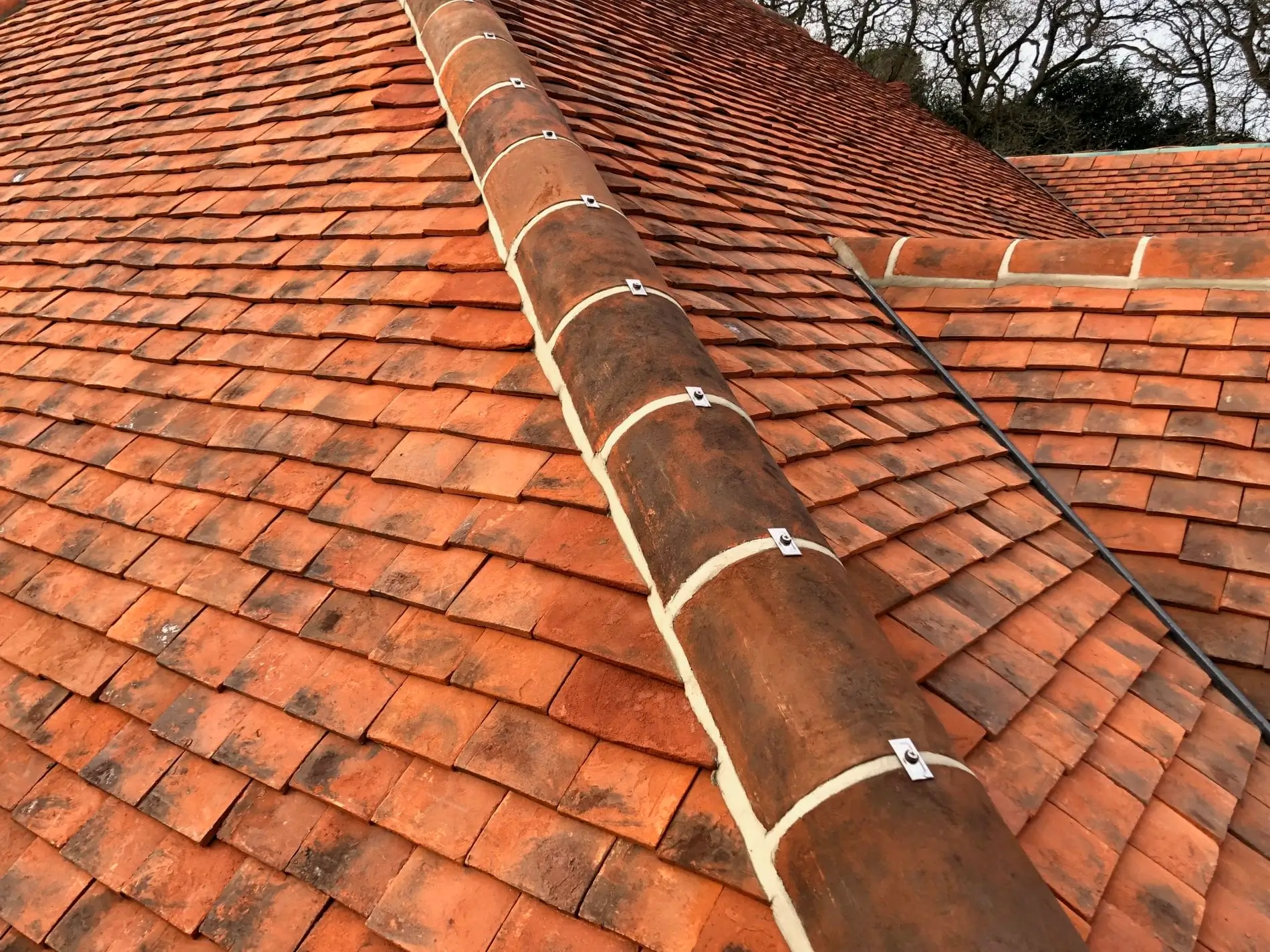
What Is a Dry Ridge System?
A dry ridge system is a mortar-free way of fixing the ridge tiles that run along the very top of your roof. Instead of sand and cement, it uses a ventilated ridge roll, stainless steel screws, clamps, and waterproof unions to lock each tile down.
In plain terms, a dry ridge kit does three jobs at once:
- Holds your ridge tiles firm against wind and storms
- Seals the joints so rain sheds back onto the roof, not into the loft
- Lets damp air escape through built-in ventilation
People search for this in a few different ways — dry fix ridge, dry ridge roofing, mechanical ridge fixing, or simply "how to fix loose ridge tiles." They all point to the same solution.
How Does a Dry Ridge System Stop Leaks Without Mortar?
A dry ridge system holds each ridge tile with stainless steel screws and clamps, then seals the joints so rain runs back onto the roof. It uses no mortar, so there is nothing to crack, wash out, or need re-pointing.
- Waterproof unions between the tiles push rainwater back onto the slope
- Stainless screws and clamps grip every tile against wind uplift
- A ventilated roll under the tiles lets damp air escape the loft
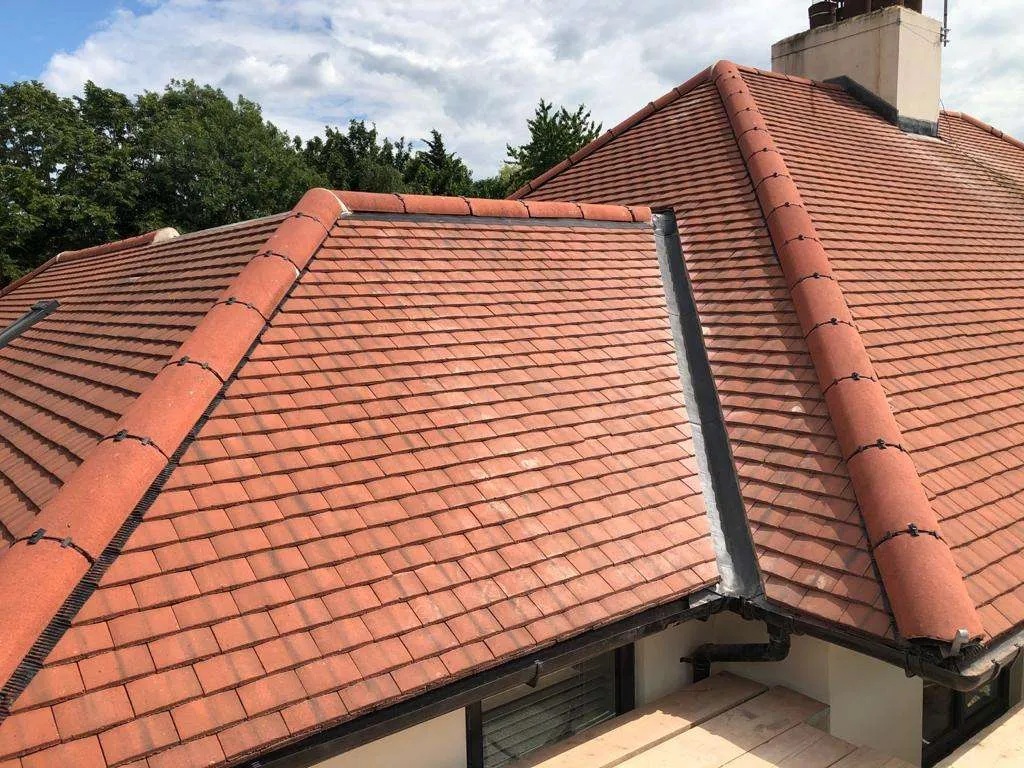
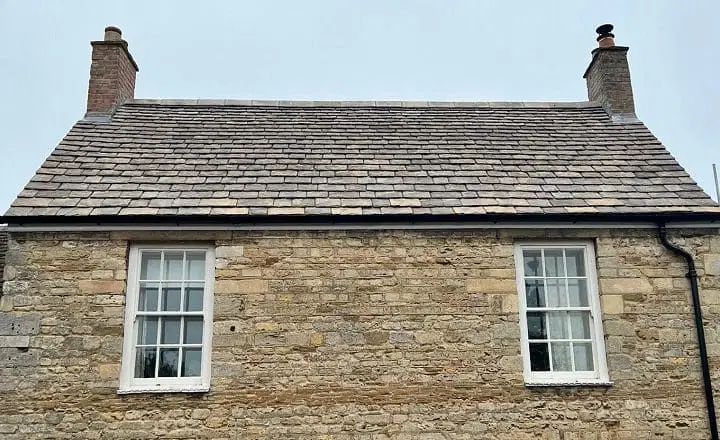
Signs Your Mortar Ridge Is Failing
Cracked mortar along the top of your roof is the first warning. Next come ridge tiles that rock when pressed, or ones that slip after a storm. You might find loose bits of mortar in the gutter or on the drive. Damp patches or moss along the ridge line point the same way.
Watch for these common red flags:
- Loose or wobbly ridge tiles that move when touched
- A ridge tile blown off or dislodged after high winds
- Powdery, crumbling mortar with visible gaps
- Damp or a musty smell in the loft near the roof apex
Our free drone survey checks all of this with no ladder near the roof. Homes on high, open ground near Beacon Hill
Country Park take the worst of the wind. There, failing mortar tends to let go sooner, so an early check pays off. Leave it too long and a single loose ridge tile can let water track down into the felt, battens, and ceilings below — a small fix that turns into a big one.
Dry Ridge vs Sand-and-Cement Mortar — Why We Recommend Dry Fix
Mortar relies on a bond that cracks as the roof heats, cools, and shifts. A dry ridge system uses screws and clamps that flex with that movement. Tiles stay put in high wind, and you skip the re-pointing that mortar needs every ten to fifteen years.
There is a rules side too. Since 2015, British Standard BS 5534 says ridge tiles on a new roof or full re-roof must be mechanically fixed. Mortar on its own no longer meets the standard. A second standard, BS 8612, sets the quality and wind-resistance rules that dry fix kits must pass. When we quote a new roof or re-roof, we fit a system that meets both — so your ridge is
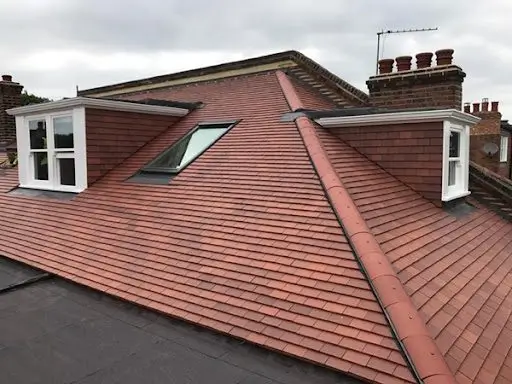
compliant as well as secure. Owners in Barrow-upon-Soar who are tired of patching the same ridge often switch over for good.
Here's the honest comparison we give every customer:
- Mortar ridge: lower upfront cost, but cracks over time, needs re-pointing, and can shed tiles in a gale
- Dry ridge: slightly more upfront, but flexes with the roof, resists wind, adds ventilation, and is close to maintenance-free
Dry Ridge, Dry Hip & Dry Verge — Which Does Your Roof Need?
The shape of your roof decides which mortar-free systems apply. Many homeowners mix these up, so here's the simple version:
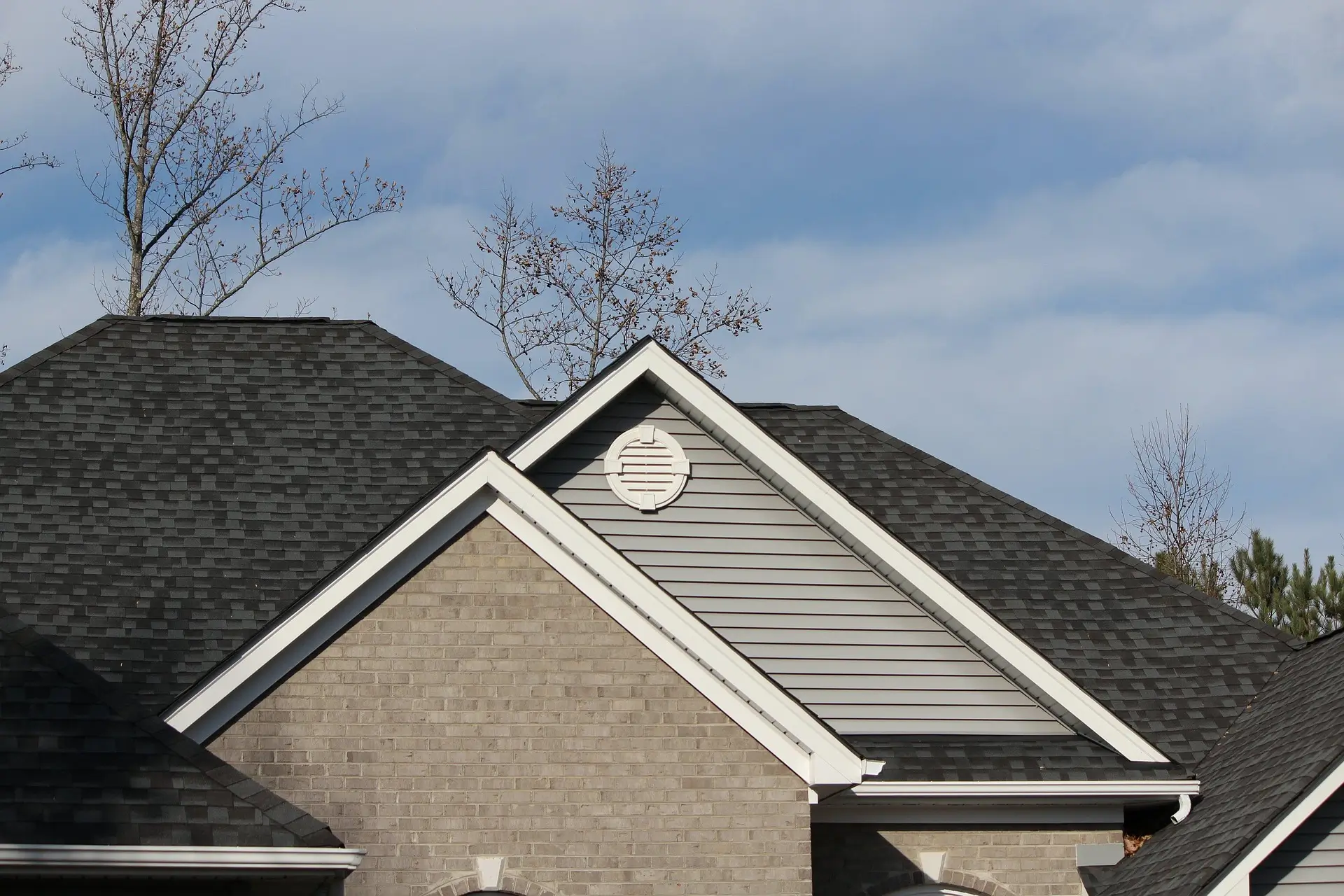
- Dry ridge — runs along the horizontal apex at the top of the roof. Almost every pitched roof has one.
- Dry hip — runs down the diagonal edges where two slopes meet. Common on hipped semis and detached homes across Charnwood. Often paired with hip trays for a neat, watertight line.
- Dry verge — caps the sloping gable edge of the roof to stop wind lifting the end tiles.
A gable-end terrace usually needs a dry ridge and dry verge. A four-sided hipped roof needs a dry ridge and dry hip. Some roofs need all three. We
confirm exactly which applies during your free survey, so you only pay for what your roof actually needs.
Preparing Your Roof and Access
Most ridge jobs need safe access, so we usually set up scaffolding or a tower. We confirm this at the survey and put it in your written quote, so nothing surprises you on the day. We also check whether your current ridge tiles can be lifted and reused, which keeps material costs down. This is what's known as a dry ridge conversion — swapping an old sand-and-cement ridge for a dry fix system, often without touching the rest of your roof covering.
Timing is easier than with mortar. A dry ridge system fits in wet or cold weather, since there is no mix to cure. That helps through a Loughborough autumn, when mortar work can stall for weeks waiting for dry, frost-free days.

How We Install Your Dry Ridge System, Step by Step
We strip the old ridge tiles and clean any mortar off the timber below. A treated batten is then fixed and strapped down along the full ridge run. Next we lay the ventilated roll, set the brackets to match your tile profile, then screw and clamp each tile at every joint. Waterproof unions and end caps finish the line.
In short, the sequence is:
- Remove old ridge tiles and clean the apex
- Fix and strap down a treated ridge batten
- Roll out the ventilated ridge roll and bed it to the tiles
- Screw, clamp, and union every ridge tile
- Fit end caps for a clean, weathertight finish
Period homes in Quorn and Woodhouse Eaves need extra thought. On decorative or crested Victorian ridges, a dry system may not suit the tile shape, and the foam strip can look wrong. In those cases we'll talk you through sympathetic options, including specialist heritage ridge products that keep the traditional look while still meeting fixing rules. Where a street sits in a conservation area, we agree a sympathetic finish with you first.
How to Check the Work Was Done Right
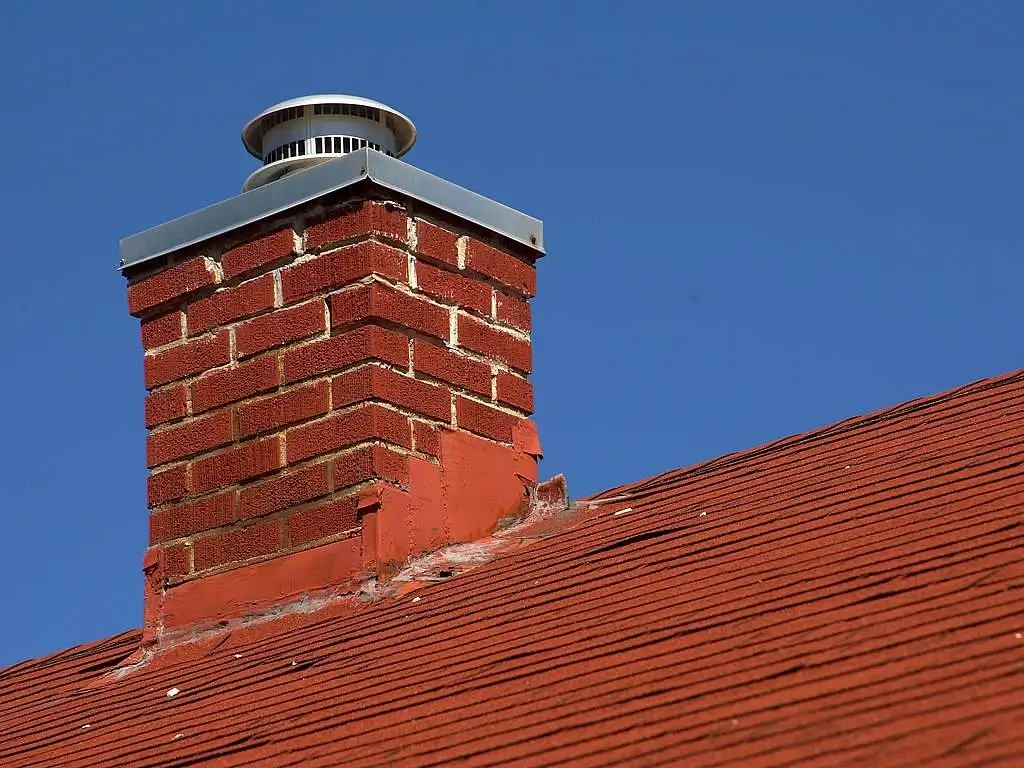
A dry ridge is only as strong as what holds it down. The ridge batten must be strapped to the rafters, not just screwed to loose battens. On a refurb, that is the corner some roofers cut, and the fixings then pull free in a gale. We show you the strapped batten before the tiles go on.
After fitting, you can check a few things yourself — no ladder needed, just a look from the ground or the drone footage we share:
- The ridge runs in a straight line with even joints
- Each tile overlaps the main tiles on both sides
- Gable ends are capped, not left open
- The ridge roll sits flush, with no gaps flapping in the wind
On exposed edges near Charnwood Forest, these details keep the ridge on the roof.
Keeping Your Ridge Sound and Your Loft Dry
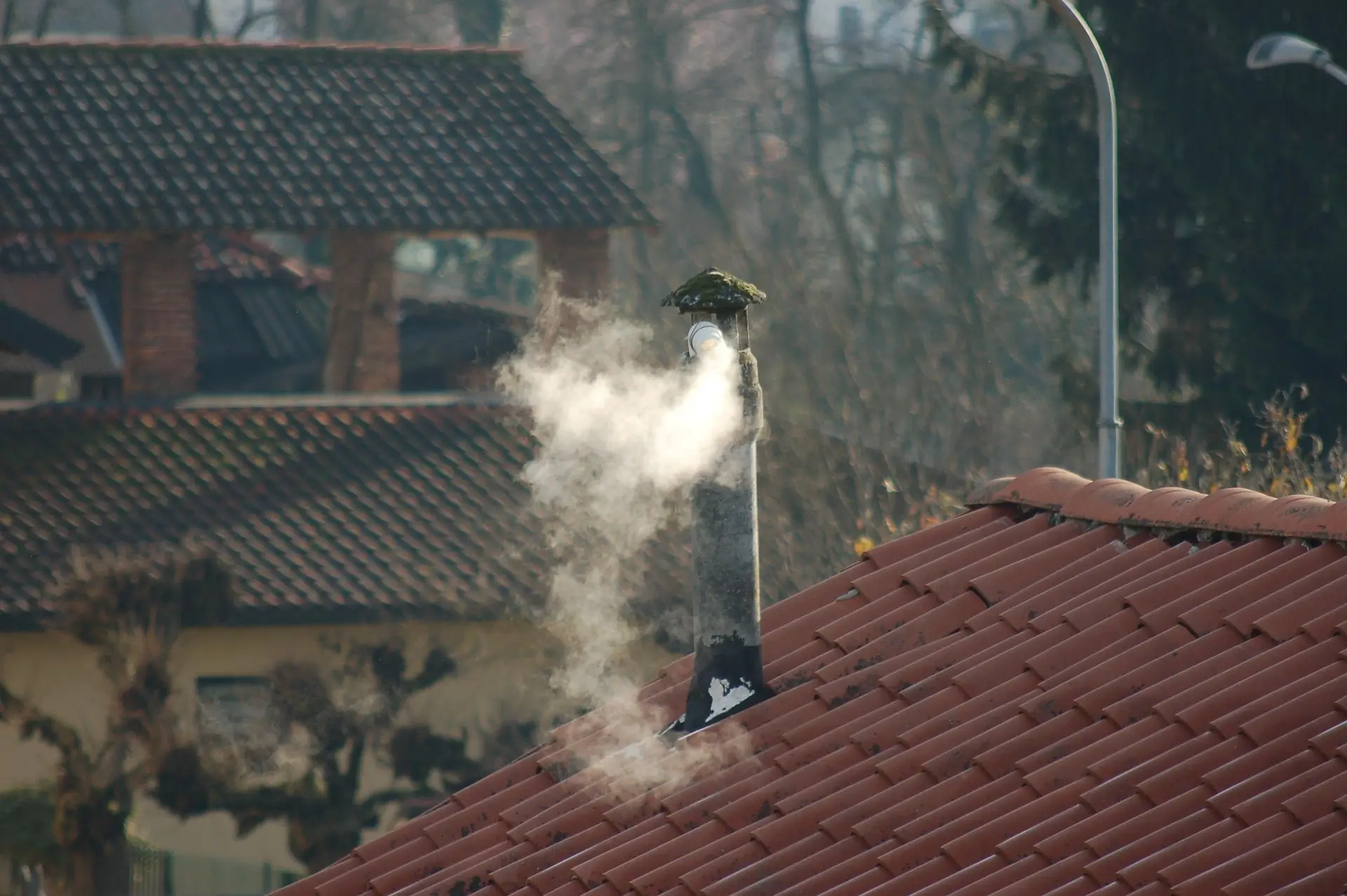
A dry ridge system asks for very little once it is on. A quick look after a big storm is usually enough to confirm nothing has shifted. There is a benefit for the roof space too. The ventilated roll lets damp air escape at the top of the roof, which cuts condensation on cold loft timbers.
Good ridge ventilation matters more than most people think. If your loft smells musty, shows black spotting on the timbers, or feels damp in winter, poor airflow is often the cause — and it can rot rafters and ruin insulation over time. In damp, wooded spots near The Outwoods, moss builds up fast, so owners in Sileby and Mountsorrel find a yearly glance keeps small problems small.
Areas We Work — Loughborough, Charnwood & the Soar Valley
Our Loughborough office covers the full LE11 and LE12 area, plus the LE7 villages to the south. If you're in any of these towns or villages, we're already on your patch:
- Loughborough (LE11) — our home base, from the town centre to the university campus
- Shepshed (LE12 9) — emergency repairs, dry ridge conversions, and garage work
- Quorn / Quorndon (LE12 8) — heritage and conservation-area ridge work
- Barrow-upon-Soar (LE12 8) — re-roofs, dry ridge and dry verge retrofits
- Hathern (LE12 5) — tile repairs, moss removal, ridge upgrades
- Woodhouse Eaves (LE12 8) — period stone properties and heritage ridges
- Mountsorrel (LE12 7) — granite terraces, storm-damage ridge repairs
- Sileby (LE12 7) — Victorian terraces, ridge re-bedding and dry fix

- Rothley (LE7 7) — larger homes, high-spec ridge and roofing work
- Syston (LE7 1 / LE7 2) — residential and commercial ridge and roof work
- East Leake (LE12 6) — new-build and re-roof ridge installs near the Notts border
Not sure if we reach your postcode? Call 01509 277099 and we'll confirm straight away.
Got Questions?
Dry Ridge Systems in Loughborough — Frequently Asked Questions
How long does a dry ridge system last?
A well-fitted dry ridge system typically lasts around 20 to 30 years, often as long as the roof tiles themselves. Because there's no mortar to crack or wash out, it holds up far better than a traditional sand-and-cement ridge.
Are dry ridge systems actually worth the money?
Yes — for most Loughborough homes a dry ridge is worth it. It costs a little more upfront than mortar, but you skip regular re-pointing, it resists wind far better, and it adds loft ventilation. Over the life of the roof, it usually works out cheaper.
Do dry ridge systems ever leak?
A correctly installed dry ridge should not leak, because the waterproof roll and unions shed rain back onto the roof. Leaks almost always come down to poor fitting — a badly seated roll, wrong tile profile, or skipped fixings — which is why the quality of the installer matters most.
What affects the cost of a dry ridge system?
The main things are the length of your ridge, the roof height and pitch, whether you need a dry hip too, access and scaffolding, and if the old ridge tiles can be reused. We give you a clear, itemised written quote after your free drone survey — no vague figures, no surprises.
Can you replace my mortar ridge without stripping the whole roof?
Yes — in most cases we remove only the ridge tiles and leave your main roof covering in place. Whether the old tiles can be reused depends on the mortar bond, which we check at the survey.
My roof slopes on all four sides — do I need a dry hip as well?
Yes — a four-sided roof needs a dry hip along each diagonal, fixed the same way as the ridge. Many hipped semis and detached homes around Charnwood need both, and we confirm which at survey.
When you remove old mortar, could the dust contain asbestos?
In older Loughborough homes we treat unknown dust with care and do not disturb suspect material. If we think the bedding or nearby material could contain asbestos, we pause and arrange proper testing before going further. Your safety comes first.
Does a dry ridge system help with condensation in my loft?
Yes — the ventilated roll under the ridge lets damp air escape from your loft. Paired with vents at the eaves, it helps cut the condensation that rots cold roof timbers.
Will a dry ridge system on my Quorn home need planning permission?
In most cases, no — swapping mortar for a dry ridge counts as maintenance. Homes in conservation areas or listed streets around Quorn and Woodhouse Eaves should check first, and we flag this for you at survey.
Can a dry ridge be fitted in winter or wet weather?
Yes — unlike mortar, a dry fix system needs no mix to cure, so we can install it in cold or wet conditions. That means fewer weather delays through a Leicestershire winter.
Book Your Free Drone Roof Survey Today
Loose ridge tiles rarely fix themselves — and every windy week is another chance for one to come down. If your mortar ridge is cracking, slipping, or letting damp into the loft, now is the time to sort it, before a small job becomes a big bill.
Book your free, no-obligation drone roof survey and we'll show you exactly what your ridge needs — with a clear, written, itemised quote and no sales pressure. Whether it's a single ridge conversion in Sileby, a full dry ridge and dry hip on a Quorn semi, or a new roof across Charnwood, our local Loughborough team is ready to help.
📞 Call now on 01509 277099
Get in Touch
Tate & Sons Roofing — Loughborough Office
5 Middleton Place, Loughborough LE11 2BY
📞 01509 277099
✉️ [email protected]