
🔧 Trusted Local Dry Verge Specialists
Dry Verge Systems in Loughborough — Installation, Repair & Mortar-Free Roof Edges
- Free Drone Survey
- 10-Year Guarantee
- BS 8612 Compliant
Free Dry Verge Survey - No Obligation
Mortar-free, wind-proof roof edges.
Free Drone Survey • Response within 15 mins
🔒 Your details are safe with us. No spam, ever.
In Loughborough, failing verge mortar is a top cause of slipped gable tiles. A dry verge system in Loughborough swaps that crumbling mortar for interlocking caps, screwed straight to the battens. The result is a secure, weather-tight roof edge that won’t crack, wash out, or need repointing every few winters.
We fit and repair dry verge across Loughborough and the wider Leicestershire area. You get a free drone roof survey first. Most gables are finished in a day.
As a local roofing contractor with a Loughborough office, we don’t upsell you a full re-roof when a verge is all that’s failing. We find the real fault and quote it straight.
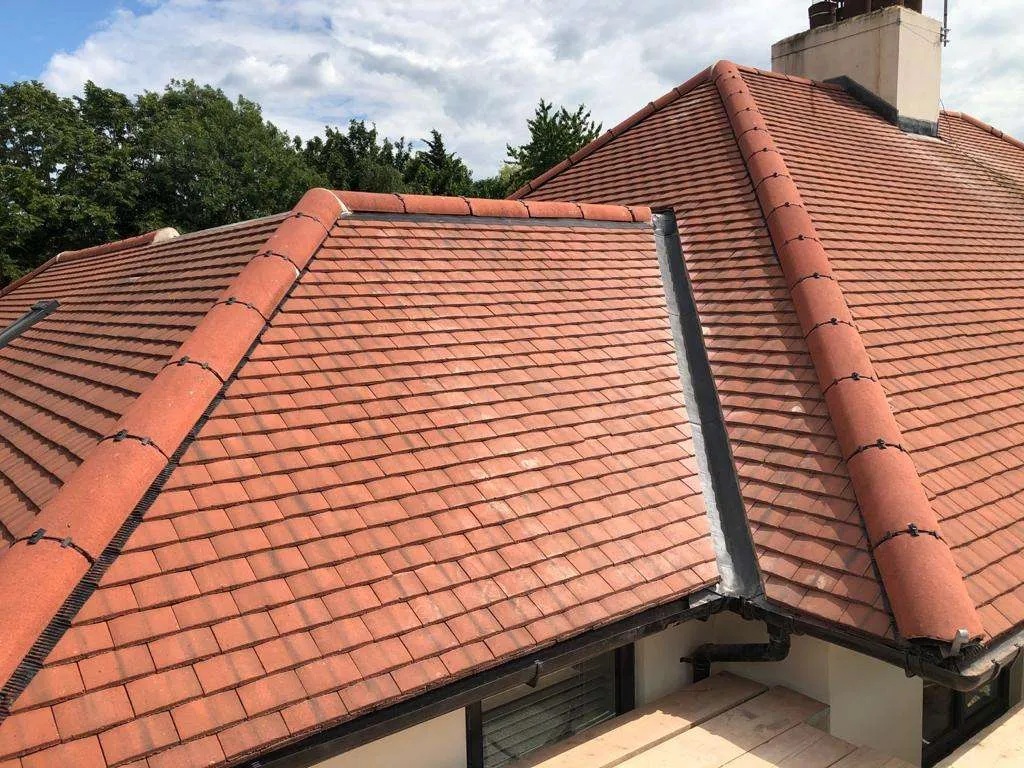
What Is a Dry Verge System?
A dry verge system caps the tiled edge of a pitched roof at the gable, known as the roof verge. It uses interlocking plastic units, screwed to the battens, instead of mortar. That holds your edge tiles firm and keeps water out.
What does a dry verge do for your roof?
- Locks edge tiles down against wind uplift.
- Blocks rain, birds and pests at the roof edge.
- Sheds water away from your gable wall.
- Needs almost no upkeep once fitted.
Dry verge vs traditional mortar — the short version
Mortar is cheap to patch but rarely stays put. It cracks with movement, washes loose in storms, and drops into your garden. A dry verge is a mechanical,
mortar-free fix — fitted once, then left alone for years. That’s why most Loughborough homeowners now switch rather than keep repointing.
Signs Your Roof Verge Needs Replacing
Cracked or missing mortar at the gable is the first warning. You might spot chunks of it in the garden after a storm. Loose or slipped edge tiles come next.
Look for these signs along your roof edge:
- Gaps or crumbling mortar at the gable.
- Tiles that have slipped or lifted at the edge.
- Green staining running down the gable wall.
- Birds or draughts getting in near the eaves.
- Damp patches on the inside of the gable wall or in the loft.
Wind-exposed roofs near Beacon Hill Country Park take a hard beating. Mortar cracks faster here than in sheltered spots. We inspect the edge itself, then tell you the real fault.Catch it early and it’s a
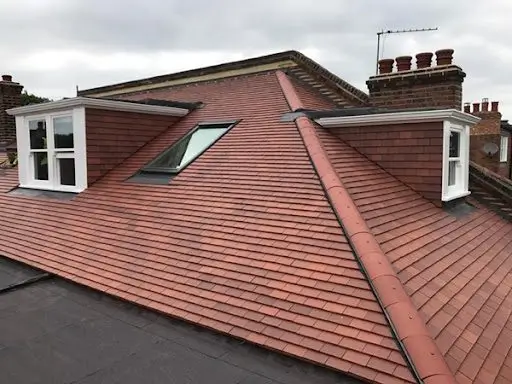
simple verge job — leave it, and water tracking behind the tiles turns it into a bigger repair.
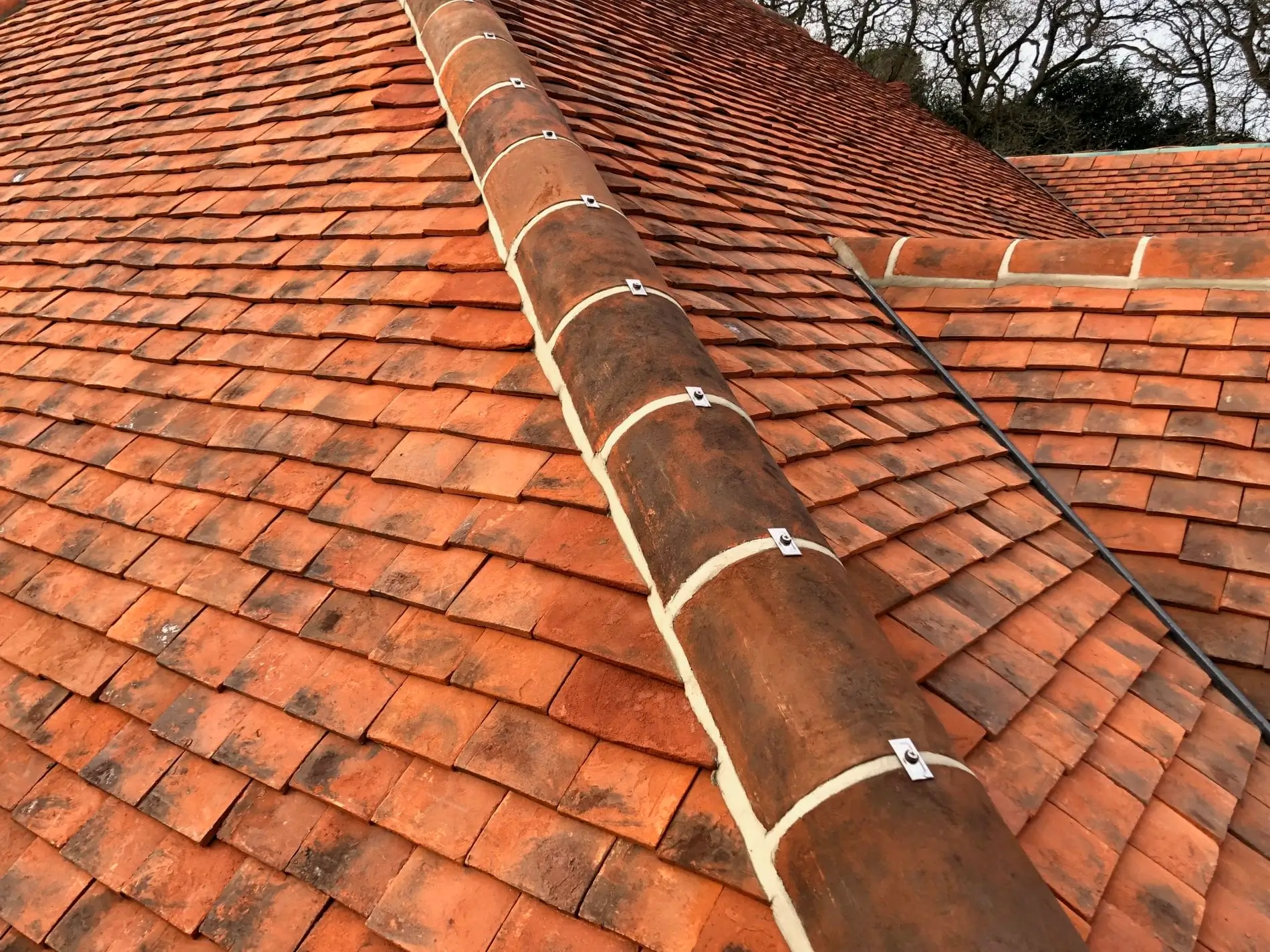
Why Dry Verge Beats Crumbling Mortar
Mortar is rigid, but your roof moves. Heat, frost and settlement all make it crack. Once it cracks, it loosens and drops out.
A dry verge system flexes with the roof. The caps clip and screw to the battens, so they hold. That mechanical grip is what mortar cannot give you.
There is a standards reason too. BS 8612 and BS 5534 set the rules for dry-fixed verges. Mortar on its own no longer counts as a fixing under them. New-build homes have needed mechanical verge fixing for years. So a dry verge isn’t a shortcut — it’s the method modern roofing standards now expect.
Across Quorn and the villages around Charnwood, freeze-thaw winters punish old mortar. A dry verge takes that weather far better.
Choosing the Right Dry Verge System for Your Roof
Not every dry verge suits every roof. We match the system to your tile profile first. The wrong unit leaves gaps or a crooked line.
Continuous verge vs individual caps
You have two main formats:
- Continuous verge: one long run, clipped together. Good for straight, even edges.
- Individual caps: one unit per tile. Better for older, uneven roofs.
uPVC vs GRP — which material?
Most units are uPVC. GRP (fibreglass) is a tougher choice for very exposed edges, like the higher roofs around Charnwood Forest. We help you pick the right one at survey. Both come in colours to match your tiles — grey, brown, black and anthracite — so the finish suits your roofline, not just your budget.
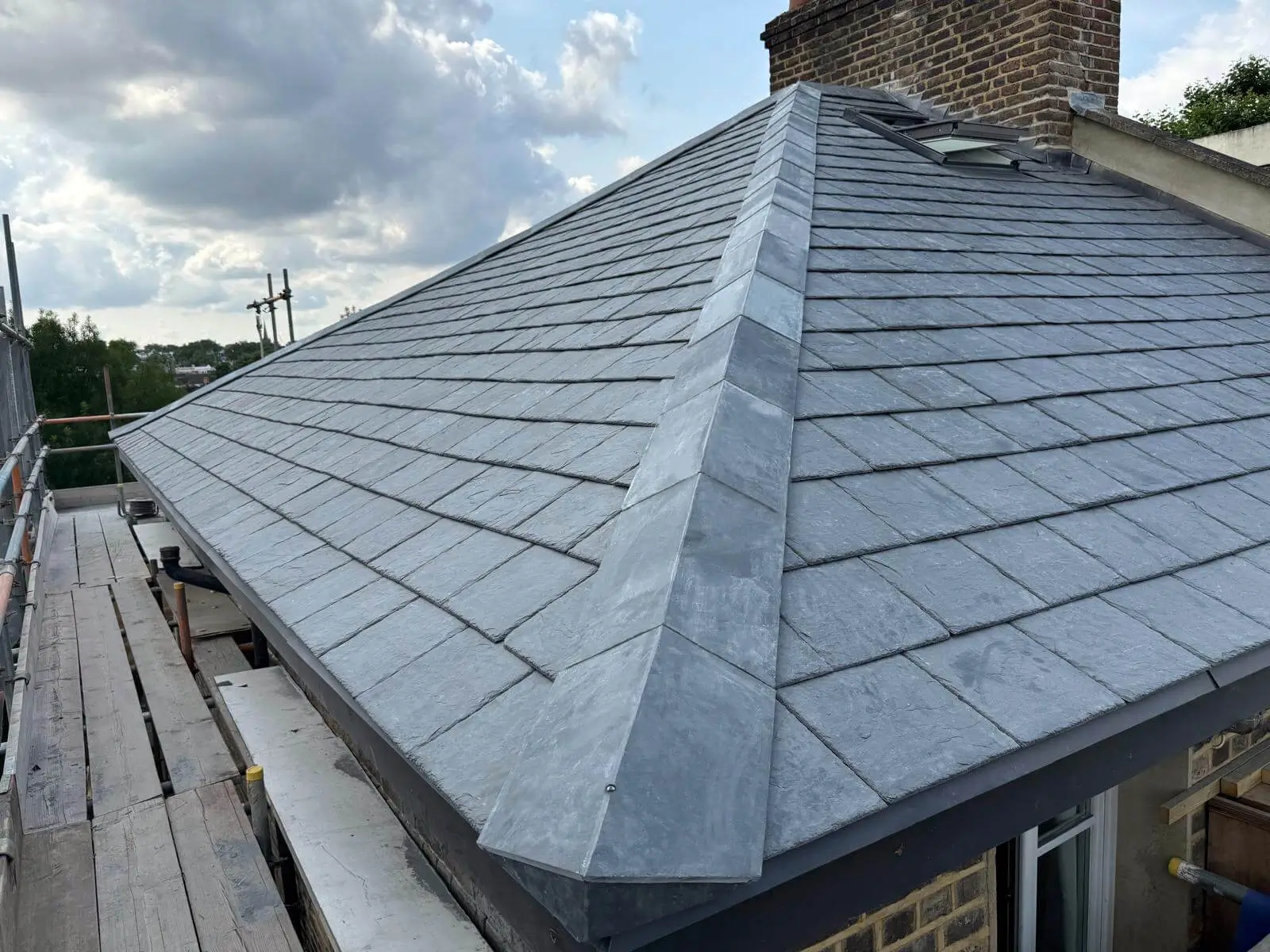
Can you dry verge a slate roof?
Many homes in Woodhouse Eaves have natural slate roofs. Standard dry verge is built for interlocking tiles, not slate. We advise the correct edge finish for slate rather than forcing a system that was never designed for it.

Our Dry Verge Installation Process in Loughborough
Good preparation is what makes a dry verge last. We check three things before any cap goes on.
- Tile type: we confirm your tiles take a compatible system.
- Batten condition: rotten or short battens get cut back and replaced.
- Overhang: the batten must sit past the gable for a firm fix.
We also strip off all the old mortar first. Caps fitted over leftover mortar sit proud and catch the wind. That is the classic bad job we get called out to fix across Loughborough.
How we fit it, edge to ridge
We work from the eaves up to the ridge. The first unit sets the line, so we get it dead straight. Each cap then clips and screws into the next.
The bottom unit carries a comb that blocks birds at the eaves. Every unit is shaped to drain rain off the edge. That keeps water away from your gable wall and brickwork.
Most single gables are finished in a day. On larger detached homes around Rothley, we plan safe access for the taller runs. You get a tidy, straight edge from top to bottom. Where it makes sense, we’ll fit a dry ridge at the same time, so the whole roofline is mechanically fixed in one visit — and one lot of access costs.
How to Spot a Poorly Fitted Dry Verge
A good dry verge is easy to check from the ground. The caps sit flush and run in a straight line. Nothing rattles, and there are no gaps underneath.
Here is your quick checklist:
- Caps sit tight against the fascia and tiles.
- The line is straight from eaves to ridge.
- Water drains off the edge into the gutter.
- No old mortar is left showing under the caps.
On the terraced rows in Sileby, a crooked verge shows from the street fast. We photograph the finished work, so you have a clear record. If a cheaper roofer has already left you with a wonky, rattling or leaking verge, we’ll happily put it right.
Dry Verge Maintenance — Keep Your Gable Edge Watertight
A fitted dry verge is close to fit-and-forget. It shrugs off wind, rain and frost for years. A quick yearly look still keeps it at its best.
Check the edge after big storms. Watch for any cap that has shifted or worked loose. A loose unit is a small fix now, not a big one later.
Damp, wooded pockets near The Outwoods speed up moss and edge decay. A clean, sealed verge gives moss less to grab. We can check it when we survey your roof.
What Affects the Cost of a Dry Verge System?
Every roof is different, so the honest answer is that your quote depends on your roof — not a one-size-fits-all price. A few things move the number up or down:
- The size of the roof and how many gables need doing.
- Access — a bungalow off a ladder costs less than a three-storey job needing scaffolding.
- How much old mortar has to be chipped away first.
- Whether the battens or felt behind the verge need repair once it’s opened up.
- The system chosen — a heavier-duty or premium unit on an exposed roof.
- Whether you fit dry verge and dry ridge together.
A dry verge usually costs more upfront than a quick mortar patch.Over time it works
out cheaper, because you’re not paying to repoint the same edge every few years. Our free drone survey gives you a firm, itemised figure before you commit to anything — no surprises once the work starts.
Areas We Work — Loughborough, Charnwood & the Soar Valley
We fit and repair dry verge systems right across the LE postcode area. If you’re in one of these towns or villages, we’re already on your patch:
- Loughborough (LE11) — our home base, town centre and all surrounding streets.
- Shepshed (LE12 9) — around 3 miles west; busy mixed residential and light industrial.
- Quorn / Quorndon (LE12 8) — premium conservation village, period and character homes.
- Barrow-upon-Soar (LE12 8) — large Soar Valley commuter village, strong demand for re-roofing and retrofits.
- Hathern (LE12 5) — quiet residential village to the northwest.
- Woodhouse Eaves (LE12 8) — stone and slate properties on the edge of Charnwood Forest.
- Mountsorrel (LE12 7) — riverside village of granite terraces and modern housing.
- Sileby (LE12 7) — high density of Victorian terraced housing.
- Rothley (LE7 7) — affluent Charnwood village with larger detached homes.
- Syston (LE7 1 / LE7 2) — larger town bordering north Leicester.
- East Leake (LE12 6) — growing commuter village just over the Nottinghamshire border.
Got Questions?
Dry Verge Systems in Loughborough — Frequently Asked Questions
Is switching to a dry verge system worth the money?
Yes, for most homes a dry verge is worth it once the mortar starts failing. You pay more than a quick patch upfront, but you stop paying to repoint the same edge every few years — and you get a stronger, wind-resistant finish.
What lifespan should I expect before a dry verge needs replacing?
A well-fitted dry verge typically lasts a couple of decades or more. Quality uPVC and GRP units resist cracking and fading, so once it’s on correctly, you can largely forget about it.
Should I repoint the mortar or move to dry verge instead?
Repointing is cheaper today; a dry verge is usually cheaper over the life of the roof. Mortar tends to need redoing two or three times over the lifespan of a single dry verge, so the switch often pays off. We’ll give you an honest steer for your roof at the survey.
Can you retrofit dry verge to my existing Loughborough roof?
Yes, we fit dry verge to most existing tiled roofs. We check your battens, tile type and overhang at the survey, then remove the old mortar before fitting.
Will dry verge work on my slate roof in Woodhouse Eaves?
Standard dry verge is made for interlocking tiles, not slate. We inspect the roof and advise the right edge finish for a slate property.
Can wind-driven rain still get past a dry verge?
A correctly fitted dry verge sheds rain and resists wind-driven water at the edge. No roof detail is fully sealed, but the units channel water off the verge and away from your gable wall — far better than cracked mortar. Correct fitting is what makes the difference.
How long does dry verge installation take?
Most single-gable jobs are done in a day. Bigger roofs, awkward access, or extra repairs behind the verge can push it to two days. We give you a clear timeframe with your quote.
My dry verge rattles in the wind — is that a problem?
No, a rattling dry verge points to loose or missing fixings. We refit or re-secure the caps so each unit sits tight and quiet.
Am I allowed to fit dry verge on a conservation-area home in Quorn?
Sometimes there are limits in conservation areas or on listed homes. We flag any Article 4 or planning rules before we book the work.
Does new dry verge affect my house sale or survey?
A tidy, correctly fitted verge reassures a homebuyer’s surveyor. We photograph the finished job, so you have proof the edge is sound.
Book Your Free Dry Verge Survey in Loughborough
Loose mortar and slipped verge tiles only get worse — and more expensive — the longer they sit. Sorting the roof edge now is a small job; leaving it until water is tracking into the loft is not. Start with a free drone roof survey. We show you the real state of your verge before any work begins, then give you a clear, written quote with no surprises. Whether you need a fresh dry verge fitted, a botched one repaired, or honest advice on whether you even need it yet — we’re a phone call away.
📞 Call now on 01509 277099
Get in Touch
Tate & Sons Roofing — Loughborough Office
5 Middleton Place, Loughborough LE11 2BY
📞 01509 277099
✉️ [email protected]