
🏠 Trusted Local Roofers
Valley Gutter Repairs Nottingham
A valley gutter carries the heaviest load on any pitched roof, and it fails quietly at first — a damp patch in a loft corner, a drip behind a bedroom ceiling, water tracking down an internal wall after a storm. As part of our guttering services across Nottingham, valley gutter repairs are one of the jobs we get called out for most, especially once autumn leaves settle into the channel. This page covers what causes a valley to fail, what a proper repair involves, and what it costs.
- Fully Insured
- 10-Year Guarantee
- 5-Star Rated
Quick Free Estimate - No Obligation
We're not just roofers – we're your neighbours.
Fully Insured • Response within 15 mins
🔒 Your details are safe with us. No spam, ever.
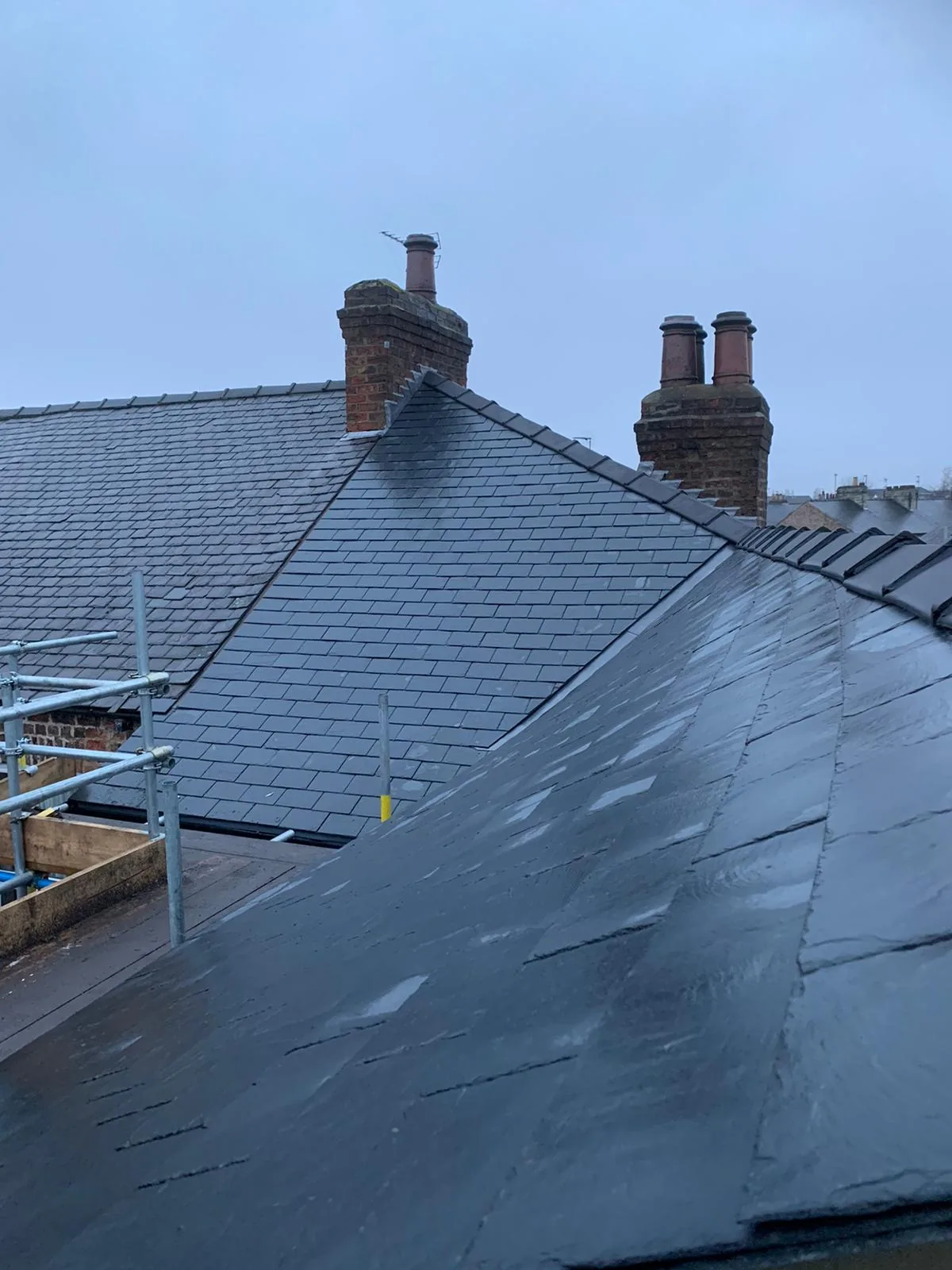
What Is a Valley Gutter, and Why Does It Leak?
A valley gutter is the channel formed where two roof slopes meet at an angle, carrying rainwater from both sides down to your main guttering. It leaks because it collects far more water than a flat section of roof, so any weak point — a cracked lead lining, a blocked outlet, failed pointing between tiles — lets water straight into the roof structure. Debris from nearby trees is the single biggest cause of Nottingham valley failures, particularly in leafy streets around Sherwood, Mapperley, and West Bridgford. A blocked or split valley rarely fixes itself and gets worse with every heavy downpour.
Lead, GRP or Dry Valley: Which Repair Fits Your Nottingham Roof?
Most Nottingham valley gutters use one of three systems, and the right repair depends on which one you have and how far it's degraded.
- Lead valleys are the traditional choice on older housing stock, especially around The Park and period properties in Wollaton. Properly fitted lead lasts 60 to 100 years, so a failing lead valley usually needs re-dressing or resealing rather than full replacement, unless the lead itself has split or fatigued.
- GRP (glass-reinforced plastic, also called fibreglass) valleys are common on newer builds and re-roofs from the last two decades. GRP is lighter and cheaper to fit than lead but has a shorter working life of roughly 20 to 30 years, and cheaper fibreglass can crack after 10 to 15 years if it wasn't laid with enough resin.
- Dry valleys and mitred soakers skip the open channel altogether. A dry valley uses interlocking valley tiles with an underlay strip beneath them, while mitred soakers are small folded lead or metal pieces tucked under each tile to form a closed, weathertight joint without any visible trough.
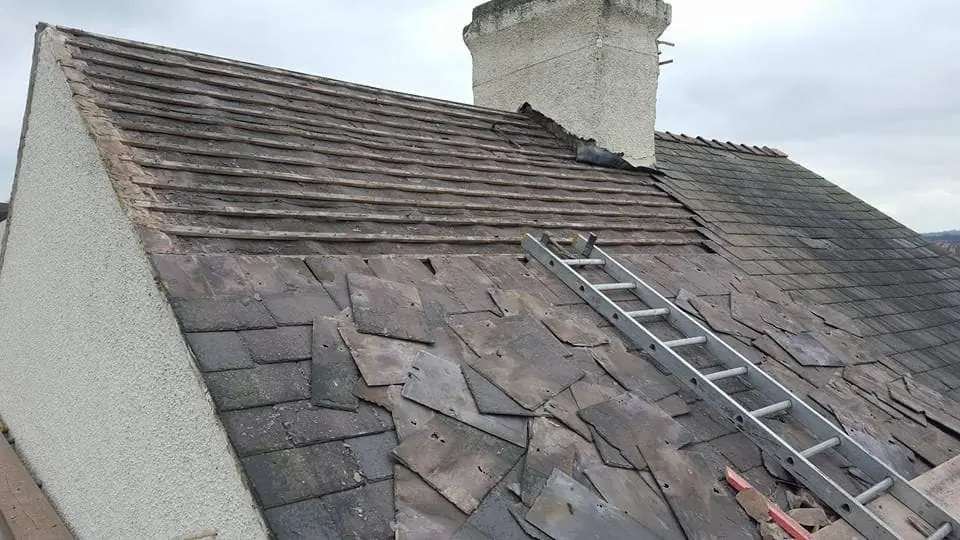
Where the underlying structure is sound, we can often reline a failing lead valley in GRP rather than strip the whole roof back, which keeps cost and disruption down. The Roof Tile Association's technical guidance on valley design details sets out the fixing standards we follow for each method, including minimum overlap widths and batten support. If your whole guttering run needs attention alongside the valley, our guttering installation and replacement page covers full system replacement.
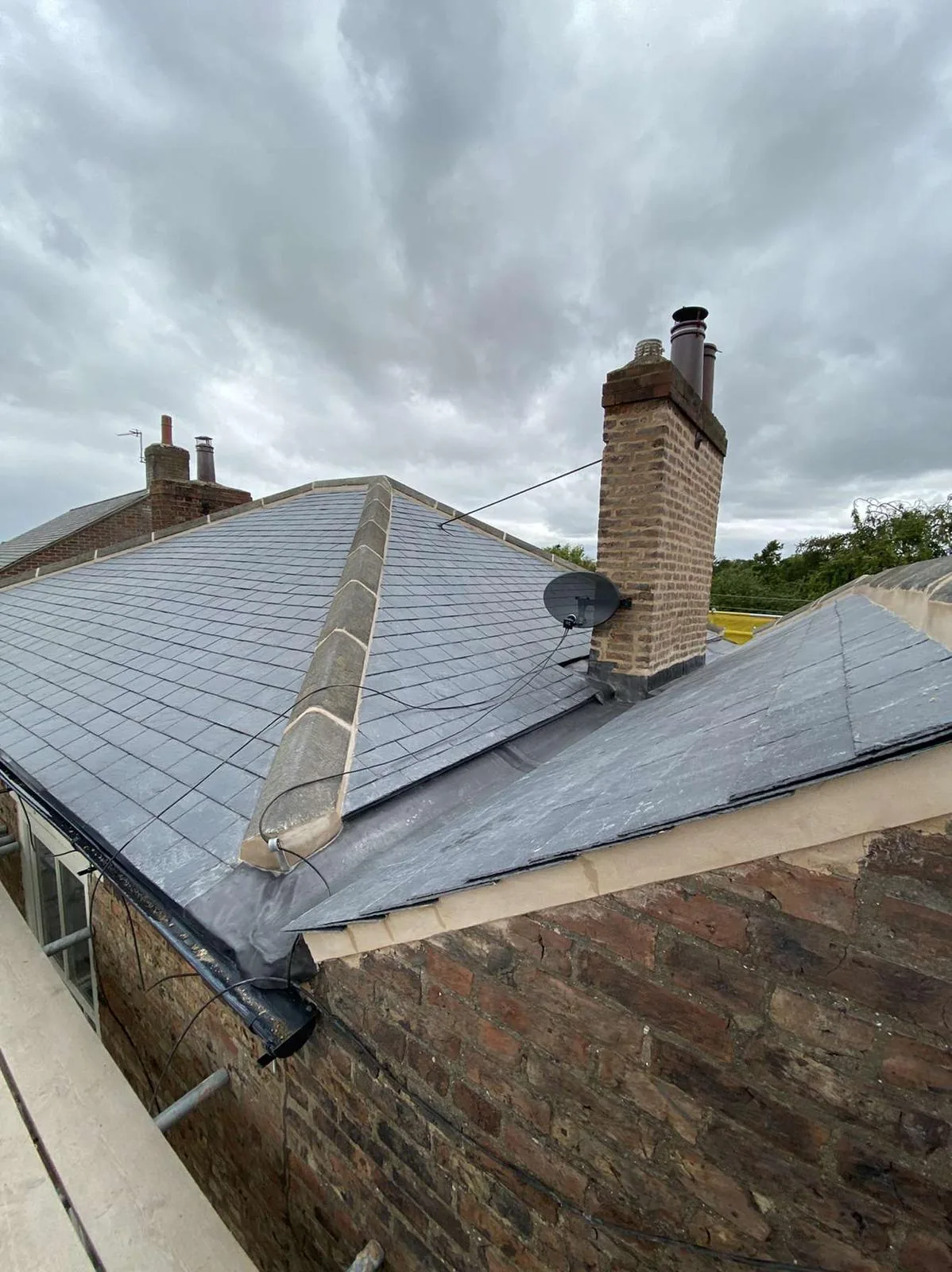
5 Warning Signs Your Valley Gutter Is About to Fail
Catching a valley problem early is far cheaper than waiting for a ceiling to stain. Watch for these signs.
- Water overflowing the valley channel during moderate or heavy rain, rather than draining away cleanly
- Damp patches, tide marks, or discoloured plaster on ceilings below the valley line
- Visible cracking, splitting, or lifting at the lead or GRP lining
- Moss or plant growth sitting in the channel, which holds moisture against the lining and speeds up decay
- Sagging or staining on fascia boards where the valley meets the main gutter run — a sign water has been tracking down behind them for some time, which our fascias and soffits page covers in more detail
Shaded, north- or east-facing valleys are the worst for moss because they never fully dry out between rainfall. If any of these signs sound familiar, it's worth booking a survey before the next storm rather than after it.
What We Check Before Any Valley Gutter Repair Starts
A valley repair done from a guess off the pavement almost always misses something. Here's what happens first.
- We carry out a free drone survey of the valley, the surrounding tiles, and the outlets — no ladders needed to get a clear look
- You get close-up photos showing the exact condition of the lining, the pointing, and the tiles either side
- We identify whether the fault is the lining itself, a blocked outlet, or failed pointing letting water in at the edges
- We check whether repair, relining, or full replacement is the honest option for your roof
- On semi-detached and terraced properties, we confirm whether the valley sits wholly on your roof or is shared across the boundary with your neighbour, since shared valleys sometimes need a joint agreement before work starts
- On period properties in The Park or Lenton's conservation area, we flag anything that needs planning sign-off before touching original lead or slate detailing
- We agree access first — many valley repairs only need a tower or roof ladder, not full scaffolding, which keeps cost down
- You get a firm quote and scope before any tool comes out of the van
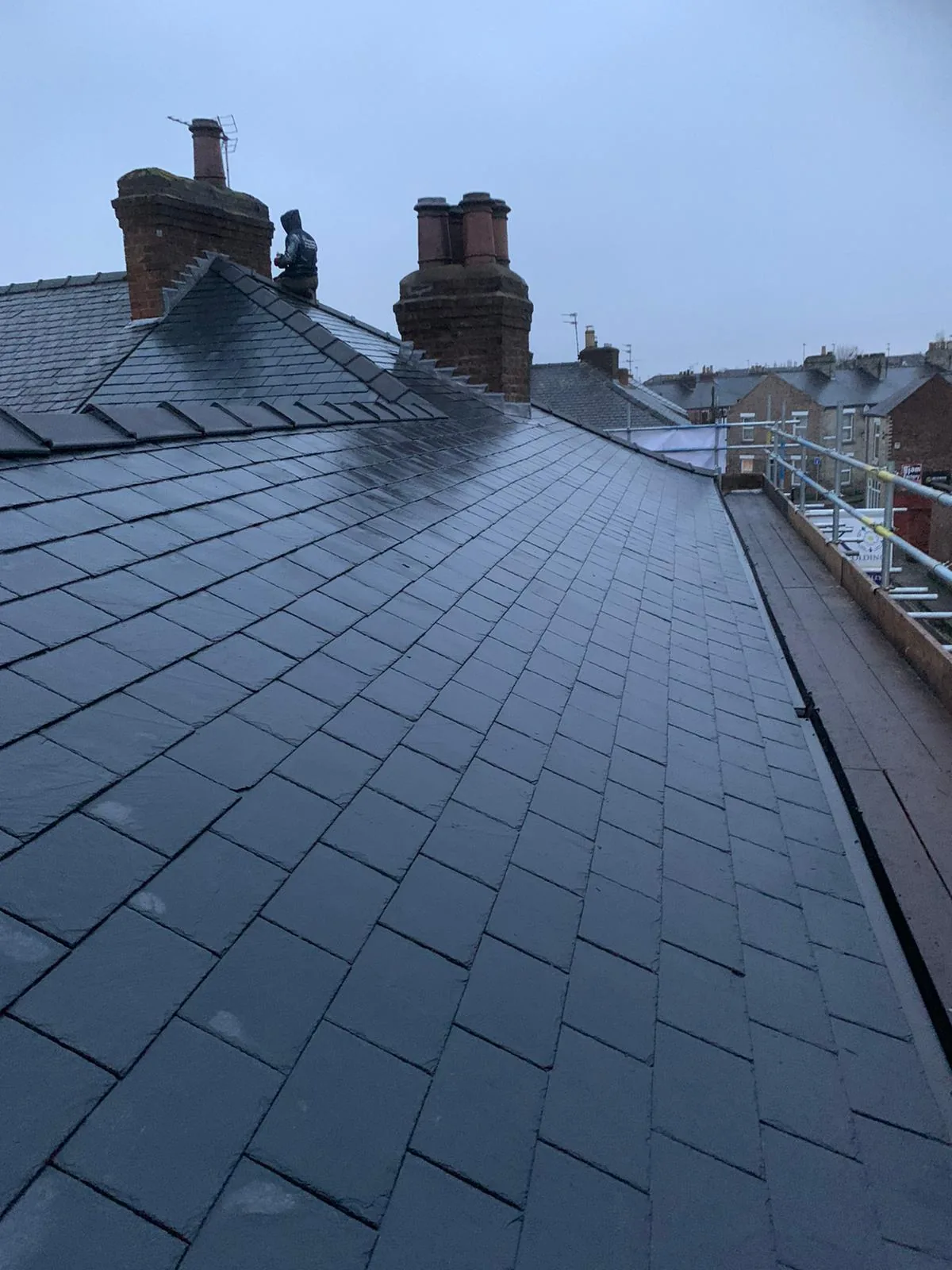
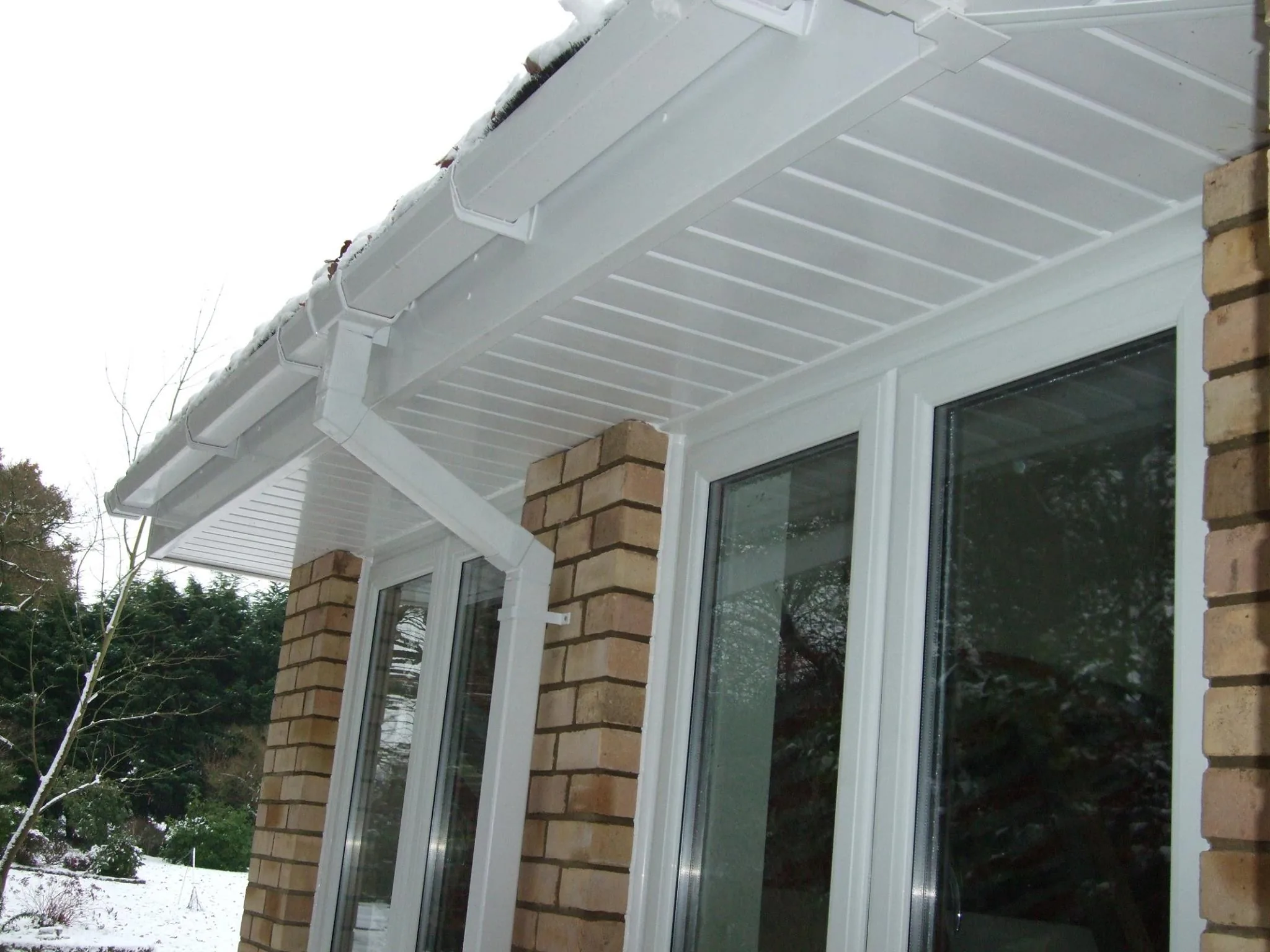
How We Repair a Leaking or Failing Valley Gutter
Once we know what's wrong, the repair itself follows a set process, whether it's a patch or a full relining.
- Clear all debris, moss, and standing silt from the channel so we can see the lining underneath properly
- Lift the tiles either side of the affected section carefully, without cracking sound ones
- Strip out the failed lead, GRP, or soaker material and check the timber battens and underlay beneath for rot
- Fit new lining to current fixing standards, with enough overlap and fall to move water away fast rather than let it pool
- Re-bed or re-point the tiles either side, matching the original mitred or overlapping detail
- Test the repair with a hose before we consider the job finished, checking the joint under real water flow
Most single-valley repairs take a day, sometimes two if the timber underneath needs replacing or the valley is long. We do carry out valley repairs through winter — a split valley shouldn't sit open through a wet season waiting for spring, and dry spells between fronts give us enough of a working window. Where relining is possible instead of a full strip-back, it usually saves both time and cost over stripping the whole valley to bare timber.
How to Check Your Valley Gutter Repair Was Done Right
A valley repair should be invisible from the ground and watertight from above. Here's what a properly finished job looks like.
- The channel should sit flat and true, with no ripples, lifted edges, or visible gaps at the tile joints
- Water should run cleanly to the outlet with nothing pooling in the middle of the run
- Lead dressing should be neatly formed with no sharp creases, which are early crack points
- Ask to see before-and-after photos of the timber deck and battens, taken during the repair — a straightforward roofer takes these as standard
- You should get written confirmation of the material used, its thickness or grade, and the guarantee that covers it
- We back every valley gutter repair with a 10-year workmanship guarantee, given in writing from day one

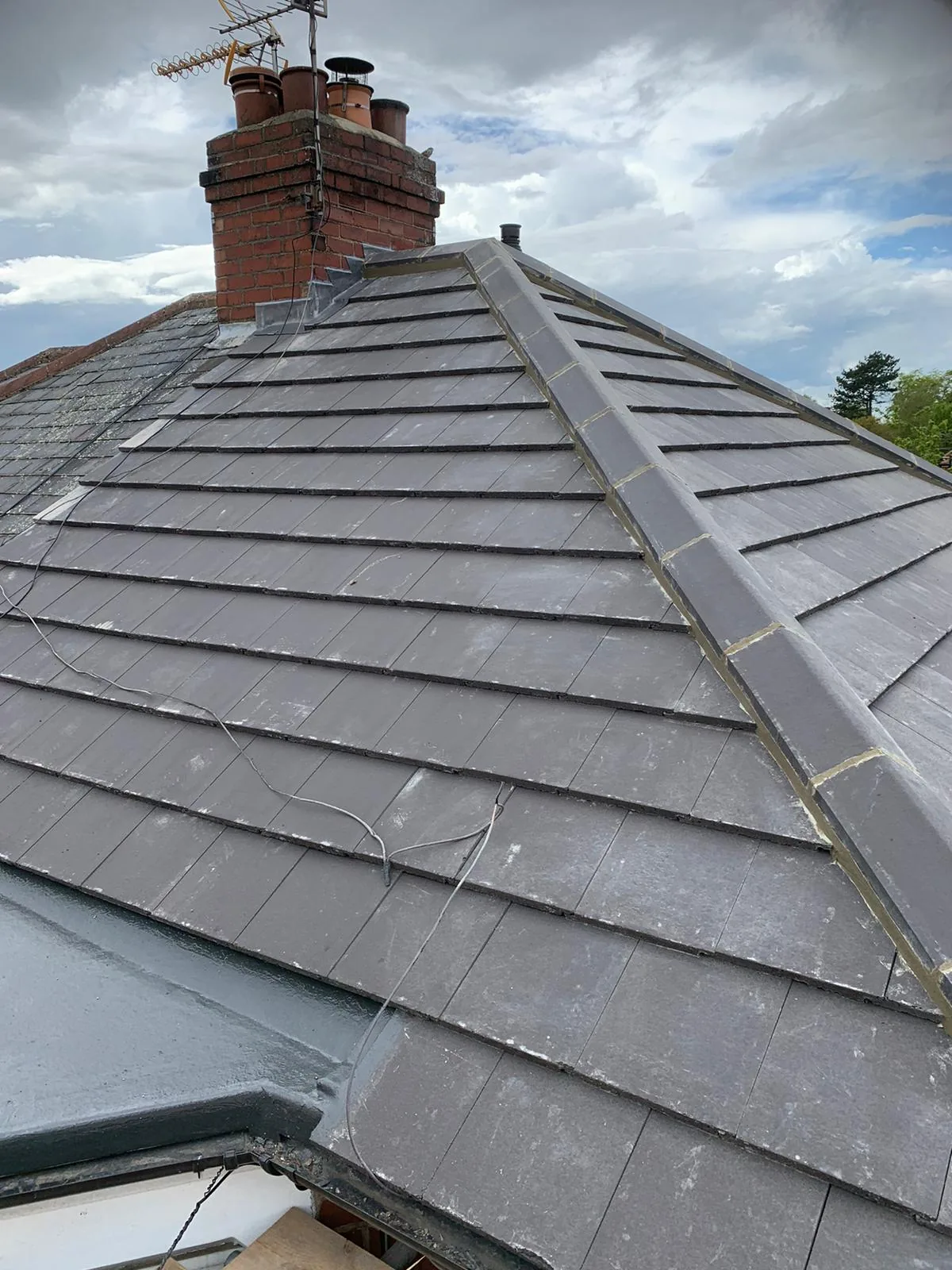
Stop Blocked Valleys Before They Flood Your Loft Again
Most valley failures we see started as a simple blockage that sat there too long. A short maintenance routine heads that off.
- Clear valleys of leaves and debris at least once a year, and again after any major storm
- Check more often if you're near mature trees, common in Mapperley, Sherwood, and parts of West Bridgford
- Look for standing water or slow drainage a day or two after heavy rain, which usually means a partial blockage
- Keep an eye on moss in shaded valleys and remove it before it thickens and holds water against the lining
- Have valleys checked as part of a general roof inspection every couple of years, even if nothing looks obviously wrong
Cost & Pricing Guidance
Valley gutter pricing across the UK for 2025/26 typically runs like this:
- Unblocking and clearing a valley: £50-£75
- Minor patch repair or resealing: £75-£300
- Partial valley repair or short-section replacement: £400-£1,000
- Full lead valley replacement: £800-£1,600
- Full GRP valley replacement or relining: £350-£700
What pushes the price up: length of the valley, the number of valleys on the roof, rotten timber underneath that needs replacing, roof pitch and height, and whether full scaffolding is needed rather than a tower or roof ladder. What brings it down: catching the problem early with a clear repair rather than a strip-back, and relining over a sound deck instead of full replacement.
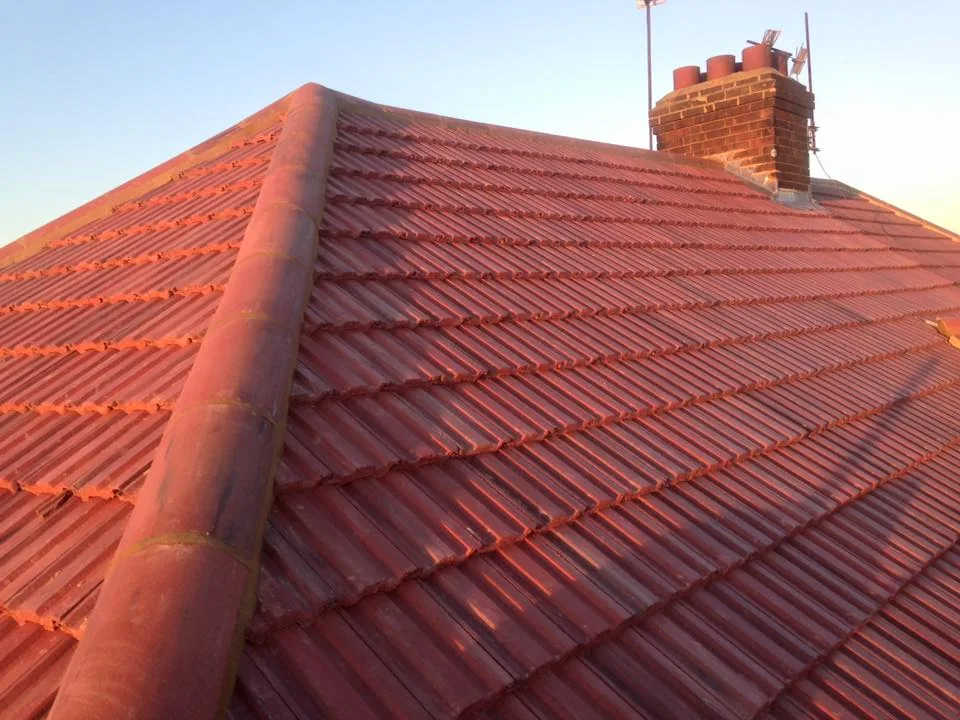
Most home insurance policies cover sudden storm damage to a valley gutter but not gradual wear from years of blocked debris, so keeping on top of maintenance matters for any future claim too. These are general ranges, not a quote. A fixed price needs a survey.
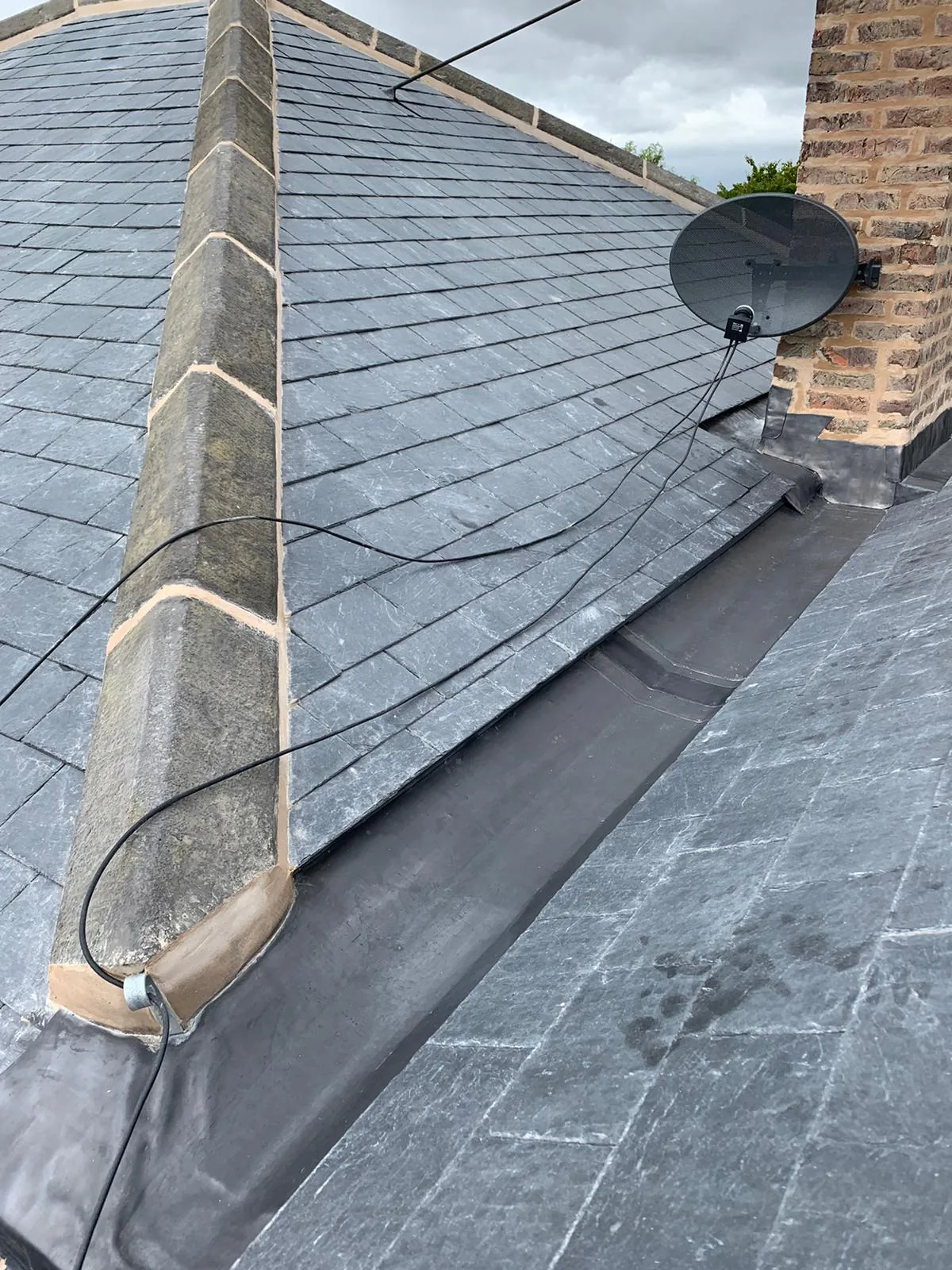
Comparison Table: Valley Gutter Systems
| System | Typical Lifespan | Best For | Relative Cost |
|---|---|---|---|
| Lead Valley | 60-100 years | Period and heritage properties, slate roofs | £££ (highest) |
| GRP Fibreglass Valley | 20-30 years | Modern re-roofs, budget-conscious replacement | ££ |
| Dry Valley (valley tiles) | Matches roof tile lifespan | New builds, roofs without a visible open channel | ££ |
| Mitred Soakers | 40-60 years | Slate roofs, closed-valley detailing on older homes | £££ |
Why Choose Tate & Sons for Your Valley Gutter Repair
Valley and guttering work is led by Daniel Oakland, Project Manager and Lead Roofer, who has 20+ years in the trade. He handles guttering and roofline work day to day, and brings heritage slate and lead detailing experience to valleys on older homes around The Park, Lenton, and Wollaton.
Tate & Sons was founded by James Tate on a simple idea: find out what's genuinely wrong, use the right materials, and leave something that holds for years, not months. That's exactly the standard we apply to a valley gutter — it's a small part of the roof that causes an outsized share of leaks when it's rushed. Read more on our About page.
Our roofers are directly employed, not subcontracted. They hold NVQ Level 2 and 3 qualifications in Roofing Occupations and carry CSCS cards. Every valley repair comes with a free drone survey up front and a 10-year workmanship guarantee once the work is finished.
Valley Gutter Repairs Across Nottingham: Areas We Serve
We repair and replace valley gutters right across Greater Nottingham and out into the wider county, on everything from period slate roofs to modern re-roofs.
- Nottingham City Centre (NG1)
- The Park (NG1)
- West Bridgford (NG2)
- Sneinton (NG2)
- Wollaton (NG8)
- Lenton (NG7)
- Beeston (NG9)
- Chilwell (NG9)
- Stapleford (NG9)
- Arnold (NG5)
- Sherwood (NG5)
- Mapperley (NG3)
- Carlton (NG4)
- Gedling (NG4)
- Hucknall (NG15)
- Long Eaton (NG10)
- Mansfield (NG18)
- Sutton-in-Ashfield (NG17)
Got Questions?
Your Flat Roofing Questions, Answered Properly
How much does a valley gutter repair cost in the UK?
Most valley gutter repairs in Nottingham cost between £75 and £1,600, depending on the scope. A simple unblock runs £50-£75, a minor patch or reseal £75-£300, a partial repair £400-£1,000, and a full lead valley replacement £800-£1,600. GRP replacement or relining is usually cheaper, at £350-£700. A survey gives you an exact figure rather than a general range.
Is lead or GRP better for a valley gutter?
Lead lasts far longer, typically 60 to 100 years against 20 to 30 years for GRP, and suits period and slate roofs best. GRP is lighter, cheaper to fit, and a sensible choice on modern re-roofs or where budget matters more than maximum lifespan. Neither is universally "better" — it depends on your roof's age, style, and how long you want the repair to last. We'll recommend the material that fits your property during survey.
Can a valley gutter be repaired, or does it need full replacement?
A sound valley with isolated damage — a blocked outlet, a cracked joint, a small split — can usually be repaired or relined, which costs less than full replacement. Widespread cracking, rotten timber underneath, or lining that's reached the end of its expected life usually points to full replacement. Our free drone survey tells you honestly which category your valley falls into, with photos to back it up.
How often should a valley gutter be cleaned?
Clear a valley gutter at least once a year, ideally after autumn leaf-fall, and again after any major storm. Properties near mature trees, common across Sherwood, Mapperley, and parts of West Bridgford, often need checking twice a year. Regular clearing is the single cheapest way to avoid a full valley repair later, since blocked debris is the most common cause of failure we see.
Do I need scaffolding for a valley gutter repair?
Not always. Many valley repairs only need a tower or roof ladder rather than full scaffolding, which keeps cost down considerably. Full scaffolding becomes necessary on steep pitches, multi-storey properties, or where several valleys need attention at once. We confirm the access needed during your survey, so it's reflected in the quote from the start.
Can valley gutters be repaired in winter?
Yes, and a split or blocked valley shouldn't be left open through a wet season waiting for better weather. We work through winter, using dry spells between fronts for lead dressing and pointing work that needs stable conditions. Leaving a failing valley over winter usually means more water damage by spring than if it had been repaired straight away.
Does home insurance cover valley gutter repairs?
Most policies cover sudden storm damage, such as a valley cracked by a falling branch or displaced tiles after high winds. They generally don't cover gradual wear from years of blocked debris or a lining that's simply reached the end of its life, since that falls under home maintenance. Keeping on top of annual clearing and repairs protects both your roof and any future claim.
Who is responsible for a valley gutter shared between semi-detached houses?
Where a valley sits directly on the boundary between two semi-detached or terraced properties, responsibility is usually shared between both homeowners, though the exact split depends on your deeds and the valley's exact position. In practice, most neighbours agree to split the cost of a shared repair, since a failure on either side affects both roofs. We can survey the whole valley and provide a scope both households can use to agree a fair split.
What's the difference between a valley gutter and mitred soakers?
A valley gutter is an open channel — lead, GRP, or tile-lined — that visibly carries water down the join between two roof slopes. Mitred soakers form a closed valley instead, using small folded pieces of lead or metal tucked under each tile so there's no visible trough at all. Soakers suit slate roofs and give a neater finish, but they're more labour-intensive to repair since individual tiles usually need lifting to reach a failed soaker. Which one your roof has affects both the repair method and the likely cost.
Book Your Free Drone Roof Survey Today
See exactly what your roof needs before any work starts. No ladders, no pressure — just a clear picture from a local Nottingham team.
A tired roof only gets worse as water works deeper into the deck and timber beneath it. A quick, free drone survey today tells you exactly where you stand — and often the fix is smaller and cheaper than you feared. Book now, get an honest quote, and protect your home before the next East Midlands downpour finds the weak spot.
📍 57 Cyril Avenue, Nottingham, NG8 5BA
📞 0115 647 4455
Call the Nottingham team today on 0115 647 4455, or request your free drone survey online. We’re already working across your area.
Get in Touch
Tate & Sons Roofing — Nottingham
57 Cyril Avenue, Nottingham, NG8 5BA
📞 0115 647 4455
✉️ [email protected]