
🏠 Trusted Local Roofers
Slate Roofs Market Harborough
Slate has topped the finest roofs across the Welland Valley for well over a century. In Market Harborough, natural slate sits on churches, old farmhouses and long rows of Victorian terraces. Laid well, a slate roof can outlive the people who fitted it. Tate & Sons Roofing fits, re-slates and repairs slate roofs in Market Harborough and the villages around it, from one slipped slate to a full heritage re-roof.
This page covers natural slate, fibre-cement and synthetic slate, real 2025 pricing, re-slating, salvaged slate and the rules that apply to period and listed homes. Every job starts with a free drone survey and a written price, with no scaffold going up just to take a look. Slate work is one part of what we do as a roofing contractor across Market Harborough.
- Fully Insured
- 10-Year Guarantee
- 5-Star Rated
Quick Free Estimate - No Obligation
We're not just roofers – we're your neighbours.
Fully Insured • Response within 15 mins
🔒 Your details are safe with us. No spam, ever.
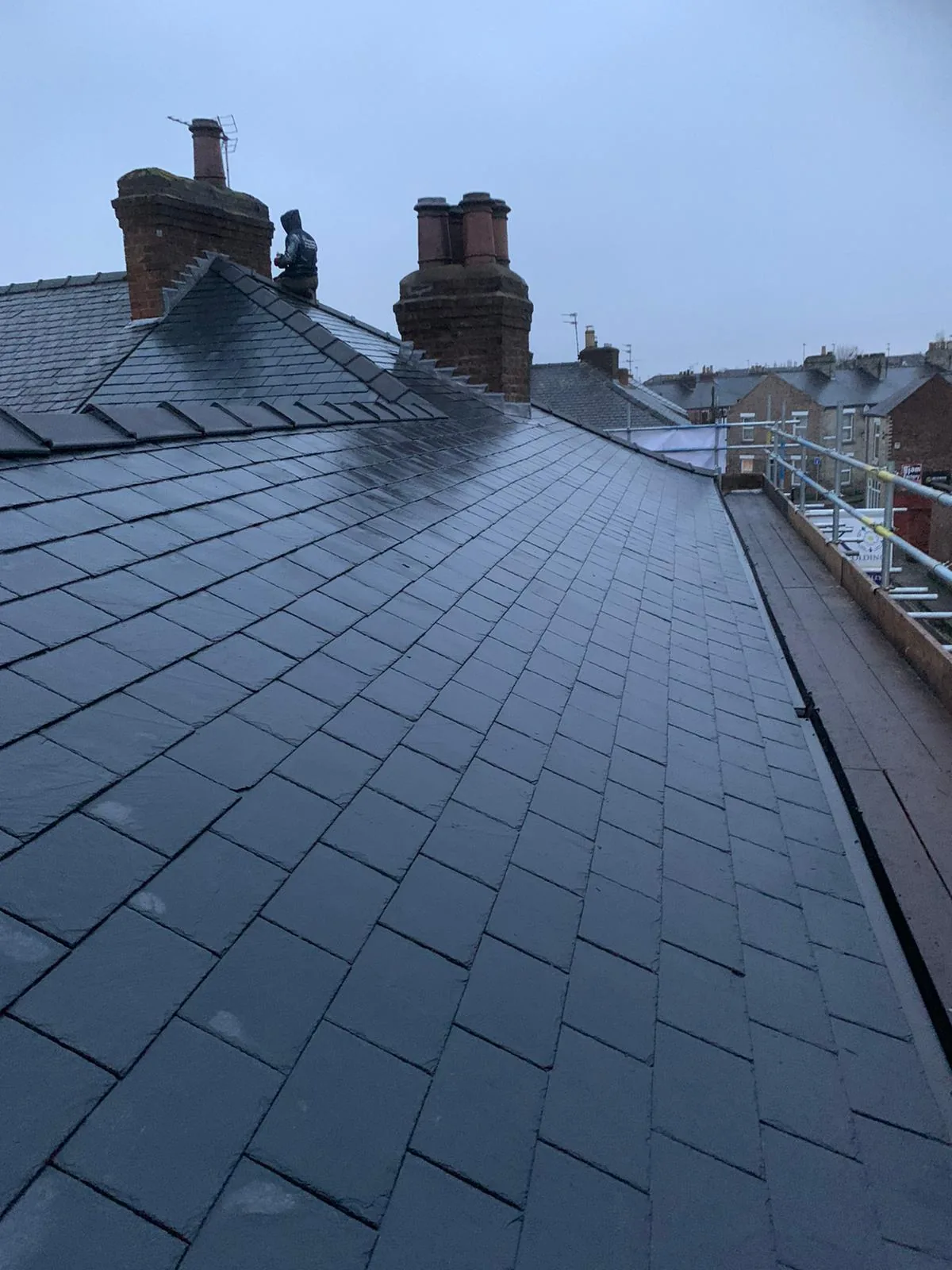
Spot a Failing Slate Roof Before Water Finds the Timber
A slate roof gives plenty of warning before it lets water in. Catch the signs early and a repair does the job, long before the battens or rafters get involved.
Keep an eye out for these:
- Slates slipped out of line, or one or two lying in the gutter
- Gaps where a slate has snapped or gone missing altogether
- Slates that flake, powder or split along the grain
- Rusty nail marks or streaks running down the roof
- A ceiling stain that grows a little after each spell of rain
- Daylight showing through the roof when you look from the loft
- Loose or cracked mortar along the ridge and around chimneys
Most old slate roofs fail from the fixings first, not the slate itself. The iron or steel nails rust through, and the battens rot, so sound slates start to slip even while they have decades of life left. This is called nail sickness, and it is very common on the Victorian roofs around Market Harborough. Spot it early and you often save the slates for reuse. Leave it, and water reaches the timber, which turns a slate job into a structural one.
Repair or Re-slate? You Get a Straight Answer, Not the Biggest Bill
A handful of slipped slates rarely means the whole roof is done. A few broken or missing slates, a bit of loose ridge mortar, or one worn valley is usually a Slate Roof Repair, not a re-roof. Widespread slipping, flaking slates, or the same patch failing twice points to re-slating instead.
We see the pattern often on older homes around Great Bowden and Lubenham. A roof gets patched here and there over the years, while nobody looks at the rusted nails holding the rest. Patch the symptom again and you buy a season or two, then pay for the same climb three times over. Once more than a fifth of the slates are slipping, a full re-slate usually works out cheaper in the long run.
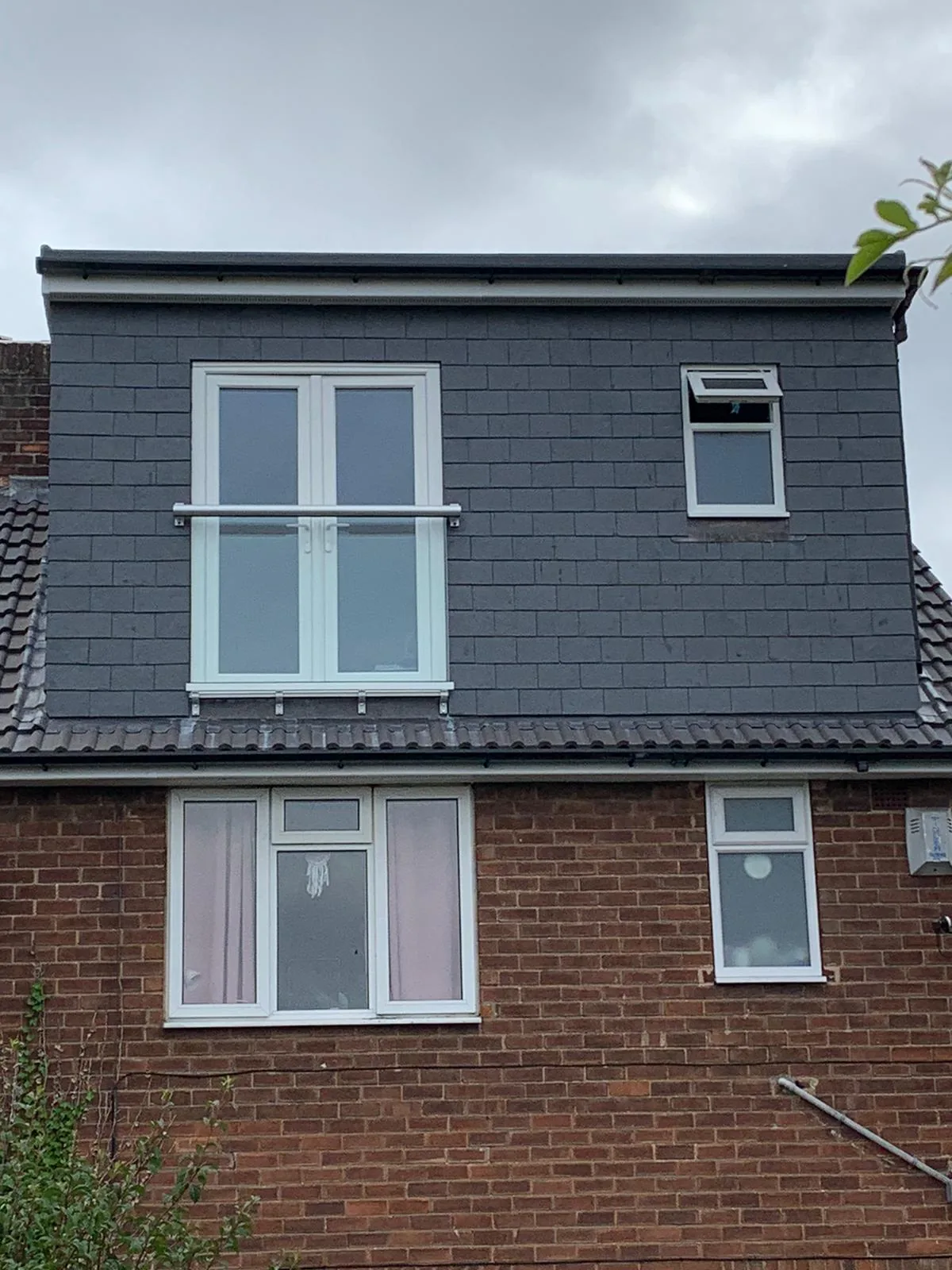
We check the whole roof before we point you either way. A free drone survey shows the full picture, close up, without a boot on a single slate. You see the nails, the valleys and the ridge line for yourself, not just our word for it. Then you get a clear written price with a plain recommendation behind it.
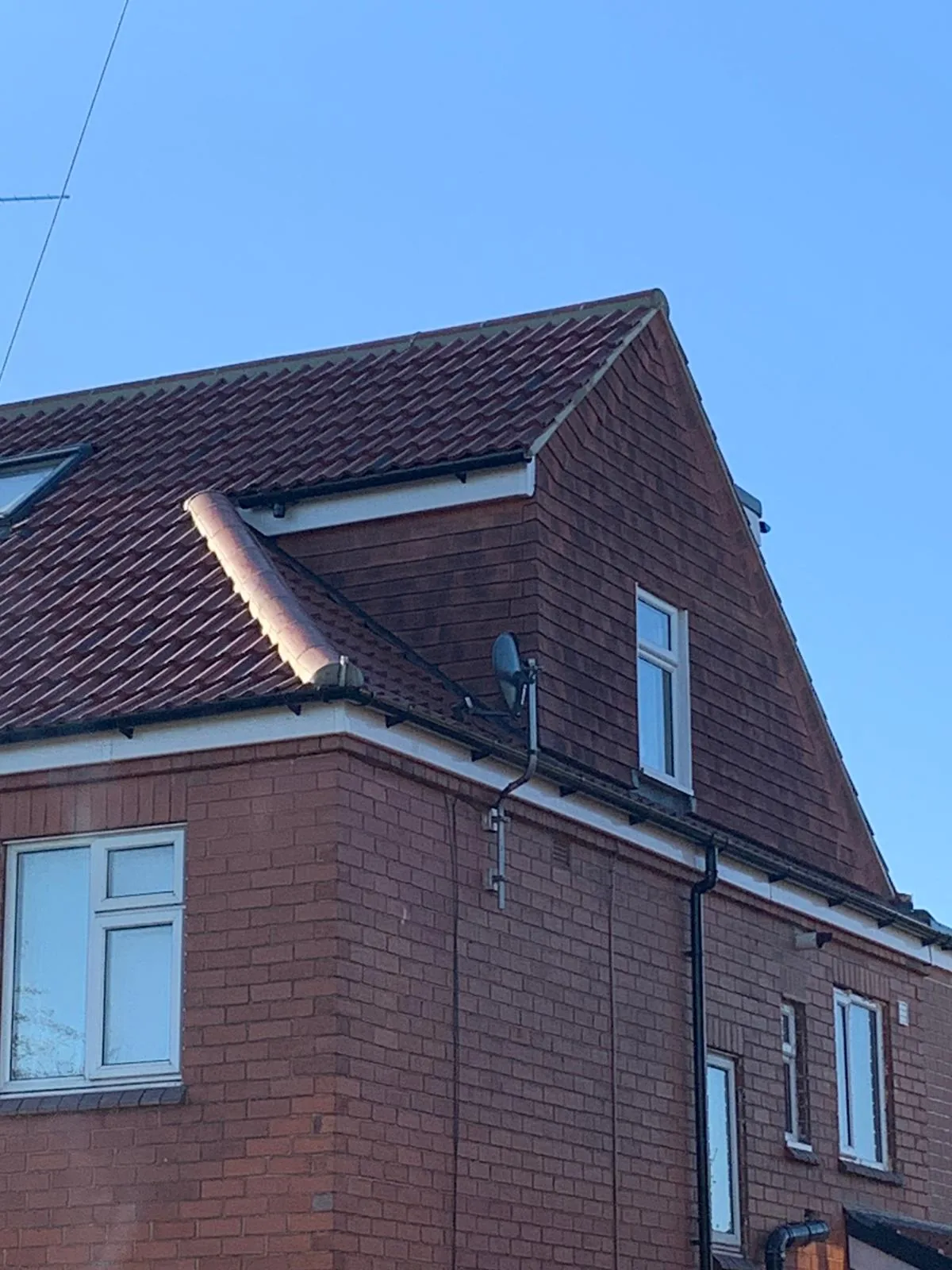
Natural Slate, Fibre-Cement or Tile — Pick the Roof That Fits Your Home
Three coverings account for almost every pitched roof in this area. Each suits a different home, budget and lifespan. In short: natural slate costs the most upfront but lasts longest and looks right on a period home; fibre-cement slate mimics the look for less and is lighter, though its coating wears over time; clay or concrete tile suits homes built with tile in the first place. On a heritage or listed property, natural slate is often the only covering the planners will pass. A survey settles which is right for you.
| :-: | :-: | :-: | :-: |
| Covering | Typical cost (per m²) | Typical lifespan | Best for |
| Natural slate | £100–£160 | 80–150 years | Period, heritage and listed homes; the longest life |
| Fibre-cement slate | £70–£120 | 30–60 years | Modern homes on a tighter budget wanting the slate look |
| Clay or concrete tile | £50–£120 | 50–60 years | Homes originally roofed in tile rather than slate |
- **Natural slate*is split from solid rock, so its colour and texture run right through the stone. Welsh slate is the premium choice and can pass a hundred years. Spanish slate costs less and still gives you decades of service.
- **Fibre-cement slate*is a man-made board pressed to look like the real thing. It is lighter and cheaper, which suits a modern roof, but it leans on a surface coating that fades and wears with age.
- **Clay or concrete tile*works best where the house was built with tile from the start. Our Clay Roof Tiling page covers that route in full if tile suits your home better.
Over the full life of a roof, natural slate often works out well against tile, because a tiled roof may need replacing once in the time a slate roof stands. On the period stock around Medbourne and Foxton, the look matters as much as the maths. We talk you through it in plain terms.
What a Slate Roof Really Costs in Market Harborough
Cost comes down to three things: the slate, the roof size and the fixings underneath.
As a general guide for 2025, natural slate runs roughly £100–£160 per square metre fitted, fibre-cement slate about £70–£120, and clay or concrete tile £50–£120. Welsh slate sits at the top end of the natural range, with Spanish slate a little lower. A full natural slate re-roof on a typical three-bed semi lands somewhere around £8,000–£14,000 including VAT.
What moves the price up or down:
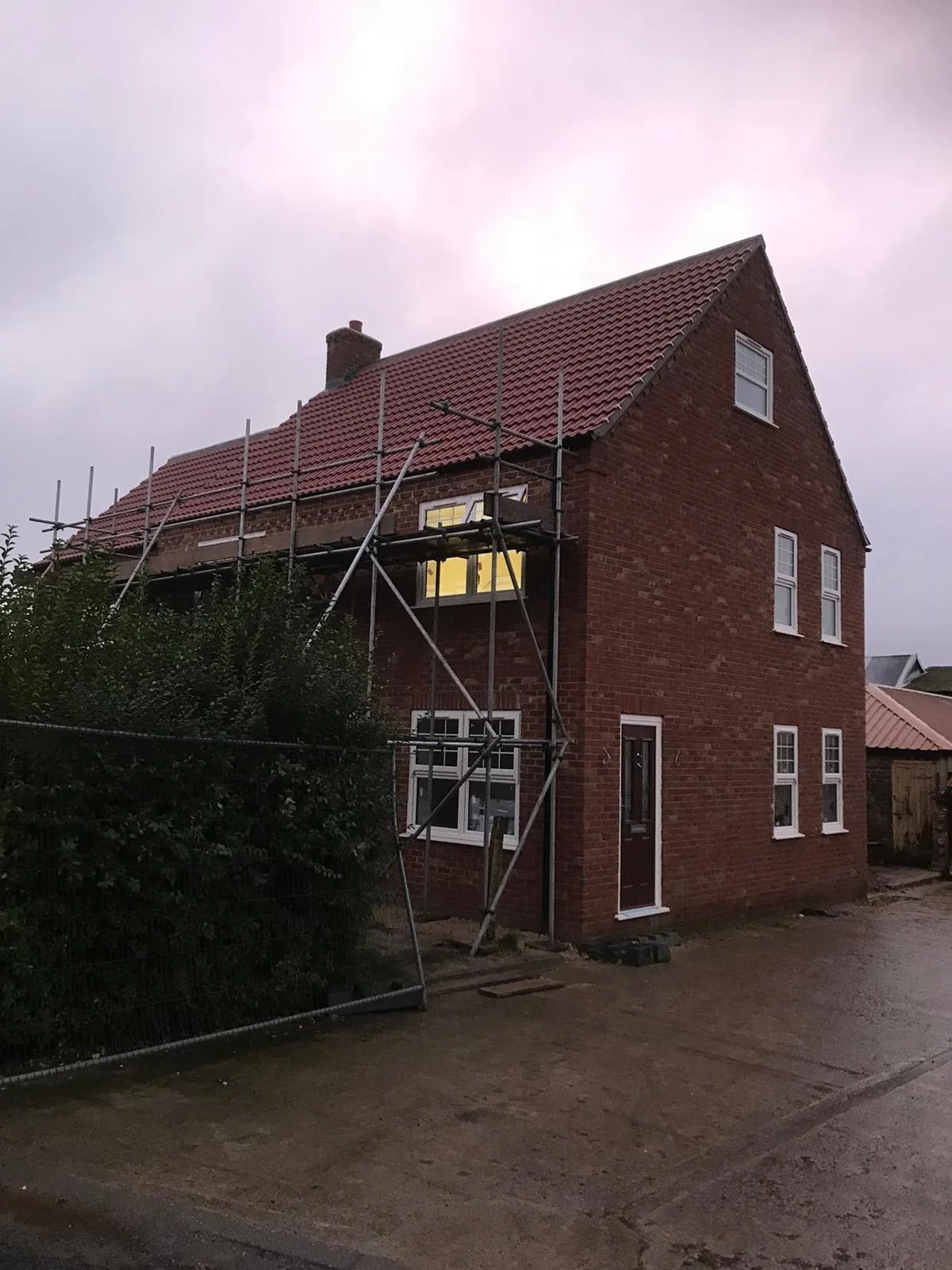
- **Slate choice*— Welsh, Spanish or reclaimed slate each carry a very different price per square metre
- **Roof size and pitch*— a steeper, cut-up roof with hips and valleys takes more labour
- **Access*— a straightforward two-storey roof scaffolds for less than one boxed in by extensions
- **Battens and felt*— a strip and re-slate almost always means new battens and a breathable underlay
- **Timber condition*— rotten rafters or purlins found under the slates add cost before the new roof goes on
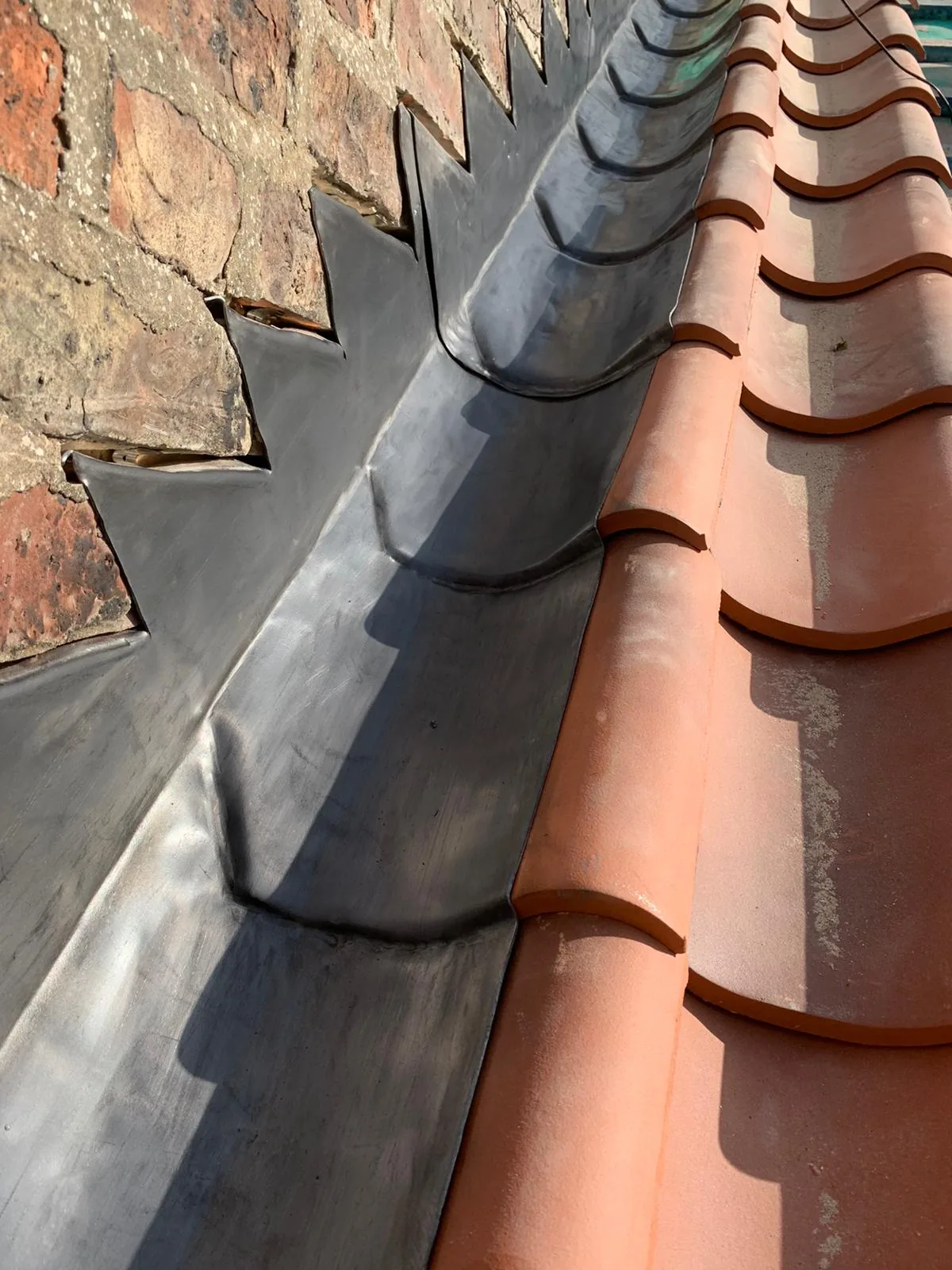
- **Lead and detailing*— new lead to chimneys, valleys and abutments is priced as part of a full re-slate
These are general market ranges, not a quote for your roof. Two roofs the same size can price very differently once slate type, access and timber condition come into it. The only way to a firm figure is a proper survey, which is exactly what our free drone survey gives you, followed by a clear written price with nothing added later. A fixed price needs a survey.
Heritage, Listed and Conservation Slate Work Done the Right Way
Older homes ask more of a roofer, and slate is where that shows most. On a listed building or in a conservation area, the covering is not a free choice. The planners often want natural slate put back like for like, matched in type, size and thickness to what came off. Get that wrong and you can be told to take it down and start again.
Market Harborough and its villages hold a lot of protected stock, from the terraces near the town centre to the old cottages by the medieval bridge at Medbourne. We check the listing and conservation status before we quote, so there are no surprises once the scaffold is up. Where consent is needed, we help you set out what is going back on and why.
Old slate roofs also reward a light touch. Sound slates are worth saving, valleys are best kept in lead rather than modern shortcuts, and the ventilation has to suit a building that was never sealed up tight. For an independent read on all of this, the SPAB on slate roofing guidance is a sound place to start before you commit to any work.
Reclaimed Slate and a Match You Won't Spot from the Street
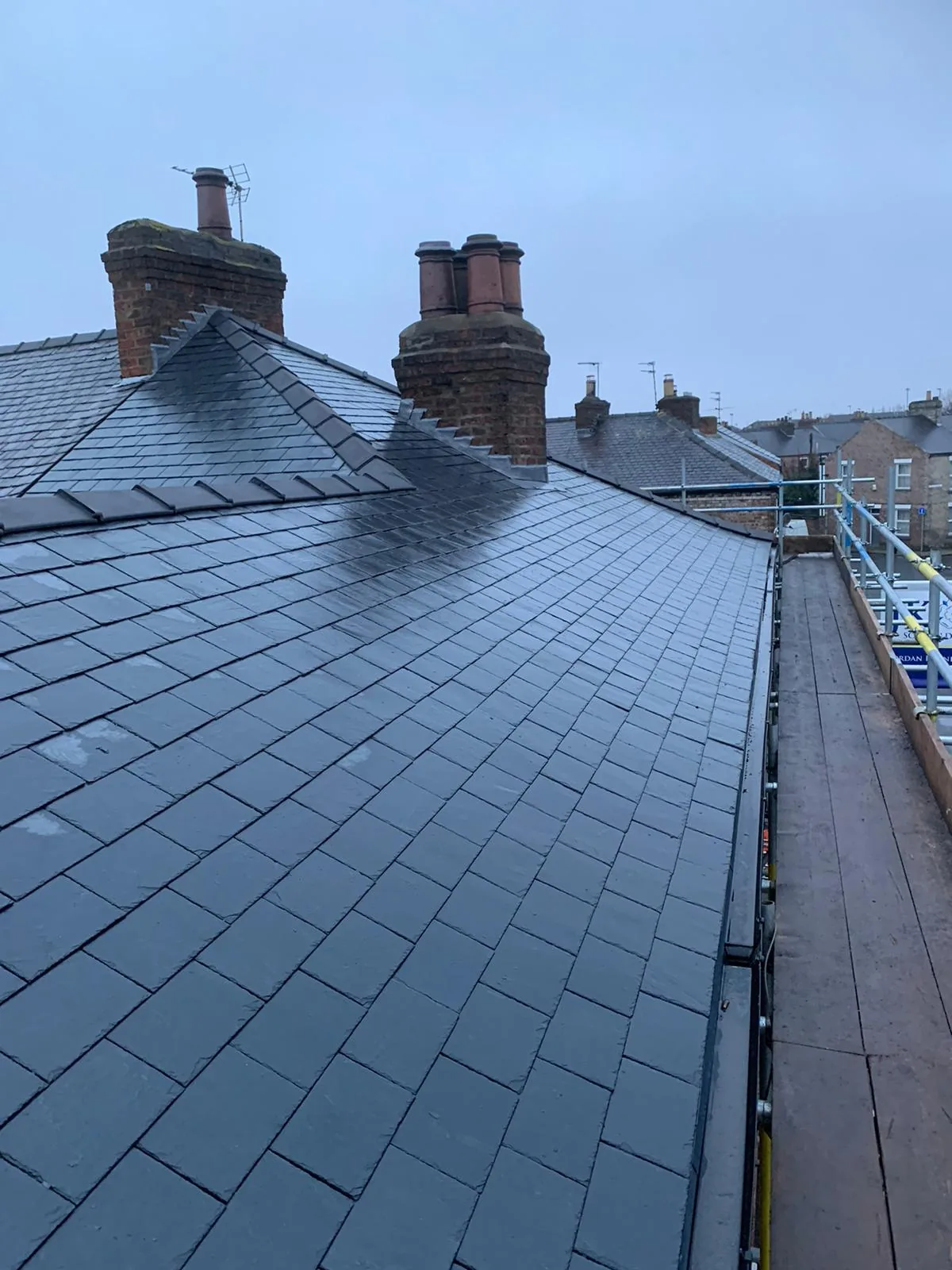
On a period home, brand-new slate next to old can stand out for years before it weathers in. Reclaimed and salvaged slate solves that. Where the existing slates come off sound, we sort and re-lay them, topping up with matched reclaimed stock to make the numbers work. The finished roof reads as one age, not a patchwork.
Reclaimed slate takes more sorting and more care to lay, so it is not always the cheapest route by the metre. What it buys you is a roof that suits the house and keeps its character, which matters on the older properties around Husbands Bosworth and Kibworth Beauchamp. We are straight with you about how many of your own slates are worth saving. Reusing good slate also cuts waste, which most owners like.
What Happens on a Re-slate, Step by Step
A full re-slate follows the same order on every job:
- Scaffold set and the old slates stripped down carefully
- Sound slates sorted and set aside for reuse
- Battens and old felt removed, timber checked and any rot cut out
- New breathable underlay and treated battens fixed across the roof
- Slates laid from the eaves up, nailed and gauged to a clean line
- New lead fitted to valleys, chimneys and abutments
- Ridge and hips bedded, site cleared and the finished roof checked
A typical house re-slate takes several days to a couple of weeks, depending on size, pitch and weather. Heritage work with hand-sorting and lead detailing runs longer, and we say so upfront rather than rushing it. You will know who is turning up and roughly how long they will be on your roof.
Why Market Harborough Homeowners Choose Tate & Sons
You are not just buying slate — you are buying whoever lays it. Founder Michael Tate started his apprenticeship at sixteen and has more than thirty years on the tools, with a particular eye for heritage slate and the lead work that older properties need. He surveys the jobs himself and works to one simple rule: fix the cause, not just the symptom. He will not patch a roof to look right for a season and slip again the next.
Ryan Tate runs the site work and keeps each job moving on the ground. Between the team we carry over 45 years of combined experience, hold NVQ Level 2 and 3 qualifications in Roofing Occupations, and keep CSCS cards and NFRC trade-body membership. That mix matters most on slate, where a botched valley or the wrong nail shows up years later. You can read more about the people behind the work on our About Tate & Sons Roofing page.
Areas We Serve Across Market Harborough and the Welland Valley
We fit, re-slate and repair slate roofs across Market Harborough and the surrounding villages. If your area is not on the list below, call us anyway — if you are nearby, there is a strong chance we cover you.
- Market Harborough (LE16)
- Great Bowden (LE16 7)
- Little Bowden (LE16 8)
- Lubenham (LE16 9)
- Foxton (LE16 7)
- Medbourne (LE16 8)
- Kibworth Beauchamp (LE8)
- Great Glen (LE8 9)
- Fleckney (LE8 8)
- Husbands Bosworth (LE17 6)
- Desborough (NN14 2)
Got Questions?
Your Slate Roof Questions, Answered Properly
How long does a slate roof last?
A natural slate roof commonly lasts 80 to 150 years when it is laid and maintained well. Welsh slate sits at the top of that range and can pass a hundred years without trouble. Spanish and other imported slate still give you 50 to 80 years of service. In most cases the nails and battens wear out before the slate does, which is why a re-slate can reuse a lot of the old stone. Fibre-cement slate is different, and usually lasts 30 to 60 years.
Is natural slate or fibre-cement slate better?
For lifespan and looks, natural slate wins; for upfront cost and weight, fibre-cement has its place. Natural slate keeps its colour and texture because they run right through the stone, and it lasts far longer. Fibre-cement leans on a surface coating that fades and wears over the years. On a modern home with a tighter budget, fibre-cement is a fair choice. On a period or listed property, natural slate is usually the right one, and often the only one the planners will pass.
How much does it cost to re-slate a roof?
A full natural slate re-roof on a typical three-bed semi usually lands around £8,000 to £14,000 including VAT. Fitted slate runs roughly £100 to £160 per square metre for natural stone, with fibre-cement lower. The final figure depends on the slate you choose, the roof size and pitch, access, and the state of the timber underneath. Reclaimed slate and heavy lead detailing push the price up. A free drone survey gives you an exact written price rather than a rough phone estimate.
Can you reuse the old slates?
Often, yes — sound natural slate is worth saving and re-laying. On many old roofs the slate still has decades of life while the nails and battens have failed, so we strip carefully, sort the good from the broken, and reuse what stands up. We top up with matched reclaimed slate to make the numbers work. This keeps the roof looking right for the age of the house and cuts waste. We tell you honestly how many of your slates are fit to go back on.
Is slate better than tile?
It depends on the house, but slate usually lasts longer and suits a period property better. A natural slate roof can stand for a century, while clay or concrete tile tends to last 50 to 60 years. Over the full life of the roof, slate often works out well against tile once you count the replacements. Tile still makes sense on a home built with tile from the start, or where budget is the deciding factor. We help you weigh both against your own roof.
Do I need permission to re-slate a listed or period house?
On a listed building, yes — listed building consent is usually needed before you change the roof. In a conservation area the planners often expect natural slate put back like for like, matched to what came off. Get this wrong and you can be ordered to take the work down. Many period homes outside those protections need no consent for a like-for-like re-slate. We check the status before we quote, so you know where you stand before any scaffold goes up.
Why are my slates slipping?
Slipping slates almost always mean the fixings have failed, not the slates. On old roofs the iron or steel nails rust through, and the battens rot, so sound slates lose their grip and slide. This is called nail sickness, and it is common on the Victorian roofs around Market Harborough. A few slips can be re-fixed, but widespread slipping across the whole roof points to a re-slate. A survey tells you which stage yours is at.
Can you just repair a few slates instead of the whole roof?
Yes — where the roof is otherwise sound, we re-fix or replace the odd slipped or broken slate. We match new slates to the existing colour and size so the repair does not stand out. This is the right call when the fixings across the rest of the roof are still holding. Once slipping shows up all over, though, patching one area just moves the next failure along, and a re-slate becomes the better value. We give you the honest call after the survey.
Book Your Free Drone Roof Survey Today
See exactly what your slate roof needs before any work starts. No ladders, no pressure — just a clear picture from a local Market Harborough team.
Every wet season a tired slate roof holds out, rusted nails work looser and water edges closer to the timber. A quick, free survey today tells you exactly where you stand — and often the fix is smaller and cheaper than you feared. Book now, get an honest quote, and protect your home before the next downpour finds the gap.
ð 5 Hood Close, Market Harborough, LE16 9XS
ð 01858 457600
Call the Market Harborough team today on 01858 457600, or request your free drone survey online. We're already working across your area.
Book Your Free Drone Roof Survey
See exactly where your roof stands, with no obligation and no pressure. Call our Market Harborough team or request your free drone survey today.
Get in Touch
Tate & Sons Roofing — Market Harborough Office
5 Hood Close, Market Harborough, LE16 9XS
📞 01858 457600
✉️ [email protected]