
🏠 Trusted Local Roofers
Slate Roofs in Hinckley
A well-laid slate roof in Hinckley can outlive the person who fitted it and the person who bought the house. Natural slate has covered homes across this part of Leicestershire for well over a century, from terraces near the town centre to stone-built cottages out past Market Bosworth. Fitted correctly, on sound timbers with the right fixings, a slate roof is one of the few home purchases that genuinely pays for itself twice over.
This page covers how to tell a slate roof is failing, when a repair is enough and when a full reslate makes more sense, which type of slate suits your property, what conservation rules apply on older streets, and real cost figures for Hinckley. Slate work sits alongside everything else we do as a roofing contractor across Hinckley, so whatever stage your roof is at, you are talking to the people who will actually be on the ladder.
- Fully Insured
- 10-Year Guarantee
- 5-Star Rated
Quick Free Estimate - No Obligation
We're not just roofers – we're your neighbours.
Fully Insured • Response within 15 mins
🔒 Your details are safe with us. No spam, ever.
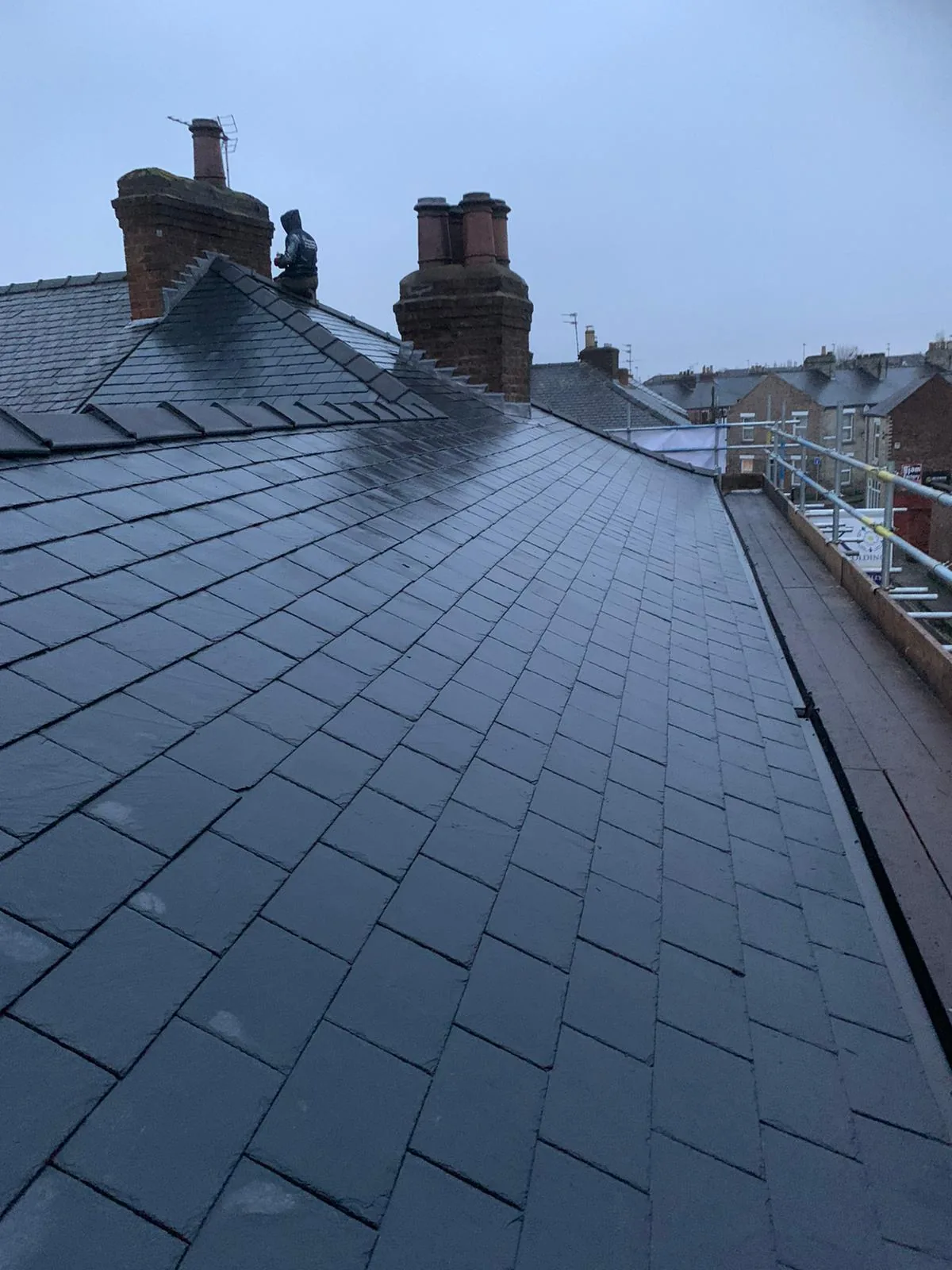
Spot the Signs Your Slate Roof Is Failing Before It Costs You More
Slate itself rarely wears out. It is almost always the fixings and the timber underneath that give up first, long before the stone does. Knowing what to look for from the ground saves you a much bigger bill later.
Watch for these warning signs on a Hinckley slate roof:
Nail sickness is the single biggest cause of slate roof failure in the UK. The old iron or copper nails holding each slate corrode over decades, and once a fixing lets go, the slate slides or drops. A roof can look sound from the pavement while dozens of slates are one storm away from coming loose. A free drone survey catches this early, with real footage of every slope, ridge and valley.
- Slates that have slipped out of line or gone missing after wind
- A build-up of slates in the gutter, often shattered fragments rather than whole pieces
- Rusty streaks running down from a fixing nail — an early sign of nail sickness
- Daylight showing through the roof timbers from inside the loft
- A soft, spongy feel underfoot on any felt or membrane visible in the loft
- Sagging along the ridge line, seen clearly from the street
- Damp patches on ceilings that grow after every heavy spell of rain
Repair, Reslate, or Replace — Getting the Slate Roof Call Right
A handful of slipped or cracked slates on an otherwise sound roof is a repair, not a reason to reslate. Individual slates can be lifted, refixed with a lead clip or copper tingle, and matched closely enough that nobody notices from the street. Our slate roof repair service handles exactly this kind of targeted work across Hinckley.
The calculation changes once damage spreads. As a rule of thumb, once around a fifth of a roof's slates have needed replacing, a full re-slate usually costs less than years of repeated patching. Reclaimed slate to match an old roof also gets harder to source every year, so waiting rarely helps.
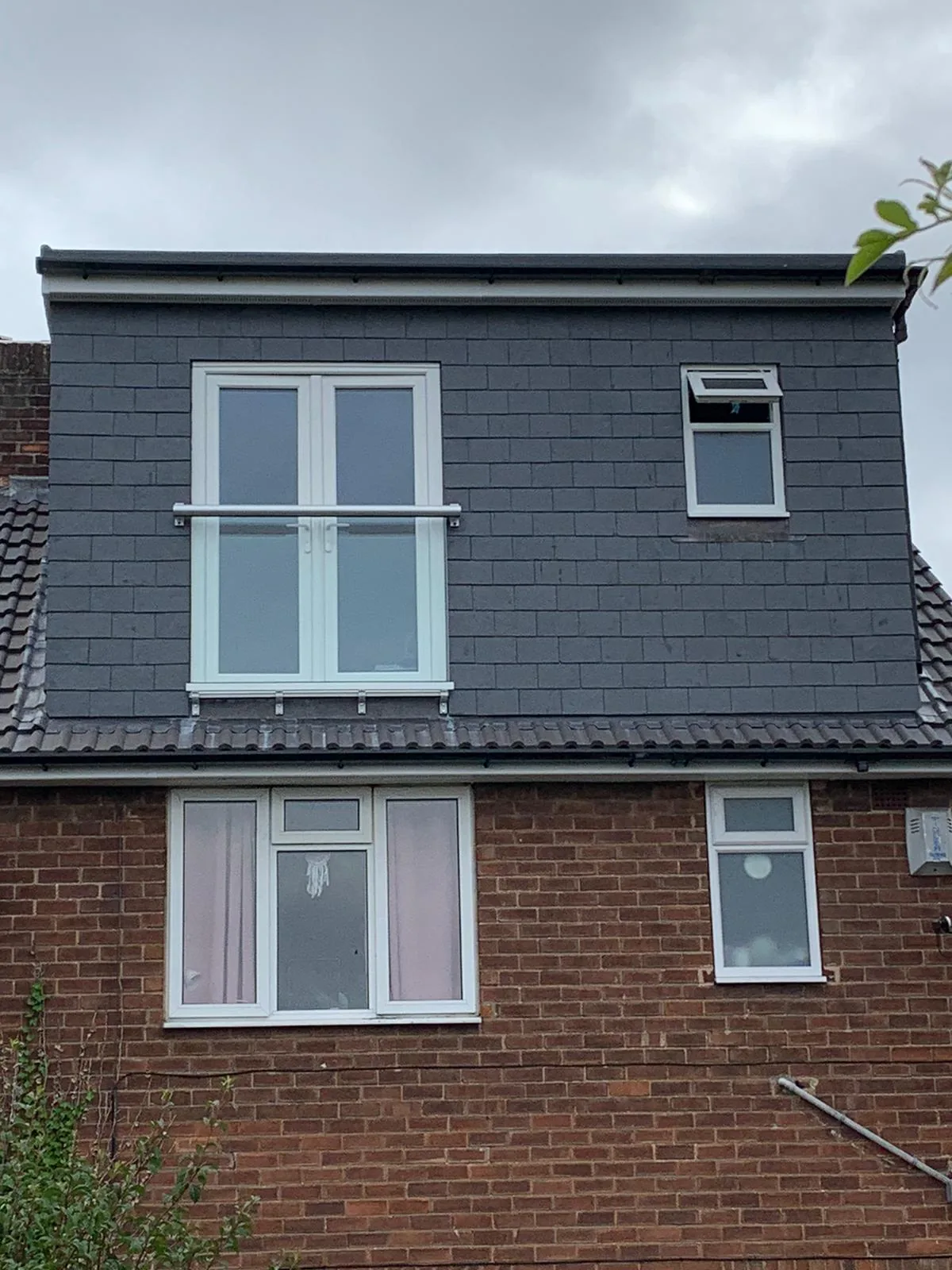
We see this most on older stone and brick cottages around Dadlington and Sutton Cheney, patched for twenty years without anyone checking the battens or nails underneath. A free drone survey settles the question properly, showing how much of the roof is still sound before any decision gets made.
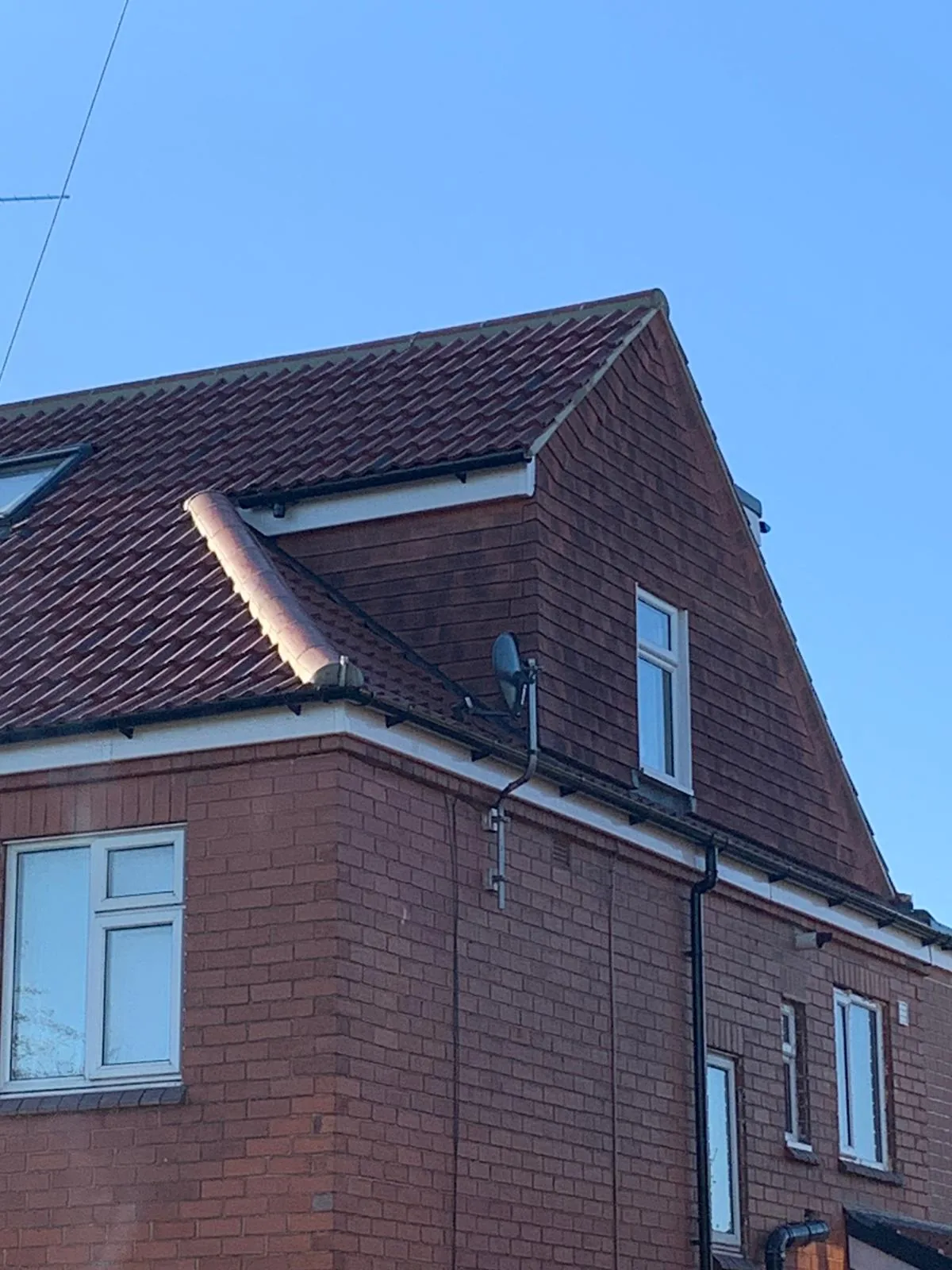
Welsh, Spanish, Westmorland or Fibre Cement — Choosing the Right Slate for Your Home
Not all slate is the same, and the type fitted on a Hinckley roof changes both the look and the price considerably. Welsh slate is the premium choice, prized for its blue-grey colour and very low water absorption, which keeps frost damage away for a century or more. Spanish slate makes up most of the natural slate fitted in the UK today, offering a dark, consistent finish at a lower price than Welsh stone while still lasting 75 to 100 years. Westmorland slate, with its distinctive green-grey tone, is harder still and often used on the most prestigious heritage projects.
Fibre-cement slate is the budget alternative, manufactured to mimic natural slate at a fraction of the weight and cost, though it will not last anywhere near as long. It suits a straightforward re-roof where the slate look matters more than a hundred-year lifespan.
| :-: | :-: | :-: | :-: |
| Slate type | Typical cost (per m², installed) | Typical lifespan | Best for |
| Natural slate (Welsh, Spanish, Westmorland) | £80–£220 | 75–100+ years, top-grade Welsh and Westmorland can exceed 150 | Period, listed and conservation area properties |
| Fibre-cement slate | £45–£85 | 30–40 years | Budget re-roofs wanting a slate look |
| Synthetic / composite slate | £55–£95 | 30–50 years | Lightweight retrofits and roofs that cannot take natural slate's weight |
Daniel Whitmore, our project manager, specialises in exactly this kind of decision. He handles the heritage tile and slate detailing on the area's older properties day to day, and he will tell you plainly which slate suits your roof rather than steering you toward whichever material happens to be sitting in the yard.
Conservation Areas, Listed Buildings and What You Actually Need Before Reslating
Most straightforward, like-for-like slate repairs do not need planning permission. The rules tighten considerably once a property sits within a conservation area or carries listed status, which covers a meaningful share of the older homes around Hinckley and the surrounding villages.
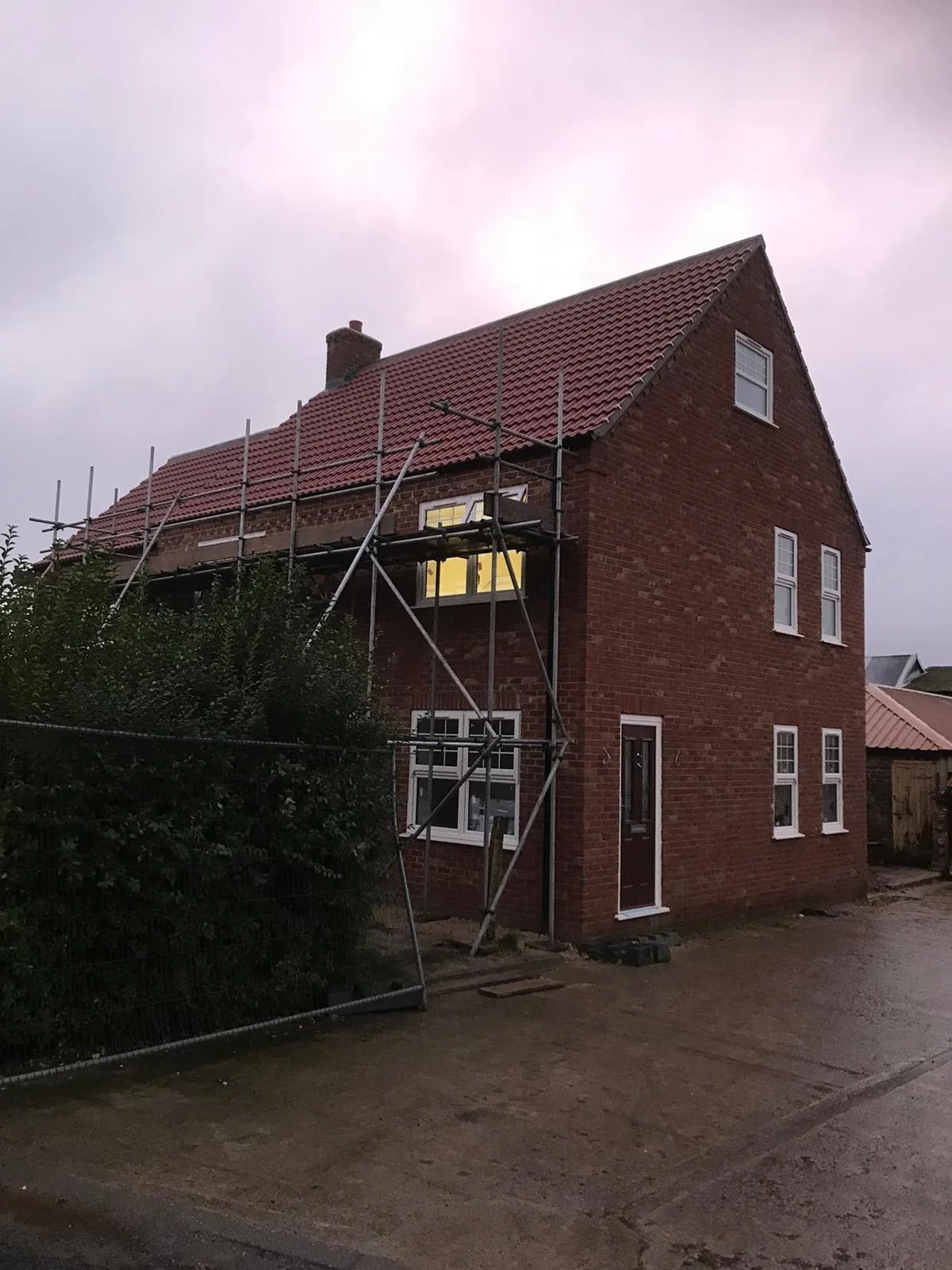
Stoke Golding, a picturesque and sought-after village close to Crown Hill — the spot where Henry Tudor was crowned after the 1485 Battle of Bosworth — sits within a conservation area where visible roofing changes get closer scrutiny from the local planning authority. Market Bosworth, an affluent and historic market town near the Bosworth battlefield itself, carries a similar concentration of listed and character buildings. On a listed building, replacing natural slate with a synthetic or fibre-cement alternative on a front-facing slope almost always needs listed building consent first, and carrying out that work without it is a criminal offence, not just a paperwork slip.
For technical guidance on matching new slate to old and keeping a period roof's character intact, the Society for the Protection of Ancient Buildings' guide to true slate roofing is worth reading before any heritage re-slate is agreed. Where a property needs that level of care, our heritage and listed building roofing service covers the consent process alongside the physical work, so the job does not stall halfway through. We check a property's status before we ever quote, whether it sits in Hinckley itself or out toward the rural hamlets around Sutton Cheney.
What a Professional Slate Roof Installation Looks Like, Start to Finish
A full re slate follows a set sequence on every job we take on around Hinckley:
- Scaffold erected and the site made safe
- Old slates carefully stripped, with sound ones set aside to reuse or sell on
- Battens, felt and roof timbers checked, with any rot replaced
- New breathable membrane and battens fitted to current standards
- Slates fixed from the eaves upward, each one nailed and lapped correctly
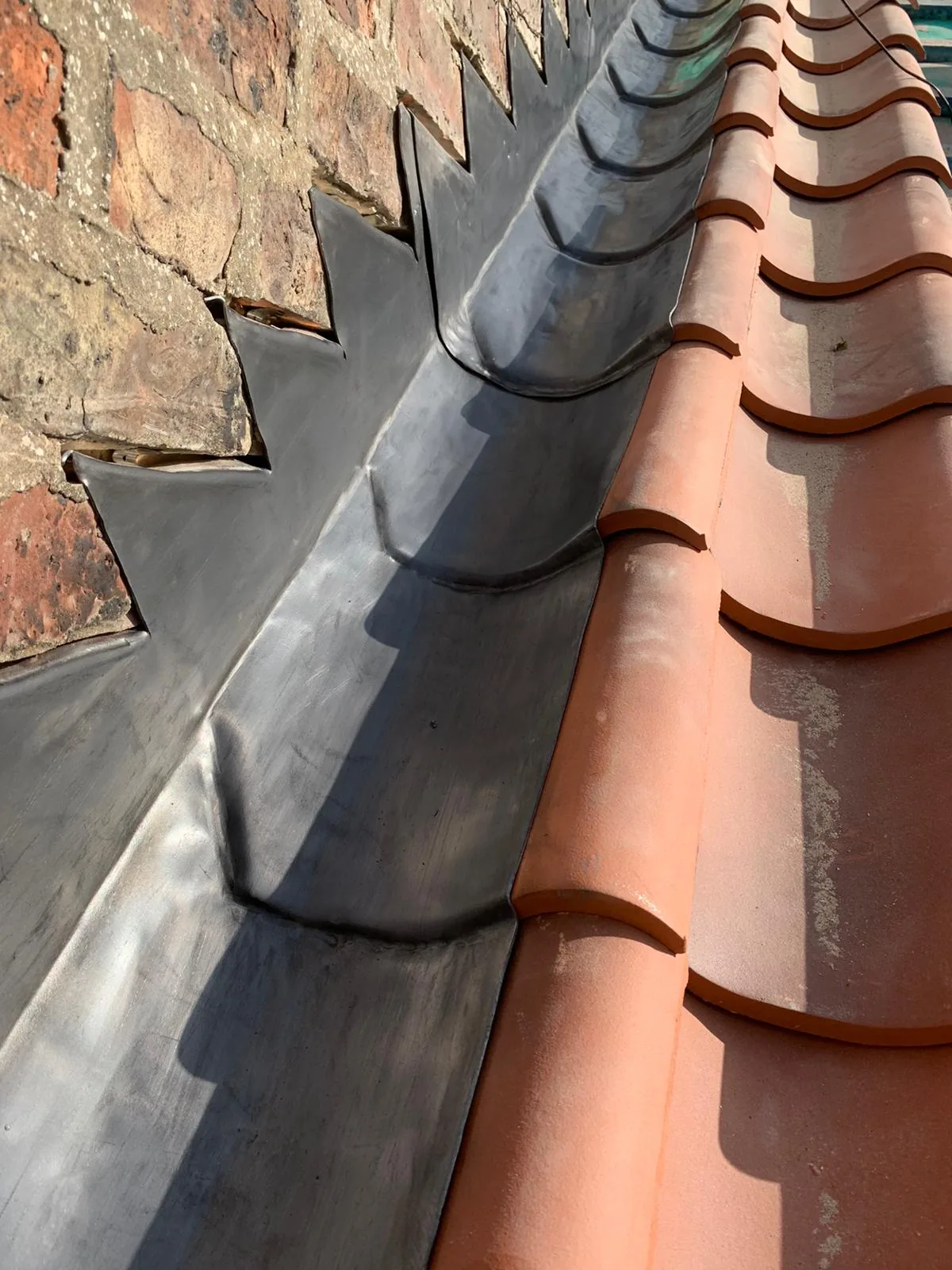
- Ridge, hips and valleys leaded and detailed to shed water cleanly
- Site cleared and the finished roof checked before we leave
A typical semi-detached slate reslate takes around 6 to 10 working days, running longer than a concrete or clay tile job because slate needs slower, more careful handling. A larger or hipped roof near Market Bosworth can run to two weeks or more once leadwork and heritage detailing are factored in. Weather has the final say, and we build a realistic allowance into the schedule rather than a date designed to win the quote.
What a Slate Roof Really Costs in Hinckley
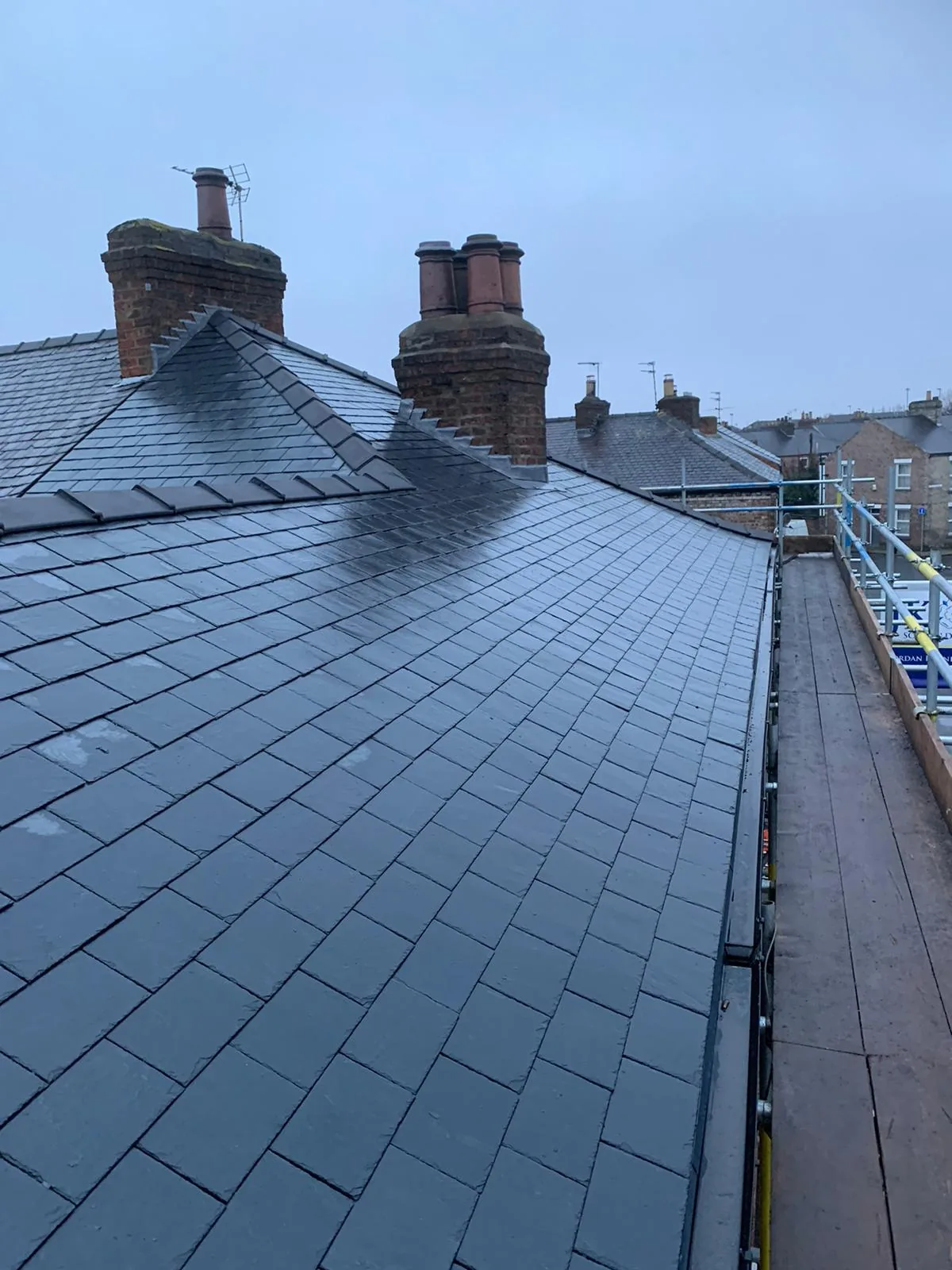
Natural slate typically costs £80 to £220 per square metre installed, depending on grade, with premium Welsh and Westmorland slate sitting at the top of that range and mid-range Spanish slate nearer the middle. Fibre-cement and synthetic alternatives generally run £45 to £95 per square metre. On a standard semi-detached roof, that translates to a full natural slate reslate of roughly £9,000 to £16,000, while a larger or more complex hip roof on a period property can reach £20,000 to £30,000 or more. A fibre-cement re slate on the same roof shape typically costs £5,000 to £9,000.
What pushes a slate roof price up or down:
- **Slate grade*— Welsh and Westmorland cost more than Spanish, which costs more than fibre-cement
- **Roof complexity*— hips, valleys and dormers all add labour and leadwork
- **Access*— a detached roof scaffolds more cheaply than one boxed in by neighbouring buildings
- **Timber condition*— rotten battens or rafters typically add £600 to £2,000 before new slate goes on
- **Heritage matching*— sourcing reclaimed or quarry-matched slate for a listed building adds cost and lead time
- **Salvage value*— sound stripped slate can offset part of the bill on some jobs
These are general market ranges rather than a quote for your roof, since two similar-looking properties can price very differently once slope, access and timber condition are checked properly. A fixed price needs a survey, which is exactly what our free drone survey gives you before anything is agreed.
Keep a Slate Roof Performing for a Century
A slate roof rewards a little regular attention with decades of extra life. None of the following needs a specialist visit, just a habit of checking.
- Clear gutters and valleys of slate fragments and moss each autumn
- Check the loft after storms for daylight or fresh damp patches
- Watch for rust streaks around fixing nails, an early nail sickness warning
- Keep flashings around chimneys and abutments free of moss and debris
- Book a free drone survey every few years, or straight after a major storm
Catching a handful of slipped slates early, before water reaches the battens, is always cheaper than the full re slate that follows years of neglect. Homes along the exposed ridge near Higham on the Hill, close to the A5, take a harder battering from wind-driven rain than a sheltered street in Hinckley town centre, so those roofs are worth checking a little more often.
Why Hinckley Homeowners Trust Tate & Sons With Their Slate
Slate work is not forgiving of guesswork. Get the lap wrong, the nail wrong, or the leadwork wrong on a valley, and the roof leaks within a few winters even though it looks perfect from the ground. Daniel Whitmore, our project manager and lead roofer, specialises in full re-roofs, leadwork and heritage tile and slate detailing on the area's older properties, and he is on site running the work, not just quoting it from an office.
Founder James Tate started out on the tools more than 20 years ago and still quotes the majority of jobs personally, so the person pricing your slate roof is the one who understands exactly what it will take to get right. Between us we bring 40 years of combined team experience, hold NVQ Level 2 and 3 qualifications in Roofing, and carry CSCS cards. Sophie Bennett, our office manager, keeps quotes, scheduling and aftercare moving smoothly from your first phone call through to the finished roof. Read more about the people behind the work on our About Tate & Sons Roofing page.
Areas We Serve Across Hinckley and Bosworth Country
We fit and repair slate roofs across Hinckley and the surrounding borough, including the villages near the Ashby Canal and the old Bosworth battlefield. If your area is not listed below, call us anyway — there is a strong chance we already cover you.
- Hinckley (LE10)
- Burbage (LE10)
- Barwell (LE9)
- Earl Shilton (LE9)
- Sapcote (LE9)
- Sharnford (LE10)
- Wolvey (LE10)
- Higham on the Hill (CV13)
- Sutton Cheney (CV13)
- Stoke Golding (CV13)
- Market Bosworth (CV13)
- Nuneaton (CV10 / CV11)
- Bedworth (CV12)
Got Questions?
Your Slate Roof Questions, Answered Properly
How long does a slate roof actually last?
A well-fitted natural slate roof typically lasts 75 to 100 years, with top-grade Welsh or Westmorland slate often exceeding 150 years on a well-maintained property. It is almost always the fixing nails and supporting timber that fail first, not the slate itself. Fibre-cement and synthetic alternatives last considerably less, usually 30 to 50 years. Regular checks of gutters, flashings and loft spaces add years to whichever type you have.
How much does a slate roof cost in Hinckley?
A full natural slate re slate on a standard semi-detached roof typically costs £9,000 to £16,000, rising to £20,000 to £30,000 or more on larger or complex period roofs. Fibre-cement and synthetic alternatives usually run £5,000 to £9,000 for a comparable roof shape. Slate grade, roof complexity, access and timber condition all affect the final figure. A free drone survey gives you a fixed written price rather than a phone estimate.
What's the difference between Welsh, Spanish and Westmorland slate?
Welsh slate has a blue-grey tone and very low water absorption, giving it a lifespan that can pass 150 years on the right roof. Spanish slate is darker and more consistent in colour, costs less than Welsh, and typically lasts 75 to 100 years, making it the most common natural slate fitted in the UK today. Westmorland slate has a distinctive green-grey colour and is extremely hard-wearing, often reserved for heritage and listed building projects. All three outlast fibre-cement and synthetic slate by a wide margin.
Do I need to replace the whole roof, or can individual slipped slates be repaired?
A small number of slipped or cracked slates on an otherwise sound roof is usually a straightforward repair, not a full reslate. Once around one-fifth of the slates have needed replacing, a full reslate typically becomes better value than continuing to patch. Reclaimed slate to match an older roof also gets harder to source over time, which pushes repair costs up the longer a roof is left. A free drone survey shows how much of the roof is still genuinely sound.
Is fibre-cement or synthetic slate a genuine alternative to natural slate?
It depends on the property and the budget. Fibre-cement and synthetic slate cost considerably less and weigh far less than natural slate, which can matter on a roof structure that cannot take extra weight. They only last 30 to 50 years compared with 75 to 100-plus for natural slate, and they are generally not accepted as a like-for-like replacement on listed buildings or in conservation areas. On an unlisted, straightforward re-roof, they are a reasonable budget option.
What is nail sickness, and how do I know if my roof has it?
Nail sickness is the corrosion of the old iron or copper nails that hold each slate in place, and it is the leading cause of slate roof failure in the UK. Rust streaks running down from a fixing point, or slates that have slipped without obvious damage to the slate itself, are the classic early signs. A roof can look sound from the ground while a significant number of fixings are close to giving way. Drone survey footage picks this up long before it becomes visible from the street.
Do I need listed building consent to re slate a period property near Stoke Golding or Market Bosworth?
Very likely, yes, if the property is listed or sits within one of the conservation areas covering both villages. Listed building consent is generally required before changing a roof's covering, shape or pitch, and carrying out the work without it is a criminal offence. Even a like-for-like repair on the front-facing slope can need approval if the council considers the roof a character-defining feature. We check a property's status before quoting, so consent is dealt with before scaffold goes up, not after.
Can reclaimed slate be used to match an existing roof?
Yes, and on a listed or older property it is often the preferred option, since colour and texture matter as much as material. Reclaimed slate is sourced from roofs being stripped elsewhere and checked for soundness before reuse, which keeps a repair visually consistent with the rest of the roof. Availability varies by slate type, and matching an unusual or older quarry's slate can take longer to source than ordering new stock. We factor this into the schedule on any heritage job from the outset.
Book Your Free Drone Slate Roof Survey Today
See exactly which slates are sound and which are one storm away from coming loose, without a single ladder against your wall. Every season a failing slate roof is left unchecked, corroding nails let more slates slip, and water reaches battens and rafters that are far more expensive to fix than the slate above them. A quick, free survey today tells you exactly where you stand, and the honest answer is often smaller than you feared.
Call the Hinckley team today on 01455 242595, or request your free drone survey online. We're already working across your area.
Book Your Free Drone Roof Survey
See exactly where your roof stands, with no obligation and no pressure. Call our Hinckley team or request your free drone survey today.
Get in Touch
Tate & Sons Roofing — Hinckley Office
10 Brosdale Drive, Hinckley, LE10 0SW
📞 01455 242595
✉️ [email protected]