
🏠 Trusted Local Roofers
Rubber Roof Repair Market Harborough
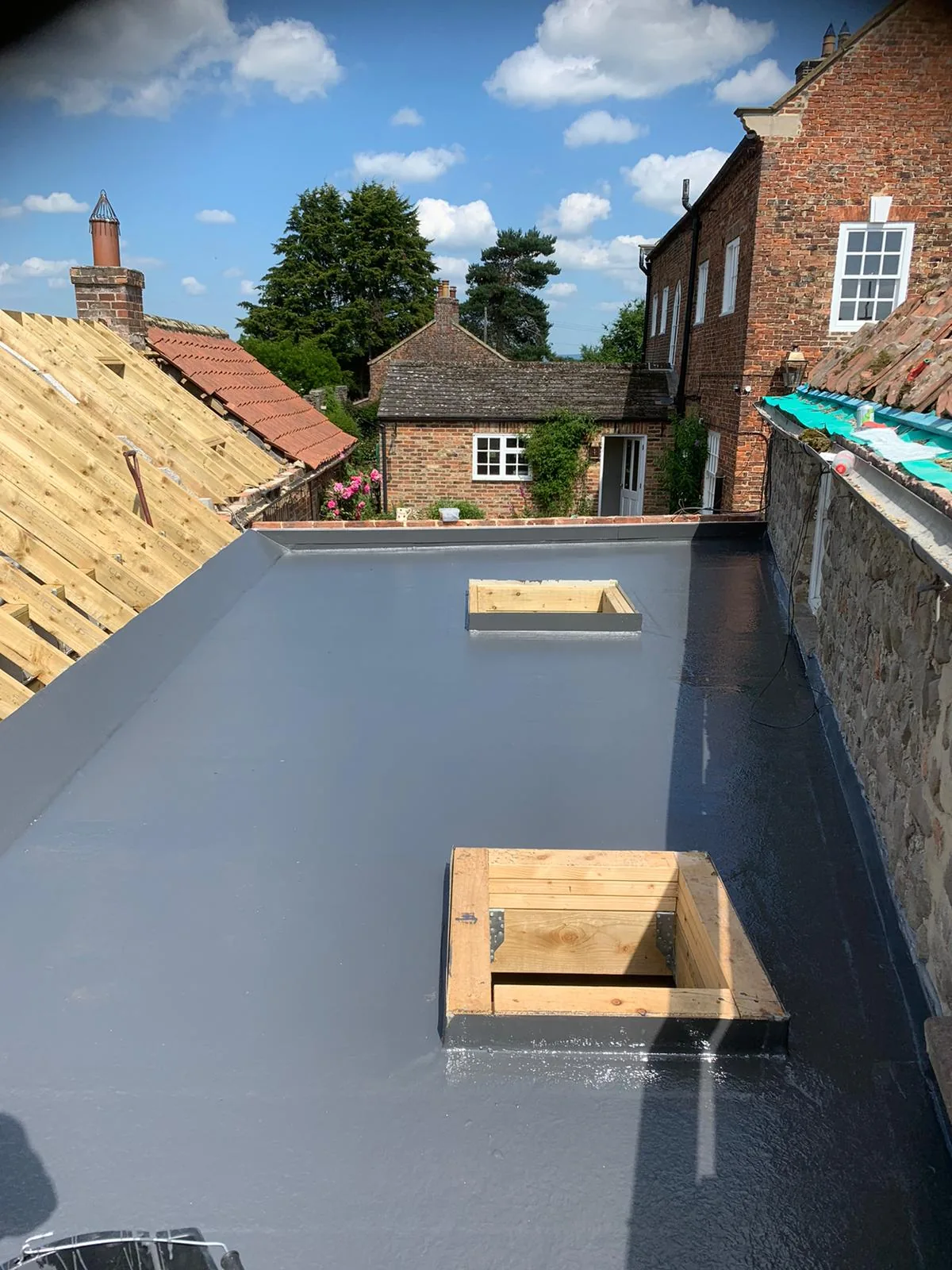
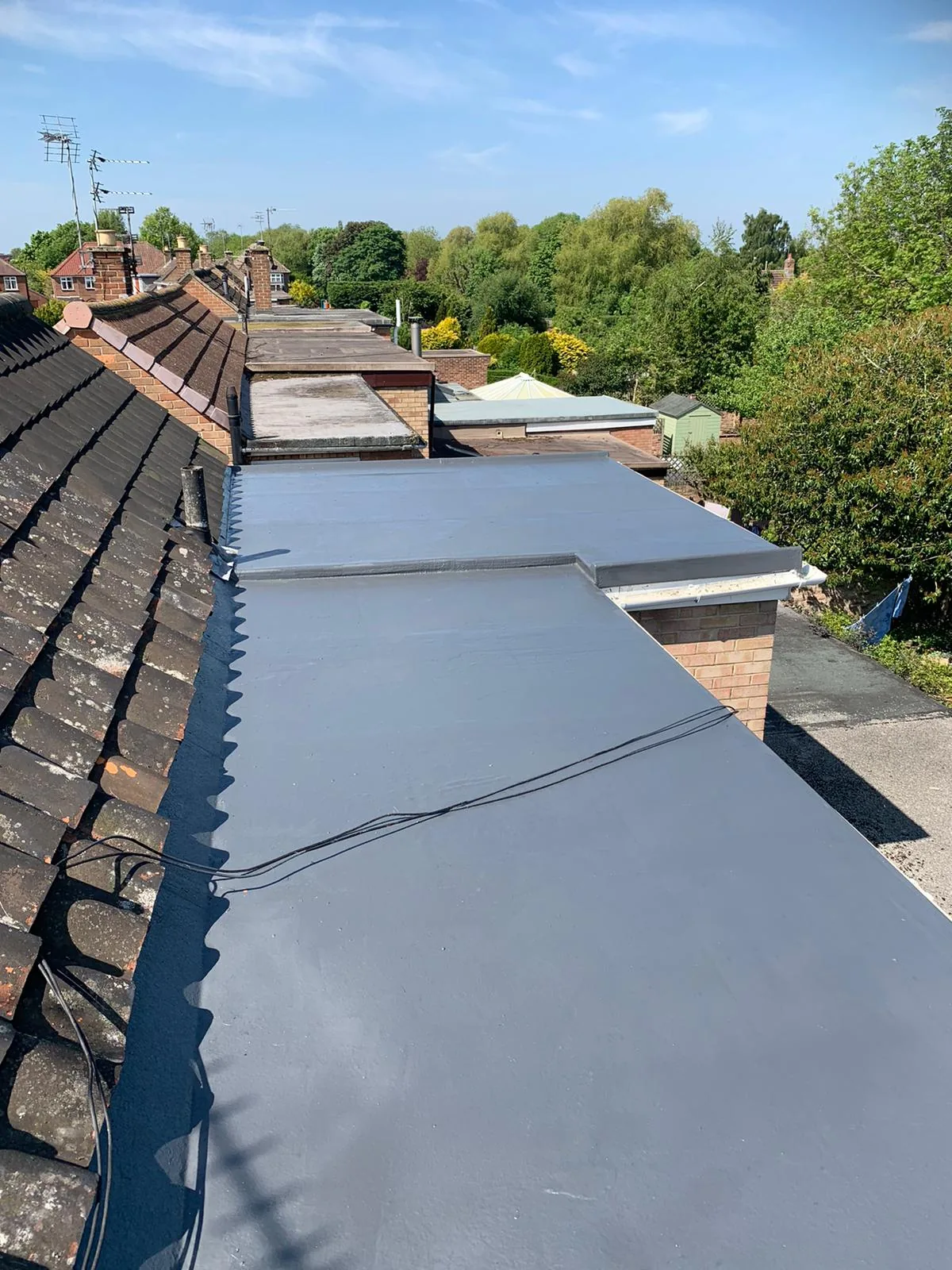
An EPDM rubber roof can last twenty or thirty years, but it rarely gets there without a repair or two along the way. A seam lets go, a boot leaves a puncture, or the membrane pulls at an edge as it ages. If you need rubber roof repair in Market Harborough, Tate & Sons Roofing fixes the fault and leaves the sound rubber alone. We repair EPDM roofs on garages, extensions and dormers right across the Welland Valley.
This page covers where rubber roofs leak first, how each fault is repaired, and what a repair really costs in 2025 and 2026. You will see the difference between repair tape and a proper bonded patch, and how to tell repair from re-cover. Start with a free drone survey and a written price before any work begins — no scaffold just to take a look, and no charge either way. Rubber roof repair is one part of the wider service we offer as a roofing contractor across Market Harborough.
- Fully Insured
- 10-Year Guarantee
- 5-Star Rated
Quick Free Estimate - No Obligation
We're not just roofers – we're your neighbours.
Fully Insured • Response within 15 mins
🔒 Your details are safe with us. No spam, ever.
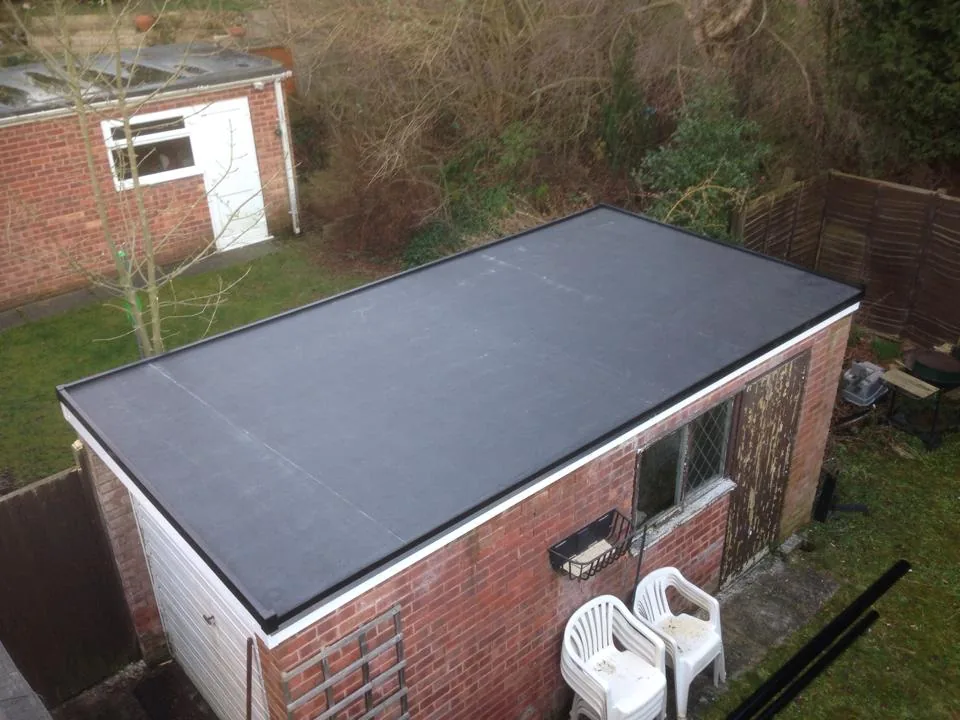
Where a Rubber Roof Leaks First — And What It Looks Like
A rubber roof almost never fails across the whole sheet. It fails at a joint, an edge or a detail — the spots where the membrane has to bond, bend or meet something else. Catch the fault early and a small repair sorts it, before the deck and ceiling get involved.
Watch for these:
- A seam lifting or opening where two sheets overlap
- A clean split or hole where a tool or branch has landed
- The membrane pulled tight and lifting at the edge trim
- Loose or peeling flashing where the roof meets a wall
- Damp or daylight around a rooflight or soil pipe upstand
- A ceiling stain below that spreads a little after rain
- Small blisters or bubbles where the bond has let go
Where the water shows inside is rarely where it gets in. Rubber roofs run water sideways under the membrane before it drips through a ceiling. That is why chasing a stain with a tube of sealant so often fails. A proper survey traces the fault back to the real entry point first. Guess wrong and you pay for a repair that never stops the drip.
Common EPDM Faults and What Each One Costs to Put Right
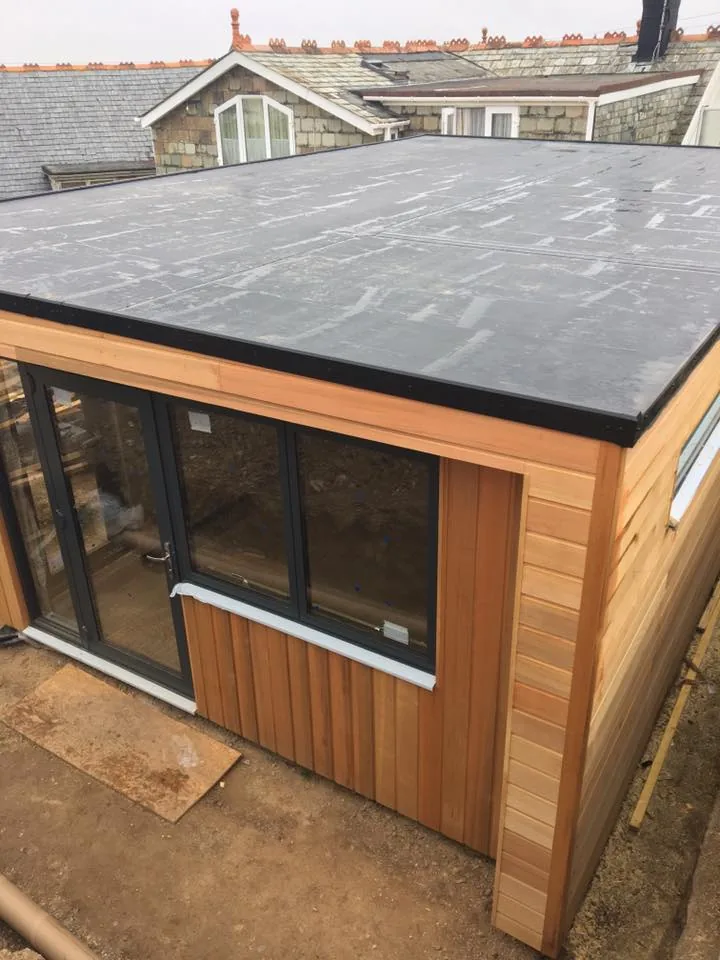
Four faults cover almost every leaking rubber roof we survey. Each has a clear cause and a repair to match. The table below sets out what tends to go wrong, a rough repair cost, and whether the fault is a repair or a sign the roof needs a re-cover.
These are general market ranges, not a quote for your roof. Access, the number of faults and the state of the deck all shift the figure. A roof with one clean puncture prices very differently from one with three tired seams. The only way to a firm price is a survey, which is exactly what our free drone survey gives you.
| :-: | :-: | :-: | :-: |
| Fault | Typical cause | Typical repair cost | Repair or re-cover? |
| Seam leak | Seam adhesive aged and let go under heat and cold cycles | £150–£450 | Repair — re-seam with primer and tape |
| Puncture or tear | Dropped tool, foot traffic, or a fallen branch | £150–£400 | Repair — bonded patch over the hole |
| Shrinkage at edges | Membrane contracts with age and pulls off the trim | £300–£800 | Repair if local; re-cover if widespread |
| Failed flashing or upstand | Bond broken down where the roof meets a wall or pipe | £200–£600 | Repair — re-dress and re-bond the detail |
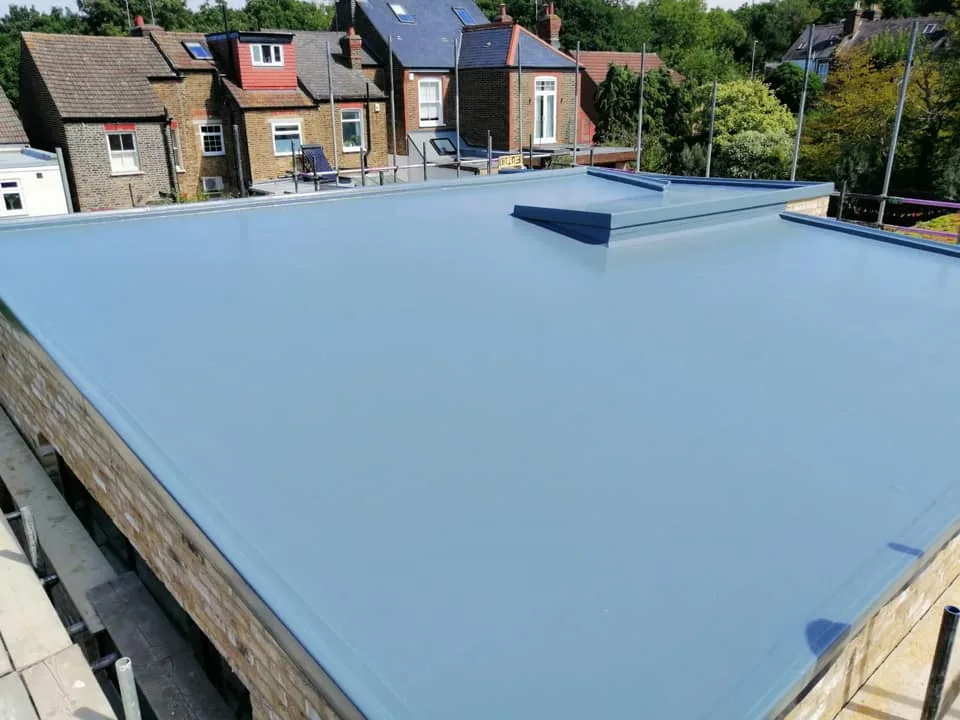
Patch or Re-cover? You Get a Straight Answer, Not the Biggest Invoice
One leaking seam does not mean the roof is finished. A single split, a lifted edge or a failed upstand is a repair, not a re-cover. The rubber around it can have years of life left. Swapping the whole roof for one local fault wastes your money.
The picture changes when faults start stacking up. Seams failing in more than one place, blisters across the sheet, or the same patch letting go twice all point to a roof past its best. At that stage a fresh membrane costs less than chasing leak after leak. If a re-cover is the honest answer, our EPDM rubber roofing page walks you through it.
We see the wrong call made often on older extensions around Lubenham and Foxton. A rubber roof gets a tube of mastic smeared over a seam every couple of years. The mastic cracks, the leak comes back, and nobody fixes the real cause. You end up paying for three bodged jobs instead of one proper repair. We check the whole roof by drone first, then tell you which route actually saves you money.
Repair Tape or a Bonded Patch — What Actually Holds
Repair tape has its place, but it is not a magic fix. Stick tape onto a dirty or aged rubber surface and it lifts within a season. EPDM builds up a fine carbon film as it ages, and any bond fails unless that film is cleaned off first.
A proper repair follows a set order every time. We clean the area back, prime the rubber, then bond a patch that overlaps the fault by a good margin on every side. The corners get rounded so nothing catches and peels. Done this way, the patch becomes part of the roof rather than a sticker sat on top of it.
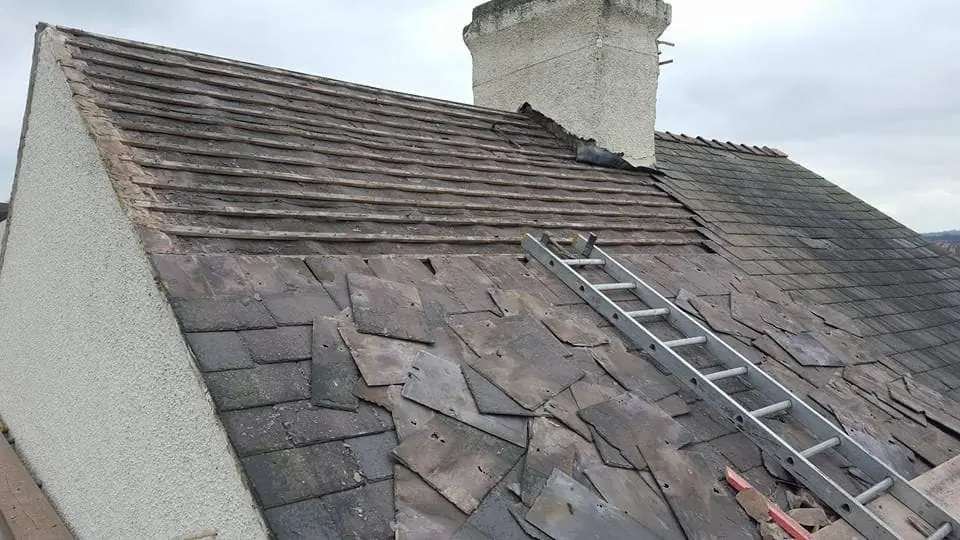
A shop-bought repair kit costs around £12 to £30 and can hold a small puncture for a while. The trouble is the prep, not the price. Most DIY patches we are called out to fail because the surface was never cleaned or primed right. A quick tape job over a wet or dirty seam buys days, not years. A bonded repair, done properly, lasts as long as the rubber around it.
Shrinkage — When the Rubber Pulls Away From the Edge
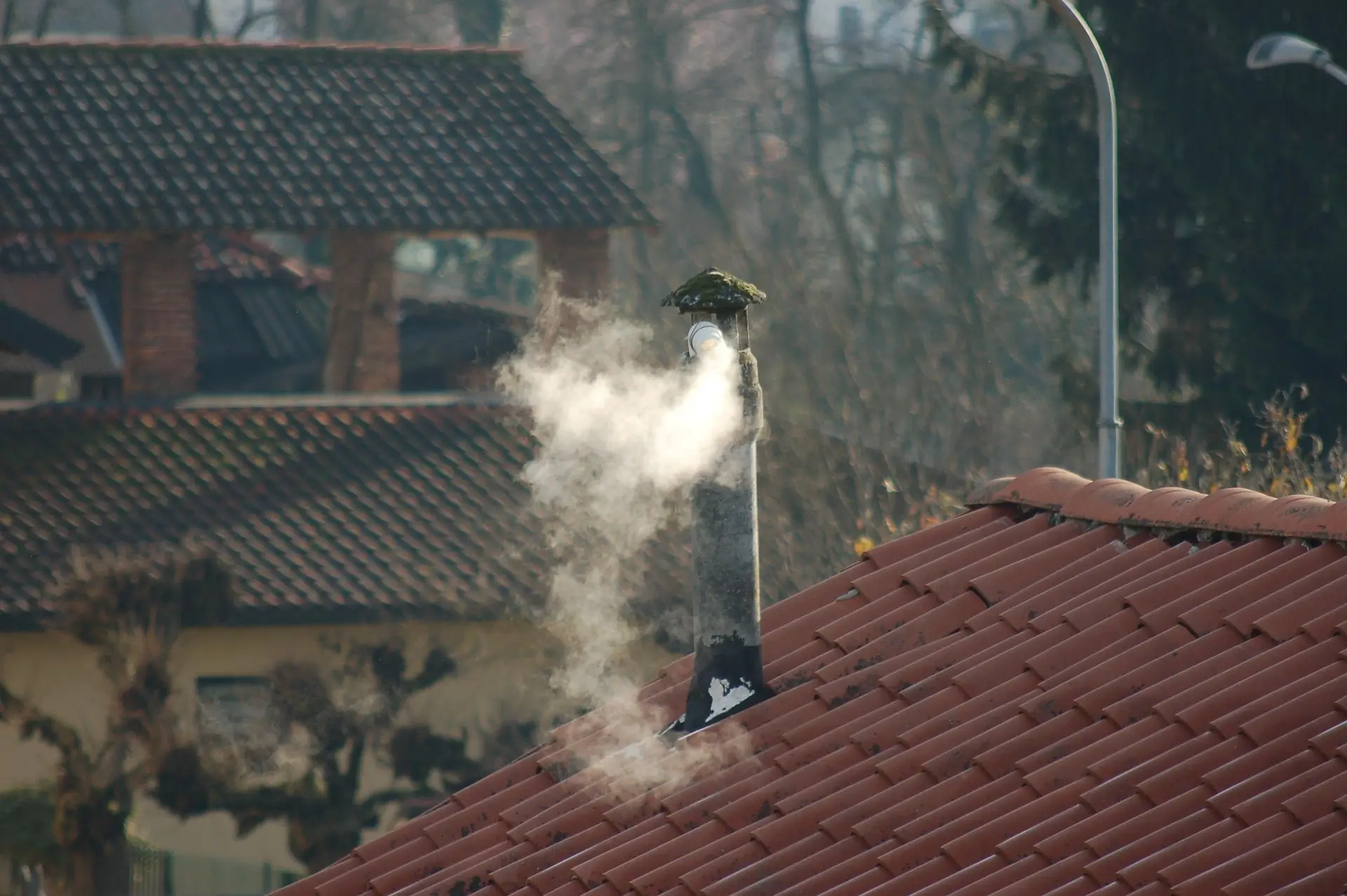
EPDM shrinks a little as it ages, often around three percent over its life. On a well-fitted roof you never notice. On a roof laid tight, or one that has had a long, hot spell, that pull shows up at the edges and upstands. The membrane lifts off the trim, or a seam is dragged open under the strain.
Where shrinkage is local, we can free the affected edge, re-dress it and bond it back down with a fresh strip. That holds the roof for years more. Where the whole sheet has drawn in and every edge is under tension, patching one corner just moves the strain along. At that point a re-cover is the sounder spend.
Shrinkage is one of those faults a ground-level look misses. The pull sits right at the trim line, out of sight from a ladder. A drone survey shows every edge and upstand at once, so we can tell you honestly whether it is a repair or a roof coming to its end.
What a Rubber Roof Repair Costs in Market Harborough
Cost comes down to three things: the fault, the access and how many spots need work.
As a rough 2025 and 2026 guide, a small rubber roof repair in the UK runs somewhere between £200 and £800. A single clean puncture or a short seam sits at the lower end. A leak that takes tracing, or a run of tired seams, pushes toward the top. An emergency call-out after a storm usually adds £100 to £300 on top for the priority visit.
What moves a repair price up or down:
- **The fault itself*— a clean puncture patches faster than a hidden leak that has to be traced
- **Access*— a roof reached by ladder costs less than one boxed in behind an extension
- **Number of faults*— one visit to fix three seams beats three separate call-outs
- **Deck condition*— soft timber under the leak adds cost before the patch goes down
- **Urgency*— a same-day storm call-out carries a priority charge normal bookings do not
These are general ranges, not a quote for your roof. Two leaks that look the same can price very differently once access and deck condition are checked. The only way to a firm figure is a proper survey, followed by a clear written price with nothing added later. If the fault is on a felt or GRP roof rather than rubber, our flat roof repair page covers those instead.
How Much Life Is Left in Your Rubber Roof?
A well-fitted EPDM roof carries a 20 to 25 year guarantee and often runs past it. When you weigh a repair, the age of the roof matters as much as the leak in front of you.
If the membrane is under fifteen years old and the fault is local, repair every time. The rubber has plenty left, and one patch keeps it going for years. A roof past twenty-five, showing cracks and shrinkage across the sheet, is a different story. Once faults keep coming back, a repair is money poured into a roof already on its way out.
A drone survey settles the question. We show you the state of the seams, the edges and the surface, then give you the footage to keep. For an independent read on single-ply rubber systems and how they are specified, the Single Ply Roofing Association is a useful reference before you commit either way.
What Happens on Repair Day
A rubber roof repair follows the same order on every job:
- Fault traced back to the real entry point, not just the stain
- Deck checked underneath for any soft or wet timber
- Repair area cleaned back to sound, dry rubber
- Surface primed so the new patch or strip bonds for good
- Patch, seam tape or edge strip bonded down and rolled flat
- Repair water-tested and the site left clean before we leave
Most single repairs take a few hours, weather allowing. A rubber patch needs a dry, clean surface to bond, so we watch the forecast and pick a settled day. A run of several faults may take a full day. You will know who is turning up and roughly how long they will be there, before anyone climbs a ladder.
Why Market Harborough Homeowners Call Tate & Sons First
You are not just buying a patch — you are buying whoever bonds it down. Ryan Tate, our project manager, is our EPDM specialist and works on site with the crew. He fits and repairs rubber roofs day in, day out, and knows exactly why a seam lets go or a patch lifts. He is part of the team that turns up to your roof, not just the man who quoted it.
Founder Michael Tate started his apprenticeship at sixteen and built the firm on one rule: fix the cause, not just the symptom. He surveys a roof to find why it failed, never to sell the biggest job. Between us we carry over 45 years of combined experience, hold NVQ Level 2 and 3 in Roofing Occupations, and keep CSCS cards and NFRC trade-body membership. Read more about the people behind the work on our About Tate & Sons Roofing page.
Areas We Serve Across Market Harborough and the Harborough District
We repair rubber roofs across Market Harborough and the surrounding Welland Valley villages. If your area is not on the list below, call us anyway — if you are nearby, there is a strong chance we cover you.
- Market Harborough (LE16)
- Great Bowden (LE16 7)
- Little Bowden (LE16 8)
- Lubenham (LE16 9)
- Foxton (LE16 7)
- Medbourne (LE16 8)
- Kibworth Beauchamp (LE8)
- Great Glen (LE8 9)
- Fleckney (LE8 8)
- Husbands Bosworth (LE17 6)
- Desborough (NN14 2)
Got Questions?
Your Rubber Roof Repair Questions, Answered Properly
Can you repair a leaking EPDM seam, or does the roof need replacing?
A single leaking seam is a repair, not a replacement. We clean the seam back, prime the rubber and bond fresh seam tape over the joint. That gives a watertight fix that lasts as long as the surrounding membrane. Replacement only comes into it when seams are failing in several places at once, which points to the roof reaching the end of its life rather than one worn joint.
How do you patch a hole in a rubber roof?
You clean the area, prime it, then bond a patch that overlaps the hole on every side. The corners are rounded so the patch cannot catch and peel back. The rubber has to be cut and cleaned back to a sound, dry surface first, because EPDM builds up a carbon film with age that stops any adhesive gripping. Skip that step and the patch lifts within a season, which is why so many DIY repairs fail.
Is EPDM repair tape a proper fix or just a temporary patch?
Repair tape is a proper fix when it goes onto a clean, primed surface, and a waste of time when it does not. The tape itself is sound, but the bond is only as good as the prep beneath it. On a dirty or aged seam, tape stuck straight down will lift. Done right, with the surface cleaned and primed first, a taped repair holds for years, not weeks.
My rubber roof has shrunk and is pulling at the edges — can that be repaired?
Often, yes. Where the pull is local, we free the affected edge, re-dress it and bond it back down with a fresh strip, which holds for years. EPDM shrinks a little with age, usually around three percent, and that strain shows up at the edges and upstands. Where the whole sheet has drawn in and every edge is under tension, a re-cover is the sounder spend, since patching one corner just moves the strain along.
How much does it cost to repair a rubber roof?
As a rough 2025 and 2026 guide, a small rubber roof repair in the UK runs between roughly 200 and 800 pounds, set by the fault, the access and how many spots need work. A single clean puncture sits at the lower end, while a leak that takes tracing pushes toward the top. An emergency call-out after a storm usually adds 100 to 300 pounds for the priority visit. A free drone survey gives you an exact written price rather than a rough estimate over the phone.
How much life is left in my EPDM roof?
A well-fitted EPDM roof carries a 20 to 25 year guarantee and often runs past it. If the membrane is under fifteen years old and the fault is local, a repair keeps it going for years more. A roof past twenty-five, showing cracks and shrinkage across the sheet, is nearer the end. A drone survey shows the state of the seams, edges and surface, so you can weigh a repair against a re-cover with the facts in front of you.
Why does my rubber roof leak at the wall but look fine everywhere else?
That points to a failed flashing or upstand where the roof meets the wall. The bond at that detail breaks down before the flat sheet does, because it takes the most movement and weather. Water gets behind the flashing and tracks along the wall before it drips inside. We re-dress and re-bond the detail, which stops the leak without touching the sound rubber across the rest of the roof.
Can I repair a rubber roof myself with a kit?
You can for a small puncture, but the prep decides whether it holds. A shop-bought kit costs around 12 to 30 pounds and works only if you clean and prime the rubber properly first. Most DIY repairs we are called out to have failed because the surface was skipped over. If the leak is hidden, near an edge, or on a roof more than fifteen years old, a survey is the safer route before you spend on materials that may not stick.
Book Your Free Drone Roof Survey Today
See exactly what your rubber roof needs before any work starts. No ladders, no pressure — just a clear picture from a local Market Harborough team.
Every week a leaking rubber roof waits, water works deeper into the deck and timber beneath it. A quick, free survey today tells you exactly where you stand — and often the fix is smaller and cheaper than you feared. Book now, get an honest quote, and stop the leak before the next downpour finds its way through.
ð 5 Hood Close, Market Harborough, LE16 9XS
ð 01858 457600
Call the Market Harborough team today on 01858 457600, or request your free drone survey online. We're already working across your area.
Book Your Free Drone Roof Survey
See exactly where your roof stands, with no obligation and no pressure. Call our Market Harborough team or request your free drone survey today.
Get in Touch
Tate & Sons Roofing — Market Harborough Office
5 Hood Close, Market Harborough, LE16 9XS
📞 01858 457600
✉️ [email protected]