
🏠 Trusted Local Roofers
Roof Replacement Hinckley
A tired roof rarely fails all at once. It fails tile by tile, patch by patch, until another repair stops making financial sense. Roof replacement in Hinckley means stripping the old covering back to bare timber, dealing honestly with whatever turns up underneath, and fitting a new covering built to outlast the one it replaces. Tate & Sons Roofing carries out full re-roofs across Hinckley, Burbage and the wider borough, from Victorian terraces near the Druid Quarter to exposed farmhouses out past Wolvey.
This page covers how to tell your roof needs replacing rather than repairing, what strip-and-recover day actually looks like, how we handle rotten timber and other problems found underneath, the planning and Building Regulations rules that apply, and real cost ranges. Start with a free drone survey and a written quote before anything is agreed — no scaffold just to take a look, and no charge either way. Re-roofing is one part of the wider work we carry out as a roofing contractor across Hinckley.
- Fully Insured
- 10-Year Guarantee
- 5-Star Rated
Quick Free Estimate - No Obligation
We're not just roofers – we're your neighbours.
Fully Insured • Response within 15 mins
🔒 Your details are safe with us. No spam, ever.
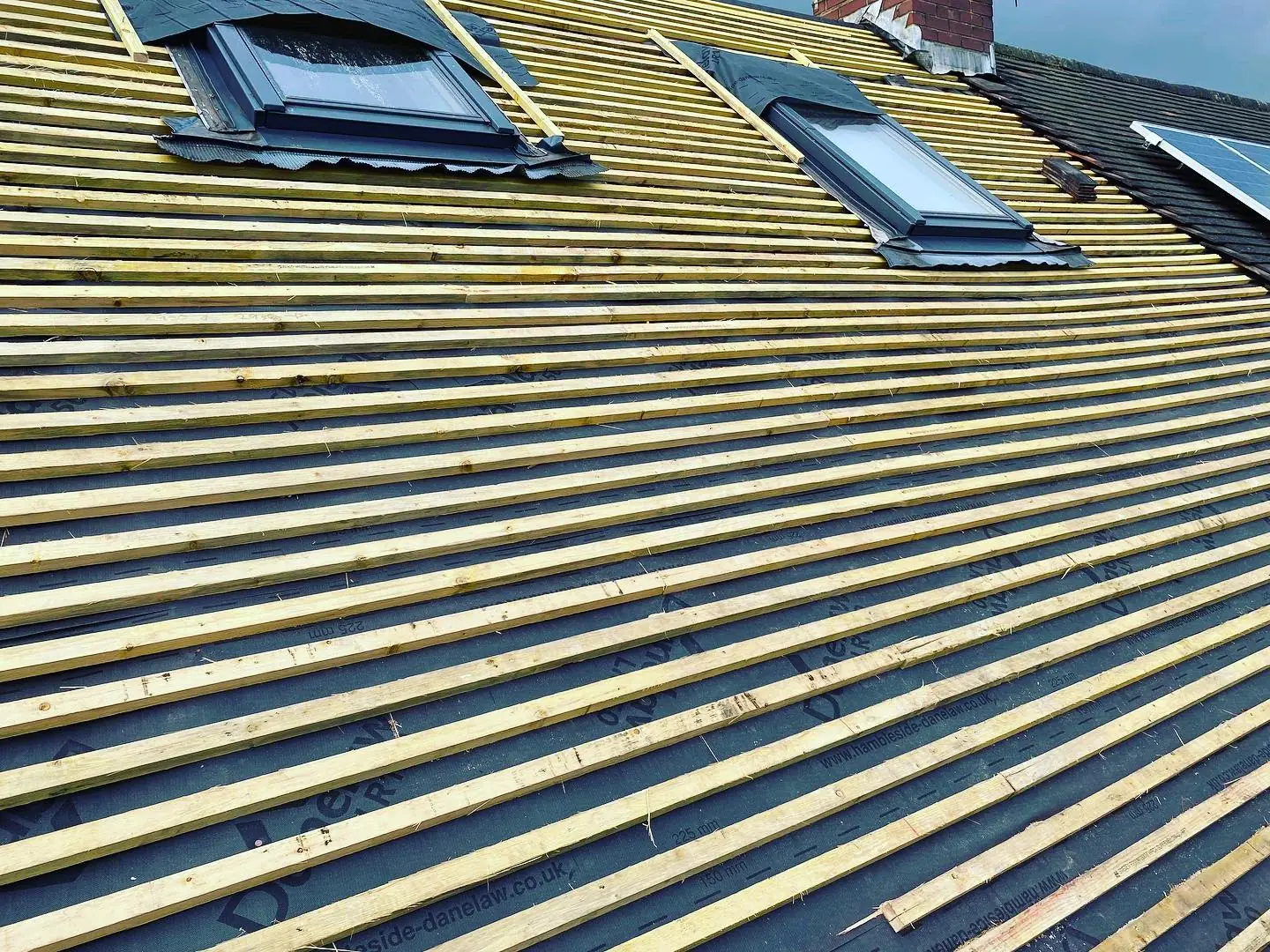
Know When It’s Time for a Full Re-Roof, Not Another Repair
Most roofs give warning before they fail outright. The hard part is knowing when patching stops being worth the money and a full re-roof becomes the better spend.
Watch for these signs:
- A sagging or dipping roofline, seen clearly from the street
- Tiles or slates that slip or crack most winters, not just after one bad storm
- Leaks turning up in more than one spot, rather than the same patch each time
- A covering over 25 to 30 years old with a growing repair history
- Repair bills that have already added up to close to a quarter of a full re-roof’s cost
- Daylight or damp visible in the loft once it rains
On the older terraces around Barwell and parts of central Hinckley, we see roofs patched every year or two for a decade without anyone dealing with the tiles, battens or felt actually failing underneath. Once repair costs climb toward roughly a quarter of a full re-roof’s price, patching stops making sense. If your roof turns out to need a targeted fix rather than a full strip, our roof repairs and restorations team handles that side of things too.
A free drone survey settles the question with footage, not guesswork, so you know whether you’re looking at a repair, a re-roof, or something in between.
Repair, Re-Roof or Full Replacement — Which One Actually Fits Your Roof
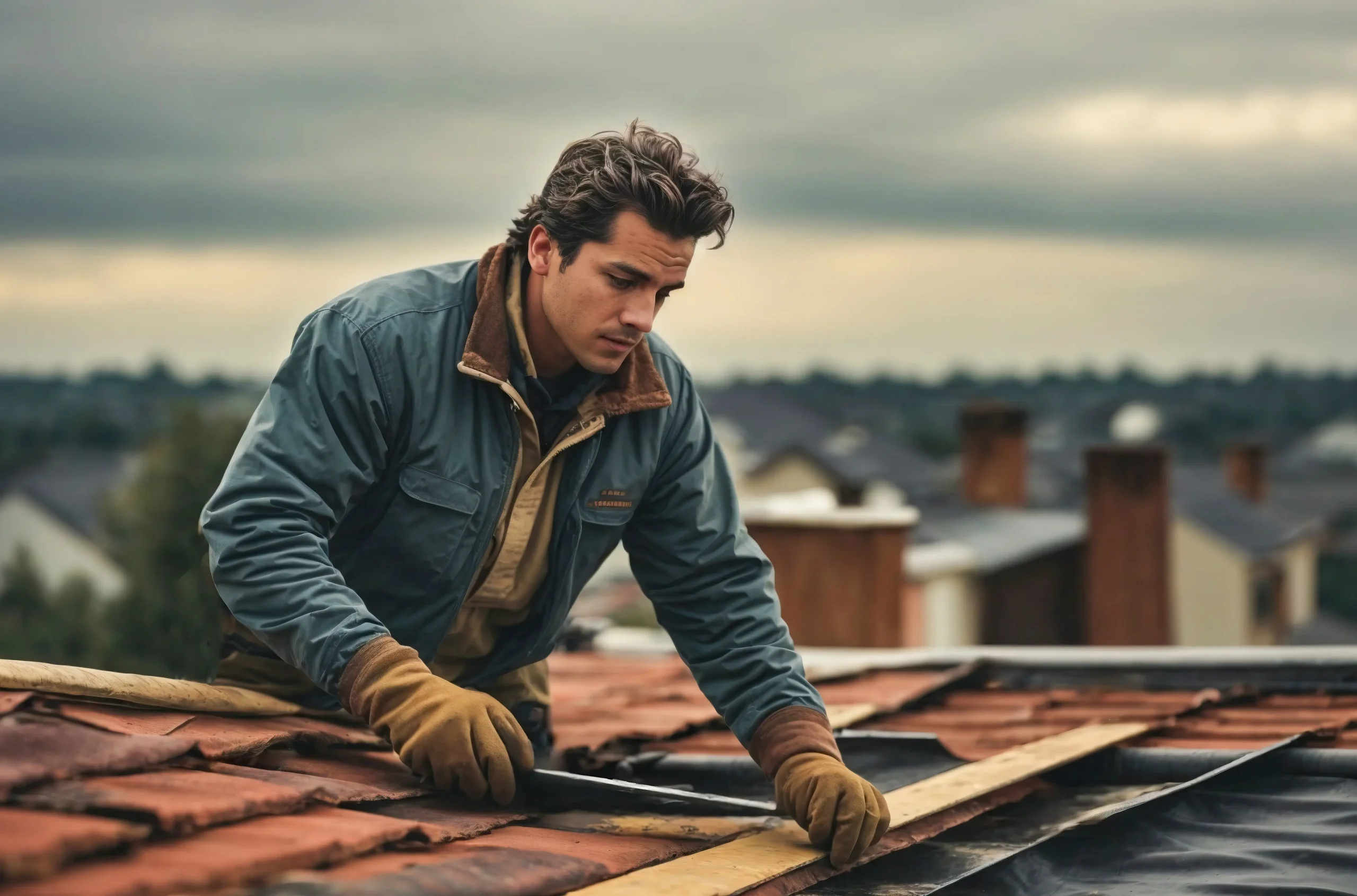
These three terms get used loosely, but they mean different jobs at different price points. A repair fixes a defined problem in an otherwise sound roof. A re-roof strips the whole covering off and fits a new one on the existing structure, timber included. A full replacement goes further again, changing the roof’s shape, pitch or structure, not just its covering.
A brand-new roof from scratch, covered by our new roof installation service, usually applies to an extension, a garage, or a property changing its roof shape entirely. Re-roofing deals with a roof that already exists and has simply worn out — the structure stays broadly the same, the covering and any failed timber underneath do not.
| :-: | :-: | :-: | :-: |
| Option | Typical cost | What it involves | Best for |
| Repair | £150–£600 per fix | Replacing a handful of tiles, resetting flashing, sealing a single leak point | A roof that’s otherwise sound with one clear fault |
| Re-roof (strip and recover) | £4,500–£12,000+ | Stripping to bare timber, replacing damaged battens and rafters, new felt and covering | A worn roof where the structure underneath is basically sound |
| Full replacement | £8,000–£20,000+ | Re-roofing plus structural change — altered pitch, shape, or rebuilt rafters | Roofs with serious structural problems, extensions, or a full shape change |
A free drone survey tells you which column your roof actually sits in, rather than leaving you to guess from the ground in Hinckley.
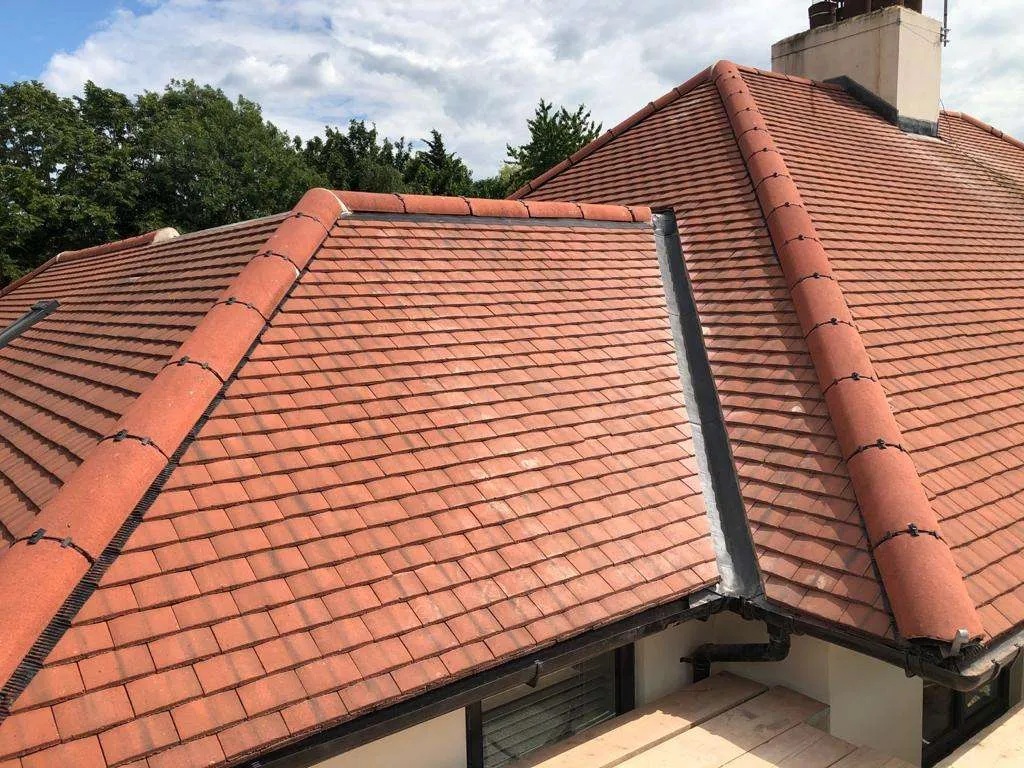
Strip and Recover — What a Full Re-Roof Actually Involves
A re-roof follows a set order on every job we run in Hinckley:
- Scaffold erected, skip placed, and the site made safe
- Old covering stripped back to bare timber
- Every rafter, purlin and batten checked by hand for rot and woodworm
- Damaged timber cut out and replaced with treated softwood
- New breathable membrane and correctly-gauged battens fitted
- Insulation and ventilation upgraded to current standards
- New covering laid from eaves to ridge, with fresh flashings and valleys
- Site cleared, roof checked, and Building Control sign-off arranged
A re-roof usually takes a little longer than fitting a covering onto brand-new timber, since the strip-out and timber inspection add a day or two. A semi-detached concrete tile re-roof typically runs 4 to 7 working days. Clay tile usually takes 5 to 8 days, and natural slate 6 to 10 days, since both need slower, more careful handling. Weather has the final say on any Hinckley job, and we build a realistic allowance into the schedule rather than promising a date we can’t keep.
When the Old Roof Comes Off — Rotten Timber and Other Surprises
This is the part that makes a re-roof different from fitting a roof onto new timber. You cannot see what condition the structure is in until the old covering comes off, and on a roof that’s 30, 40 or 50 years old, some rot or insect damage is common rather than rare.
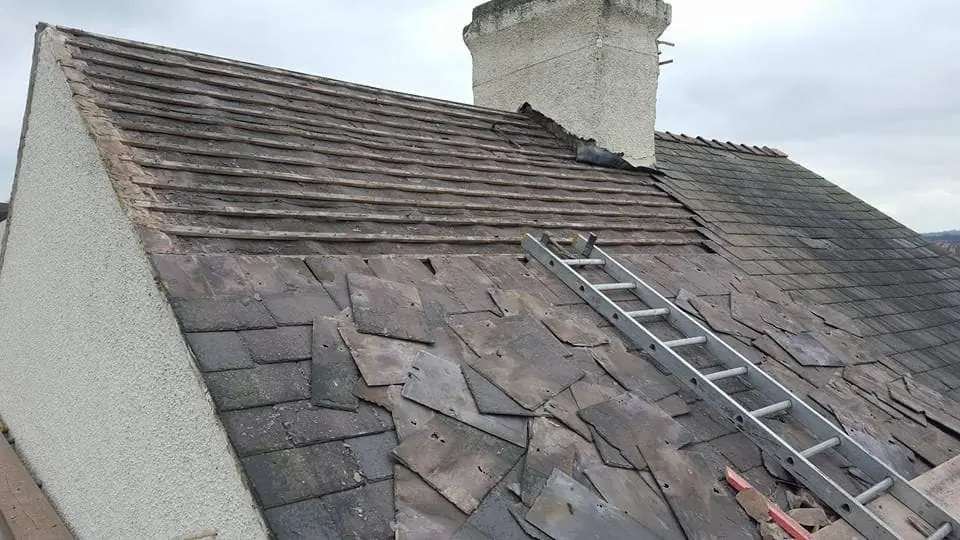
Once the strip is underway, Daniel Whitmore or a member of his crew walks every rafter, purlin and wall plate with a torch and a probe. Soft, rotten or insect-damaged sections get cut out and replaced with treated softwood — never boarded over, never left to become tomorrow’s problem.
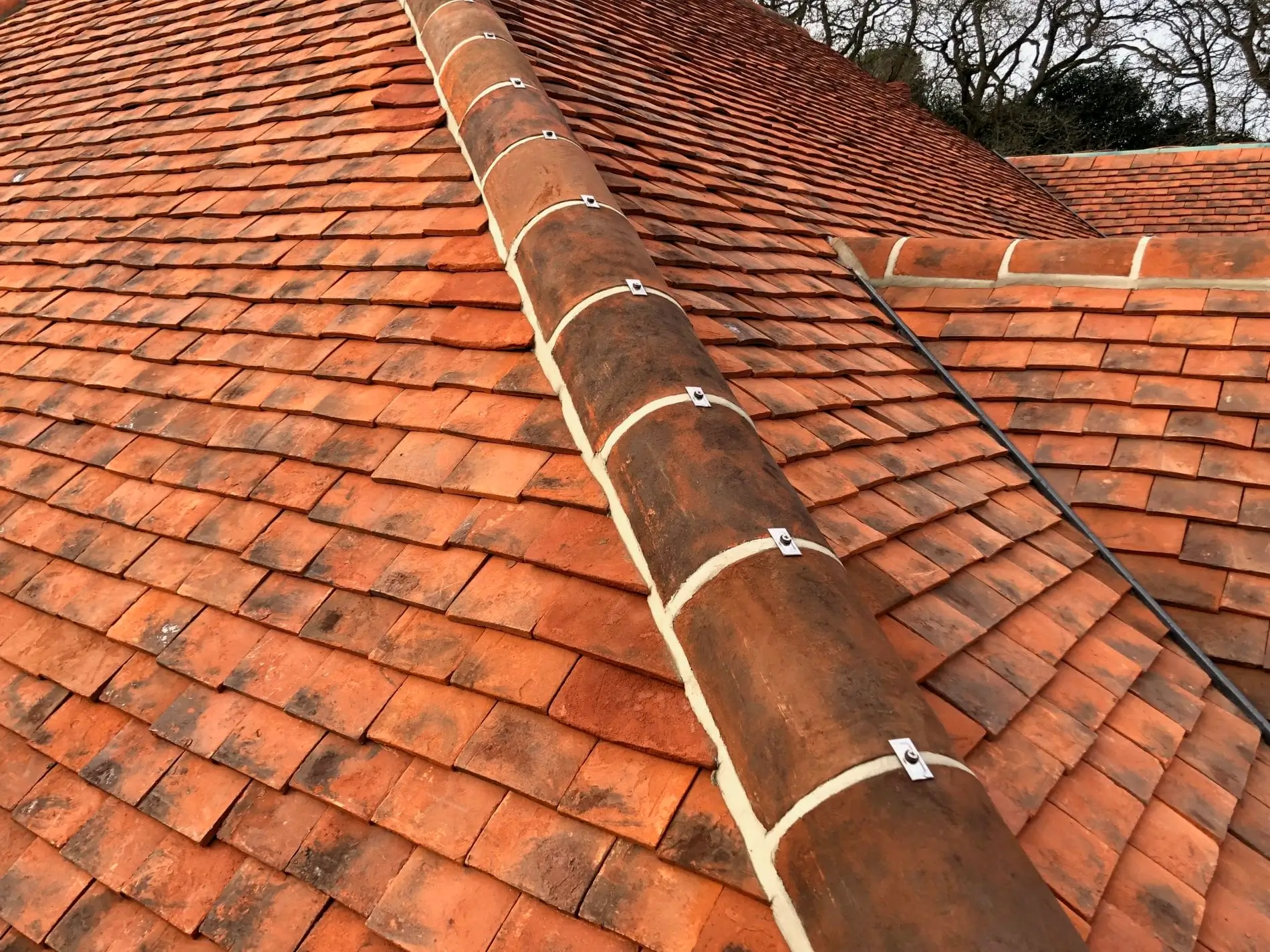
On the older housing stock around Earl Shilton and Barwell, where many roofs have never had the felt or battens touched since the house was built, this stage often turns up more than a homeowner expects. We photograph anything we find and talk you through it before cutting a single extra piece of timber, so there’s no surprise invoice waiting at the end. Typical extra timber repair work adds roughly £600 to £2,000 to a job, occasionally more on a roof that’s been neglected for decades.
Other things that can surface once the old covering is off include old bituminous felt or soffit boards that may contain asbestos, common on roofs from the 1960s to the 1980s, collapsed or blocked ventilation, and chimney flashings that have failed unseen for years. We deal with all of it as part of the same job, with Building Control sign-off arranged either way.
Planning Permission and Building Regulations for Re-Roofing in Hinckley
A straightforward, like-for-like re-roof rarely needs planning permission. Permission becomes more likely if you change the roofline, add height, or the property is listed or sits inside a conservation area.
Market Bosworth and Stoke Golding both carry a strong concentration of listed and older properties, and the local planning authority looks more closely at visible roofing changes on those streets. We check a property’s status before quoting on anything in those villages, so the job doesn’t stall once the scaffold is up.
Building Regulations are a separate matter, and they usually do apply to a re-roof. The Planning Portal’s guidance on Building Regulations for re-roofing sets out when approval is needed for work to an existing roof, and it is worth a read before any quote is agreed. As a rule of thumb, re-covering a significant share of a roof in one job, or changing the covering material, brings current standards for weather resistance, structural strength, fire safety and insulation into play, even where planning permission itself is not required. We handle the Building Control paperwork and sign-off as standard, so it never lands back on you afterwards.
What a Roof Replacement Costs in Hinckley
Cost comes down to roof shape, material, access, and what the strip-out finds underneath. As a general guide for Hinckley and the surrounding area:
- Simple gable-end semi-detached, concrete tile: £4,500–£7,500
- Hipped roof, concrete or clay tile: £7,500–£12,000
- Natural slate re-roof, semi-detached: £10,000–£16,000
- Larger or period slate roofs: £16,000–£25,000+
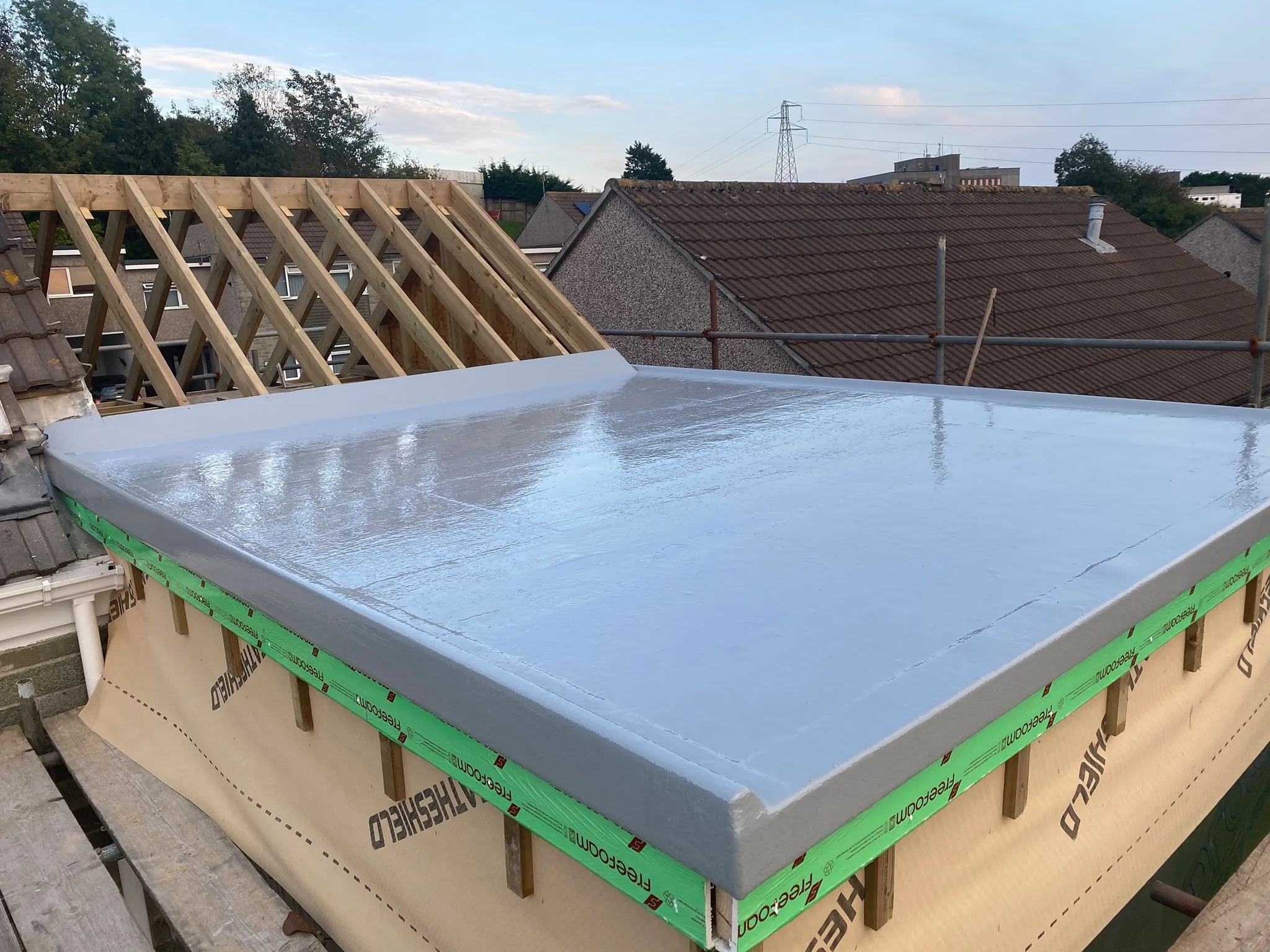
- Flat roof section over a garage or extension, re-covered: £2,500–£6,000
What pushes a price up or down:
Labour typically makes up 40 to 60 percent of the total cost, and roofers in this part of Leicestershire generally charge in the region of £200–£300 per day. These are general market ranges, not a quote for your roof — two properties the same size can price very differently once shape, access and timber condition are factored in. A fixed price needs a survey.
- **Roof shape and size*— hips, valleys and multiple slopes all add labour
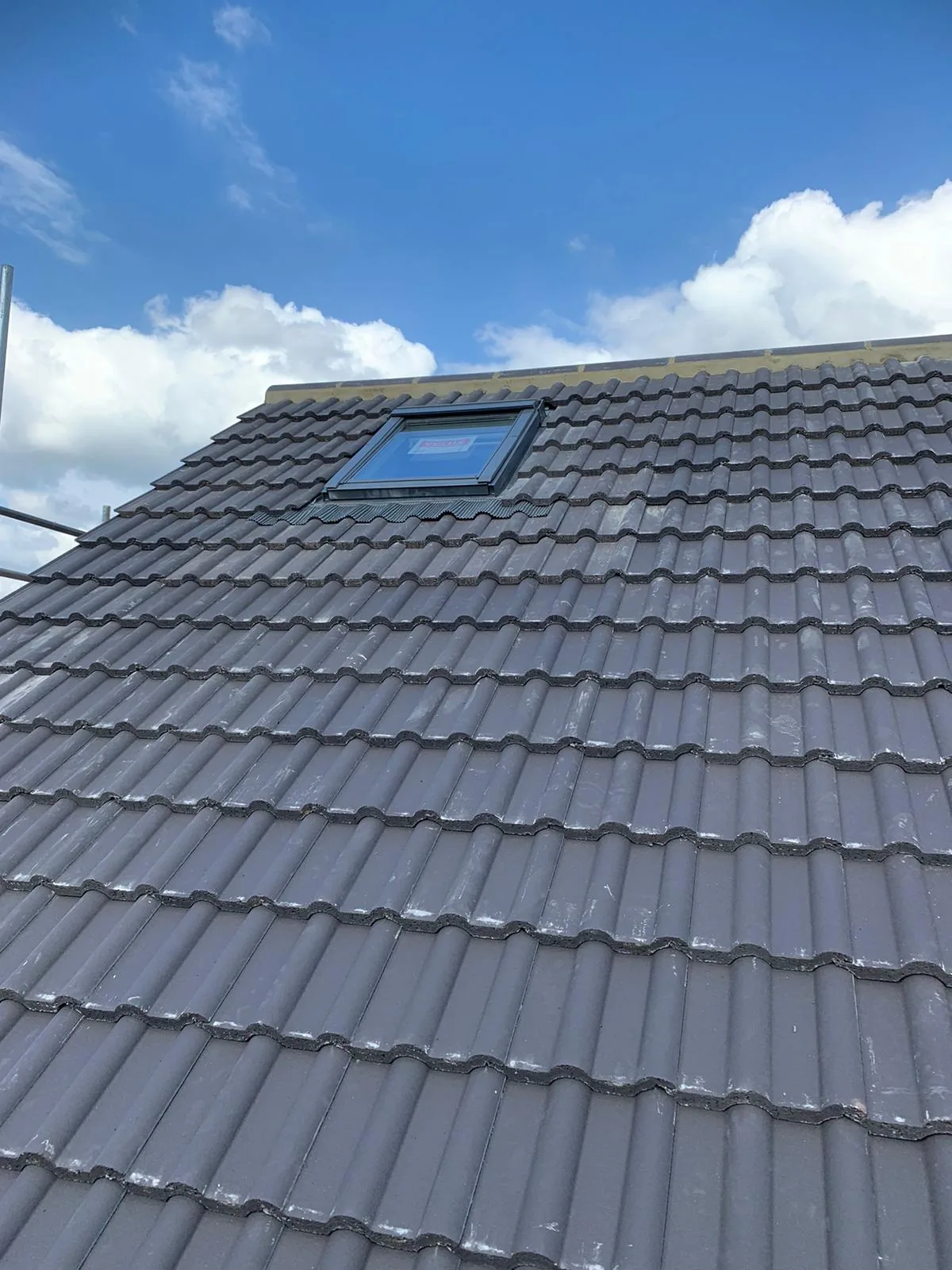
- **Material*— concrete tile costs least, natural slate costs most
- **Access*— a detached roof scaffolds more cheaply than one boxed in by neighbouring buildings
- **Timber condition*— the single biggest wildcard on any re-roof, typically adding £600–£2,000
- **Strip-out and disposal*— removing the old covering, and testing older felt for asbestos where relevant, usually adds £1,000–£2,500
- **Insulation upgrade*— bringing loft or rafter insulation up to current Building Regs standard typically adds £500–£1,500
Upgrade as You Go — Better Insulation and Ventilation Without a Second Job
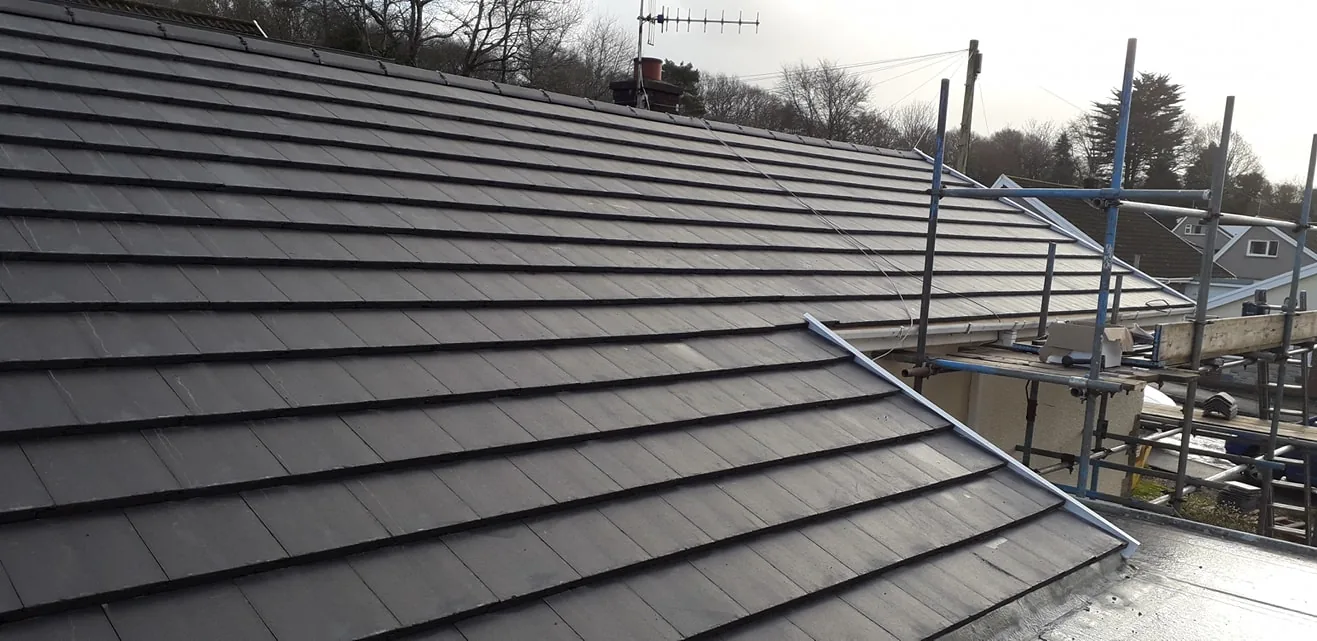
A re-roof is the one time your rafters and loft are fully exposed, which makes it the cheapest moment to fix insulation and ventilation properly. Doing it later, as a standalone job, almost always costs more.
Warm, moist air rising from inside the house meets a cold roof structure and turns to condensation if the ventilation isn’t right, and that damp then sits against timber that’s meant to stay dry for decades. Current Building Regulations expect a defined standard of insulation and adequate airflow on any re-roof, whether it’s a warm roof insulated above the rafters or a cold roof insulated between the joists.
Exposed properties out along the old Watling Street corridor and around Stoke Golding take a harder battering from wind-driven rain than a sheltered street in central Hinckley, and that affects how a roof is detailed at the ridge and verges. We factor a property’s height, position and exposure into every specification, not just a standard, one-size-fits-all approach.
Why Hinckley Homeowners Choose Tate & Sons for a Full Re-Roof
A re-roof lives or dies on what gets found once the old covering comes off, and on how honestly that gets handled. Daniel Whitmore, our project manager, runs the day-to-day on site and specialises in full re-roofs, leadwork and heritage tile and slate detailing on Hinckley’s older properties. He is the one walking your rafters with a torch, not just the name on the quote.
Founder James Tate started out on the tools more than 20 years ago and still quotes the majority of jobs personally, so the person pricing your roof is the one standing behind the finished work once it’s done. Between us we bring 40 years of combined team experience, hold NVQ Level 2 and 3 qualifications in Roofing, and carry CSCS cards. Sophie Bennett, our office manager, keeps quotes, scheduling and aftercare running smoothly from the first phone call through to the final sign-off. Read more about the people behind the work on our About Tate & Sons Roofing page.
Areas We Serve Across Hinckley and Bosworth Country
We carry out roof replacement and re-roofing work across Hinckley and the surrounding borough. If your area isn’t on the list below, call us anyway — there’s a strong chance we already cover you.
- Hinckley (LE10)
- Burbage (LE10)
- Barwell (LE9)
- Earl Shilton (LE9)
- Sapcote (LE9)
- Sharnford (LE10)
- Wolvey (LE10)
- Higham on the Hill (CV13)
- Sutton Cheney (CV13)
- Stoke Golding (CV13)
- Market Bosworth (CV13)
- Nuneaton (CV10 / CV11)
- Bedworth (CV12)
Got Questions?
Your Roof Replacement Questions, Answered Properly
How do I know if my roof needs a full re-roof rather than a repair?
A full re-roof is usually the better call once damage is spread across the roof rather than sitting in one spot. A sagging roofline, tiles slipping most winters, leaks turning up in more than one place, or repair bills already close to a quarter of a full re-roof’s cost all point toward replacement. A free drone survey gives you footage of the whole roof, not just the bit visible from the street, so the decision is based on evidence rather than guesswork.
How much does re-roofing cost in Hinckley?
As a general guide, a simple gable-end semi-detached re-roof in concrete tile runs £4,500–£7,500, a hipped roof £7,500–£12,000, and a natural slate re-roof £10,000–£16,000, with larger or period slate roofs running higher again. Timber condition is the biggest variable, since hidden rot only shows up once the old covering is stripped off. A free drone survey and written quote give you an accurate figure rather than a rough estimate over the phone.
How long does a full re-roof take?
Most residential re-roofs in Hinckley take between 4 and 10 working days depending on material. Concrete tile typically runs 4 to 7 days, clay tile 5 to 8 days, and natural slate 6 to 10 days, since re-roofing includes stripping the old covering and inspecting timber before the new covering goes on. Weather and the amount of timber repair needed can both add time, and we build a realistic allowance into every schedule.
Do I need planning permission to re-roof my house?
Most straightforward, like-for-like re-roofs do not need planning permission in England. Permission becomes more likely if the work changes the roof’s height or shape, adds dormer windows, or the property is listed or sits within a conservation area, which applies to parts of Market Bosworth and Stoke Golding. We check a property’s status before quoting so there are no surprises once work is booked in.
Will I need Building Regulations approval for a re-roof?
In most cases, yes. Building Regulations generally apply once you’re re-covering a significant share of a roof, or changing the covering material, and the finished job has to meet current standards for weather resistance, structural strength, fire safety and insulation. This applies even in many cases where planning permission itself isn’t needed. We handle the Building Control paperwork and sign-off as a standard part of every re-roof.
What happens if rotten timber turns up once the old roof comes off?
We stop, inspect, photograph, and talk you through it before cutting or replacing anything extra. Every rafter, purlin and wall plate gets checked by hand once the old covering is stripped, and any soft or insect-damaged sections are cut out and replaced with treated softwood. Extra timber work typically adds £600 to £2,000 to a job, occasionally more on roofs that have gone decades without attention. You always see the evidence and agree the cost before we proceed.
What happens if asbestos is found in old felt or soffits during the strip-out?
We stop work in that area and arrange proper testing before anything is disturbed further. Roofs from the 1960s to the 1980s sometimes used bituminous felt or soffit boards containing asbestos, and it cannot be identified by sight alone. Depending on the material and its condition, it’s either removed safely by a licensed specialist or, in some low-risk cases, dealt with directly by our team following the correct safe-handling procedure. This is factored into the job rather than treated as a nasty surprise.
Do I need a party wall agreement or scaffolding permit for a re-roof on a terraced Hinckley street?
Scaffolding on your own property generally doesn’t need council permission unless it oversails a public footpath or road, though a skip usually does need a permit if it sits on the street. A party wall agreement is only needed if scaffolding or work genuinely affects a shared wall, which is common on the terraced streets around central Hinckley and Barwell. We handle the permits our side of the job requires and can advise early if a party wall notice looks likely, so it doesn’t delay your start date.
Does a re-roof on a period home in Market Bosworth or Stoke Golding need extra sign-off?
It can. Both villages carry a strong concentration of listed and character properties, and the local planning authority takes a closer look at visible roofing changes on those streets, particularly on listed buildings or within conservation boundaries. We check a property’s status before quoting, and can advise on materials that tend to be acceptable in those areas, so the job doesn’t stall part-way through.
Book Your Free Drone Roof Survey Today
See exactly what’s happening under your roof before any work starts. No ladders, no pressure — just a clear picture from a local Hinckley team.
Every season a worn-out roof is left alone, water works further into the timber beneath it, and a job that could have been a straightforward re-roof turns into a bigger structural repair. A quick, free survey today tells you exactly where you stand, and often the right answer is smaller and more affordable than you feared. Book now, get an honest quote, and get your roof properly sorted — first time.
Call the Hinckley team today on 01455 242595, or request your free drone survey online. We're already working across your area.
Book Your Free Drone Roof Survey
See exactly where your roof stands, with no obligation and no pressure. Call our Hinckley team or request your free drone survey today.
Get in Touch
Tate & Sons Roofing — Hinckley Office
10 Brosdale Drive, Hinckley, LE10 0SW
📞 01455 242595
✉️ [email protected]