
🏠 Trusted Local Roofers
Roof Repairs & Restorations Chesterfield
A slipped tile rarely stays a small problem for long. Left alone, it lets water track into timbers, insulation and ceilings until a cheap fix turns into an expensive one. Tate & Sons Roofing carries out roof repairs and full restorations across Chesterfield, from quick patch jobs on modern estates to careful heritage work on the town's older stone and slate properties. As a roofing contractor across Chesterfield, we treat every roof on its own merits, not a one-size-fits-all price list.
This page sets out how to tell a repair from a restoration job, what each option really costs, how we handle period properties near the Crooked Spire, and the questions Chesterfield homeowners ask us most often about getting their roof fixed properly.
- Fully Insured
- 10-Year Guarantee
- 5-Star Rated
Quick Free Estimate - No Obligation
We're not just roofers – we're your neighbours.
Fully Insured • Response within 15 mins
🔒 Your details are safe with us. No spam, ever.
Spot the Warning Signs Before a Small Leak Becomes a Big Bill
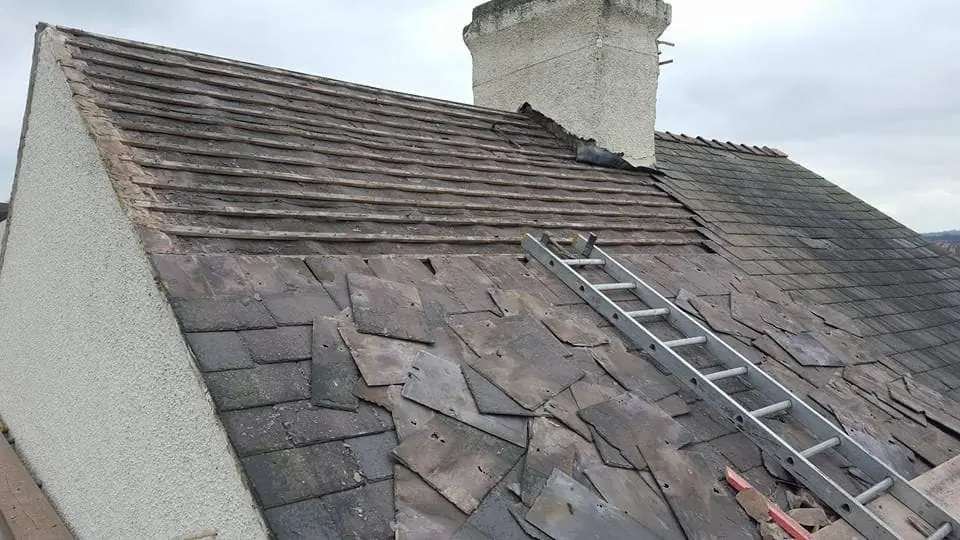
Most roof problems give warning signs long before water reaches your ceiling. Catching them early is what keeps a repair a repair, rather than letting it grow into a restoration job.
Look out for these signs on your Chesterfield roof:
- Slipped, cracked or missing tiles or slates after windy weather
- Damp patches or brown rings spreading across a bedroom or loft ceiling
- Green moss or black streaking building up across several courses
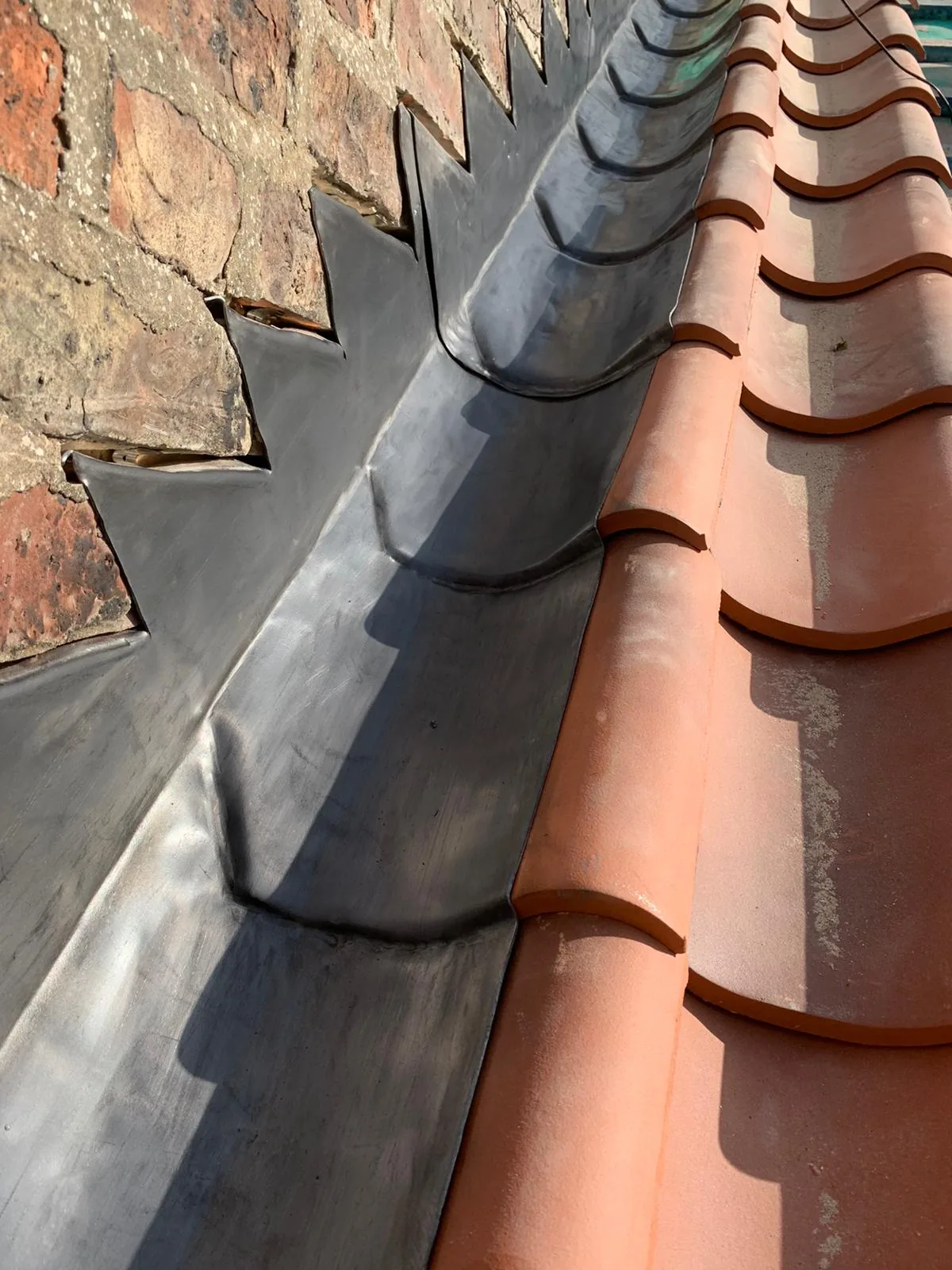
- Cracked or lifting lead flashing around chimneys and valleys
- Sagging ridge lines or a dip visible from the pavement
- Daylight showing through the roof timbers when you check the loft
One or two of these usually points to a targeted repair. Several appearing together, especially on an older property, often means the whole covering is due for restoration rather than another patch. A free drone survey gives you clear photos of the whole roof, so you are not guessing which category your problem falls into.
Decide Between a Quick Repair and a Proper Restoration
Repair and restoration solve different problems, and getting the choice wrong wastes money either way. A repair fixes a specific fault. A restoration deals with a roof covering that has aged out across its whole surface.
Spot repairs suit roofs that are otherwise sound: a handful of slipped tiles, one cracked ridge tile, or a small area of failed flashing. Partial restoration suits roofs where one section, such as a bay or rear slope, has failed while the rest holds up well. Full restoration suits roofs where the felt, battens or fixings have reached the end of their working life across the board, which is common on Chesterfield properties over 40-50 years old.

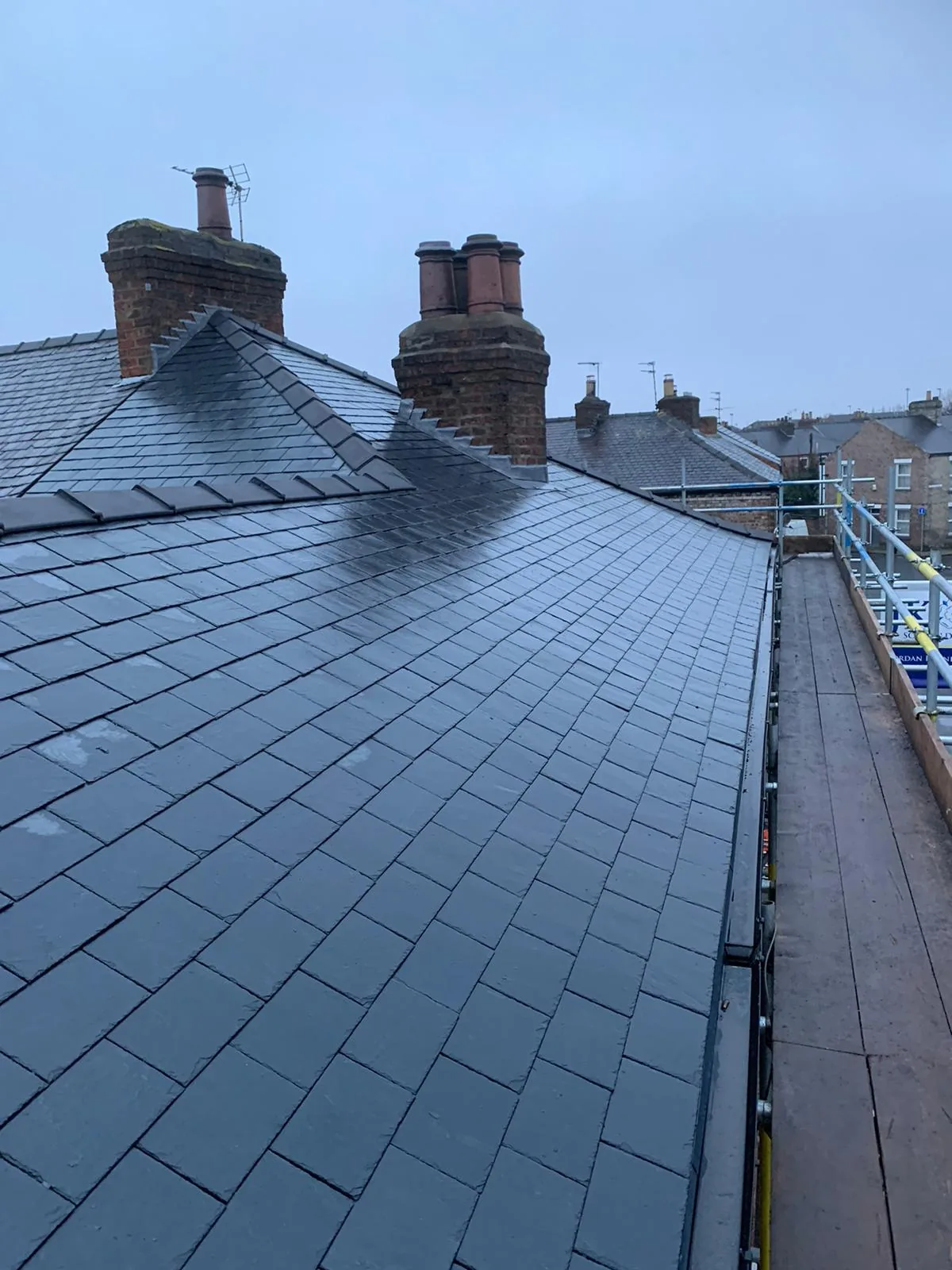
Many of the terraced and stone-built homes around Old Whittington still carry their original slate, and on those roofs the underlying timber and felt are often the weak point rather than the slate itself. James Tate, our founder, has spent years working out which of those roofs can be saved with careful repair and which genuinely need stripping back and restoring properly.
These figures are UK-wide guide ranges, and your actual price depends on roof size, pitch, access and the materials involved. A fixed price needs a survey, since two roofs of the same age can be in very different condition underneath.
| Option | Typical Cost | When It Makes Sense | Best For |
|---|---|---|---|
| Spot Repair | £150-£600 | Isolated fault on an otherwise sound roof covering | A few slipped tiles, one leak, minor flashing damage |
| Partial Restoration | £1,500-£5,000 | One roof slope or section has failed but the rest is sound | Rear extensions, bay roofs, one weathered elevation |
| Full Restoration | £6,000-£15,000+ | Covering, felt or battens have failed across the whole roof | Period properties, roofs over 40 years old, repeated repair jobs |
Roof Repair and Restoration Cost in Chesterfield: What Drives the Price
Small repairs across the UK typically run £150-£1,000, covering jobs like replacing a handful of tiles, resealing flashing or fixing a small leak. Renewing lead flashing around a single chimney usually costs £200-£600, and patching a flat roof section runs £200-£800. Emergency call-outs for a same-day temporary fix are commonly £150-£400.
Restoration work costs more because it covers a far larger area of the roof. Re-slating with reclaimed or matched slate for a period property often costs £6,000-£12,000, since suitable second-hand slate costs several times more than standard concrete tile and takes longer to source and lay. Full re-covering of a typical semi runs toward the £10,000-£15,000 mark once scaffolding, timber repairs and lead work are included.
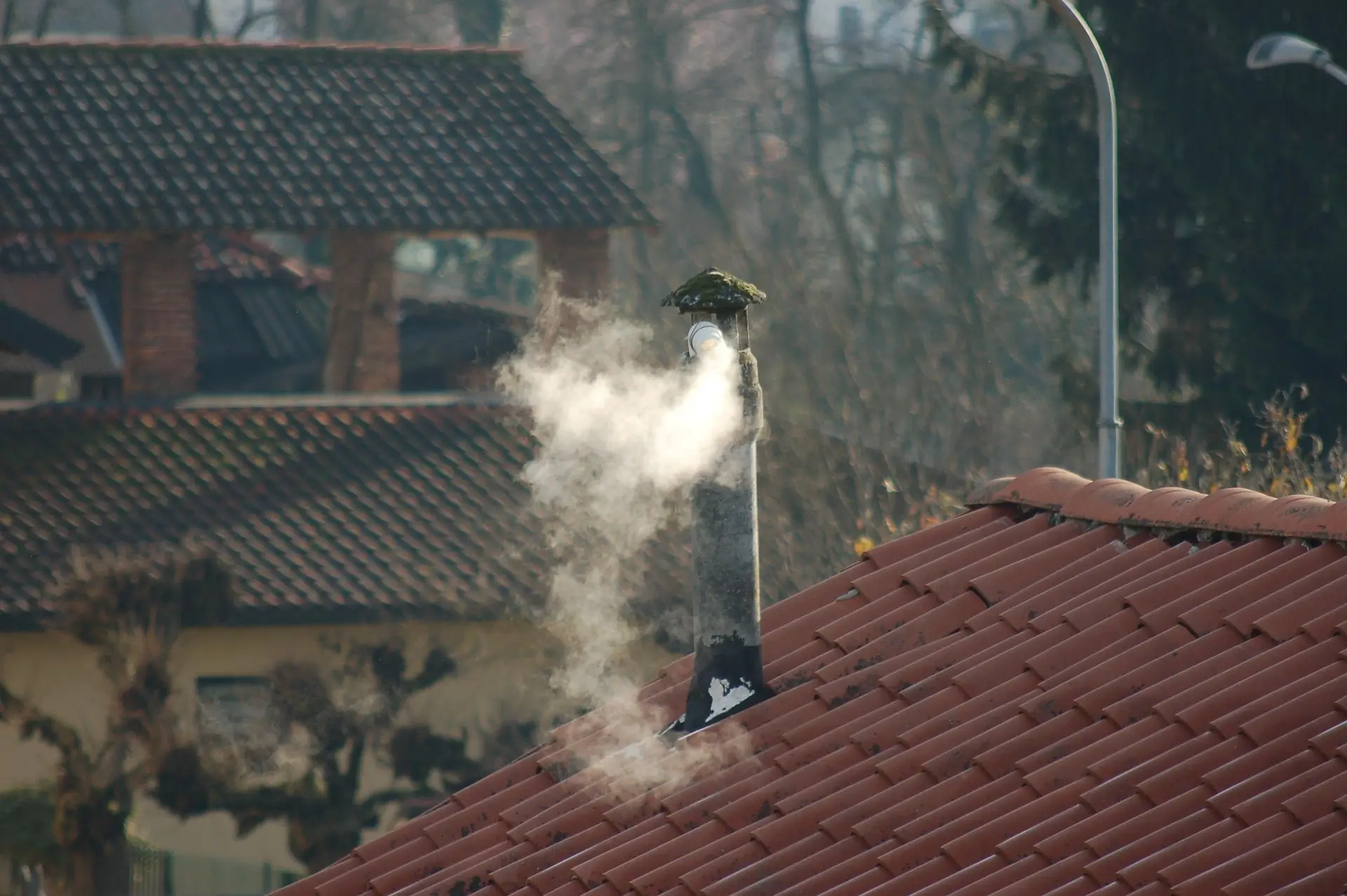
Cost rises when we find rotten battens or timber once tiles come off, when a chimney needs rebuilding lead detail around it, or when a conservation area calls for reclaimed rather than new material. Cost falls when access is easy, the roof shape is simple, and only one slope needs attention. Scaffolding typically adds £500-£1,200 on a standard two-storey home.
A fixed price needs a survey. We would rather give you an honest number after seeing your roof properly than a guess over the phone that changes once scaffold goes up.
Prepare for the Work: Surveys, Access and Listed Building Rules
Every job starts with a free, no-obligation drone roof survey. This gives us close-up photos of ridge lines, valleys and chimney flashing without anyone climbing a ladder first, so you get an accurate scope before we quote.
Most repair and restoration work falls under permitted development and does not need planning permission, provided the roof keeps its existing shape, height and materials. That changes for listed buildings and homes in conservation areas, which cover parts of central Chesterfield near the Crooked Spire and around Tapton House. On those properties, even like-for-like repairs can need listed building consent if the materials or method change.
The Society for the Protection of Ancient Buildings sets out clear guidance on maintaining and repairing traditional roofs, including why isolated slipped slates should be re-fixed rather than covered with bituminous sealant. We follow the same principle: repair what can be repaired properly, and only replace what has genuinely failed.
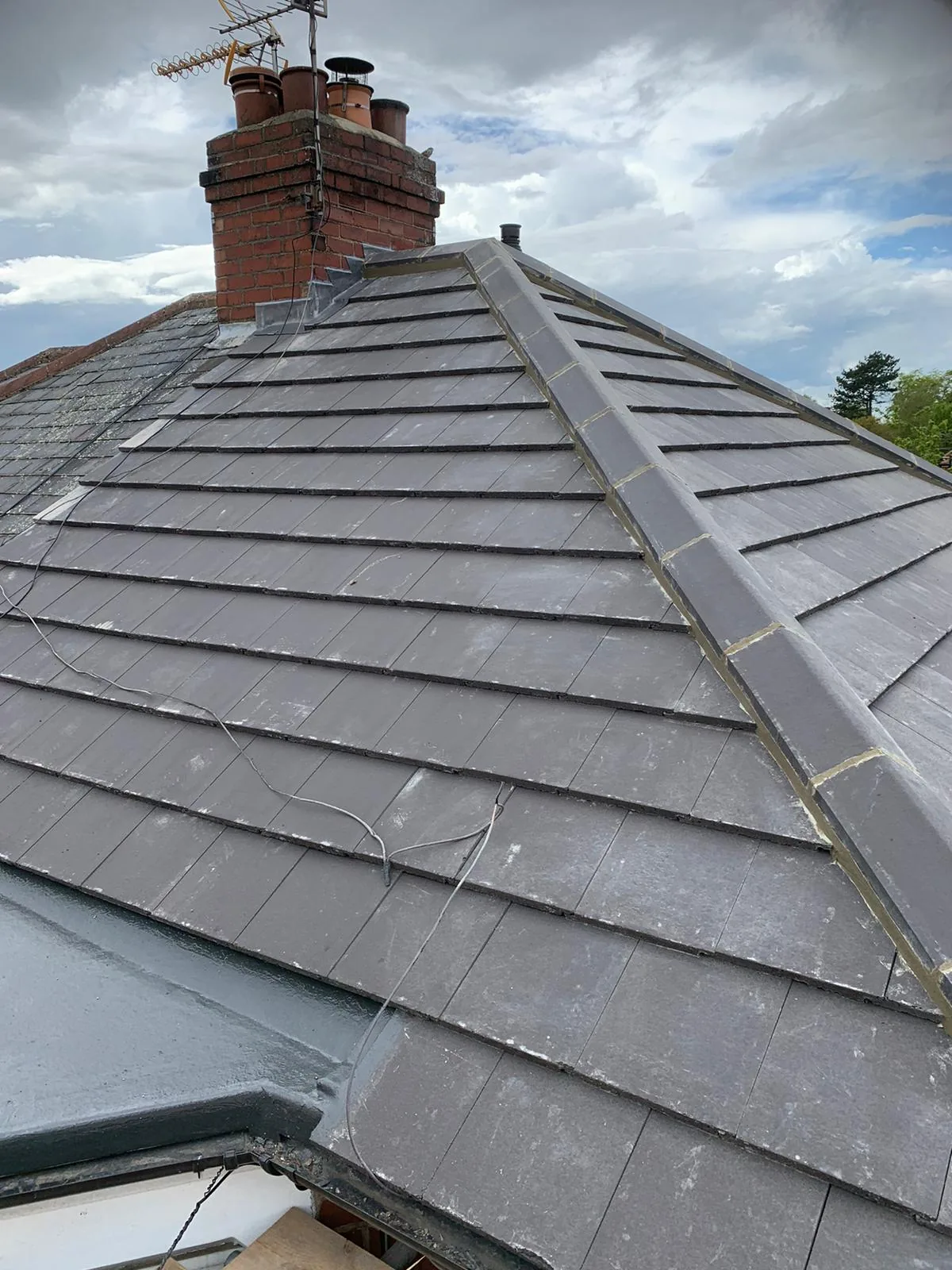
If your property is listed or sits within a conservation area, we check what consent applies before we start, so there are no surprises once scaffold is up.
How We Carry Out Your Repair or Restoration, Step by Step
Daniel Oakland, our Project Manager and Lead Roofer, runs repair and restoration jobs on site day to day. With over 20 years in the trade, he oversees everything from a single tile swap to a full re-cover, working alongside lead flashing repairs and structural timber checks as needed.
For a spot repair, we access the affected area, remove damaged tiles or slates, check the felt and battens beneath, and refit matching material using proper fixings rather than sealant alone. Most spot repairs are finished within a day.
For a restoration, scaffold goes up first so we can work safely across the whole roof or affected slope. We strip the old covering, inspect every rafter and purlin, and replace any timber that has rotted or moved before the new felt or membrane goes down. Original slate is set aside and re-laid where it is still sound, with reclaimed or closely matched material used to fill gaps.
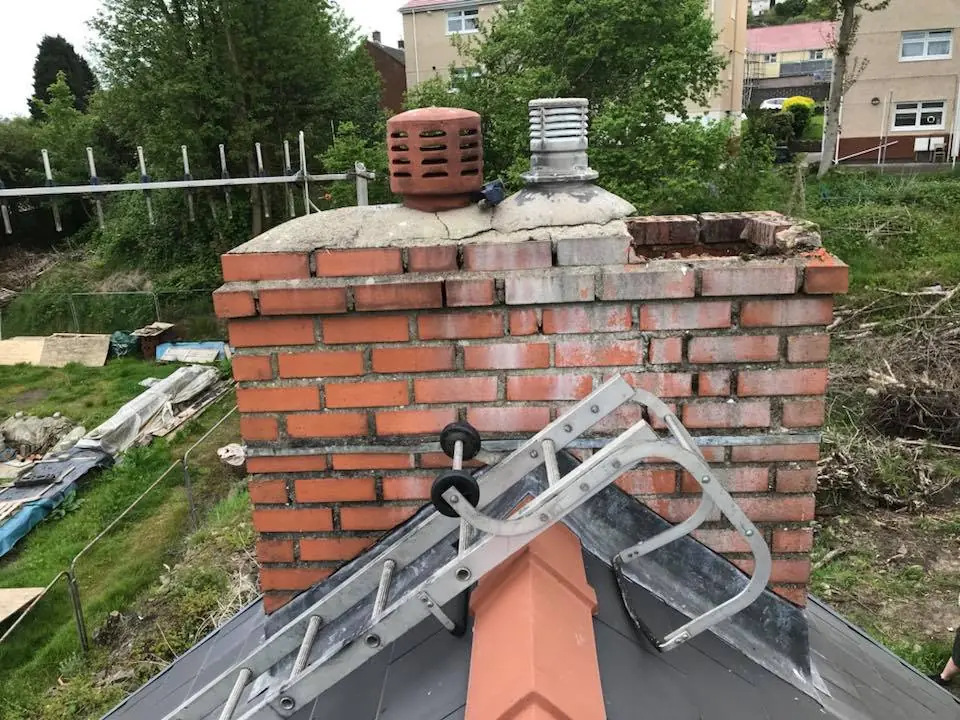
Lead flashing and ridge detail are finished by hand around chimneys and valleys, since this is where most roof leaks actually start. A partial restoration typically takes 3-6 working days, while a full restoration on a larger period property can run 1-3 weeks depending on the amount of timber and lead work involved.
Verify the Job Is Done Properly Before We Leave
Every repair and restoration finishes with a walk-round check, not just a wave from the scaffold. Daniel checks flashing lines, ridge fixings and guttering falls before signing the job off.
We test problem areas directly rather than assuming a repair has worked. Where a leak was reported, we check the exact spot from inside the loft as well as from the roof itself, so you get confirmation the fault is actually fixed.
Every repair and restoration comes with a 10-year workmanship guarantee, and we record the materials used and the work carried out. That record is useful if you sell the property, make an insurance claim, or need matching materials for future work.
Prevent the Next Repair: Simple Roof Care Between Visits
A little regular care goes a long way toward avoiding another call-out. Clear gutters and valleys twice a year, since blocked water is one of the biggest causes of roof damage we see across Chesterfield.
Check your roof from the ground after strong winds, particularly on higher ground toward the Peak District gateway where gusts are stronger. In leafy, established areas like Ashgate, overhanging trees can also drop debris into valleys and gutters, so a seasonal clear-out matters even on newer roofs.
Book a check-up as soon as you spot a slipped tile or a damp patch, rather than waiting for a full leak. Early repairs cost a fraction of what a delayed one does, and they protect the timber and plaster underneath from lasting damage.
Why Choose Tate & Sons Roofing for Your Repair or Restoration
James Tate founded the business after 15 years working roofs across Derbyshire and the East Midlands, and heritage restoration remains his personal strength. He is happiest working out how to save a tricky period roof rather than simply stripping it and starting again, and he still prices most restoration jobs himself.
Daniel Oakland leads the day-to-day repair work on site, bringing over 20 years of hands-on experience across EPDM, GRP, standing-seam and traditional slate and lead detailing. Between them, your job gets the right specialist, whether it is a quick tile swap or a full heritage re-slate.
Our wider team holds NVQ Level 2/3 qualifications in Roofing Occupations, CSCS cards and NFRC trade membership, with over 40 years of combined experience between us. Read more about the people behind every repair and restoration on our About page.
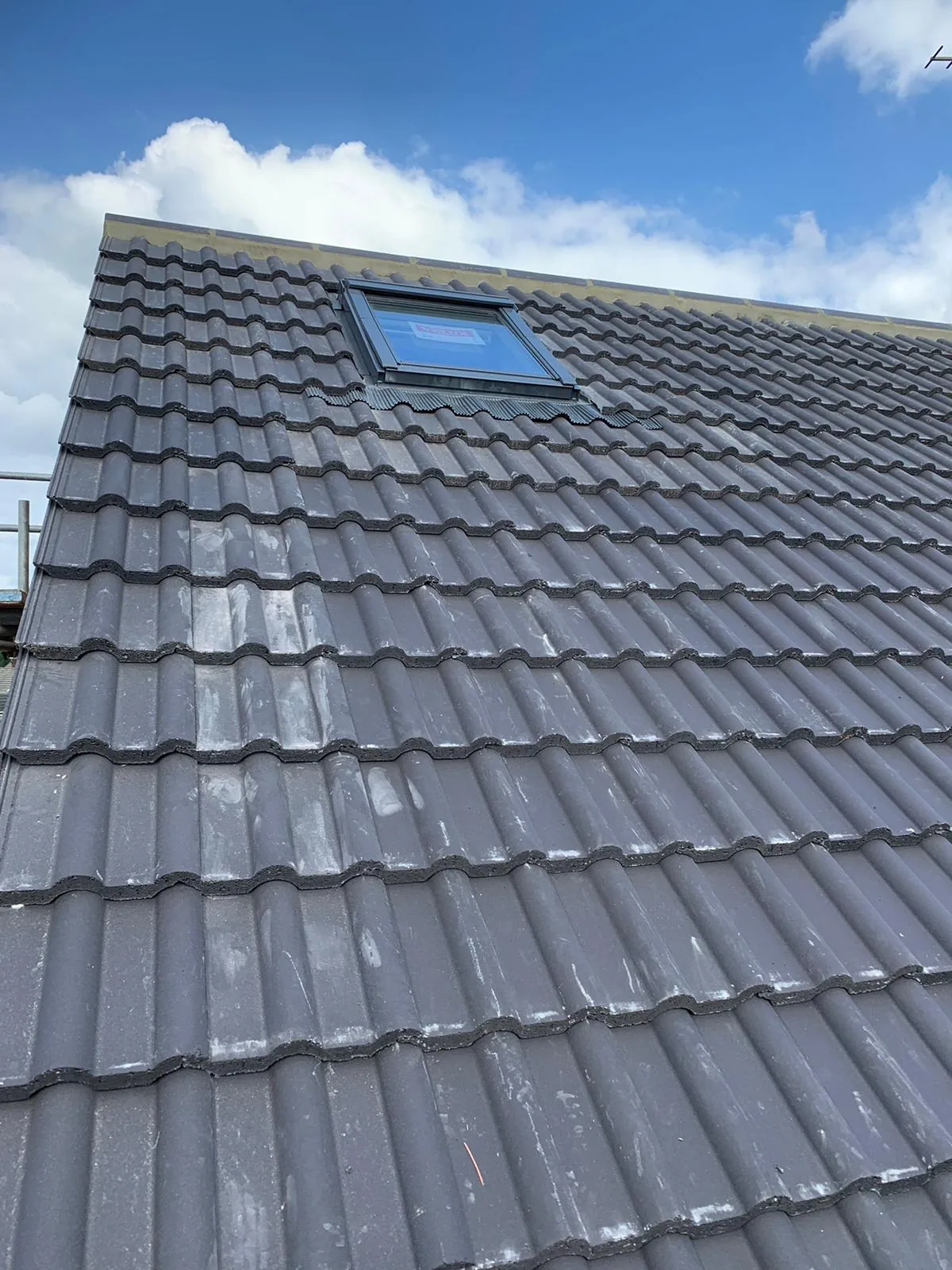
Every job comes with a 10-year workmanship guarantee and starts with a free, no-obligation drone roof survey, so you know exactly what your Chesterfield roof needs before any work begins. If your roof has failed beyond repair, we can also talk you through a full roof replacement as a straightforward next step.
Areas We Serve Around Chesterfield
We carry out roof repairs and restorations across Chesterfield and the surrounding towns and villages listed below.
- Chesterfield (S40 / S41)
- Brampton (S40)
- Hasland (S41)
- Newbold (S41)
- Staveley (S43)
- Brimington (S43)
- Whittington Moor (S41)
- Old Whittington (S41)
- Wingerworth (S42)
- Clay Cross (S45)
- Dronfield (S18)
- Eckington (S21)
- Holymoorside (S42)
Got Questions?
Your Roof Repairs & Restorations Questions, Answered Properly
How do I know if my roof needs a repair or a full restoration?
An isolated fault, such as a few slipped tiles or one small leak, usually only needs a repair. A restoration is the better choice when problems appear in several places at once, when the roof is over 40 years old, or when you have already paid for repeated repairs without the leaks stopping. A free drone survey gives you clear photos so you can see exactly which category your roof falls into before you commit to either option.
How much does a roof repair cost in Chesterfield?
Most small repairs cost £150-£1,000, covering jobs like replacing slipped tiles, resealing flashing or fixing a small leak. Emergency call-outs for a same-day temporary fix typically run £150-£400. Larger repairs involving lead flashing or a section of failed felt can cost more. We only give a fixed price once we have surveyed the actual damage.
How much does a full roof restoration cost?
Full restoration typically costs £6,000-£15,000 depending on roof size, pitch and materials. Re-slating a period property with reclaimed or matched slate often sits toward the higher end of that range, since suitable slate costs more than standard tile and takes longer to source. Scaffolding, timber repairs and lead work all affect the final figure, so a fixed price needs a proper survey.
Can my roof be repaired instead of fully replaced?
Often, yes, particularly if the covering itself is still sound and the problem is isolated to fixings, flashing or a handful of damaged tiles. James Tate specialises in working out which period roofs can be saved with targeted repair rather than a full strip and re-cover. We would rather repair what can genuinely be repaired than sell you a bigger job than you need.
Do I need permission to repair or restore a roof on a listed building?
Straightforward like-for-like repairs on most homes fall under permitted development and need no planning permission. Listed buildings and properties within a conservation area, including parts of central Chesterfield near the Crooked Spire, are different, since even minor changes to materials or method can require listed building consent. We check what applies to your property before quoting the job.
What causes roof leaks around chimneys?
Cracked or lifted lead flashing is the most common cause of leaks around chimneys, often after the lead has moved with age or the mortar joint above it has failed. Cement pointing on older chimneys can also crack and let water track down behind the flashing. We repair flashing using traditional lead-welded patches or new lead detailing rather than sealant, which only masks the problem for a short time.
How long does a typical roof repair or restoration take?
A spot repair is usually finished within a single day. A partial restoration covering one slope or section typically takes 3-6 working days. A full restoration on a larger period property can run 1-3 weeks, depending on how much timber replacement and lead detailing the roof needs. Wet weather can add a day or two, particularly over the winter months.
Will my roof insurance cover repair or restoration work?
Storm damage, such as tiles blown off in high wind, is often covered by buildings insurance, while gradual wear from age generally is not. We provide photos from your drone survey and a written report you can submit with an insurance claim where storm or accidental damage applies. It is worth checking your policy terms before work starts, since some insurers require the damage to be reported within a set time.
Is it worth restoring an old slate roof instead of replacing it with modern tiles?
Yes, in most cases, since original slate can outlast modern concrete tile by decades if the roof structure underneath is sound. Restoring with matched or reclaimed slate also keeps the character of older Chesterfield streets, particularly around conservation areas near the town centre. The trade-off is cost, since slate restoration usually costs more upfront than a like-for-like tile replacement, though it often works out better value over the roof's full lifespan.
Book Your Free Drone Roof Survey Today
A damaged roof does not stay the same size problem for long, and every heavy Chesterfield downpour can turn a small leak into rotten timber underneath. Waiting on a repair rarely saves money, since the damage keeps spreading while you decide. Book your free, no-obligation drone roof survey today and find out whether your roof needs a repair or a full restoration, with a clear fixed price either way.
📍 3 Marsden Street, Chesterfield, S40 1JY
📞 01246 956550
Call the Chesterfield team today on 01246 956550, or request your free drone survey online. We’re already working across your area.
Get in Touch
Tate & Sons Roofing — Chesterfield
3 Marsden Street, Chesterfield, S40 1JY
📞 01246 956550
✉️ [email protected]