
🏠 Trusted Local Roofers
Onduline Roofing in Hinckley
Onduline is the bitumen corrugated sheet you see on stable blocks, garden sheds, and farm buildings right across the Hinckley area. It is lighter than steel, quieter in the rain, and far easier to fix to an existing timber frame without extra bracing. Onduline roofing in Hinckley suits outbuildings that need a tidy, weatherproof roof without the cost or weight of a full tiled system.
This page covers what Onduline actually is, where it beats steel or fibre-cement sheet, what it costs fitted, and how we install it properly on outbuildings from a garden shed in Burbage to a stable block out past Sharnford. If you are comparing general corrugated options first, our corrugated roofing page covers steel, fibre-cement and bitumen sheet side by side — this page goes deeper on Onduline-type bitumen sheet specifically. Either way, we are a roofing contractor across Hinckley that fits both, so you get an honest recommendation rather than a sales pitch for whatever we happen to stock.
- Fully Insured
- 10-Year Guarantee
- 5-Star Rated
Quick Free Estimate - No Obligation
We're not just roofers – we're your neighbours.
Fully Insured • Response within 15 mins
🔒 Your details are safe with us. No spam, ever.
Is Onduline the Right Sheet for Your Outbuilding?
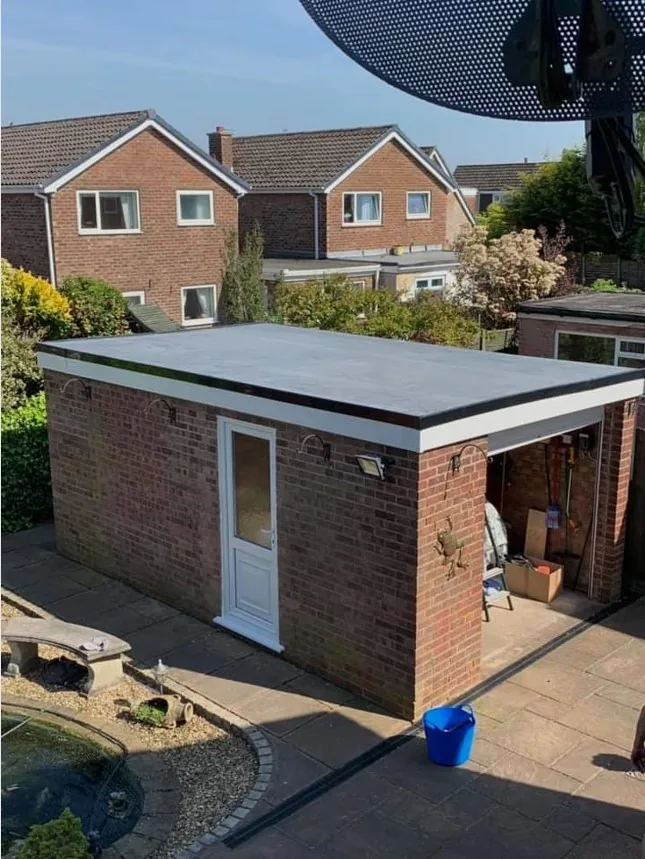
Onduline is a corrugated sheet made from bitumen-saturated fibres, pressed into the same wave profile as a steel sheet but at a fraction of the weight. A standard sheet weighs around 6kg, so one person can carry and fix it without machinery or a second pair of hands on the roof.
That lightness makes it a strong match for older sheds, lean-tos and stable roofs where the timber frame was never built to carry steel or tile. It suits:
- Garden sheds, workshops and summer houses
- Stable blocks and field shelters
- Chicken coops and small animal housing
- Lean-to roofs against a garage or house wall
- Farm outbuildings where the frame is lightweight timber, not steel portal
It is not the right choice for a habitable extension, a roof that needs a long design life to match the main house, or anywhere building control expects a heavier-duty covering. For those jobs we would usually point you toward steel sheet, or a proper tiled or flat system instead.
Onduline vs Steel and Fibre-Cement — Which Corrugated Sheet Actually Wins?
Three materials cover almost every corrugated outbuilding roof around Hinckley: bitumen sheet like Onduline, galvanised steel, and fibre-cement. Each trades cost against lifespan in a different way, and the right one depends on the building and how long you need it to last.
| :-: | :-: | :-: | :-: |
| Material | Typical cost (supply and fit, per m²) | Typical lifespan | Best for |
| Onduline / bitumen corrugated | £35–£55 | 15–30 years | Sheds, stables, field shelters, budget outbuildings |
| Steel corrugated | £30–£60 | 25–50 years | Barns, larger agricultural buildings, longer spans |
| Fibre-cement corrugated | £45–£70 | 30–50 years | Larger outbuildings wanting a longer-life, low-maintenance sheet |

Onduline wins on weight, noise and ease of fixing to a light timber frame. Steel wins on raw lifespan and clear spans. Fibre-cement sits in between, heavier than Onduline but generally outlasting it. Onduline sheets also run around 23 decibels quieter under heavy rain than a ribbed steel sheet, which matters if the building sits close to a stable, home office, or bedroom window.
What Onduline Roofing Really Costs in Hinckley
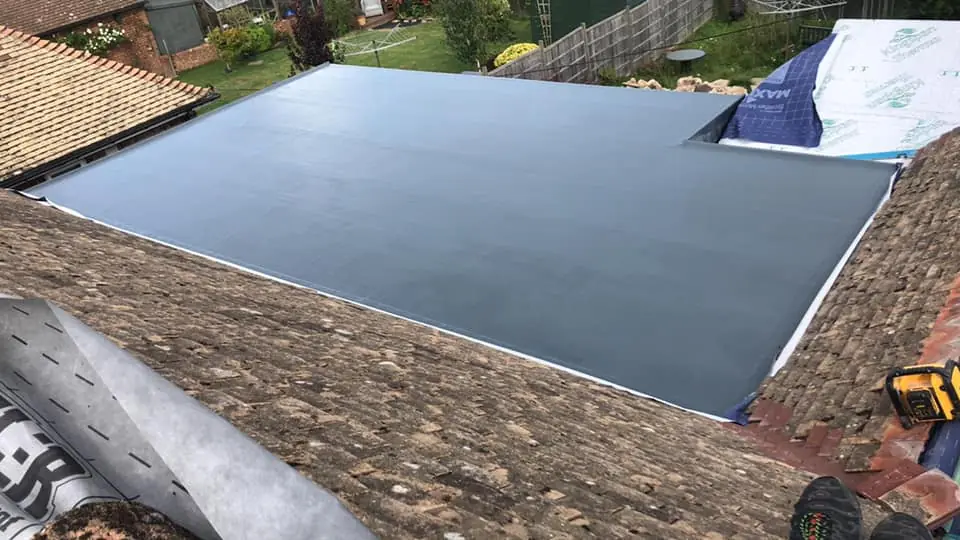
Material alone runs roughly £10–£20 per m² for standard Onduline Classic sheet, with heavier-duty or coloured ranges costing more. Once you add battens or decking, fixings, flashings and labour, a supply-and-fit price typically lands at £35–£55 per m² for a straightforward outbuilding.
In real terms, a small garden shed roof (around 8–10m²) usually costs somewhere between £350 and £600 fully fitted. A stable block or larger outbuilding roof (40–60m²) more commonly runs £1,800–£3,300. These are general market ranges, not a quote for your building.
What pushes the price up or down:
A fixed price needs a survey. We would rather look at the actual roof — pitch, timber condition and access — than quote a number over the phone that changes once we arrive.
- **Roof pitch and access*— a low, easy-access shed costs less than a stable roof needing a ladder and scaffold boards
- **Existing deck or purlins*— sound timber underneath keeps costs down; rotten or missing structure adds carpentry before a sheet goes on
- **Strip-out*— removing old felt, asbestos-cement sheet, or failed steel adds disposal cost, particularly where asbestos testing is needed first
- **Sheet grade*— standard Classic sheet costs less than heavier-duty or coloured ranges
- **Building size and shape*— more hips, valleys or abutments mean more cutting and flashing work
Getting the Roof Structure Right Before the First Sheet Goes On
Onduline needs a minimum roof pitch of around 5 degrees, and how it is laid changes with that pitch. Between roughly 10 and 15 degrees it can go straight onto purlins at 450mm centres; below that it needs a solid deck of ply or OSB underneath for the sheet to sit on properly. Getting this wrong is the single biggest cause of a bitumen sheet roof sagging or leaking early.
Every sheet gets roughly 20 fixings, with every corrugation nailed at the eaves, laps and ridge. Skipping fixings, or using the wrong nail, is the most common reason a DIY-fitted bitumen roof fails within a couple of years rather than lasting the full 15 to 30.
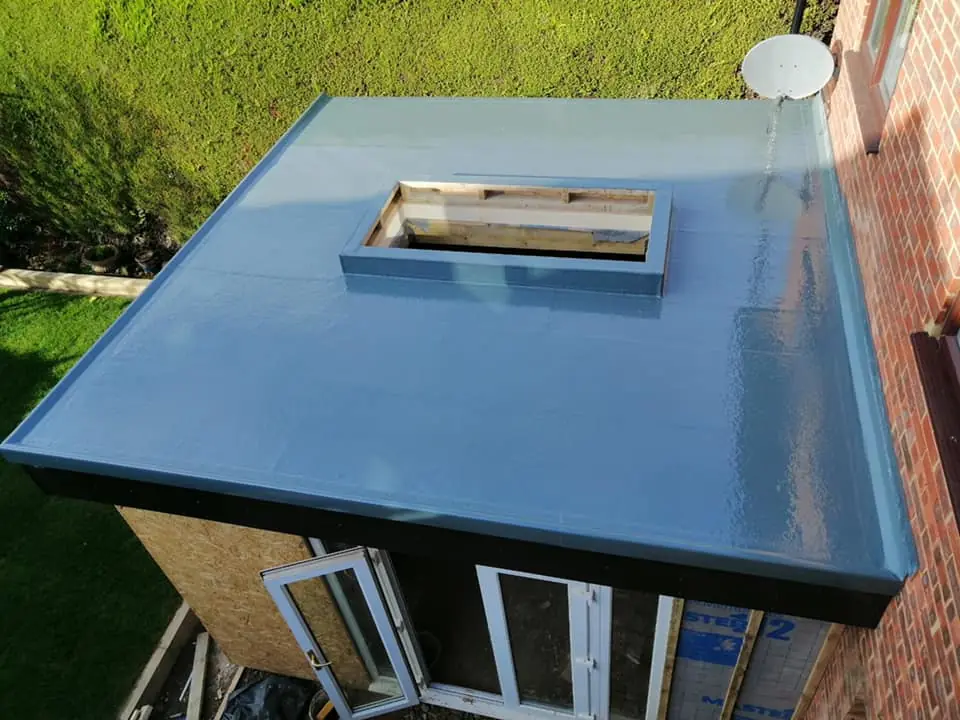
We check the existing timber before ordering a single sheet. Older farm outbuildings around Wolvey and Market Bosworth were often built with purlins sized for a much lighter original covering, and some need extra noggins or a full deck adding before Onduline goes on safely. For the structural timber detail behind purlin spacing and roof decking, the Structural Timber Association's member profile for Roof Profiles Ltd gives a useful outside reference on how timber roof structures are specified and built.
How We Fit Onduline Roofing, Start to Finish
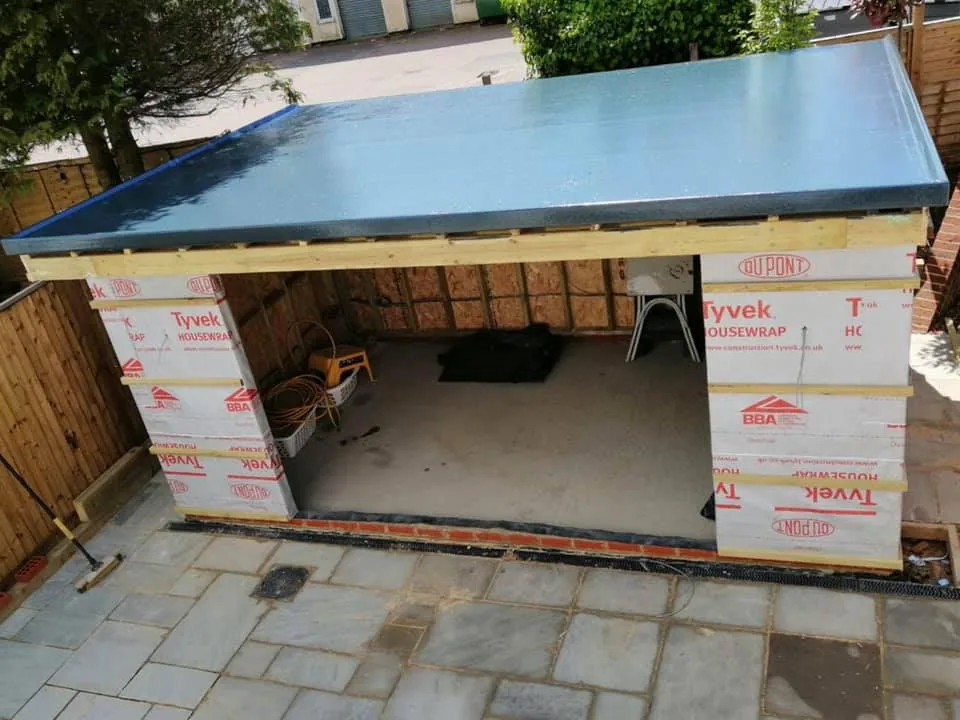
The job follows the same order on every outbuilding, whether it is a shed in a Hinckley back garden or a stable block out on the rural fringe near Sapcote and Sharnford:
- Check the timber frame, purlins or deck, and repair or add structure where needed
- Strip off the old covering and dispose of it responsibly
- Fit a breathable membrane where the building needs one
- Lay Onduline sheets from the eaves upward, with a 300mm end lap between rows
- Fix every corrugation at eaves, overlaps and ridge — roughly 20 fixings per sheet
- Fit ridge pieces and any flashings against adjoining walls
- Clear the site and check the finished roof for line, fixing and weathertightness
A single shed roof is usually a half-day job. A larger stable block or barn roof typically takes one to two days, weather allowing. Because the sheets are light, we rarely need scaffold for a low outbuilding — a tower or roof ladder is usually enough, which keeps costs down.
Checking the Finished Roof Before We Leave
Once the last ridge piece is fixed, we walk the roof and check three things: every fixing is seated correctly with its washer, the end laps sit at the full 300mm, and the ridge and any wall flashings shed water cleanly rather than trapping it. A rushed fixing job is the usual reason an otherwise good sheet starts leaking within a year or two.
On exposed sites — and the fields around Wolvey and Higham on the Hill take a harder battering from wind than a sheltered garden in town — we also check the eaves and verge fixings hold against wind uplift, not just rain. A stable roof that lifts at the eaves in a storm loses far more than the sheet itself.
Keeping an Onduline Roof Performing for Years
Onduline needs very little upkeep, but a few checks each year keep it running its full working life.
- Clear leaves and moss from valleys and gutters each autumn
- Check ridge pieces and wall flashings after storms
- Look underneath for daylight or damp after heavy rain
- Keep overhanging branches trimmed back on rural and farm sites
Where a bitumen sheet roof has faded, gone patchy with moss, or lost some of its original colour, our roof coatings and sealing service can extend the working life of a sound roof without a full re-sheet. It is often the cheaper route on an outbuilding that still has years left in the sheets themselves.
Why Hinckley Property Owners Choose Tate & Sons for Onduline Roofing
Daniel Whitmore, our project manager, runs the day-to-day site work on every outbuilding job, from a single shed re-roof to a full stable block. He specialises in the timber detailing that a lightweight sheet roof depends on — getting purlins, decking and fixings right the first time, rather than fitting a sheet over a frame that was never checked properly.
Founder James Tate started out on the tools more than 20 years ago and still quotes the majority of jobs personally, including the smaller outbuilding work that some roofing firms turn away. Between us we bring 40 years of combined team experience, hold NVQ Level 2 and 3 qualifications in Roofing, and carry CSCS cards. Sophie Bennett, our office manager, keeps quotes and scheduling straightforward from the first call. Read more about the people behind the work on our About Tate & Sons Roofing page.
Areas We Serve Across Hinckley and Bosworth Country
We fit Onduline and other corrugated roofing across Hinckley and the surrounding villages and farms. If your area is not listed below, call us anyway — there is a strong chance we already cover you.
- Hinckley (LE10)
- Burbage (LE10)
- Barwell (LE9)
- Earl Shilton (LE9)
- Sapcote (LE9)
- Sharnford (LE10)
- Wolvey (LE10)
- Higham on the Hill (CV13)
- Sutton Cheney (CV13)
- Stoke Golding (CV13)
- Market Bosworth (CV13)
- Nuneaton (CV10 / CV11)
- Bedworth (CV12)
Got Questions?
Your Onduline Roofing Questions, Answered Properly
What is Onduline roofing actually made from?
Onduline is a corrugated sheet made from bitumen-saturated organic and cellulose fibres, pressed into a wave profile similar to steel sheet. It contains no asbestos and no hazardous materials, despite the visual similarity to old asbestos-cement corrugated sheet on farm buildings. The bitumen coating gives it flexibility that rigid sheet materials do not have, which is part of why it copes well with minor movement in an older timber frame.
How long does Onduline roofing actually last?
Onduline typically lasts 15 to 30 years depending on fixing quality, pitch and exposure, and it usually carries a 15-year waterproofing guarantee from the manufacturer. That is shorter than steel corrugated, which commonly runs 25 to 50 years, or fibre-cement at 30 to 50 years. On a shed or stable roof where budget matters more than a 40-year lifespan, that trade-off is usually the right one.
What is the minimum roof pitch for Onduline sheets?
The minimum pitch for Onduline is around 5 degrees, laid with a 300mm end lap between rows of sheet. Between roughly 5 and 10 degrees the sheets need a solid ply or OSB deck underneath; between 10 and 15 degrees they can go straight onto purlins at 450mm centres. Below the minimum pitch, water can sit in the corrugations rather than running off, which shortens the roof's working life considerably.
Can I fit Onduline roofing myself, or should I get a roofer in?
You can fit Onduline yourself on a small, low shed roof if you are comfortable working at height and follow the fixing pattern exactly. The most common DIY mistake is under-fixing — using fewer than the roughly 20 fasteners per sheet the manufacturer specifies, which is also the fastest way to void the guarantee. For anything above a single-storey shed, or any stable or outbuilding where the timber frame needs checking first, a roofer catches problems a first-time fitter usually misses.
Is Onduline roofing noisy in heavy rain?
No — Onduline is noticeably quieter than steel sheet under rainfall, with independent testing showing roughly 23 decibels less noise than a ribbed metal roof of similar thickness. That is a meaningful difference if the building sits close to stabled horses, a home office, or a bedroom window. The bitumen layer absorbs and dampens the impact of raindrops rather than transmitting it straight through, unlike a rigid steel sheet.
Does Onduline roofing sag or melt in hot weather?
Properly fixed Onduline does not melt or sag in normal UK summer temperatures — the bitumen's melting point sits well above anything the weather here produces. Where sagging does happen, it is almost always down to incorrect installation: too few fixings, purlins spaced too widely, or a missing deck on a low-pitch roof. Correct fixing at the specified centres, on a properly prepared structure, avoids the problem entirely.
What's the difference between Onduline and cheaper bitumen sheets like Coroline?
Onduline is thicker and heavier than budget alternatives such as Coroline — roughly 3mm and 3.3kg per m² against 2.6mm and 2.9kg per m² — which makes it more rigid and better suited to exposed or higher-wind sites. Onduline also carries BBA approval, which some budget bitumen sheets do not. Coroline suits a low-risk DIY shed roof well; Onduline is the sturdier choice for a stable block or anything taking more weather.
Can Onduline sheets be fitted over an old asbestos-cement corrugated roof?
Generally, no — overboarding directly onto suspected asbestos-cement sheet is not standard practice, and the old sheet needs testing and safe removal by a licensed contractor first rather than sheeting over it. This comes up often on older farm outbuildings around Sutton Cheney and Market Bosworth, where grey corrugated cement sheet from decades ago is still common on barns and stores. We arrange testing before quoting on any building where the existing roof looks like it could be asbestos-cement.
Is Onduline a sensible choice for an exposed stable roof out near Wolvey or Sharnford?
Yes, provided the fixings and structure are done properly — Onduline copes well with exposed, wind-heavy sites once every corrugation is nailed at the eaves, laps and ridge as specified. The rural fringe around Wolvey and Sharnford sees harder wind-driven rain than a sheltered garden in town, so we pay particular attention to eaves and verge fixing on those jobs. Done right, a lightweight sheet roof there performs just as reliably as one in a more sheltered spot.
Book Your Free Drone Roof Survey for Onduline Roofing Today
A shed or stable roof with lifted sheets or failing fixings does not stay a small problem for long. Water finds its way to the timber underneath, and what starts as a patch job on one corner turns into a full re-sheet with rotten purlins to replace as well. A free drone survey tells you exactly what your outbuilding roof needs, with no ladder and no obligation.
Call the Hinckley team today on 01455 242595, or request your free drone survey online. We're already working across your area.
Book Your Free Drone Roof Survey
See exactly where your roof stands, with no obligation and no pressure. Call our Hinckley team or request your free drone survey today.
Get in Touch
Tate & Sons Roofing — Hinckley Office
10 Brosdale Drive, Hinckley, LE10 0SW
📞 01455 242595
✉️ [email protected]