
🏠 Trusted Local Roofers
Lead Work & Lead Flashing in Hinckley
More roofs fail at the lead than anywhere else. The tiles or slate can be sound for decades, but the lead flashing dressed around a chimney, into a valley, or against a wall abutment is the part that takes the real punishment, and the part that gets skipped when a cheaper job is priced up. Lead work and lead flashing in Hinckley has to cope with driving rain funnelled along the old Watling Street corridor and the exposed farmland out past Market Bosworth, so it needs doing properly the first time. Tate & Sons Roofing is a roofing contractor across Hinckley that fits and repairs lead work on everything from a single chimney to a full period roof.
This page covers how to spot lead that has already started to fail, when a repair beats a full replacement, which lead code suits which job, what a proper installation looks like on site, and real cost ranges for the area. If you would rather have someone look first, our free drone survey shows every flashing, valley and abutment in close-up detail before a single scaffold pole goes up.
- Fully Insured
- 10-Year Guarantee
- 5-Star Rated
Quick Free Estimate - No Obligation
We're not just roofers – we're your neighbours.
Fully Insured • Response within 15 mins
🔒 Your details are safe with us. No spam, ever.
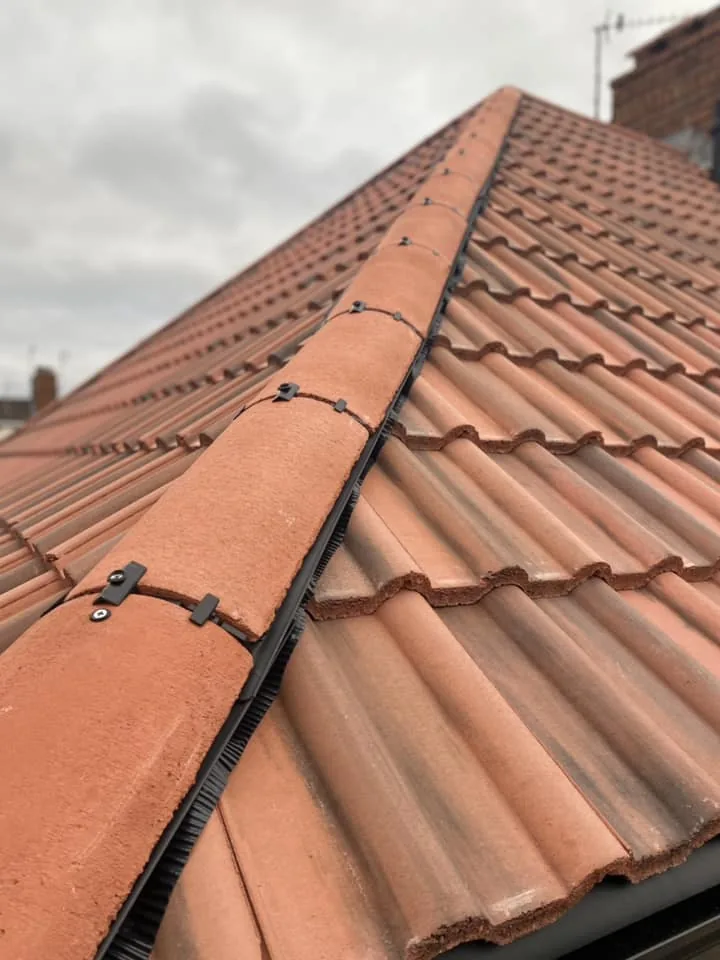
Spot the Signs Your Lead Flashing Is Already Letting Water In
Lead rarely fails without warning. The trouble is that a flashing thirty feet up a chimney stack is easy to ignore until water has already found its way into the timber below.
Watch out for these signs on any Hinckley roof:
- Hairline cracks running across the lead, usually where it has been dressed too thin or fixed too tightly
- Lead lifting away from a chimney or wall, leaving a visible gap
- White or grey powdery streaks below a flashing, a sign the lead itself is breaking down
- Damp patches on a chimney breast or ceiling that only show up after heavy rain
- Old sealant or mastic smeared over a joint instead of a proper lead detail
- Splits at corners and stepped sections, where movement stresses the lead most
None of these mean the whole roof needs replacing. But every one of them means water is finding a way past a detail that should be watertight. Around the older terraces near the Druid Quarter, we still find flashings patched with sealant years ago, buying time while the timber underneath quietly rots. A free drone survey catches these signs early, in close-up footage, before they turn into a bigger repair.
Repair or Replace — Getting the Call Right on Failing Lead
A short section of lifted or cracked lead on an otherwise sound roof is usually a straightforward repair. We re-dress the lead back into shape, re-point the chase where it meets the brickwork, and the job is done in a day. Full replacement makes more sense once the lead itself has perished, was undersized for the job in the first place, or has failed in several places across the same roof.
We check the whole roof before recommending either route, not just the section you called about. A leak at one chimney flashing often has a twin starting on the far slope that has not dripped through yet, and it makes sense to deal with both while the scaffold is already up on a Hinckley roof.
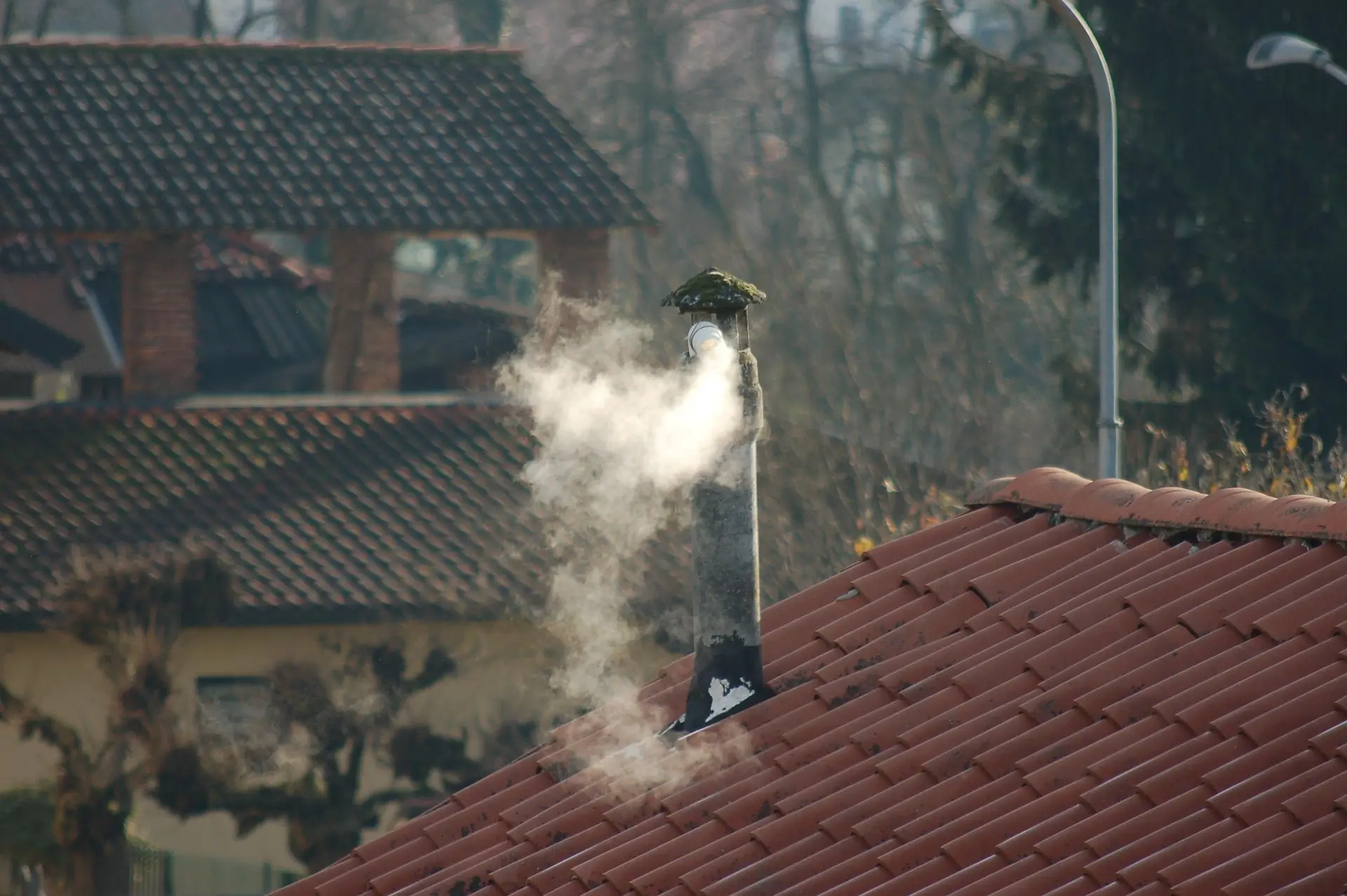
Daniel Whitmore, our project manager and lead roofer, is usually the one who finds the real cause of a leak rather than just patching the symptom. He specialises in leadwork and heritage tile and slate detailing on the area's older properties, and he can tell within minutes whether a stubborn drip is coming from the flashing itself or from a chase that was never cut deep enough into the brick. Where a wider roof problem sits behind the leak, our roof repairs and restorations service covers the structural side alongside the leadwork.
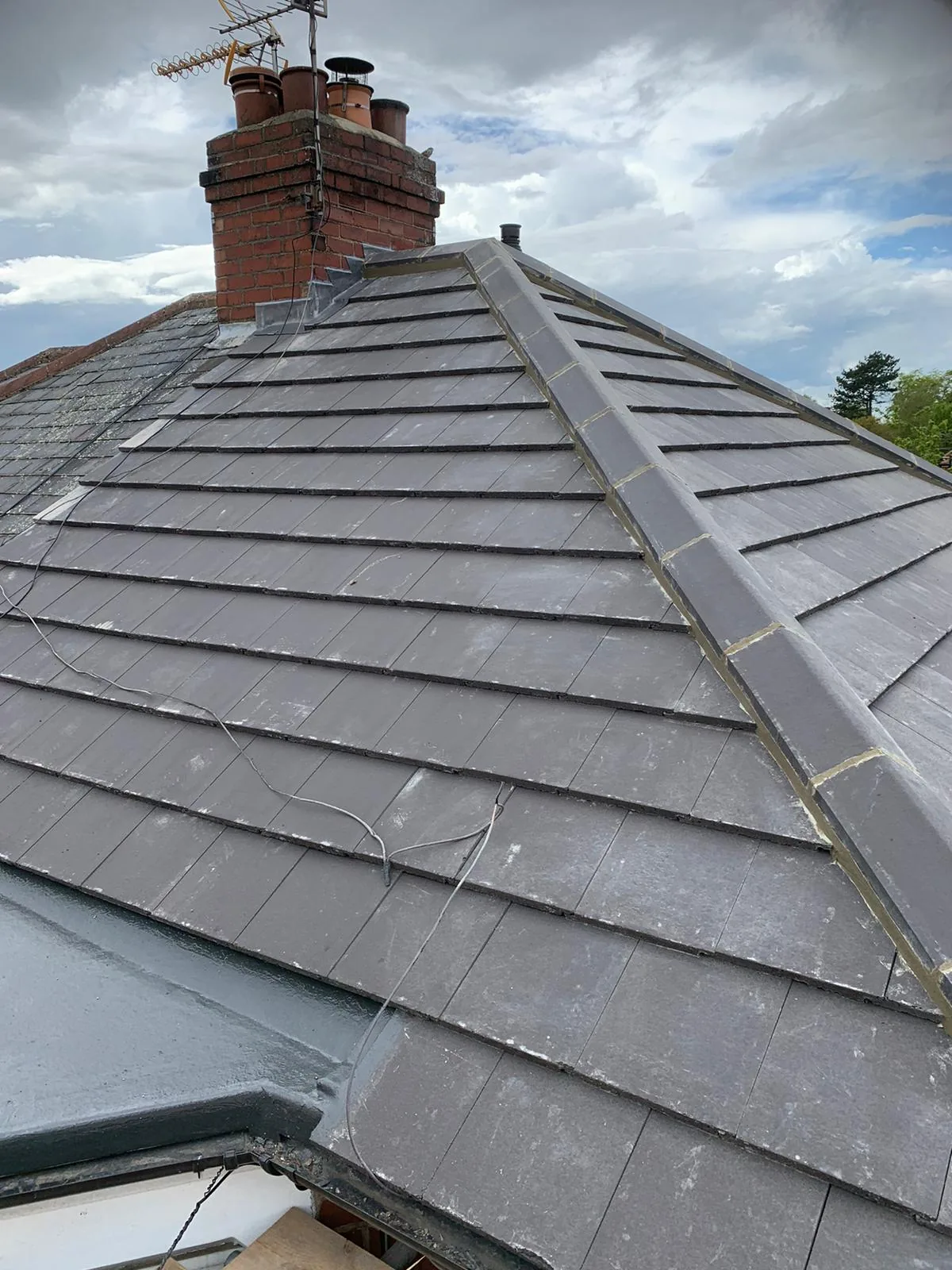
Code 3, 4, 5 or 6 — Choosing the Right Lead for the Job
Lead is graded by code, and the code tells you the thickness and weight of the sheet, not the brand or the finish. Using too light a code for an exposed valley or a wide chimney back gutter is one of the most common reasons lead fails early. A roofer who cannot tell you which code they plan to use on your job is not one to hire.
| :-: | :-: | :-: | :-: |
| Lead Code | Thickness / Weight | Typical Use | Typical Lifespan |
| Code 3 | 1.32mm, about 15.0kg/m² | Concealed soakers under tiles or slates | 40–60 years |
| Code 4 | 1.80mm, about 20.4kg/m² | Chimney flashings, stepped abutments, general use | 60–80 years |
| Code 5 | 2.24mm, about 25.4kg/m² | Valleys, aprons, exposed or wider flashings | 80–100 years |
| Code 6 | 2.65mm, about 30.1kg/m² | Flat roof coverings, complex dormers, heavy exposure | 100+ years |
Code 4 covers most chimney and abutment work on a standard Hinckley semi. Code 5 earns its keep on valleys and wider aprons that carry more water, and on the taller, more exposed stacks out toward Higham on the Hill. Code 6 tends to appear on flat sections and the more elaborate period roofs around Market Bosworth and Stoke Golding, where a conservation area often expects lead detailing to match what was there originally rather than a cheaper substitute. Lead specified and worked to BS EN 12588 gives you a traceable standard to point back to, and the Lead Sheet Training Academy's directory of trained lead workers is a useful independent check on any contractor's leadwork credentials, ours included.
What Really Happens When We Fit or Renew Your Lead Flashing
Every lead job on a Hinckley roof follows the same order, whether it is one chimney or a full valley run:
- Old lead, sealant and any failed soakers stripped back completely
- Timber, felt and brickwork chases checked and made good
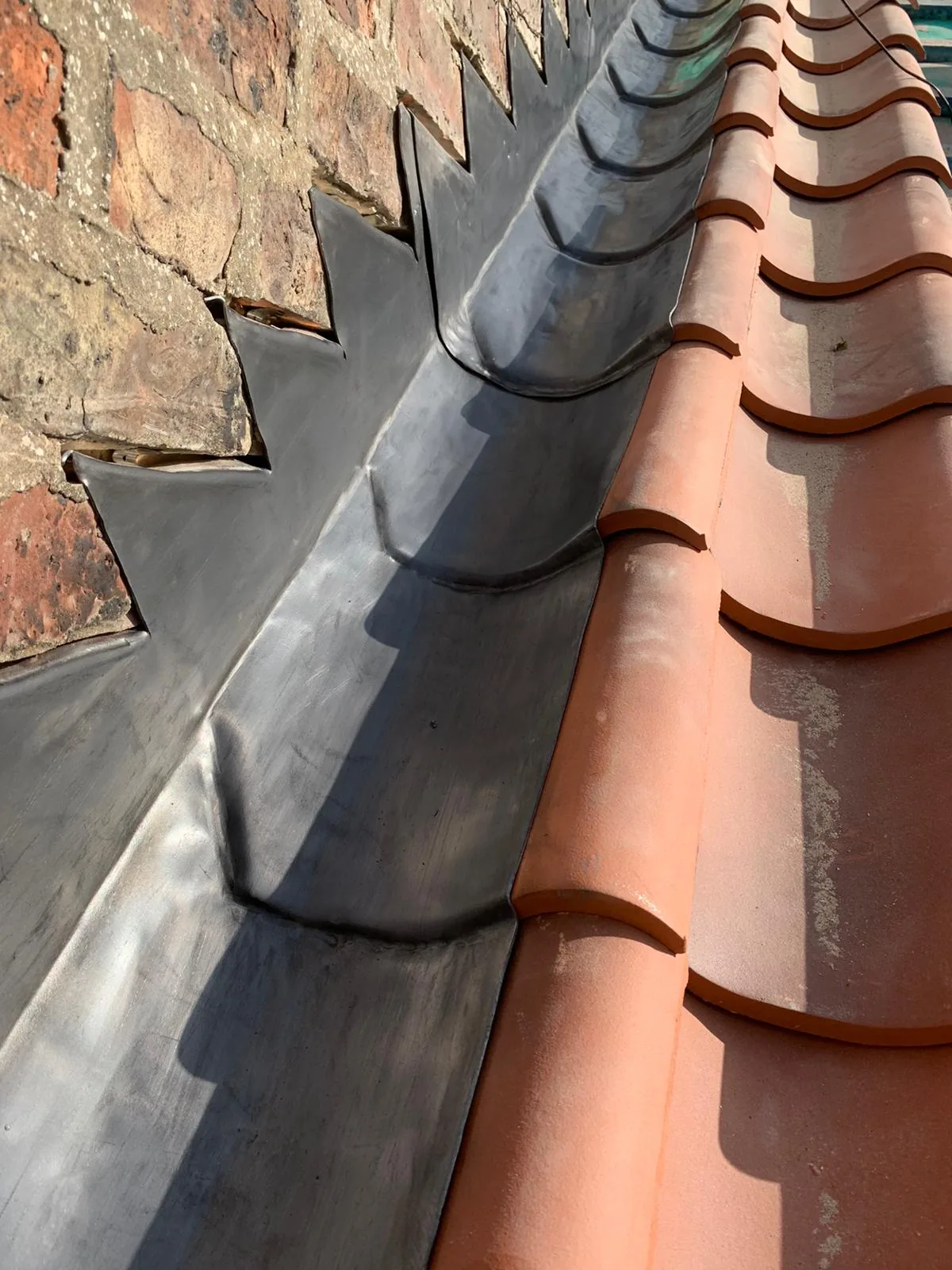
- Correct code lead cut and dressed by hand to the exact shape of the detail
- Expansion bays formed on any run over 1.5 metres, so the lead can move without cracking
- Lead fixed with copper or stainless clips, never nailed straight through the sheet
- Top edge dressed into a raked-out chase and pointed with mortar to lock it in place
- New lead treated with patination oil to stop early white staining while it weathers naturally
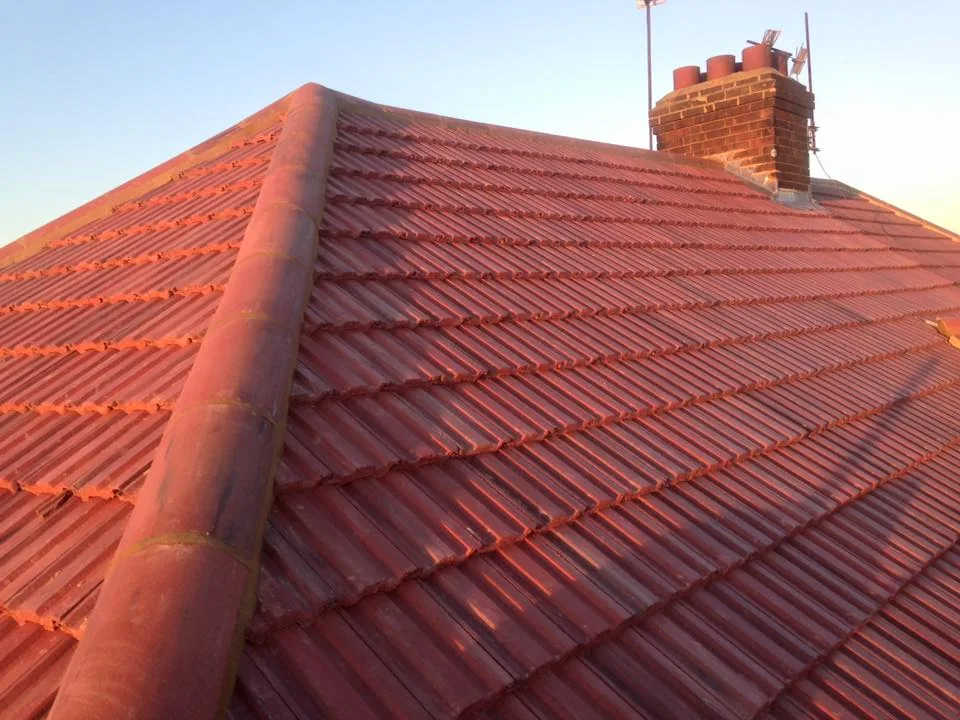
That expansion bay step matters more than most homeowners realise. Lead expands and contracts with temperature far more than tile or slate, and a long run fixed rigidly in one piece will crack within a few years however good the initial fit looks. It is a small detail that separates lead work built to last from lead work that fails again within a season, and it is exactly the kind of thing Daniel checks on every job across Hinckley.
How We Check Your New Lead Work Is Actually Watertight
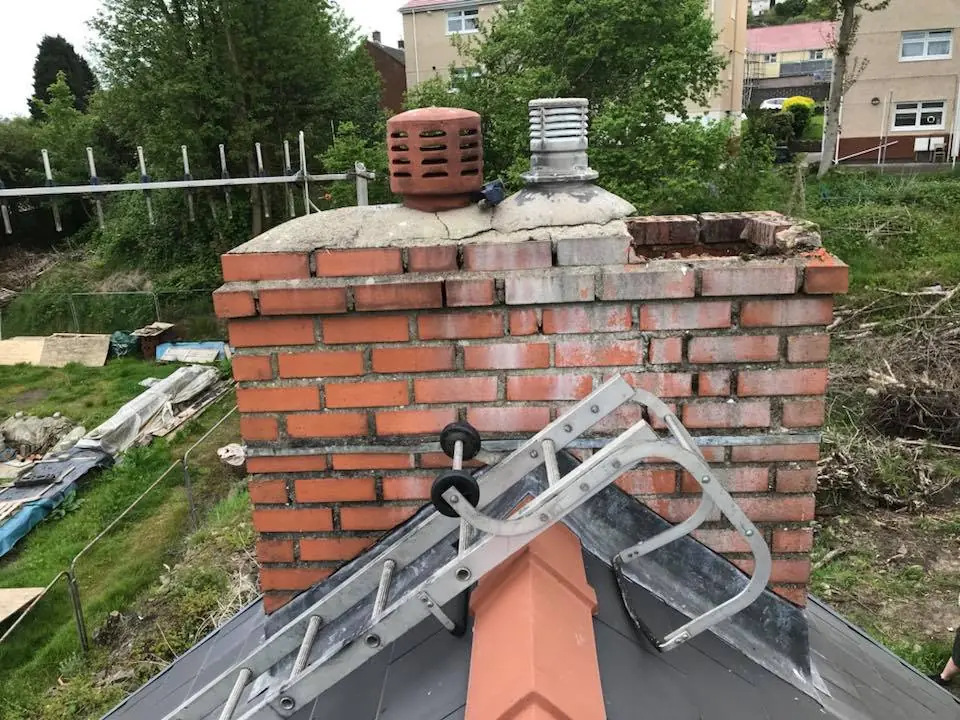
A flashing can look neat and still leak, so we check more than the visible finish before calling a job complete. We look at how the lead has been dressed into the joint, whether the pointing is solid rather than smeared over a gap, and whether water is directed away from the join rather than pooling against it.
We take close-up photos of every completed detail, chimney, valley and abutment alike, so you have a record of the work rather than just our word for it. Every lead job carries our 10-year workmanship guarantee, which only makes sense once you know the detailing underneath is sound. If anything moves or opens up within that period on a Hinckley property, we come back and put it right.
Keep Your Lead Flashing Performing — and Safe From Theft — for Decades
Good lead work needs very little upkeep, but a few checks keep it performing for the long run.
- Clear moss and debris from valleys and gutters each autumn, before it dams water against the lead
- Look for green or white staining after storms, an early sign lead is starting to break down
- Keep an eye on pointing around chimney flashings, since a raked-out chase can loosen over time
- Book a drone survey after any major storm to check flashings you cannot see from the ground
Lead also carries scrap value, and theft from roofs remains a genuine risk in Leicestershire, particularly on isolated rural properties and outbuildings around Sutton Cheney and Wolvey where a roof is out of sight from the road. Forensic marking such as SmartWater, discreet fixing methods, and swapping high-risk sections for a lead-look alternative where appropriate are all worth discussing on a property that feels exposed. We can advise on this as part of any Hinckley quote.
What Lead Work Really Costs in Hinckley
Cost depends on the lead code needed, the length of run, and how much access the job needs. As a general guide, a straightforward repair, re-dressing and re-pointing a lifted section, typically runs £150–£400. A full chimney flashing replacement in Code 4 or Code 5 lead usually starts from £400–£800 for a standard stack. Valley lead in Code 5, which carries more water and needs a wider sheet, tends to run £120–£180 per metre installed. Apron and step flashing against a wall or extension typically runs £60–£110 per metre. A full lead-covered flat section, such as a dormer or bay roof, generally costs £90–£250 per square metre depending on complexity.
What pushes a price up or down:
- **Lead code required*— heavier codes for valleys and wide aprons cost more than Code 3 or 4
- **Access*— a tall chimney or a roof boxed in by neighbouring buildings needs more scaffold
- **Number of joints and corners*— stepped abutments and dormers take longer to dress than a straight run
- **Old lead removal*— stripping failed lead and disposing of it responsibly adds to labour time
- **Current lead price*— lead is traded as a commodity metal, and material cost moves with the wider metals market
- **Timber condition*— rotten battens or rafters found underneath need replacing before new lead goes on
These are general market ranges for the Hinckley area, not a quote for your roof. Two chimneys the same size can price differently once access, existing damage and code are factored in. A fixed price needs a survey.
Why Hinckley Homeowners Trust Tate & Sons With Their Lead Work
Lead work is a specialist skill inside the wider roofing trade, and it shows the moment a job is done badly. Daniel Whitmore, our project manager and lead roofer, runs the day-to-day site work and specialises in leadwork and heritage tile and slate detailing on the area's older properties. If there is a tricky valley or a stubborn leak on a Hinckley roof, he is usually the one who finds it and puts it right.
Founder James Tate started on the tools more than 20 years ago and still quotes the majority of jobs personally, so the person weighing up your chimney or valley is the one standing behind the finished work. Between us we bring 40 years of combined team experience, hold NVQ Level 2 and 3 qualifications in Roofing, and carry CSCS cards. Sophie Bennett, our office manager, keeps quotes, scheduling and aftercare running smoothly from the first call through to the finished job. Read more about the people behind the work on our About Tate & Sons Roofing page.
Areas We Serve Across Hinckley and Bosworth Country
We carry out lead work and lead flashing repairs across Hinckley and the surrounding borough. If your village is not listed below, call us anyway, since there is a strong chance we already cover you.
- Hinckley (LE10)
- Burbage (LE10)
- Barwell (LE9)
- Earl Shilton (LE9)
- Sapcote (LE9)
- Sharnford (LE10)
- Wolvey (LE10)
- Higham on the Hill (CV13)
- Sutton Cheney (CV13)
- Stoke Golding (CV13)
- Market Bosworth (CV13)
- Nuneaton (CV10 / CV11)
- Bedworth (CV12)
Got Questions?
Your Lead Work Questions, Answered Properly
What is lead flashing and why does my roof need it?
Lead flashing is the strip of lead sheet dressed into the joints where a roof meets a chimney, wall, or another roof slope, closing gaps that tiles and slates cannot seal on their own. It bends and dresses tightly around awkward shapes in a way rigid materials cannot match. Without it, water tracks straight into the roof at exactly the points where two surfaces meet. Almost every chimney, valley, and wall abutment on a Hinckley roof relies on it.
How do I know if my lead flashing needs repair or full replacement?
A short section that has lifted or cracked on an otherwise sound roof usually only needs a repair, re-dressed and re-pointed in a single visit. Full replacement makes more sense once the lead has perished across several sections, was undersized for the job originally, or the same flashing keeps failing after repeated patches. A free drone survey shows which situation you are actually dealing with, rather than guessing from the ground.
How much does lead work cost in Hinckley?
A straightforward repair typically runs £150–£400, while a full chimney flashing replacement usually starts from £400–£800 depending on the lead code and access. Valley lead tends to run £120–£180 per metre installed, and apron or step flashing £60–£110 per metre. These are general ranges, and a fixed price always needs a survey of the actual roof.
What is the difference between Code 4 and Code 5 lead?
Code 4 lead is 1.80mm thick and covers most chimney flashings and stepped abutments on a standard home. Code 5 is thicker at 2.24mm and carries more water, so it is used for valleys, aprons, and wider or more exposed flashings. Using Code 4 where Code 5 is really needed is a common reason cheaper lead work fails within a few years. A roofer should always be able to tell you which code they plan to use before starting.
Can sealant fix failing lead flashing?
Sealant over a lead joint is not a lasting fix, even though it can look tidy at first. Lead moves with temperature, and sealant cannot flex with it the way a properly dressed and pointed detail can, so the same crack usually reopens within a season or two. It also traps moisture against the lead rather than letting it shed water cleanly. A proper repair re-dresses the lead itself and re-points the chase rather than papering over the gap.
Is my roof at risk of lead theft?
Lead carries scrap value, and theft from roofs, sheds, and outbuildings still happens across Leicestershire, particularly on isolated properties out of sight from the road. Larger flat lead areas and rural outbuildings tend to attract more attention than a standard chimney flashing on a terraced street. Forensic marking, discreet fixing, and alarmed roof sensors all reduce the risk on a property that feels exposed. We can talk through sensible options for your specific roof during a survey.
What is patination oil, and why does new lead need it?
Patination oil is a thin protective coating brushed onto freshly worked lead to stop early white staining while the metal forms its own natural weathered patina. Without it, rainwater can react with brand new lead and leave chalky white streaks down brickwork or tiles within weeks of the job finishing. It is a small step, but it protects the finish of the whole roof, not just the lead itself. It is standard practice on every lead job we complete.
Does lead work on a period property near Stoke Golding or Market Bosworth need conservation area sign-off?
It can. Both areas carry a strong concentration of listed and character buildings, and a local conservation officer may expect visible lead detailing to match traditional methods and codes rather than a modern substitute. This applies most often to prominent front-facing flashings and valleys rather than hidden rear details. We check a property's listed or conservation status before quoting on jobs in these villages.
Book Your Free Drone Roof or Chimney Survey Today
See exactly what your chimney, valley or abutment lead needs before any scaffold goes up. No ladders, no pressure, just close-up footage from a local Hinckley team.
Every season a cracked or lifted flashing is left alone, more water works its way behind it and into the timber, brickwork and plaster it was meant to protect. A small lead repair today is almost always cheaper than the damp and timber repair it turns into if it is ignored through another winter. Book a free survey now and get an honest, written quote for the work your roof actually needs.
Call the Hinckley team today on 01455 242595, or request your free drone survey online. We're already working across your area.
Book Your Free Drone Roof Survey
See exactly where your roof stands, with no obligation and no pressure. Call our Hinckley team or request your free drone survey today.
Get in Touch
Tate & Sons Roofing — Hinckley Office
10 Brosdale Drive, Hinckley, LE10 0SW
📞 01455 242595
✉️ [email protected]