
🏠 Trusted Local Roofers
Lead Flashing Around Chimneys Nottingham
A chimney rarely leaks through its brickwork. Nine times out of ten, water gets in where the chimney meets the roof — through cracked, lifted, or badly fitted lead flashing. This page covers what good chimney flashing looks like, what it costs, and how to check a job was done right. As part of our wider chimney services across Nottingham, we fit and repair lead flashing the way it should be done — cut to the roof, dressed properly, and built to outlast the tiles around it.
- Fully Insured
- 10-Year Guarantee
- 5-Star Rated
Quick Free Estimate - No Obligation
We're not just roofers – we're your neighbours.
Fully Insured • Response within 15 mins
🔒 Your details are safe with us. No spam, ever.
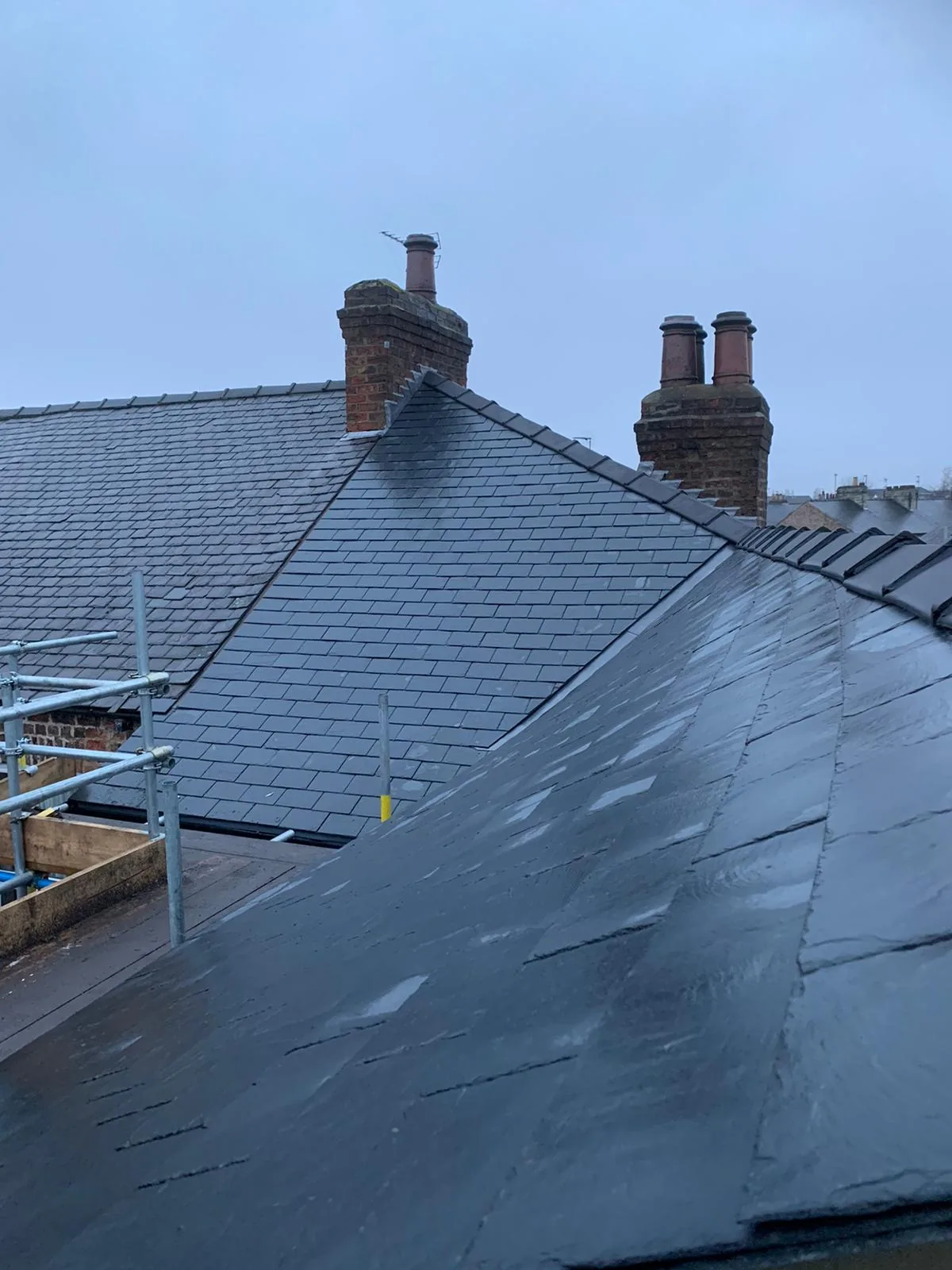
What Lead Flashing Does for Your Chimney (and Why It Fails)
Lead flashing is the strip of metal fitted around the base of a chimney to seal the joint between the brickwork and the roof covering, stopping rain from running into the gap. It's shaped to follow the chimney's four sides and dressed into the mortar joints so it can't be pulled loose by wind or rain. Lead is used because it's soft enough to bend around any chimney shape, yet tough enough to survive decades of British weather without cracking. When it fails, water doesn't just sit on the surface — it tracks down inside the chimney breast and shows up as a stain on a bedroom ceiling weeks later.
Chimney flashing takes more punishment than almost anywhere else on a roof. It sits at a junction where two different materials — brick and tile — expand and move at different rates, and it catches wind-driven rain from every direction. Here's what tells you it's on its way out.
- Damp staining or a brown ring on a ceiling or wall near the chimney breast, worse after heavy or wind-driven rain
- Visible gaps, cracks, or lifted edges where the lead meets the brickwork
- Crumbling or cracked mortar in the chase — the groove cut into the brick joint the lead is tucked into
- Green or white staining running down the chimney or roof slope below it, a sign lead is corroding
- Slipped or displaced slates and tiles right next to the chimney, often knocked loose when flashing lifts
- A musty smell in the loft near the chimney breast, even without an obvious stain yet
If any of that sounds familiar, don't wait for a full-blown leak. A cracked flashing left through one more East Midlands winter usually gets worse, not better.
Soakers, Step, Apron or Back Gutter: The Right Lead for Every Part of Your Chimney
A chimney doesn't get one piece of flashing — it gets four, each doing a different job around the stack. Getting the right piece, in the right thickness, in the right place is what separates a flashing job that lasts fifty years from one that fails in five.
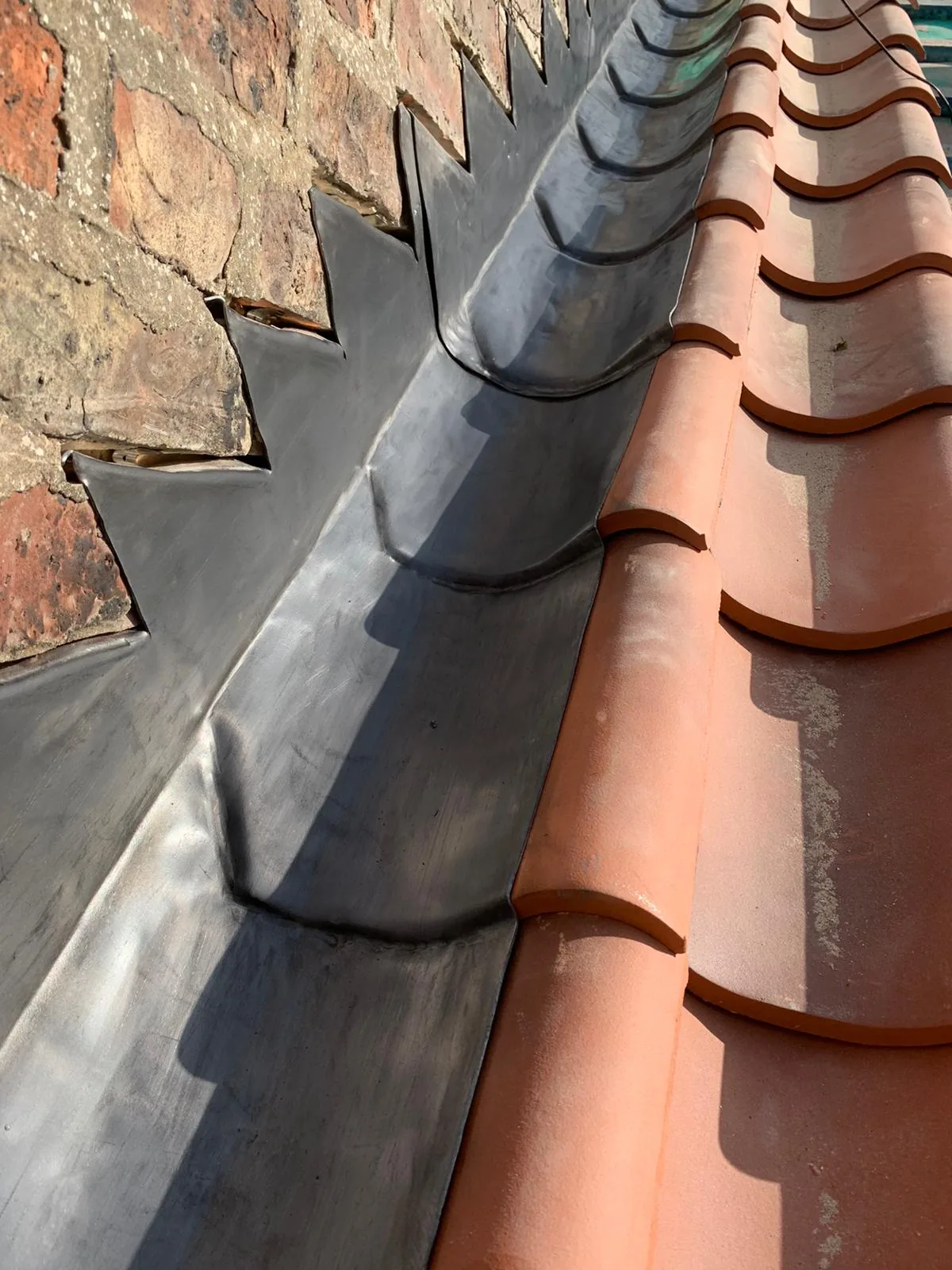
- Soakers — small individual pieces of lead fitted under each row of tiles or slates on the sides of the chimney, stepping up with the roof and directing water onto the tile below rather than letting it soak sideways into the roof timber
- Step flashing — the cover pieces that dress over the soakers and tuck into the brick joints, following the roof's slope in a staircase pattern up each side of the stack
- Apron flashing — a single wide sheet across the front (downslope) face of the chimney, with a formed drip edge that throws water clear onto the tiles below instead of behind them
- Back gutter — sits on the uphill side of the chimney and channels water running down the roof around the stack rather than letting it pool or force its way underneath
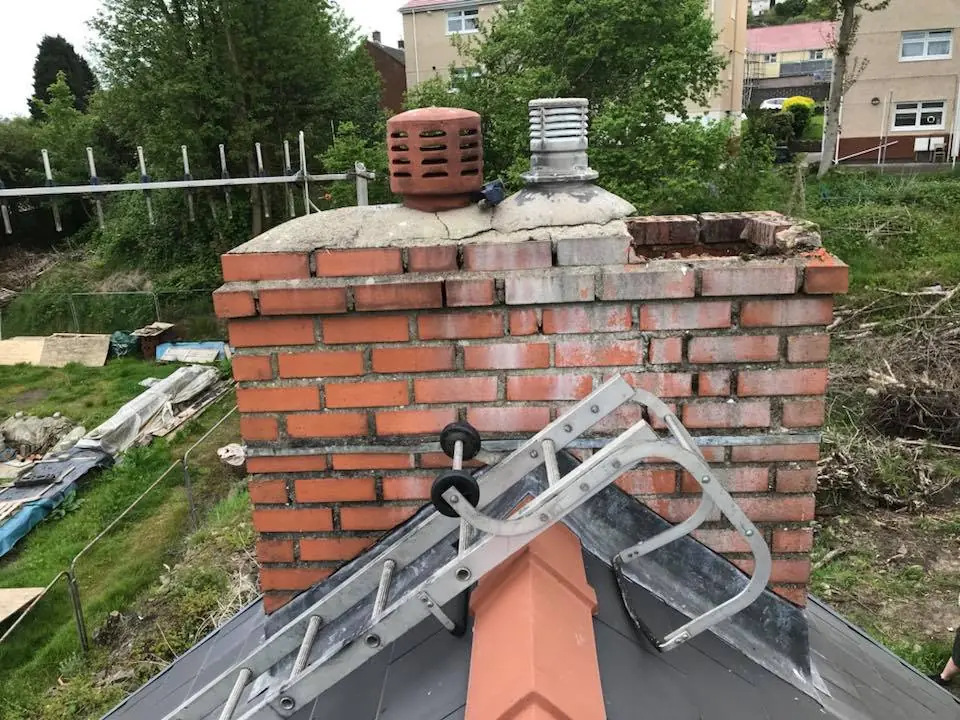
Lead comes in graded thicknesses called codes, and using the wrong one is a common reason flashing fails early. Code 4 lead is the standard choice for soakers, step flashing, and most aprons on a typical Nottingham semi or terrace. Code 5 is heavier and goes on wider aprons and back gutters, particularly on bigger stacks or more exposed roofs, where the extra thickness resists wind uplift and thermal movement better. For the full detail on lead grades and best-practice installation, the Lead Sheet Training Academy sets the training standard the trade works to.
Some homeowners ask about lead-free alternatives such as Ubiflex, a bitumen-and-mesh product that's lighter, faster to fit, and has no scrap value — which removes the theft risk entirely. It performs well and carries BBA certification, but it doesn't match traditional lead's proven 50-plus-year track record or its look on a period property. We'll talk you through both options honestly at survey stage rather than pushing whichever is easiest to fit. If your stack itself has cracked brickwork or failed flaunching under the flashing, that's a job for our chimney stack repair service before any new lead goes on.
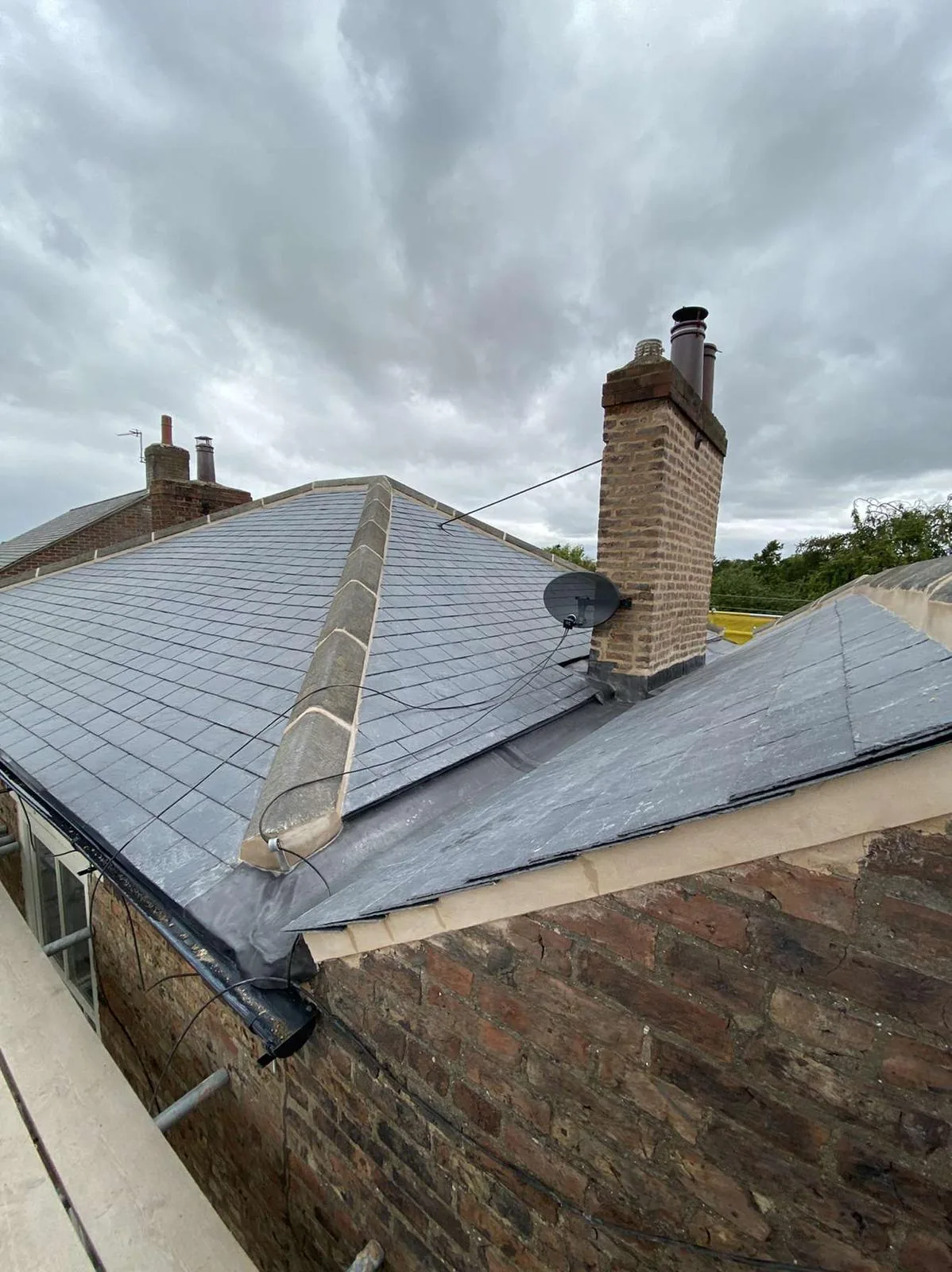
What Happens Before We Touch Your Chimney
A flashing job starts with an honest look at the whole stack, not just the strip of lead that's visibly failing.
- We carry out a free drone survey of the chimney, flashing, and surrounding roof area — no ladders needed to get a close look
- You get clear photos showing exactly where the flashing has failed and how far the damage has spread
- We check the brickwork and flaunching (the mortar capping around the chimney pots) for cracks that need attention first
- We tell you honestly whether a patch repair will hold or whether the flashing needs full replacement
- We confirm the right lead code for each section — soakers, steps, apron, and back gutter — based on your chimney's size and exposure
- If your home sits in a conservation area around The Park or Lenton, we flag anything that needs sign-off before work starts
- You get a firm quote and agreed scope before any tool comes out of the van
How We Fit Lead Flashing That Outlasts the Chimney Around It
Most flashing failures trace back to a rushed install, not a fault in the lead itself. Here's how we do it properly.
- Strip out the old flashing and clear any failed mortar from the chase around the chimney base
- Cut a clean chase roughly 25mm deep into the brick joint, ready to take the new lead
- Fit soakers individually under each course of tiles or slates as we work up both sides of the stack
- Dress step flashing over the soakers, keeping consistent overlaps of 75-100mm so water always sheds downward
- Form and fit the apron across the front face with a proper drip edge, and the back gutter behind the stack with enough fall to move water around it, not pool against it
- Tuck every piece into the chase and point it with mortar, leaving room for the lead to expand and contract with temperature changes
- Clear the site and leave the roof and guttering free of old lead and mortar debris
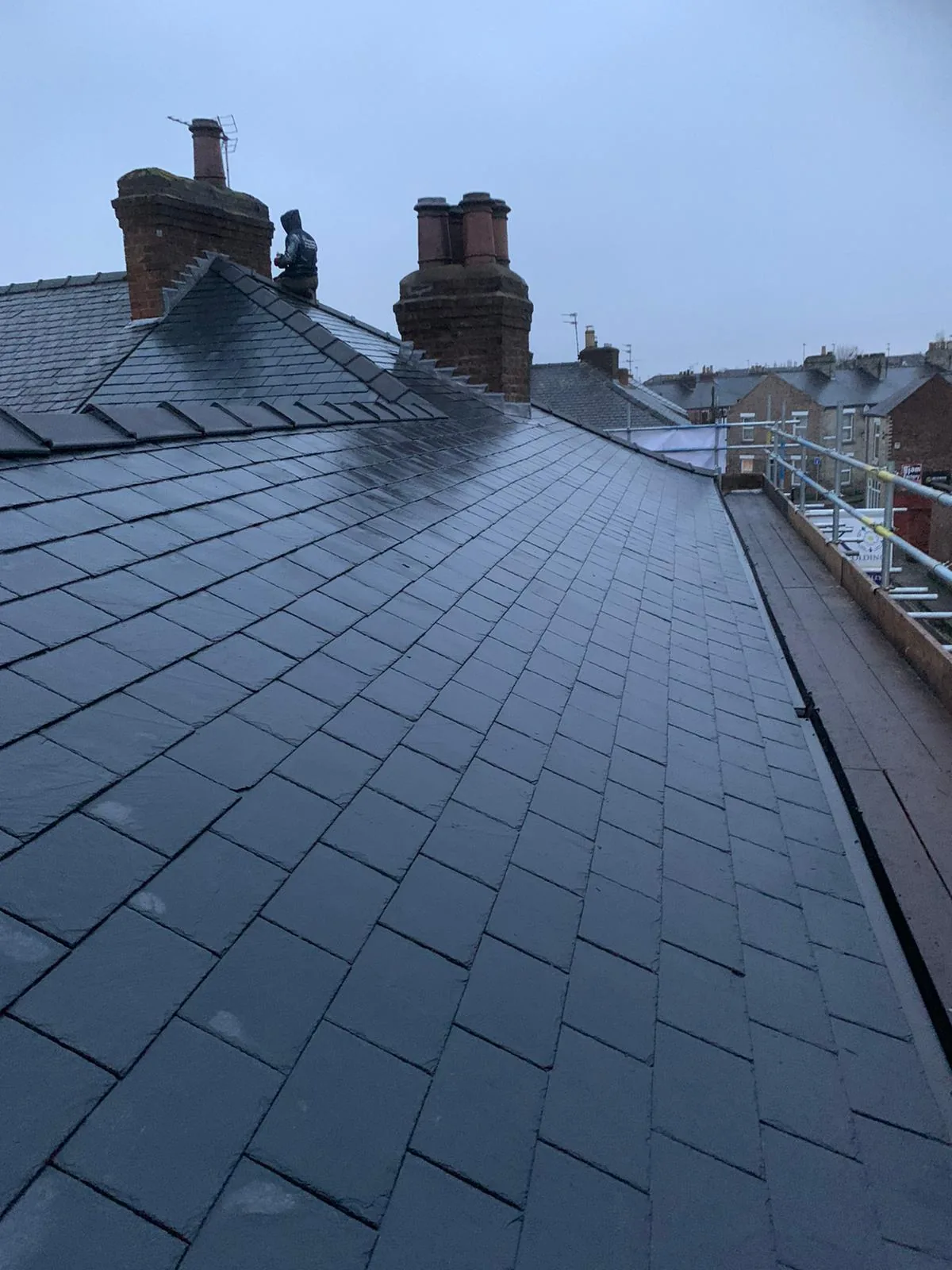
A straightforward chimney flashing replacement on a typical semi or terrace usually takes a single day once scaffolding or access is up. Bigger stacks with a back gutter and full four-sided flashing can run to two days.
How to Check Your New Chimney Flashing Was Fitted Right
Whether you're checking a job we've just finished or sizing up existing flashing on a house you're buying, here's what good work looks like.
- Every lap and joint should sit tight against the brick with no visible gaps or daylight showing through
- The lead should be tucked fully into the chase and pointed neatly, not just smeared with sealant along the top
- Step flashing should follow the roof line in even, consistent steps, not bunched or stretched at any point
- The apron's drip edge should stand proud of the tiles below, throwing water clear rather than letting it run behind them
- There should be no visible fixings through the flashing laps, which would restrict the lead's natural expansion and contraction
- Ask for written confirmation of the lead code used on each section and your workmanship guarantee
We back every chimney flashing job with a 10-year workmanship guarantee, in writing, so you've got proof beyond our word.
Stopping Leaks, Theft and Damage Before They Start
A little attention twice a year keeps chimney flashing doing its job for the decades it's designed to last.
- Check the flashing from ground level (or ask us to during a routine drone survey) after any major storm
- Keep gutters and valleys near the chimney clear, since blocked drainage forces more water to sit against the flashing
- Watch for green or white staining running down the stack, an early sign the lead is corroding and worth checking
- Get loose or cracked flaunching repaired quickly, since a failed chimney cap lets water in above the flashing line
- Consider hollow-core fixings and forensic marking if lead theft is a concern in your area, or ask us about lead-free alternatives if you'd rather remove the risk entirely
- Book a check-up survey every few years, even without symptoms, especially on chimneys over 20 years since their last re-lead
Lead theft is a real issue across the East Midlands, driven by scrap value that climbs with metal prices. If you're worried about it, tell us at survey stage — we can fit hollow-core rolls that are harder to strip, or talk you through a lead-free option like Ubiflex that carries no resale value at all.
Cost & Pricing Guidance
UK chimney lead flashing pricing for 2025/26 typically runs like this:
- Small patch repair to a single section: £150-£400
- Full flashing replacement without scaffolding: £350-£460
- Full flashing replacement with scaffolding: £700-£920
- Larger stacks needing a Code 5 back gutter and full four-sided flashing: £900-£1,500
Supply cost for the lead itself typically runs £250-£310, with labour adding roughly £200-£300 per day. Scaffolding is usually the single biggest swing factor — a chimney reachable safely from a tower or ladder costs noticeably less than one needing full access scaffolding.
What pushes the price up or down: chimney size and number of pots, roof pitch and height, condition of the brickwork underneath, whether old lead and mortar need stripping first, and access. Prices also run a little higher in London and the South East than they do here in the East Midlands.
These are general ranges, not a quote. A fixed price needs a survey — and our drone survey is free, with no obligation.
Comparison Table: Chimney Flashing Materials and Options
| Option | Typical Lifespan | Best For | Relative Cost |
|---|---|---|---|
| Code 3 lead (soakers only) | 40-60 years | Under-tile soakers on standard pitched roofs | £ (lowest) |
| Code 4 lead | 50-80 years | Step flashing and most aprons on typical homes | ££ |
| Code 5/6 lead | 60-100+ years | Back gutters, wide aprons, exposed or larger stacks | £££ |
| Lead-free (Ubiflex) | 25-40 years | Theft-prone areas, lightweight or fast-turnaround jobs | ££ |
Why Choose Tate & Sons for Your Chimney Leadwork
Chimney leadwork is led by Daniel Oakland, Project Manager and Lead Roofer, who brings 20+ years in the trade and specialises in heritage slate and lead detailing alongside his flat-roof and roofline work. He's fitted flashing on everything from a straightforward semi in Beeston to period stacks around Sherwood and Mapperley, where matching the original detailing matters as much as keeping the water out.
Tate & Sons was founded by James Tate on a simple idea: find out what's genuinely wrong, use the right materials, and leave a chimney that holds for years, not months. That's exactly why we still hand-cut and dress lead to the chimney in front of us, rather than fitting a one-size-fits-all strip and hoping it holds. Read more on our About page.
Our roofers are directly employed, not subcontracted. They hold NVQ Level 2 and 3 qualifications in Roofing Occupations and carry CSCS cards. Every chimney flashing job comes with a free drone survey up front and a 10-year workmanship guarantee once the work is finished.
Chimney Lead Flashing Across Nottingham and the Wider County: Areas We Serve
We fit and repair chimney lead flashing right across Greater Nottingham and out into the wider county, on everything from Victorian terraces to modern semis.
- Nottingham City Centre (NG1)
- The Park (NG1)
- West Bridgford (NG2)
- Sneinton (NG2)
- Wollaton (NG8)
- Lenton (NG7)
- Beeston (NG9)
- Chilwell (NG9)
- Stapleford (NG9)
- Arnold (NG5)
- Sherwood (NG5)
- Mapperley (NG3)
- Carlton (NG4)
- Gedling (NG4)
- Hucknall (NG15)
- Long Eaton (NG10)
- Mansfield (NG18)
- Sutton-in-Ashfield (NG17)
Got Questions?
Your Flat Roofing Questions, Answered Properly
How much does it cost to replace lead flashing around a chimney?
Most straightforward chimney flashing jobs in Nottingham cost £350-£920, depending mainly on whether scaffolding is needed. A small patch repair to one section can cost as little as £150-£400, while a larger stack needing a full Code 5 back gutter and four-sided flashing can run to £1,500. Access is usually the biggest single factor, since scaffolding alone can add several hundred pounds. A survey gives you an exact figure rather than a range.
What are the signs that chimney lead flashing has failed?
The clearest sign is a damp stain or ring on a ceiling or wall near the chimney breast, usually worse after heavy or wind-driven rain. Outside, look for visible gaps or lifted edges where the lead meets the brick, cracked or crumbling mortar in the chase, and green or white staining running down the stack. Slipped tiles right next to the chimney are another common giveaway, since lifted flashing often knocks them loose. Catching these early usually means a repair rather than a full replacement.
How long does lead flashing on a chimney last?
Properly installed Code 4 lead flashing typically lasts 50-80 years, and heavier Code 5 sections used on back gutters can reach 100 years or more. The lifespan depends heavily on installation quality, since poor detailing at the laps and chase is the most common reason flashing fails decades early. Regular checks and clear gutters near the chimney help it reach its full working life. Cheaper lead-free alternatives generally last 25-40 years by comparison.
What's the difference between soakers, step flashing, aprons and back gutters?
Soakers are small pieces fitted under each tile course on the chimney's sides, stepping up with the roof. Step flashing dresses over the soakers and follows the same staircase pattern, tucked into the brick joints. The apron covers the chimney's front face and directs water onto the tiles below, while the back gutter sits behind the stack and channels water around it. A complete job uses all four, each cut and fitted to that specific part of the chimney.
Can chimney lead flashing be repaired, or does it need full replacement?
A repair is usually possible where the damage is isolated, such as a single lifted section, a small split, or a joint that's opened up. Widespread cracking, corrosion across most of the flashing, or lead that's reached the end of its working life generally points to full replacement. Trying to patch flashing that's failed throughout often costs more over time than replacing it properly once. Our free drone survey tells you honestly which category your chimney falls into.
Do you need scaffolding to replace chimney flashing?
It depends on the chimney's height and how safely it can be reached. Single-storey extensions or chimneys close to a stable roof edge sometimes only need a tower or ladder access, which keeps costs down. Taller stacks on a two-storey house, or anywhere with a steep pitch or awkward access, usually need proper scaffolding for safe, thorough work. We confirm what's needed during your survey rather than guessing from the ground.
Is lead-free flashing as good as traditional lead?
Lead-free products like Ubiflex perform well, resist wind uplift, and carry official BBA certification, so they're a genuine option rather than a downgrade. They're lighter, faster to fit, and have no scrap value, which removes the theft risk that affects traditional lead entirely. Traditional lead still has the longer proven track record and suits period properties where matching the original material matters. We'll talk through both honestly rather than pushing whichever is quickest for us to fit.
Do you need planning permission for chimney lead flashing work?
Most repair and replacement flashing work on a standard house doesn't need planning permission, since it's classed as maintenance rather than alteration. Building Regulations sign-off generally isn't triggered by flashing work alone unless it's part of wider chimney or roof alterations. Conservation areas around The Park and parts of Lenton can bring extra restrictions on visible materials, so it's worth checking if your property falls inside one. We flag anything that applies during your survey.
How do I stop my chimney lead flashing being stolen?
Fitting lead using hollow-core rolls with copper fixings makes it noticeably harder to strip quickly, which puts off opportunistic theft. Restricting easy roof access, such as locking away ladders and wheelie bins and adding anti-climb paint near drainpipes, removes the easiest route up. Forensic marking products let stolen lead be traced back to your property, and some insurers recognise it. If theft is a real worry in your street, a lead-free alternative with no scrap value removes the risk altogether.
Book Your Free Drone Roof Survey Today
See exactly what your roof needs before any work starts. No ladders, no pressure — just a clear picture from a local Nottingham team.
A tired roof only gets worse as water works deeper into the deck and timber beneath it. A quick, free drone survey today tells you exactly where you stand — and often the fix is smaller and cheaper than you feared. Book now, get an honest quote, and protect your home before the next East Midlands downpour finds the weak spot.
📍 57 Cyril Avenue, Nottingham, NG8 5BA
📞 0115 647 4455
Call the Nottingham team today on 0115 647 4455, or request your free drone survey online. We’re already working across your area.
Get in Touch
Tate & Sons Roofing — Nottingham
57 Cyril Avenue, Nottingham, NG8 5BA
📞 0115 647 4455
✉️ [email protected]