
🏠 Trusted Local Roofers
Lead Flashing Around Chimneys in Market Harborough
Most chimney leaks start where the stack meets the roof. That joint is sealed with lead flashing. When the lead fails or was fitted cheaply, water runs straight down inside the wall. Do you have lead flashing around chimneys in Market Harborough that has slipped, cracked or been sealed over? Tate & Sons Roofing puts it right. We fit proper lead — aprons, step flashing, soakers and back gutters — so the water sheds where it should.
This page explains how chimney leadwork actually works, why it leaks, and what a re-flash costs in 2025 and 2026. You will learn the difference between lead and a cheap sealant patch. You will also see how long good lead lasts, and when a repair beats a full replacement. Lead flashing is one part of the wider chimney services across Market Harborough we handle. Every job starts with a free drone chimney survey and a written price.
- Fully Insured
- 10-Year Guarantee
- 5-Star Rated
Quick Free Estimate - No Obligation
We're not just roofers – we're your neighbours.
Fully Insured • Response within 15 mins
🔒 Your details are safe with us. No spam, ever.
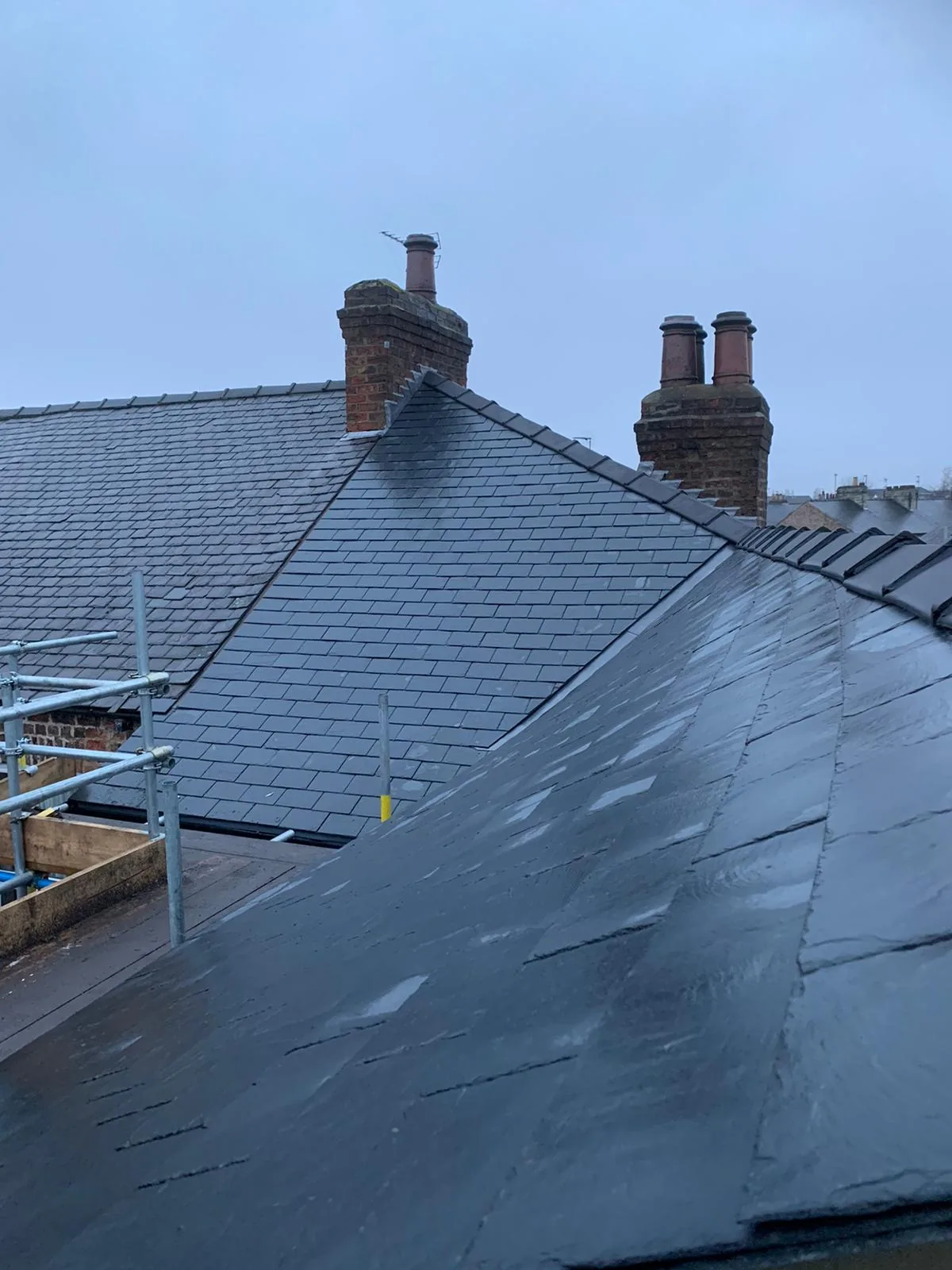
Know Why Chimney Lead Flashing Leaks in the First Place
A chimney sits in the middle of your roof and splits the flow of rainwater. Lead flashing is the system that guides that water back onto the tiles and away from the brickwork. When one part of that system fails, the leak often shows up feet away from the real fault. That is why a smear of sealant on the crack you can see rarely fixes anything.
Lead fails for a handful of reasons you can spot yourself:
We find the same story on older stacks around Great Bowden and Lubenham. Someone patched the visible crack, the leak stopped for a winter, then came back worse. Michael Tate surveys every chimney to find the real cause first. You fix the fault once, not the same symptom three times.
- Old mortar has crumbled and the lead has pulled out of the joint
- A single sheet was fitted too long, so it cracked as it expanded and shrank
- Soakers were left out and only a cover flashing was fitted on top
- The back gutter behind the stack has no fall and holds water
- A previous patch of flashband or sealant has lifted at the edges
- The chimney has moved slightly and split the lead at a corner
The Four Lead Details That Keep a Chimney Watertight
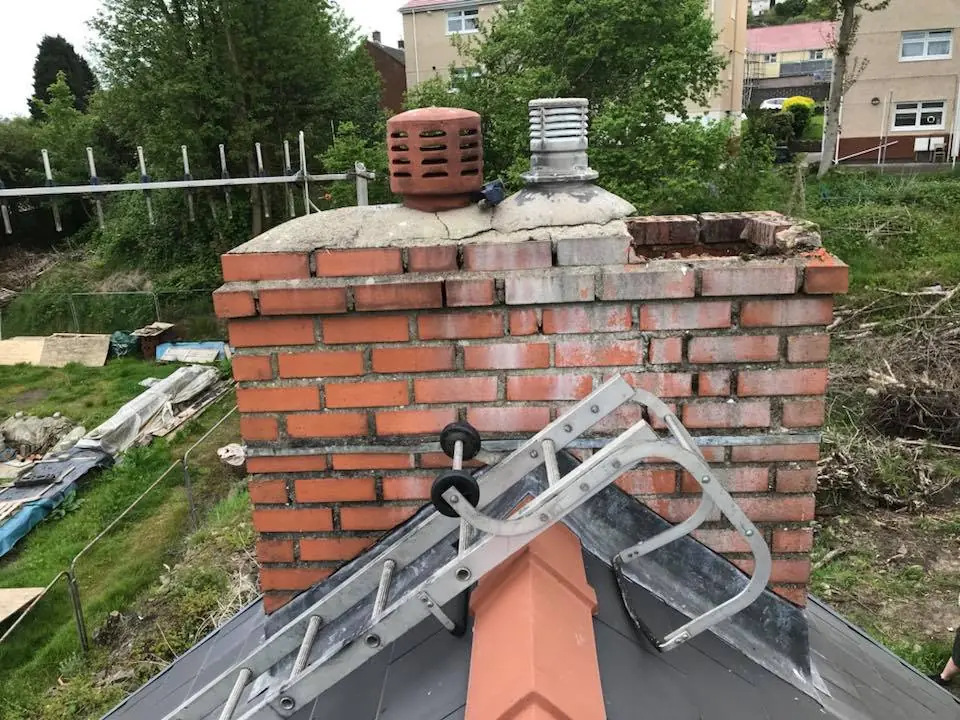
Proper chimney flashing is not one strip of lead. It is four separate details, each doing a different job, working as one system. Leave one out and water finds the gap. Here is where each piece goes and what it does.
Get all four right and your chimney stays dry through the worst Welland Valley weather. Miss the soakers, as a lot of budget outfits do, and the sides leak within a year or two. Ryan Tate runs the fitting side and forms every one of these details on the roof by hand.
| :-: | :-: | :-: | :-: |
| Lead detail | Where it goes | What it does | Notes |
| Front apron | The downhill face of the chimney | Bridges the joint and throws water onto the tiles below | The most exposed piece; splits first if fitted too long |
| Stepped flashing | The two sides, up the slope | Covers the tile edges and laps over the soakers beneath | Cut into the mortar joints in steps and wedged tight |
| Soakers | Hidden under each tile at the sides | Catch water under the tile edge and pass it back onto the roof | Often skipped on cheap jobs; the hidden layer that really seals the sides |
| Back gutter | Behind the stack, on the uphill side | Collects water coming down the slope and steers it around the chimney | The number one leak point when it has no fall or gets blocked |
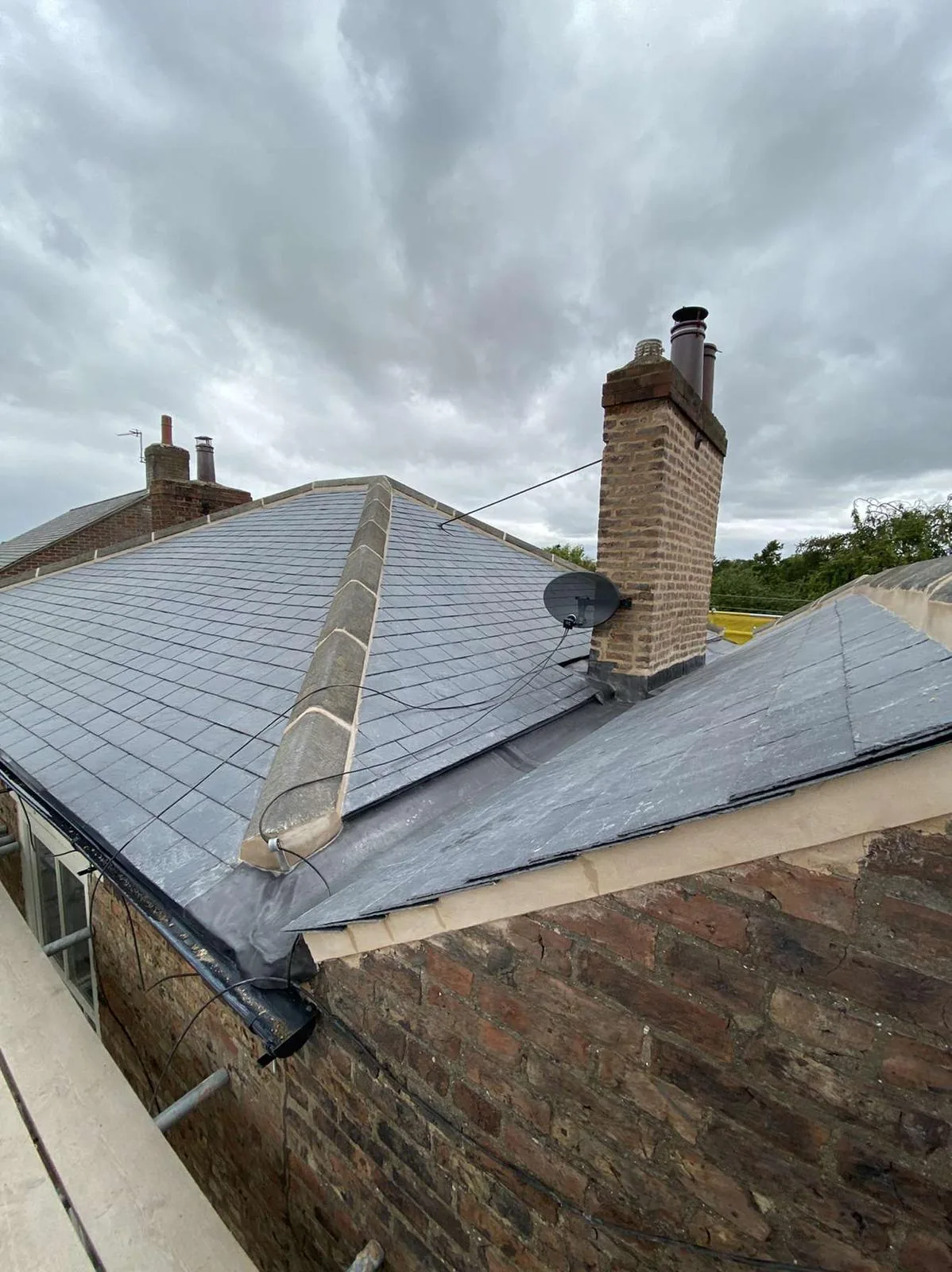
Why Proper Lead Outlasts a Smear of Sealant
Lead moves. It expands in summer heat and shrinks in winter cold, every single day. That is exactly why sealant, mastic and flashband fail so fast around a chimney. The bond cannot flex with the lead, so it splits at the edge and lets water straight through.
Worse, a failed sealant patch traps water against the joint instead of shedding it. That standing water rots the mortar and speeds up the very leak it was meant to stop. A smear of sealant buys you two to five years at best. Well-formed Code 4 lead, dressed into the joint properly, lasts decades.
If your chimney also needs the stack itself rebuilt or repointed, that is a separate job — see our Chimney Stack Repair page. Good lead is only as good as the brickwork it keys into. We check both before quoting so you fix the whole problem at once.
Spot the Warning Signs Before Water Reaches Your Ceiling
A failing chimney flashing gives you plenty of warning. Catch it early and you often save the ceiling, the plaster and a much bigger bill. Around Market Harborough, these are the signs we get called out to most.
- A brown stain on the ceiling or chimney breast that grows after rain
- Damp or peeling wallpaper on the wall beside the fireplace
- Lead that has visibly lifted, curled or slipped out of the joint
- White salt marks or crumbling plaster near the chimney
- Old sealant or flashband cracking and peeling at the edges
- A musty, damp smell in the room below the stack
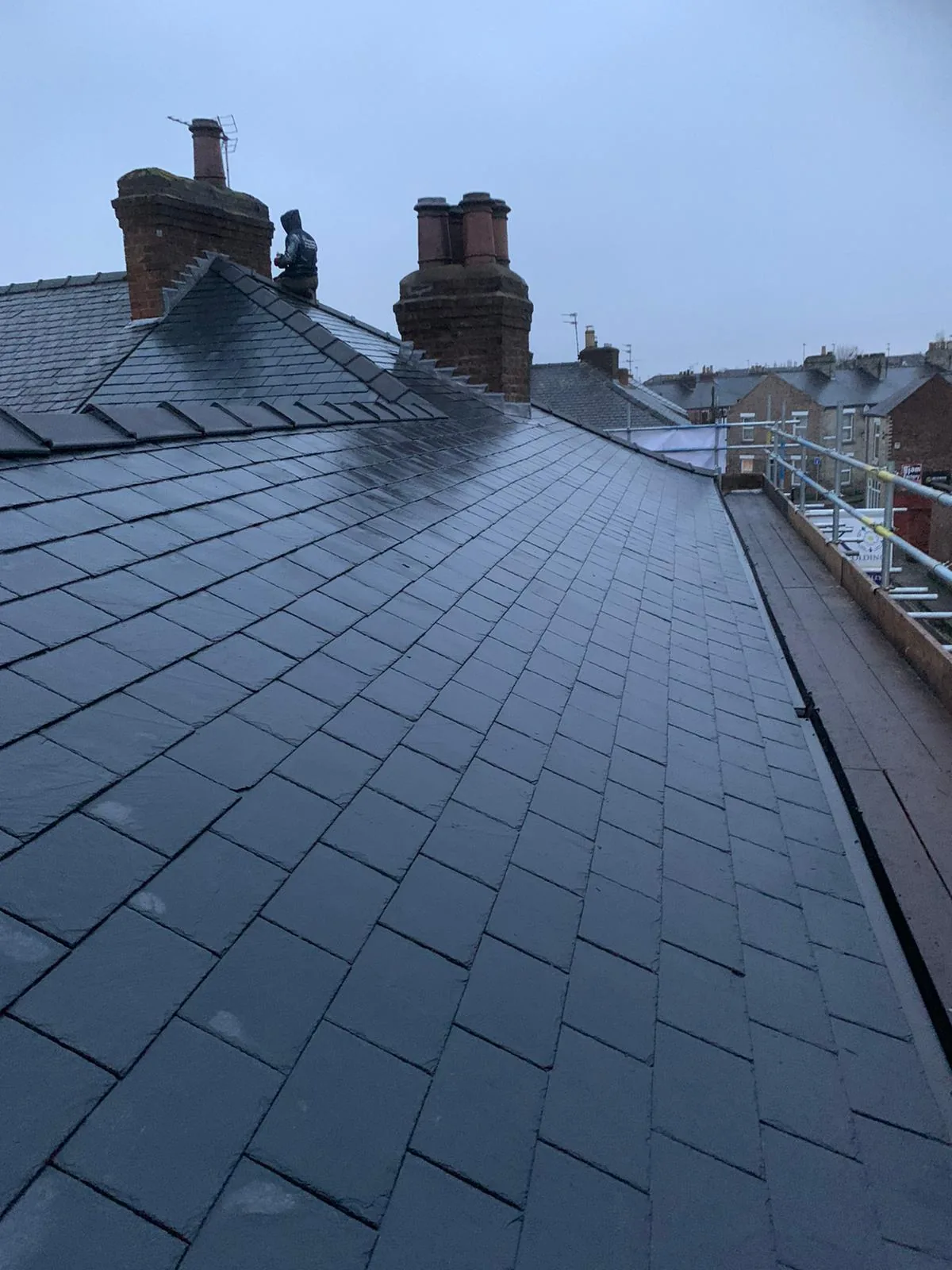
Not every damp patch near a chimney is the flashing. Sometimes it is the pot, the cap or the brickwork drawing in water. A proper survey tells the difference before anyone quotes you for the wrong fix. Guess wrong and you pay twice.
Get the Back Gutter Right and Leaks Stop for Good
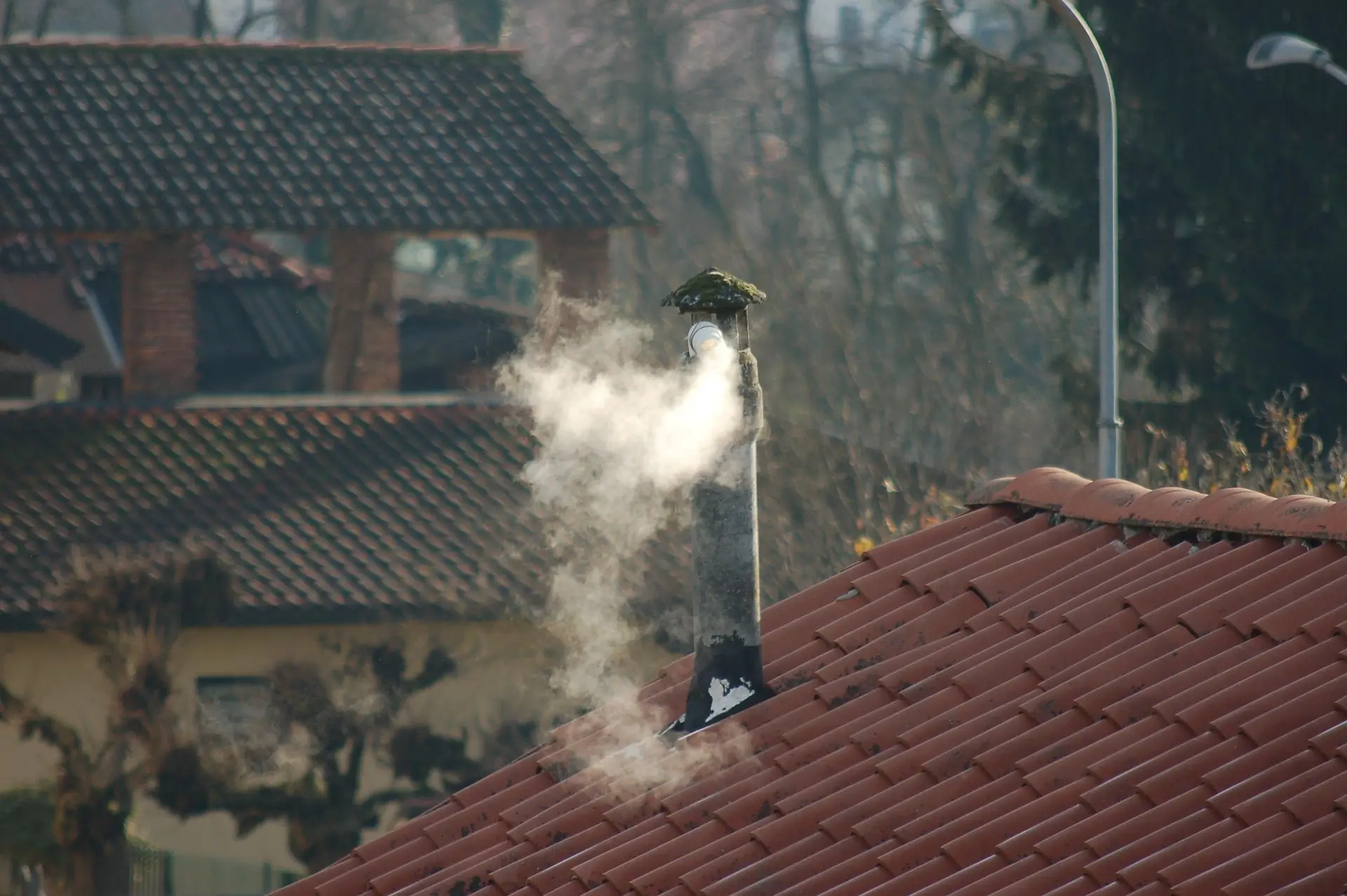
The back gutter sits behind the chimney, on the uphill side, and it does the hardest job of all. Every drop of rain running down that stretch of roof hits the back of the stack and has to go somewhere. A well-formed lead back gutter, with a proper fall, carries it neatly around each side.
This is where most chimney leaks we see in Foxton and Kibworth Beauchamp begin. A flat back gutter with no fall holds water, and standing water always finds a way through in the end. Leaves and moss build up and block the flow, which makes it worse. We form the back gutter with a clear fall and dress it well up under the tiles.
A capped, weatherproofed chimney sheds far less water down the stack in the first place. If your pot is open to the sky, ask about Chimney Cap Installation & Weatherproofing while the scaffold or access is up. Doing both at once saves you a second visit.
Re-Flash the Whole Chimney or Just Re-Point? A Straight Answer
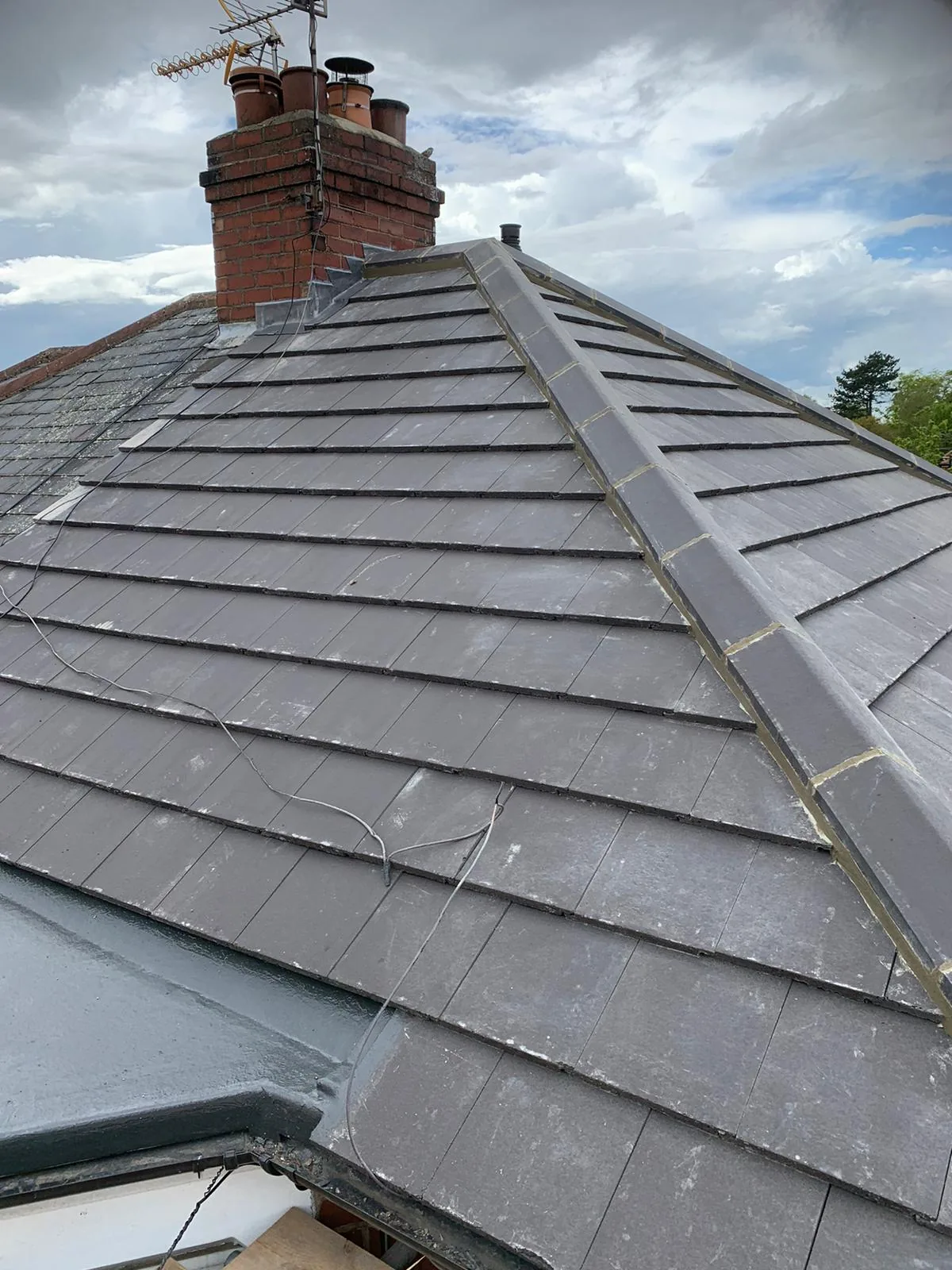
Not every leaking chimney needs all its lead stripped off. If the lead itself is sound and only the mortar has failed, raking out and repointing the joints can add fifteen to twenty years. That is the cheaper, sensible route when the lead has plenty of life left.
A full re-flash makes sense when the lead is cracked, split at the corners, badly patched or missing its soakers. Trying to save tired lead on a full re-roof is a false economy. We tell you which route fits your chimney, and we show you the drone footage so you can see it for yourself.
Michael learned his leadwork the traditional way, and he has an eye for what is worth saving. For an independent view on how skilled proper leadwork really is, the Lead Sheet Training Academy sets the national standard for the craft. We work to the same standard on every Market Harborough chimney.
What Chimney Lead Flashing Costs in Market Harborough
Three things set the price: how much lead is being replaced, whether the stack needs repointing too, and access.
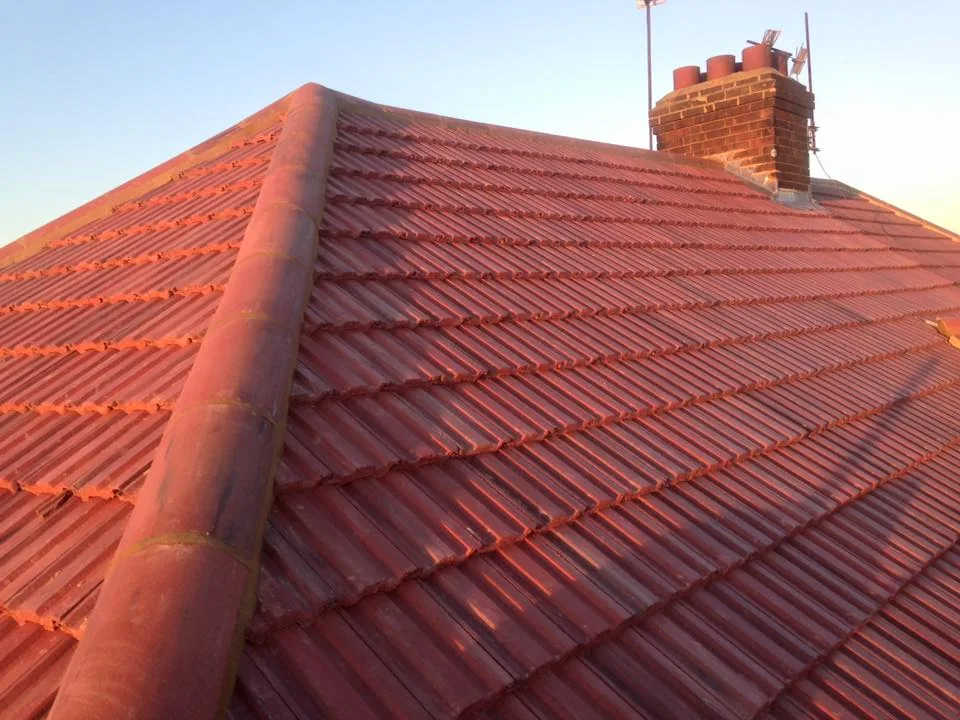
As a general 2025 to 2026 guide, re-pointing existing leadwork and re-fixing loose flashing runs roughly £250–£500 where no scaffold is needed. Replacing the lead on one or two faces of a chimney sits around £350–£460 without scaffold, rising to about £700–£920 once a scaffold goes up. A full re-flash of all four sides, scaffold included, lands near £1,000, and more on a tall or awkward stack.
What moves the figure up or down:
- **Access*— a chimney reached from a flat garage roof costs far less to reach than one three storeys up
- **Scaffold*— often the single biggest line on the bill, and unavoidable on a high stack
- **Lead code and quantity*— a big stack with a wide back gutter uses more lead, at roughly £30–£50 per metre
- **Brickwork*— a stack that needs repointing or rebuilding on top of the leadwork
- **Old patches*— stripping off failed sealant, flashband and mortar before the new lead goes on
These are general market ranges, not a quote for your chimney. Two stacks the same size can price very differently once access and brickwork are factored in. The only honest way to a firm figure is to see the chimney. That is what our free drone survey gives you, followed by a clear written price with nothing added later. A fixed price needs a survey.
Why Market Harborough Homeowners Call Tate & Sons for Leadwork
Leadwork is a craft, and the person forming it on your roof matters more than the material. Founder Michael Tate has spent over thirty years dressing lead, and he carries the heritage eye that good chimney flashing demands. He surveys every job himself, works to one rule — fix the cause, not just the symptom — and never patches a chimney to look right for one winter and fail the next.
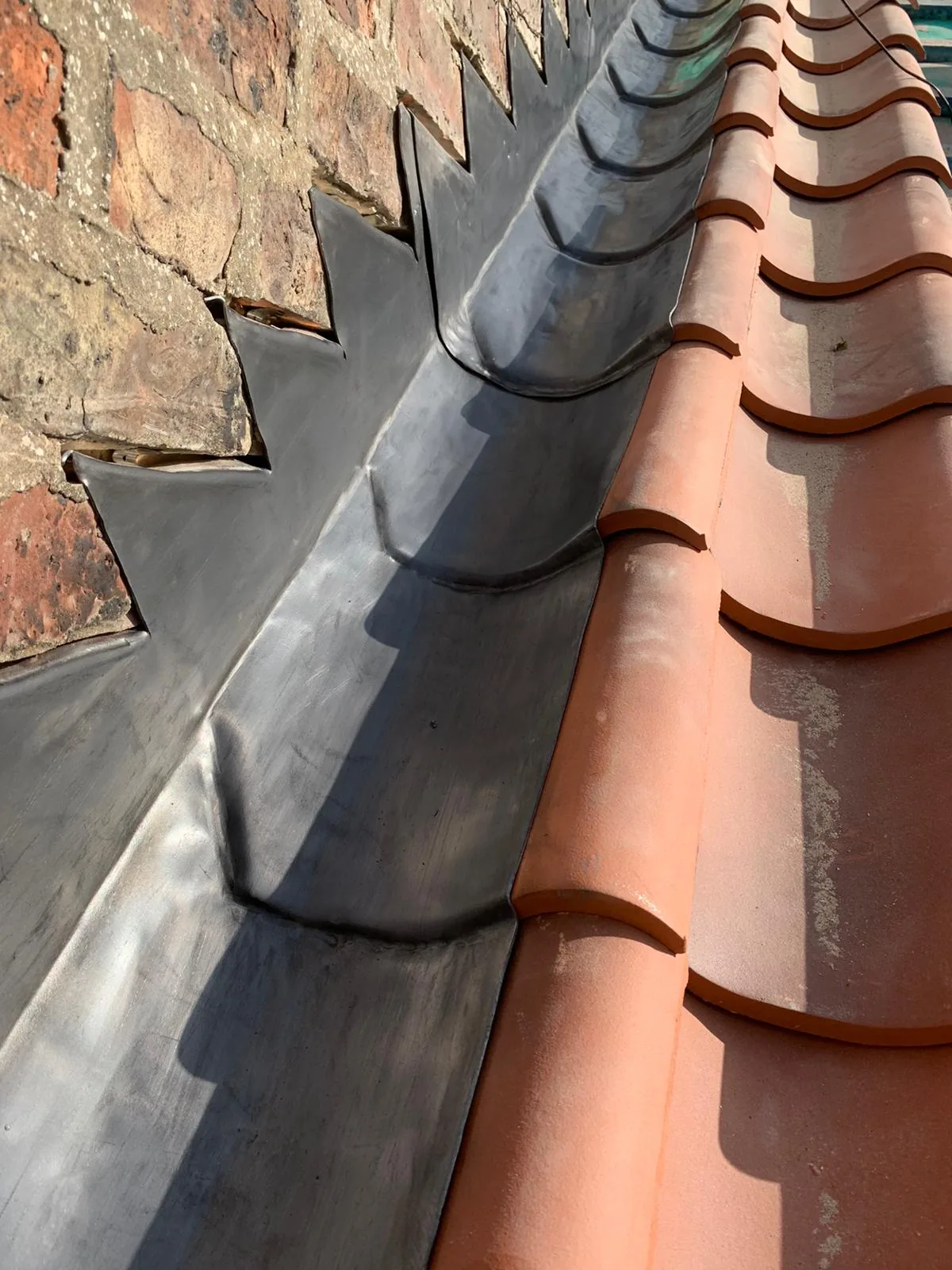
His son Ryan Tate runs the site work and forms the aprons, steps, soakers and gutters on the roof. Between the two of them the firm carries over 45 years of combined experience. They hold NVQ Level 2 and Level 3 qualifications in Roofing Occupations, keep CSCS cards, and hold NFRC trade-body membership. You can read more about the family behind the firm on our About Tate & Sons Roofing page.
Areas We Serve Across Market Harborough and the Harborough District
We fit and repair chimney lead flashing across Market Harborough and the surrounding Welland Valley villages. If your area is not on the list below, call us anyway — if you are nearby, there is a strong chance we cover you.
- Market Harborough (LE16)
- Great Bowden (LE16 7)
- Little Bowden (LE16 8)
- Lubenham (LE16 9)
- Foxton (LE16 7)
- Medbourne (LE16 8)
- Kibworth Beauchamp (LE8)
- Great Glen (LE8 9)
- Fleckney (LE8 8)
- Husbands Bosworth (LE17 6)
- Desborough (NN14 2)
Got Questions?
Your Chimney Lead Flashing Questions, Answered Properly
Why does my chimney flashing leak?
Nine times out of ten the lead has pulled out of the mortar, cracked, or was never fitted with soakers. Water then runs behind the flashing and down inside the wall, often showing up feet away from the fault. Old sealant patches make it worse by trapping water against the joint. The only reliable fix is to strip the failed lead and form it properly, not smear over the crack you can see.
What is the difference between soakers and stepped flashing?
Soakers are small pieces of lead hidden under each tile at the sides of the chimney. They catch any water that gets under the tile edge and pass it back onto the roof. Stepped flashing is the visible lead cut into the brickwork in steps, and it laps down over the soakers to cover the joint. You need both working together, and cheap jobs often leave the hidden soakers out.
Is lead flashing better than sealant or flashband?
Yes, by a wide margin. Sealant and flashband cannot flex with the daily movement of the lead and roof, so they split at the edges within two to five years. A failed patch then holds water against the joint and speeds up the leak. Proper Code 4 lead, dressed into the mortar, moves with the roof and lasts decades. We only use sealant as a temporary hold, never as the real repair.
How long does chimney lead flashing last?
Correctly fitted Code 4 lead around a chimney typically lasts 40 to 60 years, and often longer. The lead usually outlives the mortar it sits in, which is why repointing comes up long before the lead needs replacing. Cheap sealant repairs, by contrast, are lucky to see five years. Fitting good lead once is far cheaper over the life of the roof than repeated patching.
Why does water come in behind my chimney?
That points straight at the back gutter, the lead tray on the uphill side of the stack. If it was formed flat, with no fall, it holds water instead of shedding it. Leaves and moss then block what little flow there is, and water backs up under the tiles. Re-forming the back gutter with a proper fall usually cures a leak behind the chimney for good.
How much does it cost to re-flash a chimney in Market Harborough?
Re-pointing and re-fixing existing lead runs roughly £250 to £500 with no scaffold. Replacing the lead on one or two faces sits around £350 to £920 depending on scaffold, and a full four-sided re-flash with scaffold lands near £1,000 or more on a tall stack. Access and scaffold usually move the price more than the lead itself. A free drone survey gives you an exact written figure. A fixed price needs a survey.
Can you repair lead flashing or does it all need replacing?
Often we can repair it. If the lead is sound and only the mortar has failed, raking out and repointing the joints adds fifteen to twenty years for far less money. A full re-flash is only needed when the lead is cracked, badly patched, or missing its soakers. We show you the drone footage and give you a straight answer on which route your chimney needs.
What lead code do you use around a chimney?
We fit Code 4 lead for most chimney flashing, which is the standard weight for aprons, steps and soakers on a house. Larger back gutters and exposed stacks sometimes call for heavier Code 5. Using the right code for each detail is part of doing the job properly, and thin off-cuts are a common reason cheap flashing splits early. We size every piece to the job during the survey.
Book Your Free Drone Chimney Survey Today
See exactly what your chimney flashing needs before any work starts. No ladders up the side of the house, no pressure — just a clear picture from a local Market Harborough team.
Every week a tired chimney flashing waits, water works deeper into the brickwork and down inside the wall. A quick, free survey today tells you exactly where you stand — and often the fix is smaller and cheaper than you feared. Book now, get an honest quote, and stop the leak before the next downpour finds the way in.
ð 5 Hood Close, Market Harborough, LE16 9XS
ð 01858 457600
Call the Market Harborough team today on 01858 457600, or request your free drone survey online. We're already working across your area.
Book Your Free Drone Roof Survey
See exactly where your roof stands, with no obligation and no pressure. Call our Market Harborough team or request your free drone survey today.
Get in Touch
Tate & Sons Roofing — Market Harborough Office
5 Hood Close, Market Harborough, LE16 9XS
📞 01858 457600
✉️ [email protected]