
🔧 Chimney Flashing Specialists
Lead Flashing Around Chimneys in Loughborough — Repairs, Replacement & Leadwork
- Free Drone Survey
- 10-Year Guarantee
- Fully Insured
Free Chimney Flashing Survey - No Obligation
Watertight chimneys, done right.
Free Drone Survey • Response within 15 mins
🔒 Your details are safe with us. No spam, ever.
In Loughborough, a failing chimney flashing is the most common reason roofs leak. We fit and repair lead flashing around chimneys across Loughborough, Charnwood, and the Soar Valley.
From a slipped apron on a terrace to full leadwork on a period stack, our chimney specialists find the real cause of the leak — not just the stain on your ceiling. This page shows the warning signs, when to repair or renew, and how we do the job properly. Start with a free drone roof survey — no ladders, no pressure, just facts about your chimney.
What Is Lead Flashing Around a Chimney?
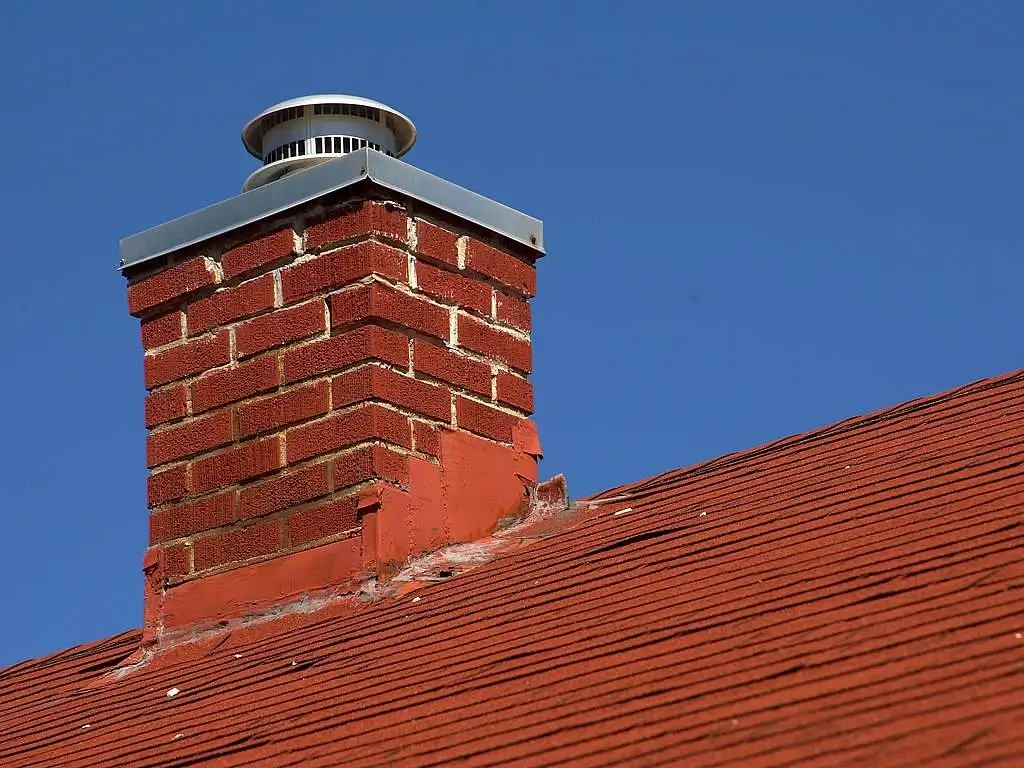
Lead flashing is the weatherproof seal where your chimney stack meets the roof. It sits in the gap between the brickwork and the tiles, and its job is simple: send rainwater back onto the roof so it runs safely into the gutter, not into your loft.
A proper chimney junction is not one strip of lead. It uses several parts working together — an apron at the front, step flashing up the sides, hidden soakers under the tiles, and a back gutter behind the stack. When any one of them fails, water finds its way in. Lead is the trusted material because it bends to any shape, handles a building’s movement, and lasts for decades when fitted right.
Spot the Signs Your Chimney Flashing Is Letting Water In
A brown stain on the ceiling near the chimney breast is the classic first sign. You might also see damp on the wall, peeling paint, or a musty smell in the loft. From outside, look for lead that has lifted, split, or pulled away from the brickwork.
Common warning signs of a failing chimney flashing:
- Damp patches or water stains on ceilings and walls near the stack
- Lifted, cracked, or corroded lead at the chimney base
- Loose, crumbling, or missing mortar along the flashing line
- A leak that only shows up in wind-driven rain or storms
- White or green staining, moss, or debris around the junction
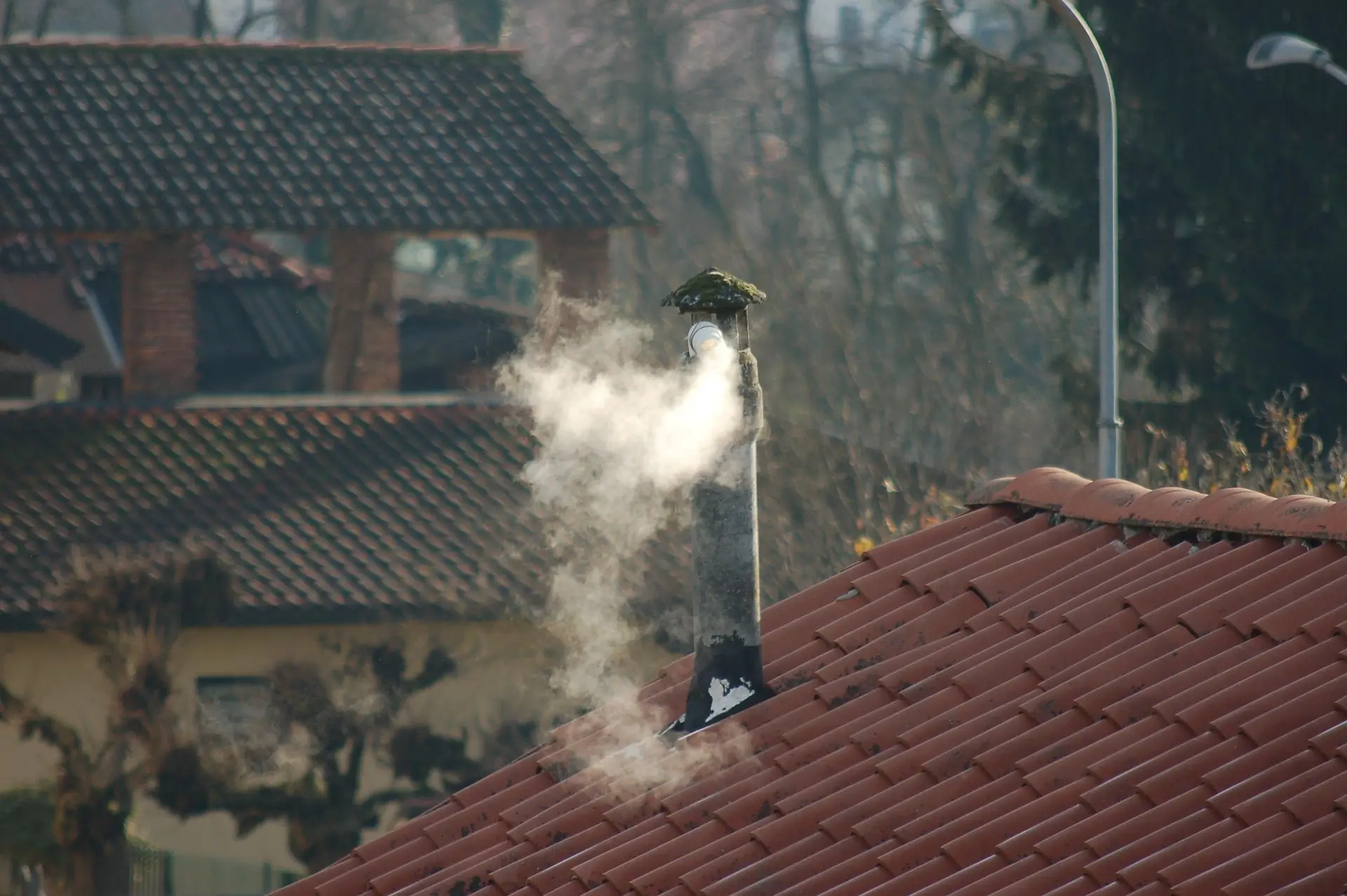
We inspect the roof itself, not just the stain inside. A damp patch rarely sits under the real fault. Water can track a long way before it drips.
Loughborough’s older stock leaks early here. The Victorian terraces around Sileby often have thin, tired lead. On exposed roofs near Beacon Hill Country Park, wind-driven rain finds any weak joint fast.
How to Tell If Your Chimney Flashing Is Leaking in Loughborough
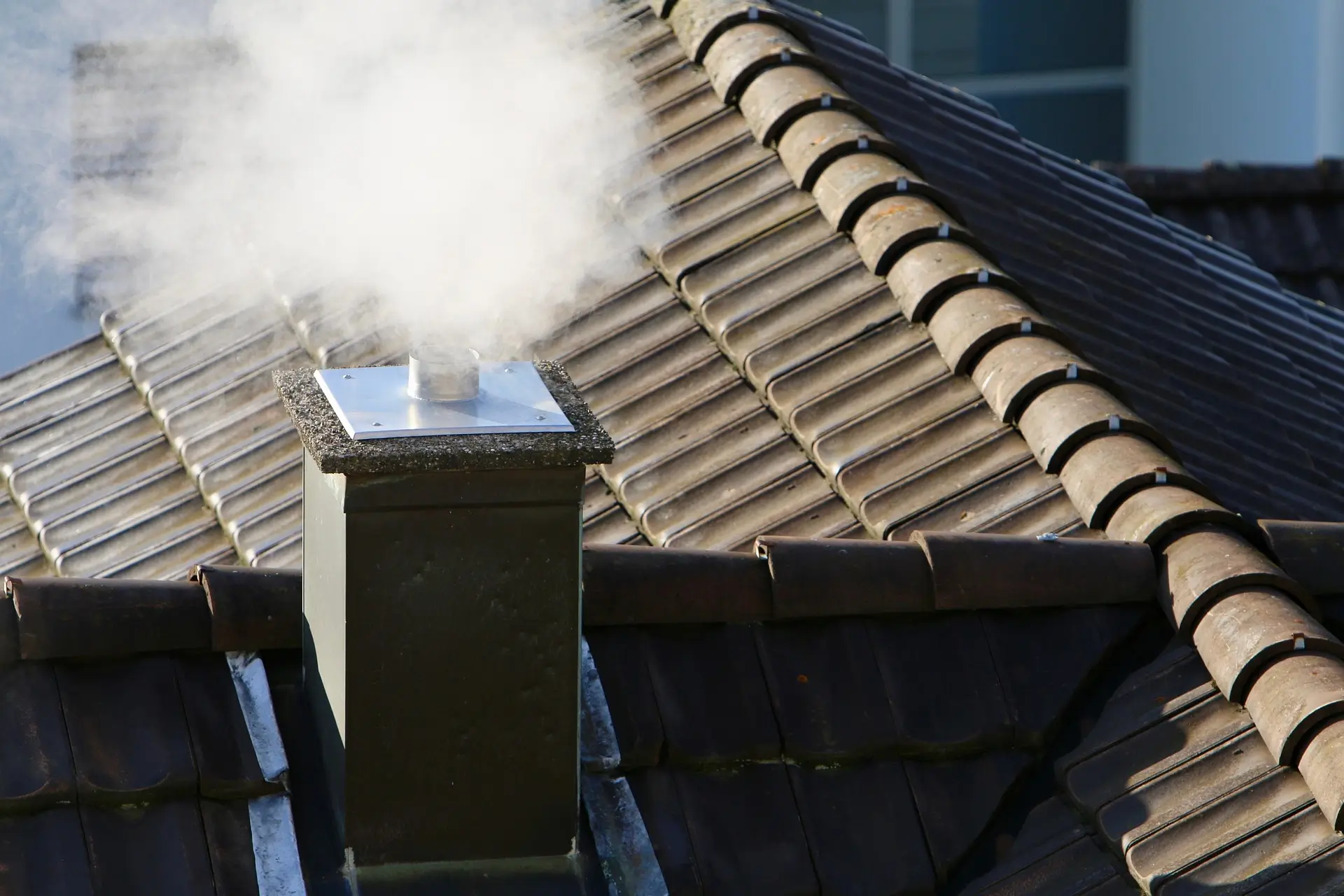
Chimney flashing is the lead seal where the stack meets the roof. When it cracks or lifts, rain runs behind it and shows up as stains inside. It often leaks only in storms, even when it looks fine in light rain.
Watch for these three signs:
- Damp patches on ceilings or the chimney breast after heavy rain
- Lead that looks lifted, split, or corroded at the stack
- Loose, cracked, or missing mortar along the flashing line
If you spot any of these, book an inspection before the damp spreads into timber and plaster.
Know When to Repair or Renew Your Chimney Flashing
Repair works when the lead is sound but has lifted or lost its pointing. We re-dress it, tuck it back into the brickwork, and repoint the joint. A small split in one spot can often be patched too.
Renewal makes more sense when the lead is cracked in several places or has been patched before. If you keep fixing the same leak, new leadwork is the cheaper long-term fix.
Ask any roofer to spell out the scope before you book. A clear quote should say which parts are included: apron, steps, soakers, or back gutter.
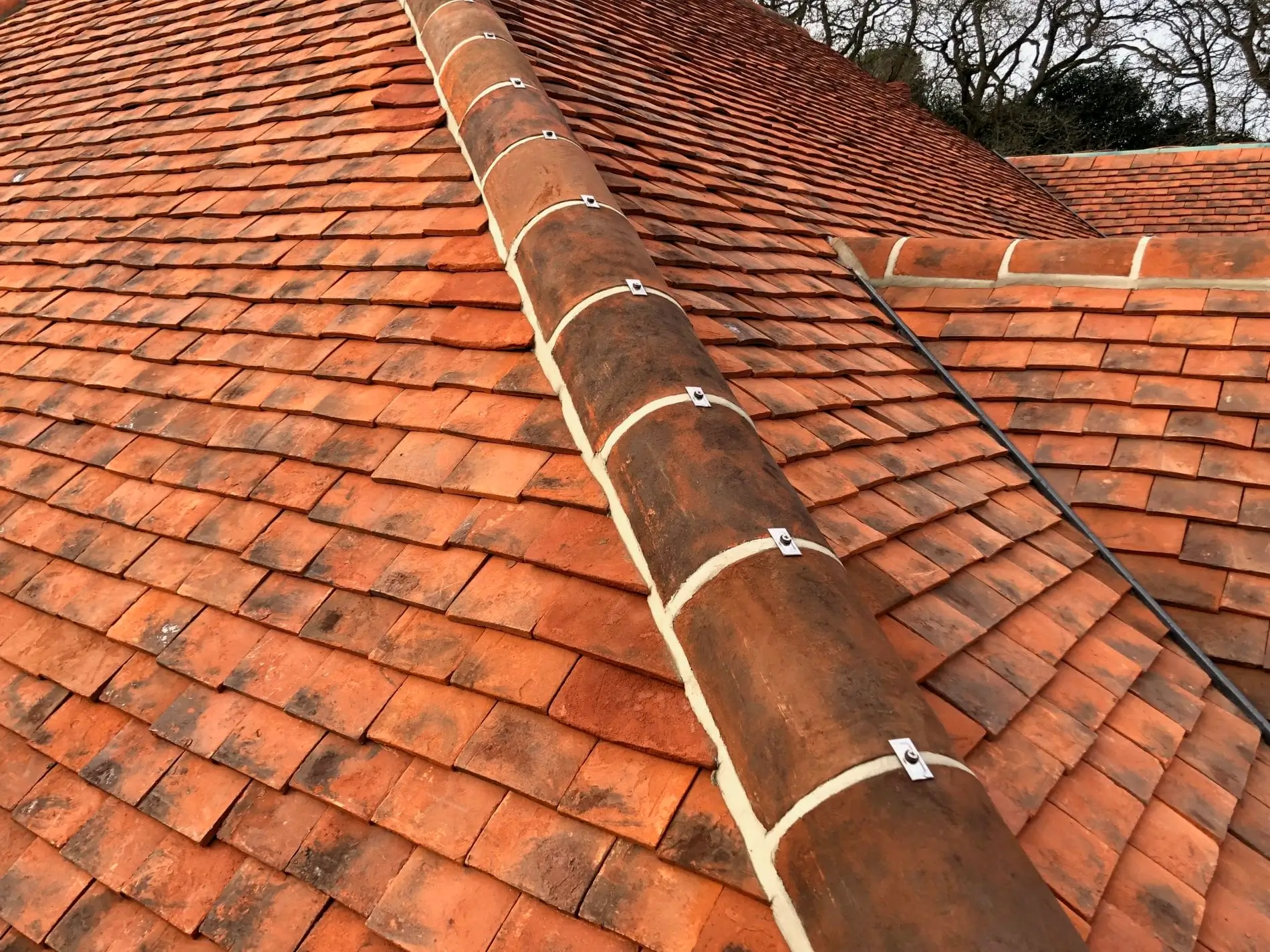
It should also confirm whether tiles get lifted, whether the chase gets repointed, and whether scaffolding is part of the price. “Seal around the chimney” is not a scope — it usually means a sealant smear that fails by next winter.
Loughborough winters push failing lead over the edge. Freeze-thaw widens small mortar cracks between autumn and January. A minor fault in October can be a live leak by spring.
The Right Lead: Codes, Materials and Alternatives
Lead is graded by thickness, and the grade is called a code. Code 4 suits most step flashing and aprons on a chimney. Code 5 is thicker and stronger, and we often use it for back gutters and exposed positions. These grades follow the British Standard for lead sheet, so you’re getting the right material for the job, not the cheapest offcut.
Thin lead is the shortcut that fails first. Under-spec lead can split within a few years. We match the code to the part and the exposure, then finish it correctly.
Lead-free options like Ubiflex and similar sheets exist. They can suit some jobs and lighter details. On most Loughborough chimneys, and on exposed roofs near Beacon Hill, traditional lead still gives the longest, most reliable seal.
How We Fit Step Flashing, Aprons, Soakers and Back Gutters
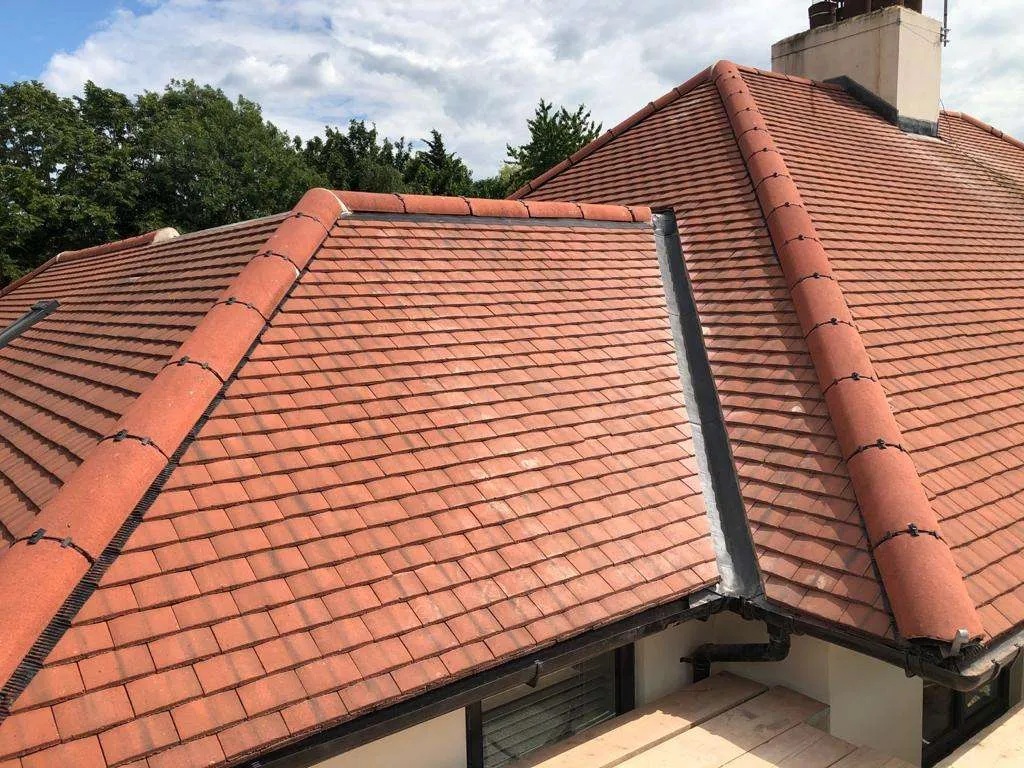
A proper chimney junction uses several lead parts, and each does one job:
- Apron — sits on the front face and sheds water onto the tiles below.
- Step flashing — runs up each side, stepping down with the tile courses.
- Soakers — hidden strips under each tile that feed water back onto the roof.
- Back gutter — sits behind the stack and carries water around it. This is the part that takes the most water, so it’s a common storm-leak point.
The lead then tucks into a cut channel in the brickwork called the chase. We rake out the joint, insert the lead, and repoint it so nothing tracks behind. Skip this step and the flashing works loose.
This full detail matters on the growing re-roofs around Barrow-upon-Soar. New coverings need fresh soakers and a sound back gutter, not just a front apron.
Why Cement and DIY Sealant Fixes Fail
Cement smeared around a chimney is a cheap stand-in for lead. It looks solid, then cracks. Once a hairline opens, water gets in and frost widens it every winter.
DIY sealant and flashband from the shop have the same flaw. The joint between roof and chimney moves through the year. Lead flexes with that movement; sealant cannot, so it splits and lets water back in.
We see this shortcut often on properties around Shepshed. We strip the failed patch, find the real fault, and fit lead that lasts. A tidy repair should not need re-doing next winter.
Protecting Period and Conservation-Area Chimneys
Period chimneys need soft lime mortar, not hard modern cement. Lime lets old brickwork breathe and move. Repoint a Victorian stack with hard cement and the bricks can crack around it, opening new leaks.
Conservation status adds rules on top. In villages like Quorn and Woodhouse Eaves, an Article 4 direction can control what materials you use and how the work looks. We flag any planning or like-for-like requirement in your quote from the start.
Our team knows the building stock across Charnwood and the Soar Valley. That means the right mortar and the right lead for the property, not whatever is quickest on the day.
How Long Does Lead Flashing Around a Chimney Last?
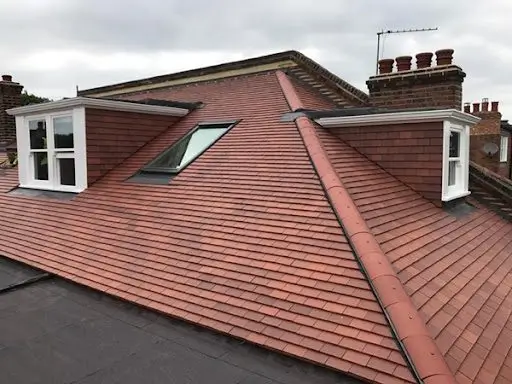
Fitted correctly with the right code of lead, chimney flashing lasts for decades — often 40 to 60 years, and aprons can go longer still. Most early failures come down to installation shortcuts, not the lead itself: thin material, missing chase pointing, or sealant used in place of proper leadwork.
A quick yearly look from the ground helps you catch problems early. Check after big storms, and watch the tiles below the stack for fresh staining. Spot a small fault now and you save a much bigger bill later.
Areas We Work — Loughborough, Charnwood & the Soar Valley
Our Loughborough office covers the full LE11 and LE12 postcode area, plus the surrounding Charnwood and Leicestershire villages. If you’re in any of these, we’re already on your patch for chimney leadwork and flashing repairs:
- Loughborough — LE11
- Shepshed — LE12 9
- Quorn / Quorndon — LE12 8
- Barrow-upon-Soar — LE12 8
- Hathern — LE12 5
- Woodhouse Eaves — LE12 8
- Mountsorrel — LE12 7
- Sileby — LE12 7
- Rothley — LE7 7
- Syston — LE7
- East Leake — LE12 6
Not sure we reach your postcode? Call us on 01509 277099 and we’ll confirm straight away.
Got Questions?
Lead Flashing Around Chimneys in Loughborough — Frequently Asked Questions
What does it cost to sort out the lead flashing on a chimney in Loughborough?
It depends on how much lead needs work and whether scaffolding is needed for safe access. A small re-dress and repoint sits at the lower end; renewing all four sides on a two-storey roof costs more. Our free drone survey gives you an exact, itemised quote before you commit a penny.
How many years should chimney lead flashing last before it needs redoing?
Properly fitted lead flashing usually lasts 40 to 60 years, and aprons often longer. Thin lead or a poor original fit can fail far sooner, which is why the right code and correct chase pointing matter.
Can the existing lead be refitted, or does it all need replacing?
Yes, sound lead can often be re-dressed and repointed rather than replaced. We advise honestly after checking the lead and the mortar line — if it keeps leaking, new leadwork is the cheaper long-term fix.
Is a cement fillet as good as proper lead around a chimney?
No — cement is a cheap stand-in that cracks and lets water in within a few winters. Lead flexes with the building’s movement, so it stays watertight for decades.
Which lead thickness is right for my chimney — Code 4 or Code 5?
Code 4 handles most aprons and step flashing, while Code 5 suits back gutters and exposed positions. We match the code to each part rather than using one thin roll for the whole job.
Can you tell if the leak is the flashing before I commit to work?
Yes — our free drone survey pinpoints the real fault before you spend anything. It checks the flashing, mortar, and tiles without ladders or scaffolding.
What are the white chalky streaks running down my tiles from the lead?
They are lead carbonate, a harmless powder that forms on new or bare lead and washes onto tiles. We clean the staining and apply patination oil to stop it returning.
Is rainwater from a lead-flashed roof safe for my veg patch or water butt?
Weathered lead forms a stable surface that keeps run-off very low, and treated lead lowers it further. If you collect water for a garden, we can apply patination oil and talk through your setup.
Why does my chimney keep leaking after every repair?
Often there is no lead cavity tray, or DPC tray, built into the stack above the flashing. Without it, water soaks through the brickwork and reappears below, so we check for one during the survey.
Get Your Chimney Watertight — Book a Free Drone Survey Today
A small leak around your chimney only gets bigger — and more expensive — the longer it sits. Water tracks into timber, plaster, and insulation while the flashing looks fine from the street. Book your free, no-obligation drone roof survey and we’ll show you exactly what’s happening around your chimney, what it takes to fix it, and a clear itemised price — before any work starts. You’ll deal with a named local team, not an anonymous call centre.
📞 Call now on 01509 277099
Get in Touch
Tate & Sons Roofing — Loughborough Office
5 Middleton Place, Loughborough LE11 2BY
📞 01509 277099
✉️ [email protected]