
🏠 Trusted Local Roofers
Lead Flashing Around Chimneys in Hinckley
Where your chimney meets the roof is where nine out of ten chimney leaks start. Not the chimney pot, not the brickwork — the strip of lead wrapped around the base of the stack. Lead flashing around chimneys in Hinckley takes a battering that flat brickwork never sees, sitting exactly where rainwater collects, wind drives hardest, and thermal movement pulls at every joint. Once that lead cracks, lifts, or comes away from the mortar joint, water finds a direct route into your loft.
Tate & Sons Roofing are chimney service specialists across Hinckley, and chimney flashing repair is one of the jobs we're called out for most. This page covers the three types of lead that keep a chimney watertight — apron, stepped, and soaker flashing — how to tell when yours has failed, what a proper repair or replacement involves, and what it costs. Start with a free drone survey, so you know exactly what your chimney needs before anyone climbs a ladder.
- Fully Insured
- 10-Year Guarantee
- 5-Star Rated
Quick Free Estimate - No Obligation
We're not just roofers – we're your neighbours.
Fully Insured • Response within 15 mins
🔒 Your details are safe with us. No spam, ever.
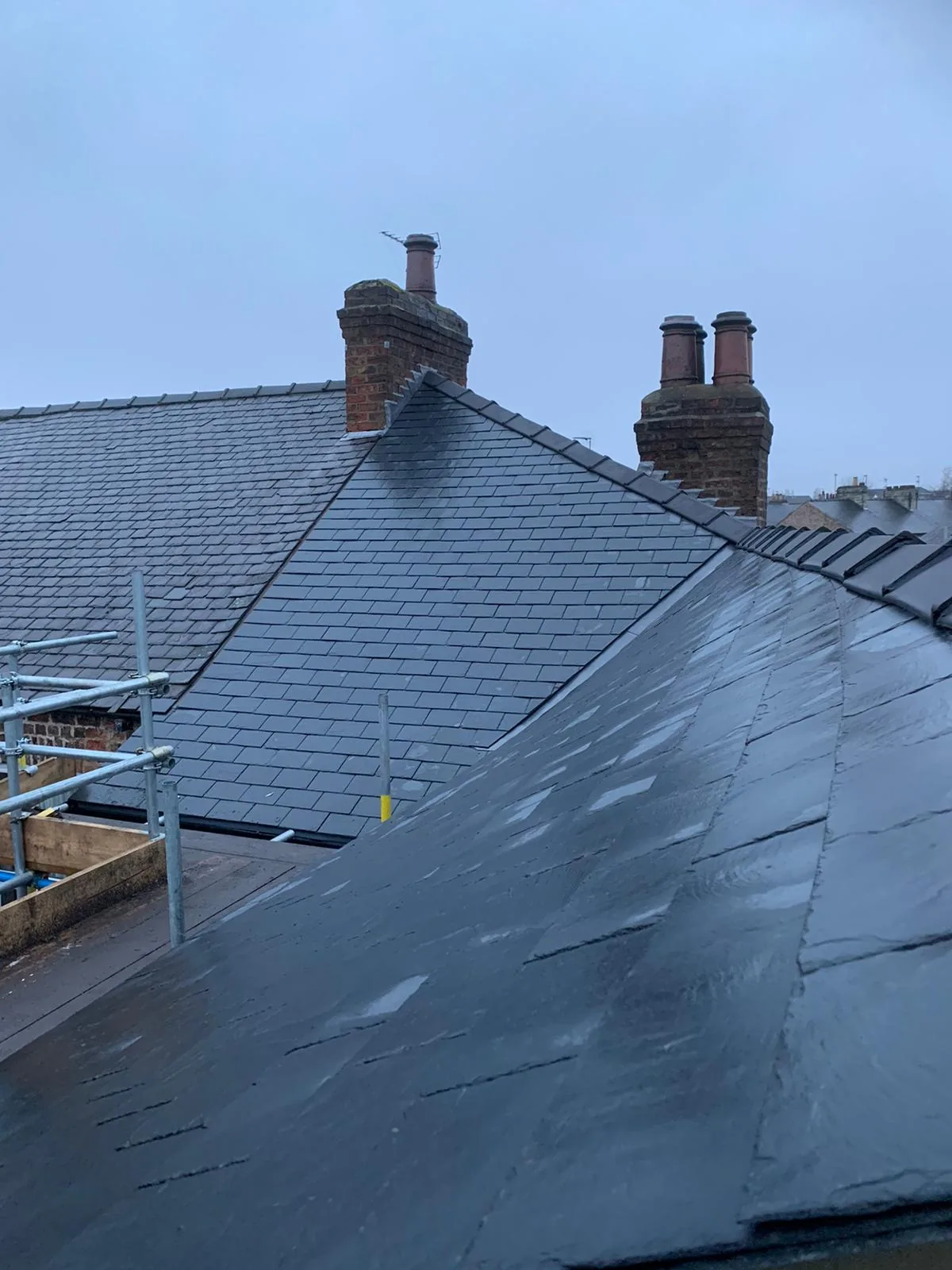
Spot the Warning Signs Before a Chimney Leak Reaches Your Ceiling
Chimney flashing rarely fails all at once. It lifts a little more each winter, and by the time you see a stain indoors, water has usually been getting in for months.
Watch for these signs around your chimney breast, both inside the loft and on the ceiling below:
Lead itself can last 50 to 80 years when it was fitted correctly in the first place. What usually fails first is the mortar joint holding it, or a poor repair from years ago that was never properly detailed. A free drone survey shows the flashing line close up, from every angle, without anyone standing on your roof to find out.
- A damp patch on the ceiling or wall close to the chimney breast
- Brown or yellow staining that spreads a little wider after each downpour
- Daylight or a damp smell around the chimney when you check the loft
- Lead that looks lifted, cracked, or pulled away from the brickwork from ground level
- Green staining or moss growth running down brickwork below the flashing line
- Mortar crumbling out of the joint the lead is tucked into
- A chimney more than 25 years old that has never had its flashing checked
Apron, Stepped, or Soaker — Know Which Lead Is Failing on Your Chimney
A chimney needs three separate pieces of leadwork to stay dry, and each one does a different job. Get one wrong and water finds the gap the others were never meant to cover.
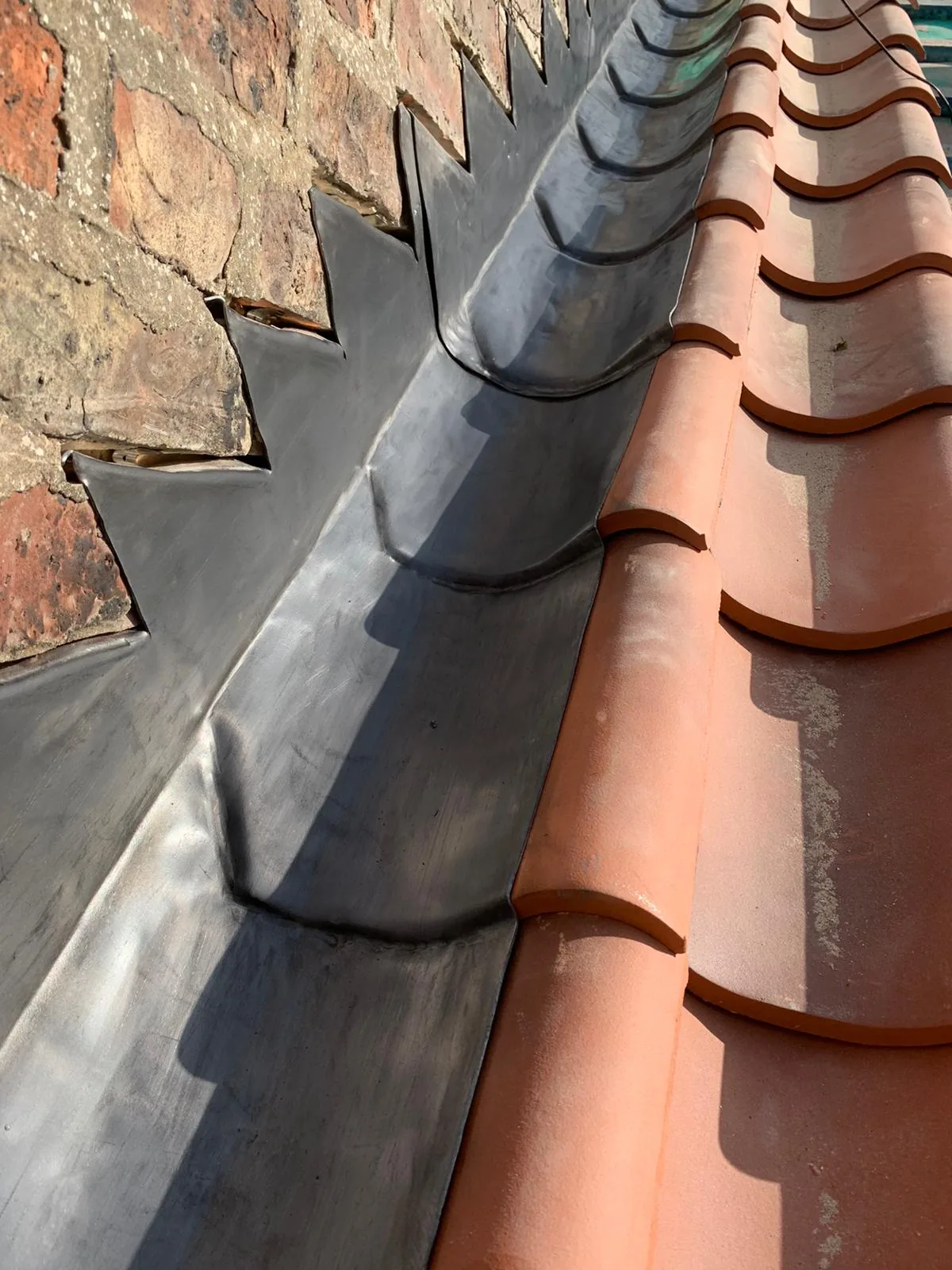
Apron flashing sits across the lower, downhill face of the chimney. It catches water running down the roof slope and throws it out over the tiles below, well clear of the brickwork. This is usually the first piece to show damage, because it takes the full weight of water coming down the pitch.
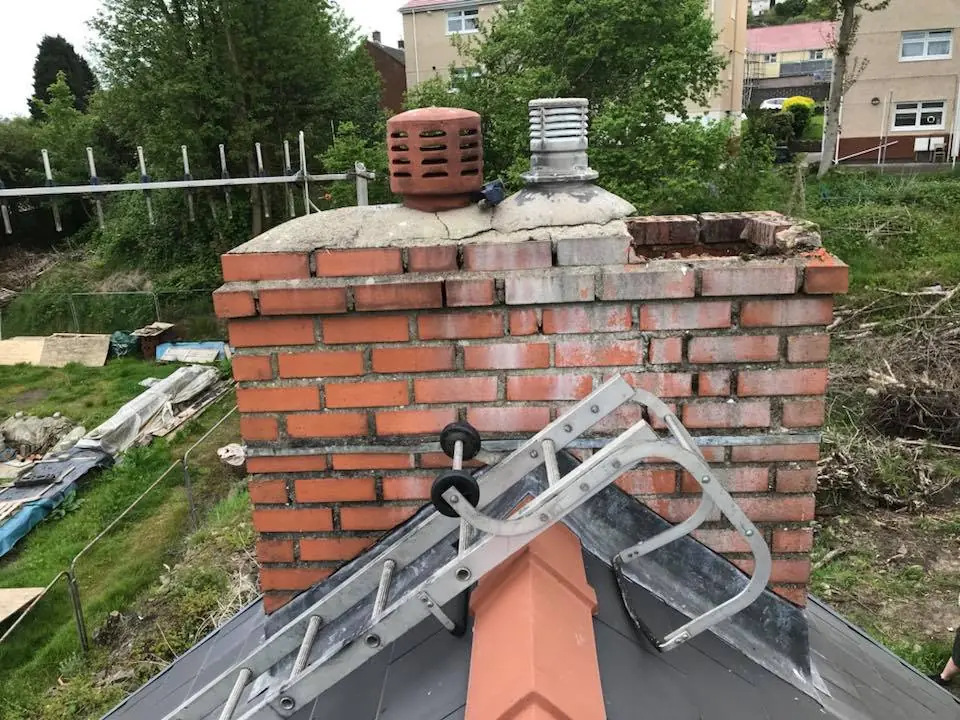
Stepped flashing runs up both sides of the chimney, cut into the mortar joints in a rising line that follows the brick courses like a staircase. Each step overlaps the tile or slate below it and tucks into the joint above, so water is shed sideways off the stack rather than pooling against it.
Soakers work alongside stepped flashing, hidden under each tile or slate along the sides of the chimney. You never see a soaker once the roof covering is back down, but it is doing as much of the work as the flashing above it, carrying water past the tile joint and out onto the one below.
Above the chimney, on the uphill side, a back gutter (sometimes called a back tray) collects everything running down the roof and diverts it around the stack rather than letting it dam up behind the brickwork. On a wide chimney this is often the hardest-working piece of lead on the whole roof, and the one most likely to need a saddle or secret gutter to cope with the volume of water. Daniel Whitmore, our project manager, treats these four pieces as one system rather than four separate repairs — patching one without checking the others is how a leak comes back within a year.
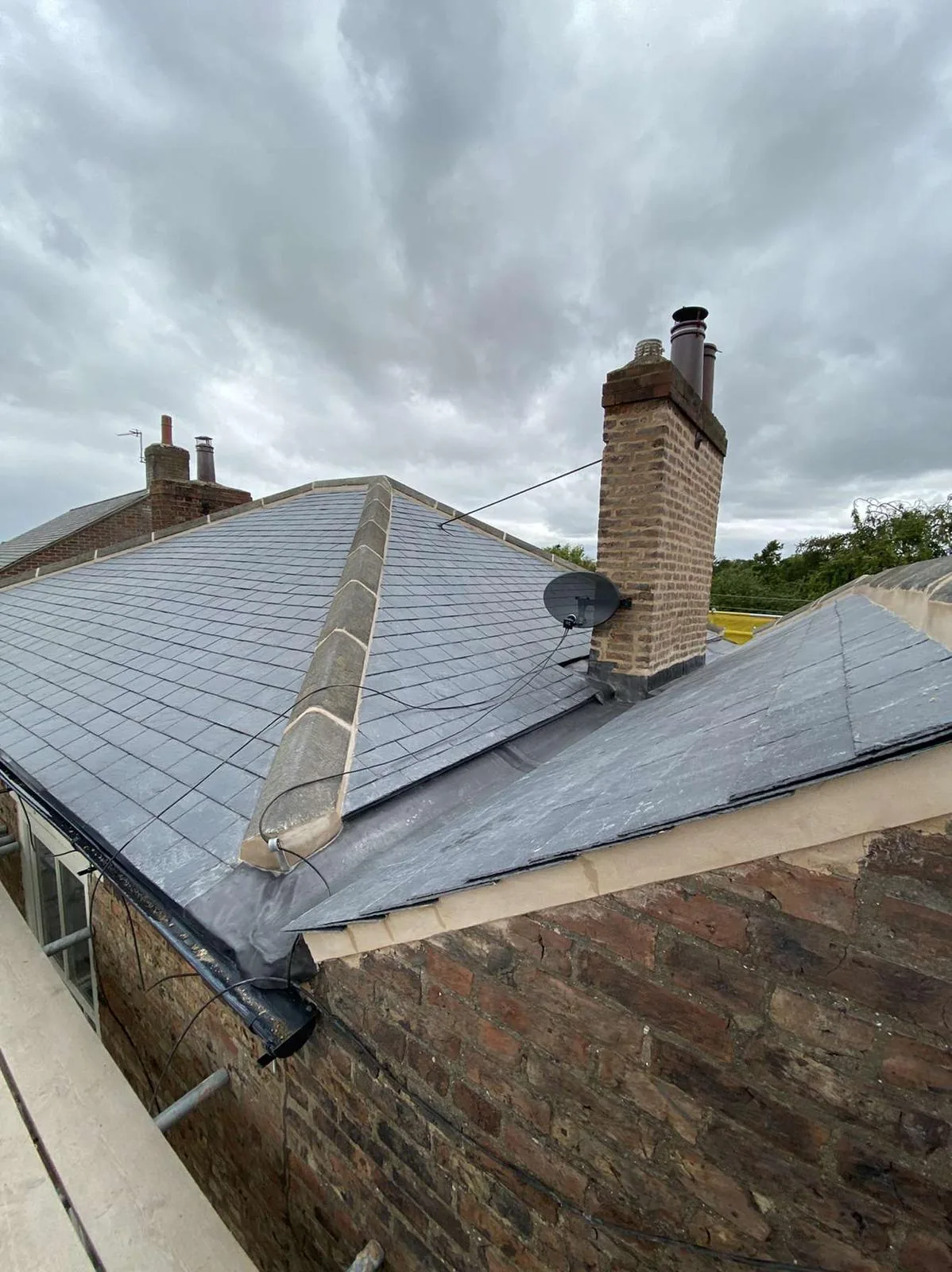
Comparison: Apron, Stepped, and Back Gutter Flashing Side by Side
| :-: | :-: | :-: | :-: |
| Flashing type | Typical use case | Typical cost | Typical lifespan |
| Apron flashing | Lower/downhill face of the chimney, shedding water onto the roof covering below | £150–£350 (single-side repair) | 25–40 years (mortar joint usually fails before the lead) |
| Stepped flashing with soakers | Both sides of the chimney, following the brick courses and tile lines | £300–£700 (both sides, including soakers) | 30–50 years, longer with a Code 5 upgrade |
| Back gutter (back tray) | Uphill side of a wide chimney, diverting the main flow of water around the stack | £250–£550 | 30–50 years, shorter on very wide or badly exposed stacks |
A full four-piece replacement, covering the apron, both sides of stepped flashing with soakers, and the back gutter, typically runs £450 to £950 once scaffolding is included. Most chimney flashing jobs need more than one of these pieces replaced together, since they were fitted at the same time and fail at roughly the same age.
What a Proper Chimney Flashing Repair Actually Involves
A flashing repair that lasts starts with getting the old lead off cleanly and checking what is underneath, not just pressing new sealant over a lifted edge.
Here's the order we follow on a typical job:
We use Code 4 rolled lead sheet as standard on chimney flashing, which is the industry-standard thickness for most domestic detailing. On taller stacks, or chimneys on the more exposed plots out past Higham on the Hill, we sometimes step up to Code 5 for extra durability against wind-driven rain. Full technical detail on lead codes and correct detailing is set out in the Lead Sheet Training Academy's Complete Manual, the industry reference for rolled lead sheet installed to BS EN 12588. Most single-chimney flashing jobs are finished within a day, weather allowing.
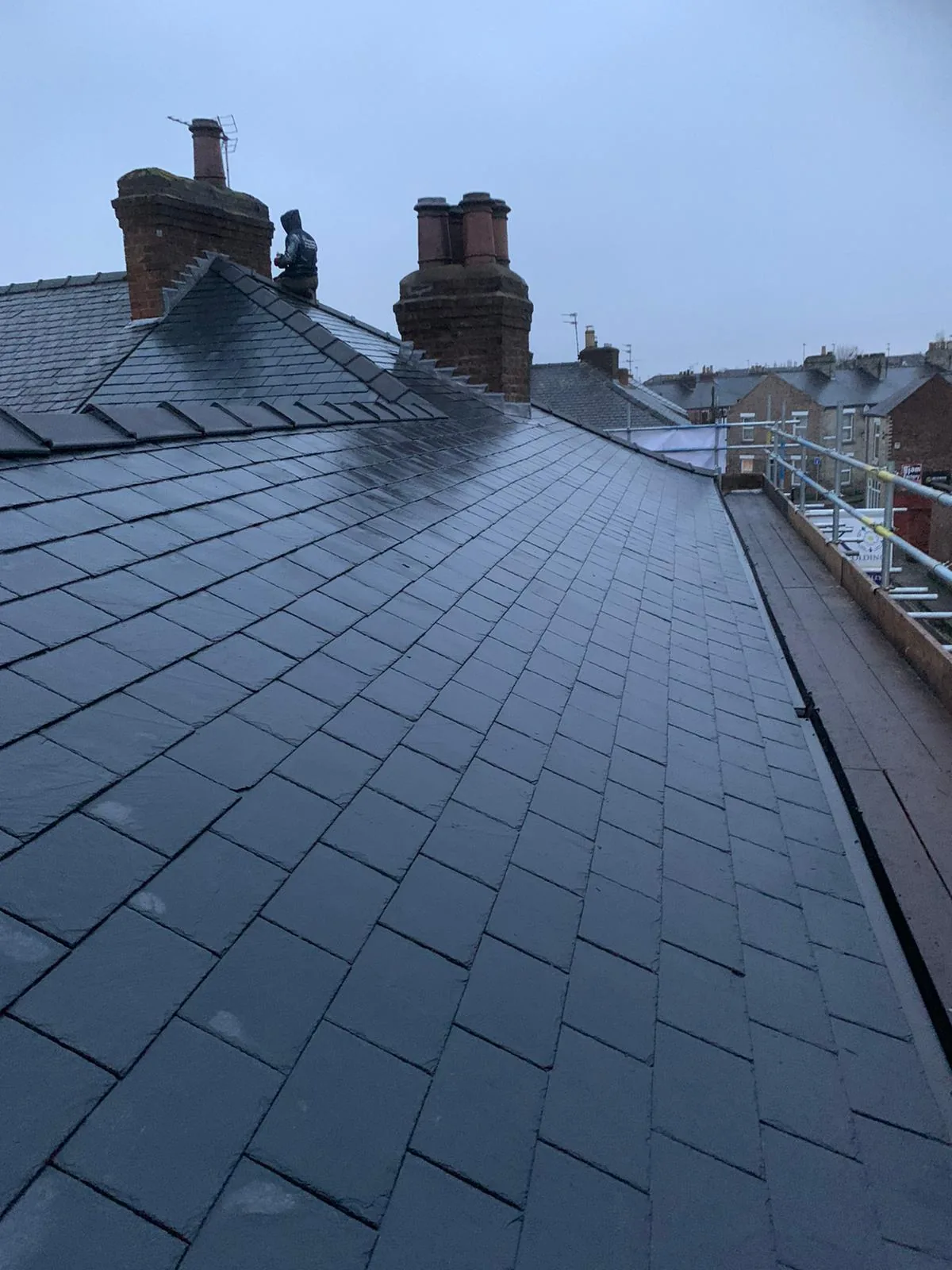
- Access set up safely — a tower or roof ladder for most chimneys, full scaffold for taller or harder-to-reach stacks
- Old lead lifted, and the tiles or slates around the chimney checked for damage underneath
- Mortar joint raked out and inspected, since a crumbling joint is often the real cause of the leak
- New lead cut and dressed to the chimney's exact profile — apron, stepped sections, soakers, and back gutter as needed
- Lead tucked into a fresh mortar joint (or fixed with proprietary clips on some detailing) and dressed down tight
- Tiles or slates reset around the new flashing, and the whole junction checked for a clean, even line
- Photos taken of the finished work before we come off the roof
What Chimney Flashing Repair or Replacement Costs in Hinckley
Cost depends on how much lead needs replacing, chimney height, and how easily we can get to it. As a general guide, a single-side repair such as re-dressing or replacing the apron alone typically runs £150 to £350. Stepped flashing with soakers on both sides usually costs £300 to £700, and a back gutter on a wide chimney runs £250 to £550. A full replacement covering all four elements typically falls between £450 and £950.
What pushes a price up or down:
These are general market ranges, not a quote for your chimney. Two stacks the same height can price very differently once access, mortar condition and lead code are factored in. A fixed price needs a survey.
- **Scaffolding versus ladder access*— a tall stack or a steep, boxed-in roof often needs full scaffold, adding £300–£600
- **Chimney width*— a wide stack needs more lead and a more complex back gutter than a narrow one
- **Mortar condition*— repointing a crumbling joint before the lead goes back adds labour but stops the same leak returning
- **Lead code*— stepping up from Code 4 to Code 5 on an exposed chimney adds to material cost but extends the life of the work
- **Roof covering*— resetting natural slate around a chimney takes longer than resetting concrete tile
- **Number of chimneys*— a semi-detached property sharing a stack, or a house with two chimneys, costs more than a single simple stack
Why Chimney Flashing Fails First — and How to Stop It Coming Back
Chimney flashing takes more thermal movement than almost anywhere else on a roof. Brick and lead expand and contract at different rates as temperature swings through the day, and that constant flexing works away at the mortar joint holding the lead in place. Once that joint opens up even slightly, wind-driven rain gets behind the flashing and the leak begins, often long before the lead itself shows any visible damage.
Preventing a repeat failure comes down to three things: a wide enough overlap on every lap joint, a mortar joint raked back to sound brick rather than skimmed over old crumbling material, and lead sized correctly for the chimney's width and exposure. Get those right once and the flashing should outlast most other parts of the roof around it.
A poor original installation makes this worse. Flashing dressed too tight, undersized soakers, or lead fixed with sealant instead of a proper mortar joint all fail years earlier than a job detailed correctly. We see this pattern often on older stone and brick chimneys around Market Bosworth and Stoke Golding, where a period property's original leadwork has been patched with sealant more than once rather than properly re-dressed. Sealant buys a season, sometimes two, but it never replaces a correctly formed joint.
Related Roofing and Chimney Work Worth Checking at the Same Time
Flashing rarely fails in isolation. If the mortar joint holding your lead has crumbled, the stack itself may need attention too — our chimney repointing service deals with failing mortar across the whole stack, not just the flashing line. And if your chimney flashing problems are part of a wider leadwork job elsewhere on the roof, such as around dormers, valleys, or abutments, our general lead work and lead flashing service covers every application beyond the chimney itself.
We always check the stack, pointing, and pot while we're up there for a flashing job, since it costs nothing extra to look and can save you a second call-out later.
Why Choose Tate & Sons for Your Chimney Flashing
Chimney leadwork is a specialist skill, not a general roofing task. Get the dressing wrong and a repair looks fine for a season before it lifts again. Daniel Whitmore, our project manager and lead roofer, specialises in leadwork and heritage detailing on the older properties scattered through Hinckley and the surrounding villages, and he personally oversees every chimney flashing job we take on.
Every chimney flashing job comes with a 10-year workmanship guarantee and starts with a free drone survey, so you see the exact state of your flashing before any work is agreed.
Founder James Tate started out on the tools more than 20 years ago and still quotes the majority of jobs himself, so the person pricing your chimney is the one who understands exactly what it needs. Between the team we bring 40 years of combined experience, NVQ Level 2 and 3 qualifications in roofing, and CSCS cards on every job. Sophie Bennett, our office manager, keeps quotes and scheduling running smoothly from your first call through to the finished work. Read more about the people behind the business on our About Tate & Sons Roofing page.
Areas We Serve Across Hinckley and Bosworth Country
We repair and replace chimney lead flashing across Hinckley and the surrounding borough. If your village is not listed below, call us anyway — there's a strong chance we already cover you.
- Hinckley (LE10)
- Burbage (LE10)
- Barwell (LE9)
- Earl Shilton (LE9)
- Sapcote (LE9)
- Sharnford (LE10)
- Wolvey (LE10)
- Higham on the Hill (CV13)
- Sutton Cheney (CV13)
- Stoke Golding (CV13)
- Market Bosworth (CV13)
- Nuneaton (CV10 / CV11)
- Bedworth (CV12)
Got Questions?
Your Chimney Flashing Questions, Answered Properly
What is chimney flashing and why does it matter so much?
Chimney flashing is the strip of lead sealing the join between your chimney stack and the roof covering around it. It matters because that join is the single most common place a roof leaks — the junction between two different materials moving at different rates, sitting exactly where rainwater collects on its way down the slope. Without correctly fitted flashing, water has a direct route through the join and into the loft below.
How do I know if my chimney flashing has failed?
The clearest sign is a damp patch on a ceiling or wall close to the chimney breast, especially one that spreads after heavy rain. Inside the loft, look for daylight, damp timber, or a musty smell around the base of the stack. From the ground, lead that looks lifted, cracked, or pulled away from the brickwork is usually visible with binoculars, but a free drone survey gives a much closer look without anyone on a ladder.
How much does chimney flashing repair cost in Hinckley?
A single-side repair such as re-dressing the apron typically costs £150 to £350. Stepped flashing with soakers on both sides usually runs £300 to £700, and a full replacement covering the apron, both sides, and the back gutter typically falls between £450 and £950. Access, chimney width, and mortar condition all affect the final figure, and a fixed price always needs a survey.
What's the difference between apron, stepped, and soaker flashing?
Apron flashing sits on the lower, downhill face of the chimney and throws water clear onto the roof below. Stepped flashing runs up both sides, cut into the mortar joints in a rising line that follows the brick courses. Soakers sit hidden under each tile or slate alongside the stepped flashing, carrying water past every tile joint. All three work together with a back gutter above the chimney to keep the stack watertight.
How long does lead flashing around a chimney actually last?
Correctly fitted lead itself can last 50 to 80 years, but the mortar joint holding it in place usually fails long before the lead does. Thermal movement between the brick and lead gradually opens the joint, letting water behind the flashing even while the lead looks sound. Most chimneys need the joint re-formed, and sometimes the lead re-dressed or replaced, somewhere between 25 and 40 years after the original installation.
Can I repair chimney flashing myself, or does it need a professional?
Chimney flashing repair is not a sensible DIY job. It means working at height on a pitched roof, often lifting tiles or slates and cutting into mortar joints, and a small mistake can turn a minor leak into a much bigger one. Correctly dressing lead around the odd angles of a real chimney takes practice most homeowners never get the chance to build, so it's a job best left to a specialist leadworker.
Will my insurance cover a chimney flashing leak?
It depends on the cause. Sudden damage, such as flashing torn off in a storm, is usually covered under standard buildings insurance. Gradual failure from age and wear, which is far more common with flashing, is typically treated as a maintenance issue and not covered. Keeping your flashing checked every few years is the best way to avoid a claim being refused for lack of upkeep.
Why does my period chimney near Market Bosworth or Stoke Golding keep leaking after repairs?
Older stone and brick chimneys in these villages often carry flashing that has been patched with sealant repeatedly rather than properly re-dressed into a fresh mortar joint. Sealant holds for a season or two before it cracks again, and every patch on top of a patch makes the next repair harder to get right. The lasting fix is stripping the flashing back and re-forming the joint properly, which is usually cheaper over ten years than repeated sealant patches.
Does the exposed position of a chimney out past Higham on the Hill change what flashing it needs?
Yes. Chimneys on the more exposed rural plots away from the shelter of Hinckley's town streets take a harder driving rain than a stack tucked between neighbouring roofs. On these properties we often step up from standard Code 4 lead to the thicker Code 5, particularly on the back gutter, since that piece carries the most water and takes the worst of the weather on an exposed stack.
Book Your Free Drone Chimney Survey Today
See exactly what's happening at your chimney flashing before any work starts. No ladders on your roof, no pressure — just a clear picture from a local Hinckley team.
Every month a failed flashing joint is left alone, more water works its way into the timber around your chimney, and a straightforward lead repair can turn into a much bigger job replacing rotten rafters or ceiling boards. A free drone survey today tells you exactly what your chimney needs, often for far less than you feared. Book now and get your chimney flashing sorted properly, first time.
Call the Hinckley team today on 01455 242595, or request your free drone survey online. We're already working across your area.
Book Your Free Drone Roof Survey
See exactly where your roof stands, with no obligation and no pressure. Call our Hinckley team or request your free drone survey today.
Get in Touch
Tate & Sons Roofing — Hinckley Office
10 Brosdale Drive, Hinckley, LE10 0SW
📞 01455 242595
✉️ [email protected]