
🏠 Trusted Local Roofers
GRP Fibreglass Roofing Nottingham
A crazed, cracking GRP roof isn't just an eyesore — it's letting water track into the timber deck underneath. This page covers what a properly laid GRP fibreglass roof needs, what it costs in 2025/26, and how to check the finished job was done right. As a roofing contractor working across Nottingham, we fit GRP roofs the way we'd want one on our own home: a solid deck, the correct resin, and nothing rushed.
- Fully Insured
- 10-Year Guarantee
- 5-Star Rated
Quick Free Estimate - No Obligation
We're not just roofers – we're your neighbours.
Fully Insured • Response within 15 mins
🔒 Your details are safe with us. No spam, ever.
What Is GRP Fibreglass Roofing? Your 60-Second Answer
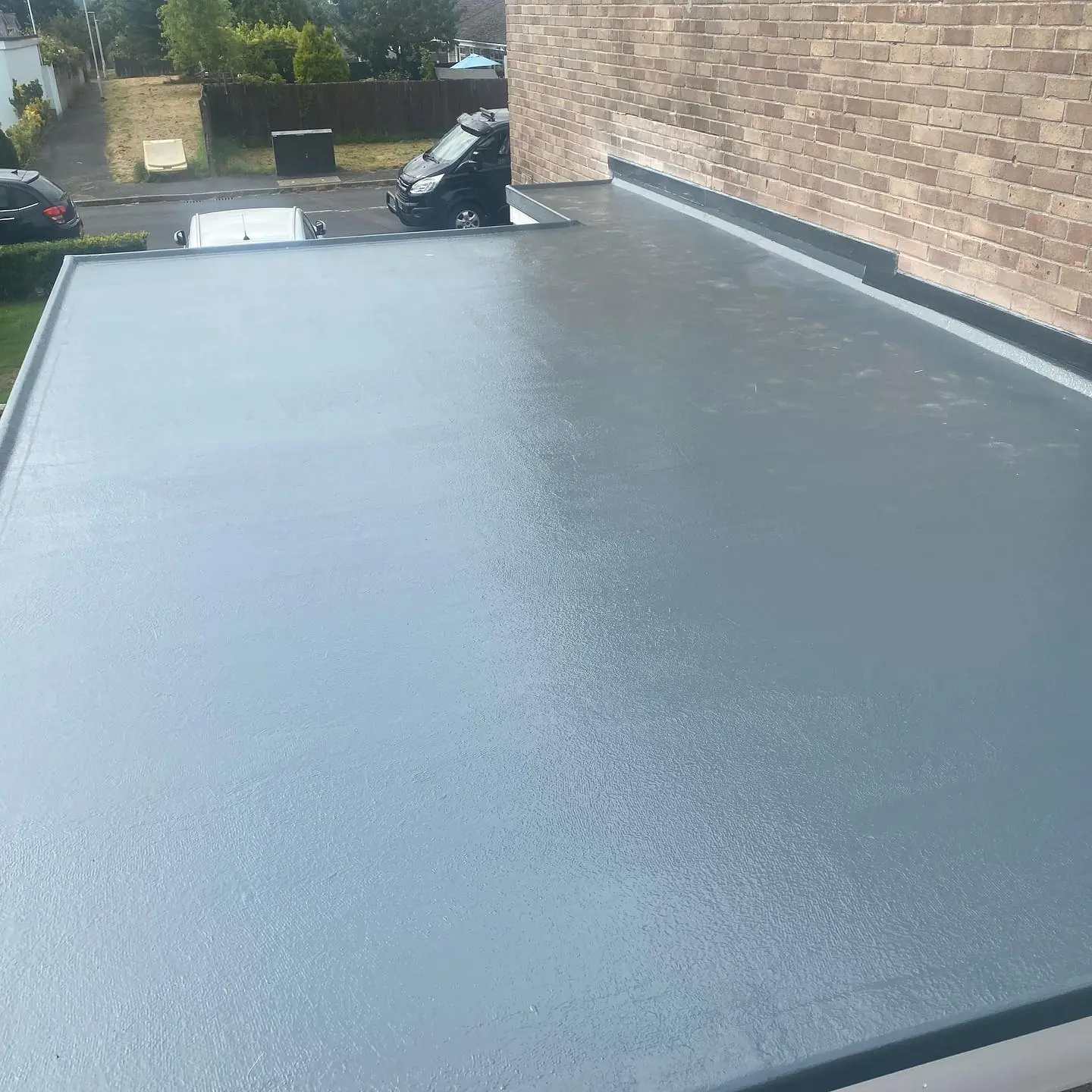
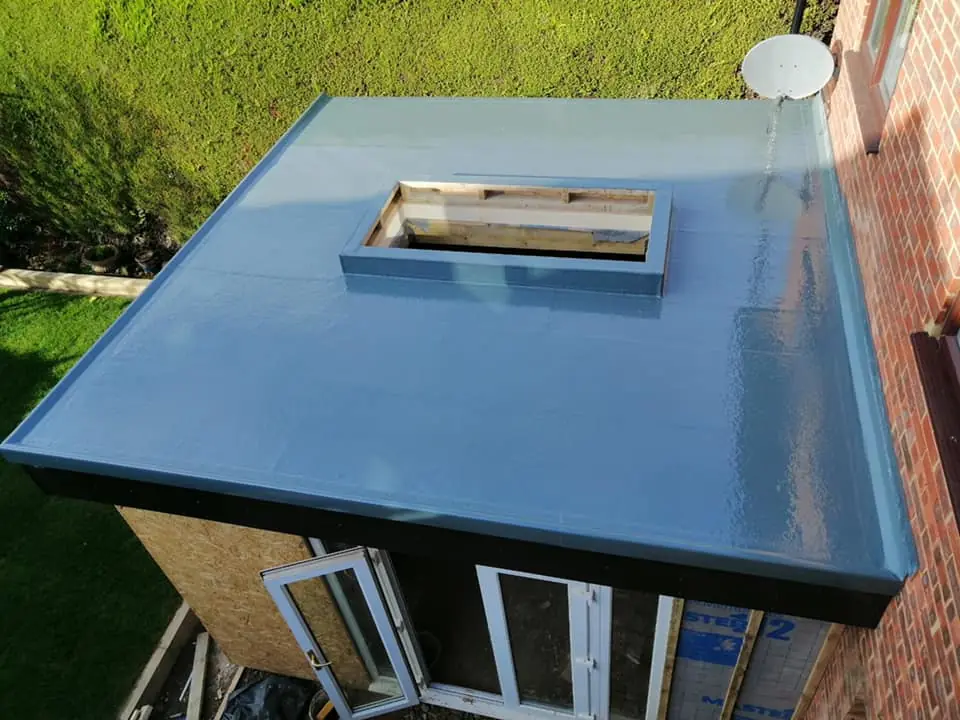
GRP (Glass Reinforced Plastic) fibreglass roofing is a flat and low-pitch roof covering built from layers of resin-soaked glass-fibre matting, finished with a protective coloured topcoat. Once cured, it forms one seamless, rigid surface with no joints or overlaps for water to find a way through. It's laid over a timber deck, almost always OSB3 board, and typically lasts 25 to 35 years with only light upkeep. GRP suits balconies, roof terraces, dormer roofs, and porch canopies especially well, because it copes with regular foot traffic better than felt or rubber.
Is GRP Fibreglass the Right Choice for Your Nottingham Roof?
GRP earns its place on a roof where a seamless, hard-wearing, walk-on surface matters more than anything else. It isn't always the right call, though, so here's where it genuinely wins.
- Balconies, roof terraces, and walkways where people need to stand or walk regularly
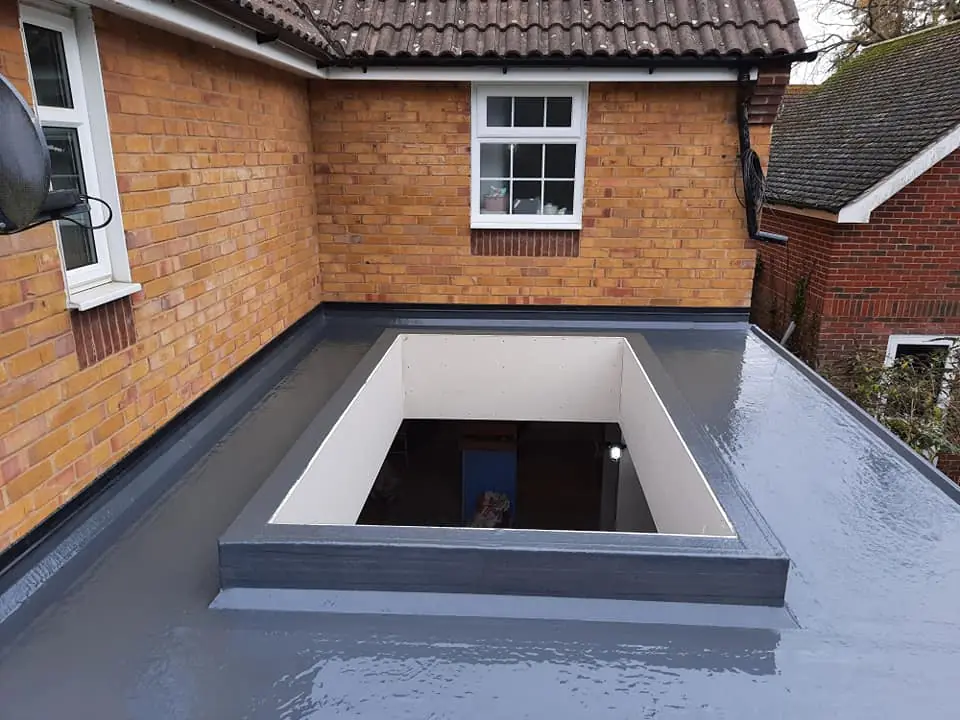
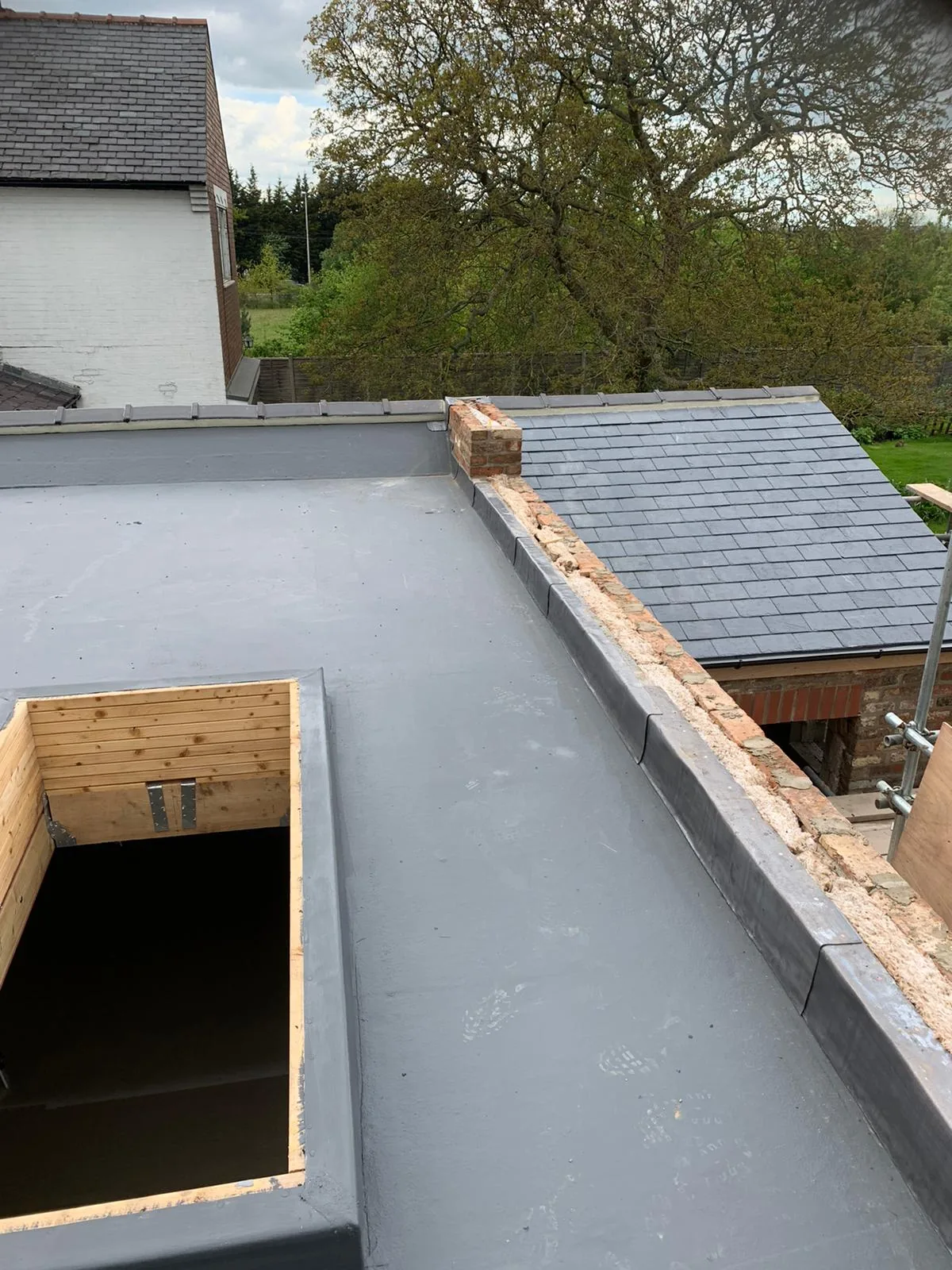
- Roofs with lots of upstands, rooflights, or pipe penetrations, where one seamless material avoids extra joints
- Porch canopies, dormer cheeks, and bay roof tops with tight, awkward shapes
- Properties where you want a coloured, decorative finish rather than a plain membrane
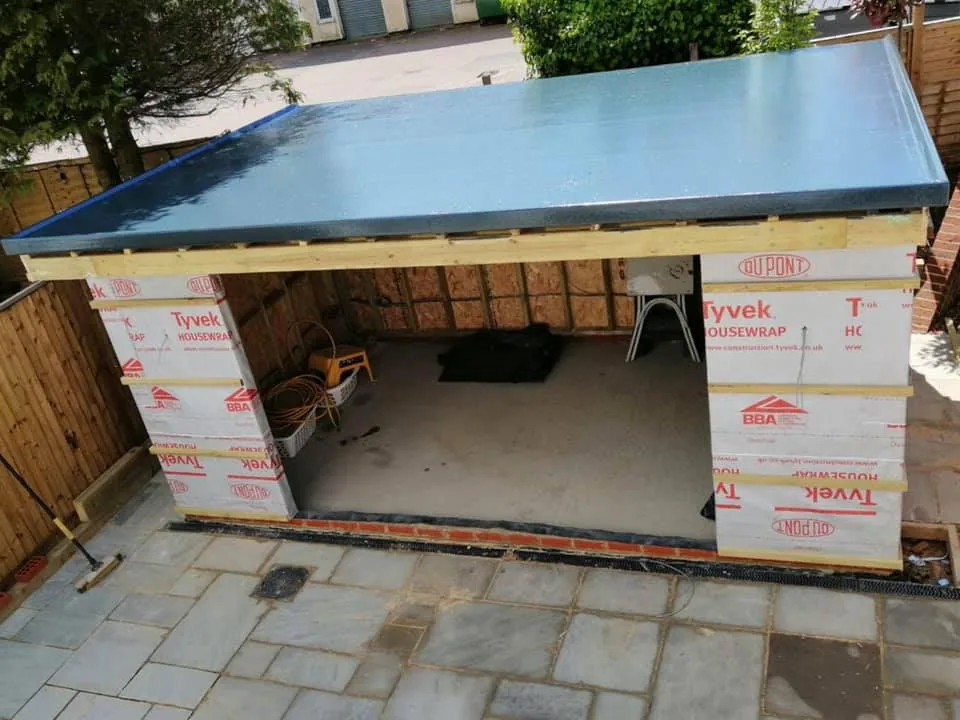
- Extensions and garages where a rigid, hard-wearing surface matters more than flexibility
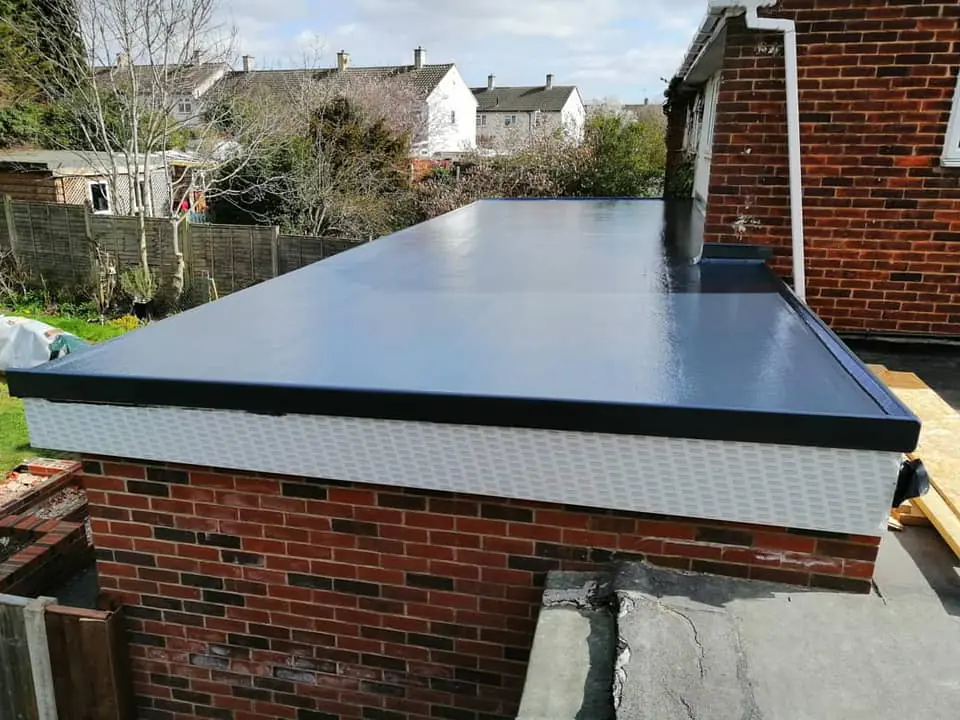
GRP is built for flat and shallow-pitch roofs, generally up to around 10 degrees. If your project needs a fully pitched structure instead, our pitched roof construction page covers that work. And if the GRP roof is one part of a bigger job — say, a rear extension going up alongside a full re-roof — our new roof installation page covers how we run the whole project.
What Happens Before We Fit Your New GRP Roof
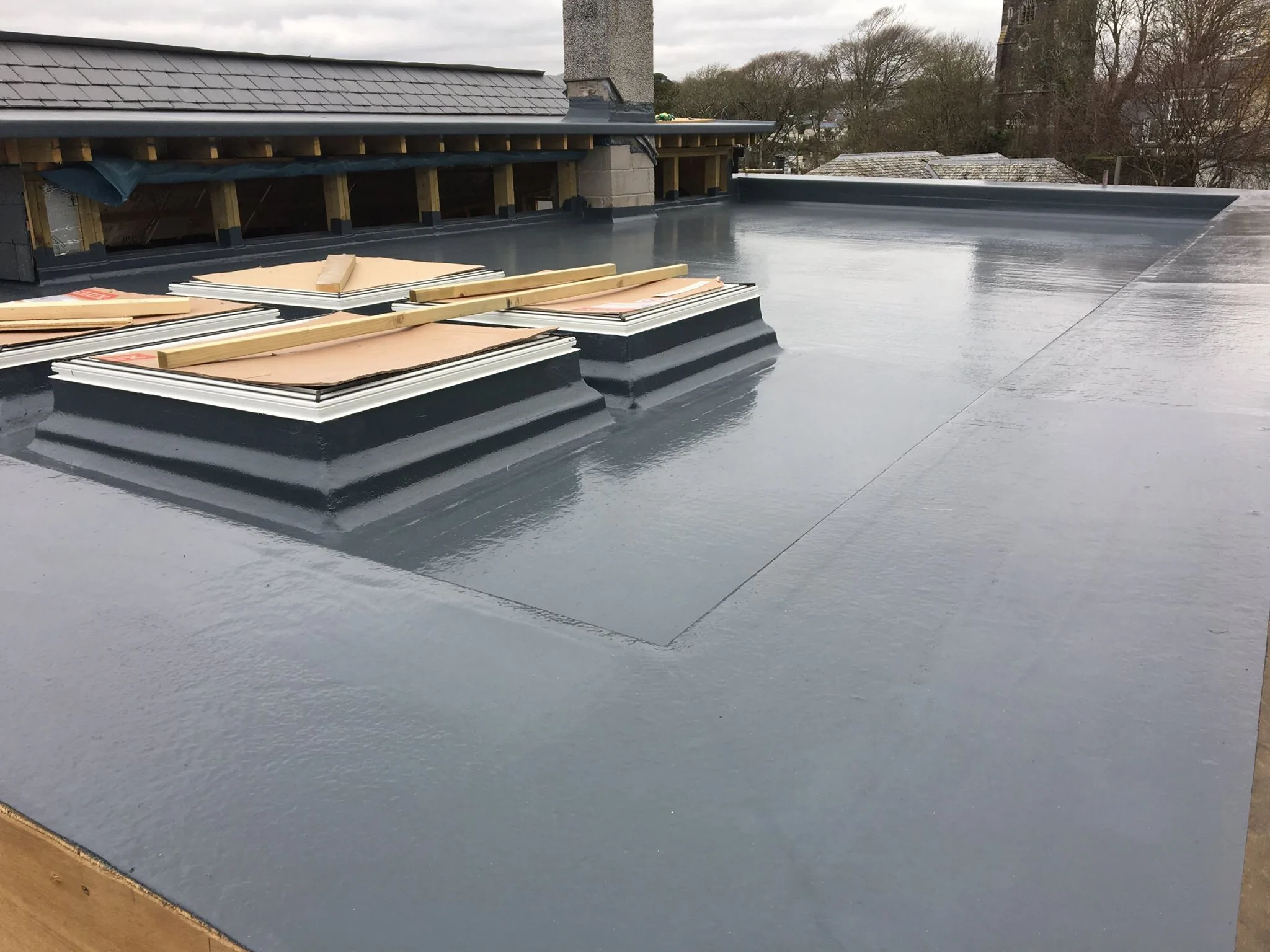
Every GRP job starts with a proper look at the roof, not a guess from ground level.
- We carry out a free drone survey of the whole roof, upstands, and junctions — no ladders needed
- We check the timber deck for rot, movement, or flex, because GRP needs a solid, well-fixed base underneath it
- On older Victorian and Edwardian terraces around Sneinton or Mapperley, we check whether the original joists need extra strengthening before new decking goes down
- We confirm there's enough fall — a slope of at least 1:40 — so water actually reaches the outlets
- We agree the topcoat finish with you: standard gloss, an anti-slip aggregate finish for a walked area, or a colour to match your property
- We check the weather window, because GRP resin needs dry conditions and a temperature above roughly 5°C to cure properly
- If you're near The Park or Lenton, we flag anything that needs conservation area sign-off before work starts
- You get a firm quote and an agreed scope before any tool comes out of the van
How We Install a GRP Roof That Won't Crack or Craze
Most GRP failures trace back to a rushed lay-up, not the material itself. Here's how we install one properly.
- Strip the roof back to a sound deck and replace any rotten or damp timber we find
- Fix new OSB3 decking, boards laid to the manufacturer's joint spacing and screwed, not just nailed
- Bond a resin-soaked fibreglass base layer across the whole deck, working only in dry conditions within the resin's curing temperature range
- Lay a reinforcing second layer of laminate over joints, upstands, and trims, where extra strength matters most
- Choose isophthalic resin — a fire-retardant grade — where Building Regulations call for it, and standard resin elsewhere
- Apply the coloured topcoat once the laminate has gone off (cured enough to walk on without marking); applying it too soon or too thick is the single biggest cause of the flaking topcoats we get called out to fix
- Finish and clear the site, typically 1 to 3 days for a garage, dormer, or balcony roof, weather allowing
How to Check Your New GRP Roof Was Fitted Properly
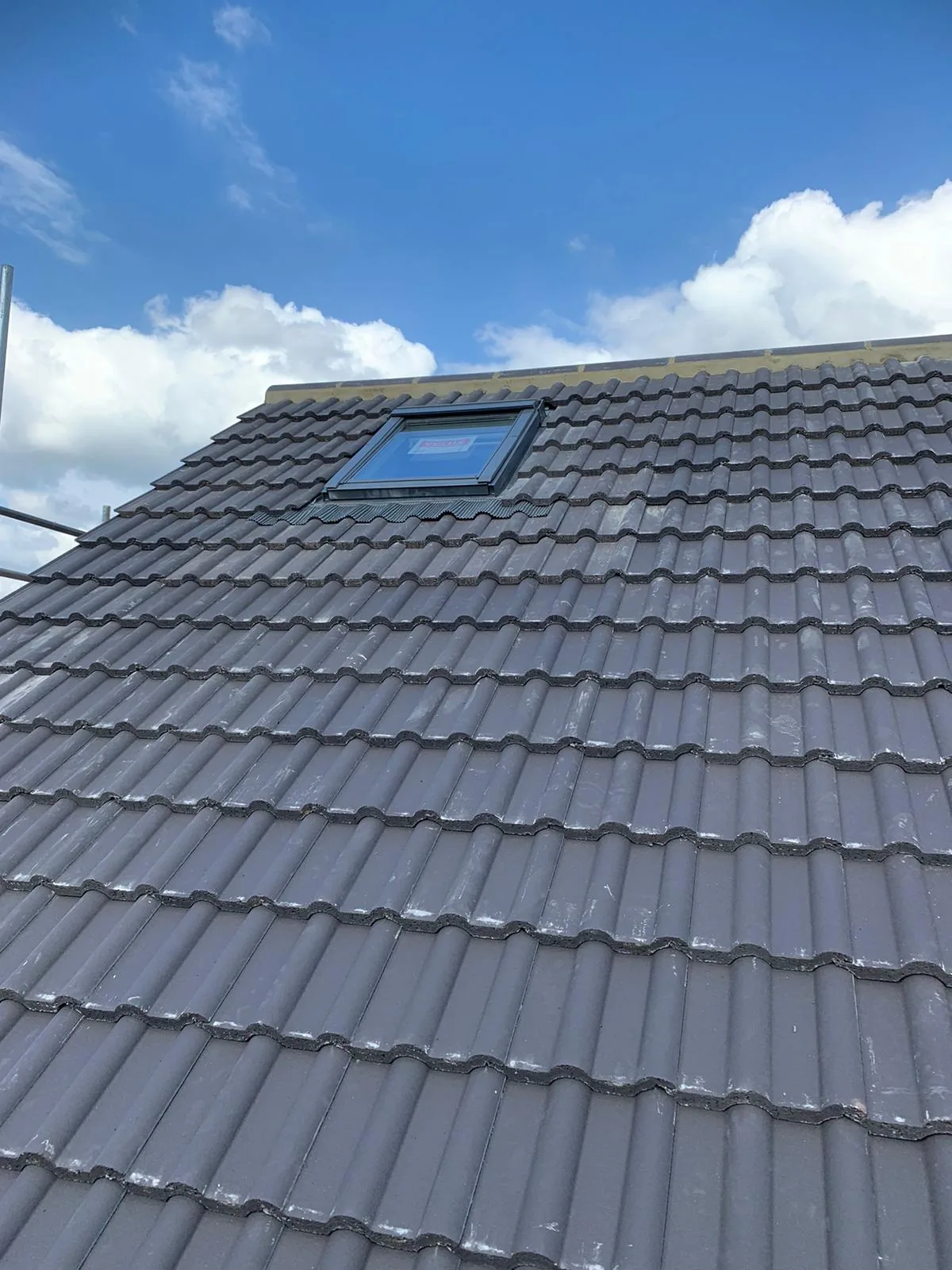
Whether you're worried about an existing roof or checking a job we've just finished, here's what to look for.
Signs Your GRP Roof Is Failing
- Hairline cracks or a network of fine lines across the surface, known as crazing
- Topcoat that's flaking, peeling, or gone dull and chalky
- Blisters or soft, spongy patches where moisture has become trapped under the topcoat
- Visible glass fibres poking through the surface
- Standing water still sitting on the roof 48 hours after rain
- A shrivelled, cracked look across the whole surface — often called "alligatoring" — on roofs well past their working life
How to Check a GRP Roof Job Was Done Properly
- The finished surface should be smooth, glossy, and completely flat, with no wrinkles, dry patches, or visible fibres
- Upstands, trims, and edges should be fully wrapped and bonded into the laminate, not just dressed over the top
- Ask to see photos of the deck taken before it was covered — proof the timber underneath was sound
- You should receive written confirmation of the resin type, laminate weight, and topcoat used, plus your guarantee terms
- We back every GRP roof we fit with a 10-year workmanship guarantee, in writing, from day one
Keeping Your GRP Roof Watertight for 30+ Years
A little maintenance twice a year keeps a good GRP roof performing for decades.
- Clear leaves and debris off the surface and out of outlets, especially after autumn leaf-fall
- Check for hairline crazing or a dulling, chalky topcoat, and get it reapplied before it cracks through to the laminate
- On shaded, north-facing roofs — common on terraces around Radford and parts of Lenton — clean off any moss or algae gently by hand, never with a wire brush, since it scratches the topcoat and holds moisture
- Avoid dragging planters, furniture, or bins across the surface, which can scuff or gouge the topcoat
- Keep gutters and outlets clear so water can't pond against upstands
- Give the roof a five-minute check after any storm, so small damage gets caught before it spreads
Cost & Pricing Guidance
GRP fibreglass roofing prices across the UK for 2025/26 typically run like this:
- Standard GRP roof covering, supply and fit: £60-£90 per m²
- Balcony or roof terrace with an anti-slip aggregate topcoat: £70-£100 per m²
- Full warm roof buildup with insulation, deck replacement included: £120-£180 per m²
- Minor repairs — a crack, a small blister, a topcoat touch-up: £150-£350
- Larger repairs, such as re-laminating a damaged section or upstand: £400-£900
A typical garage, dormer, or small balcony roof costs £1,500-£5,500 all in, depending on size and access. What pushes the price up or down: roof size and shape, the number of upstands and penetrations, whether the deck needs replacing, whether you want a decorative or anti-slip finish, and how tight the weather window is for curing. The Federation of Master Builders' flat roof cost guide covers the same cost drivers across the wider flat roofing market.
These are general ranges, not a quote. A fixed price needs a survey — and our drone survey is free, with no obligation.
Comparison Table: GRP Roof Build Options
| Build Option | Typical Lifespan | Best For | Relative Cost |
|---|---|---|---|
| Standard GRP overlay (single reinforcing layer) | 25-30 years | Garage and shed re-covers, budget balconies | £ (lowest) |
| Heavy-duty walkover GRP (extra laminate layer, anti-slip topcoat) | 30-35 years | Roof terraces, balconies, regularly walked areas | ££ |
| GRP over existing sound felt or asphalt (overlay system) | 20-25 years | Quick refurbishment where the deck and old covering are sound | £ (assessment-dependent) |
| GRP warm roof with insulation (full strip and rebuild) | 30-35+ years | Full replacements, extensions, condensation-prone rooms | £££ (highest) |
Why Choose Tate & Sons for Your GRP Roof
GRP work is led by Daniel Oakland, Project Manager and Lead Roofer, who has 20+ years in the trade. He specialises in EPDM, GRP, and standing-seam systems, and runs every GRP job day to day, from a single porch canopy to a full balcony re-cover on a property towards West Bridgford or The Park.
Tate & Sons was founded by James Tate on a simple idea: find out what's genuinely wrong, use the right materials, and leave something that holds for years, not months. That's why we won't rush a topcoat over a deck we haven't checked. Read more on our About page.
Our roofers are directly employed, not subcontracted. They hold NVQ Level 2 and 3 qualifications in Roofing Occupations and carry CSCS cards. Every GRP roof comes with a free drone survey up front and a 10-year workmanship guarantee once the work is finished.
GRP Fibreglass Roofing Across Nottingham and the Wider County: Areas We Serve
We fit and repair GRP roofs right across Greater Nottingham and out into the wider county. Wherever your property sits, our crews know the local weather, the housing stock, and the access.
- Nottingham City Centre (NG1)
- The Park (NG1)
- West Bridgford (NG2)
- Sneinton (NG2)
- Wollaton (NG8)
- Lenton (NG7)
- Beeston (NG9)
- Chilwell (NG9)
- Stapleford (NG9)
- Arnold (NG5)
- Sherwood (NG5)
- Mapperley (NG3)
- Carlton (NG4)
- Gedling (NG4)
- Hucknall (NG15)
- Long Eaton (NG10)
- Mansfield (NG18)
- Sutton-in-Ashfield (NG17)
Got Questions?
Your Flat Roofing Questions, Answered Properly
How much does GRP fibreglass roofing cost in the UK?
Most Nottingham GRP roofs cost £60-£90 per m² for a standard supply-and-fit job, rising to £120-£180 per m² for a full warm roof buildup with new insulation. A typical garage, dormer, or small balcony roof costs £1,500-£5,500 all in. Balconies and terraces that need an anti-slip aggregate topcoat sit slightly higher, at £70-£100 per m². Access, deck condition, and the number of upstands all move the final figure, so a survey gives you an exact number rather than a guess.
How long does a GRP fibreglass roof last?
A properly installed GRP fibreglass roof typically lasts 25 to 35 years. Some well-detailed installations with a heavy-duty laminate go longer, but the lifespan depends heavily on installation quality — a rushed topcoat or thin laminate shortens it considerably. Sun exposure, foot traffic, and how well junctions and upstands were detailed at the time all play a part. Routine checks twice a year help you catch early wear before it turns into a leak.
Is GRP or EPDM better for a flat roof?
Neither is simply "better" — they suit different jobs. GRP cures into a rigid, walk-on-friendly surface, which makes it the stronger choice for balconies, terraces, and roofs with lots of upstands or awkward shapes. EPDM is a single flexible rubber sheet that copes better with a deck that moves slightly and needs almost no maintenance once fitted, which suits extensions and garages well. Your budget, how you'll use the roof, and your deck's condition should decide which one goes on your property.
Can you walk on a GRP fibreglass roof?
Yes — GRP is the most walk-on-friendly of the common flat roof systems, which is exactly why it's used on balconies and terraces. A heavy-duty build with an anti-slip aggregate topcoat copes with regular foot traffic without scuffing or wearing through. A standard single-layer GRP roof can take occasional maintenance access but isn't specified for daily use. Tell us at survey stage if you need a usable roof space, so we build the right laminate thickness and finish for it.
Why is my GRP roof cracking or crazing?
Crazing — a network of fine hairline cracks across the surface — is almost always down to how the roof was installed, not the material itself. Applying the topcoat before the laminate has properly cured, or applying it too thickly, stops it bonding and flexing the way it should. UV exposure and repeated summer expansion and winter contraction then work on that weak point until it cracks through. A roof laid with the correct resin, layer weights, and curing time resists this for decades, which is why installation quality matters more than the brand of resin used.
Can a GRP roof be repaired, or does it need full replacement?
A sound deck with isolated damage — a crack, a small blister, a worn topcoat — can usually be repaired by cutting back to sound laminate and re-laminating the area. Widespread crazing, a shrivelled "alligatored" surface, or a rotten deck underneath usually points to full replacement instead. Our free drone survey tells you honestly which category your roof falls into, with photos to back it up. Patching a roof that's genuinely past its working life often costs more over time than replacing it properly once.
Do I need planning permission or Building Regulations sign-off for a GRP roof?
Most straightforward GRP re-covers on an existing flat roof don't need planning permission if the appearance and footprint stay the same. Building Regulations notification is generally required if you're covering more than 25% of the roof or adding a new balcony or terrace, and conservation areas around The Park and parts of Lenton can bring extra restrictions. Fire-retardant isophthalic resin may also be specified under Building Regs depending on the building's use and proximity to a boundary. We check what applies to your property during the survey.
What temperature does GRP need to cure properly, and can it be fitted in winter?
GRP resin generally needs a dry surface and an air temperature above roughly 5°C to cure correctly, though cold-weather resin grades can push that lower. Fitting it outside that range risks a laminate that doesn't fully harden, which weakens the roof and makes early cracking far more likely. We track the forecast closely and won't start a lay-up in damp or freezing conditions, even if that means moving the job by a day or two. Winter installs are possible in Nottingham on a dry, still day — they just need tighter weather planning than a summer job.
Does GRP roofing work on shaded, north-facing roofs prone to moss?
Yes, GRP's seamless, non-porous surface actually resists moss and algae better than felt, since there are no fibres or joints for spores to take hold in. Shaded roofs on terraces around Radford, Lenton, and parts of Sneinton still collect organic debris in low spots, though, and trapped moisture there can dull the topcoat over time. A twice-yearly clean and a check that outlets aren't blocked by leaves keeps a shaded GRP roof performing as well as one in full sun. It's a smaller risk than with felt, but not a zero one.
Book Your Free Drone Roof Survey Today
See exactly what your roof needs before any work starts. No ladders, no pressure — just a clear picture from a local Nottingham team.
A tired roof only gets worse as water works deeper into the deck and timber beneath it. A quick, free drone survey today tells you exactly where you stand — and often the fix is smaller and cheaper than you feared. Book now, get an honest quote, and protect your home before the next East Midlands downpour finds the weak spot.
📍 57 Cyril Avenue, Nottingham, NG8 5BA
📞 0115 647 4455
Call the Nottingham team today on 0115 647 4455, or request your free drone survey online. We’re already working across your area.
Get in Touch
Tate & Sons Roofing — Nottingham
57 Cyril Avenue, Nottingham, NG8 5BA
📞 0115 647 4455
✉️ [email protected]