
🏠 Trusted Local Roofers
GRP Fibreglass Roofing Market Harborough
GRP fibreglass roofing in Market Harborough goes on wet and cures into one solid skin, with no seams, no laps and no joints for water to work through. That single-piece finish is why it lasts longer than felt or rubber, and why it holds up when a roof doubles as a balcony, a terrace or a walkway. Tate & Sons Roofing fits and repairs GRP fibreglass roofs on homes across Market Harborough and the wider Welland Valley, from a small porch canopy to a full flat-roof extension.
This page runs through what GRP fibreglass actually is, the roofs it suits best, how it stacks up against EPDM rubber and felt, what it costs, and how it copes with foot traffic and a cold Leicestershire winter. Start with a free drone survey and a written quote before any work begins — no scaffold just to take a look, and no charge either way. GRP fibreglass is one part of the wider service we offer as a roofing contractor across Market Harborough.
- Fully Insured
- 10-Year Guarantee
- 5-Star Rated
Quick Free Estimate - No Obligation
We're not just roofers – we're your neighbours.
Fully Insured • Response within 15 mins
🔒 Your details are safe with us. No spam, ever.
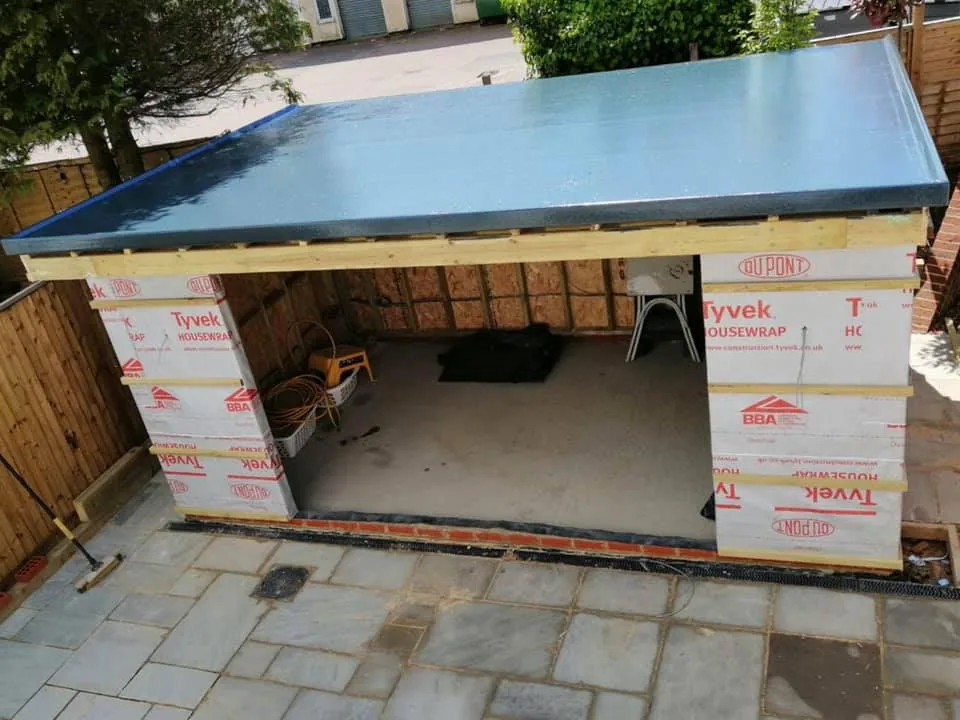
One Seamless Skin With Nothing for Water to Find
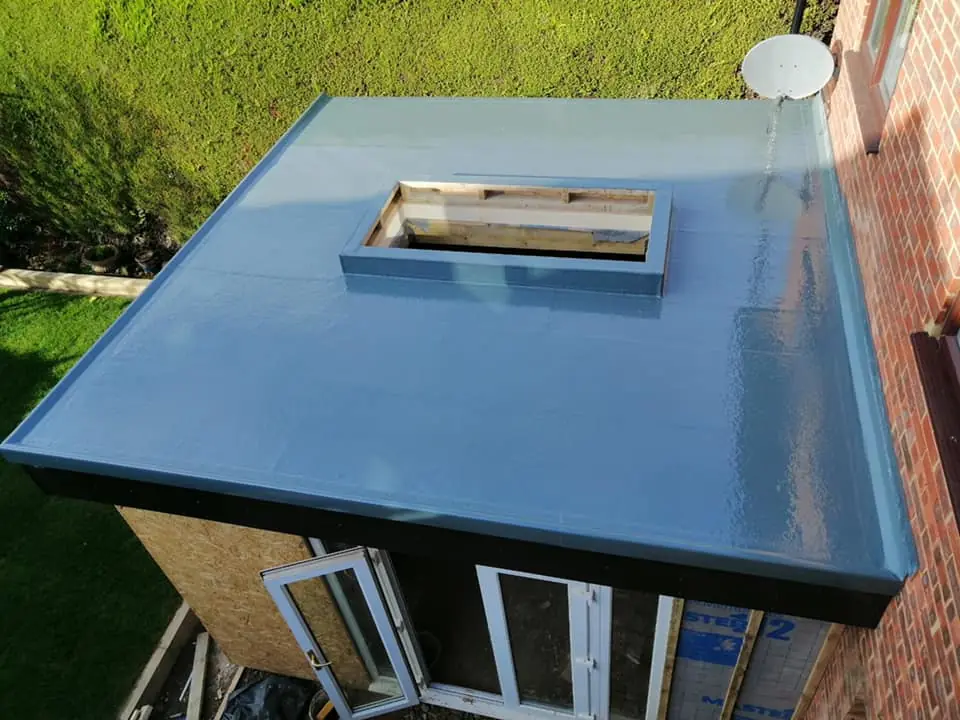
GRP stands for glass-reinforced plastic, and it starts life as a liquid. A roofer lays a base coat of resin over the deck, presses a mat of chopped glass fibre into it, then rolls another coat of resin on top. The whole lot cures hard into a single sheet that bonds tight to the boards below.
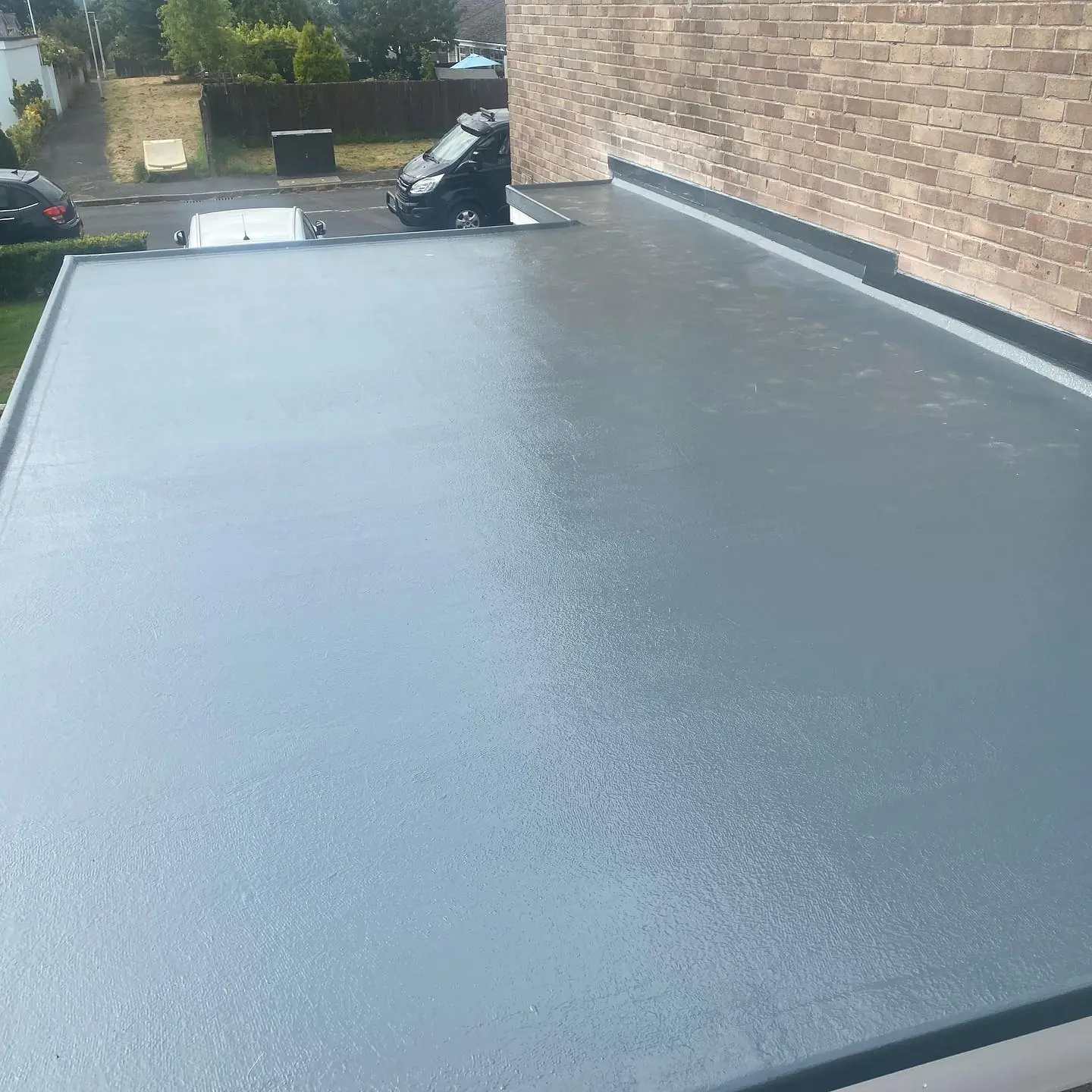
The result is a roof with no seams anywhere on the surface. Felt is bonded in overlapping layers, and rubber is laid in sheets with bonded joints at the edges. Both of those joints are the first place a flat roof tends to fail. GRP has none of them, so there is no weak line for water to track along years down the road.
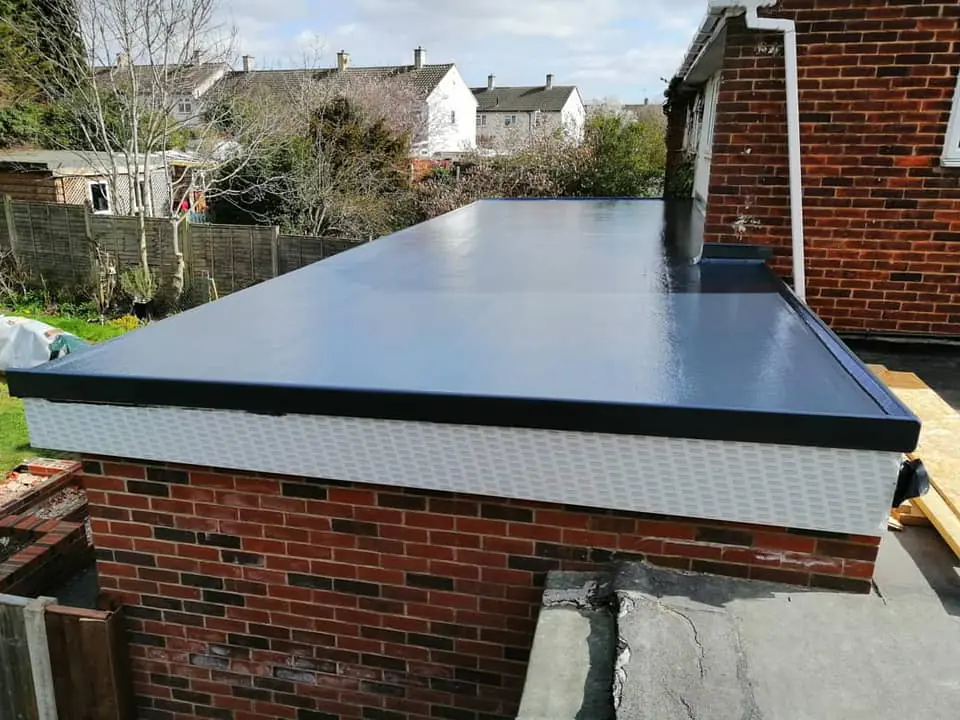
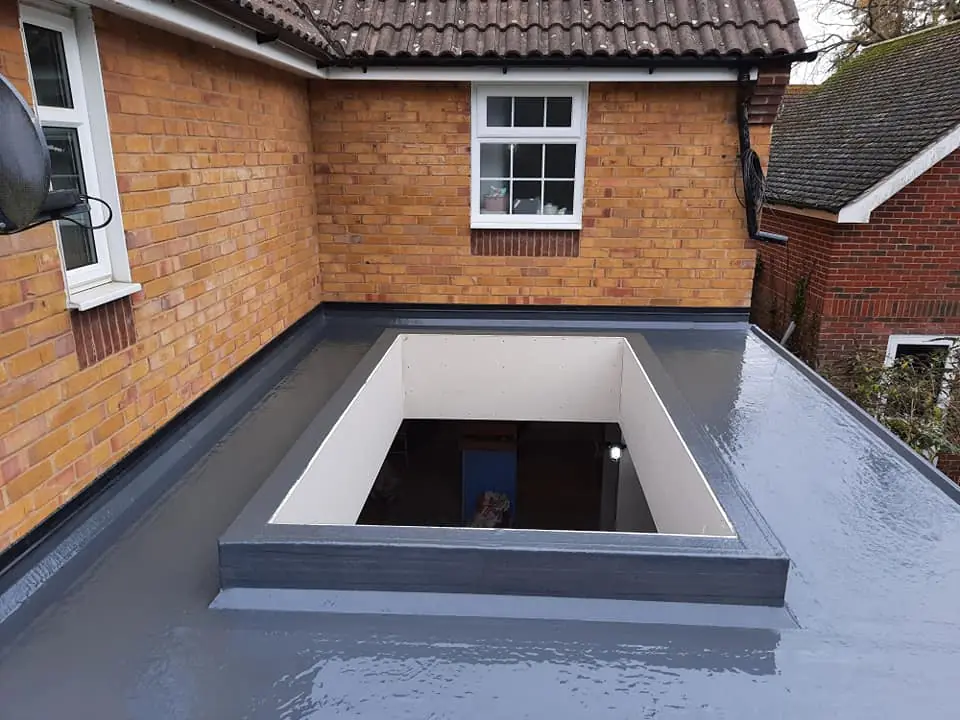
A finished GRP roof feels solid underfoot, not springy. It takes a topcoat in a range of colours, and it can be dressed neatly around pipes, rooflights and awkward corners that would be fiddly in any other system. That combination of a hard, seamless, good-looking finish is what draws people to it in the first place.
The Roofs Where GRP Fibreglass Pays for Itself
GRP is not the cheapest flat roof you can buy, so it earns its place on the jobs that play to its strengths. A dormer roof, a bay window top, a flat-roof extension used as a sun terrace off a bedroom — these are where the seamless finish and the hard wearing surface matter most.
We fit GRP on plenty of these across the district. A walk-out terrace on a converted period home near Great Bowden, a run of dormers on a newer build in Little Bowden, a wide flat-roof extension in Lubenham — each one wanted a roof that could take being looked at, walked on, and left alone for decades. GRP handled all three.
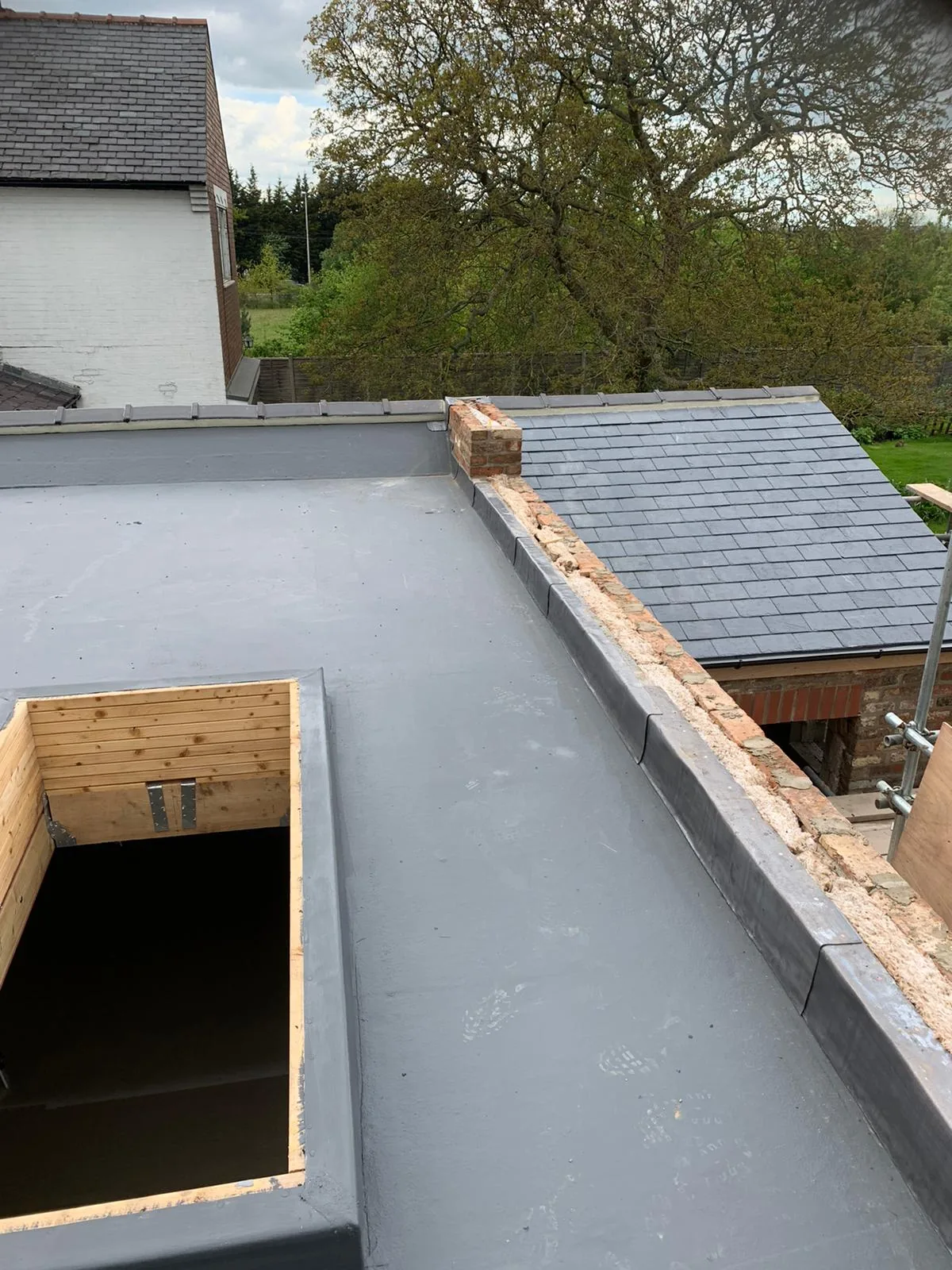
The shape of a roof matters too. If yours has lots of corners, upstands, pipe penetrations or an odd outline, a liquid system moulds around every one of them in a single pass. There are no sheets to cut and join around each obstacle. On a plain rectangular garage roof, EPDM rubber often makes better financial sense — but the moment a roof gets complex or gets used, GRP starts to look like the smarter spend.
GRP, EPDM or Felt — Which Flat Roof System Fits Your Home?
Three systems cover almost every flat roof in this area, and each suits a different job. In short: felt is the cheapest upfront and best for small outbuildings; EPDM rubber is the strong-value all-rounder for plain extensions and garage roofs; GRP fibreglass costs the most but gives a fully seamless, walkable finish with the hardest surface and a long life. The right pick depends on the roof size, how it gets used and how long you want it to last.
Here is how each one earns its keep:
| :-: | :-: | :-: | :-: |
| System | Typical cost (per m²) | Typical lifespan | Best for |
| Felt (built-up) | £40–£70 | 15–20 years | Small garages and outbuildings on the tightest budget |
| EPDM rubber | £50–£90 | 20–30 years | Plain, larger extensions and garage roofs; few joints, strong value |
| GRP fibreglass | £80–£150 | 25–40 years | Walkable terraces, dormers, complex shapes, a hard seamless finish |
- **GRP fibreglass*goes on as a liquid and cures into one seamless, walkable sheet with no joints at all. It has the hardest surface of the three, takes a coloured topcoat, and suits terraces, dormers and any roof with a fussy shape.
- **EPDM rubber*is a single-ply membrane bonded down in large sheets. It flexes well with temperature swings, which makes it a sound pick for big, plain roofs — it is the system we most often fit on standard extensions. Our Flat Roofing page covers the full range.
- **Felt (built-up roofing)*is layers of bitumen felt bonded together. It is the cheapest upfront and still a fair choice on smaller garages and sheds where the budget decides it.
Rubber has one edge worth naming. It stretches a long way and springs back, so on very large roofs it copes with expansion better than a rigid GRP sheet. GRP wins on hardness, on the seamless look and on foot traffic. Neither is simply better — they are built for different jobs, and a survey settles which one your roof wants.
What a GRP Fibreglass Roof Costs in Market Harborough
Cost comes down to three things: material, size and access.
As a general guide for 2026, a fitted GRP fibreglass roof runs roughly £80–£150 per square metre for the covering, labour and basic trims. For a typical 25–30m² garage or extension roof, that works out at around £2,400–£4,200. A smaller single garage of about 18m² often lands between £1,600 and £2,700. Bigger roofs tend to cost a little less per square metre, since materials order more efficiently and the labour per metre drops as the job scales up.
What pushes a price up or down:
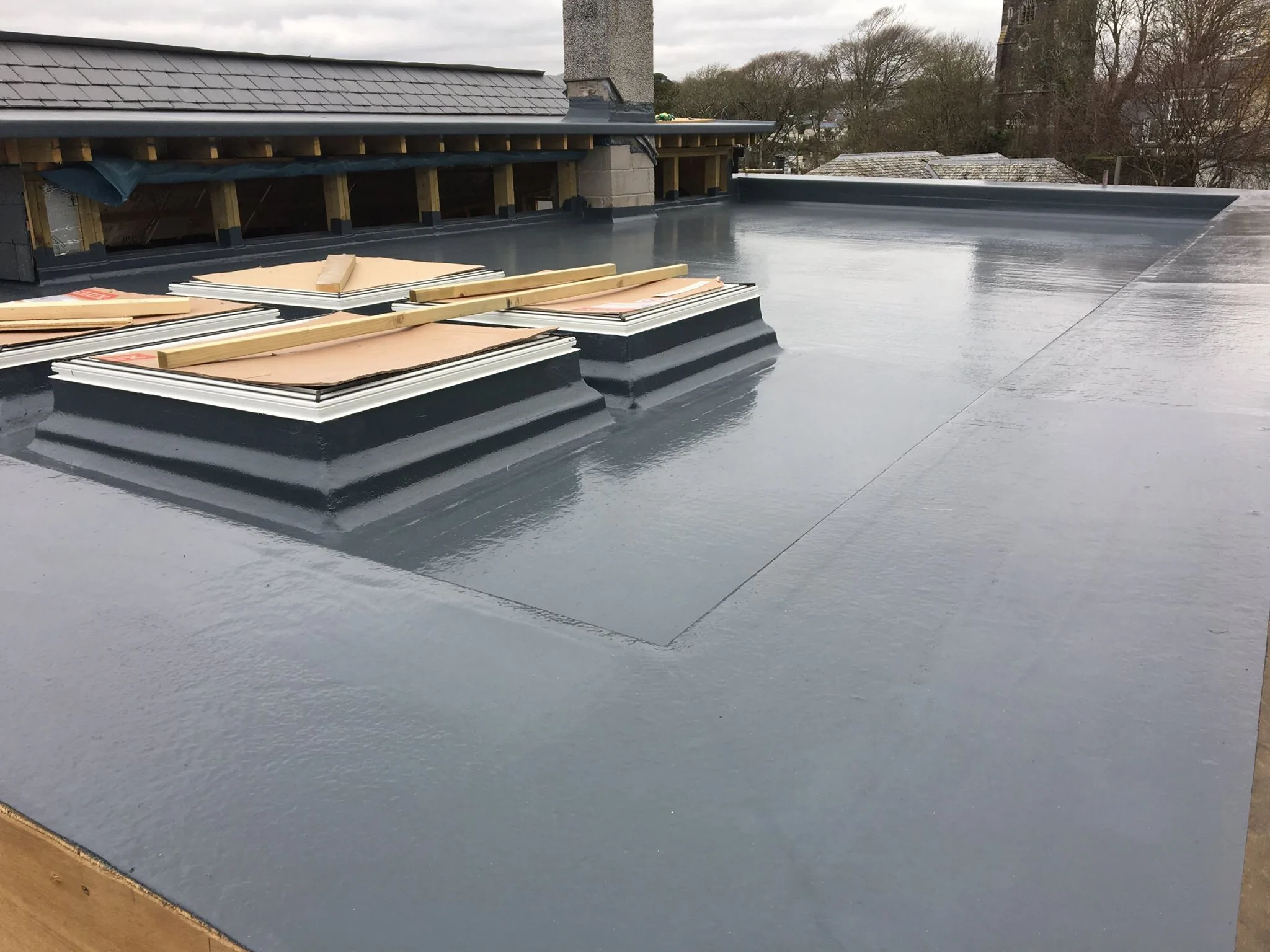
- **Roof size and shape*— more corners, upstands and pipe penetrations mean more detailing time per square metre
- **Access*— a roof reached by ladder costs less to scaffold than one boxed in behind an extension
- **Deck condition*— GRP needs a sound, dry timber deck, and rotten boards typically add £500–£1,800 before the resin goes on
- **Insulation upgrade*— building a warm roof up to current Building Regs standard usually adds £20–£40 per square metre
- **Stripping off*— how many old layers have to come off before the new deck and system go down
A fully insulated warm-roof GRP build-up, with the insulation and a fresh deck included, can reach £210–£270 per square metre once everything is added in. That is the top of the range, and most re-covers sit below it. These are general market figures, not a quote for your roof. Two roofs the same size can price very differently once access, deck condition and insulation are weighed up. The only way to a firm number is a proper survey — which is exactly what our free drone survey gives you, followed by a clear written price with nothing added later. A fixed price needs a survey.
Yes, You Can Walk On It — And No, It Won't Crack If It's Fitted Right
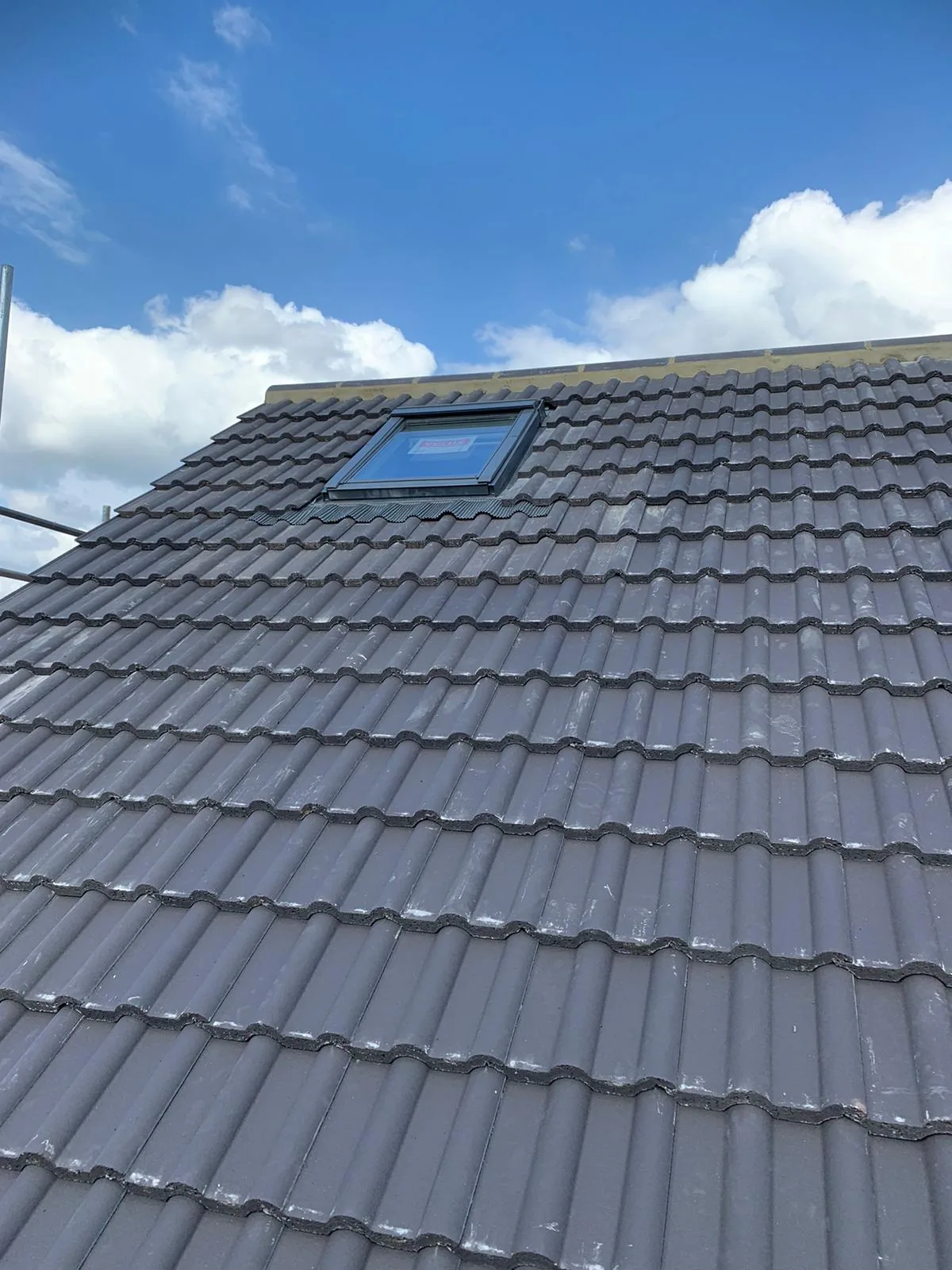
A GRP fibreglass roof is strong enough to walk on, which is one of its biggest draws. The hard cured surface takes foot traffic that would split a felt or rubber roof, so it works as a balcony, a terrace or a maintenance walkway. Wear soft-soled shoes rather than heels or heavy work boots with cleats, and keep grit off the surface, and the topcoat stays sound for years.
When a GRP roof does crack, chip or develop a pinhole, it usually mends without a full re-cover. The seamless surface takes a fresh patch of resin and matting that bonds into the original, so a sound repair blends in and holds. Our Fibreglass Roof Repair page walks through what that involves and when a repair beats a replacement.
Cracking is the worry people raise most, and it almost always traces back to how the roof was built. GRP is rigid, so it needs a stable, well-fixed deck underneath and proper detailing where it meets walls and edges. On a springy or damp deck, or where trims are left off, the surface can craze or hairline over time as the timber moves. Fitted onto a solid deck by roofers who know the system, a good GRP roof stays hard and watertight for decades.
Fitted in the Right Weather, Cured Hard Before We Leave
GRP resin cures by a chemical reaction, and cold slows that reaction right down. Standard resin should not be laid below 5°C, and it works best between 10°C and 20°C. Rush it in the cold and the topcoat can stay tacky or fail to harden, which stores up trouble from day one.
Getting the build-up right is where a lasting roof is won or lost, warm roof or cold. For an independent reference on how liquid systems and warm-roof insulation are meant to be specified, the LRWA liquid roofing guidance is a solid place to read up before you commit to a system. It sets out the standards a proper installer should be working to.
That does not mean GRP is a summer-only job. We plan winter fittings around the weather, warm the materials before use, and use accelerated cold-weather resins rated down to near freezing when the forecast calls for it. We also stop laying resin in good time each afternoon, so every coat cures before the light and heat drop away. A dry, sound deck matters just as much — GRP will not bond to damp timber, so we check moisture before a drop of resin goes down.
Why Market Harborough Homeowners Call Tate & Sons First
You are not just buying resin and glass fibre — you are buying whoever lays it. Ryan Tate, our project manager, specialises in GRP fibreglass and the modern flat-roof systems on this page. GRP is unforgiving of a rushed hand, and Ryan fits it day in, day out, on dormers, terraces and extensions across the district. He is part of the same crew that turns up to fit your roof, not just the man who quoted it.
We work across Market Harborough and the villages around it — Medbourne, Foxton down by the locks, Husbands Bosworth, Desborough and out through the Welland Valley. You get local roofers who turn up when they say they will and leave a written warranty behind.
Founder Michael Tate started his apprenticeship at sixteen and built Tate & Sons on one conviction: fix the cause, not just the symptom — never patch a roof to look right for a season and fail again the next. He still handles the surveys himself, so the person pricing your roof is the one who has read every fault on it. Between us we carry over 45 years of combined experience, hold NVQ Level 2 and 3 qualifications in Roofing Occupations, and keep CSCS cards and NFRC trade-body membership. Read more about the people behind the work on our About Tate & Sons Roofing page.
Areas We Serve Across Market Harborough and the Harborough District
We fit and repair GRP fibreglass roofs across Market Harborough and the surrounding Welland Valley villages. If your area is not on the list below, call us anyway — if you are nearby, there is a strong chance we cover you.
- Market Harborough (LE16)
- Great Bowden (LE16 7)
- Little Bowden (LE16 8)
- Lubenham (LE16 9)
- Foxton (LE16 7)
- Medbourne (LE16 8)
- Kibworth Beauchamp (LE8)
- Great Glen (LE8 9)
- Fleckney (LE8 8)
- Husbands Bosworth (LE17 6)
- Desborough (NN14 2)
Got Questions?
Your GRP Fibreglass Roofing Questions, Answered Properly
How long does a GRP fibreglass roof last?
A well-fitted GRP fibreglass roof commonly lasts 25 to 40 years, and many go beyond that with a little care. The seamless surface has no joints to fail, which is a big part of why it outlasts felt and often rubber too. Lifespan hinges on the quality of the install — a sound deck, the right resin and proper edge detailing all count. A roof fitted onto a springy or damp deck will never reach its potential, however good the materials are.
Is GRP fibreglass roofing any good?
Yes, it is one of the best flat-roof finishes you can buy when the roof suits it. GRP shrugs off heavy rain, hail and temperature swings, needs very little upkeep, and gives a hard, seamless, good-looking surface. It costs more upfront than felt or rubber, so it pays off best on roofs that get walked on or have a complex shape. On a plain, budget garage roof, rubber often makes more sense for the money.
Can you walk on a GRP fibreglass roof?
Yes, and that is one of its main advantages over felt and rubber. The hard cured surface takes regular foot traffic, so GRP works well as a balcony, terrace or maintenance walkway. Wear soft-soled footwear rather than heels or cleated boots, and keep grit and sharp objects off the surface to protect the topcoat. If you want a roof used as a proper terrace, tell us at the survey so we can specify it for the job.
Does a GRP fibreglass roof crack?
It can, but cracking nearly always comes down to how the roof was built rather than the material. GRP is rigid, so it needs a stable, well-fixed deck and proper detailing at edges and upstands to cope with timber movement. On a springy deck or a job with trims left off, the surface can craze or hairline over time. Fitted onto a solid, dry deck by roofers who know the system, a GRP roof stays hard and watertight for decades.
GRP fibreglass or EPDM rubber — which is better?
Neither is simply better; they are built for different roofs. GRP gives a hard, seamless, walkable surface and suits terraces, dormers and complex shapes. EPDM rubber flexes with temperature swings and works out cheaper, which makes it the stronger pick for large, plain extensions and garage roofs. We fit both, so the survey is about matching the system to your roof rather than selling you the dearer option.
Can a GRP roof be fitted in winter?
Yes, with the right planning and materials. Standard GRP resin should not be laid below 5°C, so in cold spells we warm the materials, work to the warmest part of the day, and use accelerated cold-weather resins rated down towards freezing. The deck also has to be dry, since GRP will not bond to damp timber. We plan winter jobs around the forecast so every coat cures properly before the light and temperature drop.
How much does a GRP fibreglass roof cost in Market Harborough?
As a general guide for 2026, a fitted GRP roof runs roughly £80 to £150 per square metre for the covering, labour and basic trims. A typical 25–30m² garage or extension re-cover lands somewhere between about £2,400 and £4,200, with a fully insulated warm-roof build-up reaching higher. The final figure depends on size, access, deck condition and insulation. A free drone survey gives you an exact written price rather than a rough estimate over the phone. A fixed price always needs a survey first.
Can you repair a GRP roof, or does it need replacing?
Most GRP faults repair without a full re-cover. A crack, chip or pinhole takes a fresh patch of resin and matting that bonds into the original surface, blending in and holding watertight. A full re-cover is only needed where the deck below has failed, or where the surface is crazing widely from a poor original install. We check the whole roof on a free drone survey before recommending either route, so you pay for what the roof actually needs.
Book Your Free Drone Roof Survey Today
See exactly what your roof needs before any work starts. No ladders, no pressure — just a clear picture from a local Market Harborough team.
Every week a tired flat roof waits, water works deeper into the deck and timber beneath it, and a job that could have been a small GRP repair grows into a full re-cover. A quick, free survey today tells you exactly where you stand — and often the fix is smaller and cheaper than you feared. Book now, get an honest written quote, and protect your home before the next downpour finds the weak spot.
ð 5 Hood Close, Market Harborough, LE16 9XS
ð 01858 457600
Call the Market Harborough team today on 01858 457600, or request your free drone survey online. We're already working across your area.
Book Your Free Drone Roof Survey
See exactly where your roof stands, with no obligation and no pressure. Call our Market Harborough team or request your free drone survey today.
Get in Touch
Tate & Sons Roofing — Market Harborough Office
5 Hood Close, Market Harborough, LE16 9XS
📞 01858 457600
✉️ [email protected]