
🏠 Trusted Local Roofers
Flat Roofing Nottingham
In Nottingham, a poorly built flat roof rarely fails quietly. It shows up as a damp patch on a kitchen extension ceiling, a puddle that won't drain off a garage roof, or a felt edge lifting after the first proper Trent Valley gale. This page covers what a good flat roof needs, what the main systems cost, and how to spot a job that will last. As a roofing contractor working across the city, we install and repair flat roofs the way we'd want one built on our own house — properly detailed, in the right material, with nothing rushed.
- Fully Insured
- 10-Year Guarantee
- 5-Star Rated
Quick Free Estimate - No Obligation
We're not just roofers – we're your neighbours.
Fully Insured • Response within 15 mins
🔒 Your details are safe with us. No spam, ever.
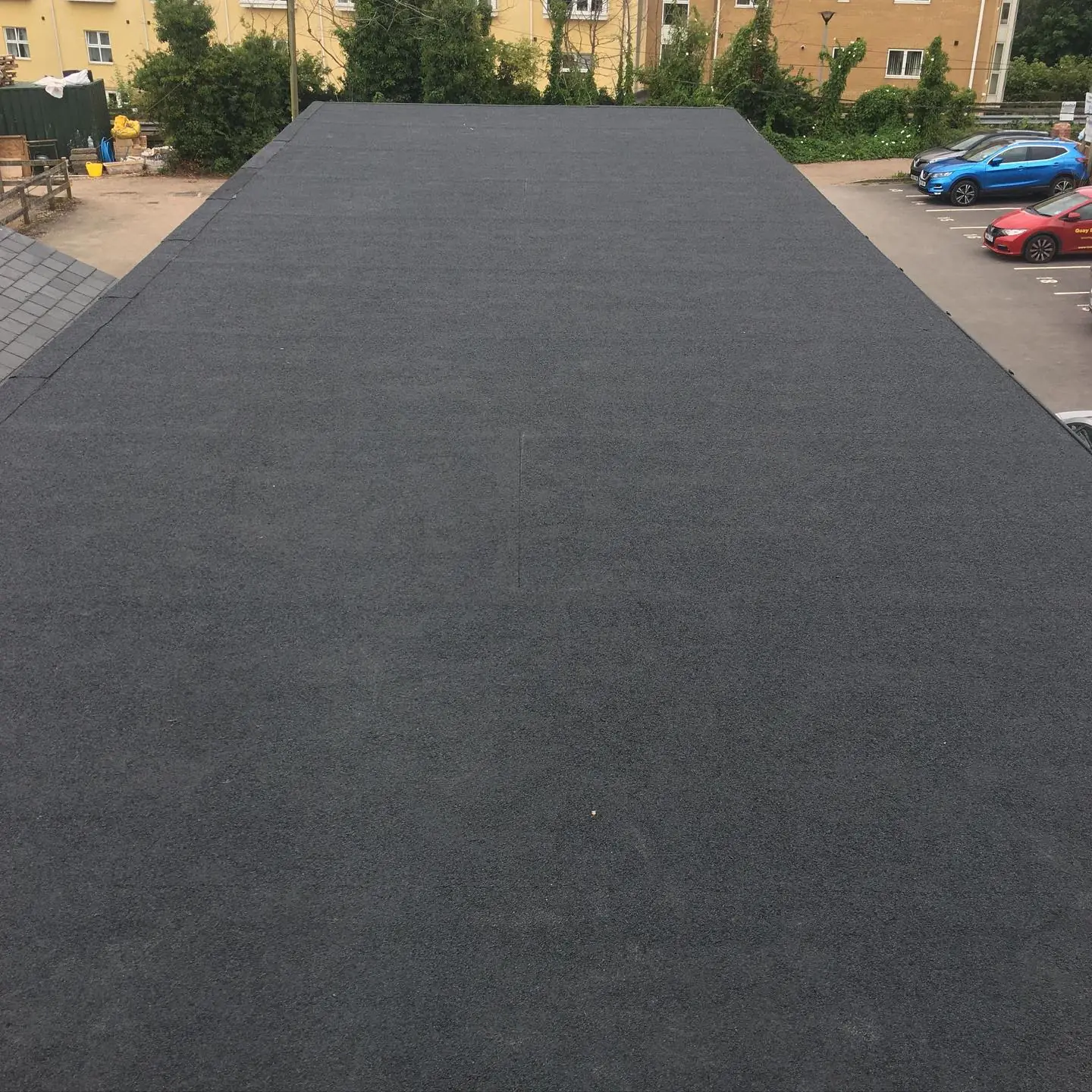
What's the Best Flat Roof Material for Your Nottingham Home?
For most Nottingham homes, EPDM rubber is the strongest all-round choice. It typically lasts 30 to 40 years with almost no upkeep. Felt is the cheapest option to install but needs replacing every 10 to 20 years. GRP fibreglass sits in the middle for cost and gives a rigid, seamless finish that suits balconies and roof terraces well. The right choice depends on your roof's size, how you use it, and your budget. A free survey settles it properly — see the comparison table further down this page for lifespan and cost at a glance.
EPDM vs GRP vs Felt: What Each System Actually Suits
Lifespan and cost only tell half the story. Here's how each system behaves once it's on your roof, and where it fits best.
EPDM Rubber
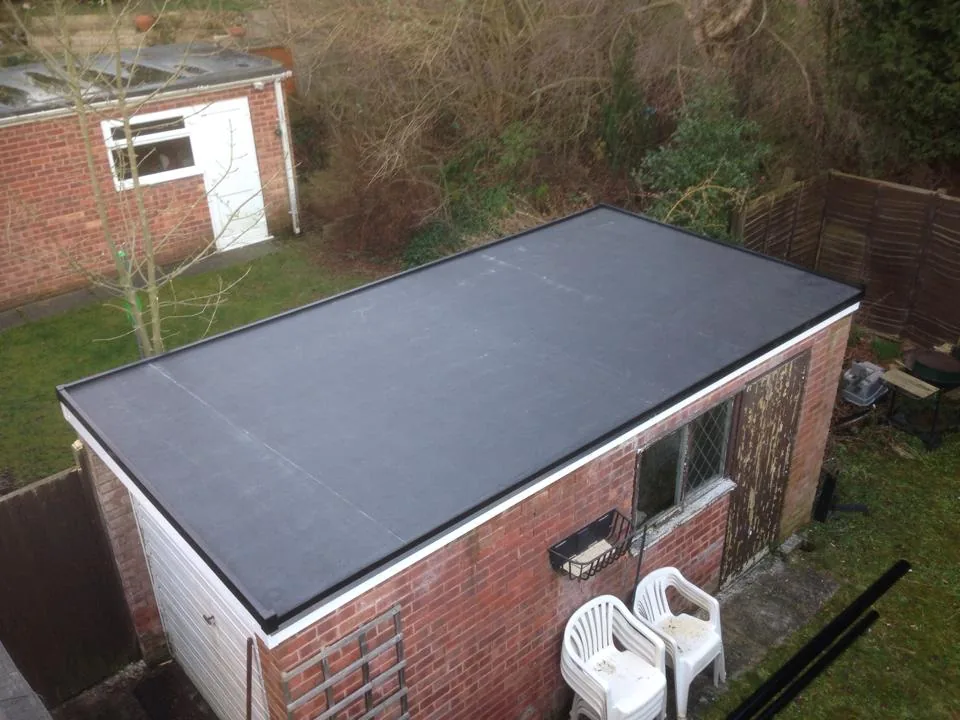
- Comes as a single rubber sheet, so there are no seams to fail
- Handles standing water and UV exposure without breaking down
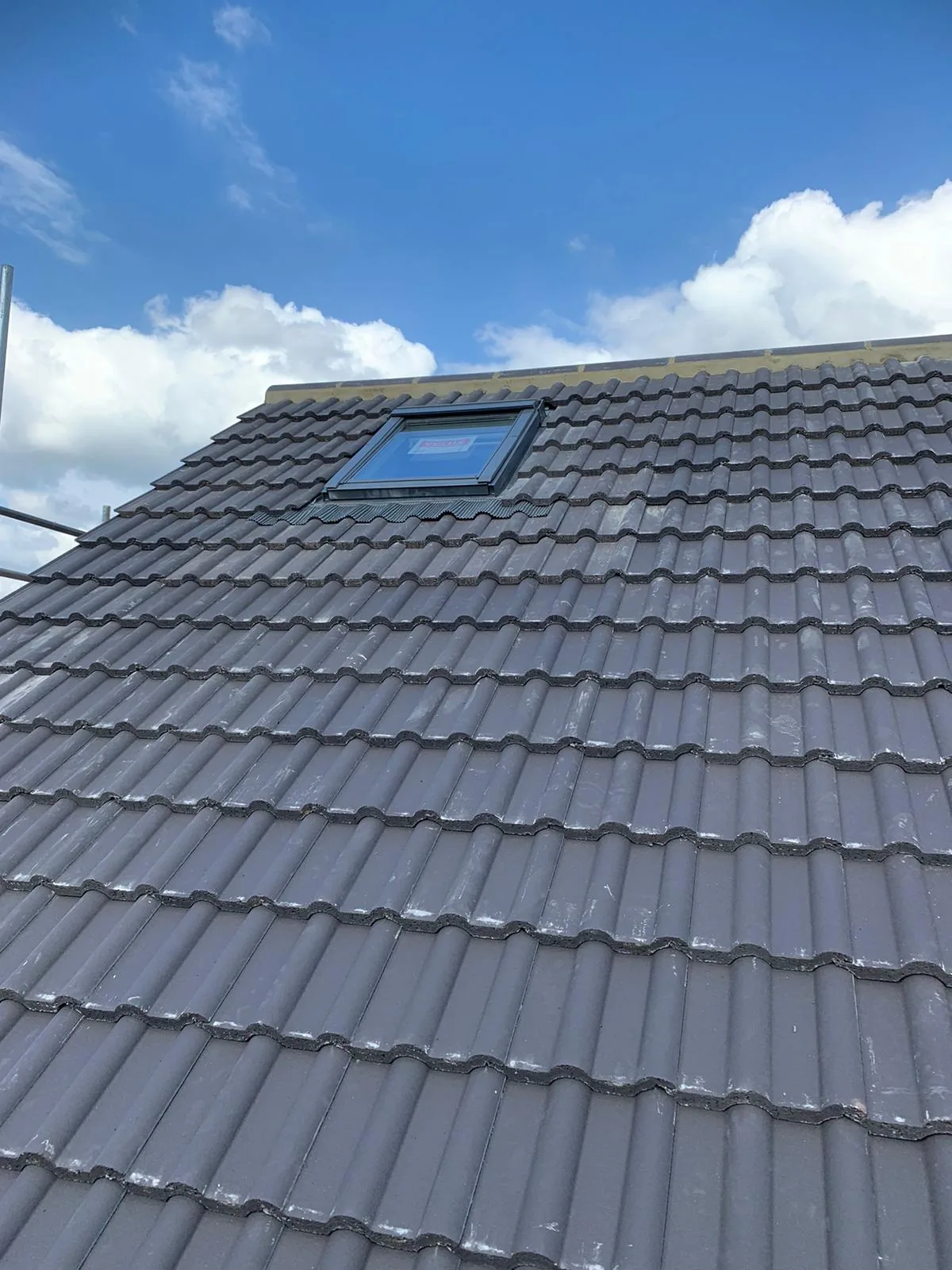
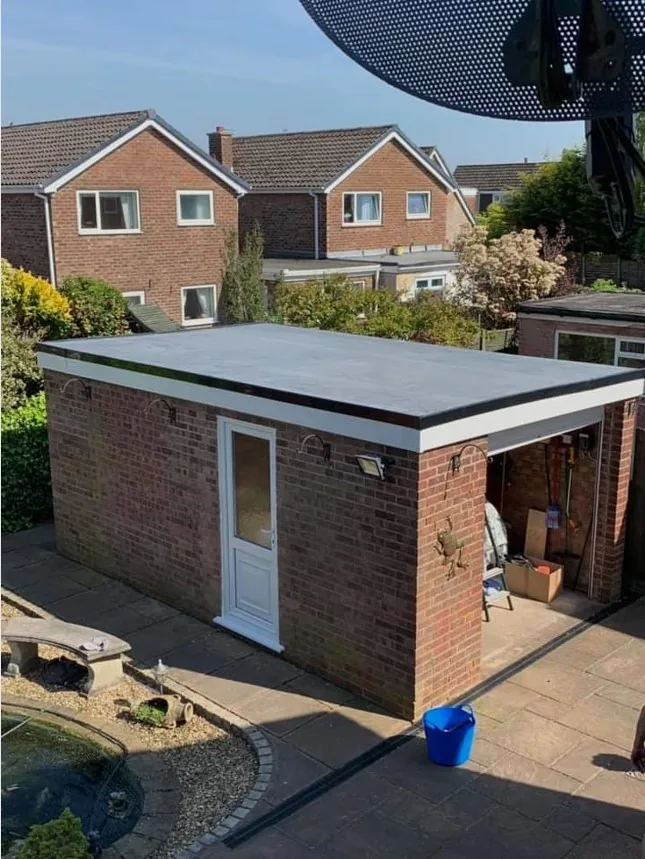
- Most often fitted on extensions, garages, and dormer roofs
- Needs almost no maintenance once it's fitted properly
- Not designed for regular foot traffic
GRP Fibreglass
- Cures into a hard, glass-like surface with no seams
- The most walk-on-friendly of the three systems
- Popular for balconies, roof terraces, and walkways
- Needs a solid, well-fixed timber deck underneath it
- Less forgiving of deck movement than EPDM, so deck condition matters more
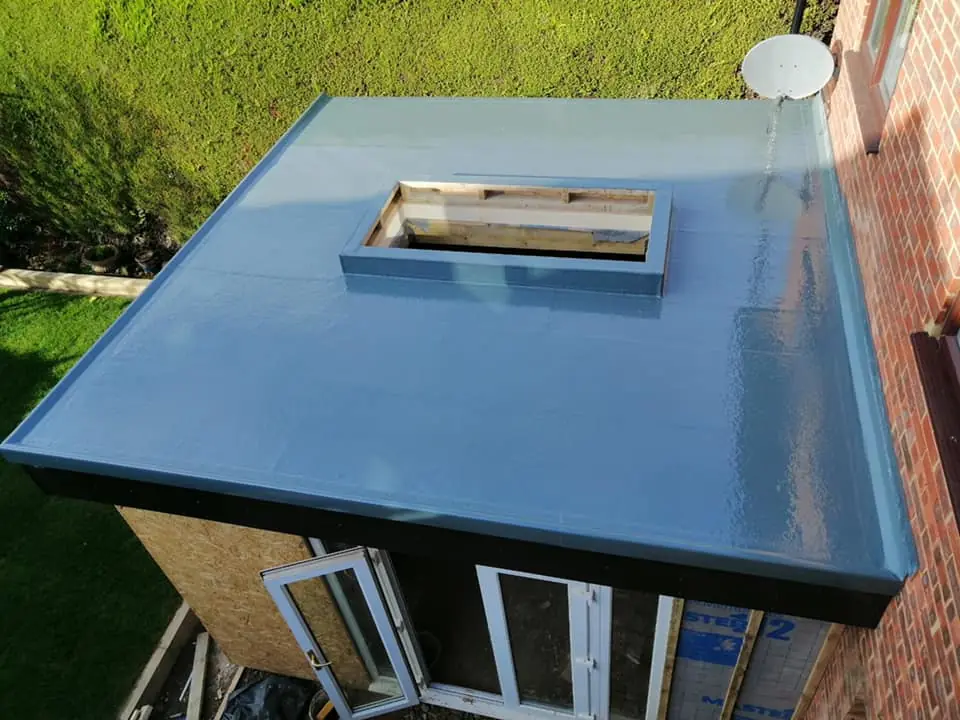
Felt (Torch-On)
- A traditional built-up system, laid in overlapping layers
- The cheapest option to install
- Modern polymer-modified torch-on felt performs far better than older three-layer systems
- Still the shortest-lived of the three, so it needs closer monitoring
- A sensible choice for sheds, garages, and tighter budgets
The buildup underneath the surface material matters as much as the surface itself. A warm roof — where insulation sits above the deck and below the membrane — avoids the condensation problems that older cold roof designs suffer from. It's specified on nearly every new flat roof we fit now. Some projects, particularly ones with restricted headroom or an existing layer of insulation, need an inverted roof buildup instead. That means the insulation sits above the waterproof membrane rather than below it, which protects the membrane from UV and temperature swings. For the full technical detail, see the Liquid Roofing & Waterproofing Association's guide to inverted roof systems.
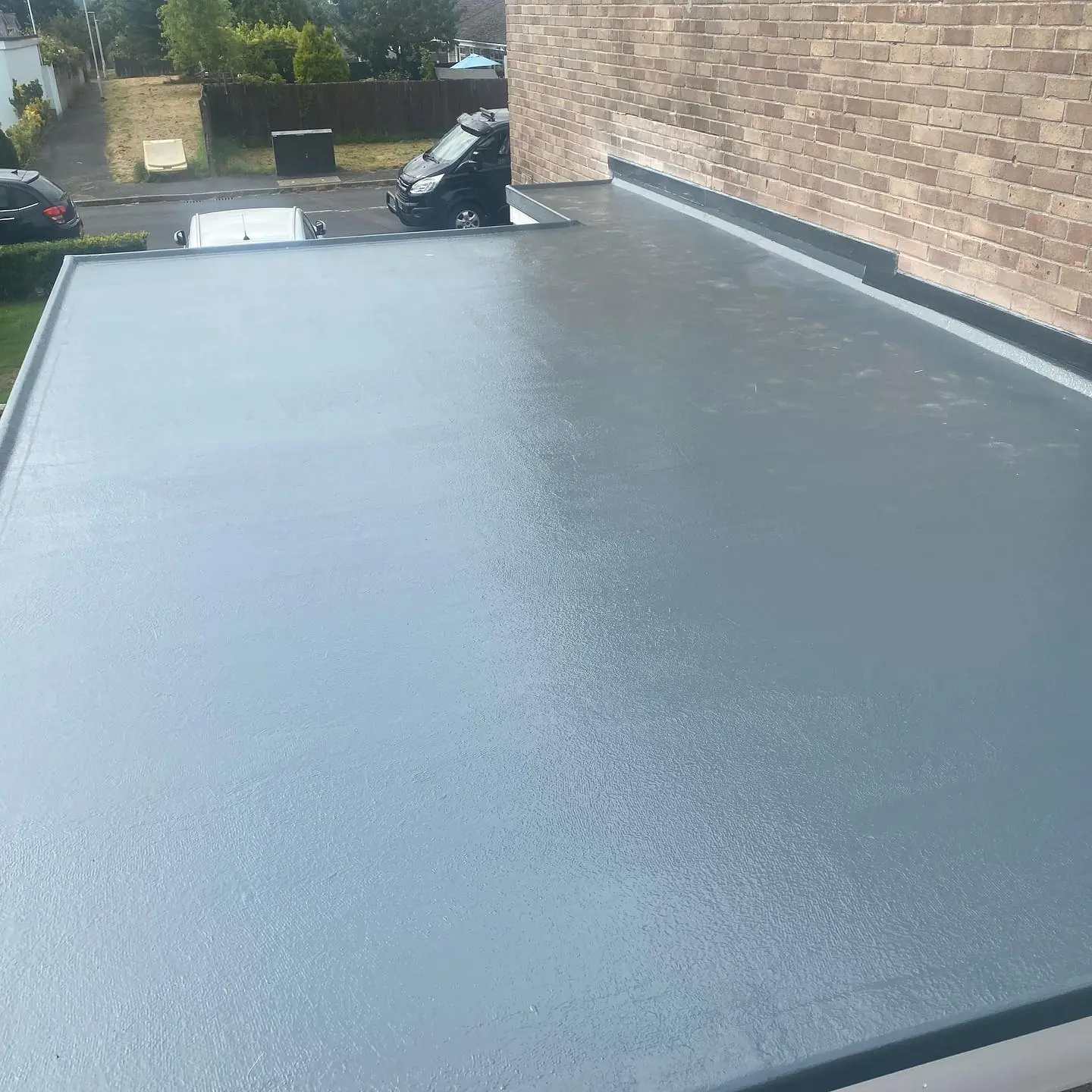
What Happens Before We Touch Your Roof
Every job starts with a clear look at what's actually going on, not a guess from the pavement.
- We carry out a free drone survey of the whole roof surface, flashings, and junctions — no ladders needed
- You get clear photos showing exactly what condition your roof is in
- We tell you honestly whether you need a repair or a full replacement
- We recommend a material that fits your budget and how you use the roof
- We check whether your existing deck is sound enough to build on
- If you're near The Park or Lenton, we flag anything that needs conservation area sign-off before work starts
- You get a firm quote and an agreed scope before any tool comes out of the van
How We Install a Flat Roof That Lasts Decades, Not Years
Most flat roof failures trace back to poor detailing, not poor material. Here's how we install one properly.
- Strip the roof back to a sound deck and replace any rotten timber we find
- Build in enough fall — a minimum slope of 1:40 — so water reaches the outlets instead of sitting still
- Fit insulation as a warm roof buildup wherever the structure allows, cutting condensation risk
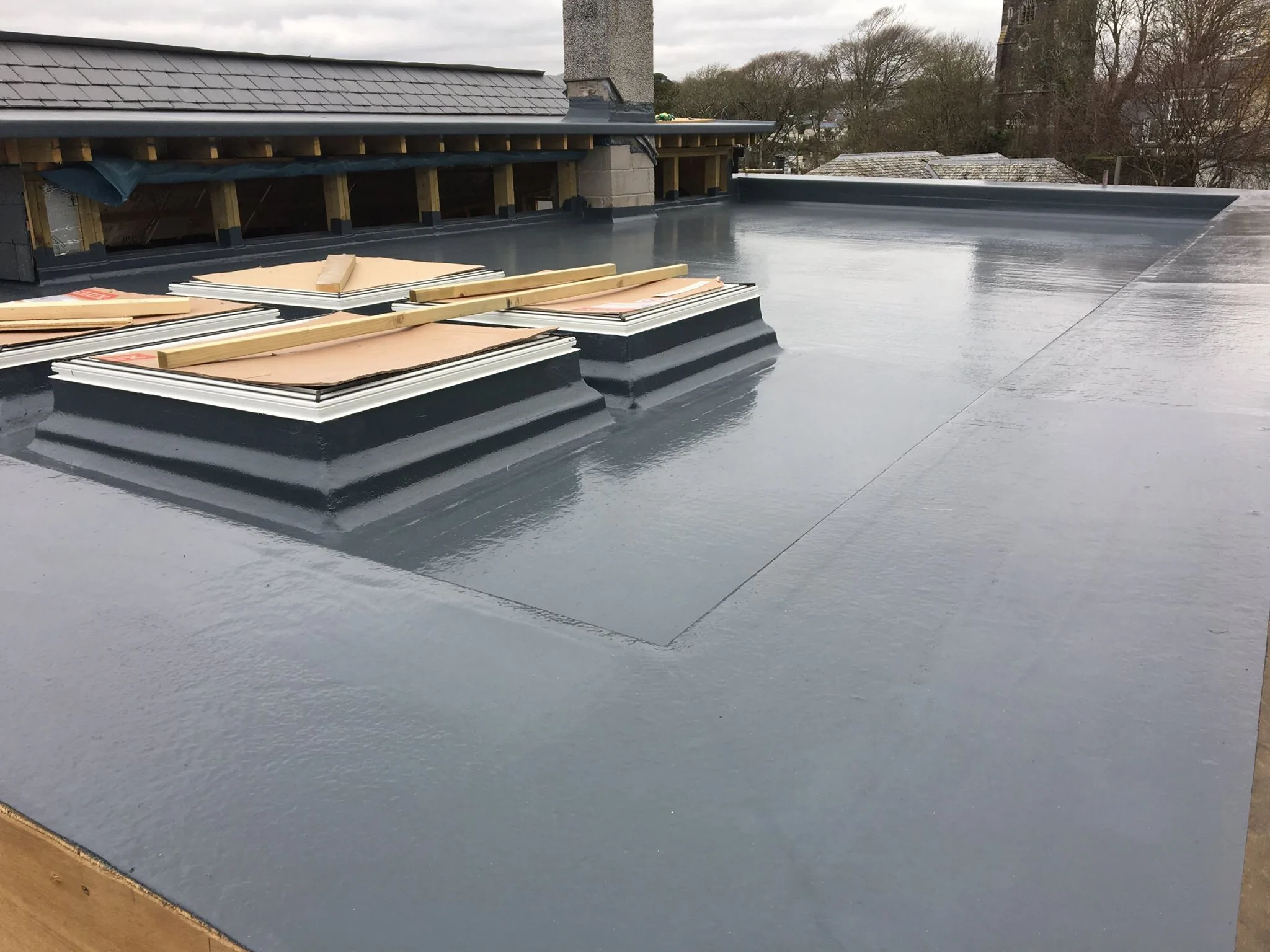
- Give extra attention to edges, upstands, and pipe or rooflight penetrations, where rushed jobs fail first
- Take particular care with adhesive coverage and corner detailing on EPDM and GRP installs — a thin patch or trapped bubble is where the first leak usually starts
- Finish and clear the site, typically 1 to 3 days for a garage or extension roof, weather allowing
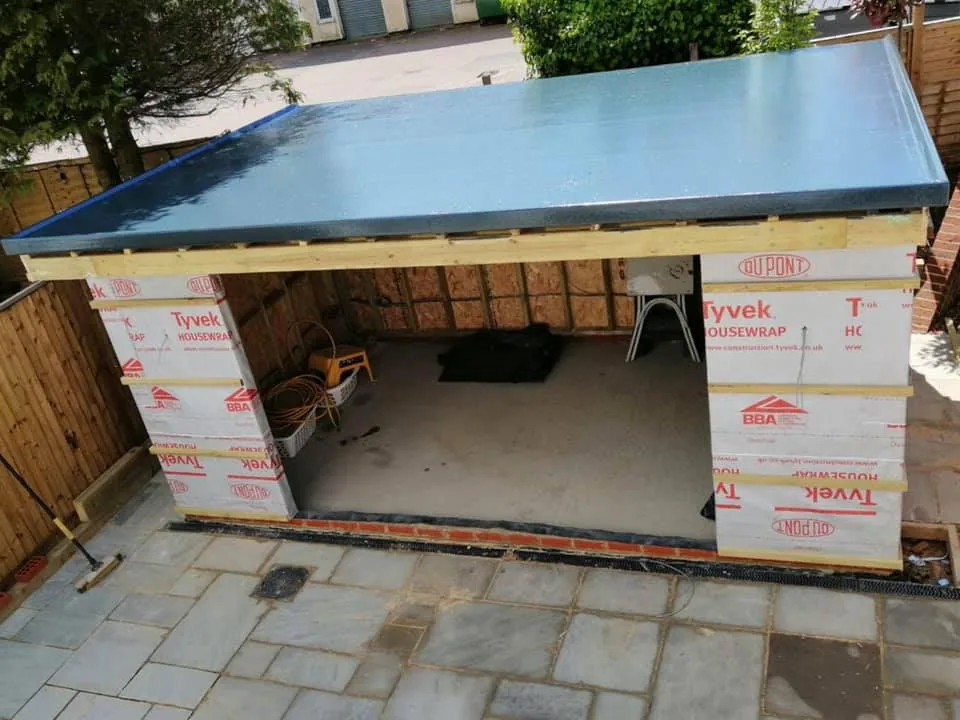
Spot the Warning Signs, Then Check the Work
Whether you're worried about an existing roof or checking a job we've just finished, here's what to look for.
Signs Your Flat Roof Is Failing
- Standing water still sitting on the roof 48 hours after rain — this means the fall (the slight slope that lets water run off) has dropped somewhere
- Blisters or cracks in felt, or crazing in GRP — a sign water is creeping in under the surface
- A sagging deck, visible as a dip in the ceiling below — usually rotten timber underneath
- Cracking or gaps where the flat roof meets an old chimney or parapet wall, common on older housing around Sherwood and Mapperley
- Damp smells or peeling paint near the ceiling
- Moss building up in low spots, holding moisture against the membrane
How to Check a Flat Roof Job Was Done Properly
- The finished surface should be completely flat and taut, with no ripples, wrinkles, or soft spots underfoot
- Edges and upstands should be neatly trimmed and fully bonded, not just tucked in place
- Ask to see photos of the deck taken before it was covered — a reputable roofer takes these as standard, and they're proof the timber was sound
- You should receive written details of your guarantee, the exact material and thickness used, and confirmation of any Building Regulations notification needed
- We back every flat roof we fit with a 10-year workmanship guarantee, in writing, from day one
Stopping Pooling Water and Leaks Before They Start
A little maintenance twice a year keeps small problems from turning into ceiling stains.
- Clear outlets and gutters twice a year, especially after autumn leaf-fall
- Check for standing water a couple of days after heavy rain — if it's still there, the fall has likely dropped and needs a look
- Watch for moss building up in shaded corners, which holds moisture against the membrane and shortens its life
- Trim back overhanging branches that drop debris or scuff the surface
- Avoid dragging anything heavy across GRP or EPDM surfaces
- Give the roof a five-minute check after any storm — it catches small damage before it becomes a bigger repair
Cost & Pricing Guidance
Flat roof pricing across the UK for 2025/26 typically runs like this:
- Felt: £40-£70 per m²
- EPDM rubber: £50-£80 per m²
- GRP fibreglass: £60-£90 per m²
- Full warm roof buildup with insulation: £120-£180 per m²
A typical garage or single-storey extension roof costs £1,200 to £6,000 all in, depending on size and access.
Repairs are cheaper than full replacement where the deck is still sound. Minor patch repairs run £150-£400. More extensive repairs to flashings, upstands, or larger damaged areas run £400-£800.
What pushes the price up or down: access (scaffolding versus a ladder), the condition of the deck, the number of junctions and penetrations, and whether old material needs stripping first.
These are general ranges, not a quote. A fixed price needs a proper survey — and our drone survey is free, with no obligation.
Comparison Table: Flat Roof Systems
| System | Typical Lifespan | Best For | Relative Cost |
|---|---|---|---|
| Felt (torch-on) | 10-20 years | Sheds, garages, budget jobs | £ (lowest) |
| EPDM Rubber | 30-40 years | Extensions, garages, low-maintenance roofs | ££ |
| GRP Fibreglass | 25-35 years | Balconies, roof terraces, walk-on areas | £££ |
| Warm Roof Buildup | Matches chosen membrane | New builds, full replacements, condensation-prone rooms | £££ (highest) |
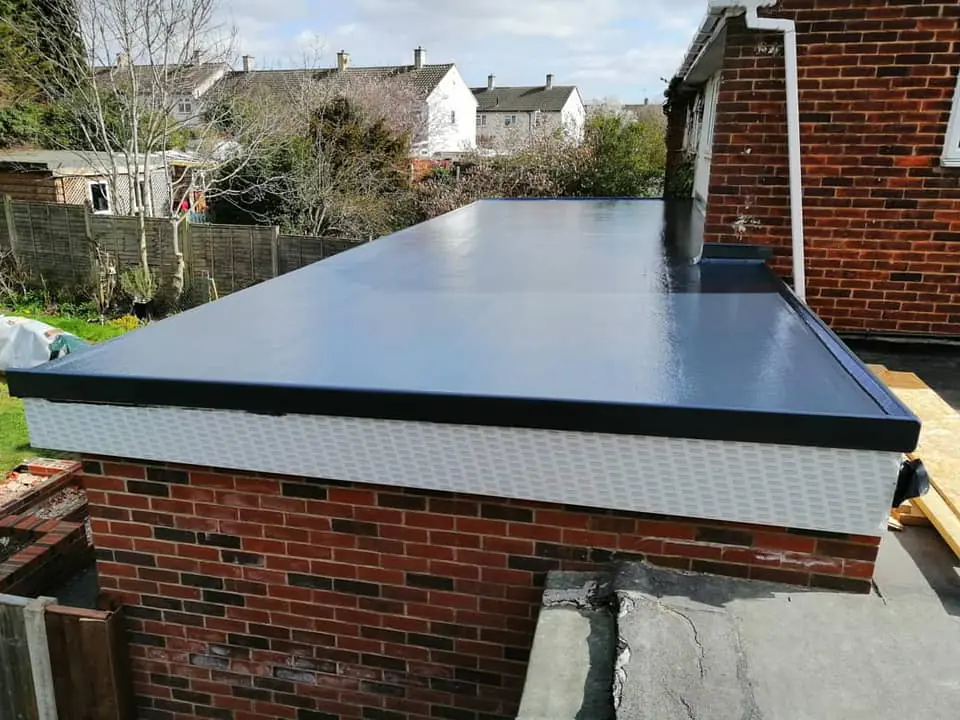
Why Choose Tate & Sons for Your Flat Roof
Flat roof work is led by Daniel Oakland, Project Manager and Lead Roofer, who has 20+ years in the trade. He specialises in EPDM, GRP, and standing-seam systems, and runs every flat roof job day to day, from a single garage re-cover to a full commercial installation towards Colwick or Lenton Lane.
Tate & Sons was founded by James Tate on a simple idea: find out what's genuinely wrong, use the right materials, and leave something that holds for years, not months. Read more on our About page.
Our roofers are directly employed, not subcontracted. They hold NVQ Level 2 and 3 qualifications in Roofing Occupations and carry CSCS cards. Every flat roof comes with a free drone survey up front and a 10-year workmanship guarantee once the work is finished.
Flat Roofing Across Nottingham and the Wider County: Areas We Serve
We fit and repair flat roofs right across Greater Nottingham and out into the wider county. Wherever your property sits, our crews know the local weather, the housing stock, and the access.
- Nottingham City Centre (NG1)
- The Park (NG1)
- West Bridgford (NG2)
- Sneinton (NG2)
- Wollaton (NG8)
- Lenton (NG7)
- Beeston (NG9)
- Chilwell (NG9)
- Stapleford (NG9)
- Arnold (NG5)
- Sherwood (NG5)
- Mapperley (NG3)
- Carlton (NG4)
- Gedling (NG4)
- Hucknall (NG15)
- Long Eaton (NG10)
- Mansfield (NG18)
- Sutton-in-Ashfield (NG17)
Got Questions?
Your Flat Roofing Questions, Answered Properly
How much does a flat roof cost to install or replace in the UK?
Most Nottingham garage or extension flat roofs cost £1,200-£6,000, depending on material and size. Felt is the cheapest at roughly £40-£70 per m², EPDM runs £50-£80 per m², and GRP runs £60-£90 per m². Larger or more complex roofs with awkward access or several upstands cost more. A survey gives you an exact figure.
How long does a flat roof actually last?
It depends on the material and the quality of the install. Felt lasts 10-20 years, GRP lasts 25-35 years, and EPDM lasts 30-40 years with minimal maintenance. Poor detailing at the edges and junctions is the most common reason for early failure, whatever the material.
What's the difference between EPDM, GRP, and felt flat roofing?
EPDM is a single rubber sheet. GRP is a fibreglass-and-resin surface that cures rigid. Felt is layered bitumen sheets torched or bonded together. EPDM and GRP are seamless and longer-lasting, while felt is cheaper upfront but has more joints and a shorter lifespan. Your budget and how you use the roof decide which fits best.
Why does water keep pooling on my flat roof?
Pooling almost always means the roof's fall has failed somewhere, often because the deck has sagged or the roof was laid too flat to begin with. Standing water left for more than 48 hours after rain speeds up membrane wear and leak risk. It's rarely something to simply monitor — it usually needs a proper look.
Do I need planning permission or Building Regulations sign-off for a new flat roof?
Most straightforward replacements on a house don't need planning permission if the materials and appearance stay broadly the same. Building Regulations notification is generally required if you're recovering more than 25% of the roof, and conservation areas around The Park and parts of Lenton can bring extra restrictions. We flag anything that applies during your survey.
Can a flat roof be repaired, or does it need full replacement?
A sound deck with isolated damage — a split, a lifted edge, a failed flashing — can usually be repaired, which is the cheaper route where it's an option. Widespread pooling, rotten decking, or a membrane past its expected lifespan usually points to full replacement. Our free drone survey tells you honestly which category your roof falls into.
Does a flat roof replacement affect home insurance?
Unapproved or non-compliant work can affect a future claim or complicate a sale, so it's worth keeping the paperwork from your Building Regulations notification and workmanship guarantee. A properly documented, compliant replacement generally causes no insurance issues. Keep the certificate and guarantee safe alongside your policy documents.
Can you walk on a flat roof safely?
GRP is the most walk-on-friendly of the common systems, which is why it's often chosen for terraces and balconies. EPDM and felt can take occasional maintenance foot traffic but aren't designed for regular use, and they can scuff or puncture under repeated weight. Tell us at survey stage if you want a usable roof space, so we specify the right buildup.
Book Your Free Drone Roof Survey Today
See exactly what your roof needs before any work starts. No ladders, no pressure — just a clear picture from a local Nottingham team.
A tired roof only gets worse as water works deeper into the deck and timber beneath it. A quick, free drone survey today tells you exactly where you stand — and often the fix is smaller and cheaper than you feared. Book now, get an honest quote, and protect your home before the next East Midlands downpour finds the weak spot.
📍 57 Cyril Avenue, Nottingham, NG8 5BA
📞 0115 647 4455
Call the Nottingham team today on 0115 647 4455, or request your free drone survey online. We’re already working across your area.
Get in Touch
Tate & Sons Roofing — Nottingham
57 Cyril Avenue, Nottingham, NG8 5BA
📞 0115 647 4455
✉️ [email protected]