
🏠 Melton Mowbray Flat Roofing Specialists
Flat Roofing in Melton Mowbray — Felt, EPDM and GRP Roofs Fitted to Last
- Free Drone Survey
- Directly Employed Roofers
- Written Fixed Price
📞 Call 01664 490955 — free drone survey & a written price
Book Your Free Drone Survey
No scaffold. No pressure. No obligation.
Straight answers from local Melton Mowbray roofers.
🔒 Your details are safe with us. No spam, ever.
Garages, extensions, dormers and porches across Melton Mowbray almost always carry a flat roof, and it takes a harder beating than the pitched roof above the main house. Rain sits on it for longer, wind off the Wolds pulls at every edge trim, and a low-slope covering has far less room for error than a tiled roof shedding water straight to the ground. Flat roofing in Melton Mowbray done properly, with the right system for the job, should give you decades of trouble-free cover rather than a yearly patch-up.
This page walks you through the warning signs of a failing flat roof, how felt, EPDM rubber and GRP fibreglass compare, what a new flat roof costs, and how to keep one performing once it is fitted. Flat roofing is one part of the wider service we offer as a roofing contractor across Melton Mowbray. Start with a free drone survey and a written quote before anything is agreed — no scaffold just to take a look, and no charge either way.
Spot the Warning Signs Before a Small Leak Becomes a Big Repair
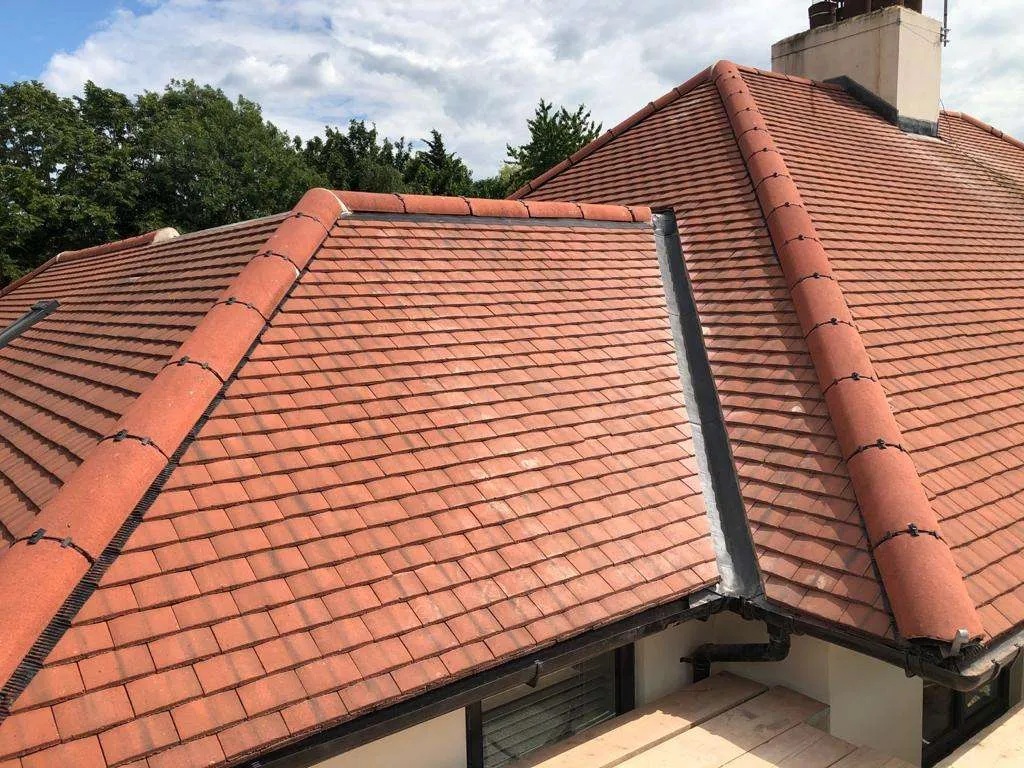
A flat roof rarely fails without warning. The trouble is that the early signs sit out of sight above a garage or extension, so nobody looks until water is already coming through a ceiling below.
Watch for these on any flat-roofed garage, extension or outbuilding around Melton Mowbray, including the flat-roofed units out on Melton Commercial Park off St Bartholomew's Way:
- Water still sitting on the roof more than two days after rain stops
- Cracking, splitting or bubbling in a felt covering
- Blisters or a chalky, powdery surface on a GRP fibreglass roof
- Lifting edges or perished seams on an EPDM rubber roof
- Ceiling stains below the flat section that spread after heavy rain
- Moss, algae or weeds holding damp against the surface
- A covering older than 15 to 20 years with a growing repair history
Felt typically lasts 10 to 20 years, EPDM rubber runs 20 to 30 years and sometimes beyond with care, and GRP fibreglass usually manages 25 to 30 years when it is laid well. A roof approaching the end of its expected life rarely fails all at once — it fails at one weak seam or upstand first. Daniel Oakland, our lead roofer, checks the whole roof on every survey, not just the spot you called about, so a small problem gets caught before it spreads.
Repair or Replace Getting the Call Right on Your Flat Roof
One split seam or a single blister is not a reason to strip an entire roof. Localised damage on a covering that is otherwise sound is usually a straightforward repair, and it is often the cheaper, faster answer.
We see the opposite pattern often on the older mid-century garages around Asfordby, where a flat roof gets patched every year or two without anyone dealing with the covering actually failing underneath it. Patching buys a summer, but the cost keeps adding up until full replacement is unavoidable anyway. If the damage is limited and the roof structure underneath is sound, our flat roof repair service in Melton Mowbray deals with it properly, without the cost of a full re-cover.
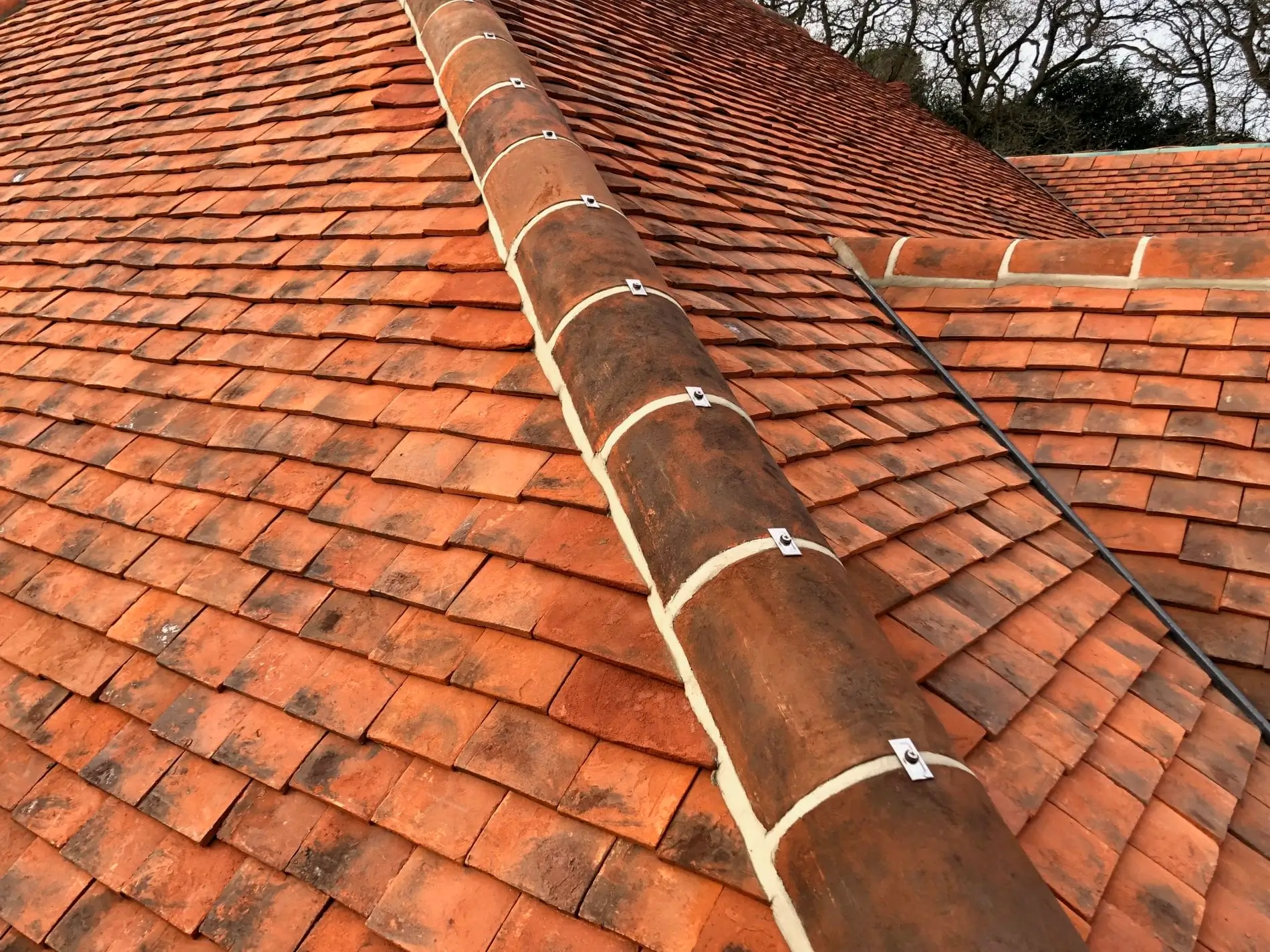
Widespread cracking, sagging decking, or a covering well past its expected lifespan point toward full replacement instead. A free drone survey gives you the full picture — every seam, upstand and drainage point — so the repair-or-replace call is based on footage, not a guess from the ground.
Felt, EPDM or GRP Choosing the Right System for Your Flat Roof
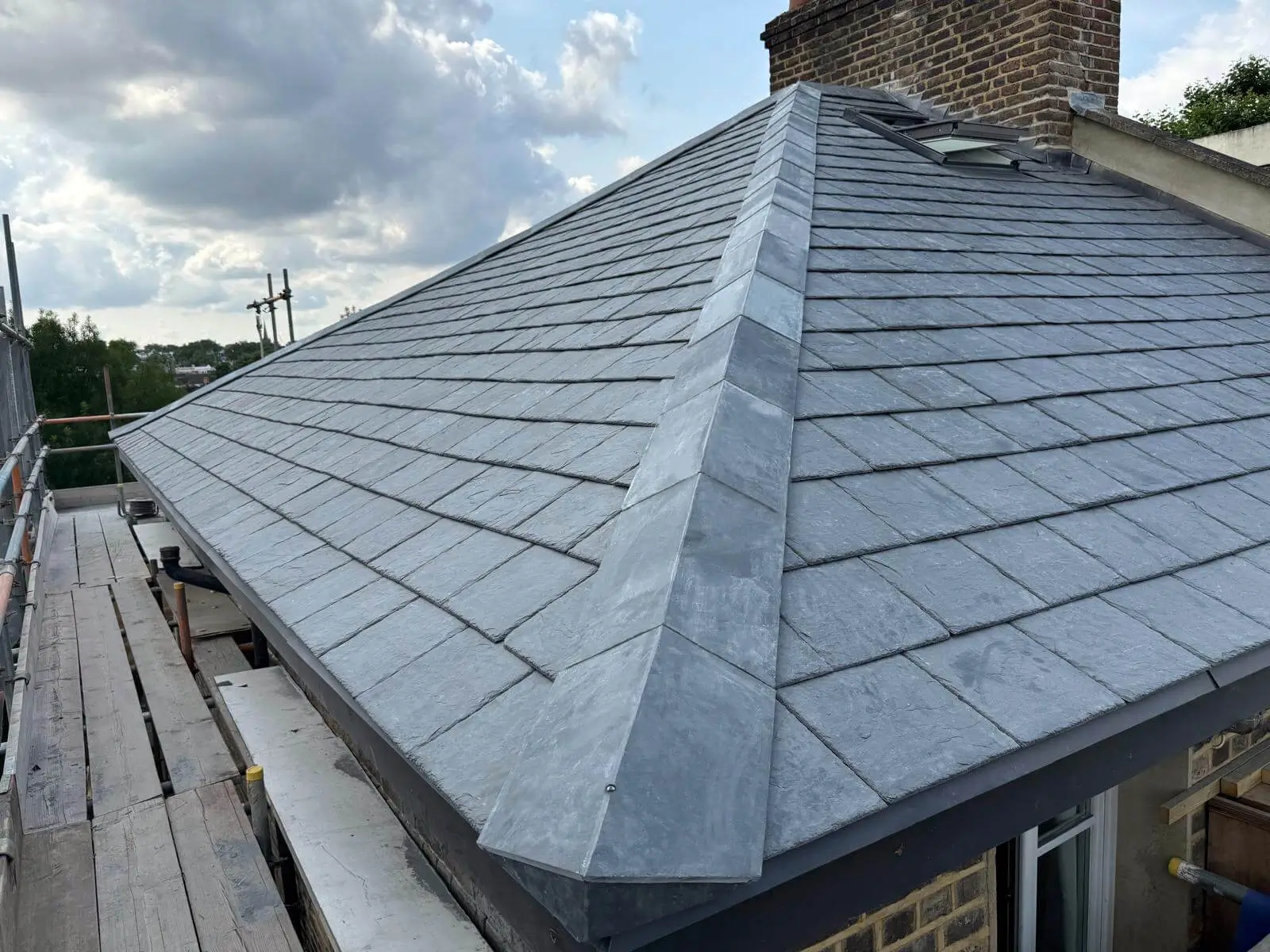
Three systems cover almost every flat roof fitted around Melton Mowbray. In short: felt is the most affordable and suits a straightforward budget re-cover; EPDM rubber gives the best balance of cost, lifespan and low maintenance on larger, simpler roofs; GRP fibreglass costs more but forms a seamless, rigid finish that copes well with complex upstands, rooflights and roof edges. The right choice depends on the roof's size, shape and how long you want it to last before touching it again.
| Material | Typical cost (per m²) | Typical lifespan | Best for |
|---|---|---|---|
| Felt (torch-on/shed felt) | £40–£70 | 10–20 years | Budget re-covers, sheds, garages |
| EPDM (rubber) | £70–£120 | 20–30 years, sometimes 40 with care | Larger roofs, extensions, fewer seams |
| GRP (fibreglass) | £80–£150 | 25–30 years, sometimes 40 | Complex shapes, upstands, premium finish |
Larger, high-value extensions around Old Dalby and Frisby on the Wreake tend to favour EPDM or GRP, since a longer-life system suits a property the owner intends to stay in for decades. On a straightforward garage re-cover in a more modest part of town, felt is often the sensible, cost-effective choice. Daniel Oakland specialises in EPDM and GRP fitting and will talk you through which system genuinely suits your roof rather than whichever is easiest to sell. Our dedicated EPDM rubber roofing page covers that system in full technical detail if you want to read further.
What a New Flat Roof Really Costs in Melton Mowbray
Cost comes down to material, roof size, and access. As a general guide, a small garage flat roof between 12 and 20 square metres typically runs £900–£1,800 in felt, £1,400–£2,800 in EPDM, or £1,700–£3,500 in GRP. A larger extension or dormer roof between 25 and 45 square metres typically runs £1,800–£3,500 in felt, £2,800–£6,500 in EPDM, or £3,200–£8,000 in GRP.
What pushes a price up or down:
- Roof size — smaller roofs cost more per square metre once labour and access are factored in
- Access — a garage roof reached by ladder costs less to work on than a boxed-in extension roof needing scaffold
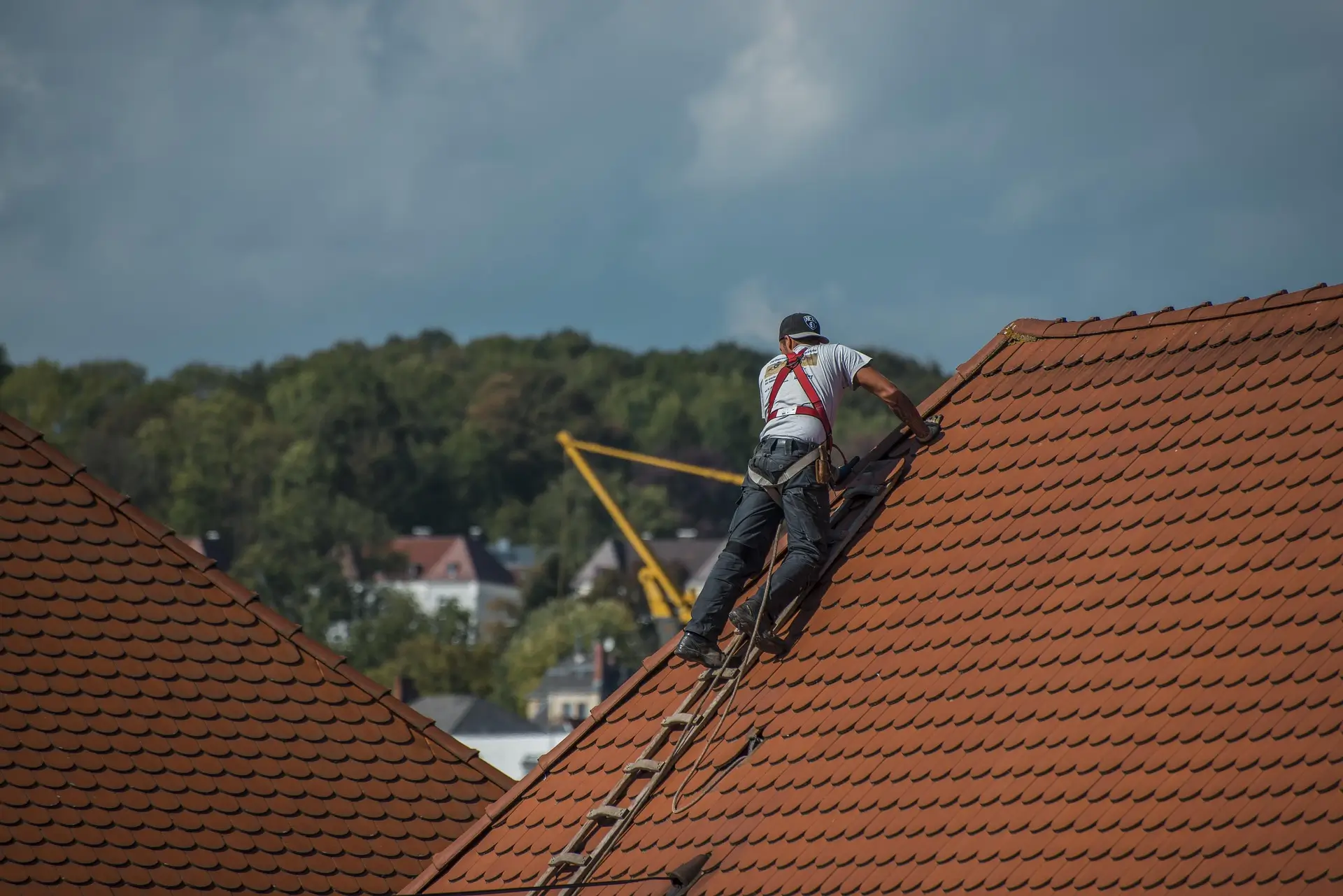
- Strip-out and decking condition — rotten decking typically adds £300–£1,000 before the new covering goes on
- Upstands and penetrations — rooflights, soil pipes and vents each add detailing time and cost
- Insulation upgrade — bringing a roof up to current Building Regulations U-values typically adds £15–£30 per square metre
- Drainage — adding falls or extra outlets to stop pooling water adds to material and labour
These are general market ranges, not a quote for your roof. Two flat roofs the same size can price very differently once access, decking condition and drainage are factored in. A fixed price needs a survey.
Warm Roof or Cold Roof Getting the Insulation and Build-Up Right
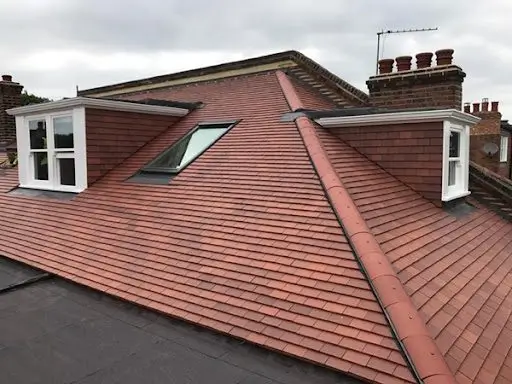
A flat roof is either built warm or cold, and getting this wrong is one of the most common causes of a flat roof failing early. A warm roof places insulation above the deck, under the waterproof covering, keeping the structure itself above dew point and largely removing the risk of condensation forming inside it. A cold roof places insulation between the joists below the deck instead, which needs a ventilated air gap above it to carry moisture away — done badly, warm moist air from the room below meets the cold deck and condenses, rotting the timber from the inside.
Current Building Regulations expect a flat roof to meet a U-value around 0.18 W/m²K, and a warm roof build-up is now the standard, preferred approach on almost every new flat roof we fit, whether it is a garage, an extension or an outbuilding. Most straightforward garage and extension flat roofs fall under permitted development and do not need planning permission, provided height and boundary rules are met, but Building Regulations approval still applies regardless. For the fuller technical detail on flat roof design, insulation and waterproofing standards, the Liquid Roofing and Waterproofing Association's technical guidance is a genuinely useful reference.
Exposure matters too. Properties out toward the Vale of Belvoir scarp and the exposed ridge around Scalford take a harder battering from wind-driven rain than a sheltered garden in central Melton Mowbray, and that changes how edge trims and upstands need to be fixed and sealed. We specify a roof's insulation and detailing around its actual position and exposure, not a generic, one-size-fits-all build-up.
What Happens on Fitting Day, Start to Finish
A flat roof re-cover follows the same order on every job:
- Old covering stripped back to the deck and disposed of responsibly
- Decking checked and any rotten boards replaced
- Insulation fitted to current Building Regulations standard
- Falls or tapered insulation set to direct water toward drainage points
- New felt, EPDM or GRP covering fitted and detailed at every edge
- Trims, upstands and flashings fitted to shed water cleanly
- Site cleared and the finished roof checked before we leave
A garage roof under 20 square metres is usually finished in a single day. A larger extension or dormer roof typically takes 1 to 3 days. GRP needs a dry, settled spell to cure properly, and EPDM adhesives perform best
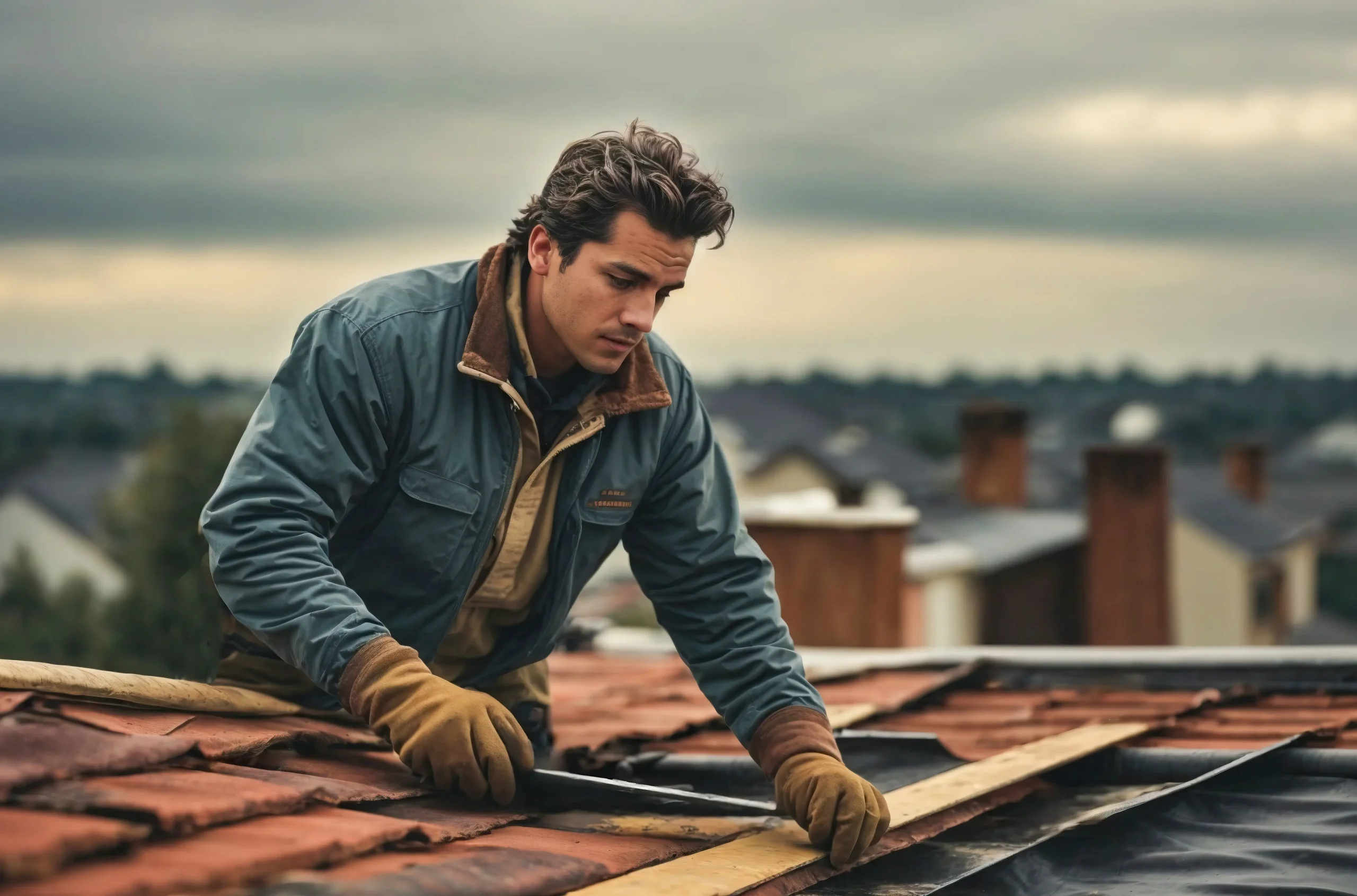
above a set minimum temperature, so very cold or wet weather can push a start date back. We plan around the forecast rather than promising a date the weather cannot keep, and spring through early autumn tends to run the most reliably around Melton Mowbray.
Keep Your Flat Roof Performing for Decades
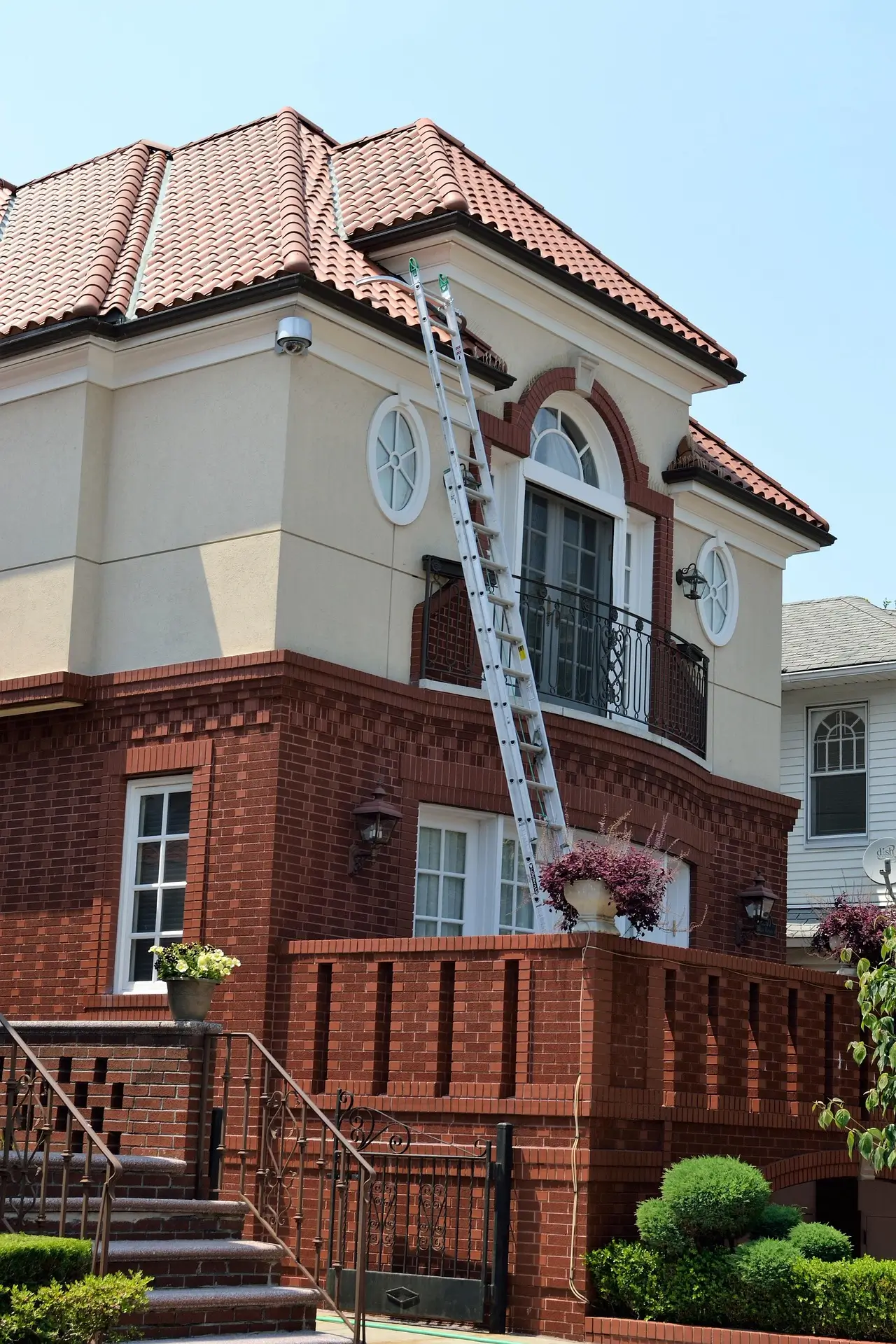
A flat roof fitted well still needs a little regular attention to reach its full lifespan.
- Clear leaves, moss and debris from the surface and drains each autumn
- Check for standing water more than 48 hours after heavy rain
- Keep foot traffic and stored items off the roof wherever possible
- Look over edge trims and upstands after storms for lifting or splitting
- Book a free drone survey every few years, or straight after any major storm
None of this needs a specialist visit — just a regular look, and a call to us if something seems off. A flat roof over an outbuilding near the River Eye or the Wreake Valley catches more standing damp than one on
higher, more exposed ground, so drainage checks matter even more if your property sits low. Catching a blocked outlet or a lifting edge early is always cheaper than letting it run until the deck underneath is wet.
Why Melton Mowbray Property Owners Choose Tate & Sons for Flat Roofing
Flat roofing rewards a fitter who has done it properly, many times over, because a poorly detailed edge or seam is where almost every failure starts. Daniel Oakland, our project manager and lead roofer, specialises in EPDM, GRP and standing-seam systems, with over twenty years in the trade behind him. He is part of the same crew that turns up to fit your roof, not just the man who quoted it, so the detailing you were promised is the detailing you get.
Founder James Tate started the business after fifteen years working roofs across Melton Mowbray and the East Midlands, and still prices most jobs himself. He built Tate & Sons around a simple idea — find out what is genuinely wrong, use the right materials for the job, and stand behind the result once the job is finished. Between us we bring over 40 years of combined team experience, hold NVQ Level 2 and 3 qualifications in Roofing Occupations, and carry CSCS cards. Every flat roof we fit comes with a 10-year workmanship guarantee. Read more about the people behind the work on our About Tate & Sons Roofing page.
Areas We Serve Across Melton Mowbray and the Vale of Belvoir
We fit and repair flat roofs across Melton Mowbray and the surrounding villages and borough. If your area is not on the list below, call us anyway — there is a strong chance we already cover you.
- Melton Mowbray (LE13)
- Asfordby (LE14 3)
- Old Dalby (LE14 3)
- Nether Broughton (LE14 3)
- Frisby on the Wreake (LE14 2)
- Wymondham (LE14 2)
- Long Clawson (LE14 4)
- Harby (LE14 4)
- Stathern (LE14 4)
- Waltham on the Wolds (LE14 4)
- Bottesford (NG13)
Got Questions?
Your Flat Roofing Questions, Answered Properly
How long does a flat roof actually last in Melton Mowbray?
It depends on the material, but most well-fitted flat roofs last between 15 and 30 years. Felt typically manages 10 to 20 years, EPDM rubber 20 to 30 years and sometimes longer, and GRP fibreglass 25 to 30 years when installed correctly. Exposed sites toward the Vale of Belvoir scarp tend to shorten that lifespan slightly compared with a sheltered garden in town, since wind-driven rain works harder at every edge and seam. Good drainage and regular clearing of debris make the biggest difference to how long any flat roof actually lasts.
Felt, EPDM or GRP — which is the best flat roofing material?
There is no single best system, only the right one for your roof. Felt is the most affordable option and suits a straightforward budget re-cover on a garage or shed. EPDM rubber gives the best balance of cost, lifespan and low maintenance on larger, simpler roofs with fewer seams. GRP fibreglass costs more but forms a seamless, rigid finish that copes best with complex upstands, rooflights and awkward roof edges. Daniel Oakland will recommend the system that suits your roof's shape and your budget, not the one that is easiest to sell.
How much does a new flat roof cost?
A small garage flat roof typically costs £900–£3,500 depending on the material chosen, while a larger extension or dormer roof typically runs £1,800–£8,000. Felt sits at the lower end, EPDM in the middle, and GRP at the top, with roof size, access and decking condition all affecting the final figure. A free drone survey gives you an exact written price rather than a rough estimate over the phone.
What are the warning signs my flat roof needs replacing?
Standing water more than 48 hours after rain, cracking or blistering in the surface, lifting seams, and ceiling stains below the roof are the clearest signs. A covering older than 15 to 20 years with a growing repair history is also worth a proper survey rather than another patch. Left unchecked, these signs usually mean water has already reached the decking underneath. A free drone survey settles the question with footage rather than guesswork.
Can my flat roof be repaired instead of fully replaced?
Often, yes. A single split seam, a localised blister, or damage limited to one area is usually a straightforward repair on an otherwise sound roof. Full replacement becomes the better option once damage is widespread, the decking has failed, or the covering is well past its expected lifespan. We check the whole roof before recommending either route, so you are not paying for a repair that will not hold.
Do I need planning permission or Building Regulations approval for a flat roof?
Most garage and extension flat roofs fall under permitted development and do not need planning permission, provided height and boundary rules are met. Building Regulations approval is a separate matter and almost always applies, covering weather resistance, insulation and structural strength. We handle the Building Control side of the job as standard, so it never lands back on you afterwards.
Why is water sitting on my flat roof, and does it mean it has failed?
Not necessarily, but it needs checking. Pooling water more than 48 hours after rain usually means the roof's fall is too shallow, a drain is blocked, or the decking has sagged slightly over time. Left alone, standing water speeds up wear on any covering and eventually finds a weak point to leak through. Clearing blocked outlets or adding tapered insulation to correct the fall usually resolves it without a full replacement.
Does a flat roof need a slight fall, or should it genuinely be flat?
A flat roof is never actually flat — it needs a slight fall, typically a minimum gradient, to direct water toward drains or gutters. A roof laid genuinely level will always pond water somewhere, since no surface is perfectly true. Tapered insulation is often used to build that fall in during a re-cover, correcting an older roof that was never sloped properly in the first place. It is one of the most overlooked details on a flat roof, and one of the most important.
Do older flat roofs on Melton's commercial and industrial units need anything different?
Often, yes. Older flat-roofed units around Melton Commercial Park and the wider industrial estates near the former Cattle Market frequently carry outdated built-up felt systems approaching or past the end of their working life. These larger commercial roofs usually need a proper fall survey and drainage review before re-covering, since ponding across a big surface causes far more damage than on a small domestic garage. Our team handles these larger flat roof projects alongside standard residential work.
Book Your Free Drone Roof Survey for Your Flat Roof Today
See exactly what your flat roof needs before any work starts. No ladders, no pressure — just a clear picture from a local Melton Mowbray team.
Every season a failing flat roof is left alone, standing water works its way further into the decking beneath it, turning a straightforward re-cover into a bigger structural repair. A quick, free survey today tells you exactly where you stand, and often the right answer is smaller and more affordable than you feared. Book now, get an honest quote, and get your flat roof sorted properly — first time.
Get in Touch
Tate & Sons Roofing, Melton Mowbray
13 Cromwell Road, Melton Mowbray, LE13 0AD
📞 01664 490955
✉️ [email protected]