
🏠 Trusted Local Roofers
Fibreglass Roof Repair Nottingham
A cracked fibreglass roof rarely stays small. What starts as a hairline mark in the topcoat on a garage or extension roof can open into a leak path within a season, especially after a hard Nottingham frost. This page covers what causes GRP damage, what a proper repair involves, and what it costs. As a roofing contractor working across the city, we repair fibreglass roofs the way we'd want our own fixed — sound underneath, not just patched on top.
- Fully Insured
- 10-Year Guarantee
- 5-Star Rated
Quick Free Estimate - No Obligation
We're not just roofers – we're your neighbours.
Fully Insured • Response within 15 mins
🔒 Your details are safe with us. No spam, ever.
Can Your Fibreglass Roof Be Repaired, or Does It Need Replacing?
Most fibreglass (also called GRP, short for glass reinforced plastic) roof damage can be repaired rather than replaced, as long as the laminate underneath the surface is still sound and dry. A roofer grinds back the damaged patch, builds fresh resin and glass matting into it, then seals it with a matching topcoat. This works well for cracks, pinholes, blisters, and isolated splits. Full replacement becomes the better option once damage spreads past roughly a quarter of the roof, the deck underneath has gone soft or spongy, or the roof is already past 20 years old with several problem areas. A free survey tells you honestly which category yours falls into.
Here's a rough guide to which route usually applies:
- Repair usually works for: hairline topcoat cracks, small holes or pinholes, blistering, a single split from impact damage, or a leak traced to one flashing or upstand
- Replacement is usually the better call for: damage covering more than a quarter of the surface, a soft or spongy deck underfoot, repeated leaks in different spots, or a roof already over 20 years old
- If your roof needs a full re-cover rather than a repair, our roof repairs and restorations team handles that as one job, so you're not paying for two separate visits
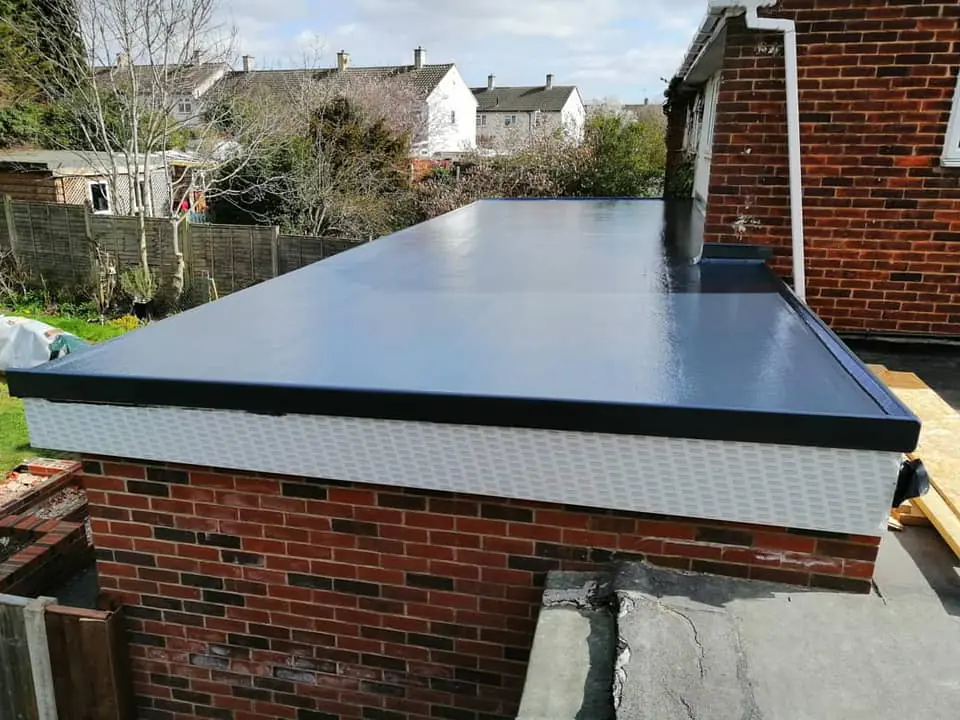
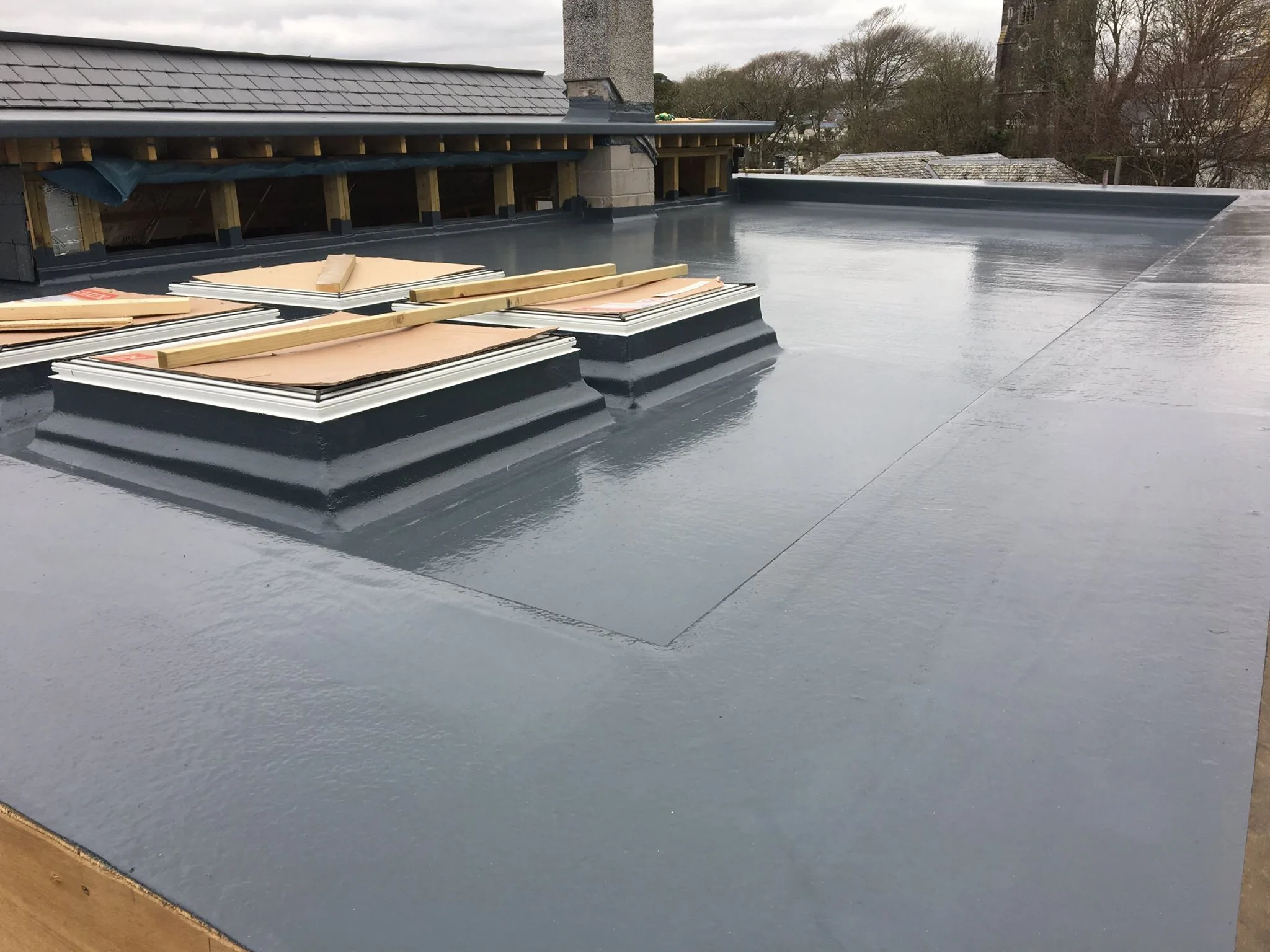
What's Really Cracking Your GRP Roof in Nottingham?
Fibreglass is tough, but a handful of things wear it down faster than most homeowners expect, and Nottingham's weather swings don't help.
- Thermal expansion — the roof heats up and expands in the day, then contracts as it cools at night, and that constant movement eventually cracks a brittle topcoat
- A moving deck underneath — timber that flexes, shrinks, or has come loose stresses the rigid laminate above it until it splits
- UV and weather wear on the topcoat — years of sun and rain break down the surface layer long before the structural laminate underneath fails
- Standing water sitting in a low spot after rain, which keeps the surface wet and speeds up wear around that area
- Poor original installation — thin resin coverage, a rushed lay-up, or corners cut on trims and detailing around outlets and upstands
- Impact damage — a dropped tool, a ladder foot, or general foot traffic on a roof not built for regular use
A roof that heats up and cools down will occasionally crack or pop as it moves — that's normal thermal movement, not a fault on its own. What matters is whether that movement has opened a crack through to the laminate, which is a different problem to a cosmetic surface mark.
What Happens Before We Touch Your Fibreglass Roof
Every repair starts with a proper look at what's actually going on, not a guess from ground level.
- We carry out a free drone survey of the whole roof surface, flashings, and edge detailing — no ladders needed
- You get clear photos showing exactly where the laminate has cracked, blistered, or worn through
- We tap and check suspect areas to see whether the damage is cosmetic or has reached the structural laminate
- We check the deck underneath through any existing damage, since a soft deck changes the whole plan
- We tell you honestly whether a repair will hold or whether you're better off re-covering the area
- If you're near The Park or a conservation area, we flag anything that needs sign-off before work starts
- You get a firm quote and an agreed scope before any tool comes out of the van
Building Regulations generally don't get involved in a straightforward repair or patch, but they can apply if you're re-covering a large section of the roof rather than fixing an isolated area. The general rule is that re-covering more than a quarter of the roof, or making the covering significantly heavier, brings Building Regulations into play. The Planning Portal's guidance on roof work sets out exactly where that threshold sits. We check this against your job at survey stage, so there are no surprises later.
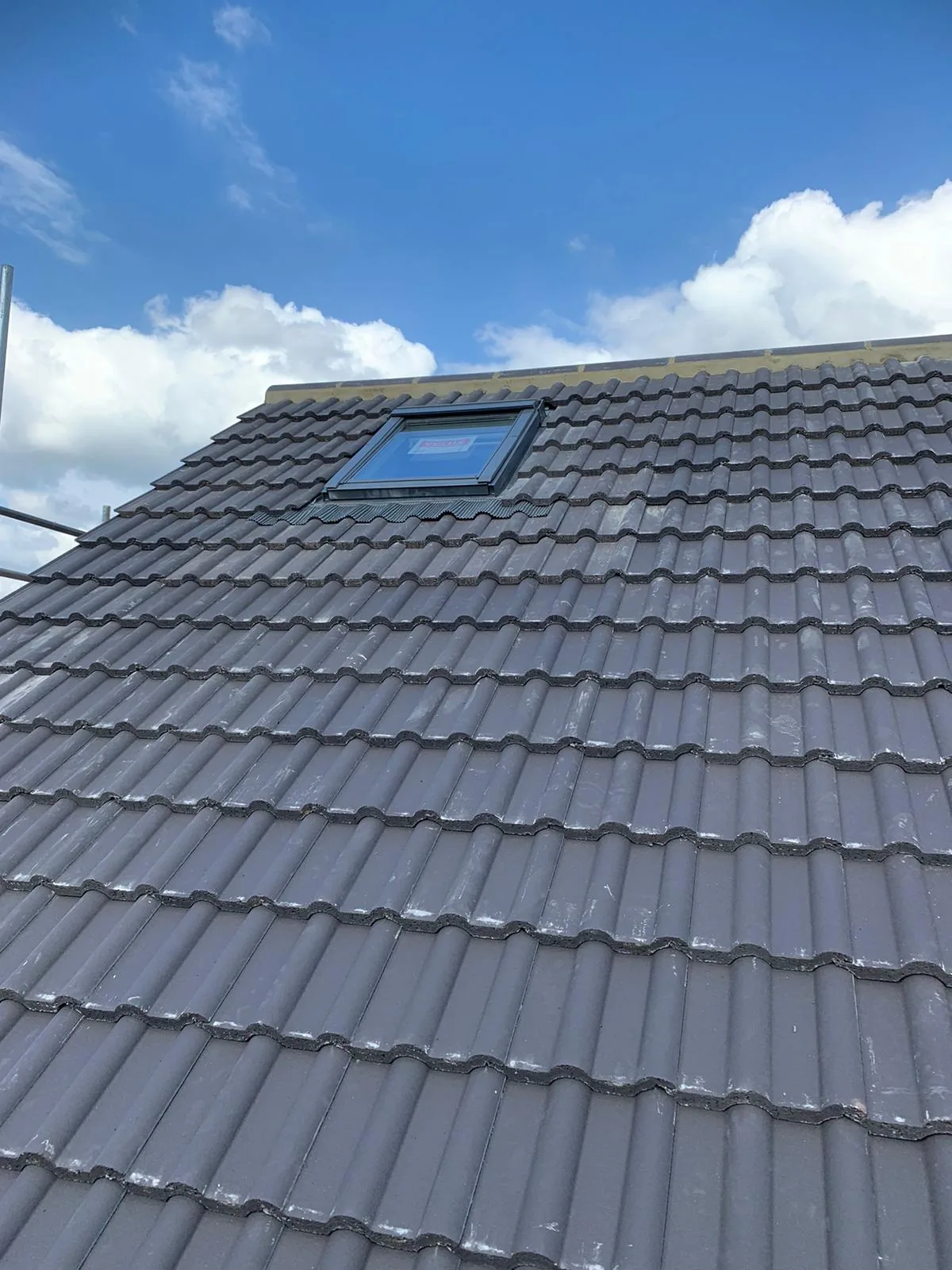
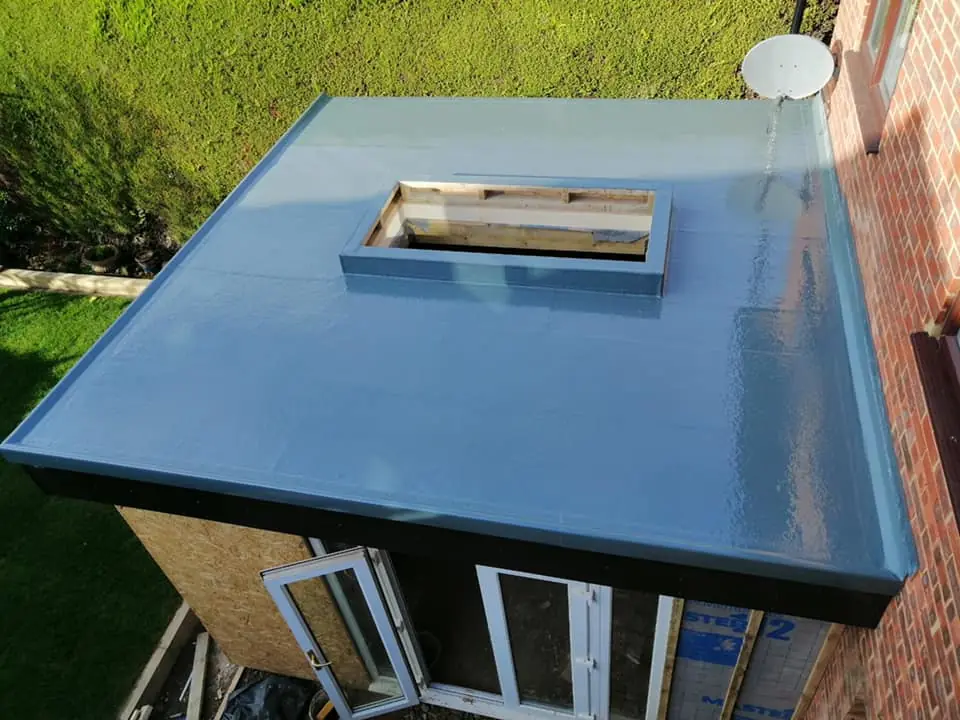
How We Repair a Fibreglass Roof That Actually Stops Leaking
A patch that only covers the surface crack tends to fail again within a year or two. Here's how we do it properly.
- Clean and dry the damaged area fully — fibreglass resin won't bond properly to a damp or dirty surface
- Grind back the crack or hole to sound laminate, taking it well past the edges of the visible damage
- Check the deck underneath is solid; if it's rotten or soft, we replace that section before laminating over it
- Build up fresh layers of resin and glass matting, matching the thickness of the surrounding roof
- Let the laminate cure — this usually takes around an hour to become touch-dry, though full cure can take several days depending on temperature
- Apply a matching topcoat over the repair and blend the edges so it seals properly into the existing surface
- Check and reseal any nearby flashings, upstands, or outlets while we're up there, since these are where the next leak usually starts
Cold, damp weather slows resin cure times and can affect how well it bonds, so we plan repair work around drier, milder spells wherever your schedule allows. For a roof that's actively letting water into the property right now, our emergency roof repair team can get out fast to stop the immediate damage, then return to complete a full permanent repair once conditions allow it.
How to Check Your Fibreglass Roof Repair Was Done Properly
Whether you're checking our work or someone else's, here's what a properly finished GRP repair should look like.
- The topcoat should be smooth and consistent in colour, with no visible ridge where the repair meets the original surface
- There should be no give, softness, or flex when you press gently on the repaired patch
- Edges, trims, and any nearby upstands should be neatly finished and fully bonded, not just dabbed with sealant
- Ask to see photos of the damage before it was ground back — proof the repair addressed the actual cracked laminate, not just the topcoat
- You should get written confirmation of the material used, the area covered, and your guarantee
- We back every fibreglass repair with a 10-year workmanship guarantee, in writing, from day one
Stopping the Next Crack Before It Starts
A little care through the year keeps a fibreglass roof from cracking again in the same spots.
- Clean the roof at least once a year with a soft brush, mop, or gentle hose — never a jet wash, which can damage the topcoat and force water under trims
- Clear leaves and debris from outlets and low spots so water doesn't sit and wear at the surface
- Check for standing water a couple of days after heavy rain — if it's still there, the fall has likely dropped somewhere
- Avoid dragging ladders, furniture, or heavy equipment across the surface, since GRP isn't built for regular foot traffic
- Keep an eye on any hairline surface cracks — they're cheap to reseal early and expensive to ignore
- Book a check-up every couple of years, especially once the roof passes the 15-year mark
Cost & Pricing Guidance
Fibreglass roof repair pricing across the UK for 2025/26 typically runs like this:
- Minor repairs (small cracks, pinholes, isolated splits): £100-£300
- Moderate repairs (larger cracks, blistering, flashing and upstand work): £300-£500
- More extensive patch repairs or damage over several square metres: £500-£800
- Full re-cover, where damage is too widespread to repair: roughly £60-£90 per m², or £1,800-£4,000 for a typical garage or extension roof
What pushes the price up or down: how much of the deck needs replacing underneath, access (scaffolding versus a ladder), the number of upstands and penetrations near the damage, and whether the repair needs to match an existing colour and texture.
These are general ranges, not a quote. A fixed price needs a proper survey — and our drone survey is free, with no obligation.
Comparison Table: Fibreglass Roof Repair Options
| Repair Type | Lifespan Added | Best For | Relative Cost |
|---|---|---|---|
| Spot topcoat reseal | 2-5 years | Cosmetic hairline cracks that haven't reached the laminate | £ (lowest) |
| Grind-back and re-laminate patch | 8-12 years | Isolated splits, holes, or blisters with a sound deck underneath | ££ |
| Deck replacement and re-laminate | 15-20 years on the repaired section | Damage sitting over a soft or rotten deck | £££ |
| Full re-cover | 20-25 years, matching a new install | Widespread damage, an ageing roof, or repeated leaks | £££ (highest) |
Why Choose Tate & Sons for Your Fibreglass Roof Repair
Fibreglass and flat roof work is led by Daniel Oakland, Project Manager and Lead Roofer, who has 20+ years in the trade. He specialises in EPDM, GRP, and standing-seam systems, and personally checks every laminate repair before the topcoat goes on, from a single garage crack to a full commercial re-cover towards Colwick or Lenton Lane.
Tate & Sons was founded by James Tate on a simple idea: find out what's genuinely wrong, use the right materials, and leave something that holds for years, not months. That's exactly why we grind a repair back to sound laminate instead of skimming resin over a crack and hoping it holds. Read more on our About page.
Our roofers are directly employed, not subcontracted. They hold NVQ Level 2 and 3 qualifications in Roofing Occupations and carry CSCS cards. Every fibreglass repair comes with a free drone survey up front and a 10-year workmanship guarantee once the work is finished.
Fibreglass Roof Repair Across Nottingham and the Wider County: Areas We Serve
We repair and re-cover fibreglass roofs right across Greater Nottingham and out into the wider county. Wherever your property sits, our crews know the local housing stock, weather, and access.
- Nottingham City Centre (NG1)
- The Park (NG1)
- West Bridgford (NG2)
- Sneinton (NG2)
- Wollaton (NG8)
- Lenton (NG7)
- Beeston (NG9)
- Chilwell (NG9)
- Stapleford (NG9)
- Arnold (NG5)
- Sherwood (NG5)
- Mapperley (NG3)
- Carlton (NG4)
- Gedling (NG4)
- Hucknall (NG15)
- Long Eaton (NG10)
- Mansfield (NG18)
- Sutton-in-Ashfield (NG17)
Got Questions?
Your Fibreglass Roof Repair Questions, Answered Properly
Can a fibreglass roof be repaired, or does it always need replacing?
Most fibreglass roofs can be repaired if the laminate underneath the surface is still sound and dry. A roofer grinds back the damaged patch to solid material, rebuilds it with fresh resin and glass matting, then finishes it with a matching topcoat. Replacement only becomes necessary once damage covers a large share of the roof, the deck has gone soft, or the roof is old enough that several areas are failing at once. A survey settles which category your roof falls into, rather than guessing from the size of one visible crack.
How much does fibreglass roof repair cost in the UK?
Minor repairs such as small cracks or pinholes typically cost £100-£300, while larger or more involved repairs run £300-£800 depending on size and access. A full re-cover, where the damage is too widespread to patch, generally costs £60-£90 per m². Prices vary with how much deck work is needed underneath, whether scaffolding is required, and how many upstands or penetrations sit near the damage. A survey gives you an exact figure rather than a general range.
How long does a fibreglass roof repair take to cure?
The resin used in a fibreglass repair is usually touch-dry within about an hour, though this depends heavily on temperature. A full cure that can handle heavy rain or regular foot traffic typically takes a few days rather than hours. Warmer, drier weather speeds the process up, while cold or damp conditions slow it down and can affect how well the resin bonds. We plan repair timing around the weather so the job cures properly rather than rushing it.
Can you walk on a fibreglass roof once it's been repaired?
You can walk carefully on a repaired area once it's fully cured, but fibreglass roofs generally aren't designed for regular foot traffic. Light walking too soon, before the resin has properly hardened, risks marking or weakening the new laminate. If you need a roof space you can use regularly, tell us at survey stage so we can specify a buildup suited to that. Otherwise, treat any GRP surface as occasional-access only, even after a repair.
Why is my GRP roof cracking or making popping noises?
Cracking and popping sounds are usually thermal movement — the roof expanding as it heats during the day and contracting as it cools at night. That movement alone is normal and doesn't mean the roof has failed. The problem starts when that movement opens a crack all the way through to the structural laminate underneath, rather than staying in the surface topcoat. If a crack has appeared and you're unsure how deep it runs, it's worth getting it checked rather than waiting to see if it leaks.
Do I need planning permission or Building Regulations sign-off for a fibreglass roof repair?
A straightforward patch repair on an existing fibreglass roof doesn't usually need planning permission or Building Regulations approval. Building Regulations tend to apply once you're re-covering more than around a quarter of the roof or changing the weight of the covering significantly, which is closer to a re-cover than a repair. Conservation areas around The Park and parts of Lenton can bring extra restrictions on visible roof changes, even for repairs. We check this against your specific job during the survey, so nothing catches you out later.
Can fibreglass roof repairs be done in winter or wet weather?
Fibreglass repairs are possible in colder months, but cold and damp conditions slow the resin's cure time and can affect how well it bonds to the existing laminate. We monitor temperature and moisture closely on winter jobs and time the work around drier spells wherever we can. For a roof that's actively leaking and can't wait for ideal conditions, a temporary fix to stop water ingress followed by a full permanent repair once conditions improve is usually the safer approach.
Why does my roof smell after a fibreglass repair, and is it safe?
The smell you notice after a fibreglass repair comes from the resin curing, which releases a styrene odour that's strongest in the first day or two. It fades as the resin fully cures and is generally not a cause for concern once the area has had time to air. We work with good ventilation during application and keep the strongest-smelling stage brief. If a smell persists for more than a few days or is unusually strong, it's worth flagging so we can check the repair.
How long does a fibreglass roof last overall?
A well-installed fibreglass roof typically lasts 20-25 years, and some well-maintained installs run longer than that with no real deterioration. How long yours lasts depends on the quality of the original install, how exposed it is to sun and standing water, and whether small cracks get repaired early rather than left to spread. Regular light maintenance and prompt repairs to hairline damage are what usually separate a roof that reaches 25 years from one that needs full replacement at 15.
Book Your Free Drone Survey for Your Fibreglass Roof Today
A free drone survey shows you exactly where your fibreglass roof has cracked, blistered, or worn through — no ladders, no pressure, just a clear picture from a local Nottingham team. A hairline crack left through another East Midlands winter of freezing nights and heavy rain usually opens into a leak path, and a leak left untreated soaks the deck underneath and turns a £200 patch into a full re-cover. Book now and get an honest quote before the damage spreads.
Get in Touch
Tate & Sons Roofing — Nottingham
57 Cyril Avenue, Nottingham, NG8 5BA
📞 0115 647 4455
✉️ [email protected]