
🏠 Trusted Local Roofers
Felt Roofing Market Harborough
Felt roofing in Market Harborough covers thousands of garages, sheds and small extensions across the Welland Valley. Built-up bitumen felt has kept our roofs dry for decades, and a modern torch-on system does the job better than ever. When felt splits or blisters, water finds the gap fast, and one tired seam can drip onto a garage floor by the weekend. Tate & Sons Roofing fits and repairs felt roofs across Market Harborough and the wider Harborough District.
This page walks you through built-up felt, torch-on layers and cold-applied systems, what each really costs, and when to repair rather than replace. You will see how felt stacks up against EPDM and GRP, and what a fitting day looks like start to finish. Book a free drone survey and a written quote before any work begins — no scaffold just to take a look, and no charge either way. Felt roofing is one part of the wider service we offer as a roofing contractor across Market Harborough.
- Fully Insured
- 10-Year Guarantee
- 5-Star Rated
Quick Free Estimate - No Obligation
We're not just roofers – we're your neighbours.
Fully Insured • Response within 15 mins
🔒 Your details are safe with us. No spam, ever.
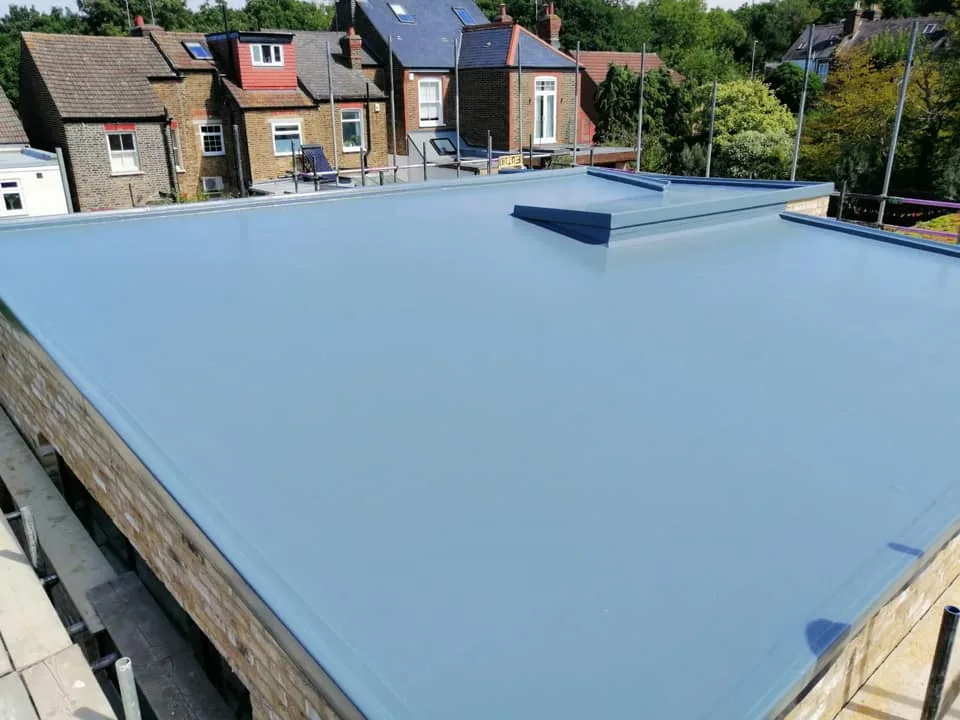
Spot a Failing Felt Roof Before It Soaks Your Ceiling
Felt rarely gives out overnight. Catch the early signs and a small repair often holds, before the deck or the room below gets involved.
Watch for these on your garage or extension:
- Cracks or splits running along the felt at seams and edges
- Blisters and bubbles lifting the surface away from the deck
- Bare patches where the mineral finish has worn off
- Felt that feels brittle and flakes when you press it
- A lifted or torn edge where the felt meets the trim
- Moss or standing water holding damp against the surface
- A stain on the ceiling or garage wall that spreads after rain
Age tells you a lot on its own. A felt roof past fifteen years, going brittle and grey, is near the end of its working life. Bitumen dries out in the sun, loses its flex, then cracks the first cold snap that follows. One split lets water track under the felt and rot the timber deck beneath. That is when a cheap fix turns into a full re-cover. A survey settles whether you are looking at years of life left or a roof living on borrowed time.
Torch-On or Cold-Applied Felt — Which Built-Up System Suits Your Roof?
Modern felt is a world away from the thin single-layer stuff of the past. A proper built-up roof uses two or three bonded layers, and the top cap sheet carries a mineral finish that shrugs off UV. How those layers bond is the main choice you face.
Torch-on gives you the edge on durability and warranty length. Cold-applied wins where fire safety rules the job, such as a shed built tight against a fence or a roof under overhanging branches. Ryan Tate will look at the deck, the surroundings and your budget, then tell you which route fits. You get a straight recommendation, not a push toward whatever costs most.
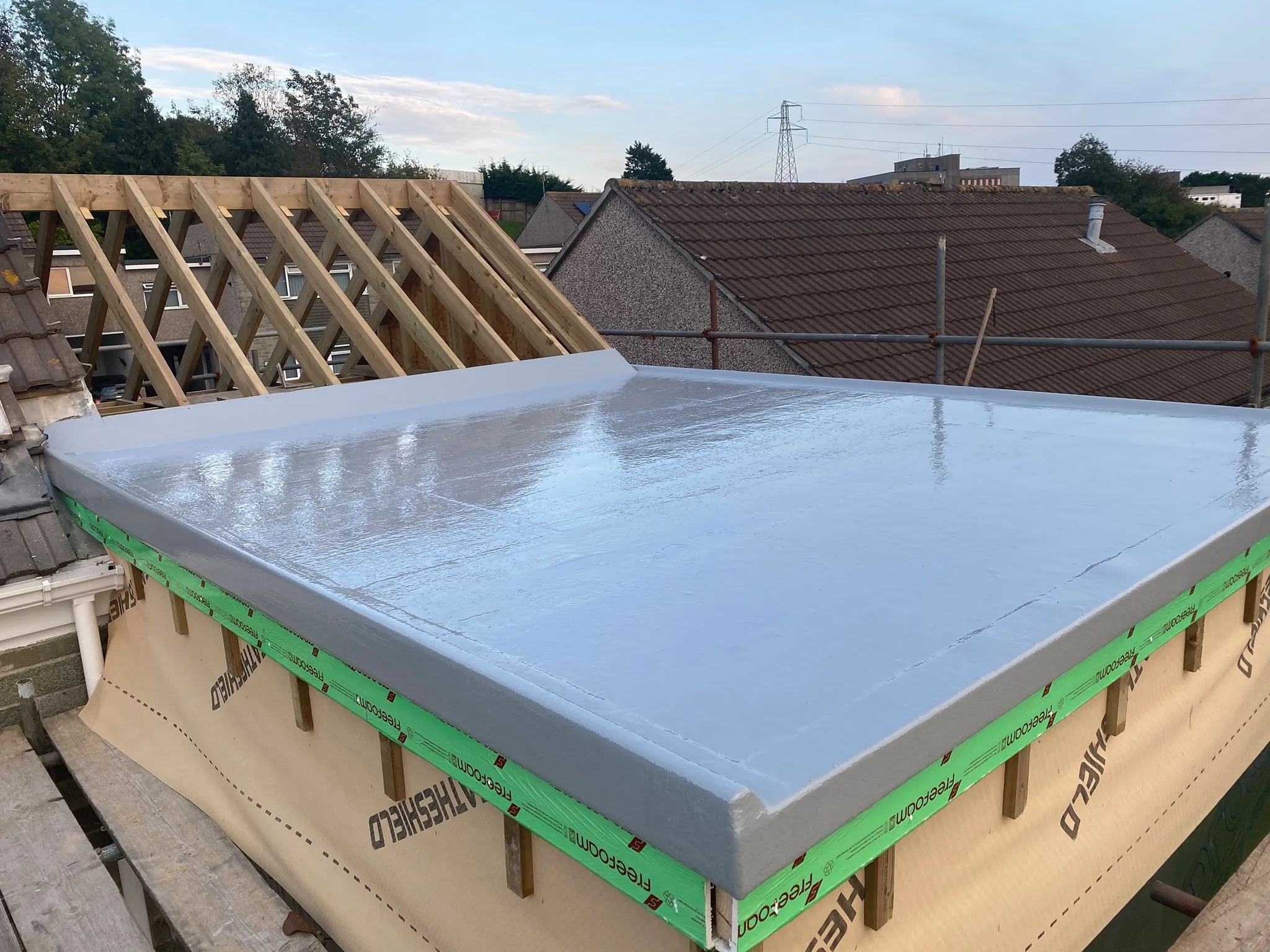
Torch-on felt is heated with a gas torch as it goes down, melting the bitumen so each layer fuses to the one below. It gives the toughest bond and the longest life of any felt, and it is what we fit on most garage and extension roofs around Market Harborough. Cold-applied felt is bonded with adhesive instead of an open flame, which suits jobs near timber, fascias or anywhere a naked flame is a risk. Both build up in layers, and both far outlast the old pour-and-roll felt that used to fail in a decade.
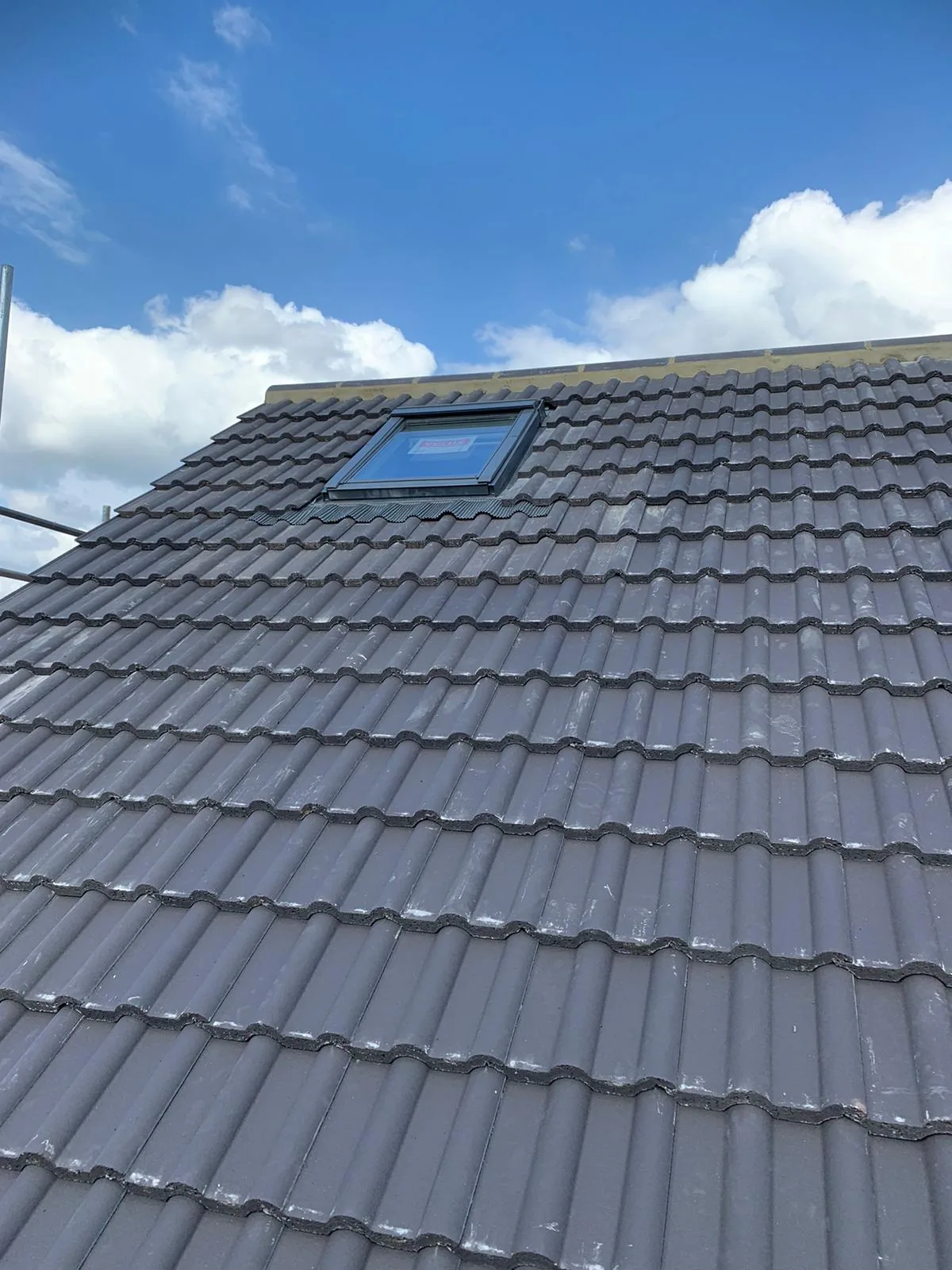
Felt, EPDM or GRP — See Which Flat Roof Wins on Cost and Lifespan
Three systems cover almost every flat roof in this area, and felt is one of them. Each suits a different job, budget and lifespan. In short: felt is the cheapest upfront and hard to beat on smaller garages and sheds; EPDM rubber is the strong-value all-rounder for extensions, with few joints and a long life; GRP fibreglass costs the most but gives a seamless, walkable finish that lasts longest. The table below lays the numbers side by side.
| :-: | :-: | :-: | :-: |
| System | Typical cost (per m²) | Typical lifespan | Best for |
| Felt (built-up / torch-on) | £40–£75 | 15–25 years | Garages, sheds and small extensions on a tight budget |
| EPDM rubber | £75–£110 | 25–35 years | Most extensions and larger flat roofs; few joints |
| GRP fibreglass | £80–£130 | 30–40 years | Walkable terraces, complex shapes, the longest life |
- **Felt (built-up roofing)*is layers of bitumen felt bonded together, torched or cold-applied. The cheapest system to fit, and a sound choice on smaller roofs where budget decides it. Modern torch-on felt now reaches twenty-plus years with care.
- **EPDM rubber*is a single-ply membrane bonded down in large sheets. Few joints, and it copes well with UK weather cycles. Good value over the life of the roof on a bigger extension.
- **GRP fibreglass*goes on as a liquid and cures solid, so the surface has no seams at all. Well suited to a roof used as a walkway or terrace, or anywhere the longest life matters most.
If your roof is a larger extension rather than a garage, it is worth reading our Flat Roofing page too, where EPDM and GRP get the full write-up. On a small garage or shed, felt often makes the most sense on cost alone. The right pick depends on roof size, how it is used and how long you want it to last. A survey settles it in plain terms.
What a New Felt Roof Really Costs in Market Harborough
Cost comes down to three things: material, size and access.
As a general guide, built-up and torch-on felt runs roughly £40–£75 per square metre fitted. For a single garage of around 15m², that lands at roughly £1,000–£1,500 for a straightforward re-felt. A larger garage or a small extension of 25–30m² typically works out between £1,500 and £3,000. A shed roof, being small, often comes in under £700. Labour usually sits around £250–£350 per day.
What pushes a price up or down:
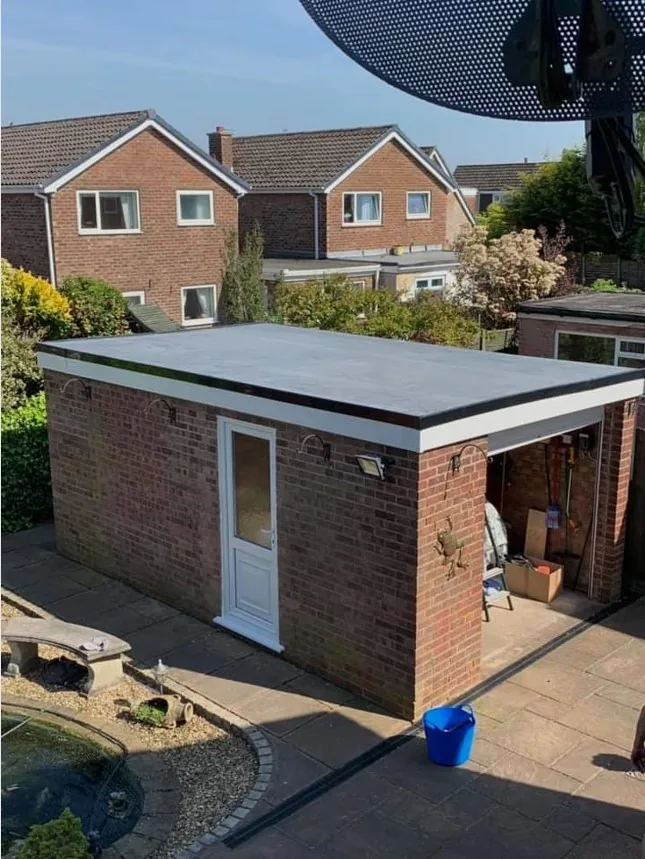
- **Roof size and shape*— more corners, upstands and pipe penetrations mean more labour per square metre
- **Access*— a roof reached by ladder costs less to scaffold than one boxed in behind an extension
- **Deck condition*— rotten timber underneath typically adds £500–£1,800 before the new felt goes on
- **Number of layers*— a full three-layer torch-on build costs more than a lighter two-layer system
- **Stripping off*— how many old felt layers have to come off before the new system goes down
These are general market ranges, not a quote for your roof. Two garages the same size can price very differently once access and deck condition come into play. The only way to a firm figure is a proper survey — which is exactly what our free drone survey gives you, followed by a clear written price with nothing added later. A fixed price needs a survey.
Repair or Replace? You Get a Straight Answer, Not the Biggest Invoice
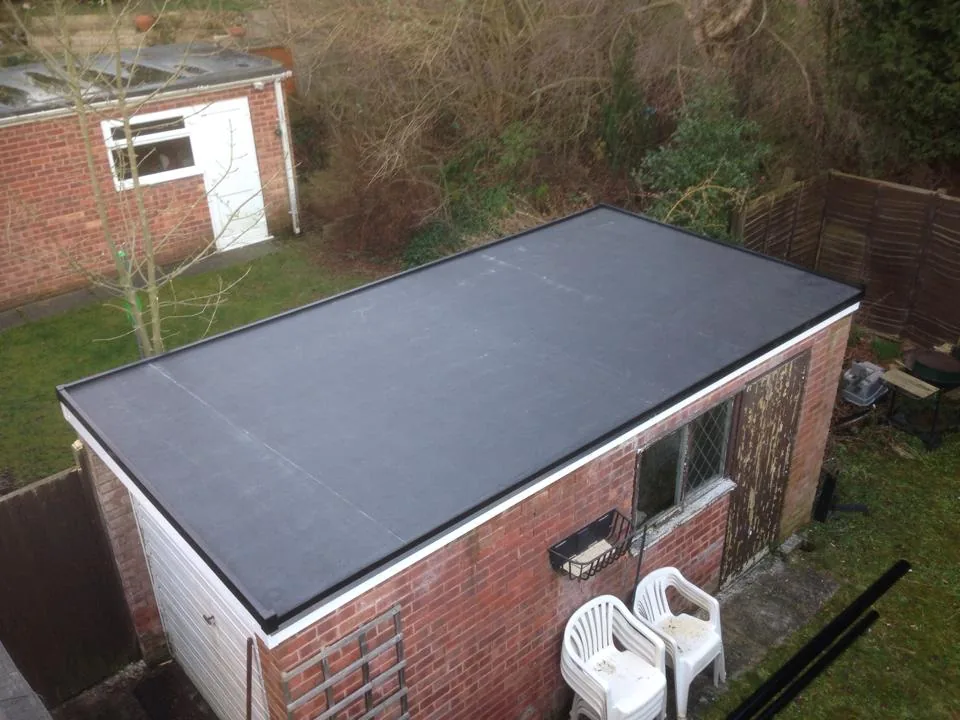
One split or a single blister rarely means the whole roof is finished. An isolated crack, a lifted edge or a worn patch is usually a Felt Roof Repair, not a full re-cover. Widespread cracking, felt gone brittle across the whole roof, or a deck that flexes underfoot points to replacement instead.
We see the same story on older garages around Lubenham and Foxton near the locks. A felt roof gets patched two or three times over the years, while nobody deals with the ponding that caused the first split. Patching the symptom buys a season, and you end up paying for three small jobs instead of one proper one. A rough rule holds well: once a repair costs more than half a full re-cover, replacement is the better spend.
We check the whole roof before recommending either route. A free drone survey shows the full picture — the seams, edge trims and upstands that a ground-level look always misses. You get the footage, not just our word for it. Most like-for-like felt re-covers on a garage or shed do not need planning permission. We tell you plainly which side of the repair-or-replace line your roof sits on, and why.
Layer by Layer: What Happens When We Felt Your Roof
A felt re-cover follows the same order on every job:
- Old felt stripped back to the timber deck
- Deck checked and any rotten or soft boards replaced
- Vapour layer and underlay bonded down where the system needs it
- Base and intermediate felt layers laid and bonded
- Mineral cap sheet torched or cold-bonded over the top
- Edges, upstands and trims dressed in to shed water cleanly
- Site cleared and the finished roof checked before we leave
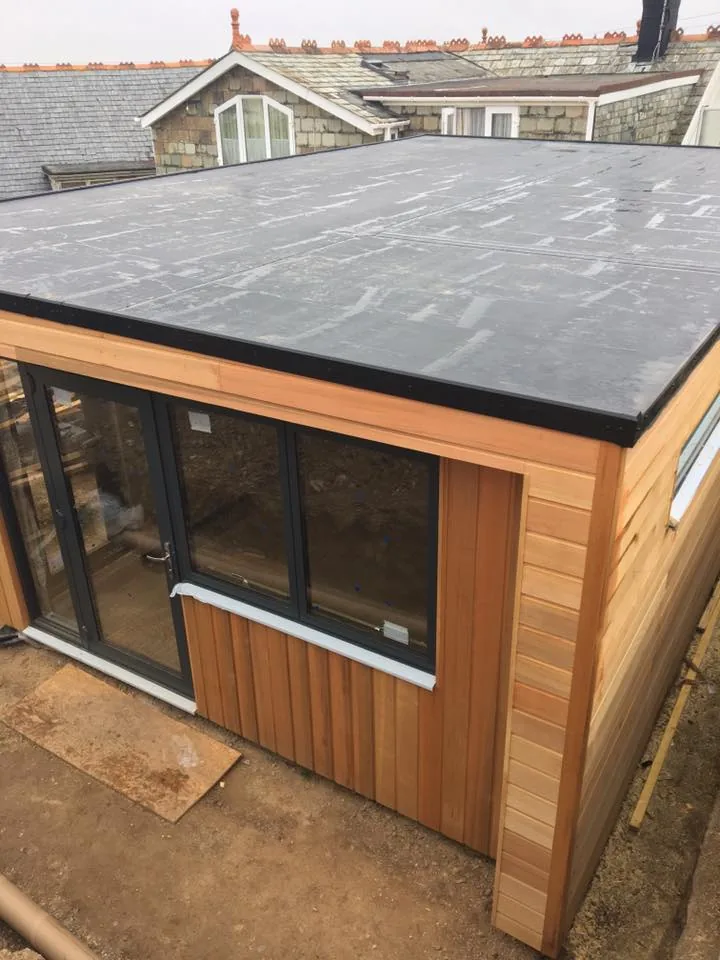
Most garage and shed roofs take one to two days, weather allowing. A larger extension roof takes a little longer. We give you a realistic timeframe before work starts, not an optimistic one designed to win the job. You will know who is turning up and roughly how long they will be there. Torch work is done with care and the right fire precautions on every job.
A Few Minutes a Year Keeps Your Felt Roof Watertight
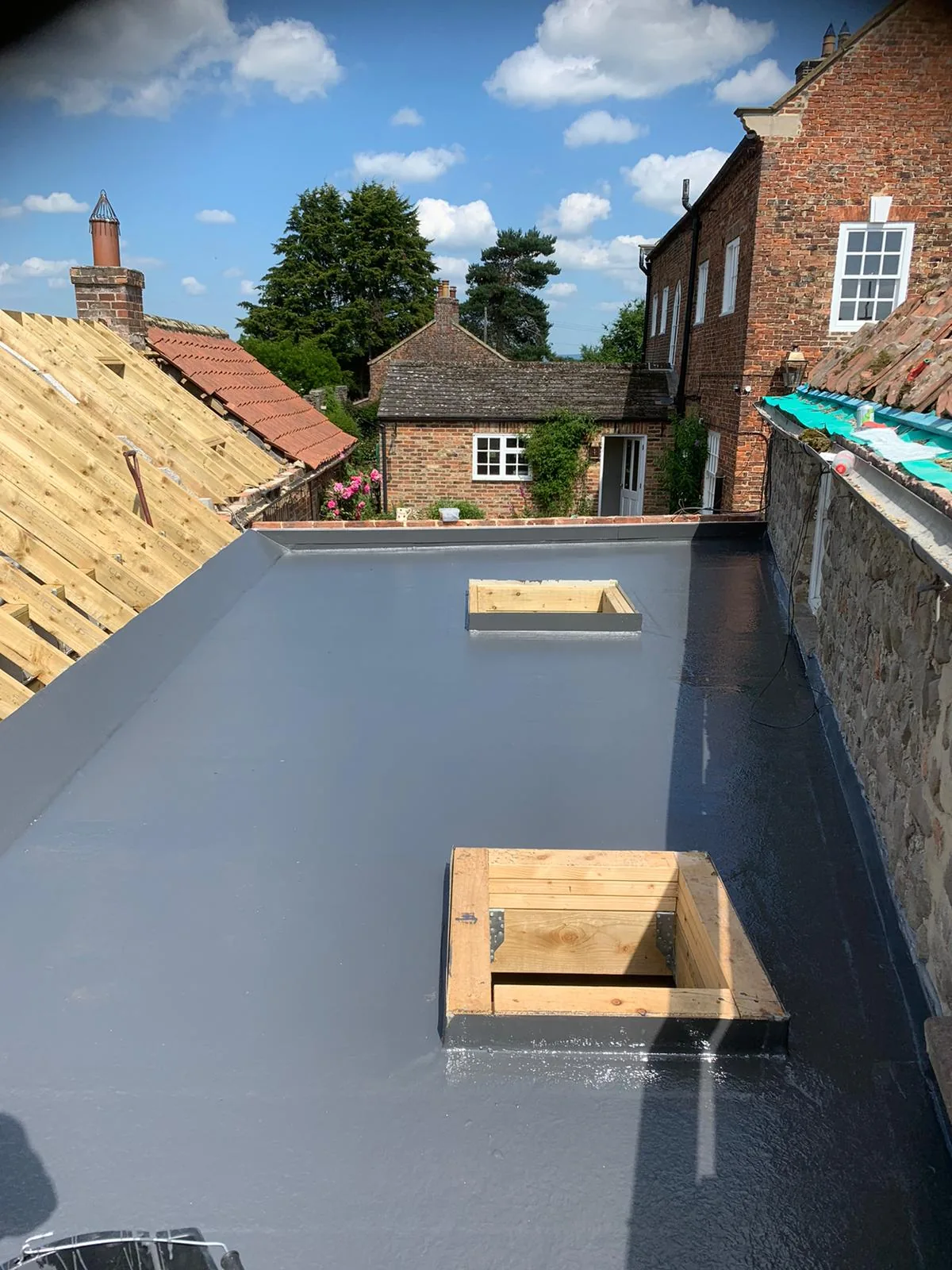
Felt lasts longest when small faults get caught early. None of this needs a specialist — just a look, a couple of times a year.
- Clear leaves and moss off the surface and out of the outlets each autumn
- Check for standing water a day or two after heavy rain
- Look over the edges and upstands for lifted or cracked felt
- Book a free drone survey if you spot any warning sign above
Installation quality does more for felt than any other single factor. A well-bonded roof, dressed in properly at every edge, can double the life of a rushed one. For an independent view on how long different coverings really last, Roofing Today on roof material lifespans is a useful read before you commit to a system. It puts a modern felt roof in fair company alongside slate, tile and the other flat systems.
Why Market Harborough Homeowners Call Tate & Sons First
You are not just buying felt — you are buying whoever fits it. Ryan Tate, our project manager, joined the trade full-time after his NVQ Level 3 in Roofing, and works across modern flat systems day in, day out. He runs the site work himself, so the man who quotes your roof is part of the crew that felts it.
Founder Michael Tate started his apprenticeship at sixteen and built Tate & Sons on one conviction: fix the cause, not just the symptom — never patch a roof to look right for a season and fail again the next. He still handles much of the surveying, so you get an experienced eye on the roof before a price is set. Between us we carry over 45 years of combined experience, hold NVQ Level 2 and 3 qualifications in Roofing Occupations, and keep CSCS cards and NFRC trade-body membership. Read more about the people behind the work on our About Tate & Sons Roofing page.
Areas We Serve Across Market Harborough and the Harborough District
We fit and repair felt roofs across Market Harborough and the surrounding Welland Valley villages, from Great Bowden and Little Bowden through to Kibworth Beauchamp, Medbourne and Husbands Bosworth. If your area is not on the list below, call us anyway — if you are nearby, there is a strong chance we cover you.
- Market Harborough (LE16)
- Great Bowden (LE16 7)
- Little Bowden (LE16 8)
- Lubenham (LE16 9)
- Foxton (LE16 7)
- Medbourne (LE16 8)
- Kibworth Beauchamp (LE8)
- Great Glen (LE8 9)
- Fleckney (LE8 8)
- Husbands Bosworth (LE17 6)
- Desborough (NN14 2)
Got Questions?
Your Felt Roofing Questions, Answered Properly
How long does a felt roof last?
A modern felt roof lasts 15 to 25 years when fitted well and looked after. Basic single-layer felt of the old sort often failed inside ten to fifteen years, which gave felt its dated reputation. A torch-on built-up system with a mineral cap sheet sits at the top of that range, and some reach thirty years with regular care. Installation quality decides it more than anything, since a rushed roof can lose half its working life to poor bonding at the edges.
Is torch-on felt better than cold-applied felt?
Torch-on felt gives the toughest bond and usually the longest life, so it is our first choice on most garage and extension roofs. The gas torch melts the bitumen and fuses each layer to the one below, which locks water out at every seam. Cold-applied felt is bonded with adhesive rather than a flame, and it is the safer pick near timber, fences or overhanging branches. Both far outlast old pour-and-roll felt, and we match the system to your roof and its surroundings.
Is a felt roof any good, or should I choose something else?
A modern felt roof is a sound, honest option, especially on garages, sheds and smaller extensions where budget matters. It costs less to fit than EPDM or GRP and still gives you fifteen to twenty-five years from a good build. On a larger extension or a roof you want to walk on, EPDM or GRP can be the better long-term spend. We give you the plain trade-offs rather than steering you toward whatever earns us most.
How much does a new felt roof cost in Market Harborough?
As a general guide, felt runs around £40 to £75 per square metre fitted, with the final figure set by size, access and deck condition. A single garage of about 15m² usually lands between roughly £1,000 and £1,500, while a shed roof often comes in under £700. A larger garage or small extension typically falls between £1,500 and £3,000. A free drone survey gives you an exact written price rather than a rough estimate over the phone, and a fixed price always needs a survey first.
Can you re-felt over the old felt, or does it come off first?
On most jobs the old felt comes off first, back to the timber deck. Laying new felt straight over old traps damp, hides any rot below, and rarely bonds as it should. Stripping off lets us check the deck, replace any soft boards, and give the new system a clean, dry base. It costs a little more in labour, but it is the only way to a felt roof that lasts its full life rather than failing early.
Should I repair my felt roof or replace it?
Repair makes sense when the damage is isolated, the felt is under ten years old, and the deck below is dry. A single split, a lifted edge or one blister is often a quick fix. Replace when the cracking is widespread, the felt has gone brittle all over, or the deck flexes underfoot. As a rule of thumb, once a repair costs more than half a full re-cover, replacement is the smarter spend and resets the warranty.
Why does my felt roof blister and bubble?
Blisters form when moisture or air gets trapped between the felt layers, then expands in the sun. It often points to felt laid over a damp deck, or a bond that failed at the base layer. A small blister that has not split can sometimes be left, but one that cracks lets water straight in. A survey tells you whether it is cosmetic or the first sign of a wider bonding problem.
Can you felt a shed or garage roof?
Yes, shed and garage roofs are among the most common felt jobs we handle. A shed roof is small and often done in a single visit, while a garage takes a day or two depending on size and access. We strip the old felt, check the boards, and lay a fresh built-up or torch-on system dressed in cleanly at every edge. It is a cost-effective way to get another two decades out of an outbuilding.
Book Your Free Drone Roof Survey Today
See exactly what your felt roof needs before any work starts. No ladders, no pressure — just a clear picture from a local Market Harborough team.
Every week a tired felt roof waits, water works deeper under the felt and into the deck beneath it. A quick, free survey today tells you exactly where you stand — and often the fix is smaller and cheaper than you feared. Book now, get an honest quote, and protect your garage or extension before the next downpour finds the weak spot.
ð 5 Hood Close, Market Harborough, LE16 9XS
ð 01858 457600
Call the Market Harborough team today on 01858 457600, or request your free drone survey online. We're already working across your area.
Book Your Free Drone Roof Survey
See exactly where your roof stands, with no obligation and no pressure. Call our Market Harborough team or request your free drone survey today.
Get in Touch
Tate & Sons Roofing — Market Harborough Office
5 Hood Close, Market Harborough, LE16 9XS
📞 01858 457600
✉️ [email protected]