
🏠 Trusted Local Roofers
Felt Roof Repair in Hinckley
A split seam or a single blister rarely means your whole roof needs stripping off. Felt roof repair in Hinckley deals with the localised faults — blisters, splits, torn edges and lifted laps — that cause most flat roof leaks, without the cost of a full re-cover you do not actually need. Tate & Sons Roofing repairs felt roofs across Hinckley, Burbage and the wider borough, from a single garage roof near the Druid Quarter to a larger flat-roofed extension out toward Barwell.
This page walks you through the warning signs worth acting on, how we decide between a patch, an overlay and a full strip-and-recover, what a repair day actually involves, and real cost figures for the Hinckley area. If your felt roof needs more than a repair, our felt roofing page covers full installation and re-covering in more depth. Felt roof repair is one part of the wider service we offer as a roofing contractor across Hinckley. Start with a free drone survey and a written quote before anything is agreed — no ladder against your wall just to take a look, and no charge either way.
- Fully Insured
- 10-Year Guarantee
- 5-Star Rated
Quick Free Estimate - No Obligation
We're not just roofers – we're your neighbours.
Fully Insured • Response within 15 mins
🔒 Your details are safe with us. No spam, ever.
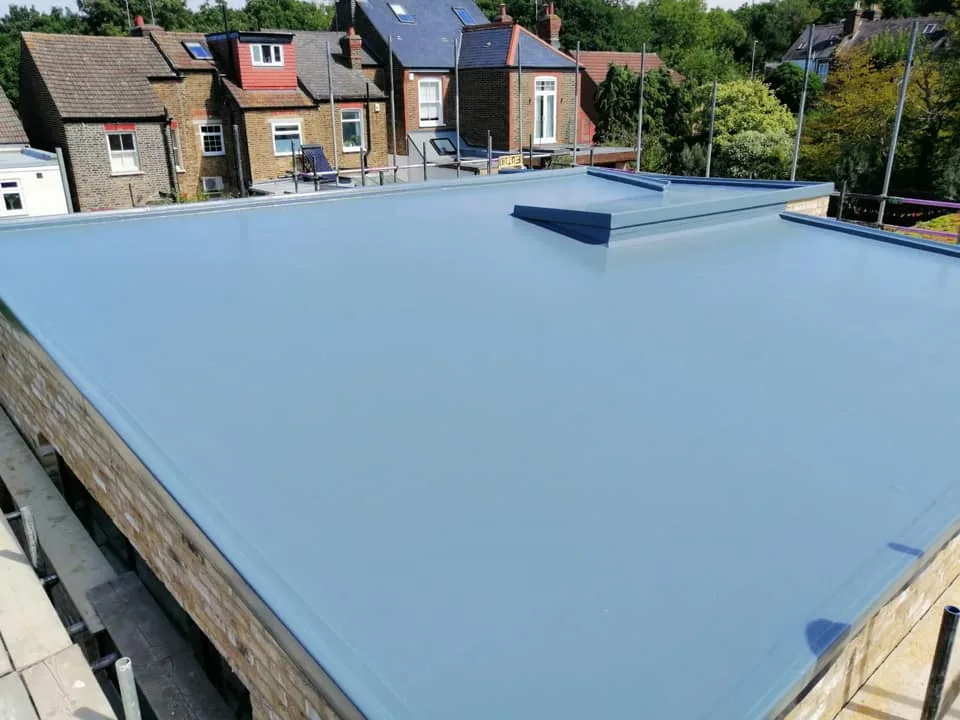
Spot the Warning Signs Before a Small Split Becomes a Big Leak
A felt roof almost always gives warning before it leaks properly. The trouble is that a flat roof over a garage or extension sits out of sight, so a small fault can sit unnoticed for months until a stain shows up on the ceiling below.
Look out for these:
- Bubbles or blisters on the surface, especially after a hot spell
- A split or crack where the felt has dried out and lost its flexibility
- Torn edges or corners where the felt has lifted away from a trim
- Laps that have peeled back at the seams instead of staying bonded flat
- Water still sitting on the roof more than 48 hours after rain stops
- Damp patches spreading across a garage or extension ceiling
- Moss or leaf litter building up around outlets and valleys
A single blister or split on a felt roof under ten years old is almost always a straightforward repair. A roof covered in cracking, or one that has already been patched two or three times in recent years, is telling you it needs more than another patch. Garage roofs on the older terraces around the Druid Quarter often show exactly this pattern — a small split ignored for a season turns into a soaked deck by the time anyone calls us. A free drone survey settles the question with real footage, not a guess from a ladder.
Patch, Overlay or Full Recover — Getting the Repair Call Right
A single blister, split or lifted lap on an otherwise sound roof is usually a local patch repair — cut back to sound felt, bond a new piece over the fault with a generous overlap, and seal the edges properly. It is quick, low-cost, and the right call for isolated damage.
Where damage is spread across a wider area but the deck underneath is still dry and firm, a single-layer overlay often makes more sense than another patch. A fresh layer of felt bonded straight over the sound existing covering resets the surface without the cost of stripping everything back to the timber. It is a good middle option between a small patch and a full recover.
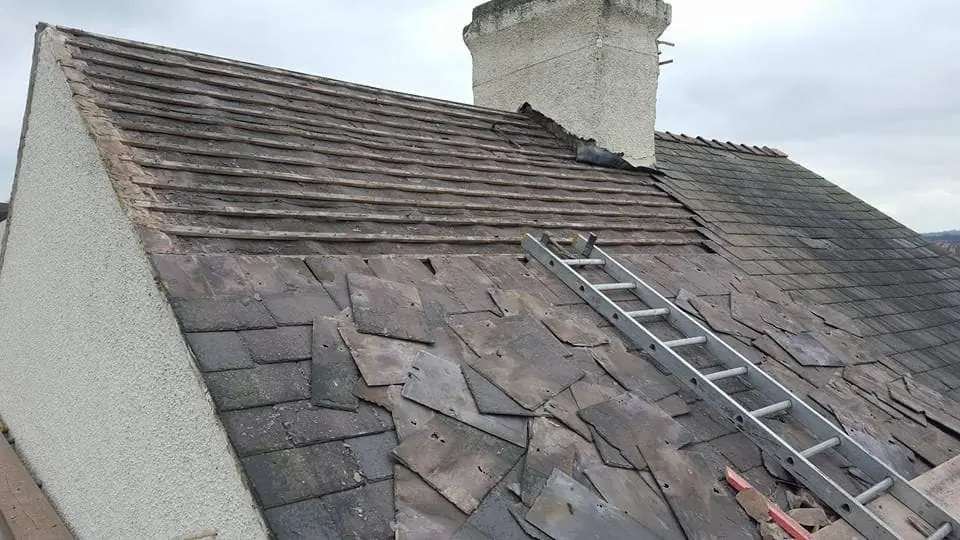
Once the felt has failed across most of the roof, the deck beneath has taken on water, or a roof has been patched repeatedly without lasting, a full strip-and-recover is the only repair that actually holds. This is common on older garage roofs that have been patched every year or two for a decade rather than dealt with properly — at that point, our garage roof replacement service covers the fuller job a patch cannot fix. We check the deck on every survey before recommending any of the three, so you are never paying for more repair than the roof actually needs.
| :-: | :-: | :-: | :-: |
| Repair Type | Typical Cost | What It Involves | Best For |
| Local patch repair | £80–£900 | Cutting back to sound felt, bonding a new patch with a 100mm+ overlap, sealing edges | A single blister, split, torn edge or lifted lap on an otherwise sound roof |
| Single-layer overlay | £900–£1,800 (typical garage) | A fresh layer of felt bonded over the existing sound covering, no strip-out | Wider surface wear where the deck below stays dry and firm |
| Full strip-and-recover | £2,000–£4,500 (larger roof) | Old felt stripped off, deck checked and repaired, new felt system fitted from scratch | Failed felt across most of the roof, a wet or rotten deck, or repeated failed patches |
What Actually Happens During a Felt Roof Repair, Start to Finish
A felt roof repair follows the same order on every job we carry out:
- Roof inspected and the full extent of the damage marked out
- Damaged felt cut back to sound, dry material around the fault
- Deck checked underneath for any softness or rot
- New felt patch or layer bonded on with bitumen adhesive or heat
- Edges and laps sealed to shed water cleanly
- Surrounding roof checked for any other early faults
- Site cleared and the repair checked before we leave
A single blister or split repair is usually finished within a couple of hours. A larger patch covering a lifted edge or upstand typically takes half a day, and a single-layer overlay on a garage roof is normally a one-day job. Daniel Whitmore, our project manager, oversees the trickier repairs personally, since flat roof detailing around upstands, outlets and abutments is where a patch repair either holds for years or fails again within months. Bitumen adhesives need a dry surface and a temperature above roughly 5°C to bond properly, so we work around the forecast rather than rushing a repair into weather that risks it failing again.
What Felt Roof Repair Really Costs in Hinckley
Cost comes down to how much of the roof is damaged, how easy the roof is to access, and whether the deck underneath has stayed dry. As a general guide, a small patch repair covering a single blister or split typically costs £80–£350. A larger patch involving a lifted edge, torn corner or upstand usually runs £400–£900. A single-layer overlay across a typical garage roof runs £900–£1,800, and a full strip-and-recover on a larger flat-roofed extension can reach £2,000–£4,500 depending on size and how much deck timber needs replacing.
What pushes a price up or down:
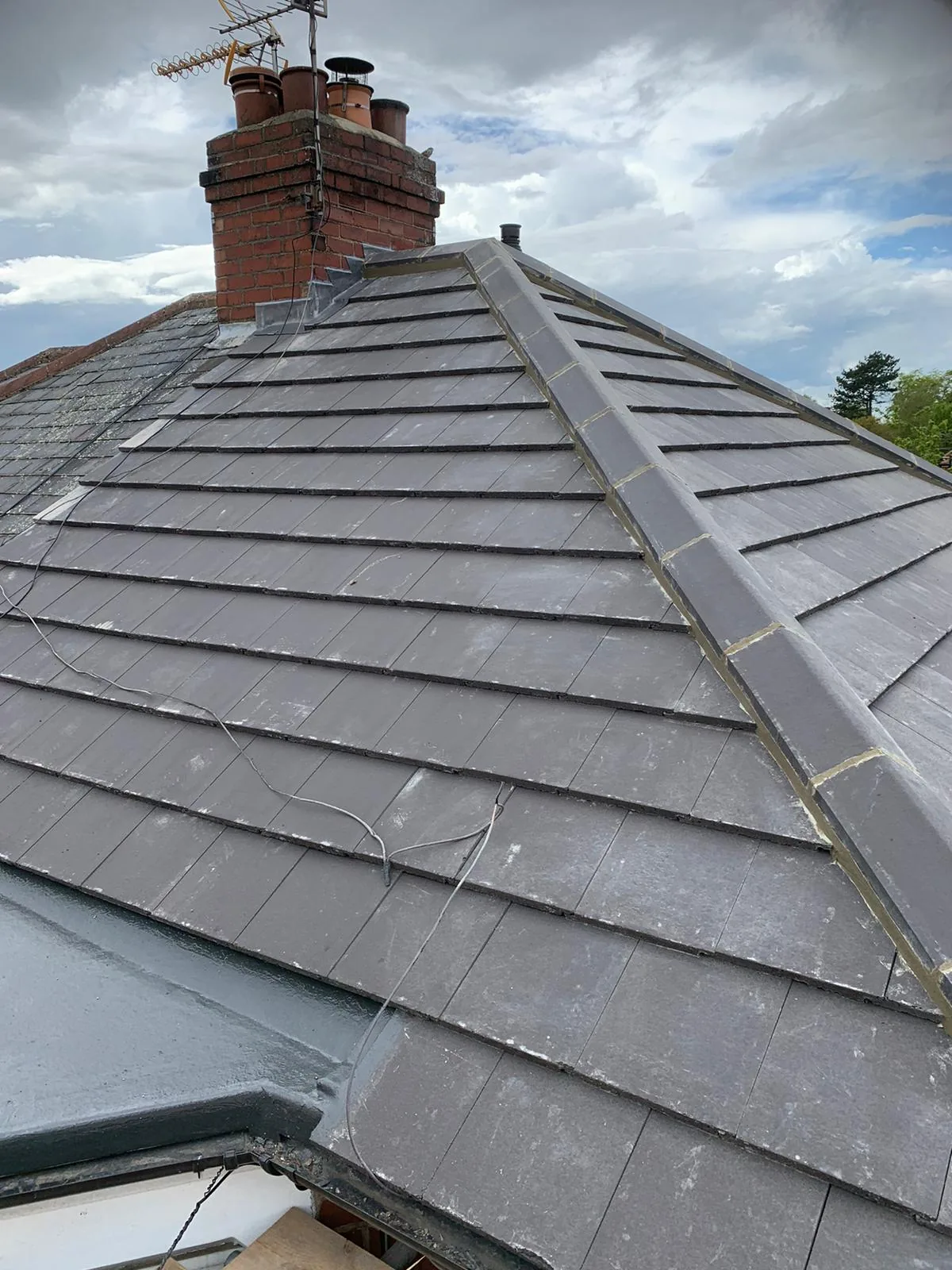
- Extent of damage — one blister costs far less than several separate faults
- Deck condition — soft or rotten decking boards typically add £200–£600 to replace
- Access — a garage roof reached easily by ladder costs less than one boxed in by fencing or a neighbouring wall
- How the damage was caused — storm damage, foot traffic and old age all repair differently
- Number of previous patches — a roof patched repeatedly often needs more prep before a new patch will bond
Labour typically makes up 40 to 60 percent of the total cost, and roofers in this part of Leicestershire generally charge in the region of £200–£350 per day. These are general market ranges, not a quote for your roof — two garages the same size can price differently once deck condition and access are factored in. A fixed price needs a survey.
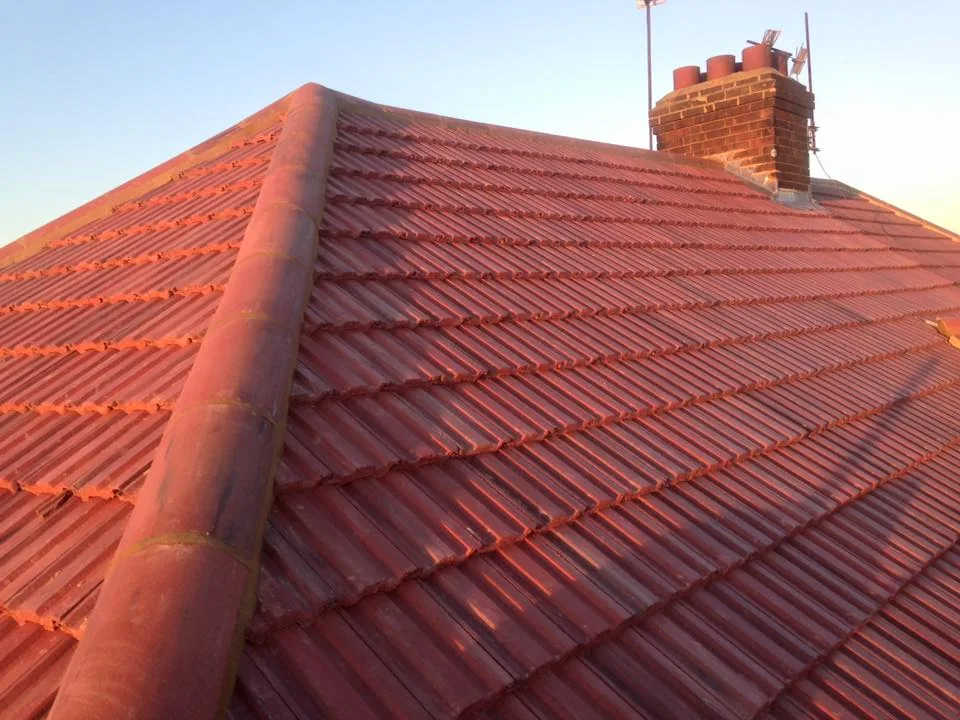
Getting a Repair That Actually Lasts — Deck, Weather and the Right Materials
A patch repair is only as good as the surface it bonds to. Patching over a felt roof that is still damp, or over decking that has already softened underneath, traps moisture against the timber and the patch fails again within months. We always check the deck is dry before bonding a patch down, not just the felt on top of it.
Wind-driven rain along the old Watling Street corridor and the exposed plots out past Higham on the Hill tests a repair harder than a sheltered garage roof in the town centre. We factor a roof's exposure into the materials and detailing we use, not just a standard fix applied the same way everywhere.
Bitumen-based patches lose their bond gradually over years as the felt around them ages and moves with the weather, which is why even a well-fitted patch typically lasts three to seven years rather than forever. Where a roof needs more than a patch but stripping the whole thing back is not necessary, the industry's own guidance is useful reading — the LRWA's NFRC GN71 guidance on overlaying a flat roof sets out the conditions that make an overlay a sound option rather than a false economy. We follow the same logic on every survey: check the deck, check the number of existing layers, and only recommend an overlay where it will actually hold.
Keep Your Felt Roof Watertight After the Repair
A repaired felt roof rewards a little regular attention with years of extra service. Garage roofs sitting under trees or in a sheltered corner, as many do close to Hollycroft Park, collect more leaf litter and moss than an open roof out toward Sharnford or Wolvey.
- Clear leaves, moss and debris from the surface each autumn
- Check outlets and gutters stay free-flowing so water cannot pool
- Look for new blisters or cracking after a hot summer or a hard frost
- Keep an eye on the patched area for the first year after any repair
- Book a free drone survey every few years, or after any storm
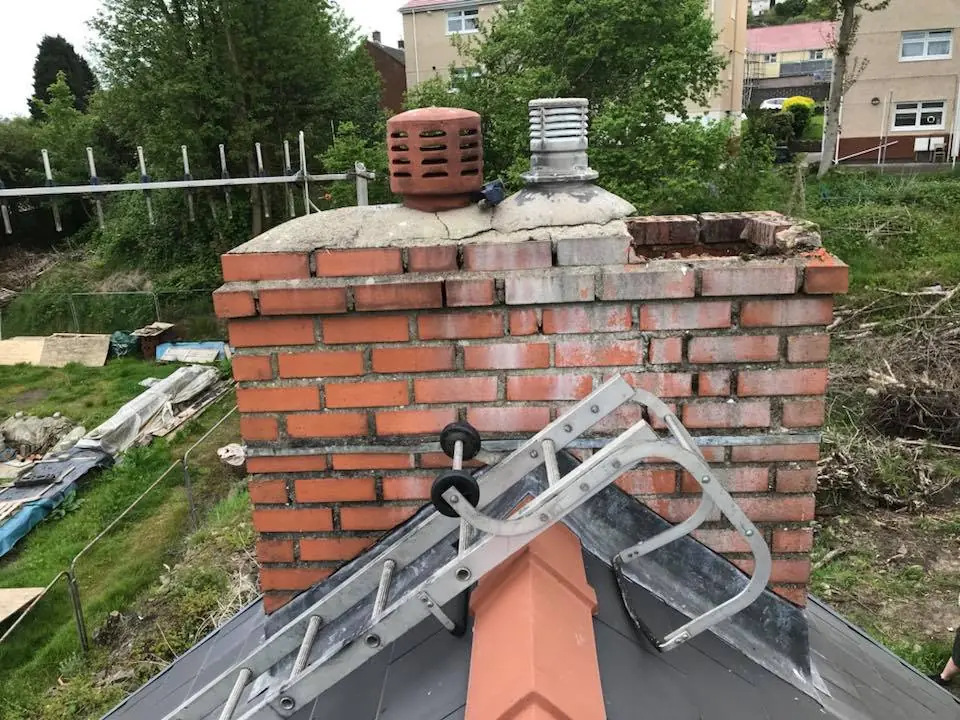
None of this needs a specialist visit — just a regular look, and a call to us if anything seems off. Catching a new blister or a lifted edge early is always cheaper than letting it run into a full re-cover.
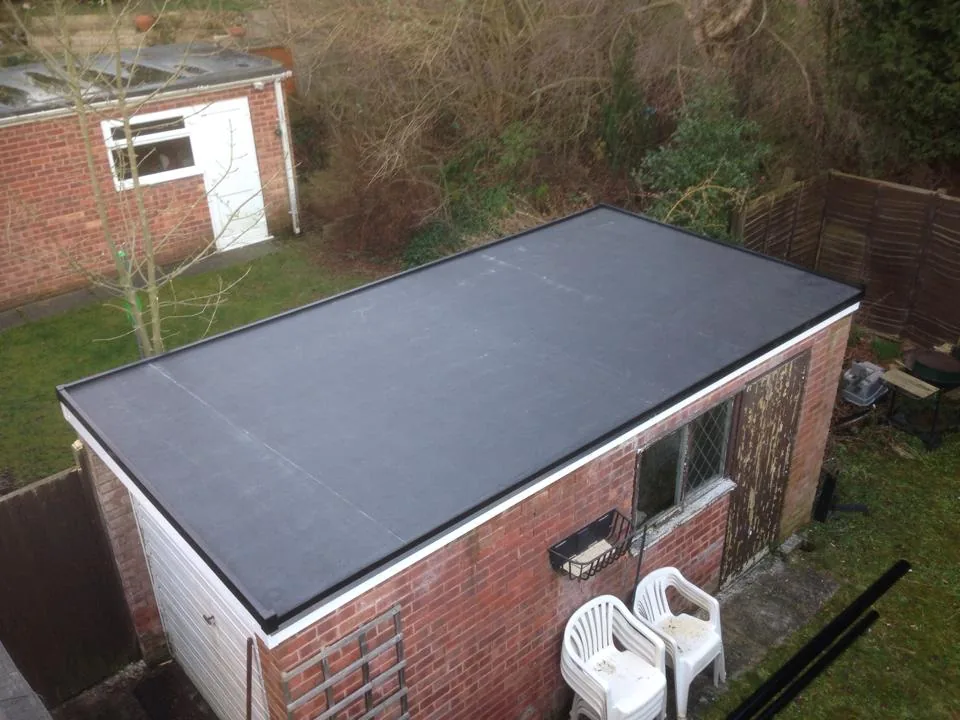
Why Hinckley Turns to Tate & Sons for Felt Roof Repair
You are not just buying a patch of felt — you are buying whoever bonds it down. Daniel Whitmore, our project manager, oversees the trickier felt repairs personally and specialises in the flat roof detailing around upstands, outlets and abutments that decides whether a patch holds for years or fails again within months. He checks the deck on every repair before any felt goes down, since a patch only lasts as long as the surface underneath it stays sound.
Founder James Tate started out on the tools more than 20 years ago and still quotes the majority of jobs personally, so the person weighing up your repair is the one standing behind the finished work. Between us we bring 40 years of combined team experience, hold NVQ Level 2 and 3 qualifications in Roofing, and carry CSCS cards. Sophie Bennett, our office manager, keeps quotes, scheduling and aftercare running smoothly from the first phone call onwards. Read more about the people behind the work on our About Tate & Sons Roofing page.
Areas We Serve Across Hinckley and Bosworth Country
We repair felt roofs across Hinckley and the surrounding borough. If your area is not on the list below, call us anyway — there is a strong chance we already cover you.
- Hinckley (LE10)
- Burbage (LE10)
- Barwell (LE9)
- Earl Shilton (LE9)
- Sapcote (LE9)
- Sharnford (LE10)
- Wolvey (LE10)
- Higham on the Hill (CV13)
- Sutton Cheney (CV13)
- Stoke Golding (CV13)
- Market Bosworth (CV13)
- Nuneaton (CV10 / CV11)
- Bedworth (CV12)
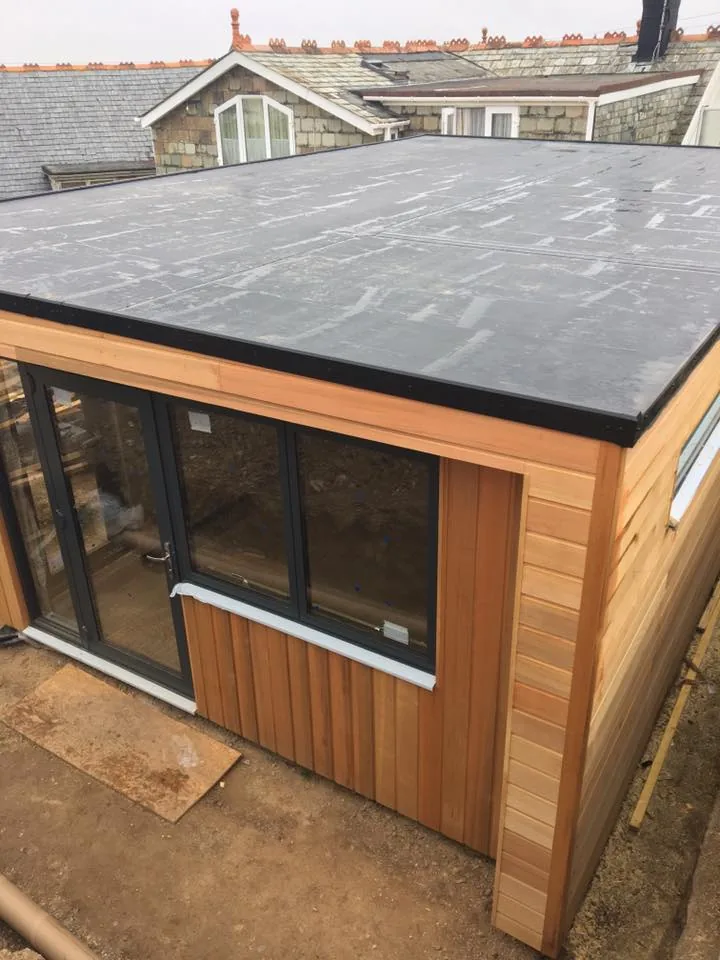
Got Questions?
Your Felt Roof Repair Questions, Answered Properly
How much does felt roof repair cost in Hinckley?
A small patch repair covering a single blister or split typically costs £80–£350, while a larger patch involving a lifted edge or upstand usually runs £400–£900. A single-layer overlay across a whole garage roof typically costs £900–£1,800, and a full strip-and-recover on a larger flat-roofed extension can run £2,000–£4,500 depending on size and deck condition. Deck condition, access and how many separate faults need addressing all move the final price. A free drone survey gives you a written price rather than a phone estimate.
Can a felt roof always be repaired, or does it eventually need full replacement?
Most felt roof damage is repairable if it is confined to one or two spots and the deck below has stayed dry. A single blister, split or lifted lap is usually a same-day patch rather than a job that needs the whole roof stripping off. Once cracking spreads across most of the surface, or the felt has already been patched several times in the same few years, another patch rarely holds for long. At that point a single-layer overlay or a full strip-and-recover works out cheaper across the roof's remaining lifespan than repeated call-outs.
What causes blisters to form on a felt roof?
Blisters form when moisture or trapped air gets sealed between layers of felt during a repair or an original installation. Heat from the sun makes the trapped vapour expand, which pushes the surface up into a bubble. They tend to show up first after a hot spell, when the expansion is at its strongest. A small blister can usually be cut open, dried out and resealed as a straightforward patch, but a blister left to grow eventually splits and lets water straight into the deck.
Can felt roof repairs be done from inside the loft?
A small split or nail hole can sometimes be sealed from inside the loft as a short-term fix, but it is rarely a lasting repair. Reaching the felt from below means working blind, without seeing the true size or shape of the damage from the weather side. Water also tends to travel sideways along the felt before it drips through, so the wet patch on the ceiling is often nowhere near the actual fault. We always repair a felt roof from the outside, on the surface where the damage actually sits, so the fix addresses the real problem rather than a symptom.
How long does a felt roof patch repair actually last?
A well-fitted patch repair on an otherwise sound felt roof typically lasts three to seven years before the surrounding membrane starts to age around it. How long it holds depends on the felt's remaining condition, the quality of the bond, and how exposed the roof is to sun and frost. A patch on a roof with less than two years of useful life left is really a stop-gap rather than a fix. If your felt is already past 15 years old with several past patches, we will tell you honestly if a patch is worth doing at all.
Can new felt be laid over the old felt instead of stripping it off?
Yes, a single-layer overlay can be laid directly over existing felt provided the deck beneath is dry, sound and not already carrying more than one previous layer. An overlay saves the labour and disposal cost of a full strip-out, which keeps the job quicker and cheaper. It is not the right call for every roof — a deck with rot, or felt that has already been overlaid once before, usually needs stripping back to start again properly. We check the existing build-up on every survey before recommending an overlay instead of a full recover.
Does cold weather rule out felt roof repair in winter?
Cold weather does not rule out a felt roof repair outright, but it does narrow the working window. Bitumen adhesives and primers need dry conditions and a surface temperature above roughly 5°C to bond properly, which rules out frosty mornings and driving rain. A repair rushed in poor conditions is one of the most common reasons a patch fails again within a year. We check the forecast before booking a repair date, and would rather move a job by a day than fit it in conditions that risk the bond.
Do the older garage roofs around the Druid Quarter usually need a patch or a full recover?
Most of the felt garage roofs on the older terraces around the Druid Quarter still take a patch repair well, provided the deck timber underneath has stayed dry. These roofs date from Hinckley's hosiery and framework-knitting years and were mostly felted in modest single layers, which patch cleanly when the damage is localised. Where a roof has been patched repeatedly over several years without ever addressing the deck, a single-layer overlay or full recover usually works out better value. We recognise the typical build-up on these terraces before we even climb the ladder, from years of working on the same streets.
Does the tree cover near Hollycroft Park make felt roofs there more prone to splits?
Garage and extension roofs close to Hollycroft Park do tend to collect more leaf litter and moss than roofs on open, exposed streets. Damp moss holds water against the felt surface for longer, which softens the membrane and makes it more likely to crack or split under later stress. Blocked outlets from fallen leaves also cause water to pond, adding weight and slowing drainage across the whole roof. Clearing debris each autumn is one of the simplest ways to keep a felt roof in that part of Hinckley from developing avoidable splits.
Book Your Free Drone Roof Survey for Your Felt Roof Repair Today
See exactly what your felt roof needs before any work starts. No ladders against your wall, no pressure — just a clear picture from a local Hinckley team.
Every season a small split or blister is left alone, water works further into the felt and the deck timber beneath it, and a same-day patch turns into a full strip-and-recover at several times the cost. Book a free survey today, get an honest answer on patch, overlay or recover, and get your felt roof watertight again — first time.
Call the Hinckley team today on 01455 242595, or request your free drone survey online. We're already working across your area.
Book Your Free Drone Roof Survey
See exactly where your roof stands, with no obligation and no pressure. Call our Hinckley team or request your free drone survey today.
Get in Touch
Tate & Sons Roofing — Hinckley Office
10 Brosdale Drive, Hinckley, LE10 0SW
📞 01455 242595
✉️ [email protected]