
🏠 Trusted Local Roofers
EPDM Rubber Roofing Nottingham
A cheap flat roof rarely survives a Nottingham winter without a fight. EPDM rubber roofing in Nottingham gives you a single, seamless membrane that shrugs off standing water, UV, and hard frost for 30 years or more. As a roofing contractor working across the city, we fit EPDM the way it should be done: the right thickness, the right fixing method, and no shortcuts at the edges.
- Fully Insured
- 10-Year Guarantee
- 5-Star Rated
Quick Free Estimate - No Obligation
We're not just roofers – we're your neighbours.
Fully Insured • Response within 15 mins
🔒 Your details are safe with us. No spam, ever.
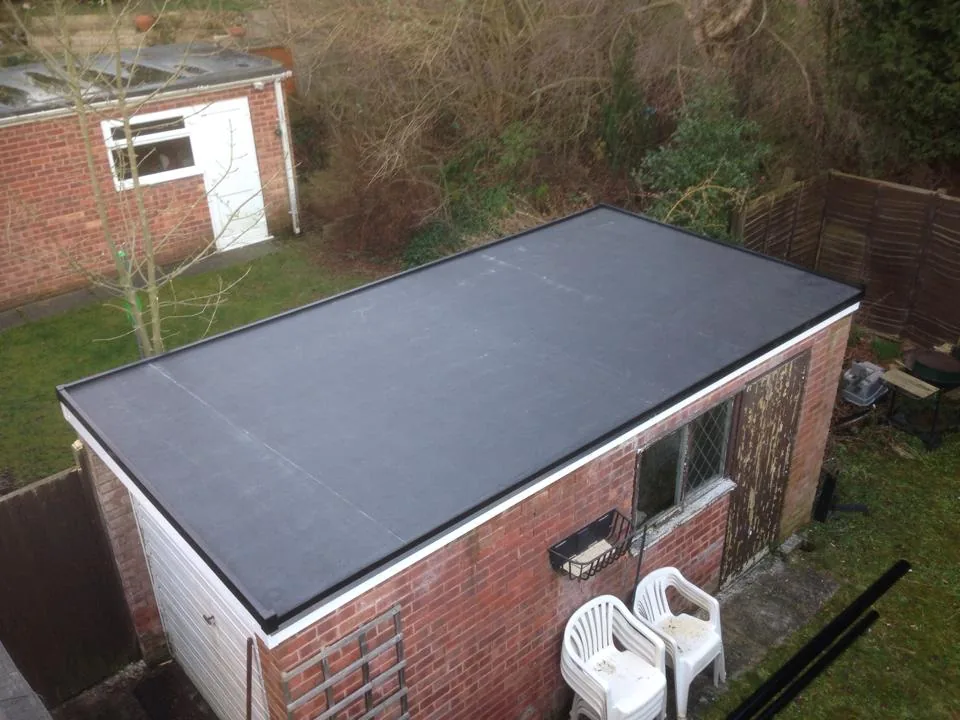
What Is EPDM Rubber Roofing, and Is It Right for Your Nottingham Home?
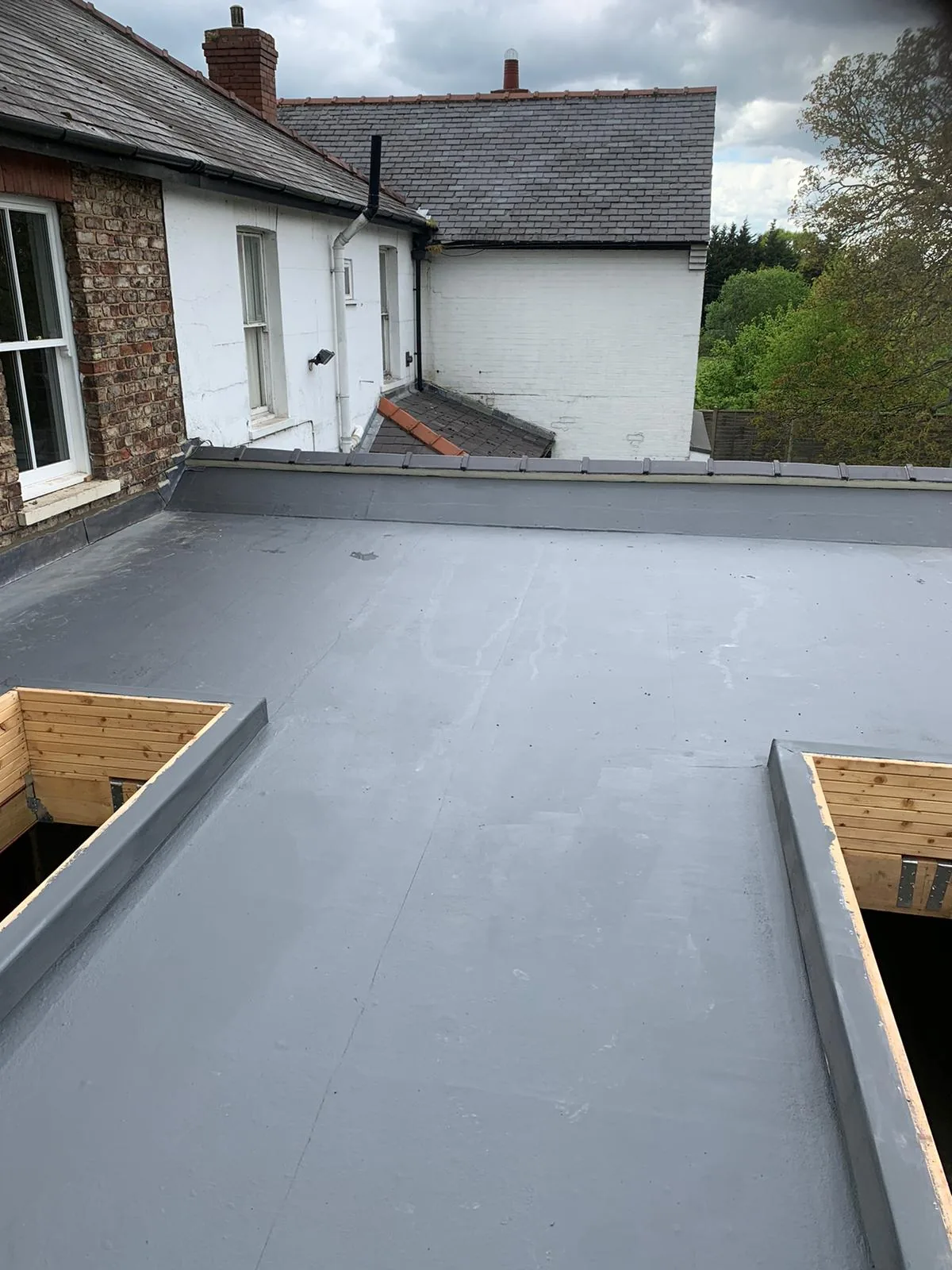
EPDM stands for Ethylene Propylene Diene Monomer, a synthetic rubber that comes as one continuous sheet rather than layered strips. Because a single sheet covers most domestic roofs in one piece, there are few or no seams for water to find its way through. It flexes with temperature swings instead of cracking, copes with standing water without breaking down, and needs almost no attention once it's fitted correctly. That combination makes it the strongest all-round choice for extensions, garages, dormer cheeks, and box gutters across Nottingham.
EPDM isn't the right call for every roof. Roofs used regularly as a terrace or walkway suit GRP fibreglass better, since EPDM can scuff or puncture under repeated foot traffic. Tight budgets on a shed or outbuilding might still point to felt. For everything in between — the extension roof, the garage, the dormer, the flat-roofed bay window — EPDM is usually the sensible long-term choice, and a free survey will confirm it for your specific roof.
Fully Adhered, Mechanically Fixed, or Ballasted: Which EPDM Fitting Suits Your Roof?
EPDM isn't fitted the same way on every job. The fixing method changes how the roof performs and what it costs.
- Fully adhered (glued): the membrane is bonded directly to the deck with contact adhesive, giving a taut, low-profile finish with the best wind resistance. It's the method we use on almost every domestic extension, garage, and dormer roof.
- Mechanically fixed: the membrane and insulation are held down with plates and fasteners in a grid pattern, then the joints are sealed. It's quicker to fit on larger roofs and less weather-dependent during installation, which suits bigger commercial jobs on a tight schedule.
- Ballasted: the sheet is laid loose and held down with smooth stone or paving slabs instead of glue or fixings. The ballast shields the membrane from UV, which can stretch its working life, but the roof structure needs to carry the extra weight — this rules it out for most domestic roofs and suits larger flat commercial roofs instead.
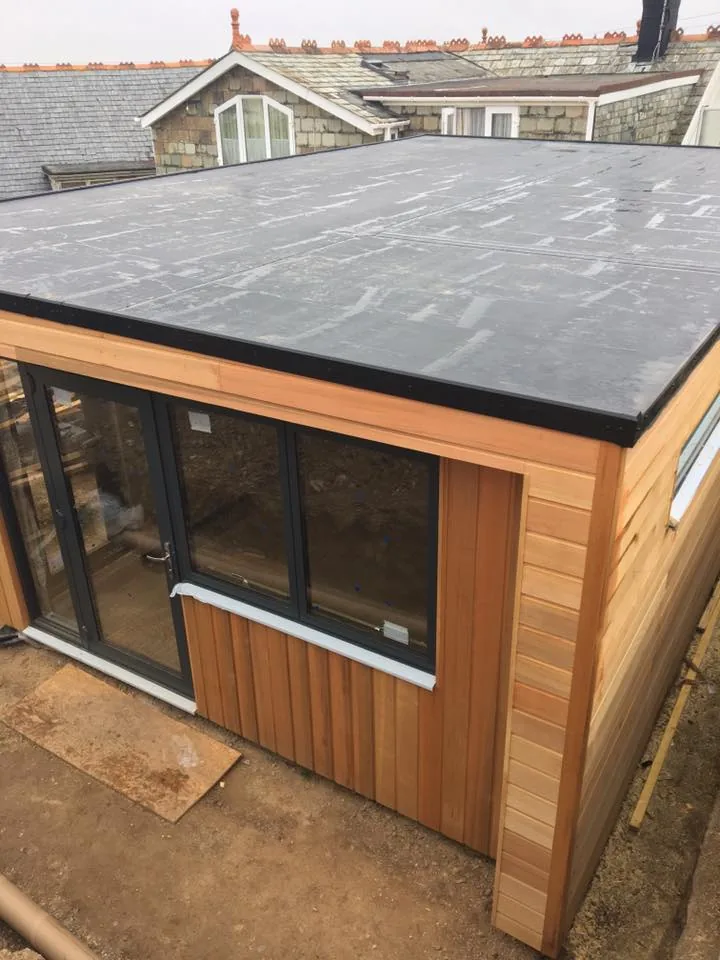
Membrane thickness matters too. Most domestic roofs use 1.14mm or 1.52mm EPDM; the thicker option costs more but resists punctures and foot traffic better, which is worth it on a roof near overhanging trees or one that doubles as access to a chimney. We'll recommend the thickness and fixing method that suits your roof at survey stage, not before.
If your project involves a mix of flat and sloped sections — a dormer with EPDM cheeks sitting against tiled slopes, for example — the pitched sections are a different job entirely. See our pitched roof construction page for how we handle that side of the work.
What Happens During Your Free EPDM Roof Survey?
Every EPDM job starts with a proper look at the roof, not a guess from ground level.
- We carry out a free drone survey of the whole roof, flashings, and junctions — no ladders needed
- You get clear photos showing the exact condition of the existing membrane, deck, and upstands
- We check whether the deck is sound enough to fit straight over, or whether it needs stripping back first
- We recommend the right thickness and fixing method for your roof's size, shape, and shading
- If your existing flat roof is beyond a sensible repair, we'll say so honestly — sometimes the better route is a full new roof installation rather than another recover
- Around The Park and parts of Lenton, we flag anything that needs conservation area sign-off before work starts
- On roofs shaded by mature trees, common around Mapperley and Sherwood, we check drainage falls carefully, since leaf litter and moss build up faster there
- You get a firm quote and an agreed scope before any tool comes out of the van
How We Install an EPDM Roof That Lasts Decades
Most EPDM failures trace back to rushed detailing at the edges, not the membrane itself. Here's how we fit one properly.
- Strip the roof back to a sound deck and replace any rotten timber we find underneath
- Build in enough fall — a minimum slope of 1:40 — so water reaches the outlets instead of sitting still
- Fit insulation as a warm roof buildup wherever the structure allows, which cuts condensation risk inside the roof void
- Roll out the EPDM in the largest single sheet the roof size allows, keeping joints to a minimum
- Bond the membrane fully to the deck with contact adhesive, working out air pockets as we go
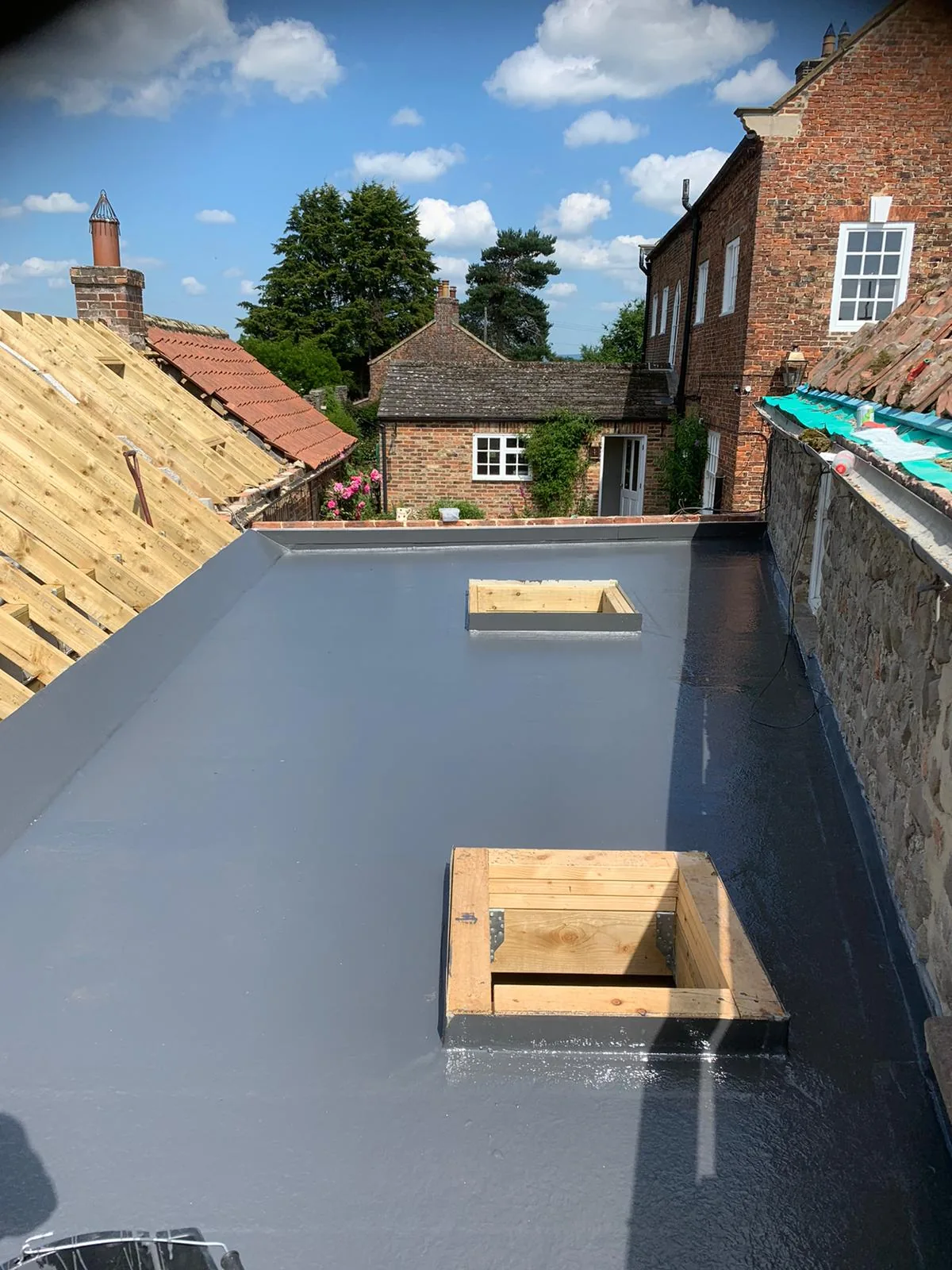
- Dress and bond every edge, upstand, and pipe penetration — the abutment where the membrane meets a wall or parapet is where a rushed job leaks first, so we take particular care with trims and flashing here
- Finish and clear the site, typically 1 to 3 days for a garage or extension roof, weather allowing
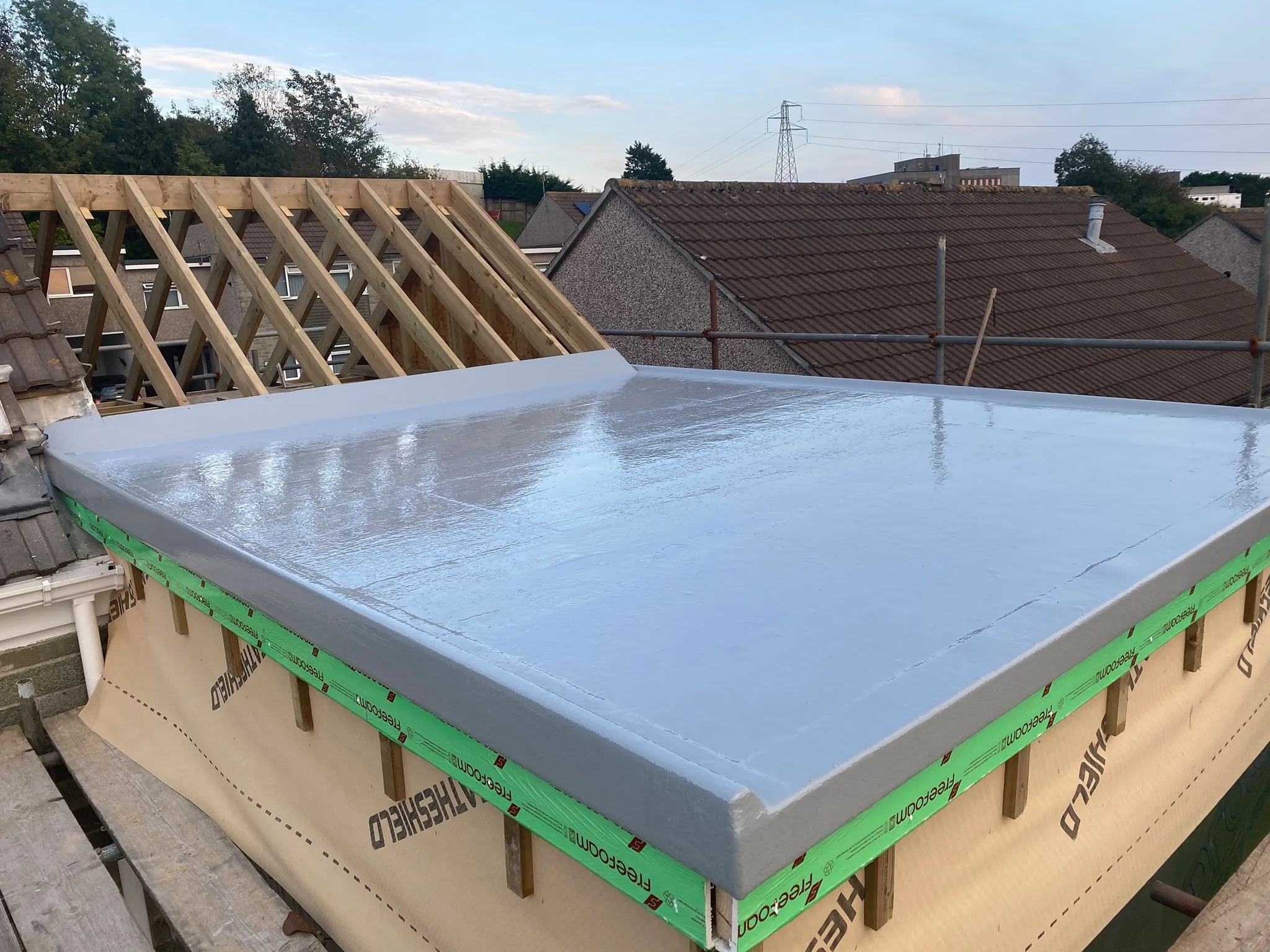
Detailing at abutments and behind cladding is a specialist skill in its own right — the Single Ply Roofing Association's guidance on abutment flashings sets out the standard we work to on every job.
Spot the Warning Signs, Then Check the Work
Whether you're worried about an existing EPDM roof or checking one we've just finished, here's what to look for.
Signs Your EPDM Roof Is Failing
- Standing water still sitting on the roof 48 hours after rain, meaning the fall has dropped somewhere
- Blistering or bubbling in the membrane, a sign air or moisture has got trapped underneath
- A seam or joint edge lifting or peeling back, usually where old adhesive has dried out and failed
- Trims or flashings pulling away from a chimney, parapet, or wall abutment
- Damp smells or a stain spreading across the ceiling below
- Moss or algae building up in shaded corners, common on roofs tucked under trees around Mapperley and Sherwood
How to Check an EPDM Installation Was Done Properly
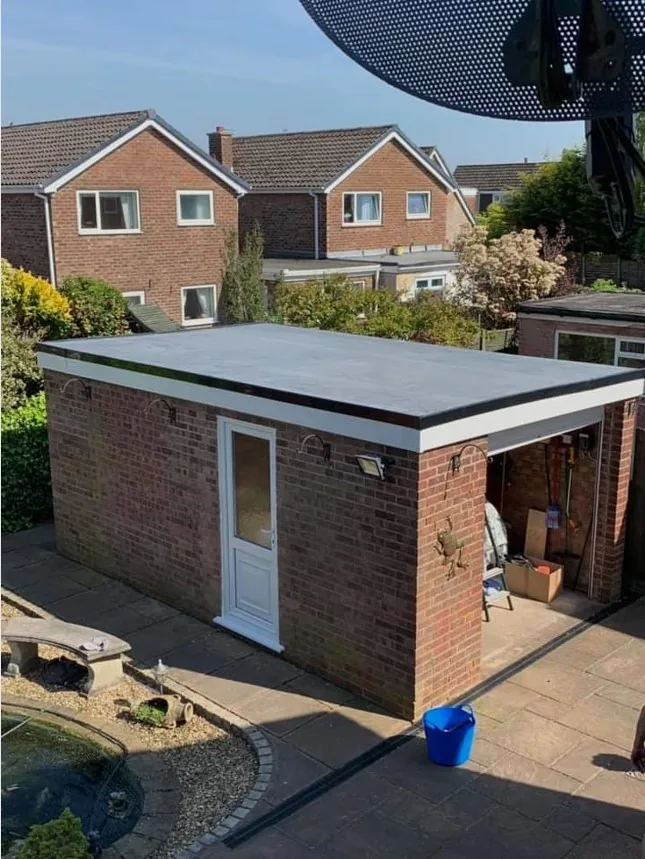
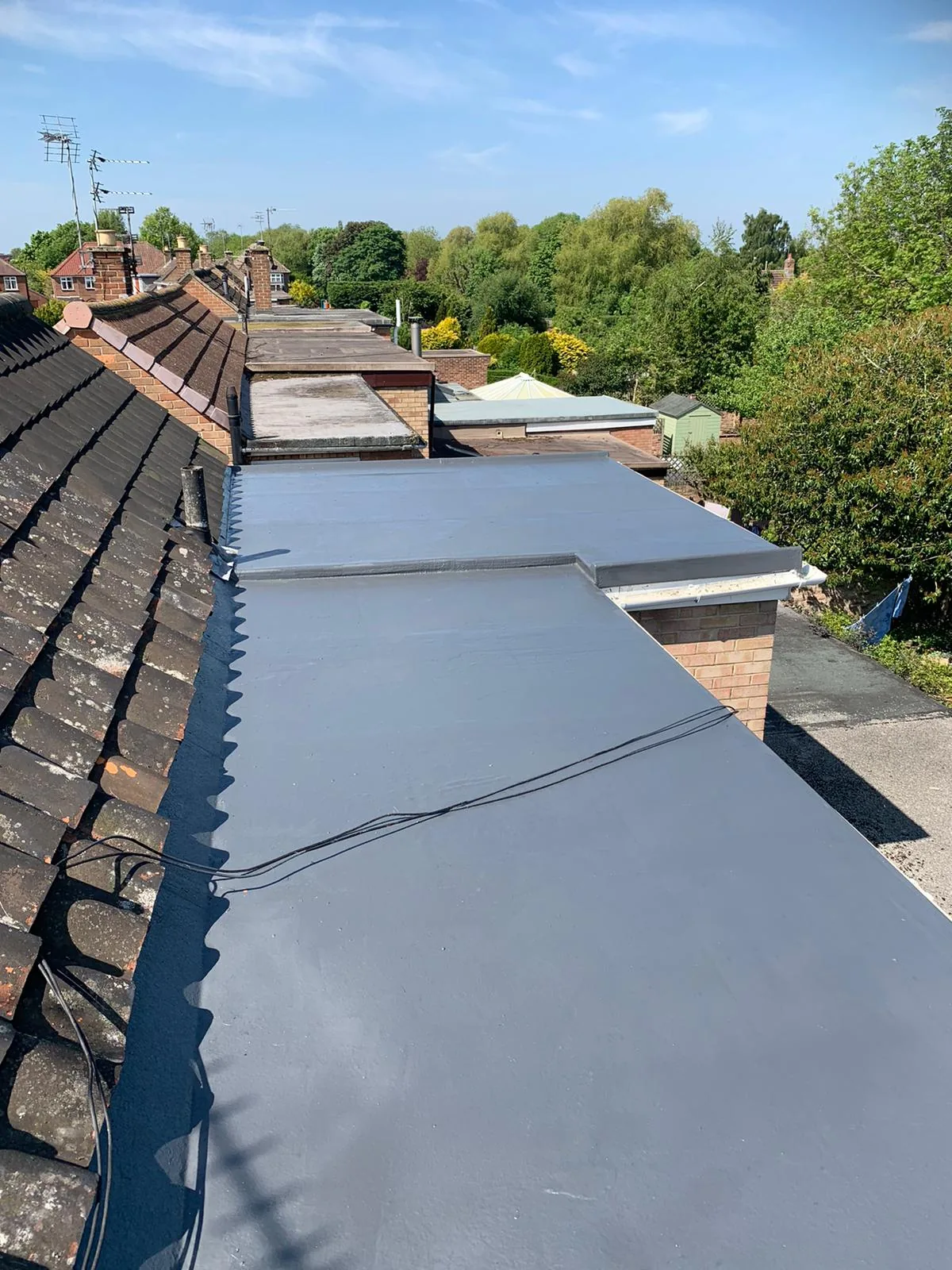
- The membrane should sit taut and flat, with no wrinkles, ripples, or trapped air bubbles underfoot
- Joints, where they exist, should be neatly taped or bonded, not just pressed together
- Edges and upstands should be fully dressed and bonded, not tucked in and left
- Ask to see photos of the deck taken before the membrane went down — proof the timber underneath was sound
- You should receive written details of your guarantee, the membrane thickness used, and confirmation of any Building Regulations notification needed
- We back every EPDM roof we fit with a 10-year workmanship guarantee, in writing, from day one
Keeping Your EPDM Roof Watertight for 30+ Years
EPDM needs far less looking after than felt, but a little attention twice a year keeps it performing for decades.
- Clear leaves and debris from outlets and gutters twice a year, especially after autumn leaf-fall
- Check for standing water a couple of days after heavy rain — if it's still sitting there, the fall has likely dropped and needs a look
- Brush off moss building up in shaded corners before it holds moisture against the membrane
- Trim back overhanging branches that drop debris or scuff the surface, particularly on roofs near mature trees
- Avoid dragging ladders, furniture, or anything sharp-edged across the membrane
- Give the roof a five-minute check after any storm — it catches small damage before it turns into a bigger repair
Cost & Pricing Guidance
UK EPDM rubber roofing pricing for 2025/26 typically runs like this:
- Fully adhered EPDM: £50-£90 per m², materials and labour combined
- Mechanically fixed EPDM: broadly similar per m², though fixings and plates add material cost even where labour is quicker
- Full warm roof buildup with insulation: £120-£180 per m²
- Thicker 1.52mm membrane typically adds 10-20% over standard 1.14mm on material cost alone
A typical garage or single-storey extension roof costs £1,200 to £4,500 all in, depending on size and access. Larger commercial EPDM roofs, or ballasted systems needing a structural check first, cost more and price per project rather than per m².
Repairs are cheaper than full replacement where the deck and most of the membrane are still sound. Minor seam or patch repairs run £150-£400. Larger repairs to flashings, upstands, or a wider damaged area run £400-£800.
What pushes the price up or down: access (scaffolding versus a ladder), the number of upstands and penetrations, whether old covering needs stripping first, and the fixing method the roof calls for.
These are general ranges, not a quote. A fixed price needs a survey — and our drone survey is free, with no obligation.
Comparison Table: EPDM Fitting Methods
| Fitting Method | Typical Lifespan | Best For | Relative Cost |
|---|---|---|---|
| Fully Adhered (glued) | 30-50 years | Extensions, garages, dormers, most domestic roofs | ££ |
| Mechanically Fixed | 25-35 years | Larger roofs, exposed sites, tighter timescales | ££ |
| Ballasted | 30+ years (UV shielded by ballast) | Large flat commercial roofs with strong structural loading | £ material / higher overall due to structural check |
Why Choose Tate & Sons for Your EPDM Roof
EPDM and flat roof work is led by Daniel Oakland, Project Manager and Lead Roofer, who has 20+ years in the trade. He specialises in EPDM, GRP, and standing-seam systems, and runs every flat roof job day to day, from a single garage recover to a full dormer or extension roof.
Tate & Sons was founded by James Tate on a simple idea: find out what's genuinely wrong, use the right materials, and leave something that holds for years, not months. That's why we don't default to the cheapest membrane thickness or fixing method — we specify what your roof actually needs. Read more on our About page.
Our roofers are directly employed, not subcontracted. They hold NVQ Level 2 and 3 qualifications in Roofing Occupations and carry CSCS cards. Every EPDM roof comes with a free drone survey up front and a 10-year workmanship guarantee once the work is finished.
EPDM Rubber Roofing Across Nottingham: Areas We Serve
We fit and repair EPDM roofs right across Greater Nottingham and out into the wider county.
- Nottingham City Centre (NG1)
- The Park (NG1)
- West Bridgford (NG2)
- Sneinton (NG2)
- Wollaton (NG8)
- Lenton (NG7)
- Beeston (NG9)
- Chilwell (NG9)
- Stapleford (NG9)
- Arnold (NG5)
- Sherwood (NG5)
- Mapperley (NG3)
- Carlton (NG4)
- Gedling (NG4)
- Hucknall (NG15)
- Long Eaton (NG10)
- Mansfield (NG18)
- Sutton-in-Ashfield (NG17)
Got Questions?
Your Flat Roofing Questions, Answered Properly
How much does EPDM rubber roofing cost in Nottingham?
A fully adhered EPDM roof typically costs £50-£90 per m², materials and labour combined. A garage or single-storey extension roof usually comes to £1,200-£4,500 all in, depending on size and access. Thicker membrane and a full warm roof buildup with insulation push the price toward £120-£180 per m². A free drone survey gives you an exact figure rather than a rough guide.
How long does an EPDM roof actually last?
A properly fitted EPDM roof typically lasts 30 to 50 years, making it one of the longest-lasting flat roof coverings available. Lifespan depends heavily on installation quality — a rushed job with poor edge detailing can fail in a fraction of that time, whatever the membrane's rated life. Thicker membrane and a fully adhered fixing method generally outlast thinner, mechanically fixed alternatives. Regular clearing of debris and outlets also adds years to the working life.
What does EPDM stand for and what's it made from?
EPDM stands for Ethylene Propylene Diene Monomer, a synthetic rubber compound. It's manufactured as large, flexible sheets that get cut to fit a roof in as few pieces as possible, ideally one. The rubber flexes with heat and cold instead of cracking, which is why it copes so well with the East Midlands' mix of hot summers and hard frosts. It's also resistant to UV, ozone, and standing water without breaking down.
Is EPDM better than felt or GRP for a flat roof?
EPDM generally outlasts both, with a working life of 30-50 years against felt's 10-20 years and GRP's 25-35 years. Felt is cheaper upfront but needs replacing far sooner and has more joints that can fail. GRP fibreglass is more walk-on-friendly and suits terraces or balconies, but EPDM needs less maintenance and handles a moving deck better. The right choice depends on your budget, your roof's size, and whether you need it to take foot traffic.
Why is my EPDM roof leaking?
Most EPDM leaks trace back to failed adhesive at a seam or edge, not a puncture in the rubber sheet itself. Older glued joints and flashing adhesive can dry out and weaken after 8-11 years, especially where they've had heavy UV exposure. Loose trims, lifted edges around a chimney or parapet, and blocked outlets that let water pool are the other common causes. A patch repair often fixes it if the deck underneath is still sound, but it's worth having a proper look rather than guessing.
Can an EPDM roof be repaired, or does it need replacing?
A sound deck with isolated damage — a lifted seam, a failed trim, a small puncture — can usually be repaired, which is the cheaper route. Widespread blistering, a membrane well past its expected life, or rotten decking underneath usually points to full replacement instead. Our free drone survey tells you honestly which category your roof falls into, with photos to back it up. Patch repairs typically run £150-£400, while more extensive flashing or trim repairs run £400-£800.
Does an EPDM roof need much maintenance?
EPDM needs far less maintenance than felt, but it isn't entirely maintenance-free. Clearing outlets and gutters twice a year, checking for standing water after heavy rain, and brushing off moss in shaded corners keeps small issues from growing. A five-minute check after any severe storm catches damage early. Left completely unchecked for years, even EPDM will develop problems at the edges and trims eventually.
Can you fit solar panels on an EPDM roof?
Yes, EPDM roofs can carry solar panels, but the fixing method needs planning at survey stage rather than bolted on as an afterthought. Panels are usually mounted on non-penetrative ballasted frames or bonded stands designed specifically for single-ply membranes, so the waterproofing itself isn't pierced. Getting this wrong by drilling straight through the membrane is one of the most common causes of a leak on an otherwise sound roof. Tell us early if solar is part of the plan, so we specify a membrane and mounting system built for it from day one.
Book Your Free Drone Roof Survey Today
See exactly what your roof needs before any work starts. No ladders, no pressure — just a clear picture from a local Nottingham team.
A tired roof only gets worse as water works deeper into the deck and timber beneath it. A quick, free drone survey today tells you exactly where you stand — and often the fix is smaller and cheaper than you feared. Book now, get an honest quote, and protect your home before the next East Midlands downpour finds the weak spot.
📍 57 Cyril Avenue, Nottingham, NG8 5BA
📞 0115 647 4455
Call the Nottingham team today on 0115 647 4455, or request your free drone survey online. We’re already working across your area.
Get in Touch
Tate & Sons Roofing — Nottingham
57 Cyril Avenue, Nottingham, NG8 5BA
📞 0115 647 4455
✉️ [email protected]