
🏠 Trusted Local Roofers
Emergency Roof Repair Nottingham
Water coming through a ceiling doesn't wait for a convenient afternoon. It picks the middle of a storm, a Sunday night, or the week you're already stretched thin. As a roofing contractor working right across the city, we deal with genuine roof emergencies every week — leaks, storm damage, and roofs that have simply given up. This page explains what actually counts as an emergency, what we do about it fast, and what it costs.
- Fully Insured
- 10-Year Guarantee
- 5-Star Rated
Quick Free Estimate - No Obligation
We're not just roofers – we're your neighbours.
Fully Insured • Response within 15 mins
🔒 Your details are safe with us. No spam, ever.
What Counts as a Roofing Emergency? (And What Can Wait)
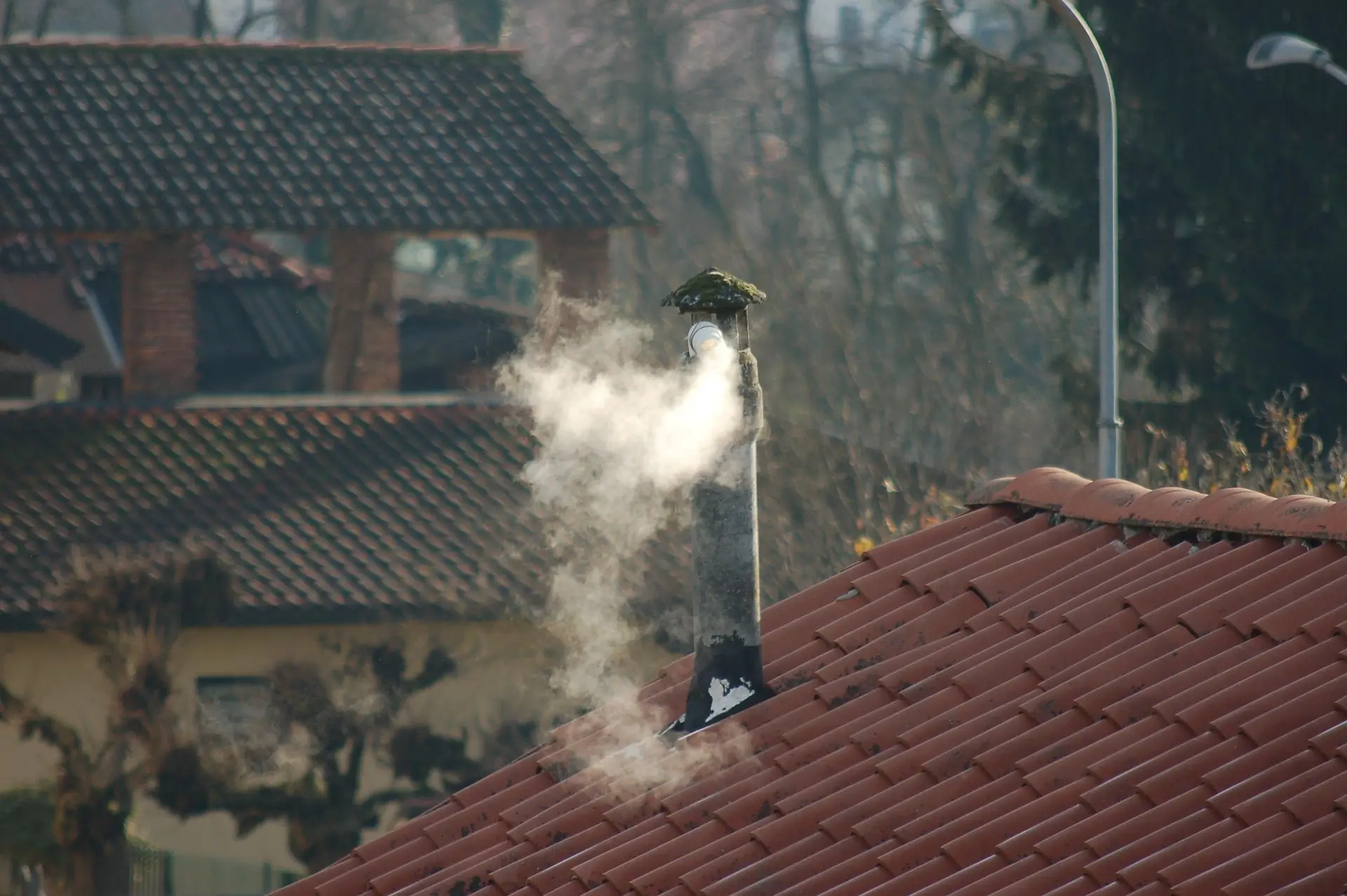
A roofing emergency is any roof problem letting water, wind, or debris into your home right now, or putting someone's safety at risk. That includes active leaks during rain, a hole from a fallen branch, tiles ripped off in a storm, or a chimney stack that's come loose. It does not include a few missing tiles on a dry roof, slow staining that's been there for months, or general wear you've been meaning to look at. The first case needs a same-day callout. The second can usually wait for a scheduled repair.
Here's a quick way to tell the two apart:
This Is an Emergency
- Water actively dripping or running inside the property
- A visible hole, gap, or missing section of roof covering
- Tiles, slates, or flashing lying in the garden or on the pavement after wind
- A chimney stack, pot, or parapet that looks loose or has partly come away
- A ceiling that's bulging, sagging, or has collapsed in one spot
- Storm or fallen-tree damage that's opened up the roof structure
This Can Wait for a Scheduled Visit
- A few cracked tiles with no sign of water getting through underneath
- Moss or algae buildup on an otherwise sound roof
- Old staining on a ceiling that hasn't changed in months
- Gutters that need clearing but aren't overflowing onto walls
- General wear you've noticed but that isn't letting water in yet
If you're not sure which list your roof falls into, call us. We'd rather talk you through it on the phone than have you wait out a genuine emergency, or pay a callout fee for something that could have been booked in normally.
Emergency Patch or Full Repair? How We Decide on Site
An emergency callout has one job: stop the water and make the roof safe. It is not the moment to decide on a full repair or replacement — that decision needs daylight, a proper look at the roof, and time to think, none of which you have mid-storm. So every emergency visit follows the same logic.
- We stop water getting in, using a tarpaulin, temporary flashing, or a like-for-like tile and slate swap, whichever suits the damage
- We make anything loose or hanging safe, so it can't fall or cause further damage
- We tell you honestly whether that temporary fix is likely to hold as a longer-term repair, or whether it's a stopgap only
- If the roof needs more than a patch, we book a follow-up visit in daylight to scope the full repair properly
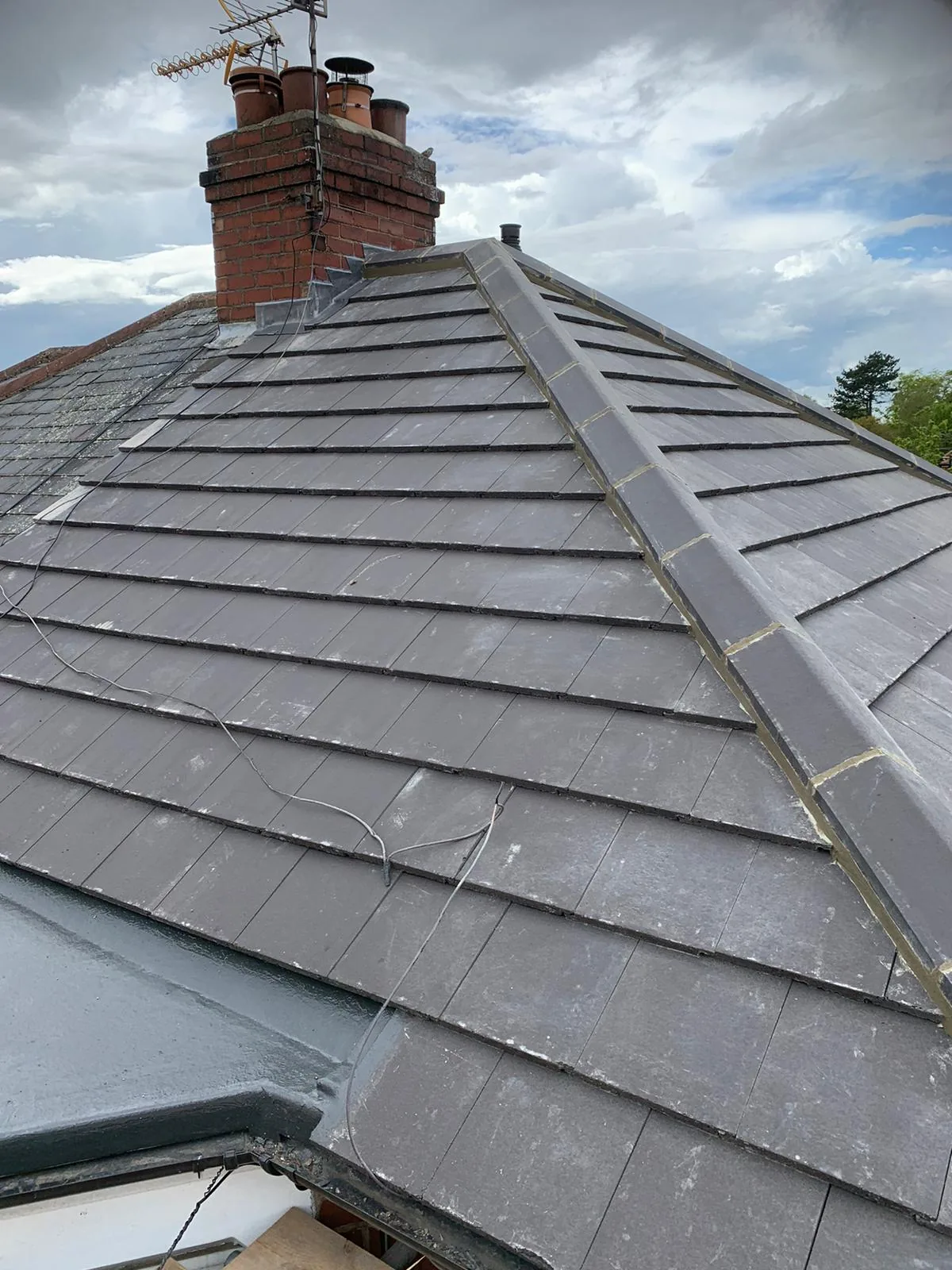
Roofs that keep needing emergency patches usually have an underlying problem worth sorting properly. If that's the case for you, our roof repairs and restorations service covers the permanent fix once the immediate danger is dealt with, from re-bedding a ridge to replacing a section of covering that's past patching. We'll always tell you which situation you're in rather than leaving you guessing.
What Happens the Moment You Call Tate & Sons
Getting a clear answer fast matters more than anything else when your roof is leaking. Here's what happens when you ring us.
- You speak to a real person at our Cyril Avenue office, not a call centre reading a script
- We ask what's happening, where the water's coming through, and how bad it looks, so we send the right roofer with the right materials first time
- We give you honest advice on protecting the inside of your home while you wait — buckets, moving furniture, that sort of thing
- We tell you a realistic arrival window, and we call if anything changes
- Our roofer arrives with tarpaulins, temporary flashing, and common tile and slate sizes already in the van
- If conditions on site are too dangerous to work in — a live electrical hazard, or wind strong enough to make roof access unsafe — we'll say so and explain the plan instead of pretending otherwise
Every roofer we send is directly employed, not a subcontractor picked up for the day. They know our standards because they're trained to them, not because they've been told to behave for one job.
How We Stop the Leak and Secure Your Roof Fast
Once we're on site, the priority is a dry, safe roof — not a showpiece finish. That comes later if it's needed.
- We find where the water is actually entering, which is often higher up or further along than where it's showing inside
- We clear away any broken tiles, slates, or debris that could cause further damage or injury
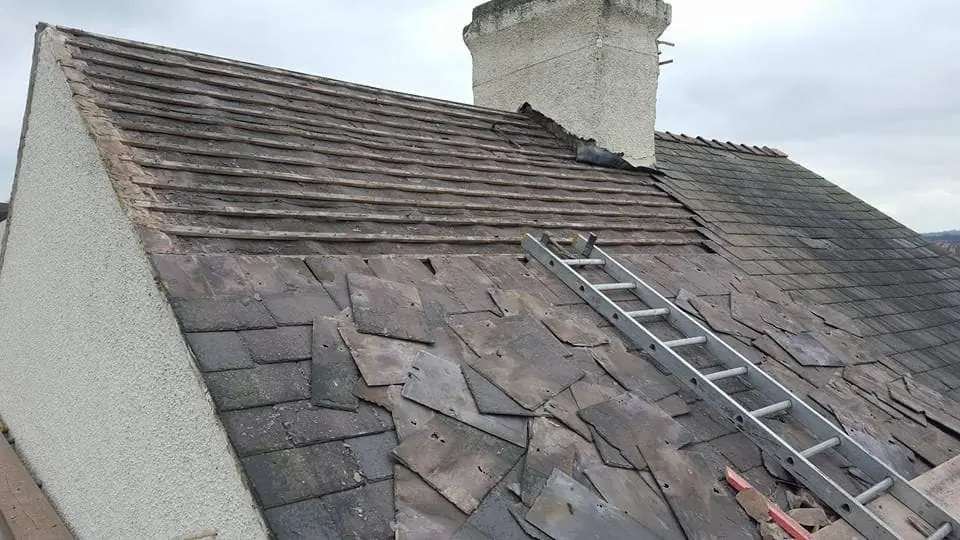
- We fit a heavy-duty tarpaulin or temporary membrane over the affected area, battened and weighted so it holds in wind, not just draped over
- Where the damage is a straightforward tile, slate, or flashing failure, we carry out a like-for-like repair on the spot rather than a temporary cover
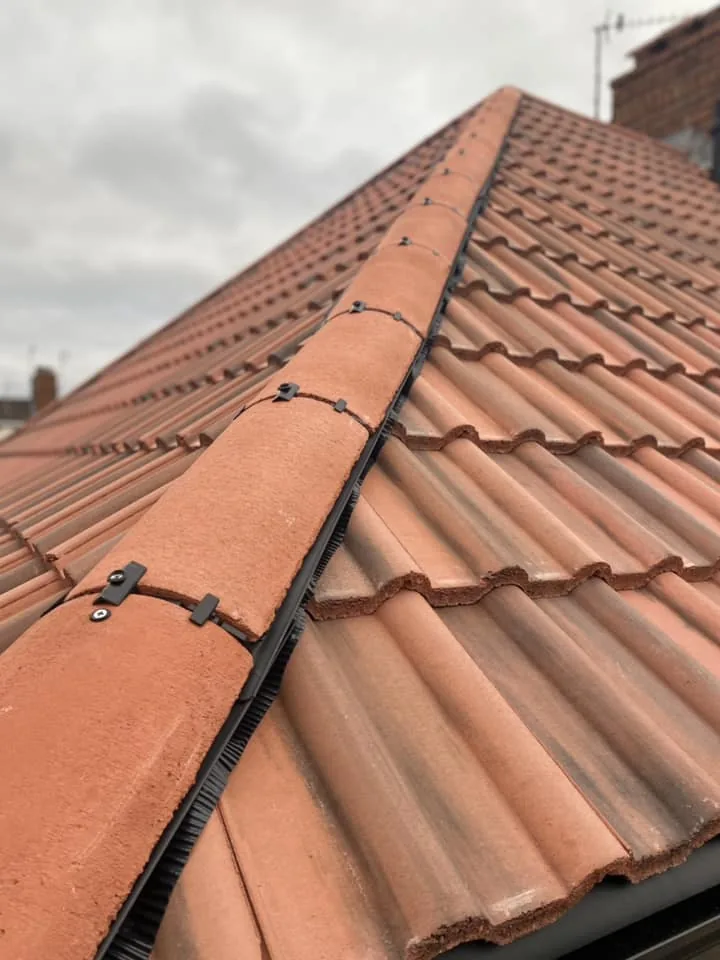
- We check the surrounding area for related damage — a slipped ridge tile often means the ones either side are loose too
- We photograph the damage and the completed work, which you can pass straight to your insurer if you're making a claim
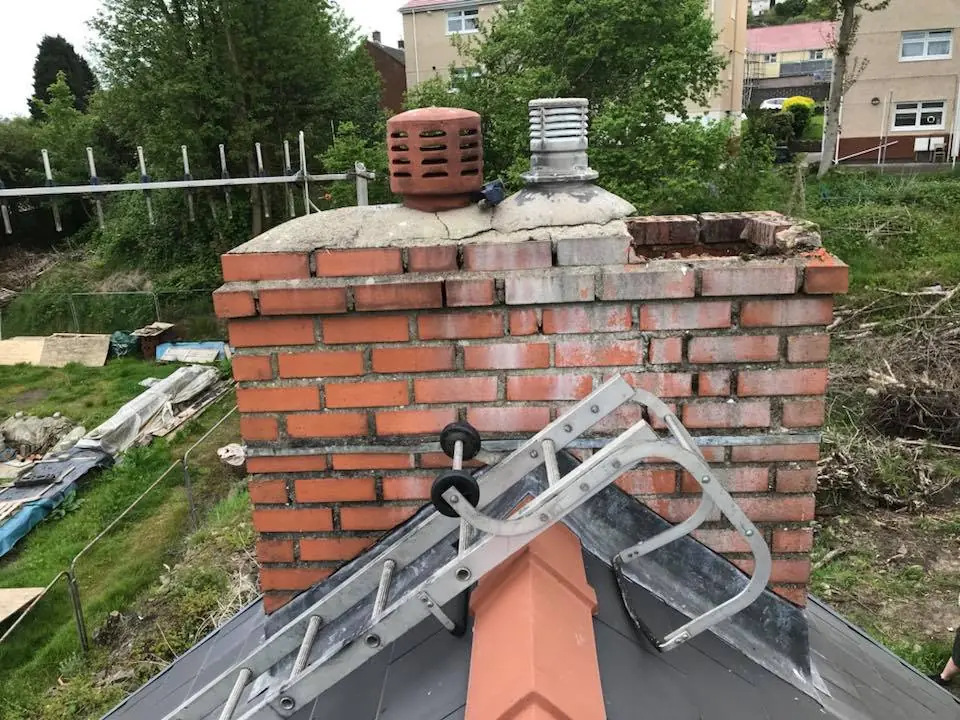
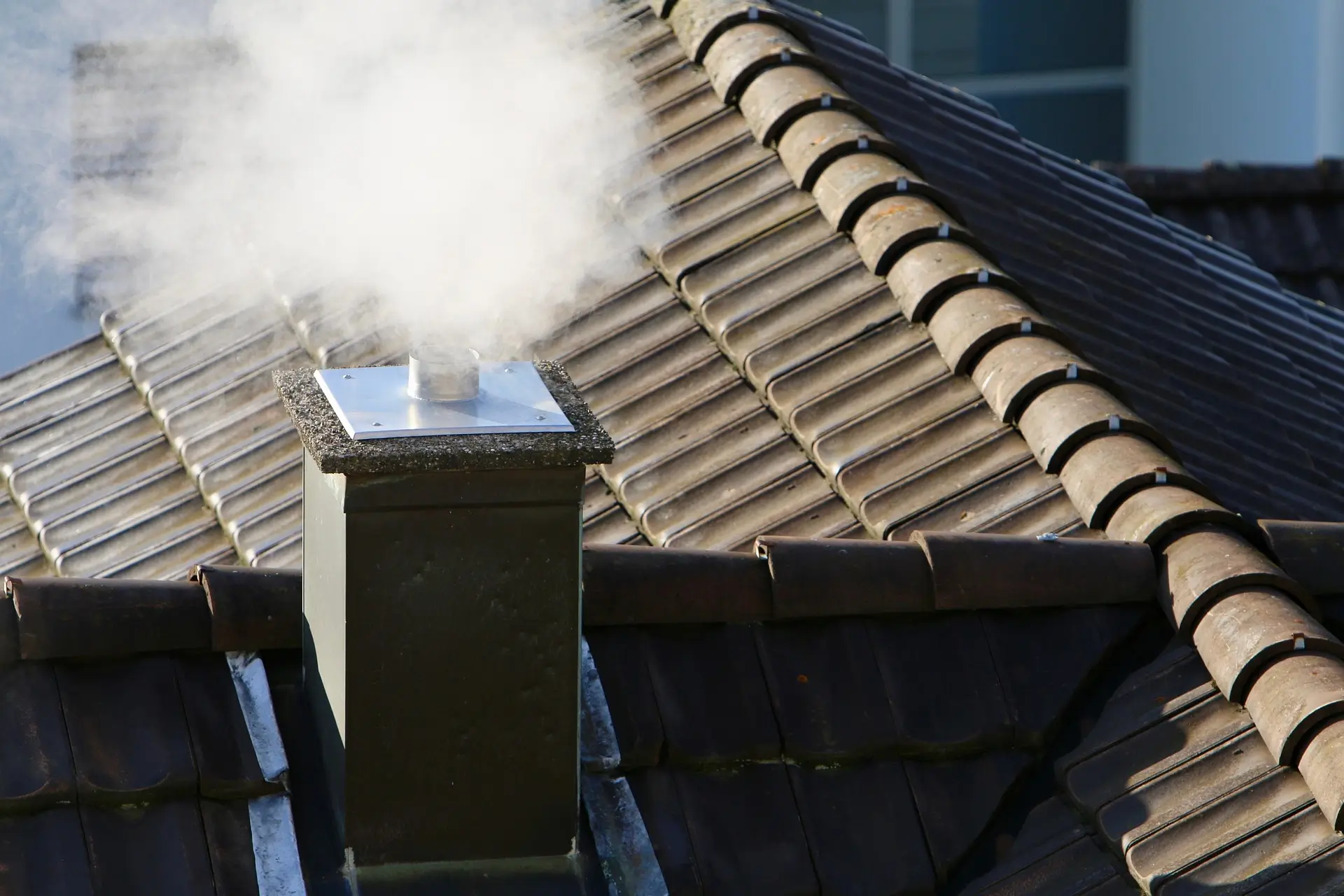
Wind speed genuinely limits what any roofer can safely do, and a firm that tells you otherwise is cutting corners with someone's safety. The National Federation of Roofing Contractors' guidance on roofing in windy conditions sets out the wind speeds at which roof access stops being practical, and we work to that standard, not around it. If your emergency involves a flat roof — a felt or EPDM covering that's split or ponding after a storm — the repair approach differs from pitched tile work, and our flat roof repair service covers that in more depth.
How to Check Your Emergency Repair Was Done Properly
A rushed emergency fix should still meet a basic standard. Here's what to look for once the roofer has gone.
- A tarpaulin should be fully battened or weighted down at every edge, with no flapping corners a gust could catch
- Any temporary repair should extend well past the damaged area, not stop exactly at its edge
- The roofer should tell you plainly whether the fix is temporary or permanent, and roughly how long it should hold
- You should get photos of the damage and the finished work, useful for insurance and for your own records
- Debris and broken materials should be cleared from your garden, drive, and gutters before the roofer leaves
- If a permanent repair is still needed, you should leave with a clear next step, not a vague promise to call back
Any permanent repair carried out during or after an emergency callout carries our 10-year workmanship guarantee, in writing. A temporary tarpaulin is exactly that — temporary — and we'll always say so rather than let you assume it's a finished job.
Stopping the Next Emergency Before It Starts
Most roof emergencies have a warning stage that gets missed. A little attention twice a year catches it.
- Check the roof from ground level after any named storm, looking for slipped, cracked, or missing tiles
- Clear gutters and downpipes twice a year, since a blocked gutter forces water back up under the roof edge
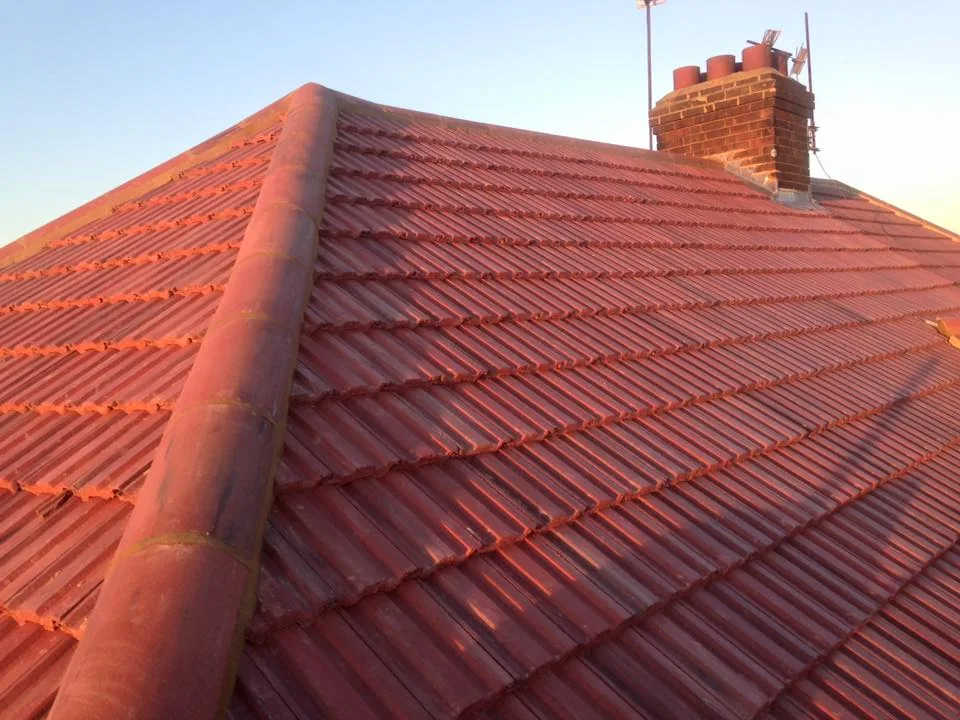
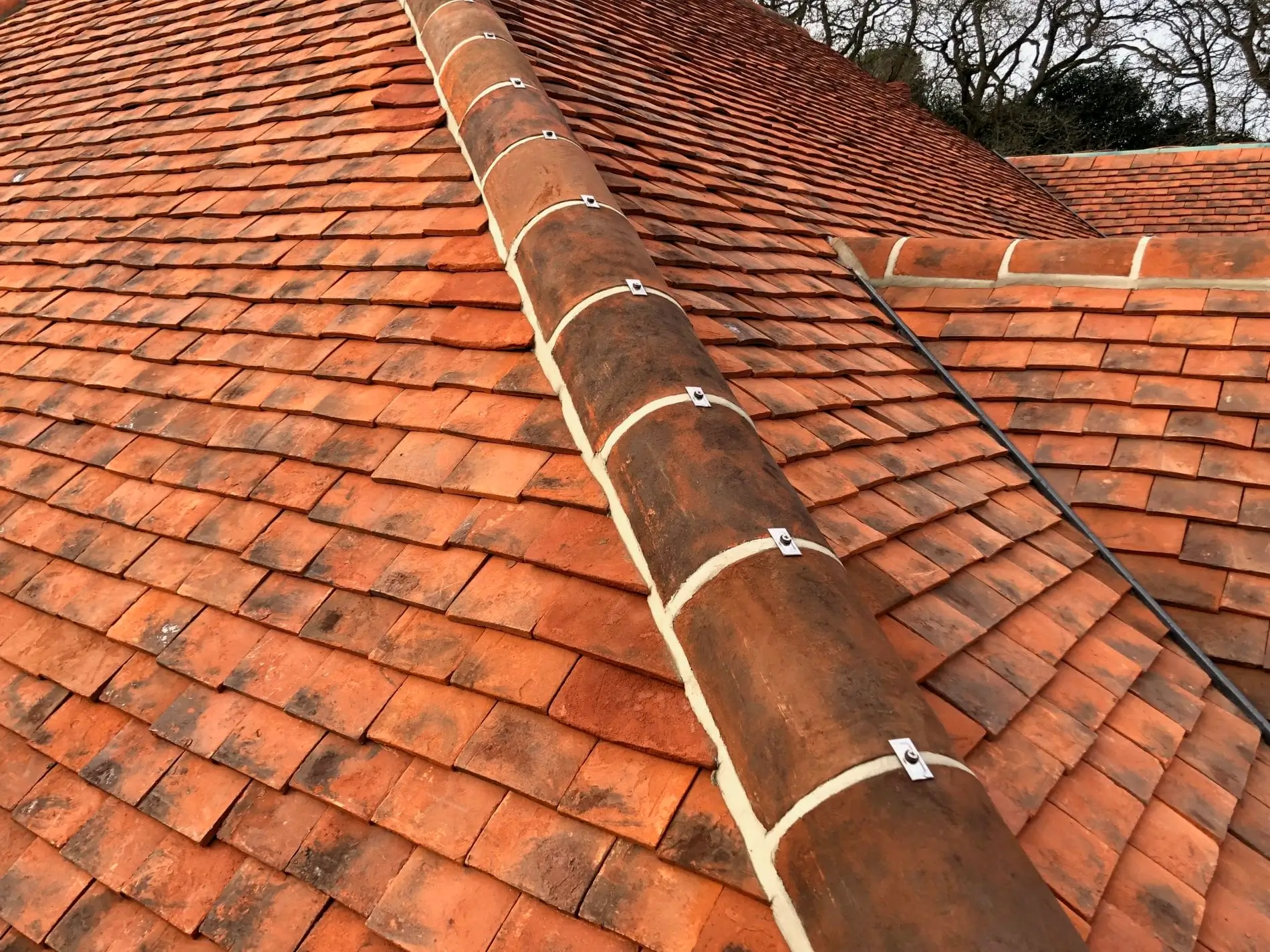
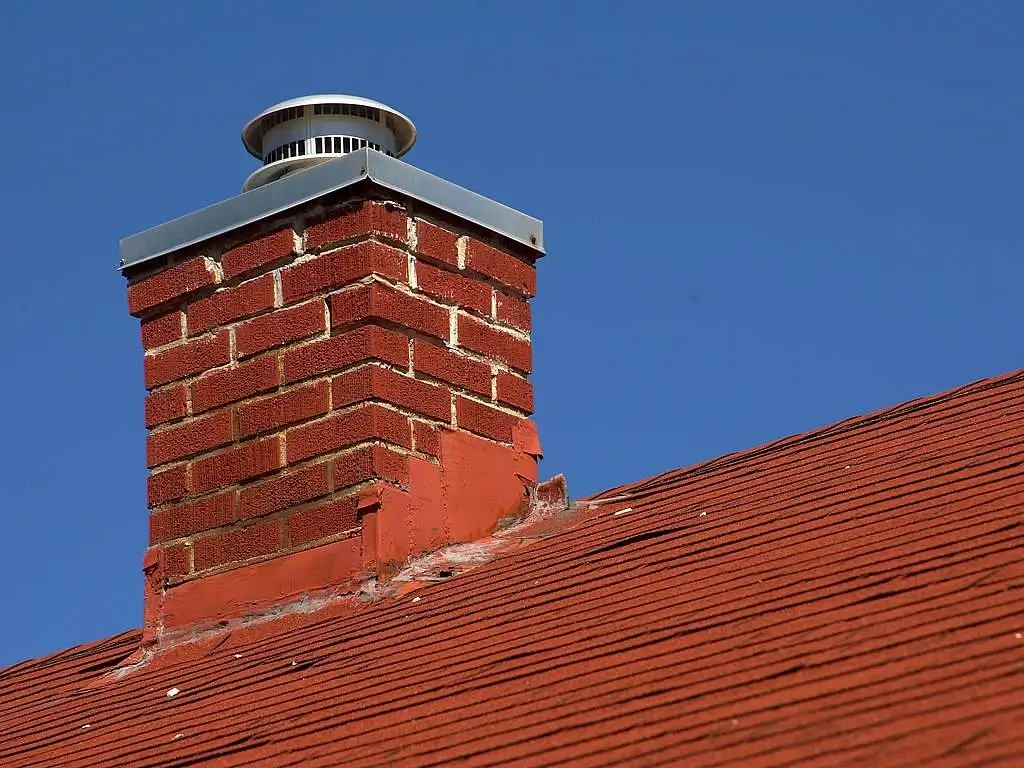
- Look at your chimney stack and pointing once a year — loose mortar is often the first sign of a stack that's about to fail
- Trim back branches overhanging the roof, which cause the fallen-branch damage we see most after every storm
- Book a free drone survey every couple of years, so small problems get caught while they're still small
- Keep your roof's paperwork — guarantees, past repair photos, and survey reports — together so any future problem is quicker to diagnose
Cost & Pricing Guidance
Emergency roof repair pricing across the UK for 2025/26 typically runs like this:
- Standard callout fee (daytime): £150-£300, often credited against the repair cost
- Minor emergency repair (single tile, slate, or small flashing fix): £250-£400
- Leak repair during heavy rain or an active storm: £300-£800
- Storm-damaged tiles or a larger section of covering: £300-£1,000
- Flat roof emergency repair (split membrane, ponding): £350-£1,200
- Structural or major damage, such as a partly exposed roof: £800-£1,500+
- Out-of-hours premium (evenings, weekends, overnight): typically an extra £100-£300 on top of the daytime rate
These are general ranges, not a quote. A fixed price needs a survey — and once your roof is safe and dry, our follow-up drone survey to scope any permanent repair is free, with no obligation.
Emergency work generally costs more than a scheduled repair, often 20-50% more once out-of-hours labour and urgent materials sourcing are factored in. What pushes the price up or down: the time of day and day of the week, roof access (a straightforward pitched roof versus scaffolding or a difficult angle), how much of the covering is damaged, and whether the fix is a like-for-like repair or a full tarpaulin cover pending a later visit.
Comparison Table: Emergency Repair Options
| Option | Typical Duration | Best For | Relative Cost |
|---|---|---|---|
| Tarpaulin cover | Days to a few weeks | Stopping water fast until a full repair can be scoped in daylight | £ (lowest) |
| Like-for-like emergency patch | Months to several years | Single slipped tile, slate, or small flashing failure | ££ |
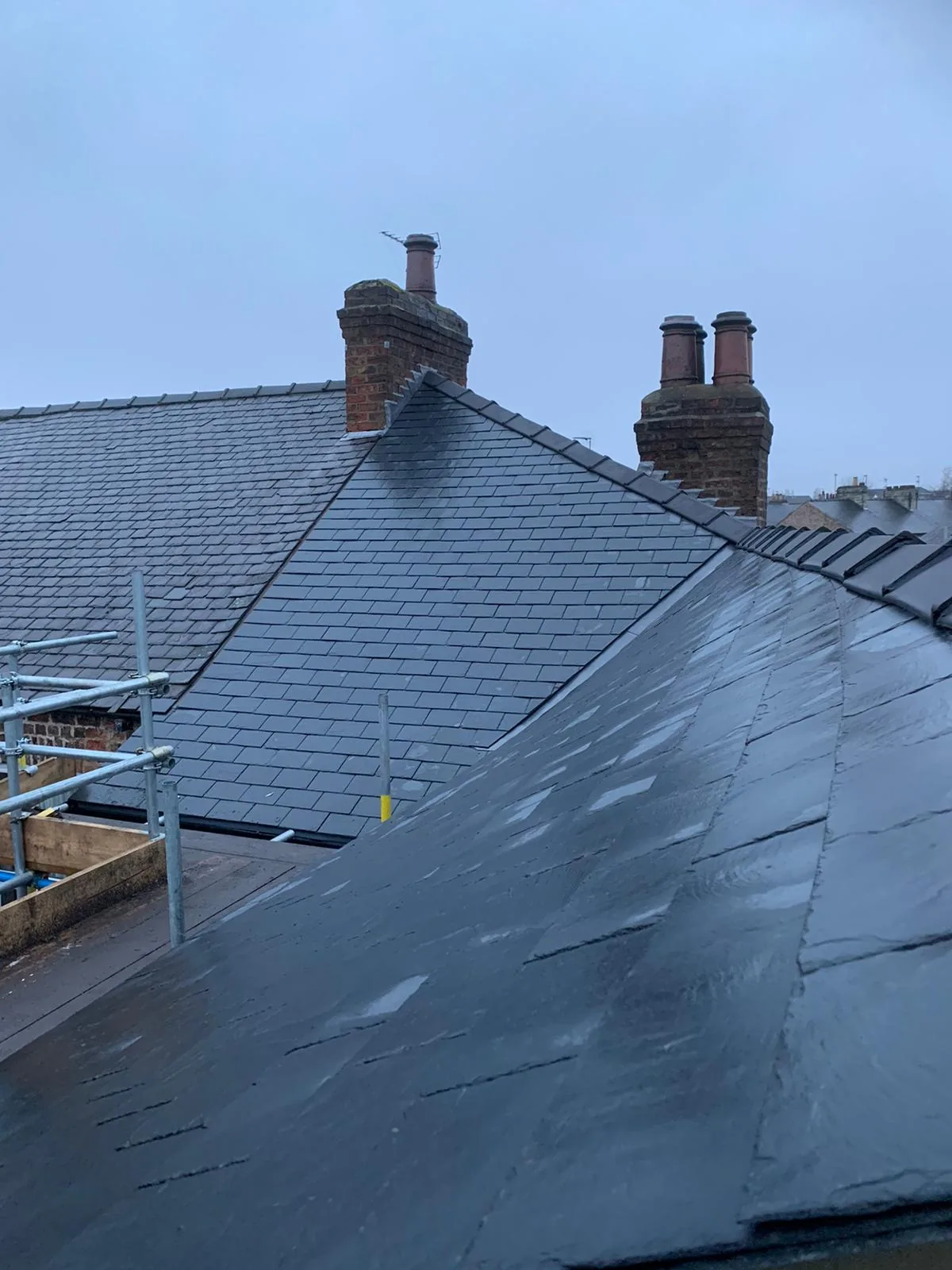
| Permanent section repair | 10+ years, guaranteed | Storm damage covering several tiles, a valley, or a chimney junction | £££ |
| Full re-roof or replacement | 30-50+ years depending on material | A roof past patching, or repeated emergencies on the same area | £££ (highest) |
Why Choose Tate & Sons for Emergency Roof Repair
Emergency callouts are led on site by Daniel Oakland, Project Manager and Lead Roofer, who has 20+ years in the trade. He's dealt with enough 2am phone calls and storm-damaged roofs to know that speed without a proper diagnosis just means a second callout later, so every emergency visit still gets a genuine look at what's actually gone wrong, not just a quick cover-up.
Tate & Sons was founded by James Tate on a simple idea: find out what's genuinely wrong, use the right materials, and leave something that holds for years, not months. That applies just as much to a 2am tarpaulin as it does to a full re-roof — a rushed job that fails again next week helps nobody. Read more on our About page.
Our roofers are directly employed, not subcontracted. They hold NVQ Level 2 and 3 qualifications in Roofing Occupations and carry CSCS cards. Any permanent emergency repair comes with our 10-year workmanship guarantee, and our follow-up drone survey to scope further work is always free.
Emergency Roof Repair Across Nottingham: Areas We Serve
We respond to roof emergencies right across Greater Nottingham and out into the wider county, day or night.
- Nottingham City Centre (NG1)
- The Park (NG1)
- West Bridgford (NG2)
- Sneinton (NG2)
- Wollaton (NG8)
- Lenton (NG7)
- Beeston (NG9)
- Chilwell (NG9)
- Stapleford (NG9)
- Arnold (NG5)
- Sherwood (NG5)
- Mapperley (NG3)
- Carlton (NG4)
- Gedling (NG4)
- Hucknall (NG15)
- Long Eaton (NG10)
- Mansfield (NG18)
- Sutton-in-Ashfield (NG17)
Got Questions?
Your Flat Roofing Questions, Answered Properly
What actually counts as an emergency roof repair?
An emergency roof repair is any repair needed to stop water, wind, or debris getting into your home right now, or to make a dangerous roof safe. That covers active leaks, storm-torn tiles, a hole from a fallen branch, or a loose chimney stack. It does not cover general wear, dry cracked tiles, or staining that's been there for months. If water is currently getting in or something is at risk of falling, treat it as an emergency and call.
How much does emergency roof repair cost in the UK?
Most emergency roof repairs in the UK cost between £250 and £1,500, depending on the damage and the time of day. A minor tile or flashing fix sits at the lower end, around £250-£400, while storm damage across a larger area or structural risk runs £800-£1,500 or more. Out-of-hours callouts, evenings, weekends, and overnight, typically add £100-£300 on top of daytime pricing. A tarpaulin cover to stop water fast is usually the cheapest immediate option, with the permanent repair costed separately once it's daylight.
How quickly can you get someone out to a roof emergency in Nottingham?
We aim to reach genuine emergencies in Nottingham and the surrounding areas the same day, and often within a few hours depending on how far out you are and the weather at the time. Active leaks and storm damage get priority over routine bookings. We'll give you a realistic arrival window on the phone rather than a vague "sometime today," and we call if anything changes. Severe weather across the whole city can stretch response times, since every roofer is dealing with the same storm at once.
Can I put a tarpaulin over the hole myself while I wait?
You can protect the inside of your home with buckets and by moving belongings away from the leak, but going onto the roof yourself is not worth the risk. Roofs are more dangerous than they look, especially wet, tiled, or in wind, and a fall causes far more damage than a leaking ceiling ever will. If you must do something outside, only work from ground level, moving debris that's already fallen rather than climbing up. Leave anything involving roof access to a professional with the right equipment and training.
Will my home insurance cover emergency roof repair costs?
Most UK home insurance policies cover sudden, accidental damage such as storm or fallen-tree damage, but not gradual wear or neglect. Insurers generally expect emergency work to be carried out by a competent, insured contractor, and delaying repairs or attempting DIY fixes can put a claim at risk. Keep photos of the damage and the repair, along with your invoice, since most insurers ask for both when you claim. We provide photo evidence as standard with every emergency callout for exactly this reason.
What's the difference between an emergency repair and a normal roof repair booking?
An emergency repair happens fast, often same-day, and its only goal is to stop water getting in and make the roof safe. A normal repair booking is scheduled in advance, assessed properly in daylight, and usually costs less because there's no urgency premium or out-of-hours labour involved. Many emergency visits are followed by a normal booking to finish the job properly once the immediate danger has passed. If your roof isn't actively letting water in, a scheduled repair is almost always the cheaper, better-planned route.
Does calling an emergency roofer affect the workmanship guarantee I get afterwards?
No, as long as the contractor is competent and the work is done properly, an emergency callout doesn't change what guarantee you're entitled to. A temporary tarpaulin isn't a finished repair and carries no workmanship guarantee, because it isn't meant to be permanent. Once we carry out a permanent fix, whether that's during the emergency visit or a follow-up, it comes with our standard 10-year workmanship guarantee in writing. Ask any roofer directly whether what they've just fitted is temporary or guaranteed, since the two get confused surprisingly often.
What happens if another storm hits before the permanent repair is scheduled?
A properly fitted tarpaulin, battened and weighted at every edge, should hold through further rain and moderate wind while you wait for the permanent repair. If a second storm causes new damage or the tarpaulin shifts, call us again straight away rather than waiting for the original appointment. We prioritise repeat emergencies on the same property, since a second failure usually means the temporary fix needs adjusting or the permanent repair needs bringing forward. Keep an eye on the affected area after any further bad weather until the permanent fix is done.
Book Your Free Drone Roof Survey Today
See exactly what your roof needs before any work starts. No ladders, no pressure — just a clear picture from a local Nottingham team.
A tired roof only gets worse as water works deeper into the deck and timber beneath it. A quick, free drone survey today tells you exactly where you stand — and often the fix is smaller and cheaper than you feared. Book now, get an honest quote, and protect your home before the next East Midlands downpour finds the weak spot.
📍 57 Cyril Avenue, Nottingham, NG8 5BA
📞 0115 647 4455
Call the Nottingham team today on 0115 647 4455, or request your free drone survey online. We’re already working across your area.
Get in Touch
Tate & Sons Roofing — Nottingham
57 Cyril Avenue, Nottingham, NG8 5BA
📞 0115 647 4455
✉️ [email protected]