
🏠 Trusted Local Roofers
Dry Verge System Hinckley
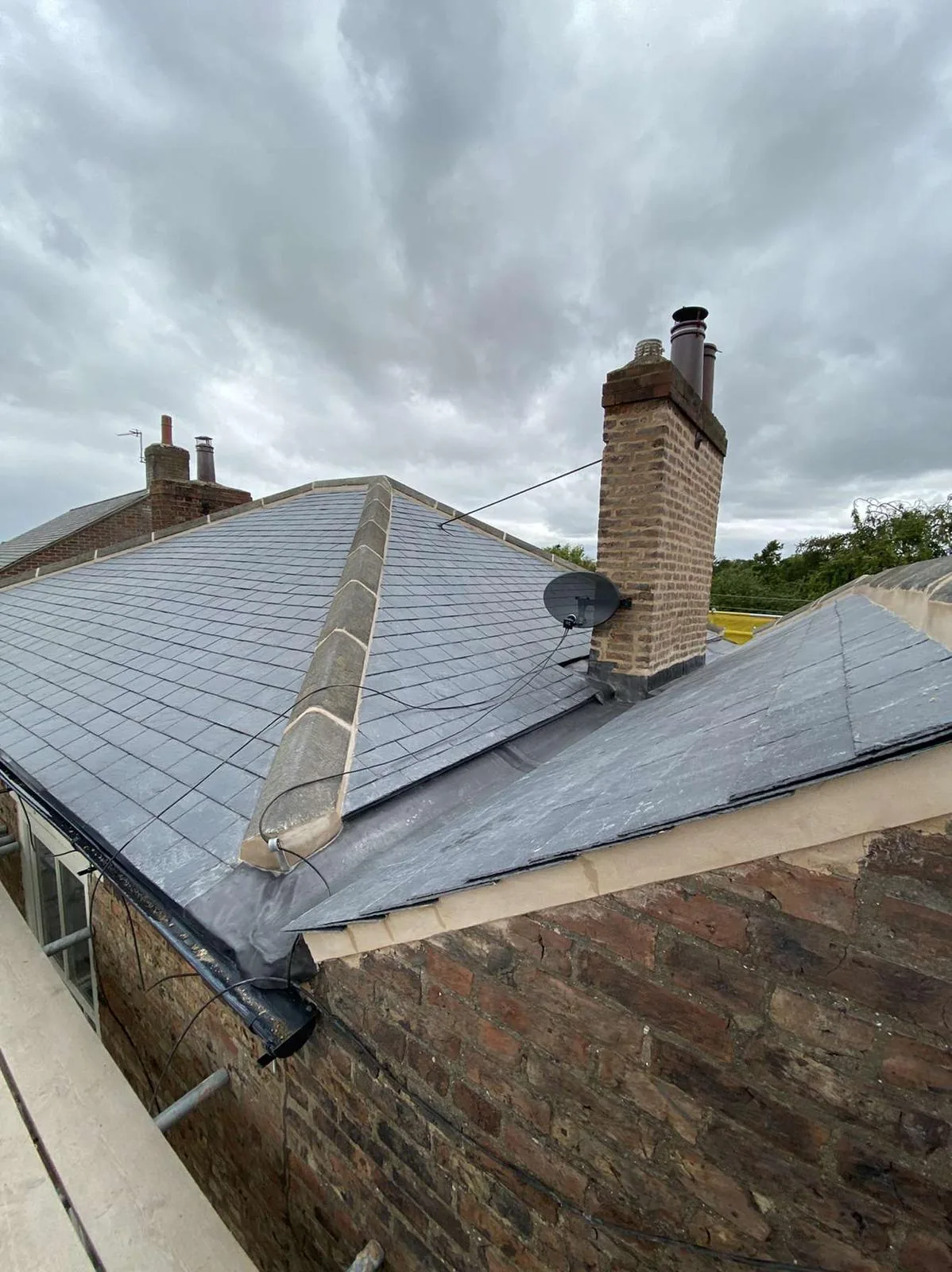
Along the old Watling Street corridor, wind gets under loose or cracked verge tiles long before anyone notices a problem indoors. A dry verge system in Hinckley swaps that crumbling mortar line for a mechanically fixed plastic or aluminium capping that clips straight onto your battens and tiles, so wind cannot lift the edge and water cannot track in behind it. Tate & Sons Roofing fits dry verge systems across Hinckley and the wider borough, from a single gable-end repair to a full verge replacement on an exposed roof out near Higham on the Hill.
This page walks you through the warning signs a verge is failing, how a dry verge system compares with a mortar repair, what fitting one actually involves, and real cost ranges for Hinckley properties. Start with a free drone survey and a written quote before anything is agreed — no scaffold just to take a look, and no charge either way. Verge work is one part of the wider service we offer as a roofing contractor across Hinckley.
- Fully Insured
- 10-Year Guarantee
- 5-Star Rated
Quick Free Estimate - No Obligation
We're not just roofers – we're your neighbours.
Fully Insured • Response within 15 mins
🔒 Your details are safe with us. No spam, ever.
Know the Warning Signs Before Your Verge Lets Water In
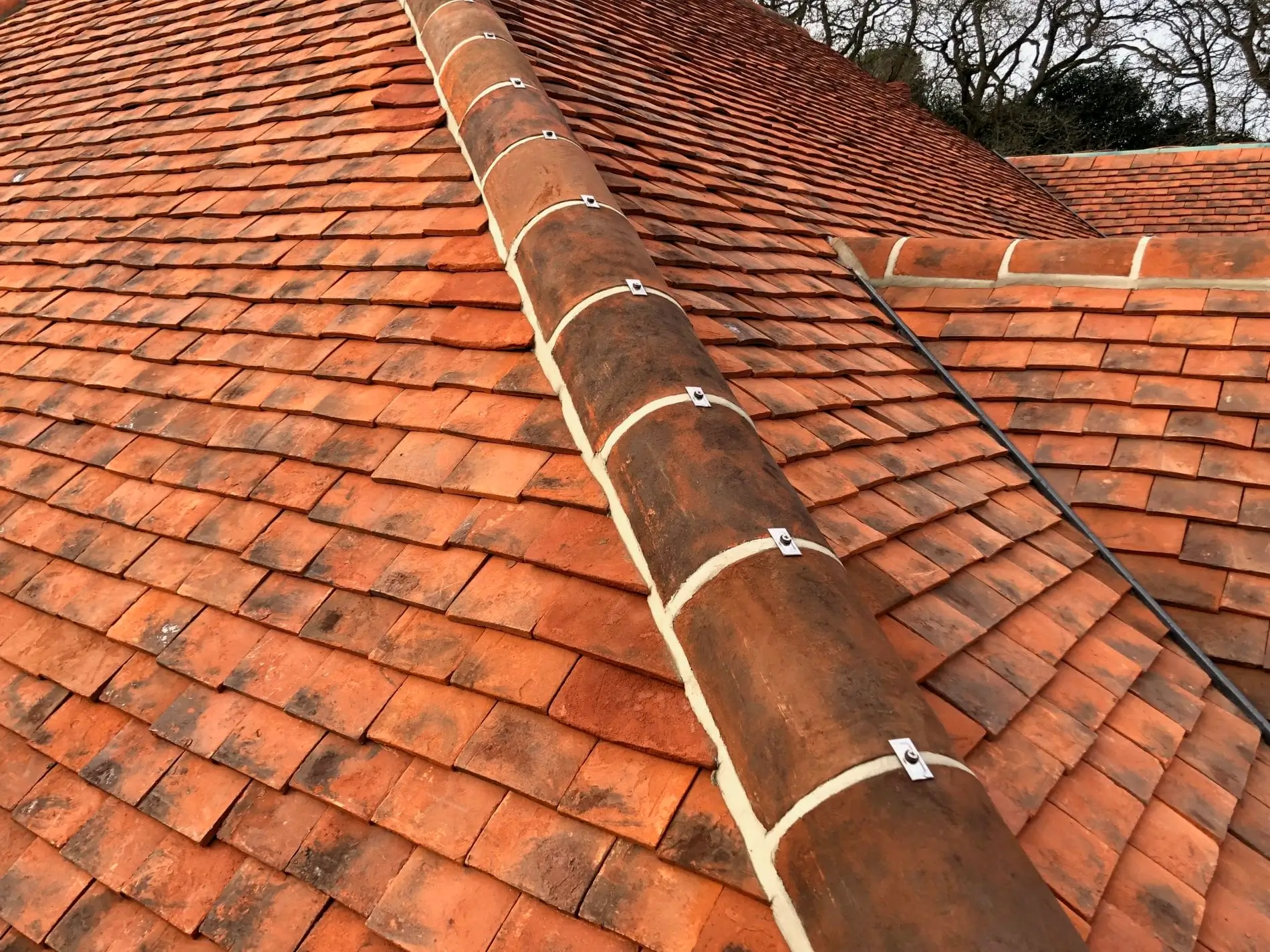
A verge rarely fails without warning. The trouble is that the signs sit right at the edge of the roof, where nobody looks unless something is already dripping.
Look out for these:
- Cracked or crumbling mortar running along the gable edge
- Hairline cracks that seem to widen every winter after frost
- A visible gap opening up between the verge tile and the wall below
- Damp staining tracking down the gable wall under the roofline
- Edge tiles that shift, lift, or rattle when the wind picks up
- Moss or weeds taking hold in a cracked mortar line
- A draught or damp patch felt in the loft close to the gable end
Mortar verges typically need repointing every 5 to 15 years, and once the bond starts to fail, it rarely holds much longer. On the exposed stretch along the A5, that failure often comes faster, since wind-driven rain gets behind the mortar and works it loose season after season. A free drone survey shows the gable edge close up, so you can see exactly what state your verge is in before deciding what to do about it.
Dry Verge or Mortar Repair — Which Fix Actually Lasts?
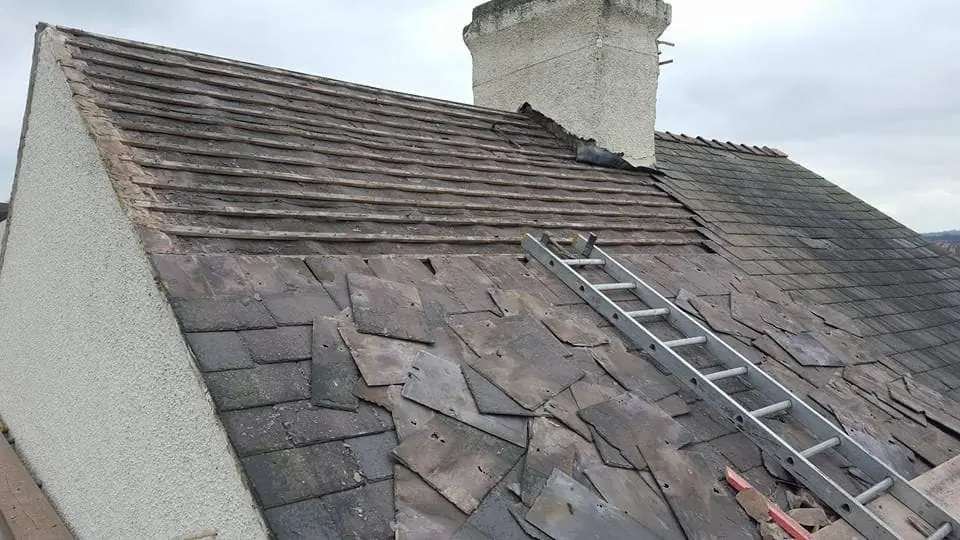
A small hairline crack in an otherwise sound mortar verge can sometimes be repointed and left alone for a few more years. Once mortar has failed along most of a gable, though, repointing again is a short-term patch on a system that was never designed to be permanent. Our roof repairs and restorations team can handle a straightforward repoint where that genuinely makes sense, but on a roof that has already been repointed once or twice, a dry verge system usually works out cheaper over time and stops the problem coming back.
Here is how the two options actually compare, side by side.
| :-: | :-: | :-: | :-: |
| Option | Typical cost | Typical lifespan | Best for |
| Dry verge system | £15–£30 per metre (around £600–£1,200 per semi-detached gable pair) | 20–30+ years (uPVC), 40+ years (aluminium) | Any property needing a permanent, low-maintenance fix; exposed sites along the A5 |
| Traditional mortar-bedded verge | £20–£40 per metre to repoint | 5–15 years before repointing is needed again | Minor patch repairs, listed buildings wanting a traditional finish |
A dry verge system and a dry ridge system solve a similar problem in two different places. A dry verge protects the sloped edges at the gable ends, while our dry ridge system service covers the horizontal ridge line at the top of the roof. Many Hinckley roofs benefit from both being fitted at the same time, since the two systems together remove mortar from every high-wind edge of the roof.
Pick the Right Dry Verge System for Your Tiles and Property
Not every dry verge unit suits every roof. The right choice depends on your tile profile, your property's age, and how exposed the roof is.
- **uPVC dry verge*— the most common choice, priced around £5–£10 per unit, lasts 20 years or more, and comes in colours to match standard concrete and clay tiles
- **Aluminium dry verge*— a premium option at roughly £15–£25 per unit, holds its colour and shape for 40 years or beyond, and suits period or higher-spec properties
- **GRP verge systems*— a heavier-duty option for larger interlocking tiles or roofs that take a real battering from wind
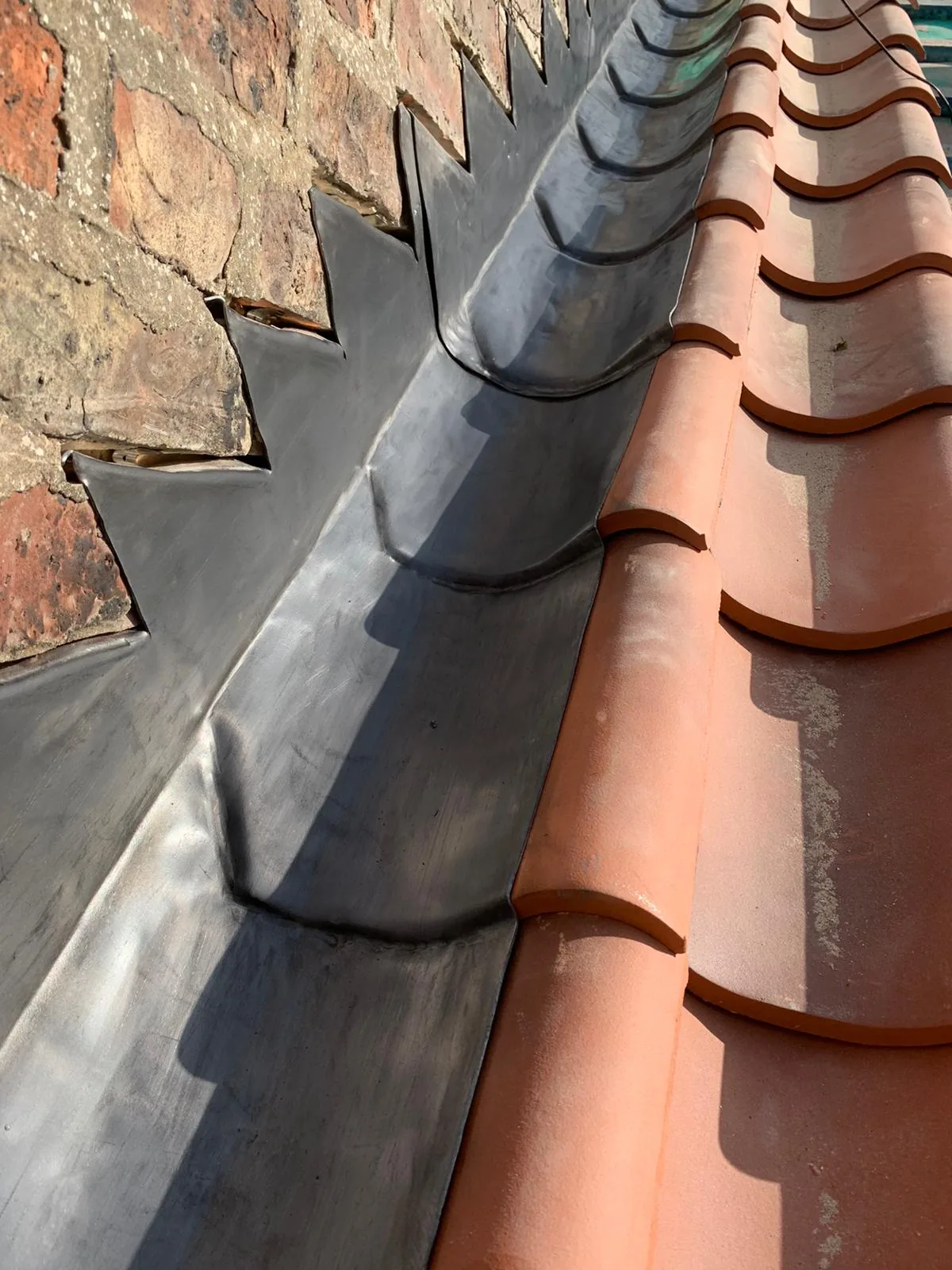
Interlocking concrete and clay tiles have the widest range of compatible dry verge units, while plain tiles and older handmade clay need a system matched carefully to the tile thickness and profile. On the older mortar-verge terraces around Higham on the Hill, we often find the original tile profile is no longer made, so getting the unit and clip right takes a proper look at the roof, not a guess from the pavement.
Daniel Whitmore, our project manager, fits dry verge systems across Hinckley week in, week out and will talk you through which unit suits your tiles, your budget, and how exposed your particular roof is — in plain English, not sales jargon.
What Fitting a Dry Verge System Really Involves, Start to Finish
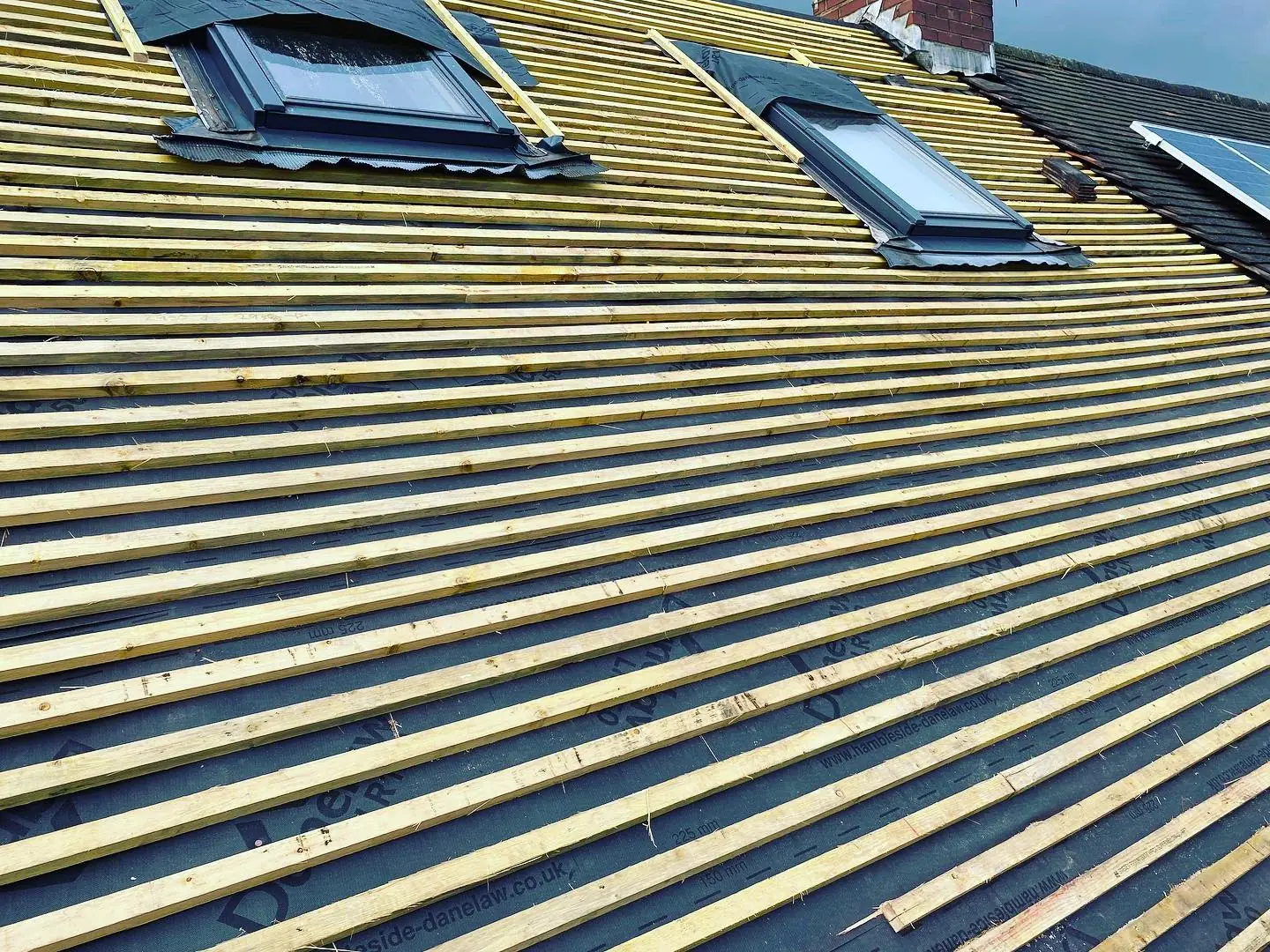
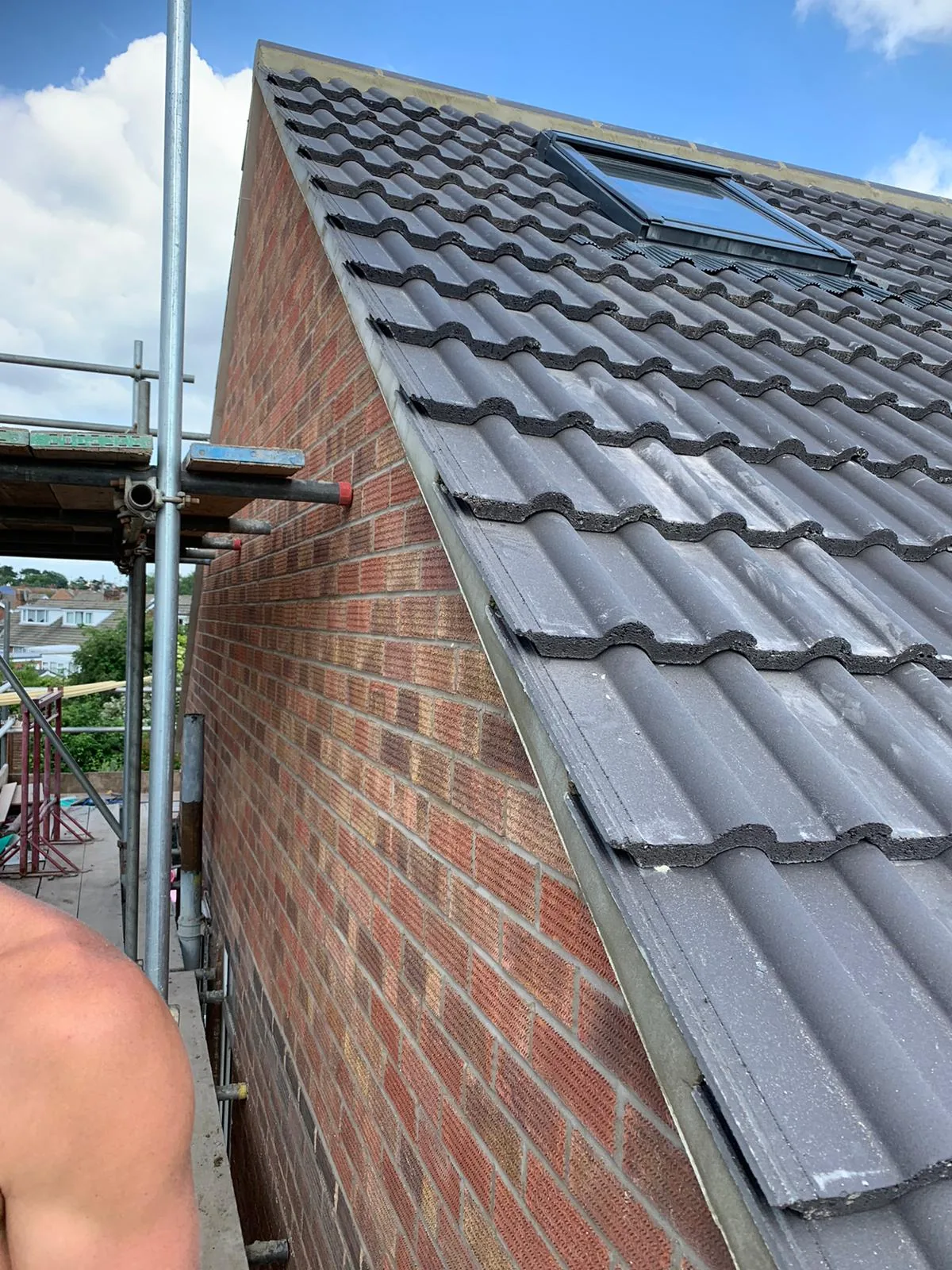
Fitting a dry verge system follows the same order on every job:
- Scaffold or tower erected and the gable made safe to work on
- Old mortar chipped out and the verge tiles lifted and checked
- Bargeboard and fascia checked, with any rot repaired first
- Verge units fixed mechanically to the battens along the full length
- Union clips and corner or ridge-end pieces fitted to close every joint
- Tiles reset and checked for a tight, secure fit under the new capping
- Site cleared and the finished verge checked from ground and roof level
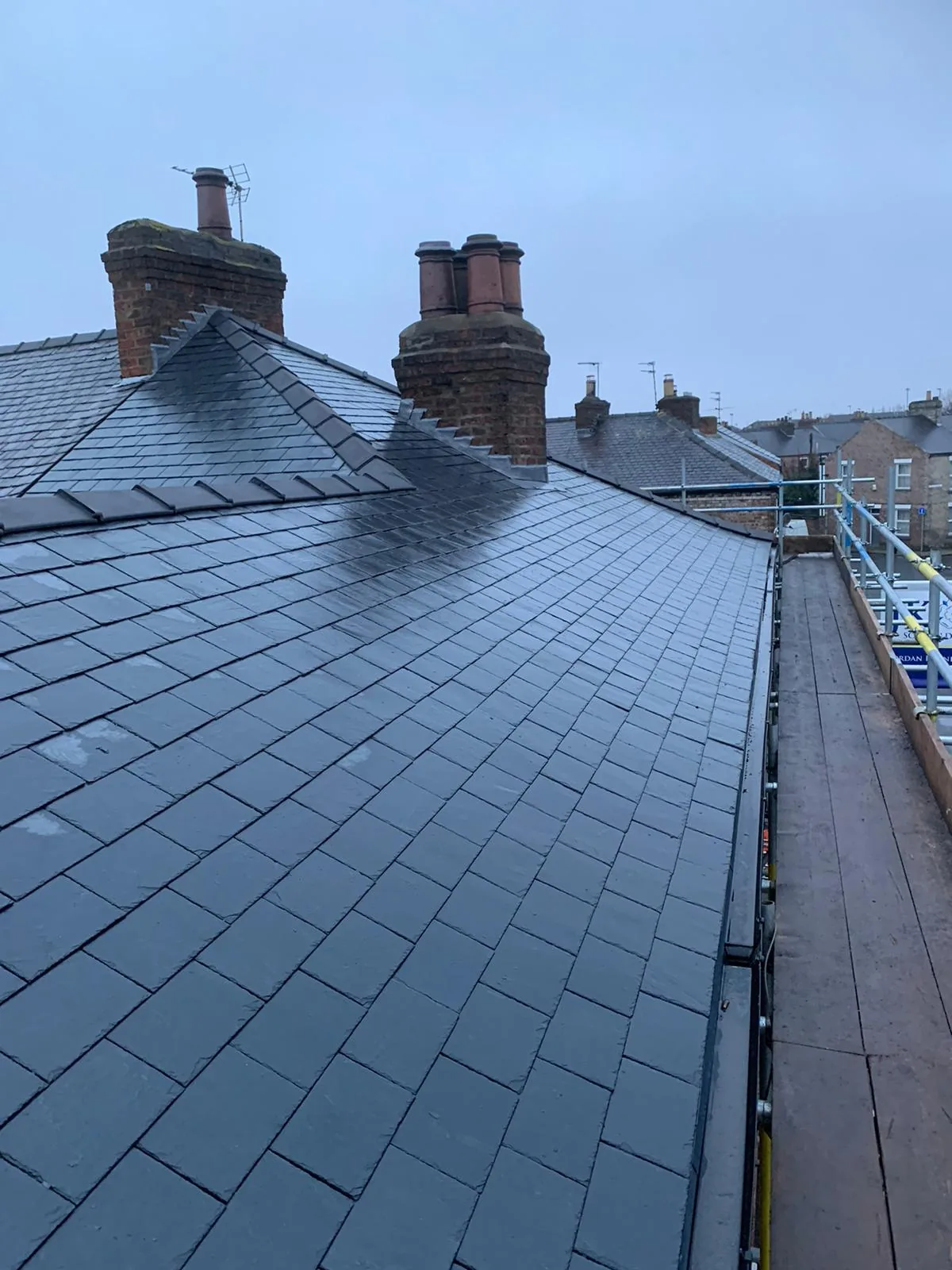
A single gable end typically takes half a day to a full day. A semi-detached property with both gables done together usually takes 1 to 2 days, weather allowing. Where the bargeboard underneath has rotted, that adds time and cost, since it needs replacing before any verge unit can be fixed to it properly.
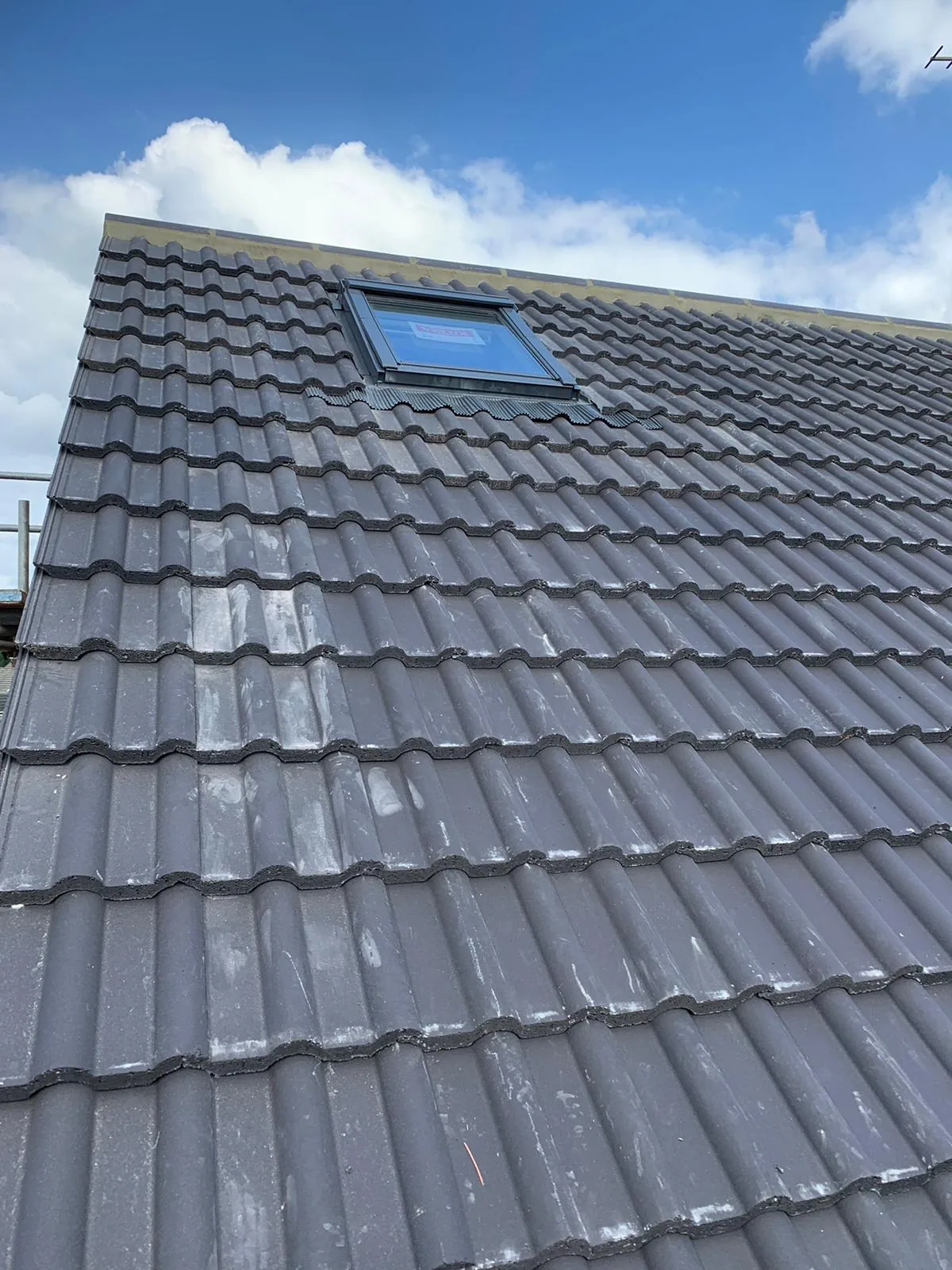
Wind Uplift and BS 5534 — Why the Fixing Detail Matters Most Along the A5
British Standard BS 5534 sets out how a roof has to be fixed to resist wind uplift, and the 2018 update changed the rules that matter most for verges. That revision stopped roofers relying on the tensile strength of mortar to hold edge tiles down, because mortar bonds fail under repeated wind loading in a way mechanical fixings do not. Verges, ridges and eaves are all classed as high-suction perimeter zones, meaning they need more fixings than the field of the roof, not fewer.
Every tile along a dry verge is mechanically clipped or screwed rather than bedded in cement, so the fixing holds regardless of how the mortar underneath would have weathered. For the fuller technical detail on tiling design and verge detailing, the Roof Tile Association's design and installation guide sets out current best practice across the trade.
Properties along the A5 and the exposed ridge near Higham on the Hill take a harder battering from wind-driven rain than a sheltered street in Hinckley town centre, and a verge with no wind-uplift margin left in it is usually the first thing to give. We calculate the fixing spec for your roof's actual exposure, not a standard, one-size-fits-all approach lifted from a flatter, more sheltered site.
What a Dry Verge System Really Costs in Hinckley
As a general guide, a dry verge system typically costs £15–£30 per linear metre, which puts a full gable pair on a standard semi-detached house at roughly £600–£1,200 including scaffold access and mortar removal. A single gable end on a smaller property can come in under that. Larger detached homes, dormer bungalows with multiple gables, or roofs needing bargeboard repair first will run higher.
What pushes a price up or down:
- **Material*— uPVC costs less than aluminium, which costs more but lasts longer
- **Access*— a detached gable is quicker and cheaper to scaffold than one boxed in between properties
- **Old mortar removal*— stripping and disposing of failed mortar adds labour before any new unit goes on
- **Bargeboard condition*— rotten timber underneath usually adds £150–£400 per gable before fixing can start
- **Tile type*— plain or older handmade tiles sometimes need a bespoke or adapted unit, which costs more than a standard interlocking-tile fitting
- **Roof height and pitch*— steeper or taller gables take longer and need more scaffold
These are general market ranges, not a quote for your roof — two gable ends the same length can price differently once access, tile type and mortar condition are factored in. A free drone survey shows the exact state of your verges and lets us put a firm figure in writing, with nothing added later. A fixed price needs a survey.
Keep Your Verges Watertight for the Long Haul
A dry verge system is close to maintenance-free, but a little attention keeps it working as it should for decades.
- Check the gable edge after any named storm or period of high wind
- Clear moss or leaf build-up from where the verge meets the roof covering
- Watch remaining mortar sections elsewhere on the roof for early cracking
- Book a free drone survey every few years to catch movement early
None of this needs a specialist visit — just a look after bad weather, and a call to us if anything seems loose or out of line. Catching a small problem at the verge is always cheaper than dealing with rot in the rafters underneath it.
Why Hinckley Homeowners Trust Tate & Sons With Their Verges
You are not just buying plastic or aluminium units — you are buying whoever fixes them to your roof. Daniel Whitmore, our project manager and lead roofer, runs verge and re-roofing work on site day to day and specialises in leadwork and heritage tile detailing on the area's older properties. He is part of the same crew that turns up to fit your verge, not just the man who quoted it.
Founder James Tate started out on the tools more than 20 years ago and still quotes the majority of jobs personally, so the person weighing up your gable end is the one standing behind the finished work. Between us we bring 40 years of combined team experience, hold NVQ Level 2 and 3 qualifications in Roofing, and carry CSCS cards. Sophie Bennett, our office manager, keeps quotes, scheduling and aftercare running smoothly from the first phone call onwards. Read more about the people behind the work on our About Tate & Sons Roofing page.
Areas We Serve Across Hinckley and Bosworth Country
We fit dry verge systems across Hinckley and the surrounding borough. If your area is not on the list below, call us anyway — there is a strong chance we already cover you.
- Hinckley (LE10)
- Burbage (LE10)
- Barwell (LE9)
- Earl Shilton (LE9)
- Sapcote (LE9)
- Sharnford (LE10)
- Wolvey (LE10)
- Higham on the Hill (CV13)
- Sutton Cheney (CV13)
- Stoke Golding (CV13)
- Market Bosworth (CV13)
- Nuneaton (CV10 / CV11)
- Bedworth (CV12)
Got Questions?
Your Dry Verge Questions, Answered Properly
What exactly is a dry verge system?
A dry verge system is a mechanically fixed plastic or aluminium capping that protects the sloped edges of a roof at the gable ends without using mortar. It clips onto the battens and over the edge tiles, holding them down and shedding water clear of the wall below. It replaces the traditional method of bedding verge tiles in cement mortar, which cracks and needs repointing every few years.
How much does a dry verge system cost in Hinckley?
As a general guide, dry verge installation costs £15–£30 per linear metre, putting a full gable pair on a semi-detached house at roughly £600–£1,200. A single gable end on a smaller property costs less, while larger homes with multiple gables or rotten bargeboards underneath cost more. A free drone survey gives you an exact written price rather than a phone estimate.
How long does a dry verge system last?
A quality uPVC dry verge system typically lasts 20 years or more, and aluminium units can last 40 years or beyond without cracking or needing repointing. That compares with mortar-bedded verges, which usually need repointing every 5 to 15 years as the bond weakens and cracks under weather and thermal movement. Choosing a dry verge at the outset usually works out cheaper across the life of the roof.
Is a dry verge system completely waterproof?
Not in the way people often assume — "dry fix" means no mortar, not a fully sealed unit. Some water can still find its way to the edge of the tile, and each verge unit is designed with a drip profile that channels that water clear of the gable wall rather than letting it soak in. The point of a dry verge system is mechanical strength and controlled drainage, not an airtight seal.
What's the difference between a dry verge and a dry ridge system?
A dry verge protects the sloped edges of the roof at the gable ends, while a dry ridge covers the horizontal line running along the top. Both replace mortar with mechanical fixings for the same reason — mortar cracks and fails under wind and weather, while clipped units do not. Many Hinckley homeowners have both fitted together, since a roof with a mortar ridge and a dry verge, or the other way round, still has one weak point left exposed.
Can a dry verge system be fitted without stripping the whole roof?
Yes, in almost every case. Fitting a dry verge system only involves the tiles along the gable edge, not the main field of the roof, so it does not need scaffolding the whole property or lifting tiles you were not planning to touch. It is one of the reasons dry verge work is often done as a stand-alone job rather than tacked onto a full re-roof.
Why do some dry verge caps rattle or whistle in strong wind?
This usually points to a unit that was clipped loosely, fitted with the wrong size cap for the tile profile, or left with a union joint that was not seated properly. A correctly fitted dry verge system should sit tight against the tile and batten with no movement, even in a strong gust. If an existing dry verge on your roof rattles or whistles, it is worth having the fixings checked rather than living with the noise, since a loose unit is more likely to let water in.
Does the wind exposure along the A5 mean Hinckley roofs need a higher-spec fixing?
Often, yes. BS 5534 requires the fixing specification to be calculated against a roof's actual wind exposure, and properties along the old Watling Street corridor and the higher ground near Higham on the Hill sit in a genuinely more exposed wind zone than a sheltered street in the town centre. That can mean closer fixing centres or a heavier-duty unit at the verge than a standard calculation would call for elsewhere. We work out the fixing spec from your roof's real position, not a generic figure.
Book Your Free Drone Roof Survey for Your Verges Today
See exactly what state your gable edges are in before any work starts. No ladders, no pressure — just a clear picture from a local Hinckley team.
Every winter a cracked verge is left alone, more mortar works loose and more water tracks down into the bargeboard and rafters beneath it. A quick, free survey today tells you exactly where you stand, and fitting a dry verge system now is almost always cheaper than repairing timber rot later. Book now, get an honest quote, and stop repointing the same gable end every few years.
Call the Hinckley team today on 01455 242595, or request your free drone survey online. We're already working across your area.
Book Your Free Drone Roof Survey
See exactly where your roof stands, with no obligation and no pressure. Call our Hinckley team or request your free drone survey today.
Get in Touch
Tate & Sons Roofing — Hinckley Office
10 Brosdale Drive, Hinckley, LE10 0SW
📞 01455 242595
✉️ [email protected]