
🏠 Trusted Local Roofers
Dry Ridge System Chesterfield
Mortar-bedded ridge tiles crack, crumble and let go in strong wind, and once one tile lifts the whole ridge line is at risk. A dry ridge system fixes every ridge tile to the roof structure with screws and clips instead of sand and cement, so there is no mortar left to fail. Tate & Sons Roofing installs dry ridge systems in Chesterfield built to BS 5534, from exposed farmhouses near the M1 corridor to terraces closer to town.
As a roofing contractor across Chesterfield, we fit dry ridge systems on new roofs and retrofit them onto older ones where the mortar has failed. This page is about ridge tiles specifically, mechanically fixed with no mortar at all. If you are looking at the roof edges instead, our separate dry verge system page covers that job.
Below you will find the warning signs that your ridge needs attention, honest cost ranges, what the standards require, and how our team carries out the work from scaffold to sign-off.
- Fully Insured
- 10-Year Guarantee
- 5-Star Rated
Quick Free Estimate - No Obligation
We're not just roofers – we're your neighbours.
Fully Insured • Response within 15 mins
🔒 Your details are safe with us. No spam, ever.
Signs Your Chesterfield Roof Needs a Dry Ridge System, Not Another Mortar Patch
A ridge tile that rocks when you touch it, or mortar that has turned to loose sand along the roof apex, both point to the same problem. The bedding has failed, and the tiles above it are no longer properly held down. Once that happens, one strong gust can lift a tile clean off.
Chesterfield sees its share of exposed weather, especially on higher ground toward Wingerworth and out along the M1 corridor, where roofs take a harder battering than those tucked into town. Older mortar ridges in these spots often fail years before the tiles themselves wear out.
Watch for these signs that your ridge line needs more than a quick repair:
- Grey, crumbling mortar visible along the ridge or hip line
- A ridge tile that moves, rocks or sounds hollow when tapped
- Sand or mortar debris collecting in your gutters after wind
- A missing or slipped ridge tile after a storm
- Daylight or draughts felt at the ridge line inside the loft
- Repeated repointing of the same ridge every few years
If only a short section of mortar has failed and the rest of the roof is sound, a simple repair might be enough. Our ridge tile repairs and rebedding service covers that smaller job. Once mortar has failed more than once, switching the whole ridge to a dry fixed system usually costs less over the life of your roof than repointing it again and again.
Dry Ridge vs Mortar Ridge: Which System Fits Your Chesterfield Roof?
Traditional mortar-bedded ridges rely on sand and cement to hold each tile in place. Under the current British Standard, mortar strength can no longer be counted on to resist wind uplift on its own, which is exactly why dry fixed systems have become the default choice on new roofs across Chesterfield and the rest of the UK.
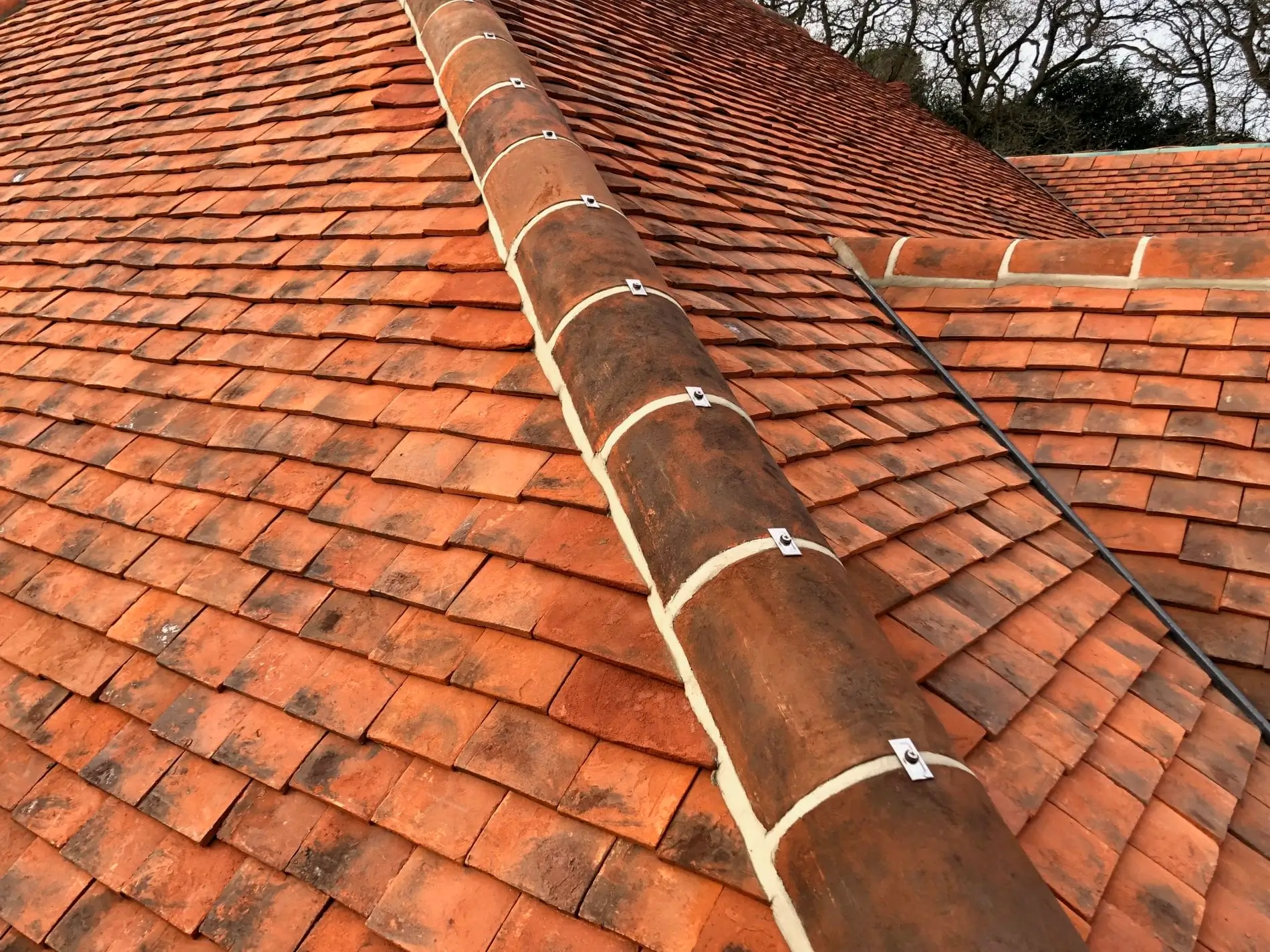
A dry ridge system uses a continuous dry ridge batten fixed along the apex, with a union and clip screwed through each tile joint into that batten. There is no mortar at all, so there is nothing to crack, wash out or need repointing later. The union also lets a small amount of air pass through, helping ventilate the loft space below.
The table below sets out how the two systems compare for a typical Chesterfield roof.
Mortar ridges are cheaper to fit at the outset, but the repeated repointing bills over 20-30 years often outweigh the difference. Dry ridge systems cost more up front and pay that back in fewer call-outs and far less storm risk.
Dry Ridge System Cost in Chesterfield: What You'll Actually Pay
Most dry ridge installations across the UK cost between £40 and £60 per linear metre, covering both materials and labour. Materials such as the dry ridge batten, unions and stainless steel screws typically run £10-£20 per metre, with the rest made up of labour and scaffold access.
For a typical Chesterfield semi-detached roof, that usually works out at £500-£1,000 for the whole ridge line. A larger detached property with a hip roof and several ridge and hip junctions can run higher, particularly where scaffolding is already needed for other roof work.
Cost rises where the roof has multiple hips, dormers or chimneys breaking up the ridge line, since each junction needs extra components and careful cutting. Cost falls on straightforward gable roofs with a single continuous ridge, which is common on many estate homes around Grassmoor and Duckmanton.
Access also plays a part. If the scaffold is already up for a re-roof or repair, adding a dry ridge system costs less than booking it as a stand-alone job later. A fixed price needs a survey, since ridge length, tile profile and roof pitch all affect the final figure.
What Happens Before Work Starts: BS 5534, Wind Zones and Your Free Survey
Every dry ridge system we fit in Chesterfield follows BS 5534:2014+A2:2018, the British Standard covering slating and tiling for pitched roofs. Since the 2018 update, mortar can no longer be relied on for wind uplift resistance at all, so ridge and hip tiles must be mechanically fixed using a system tested to BS 8612. The NFRC's guidance on current roofing standards sets out exactly what BS 5534 and BS 8612 require, and we work to both on every job.
The standard calculates fixing specification from your roof's location, height and exposure, not a single fixed rule for every house. A roof on high ground near Wingerworth or facing the open fields around the M1 corridor needs a stronger fixing pattern than a sheltered terrace closer to the town centre.
We start with a free drone roof survey, giving us close-up photos of your existing ridge, tile profile and roof pitch before we specify anything. This tells us the wind zone your property sits in and the fixing pattern the standard requires, so the quote you get matches the roof you actually have.
Most dry ridge installations do not need planning permission, since the roofline and tile appearance stay the same. Homes in conservation areas near the Crooked Spire occasionally need matching ridge tile colours agreed in advance, which we check as part of the survey.
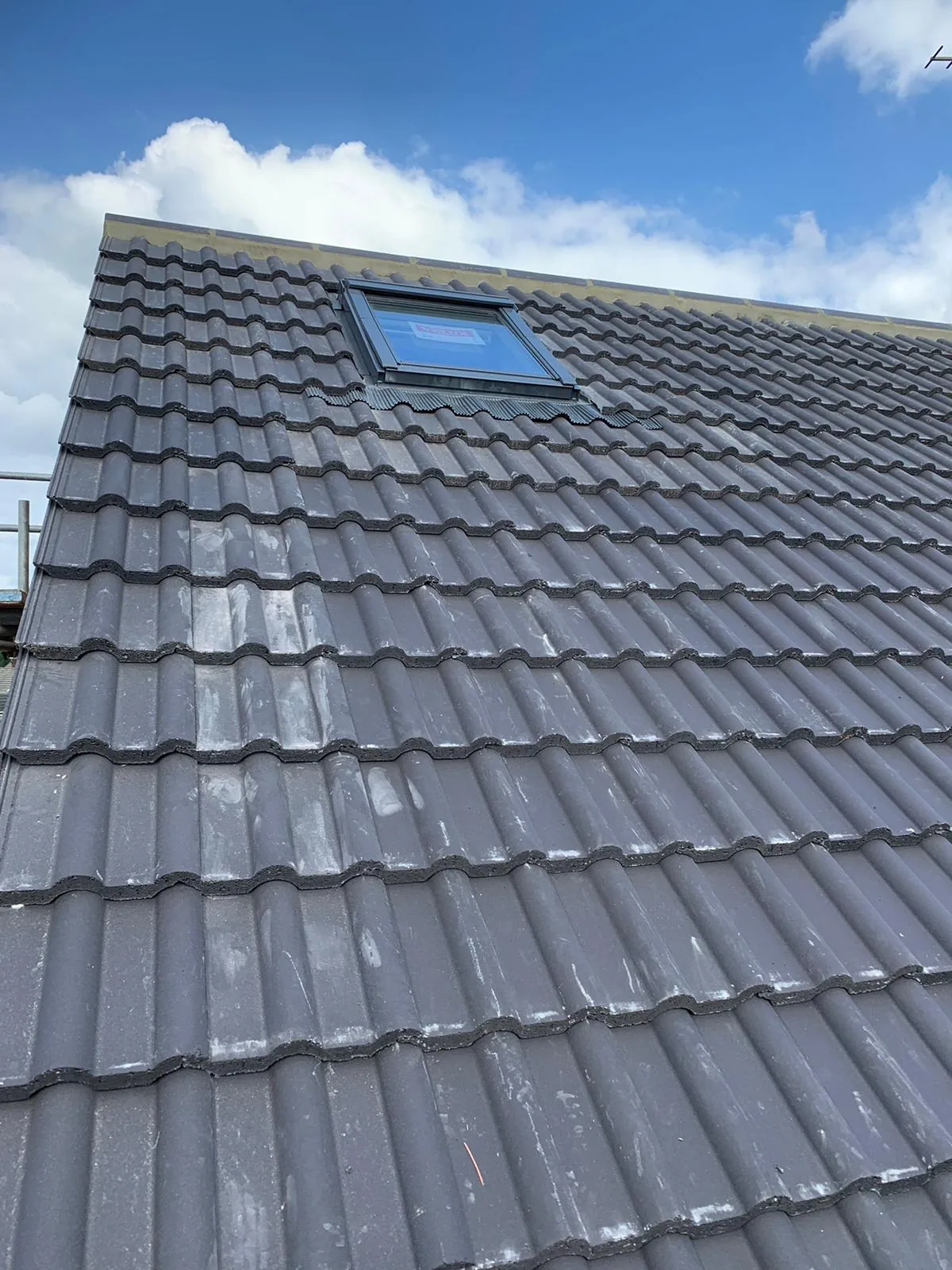
Your Dry Ridge Installation, Step by Step
Daniel Oakland, our Project Manager and Lead Roofer, oversees every dry ridge installation on site. With over 20 years in the trade, including heritage slate and lead detailing alongside modern dry fix systems, he knows how to match the right components to Chesterfield's mix of old and new roofs.
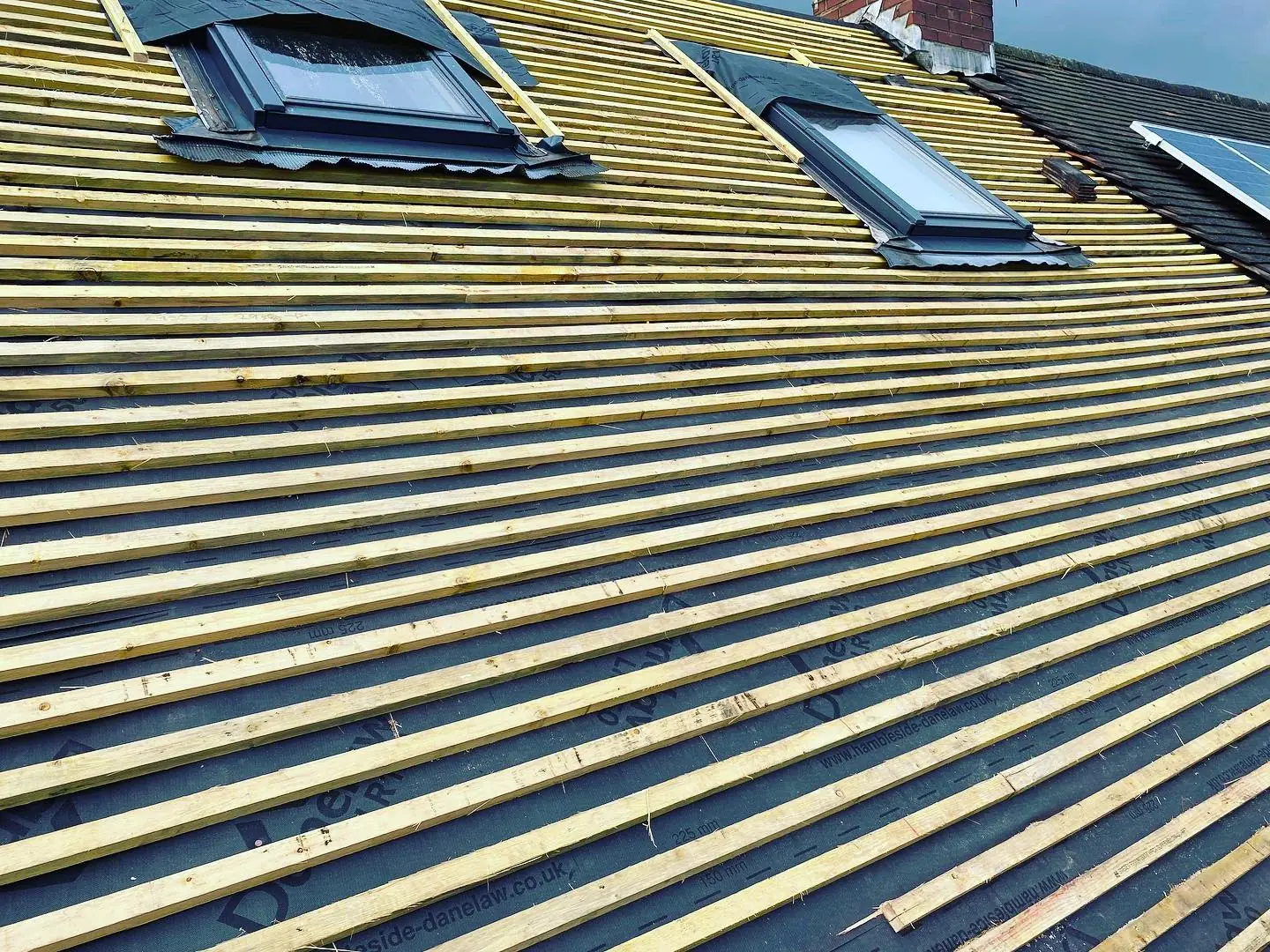
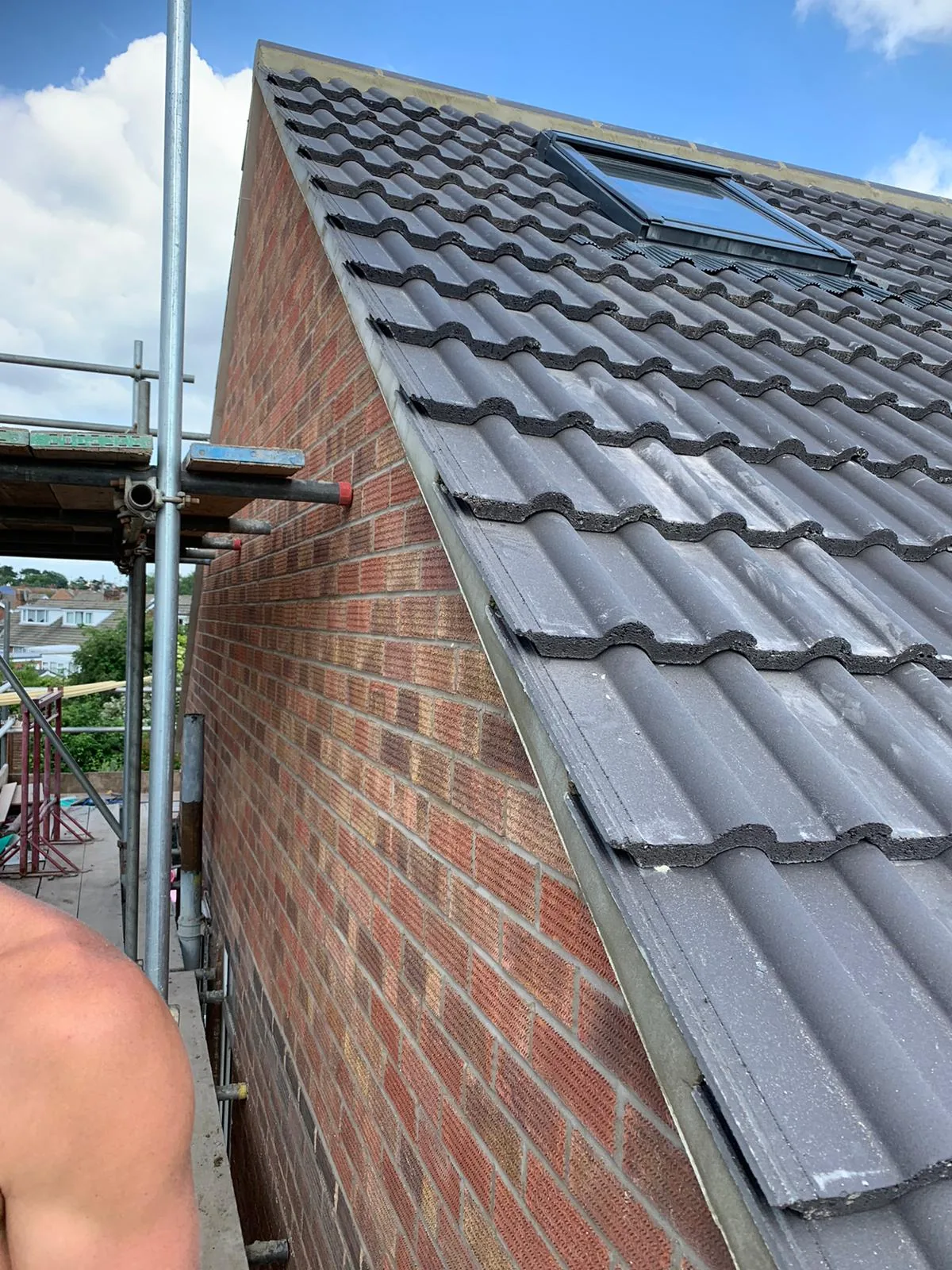
Once scaffold is up, we remove the old ridge tiles and strip away any remaining mortar back to sound roof timber. Daniel checks the batten and felt underneath for damage, since a dry ridge system is only as good as what it is fixed to.
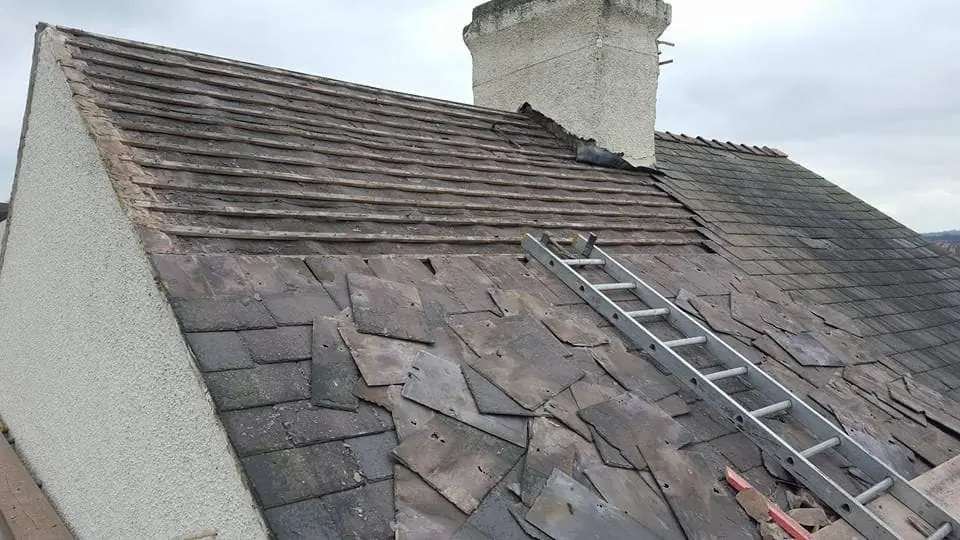
A continuous dry ridge batten is fixed along the apex, followed by a breathable underlay strip where ventilation is needed. Each ridge tile is set onto a union and secured with a clip and screw at every joint, following the fixing pattern set by your roof's wind zone.
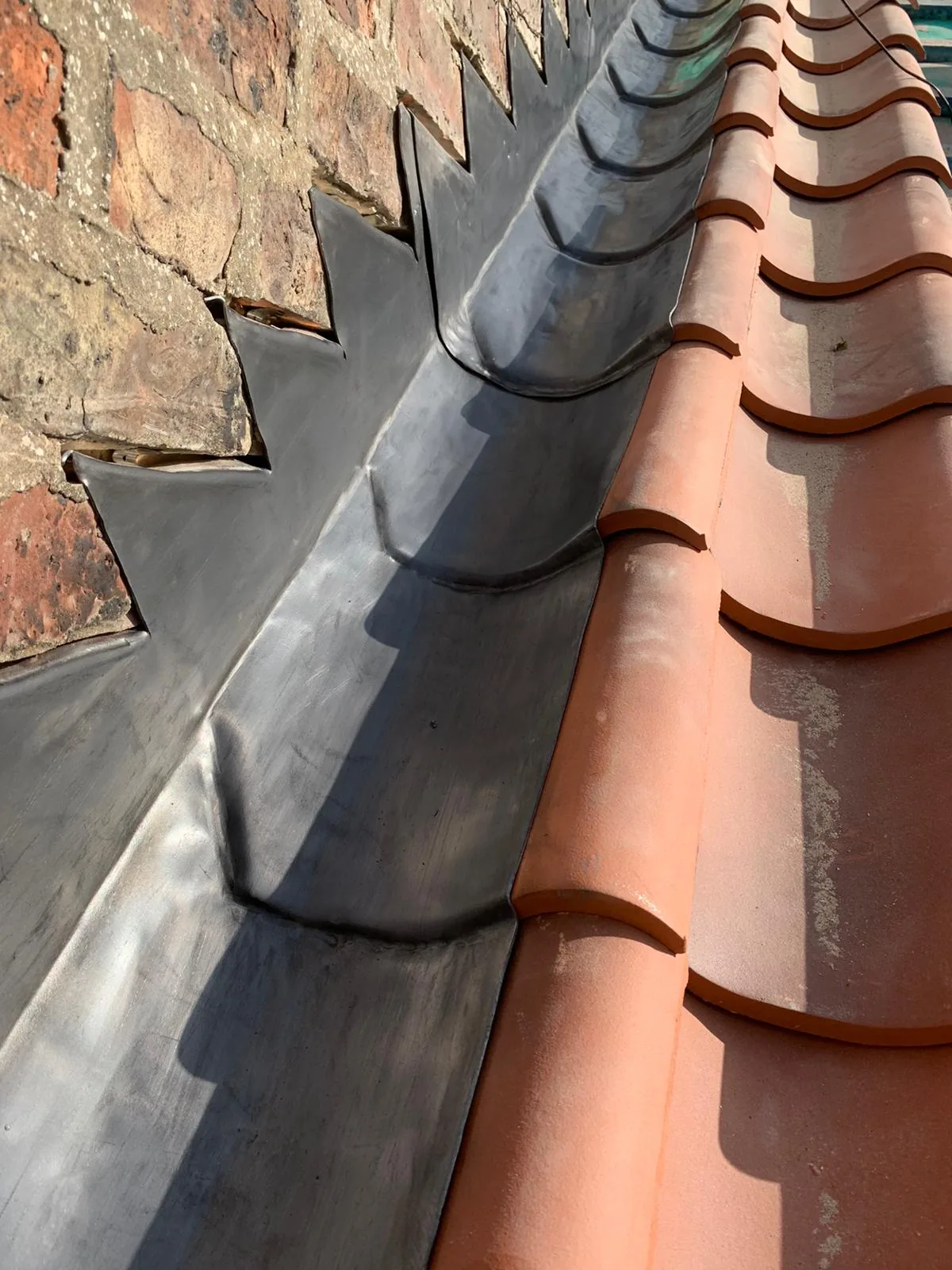
Hips and junctions are finished by hand, since these points take the most load in wind and need extra care to seal properly. A straightforward semi-detached ridge usually takes one working day, while larger hipped roofs with more junctions can take two to three days.
Daniel checks the weather forecast before starting, since a dry ridge system needs a dry ridge line to fix onto properly. Materials and waste disposal are arranged in advance, so once your job starts, it runs straight through to completion.
Quality Checks That Keep Your Ridge Storm-Proof for Decades
Every dry ridge system we fit comes with our 10-year workmanship guarantee, on top of manufacturer warranties on the union and clip components themselves. Daniel walks the finished ridge line before handover, checking every fixing and union by hand.
A correctly fitted dry ridge system needs very little upkeep, unlike mortar which slowly weathers from year one. We still recommend a visual check after any severe storm, since even mechanically fixed tiles can shift if a clip has been damaged by a falling branch.
If you notice a rattling or whistling noise from the roof in high wind, that usually means a clip has worked loose rather than the whole system failing. Catching this early with a drone survey avoids the water ingress that a fully detached tile can cause.
Homes we maintain around Wingerworth and Clay Cross, where the village character means a mix of older stone roofs and newer estates, get the same fixing standard regardless of age. Consistent detailing across every roof we touch is what keeps the guarantee meaningful.
Why Choose Tate & Sons Roofing for Your Dry Ridge System
James Tate founded the business after 15 years working roofs across Derbyshire and the East Midlands, and he still prices most dry ridge jobs himself. He specifies every fixing pattern to the actual wind exposure of your Chesterfield property, not a generic standard spec.
Daniel Oakland leads every dry ridge installation on site, bringing over 20 years of hands-on roofing experience. His background spans heritage slate and lead detailing through to modern mechanically fixed ridge and standing-seam systems, so period Chesterfield roofs and new-build estates both get the correct treatment.
Our wider team holds NVQ Level 2/3 qualifications in Roofing Occupations, CSCS cards and NFRC trade membership, with over 40 years of combined experience between us. Read more about the people fixing your ridge on our About page.
Every dry ridge system comes with a 10-year workmanship guarantee and starts with a free, no-obligation drone roof survey, so you know the fixing spec and cost before we go anywhere near your Chesterfield roof.
Areas We Serve Around Chesterfield
We fit dry ridge systems across Chesterfield and the surrounding towns and villages listed below.
- Chesterfield (S40 / S41)
- Brampton (S40)
- Hasland (S41)
- Newbold (S41)
- Staveley (S43)
- Brimington (S43)
- Whittington Moor (S41)
- Old Whittington (S41)
- Wingerworth (S42)
- Clay Cross (S45)
- Dronfield (S18)
- Eckington (S21)
- Holymoorside (S42)
Got Questions?
Your Dry Ridge System Questions, Answered Properly
What is a dry ridge system?
A dry ridge system fixes ridge tiles to the roof with screws, clips and a continuous batten instead of sand and cement mortar. Each tile joint gets its own union, which seals the joint and lets a small amount of air through for ventilation. There is nothing left to crack or wash out over time, unlike mortar bedding. Most new roofs in the UK now use a dry ridge system as standard under BS 5534.
How much does a dry ridge system cost in Chesterfield?
Most dry ridge installations cost between 40 and 60 pounds per linear metre, including materials and labour. A typical semi-detached roof usually comes to 500 to 1,000 pounds for the full ridge line. Larger roofs with more hips and junctions cost more because of the extra components needed. We only give a fixed price after a free drone survey of your actual roof.
Is a dry ridge system required by building regulations?
Yes, current building regulations and BS 5534 require ridge and hip tiles on new roofs to be mechanically fixed rather than relying on mortar alone. Existing roofs being repaired are not always forced to upgrade immediately, though most homeowners choose to switch once mortar starts failing. Listed buildings sometimes need a specific approach agreed with conservation officers. We check what applies to your property before quoting.
How long does a dry ridge system last?
A correctly installed dry ridge system can last as long as the roof covering itself, often 50 years or more. This compares well against mortar ridges, which usually need repointing every 10 to 15 years as the bedding weathers. Lifespan depends on installation quality, the wind exposure of your plot and how well the clips and unions were fitted. Regular checks after severe storms help catch any loose fixings early.
Can a dry ridge system be fitted to an existing roof, or only new builds?
Dry ridge systems can be retrofitted to most existing pitched roofs, not just new builds. We remove the old mortar and ridge tiles, check the felt and battens underneath, then fit the dry ridge batten and unions in their place. The tiles themselves are usually reused if they are in good condition. This is one of the most common jobs we carry out on older Chesterfield roofs where the original mortar has failed.
Why do dry ridge systems sometimes leak or fail?
Leaks usually trace back to a damaged or poorly fitted underlay membrane beneath the ridge tiles, rather than the mechanical fixings themselves. Loose clips, often from a branch strike or a poor original installation, can also let a tile shift and let water in. Correctly specified fixings to BS 5534 rarely fail under normal wind loads. Most problems we see on other contractors' work trace back to skipped steps during the original fit.
Does the wind exposure around Chesterfield change how a dry ridge system is fixed?
Yes, BS 5534 sets fixing requirements based on your roof's height, location and wind exposure, not one fixed spec for every house. Properties on higher ground toward Wingerworth or facing open land along the M1 corridor need a stronger fixing pattern than sheltered roofs closer to the town centre. Our drone survey identifies your wind zone before we specify materials. This is why a fixed price always needs a proper survey first.
Will a dry ridge system suit an older stone roof near Chesterfield town centre?
In most cases, yes, since dry ridge tiles are available in profiles and colours that match traditional stone and clay roofs closely. Some conservation areas near the town centre ask for ridge tile colours to be agreed before work starts, which we handle as part of your quote. The mechanical fixing itself sits under the tiles and is not visible once the job is finished. Heritage properties get the same wind resistance as any modern roof.
How long does it take to fit a dry ridge system?
A straightforward semi-detached roof with a single ridge line usually takes one working day. Larger hipped roofs with several junctions can take two to three days to finish properly. Wet weather can delay the start, since the ridge line needs to be dry when the batten and unions are fixed. We plan start dates around the forecast so the job runs straight through once scaffold is up.
Book Your Free Drone Roof Survey Today
A ridge with failing mortar gets worse every time wind picks up off the M1 corridor or the open ground beyond Wingerworth, and a single lost tile can let water straight into your loft. Waiting usually means a bigger repair bill once timber and insulation are affected too. Book your free, no-obligation drone roof survey today and get a clear, fixed price for a dry ridge system built to last on your Chesterfield roof.
📍 3 Marsden Street, Chesterfield, S40 1JY
📞 01246 956550
Call the Chesterfield team today on 01246 956550, or request your free drone survey online. We’re already working across your area.
Get in Touch
Tate & Sons Roofing — Chesterfield
3 Marsden Street, Chesterfield, S40 1JY
📞 01246 956550
✉️ [email protected]