
🏠 Trusted Local Roofers
Corrugated Roofing Nottingham
A corrugated roof looks simple, but a badly overlapped sheet lets water track straight through the join, and a badly fixed one lifts in the first proper Trent Valley gale. This page covers materials, fixing methods, and real Nottingham prices. As a roofing contractor working across the city, we fit and repair corrugated roofs on garages, sheds, and commercial units the right way, first time.
- Fully Insured
- 10-Year Guarantee
- 5-Star Rated
Quick Free Estimate - No Obligation
We're not just roofers – we're your neighbours.
Fully Insured • Response within 15 mins
🔒 Your details are safe with us. No spam, ever.
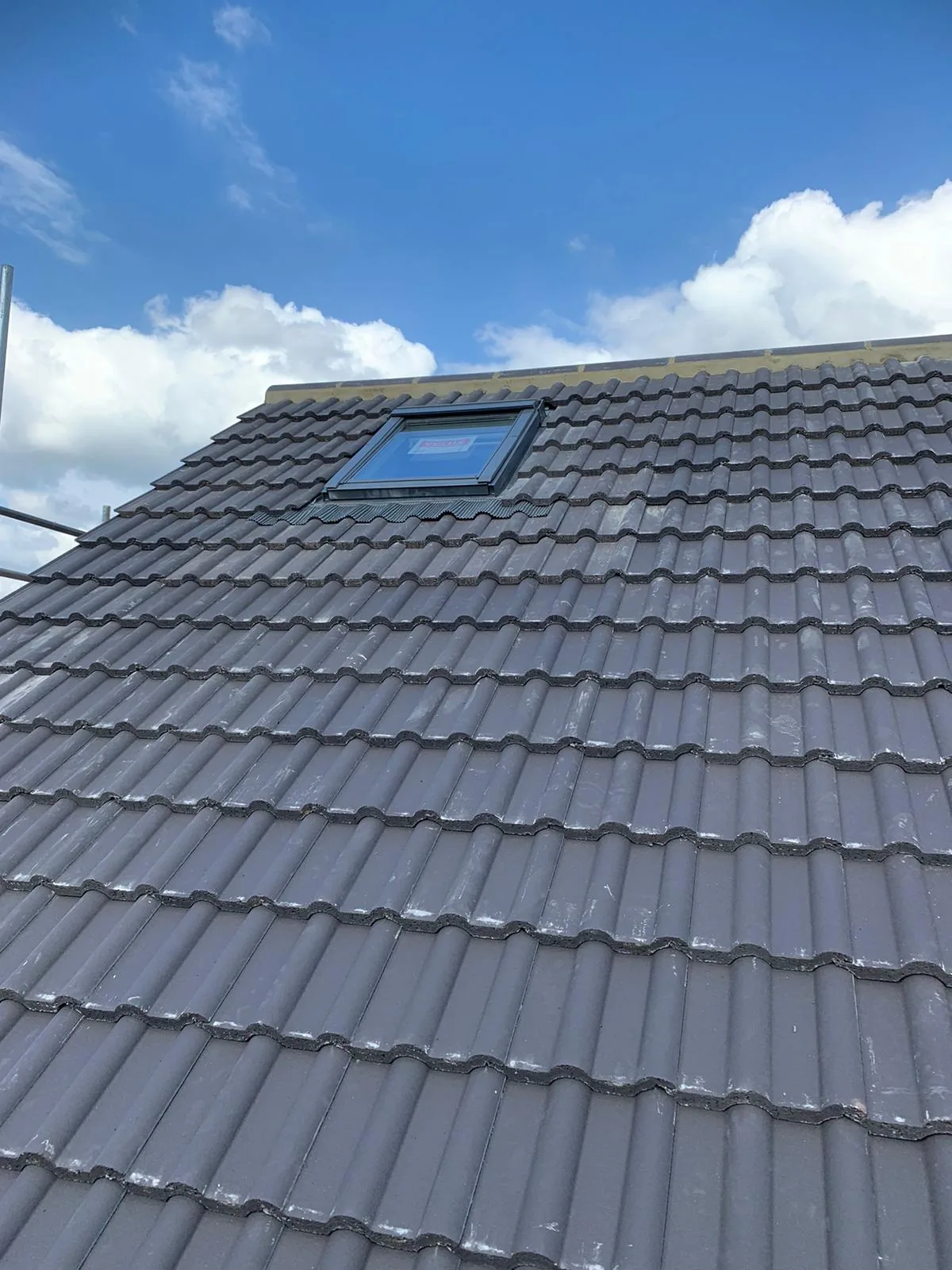
What Is Corrugated Roofing? (Quick Answer)
Corrugated roofing is sheet material formed into a wavy, ridged profile that runs water off quickly and adds strength without extra weight. In the UK it's most often galvanised steel or aluminium, though PVC, GRP fibreglass, and fibre cement versions are common too. It suits garages, sheds, agricultural buildings, and commercial units far better than it suits a main house roof. A well-fitted steel corrugated roof lasts 20 to 30 years, and correct overlap and fixing at the crest of each wave are what stop it leaking or lifting in strong wind.
Which Corrugated Roofing Material Suits Your Nottingham Building?
Most corrugated roofing jobs we quote fall into four material types, and each suits a different building.
- Galvanised steel — the most common choice, coated with zinc (galvanising) to resist rust, strong and affordable for garages and workshops
- Aluminium — lighter than steel and naturally rust-proof, a good fit for coastal-style exposure or where the structure below can't take extra weight
- PVC or GRP fibreglass — a lightweight plastic sheet, often used where you want some daylight through the roof, common on lean-tos, carports, and covered walkways
- Fibre cement — a heavier, rigid sheet with strong fire resistance, favoured on agricultural and industrial buildings
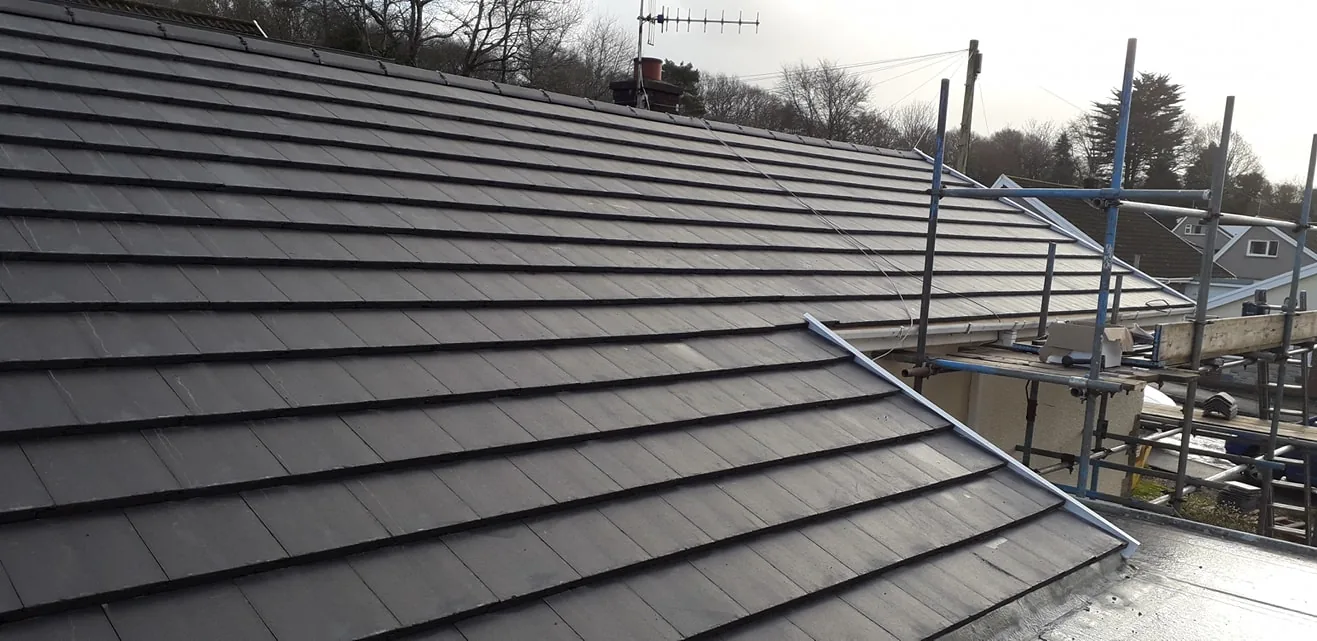
Corrugated sheeting suits outbuildings, garages, agricultural, and commercial roofs best. If you need a full re-roof on the house itself, our new roof installation team covers tile and slate work, and our pitched roof construction page covers extensions and dormers built from scratch.
Sheet quality varies more than people expect. Coating thickness, sheet gauge (the metal's thickness), and profile depth all affect how long a roof lasts and how well it copes with wind uplift. The Metal Cladding & Roofing Manufacturers Association's materials standards set out the British and European specifications that decent steel and aluminium sheeting should meet — worth asking about if a quote seems unusually cheap.
Got an Old Asbestos Corrugated Roof? Here's What to Do
A lot of older garages, outbuildings, and industrial units around Nottingham — particularly ones built before the early 2000s near Lenton Lane and Colwick — still carry asbestos cement corrugated sheets. These are usually grey, flat-profiled, and brittle at the edges compared to modern steel sheeting.
- Don't drill, cut, jet-wash, or walk on a suspected asbestos roof — disturbing it is the main health risk, not leaving it alone
- Get it tested by a UKAS-accredited lab before assuming either way
- Small, non-licensed removal jobs can often be handled by a trained contractor under the Control of Asbestos Regulations 2012, but larger or more damaged roofs may need a licensed asbestos removal firm
- In some cases, new corrugated sheets can be fitted straight over sound, undamaged asbestos cement sheeting rather than removing it, which avoids disturbing the material at all
- Overlay only works where the existing structure and purlins can take the extra weight, so it needs checking first
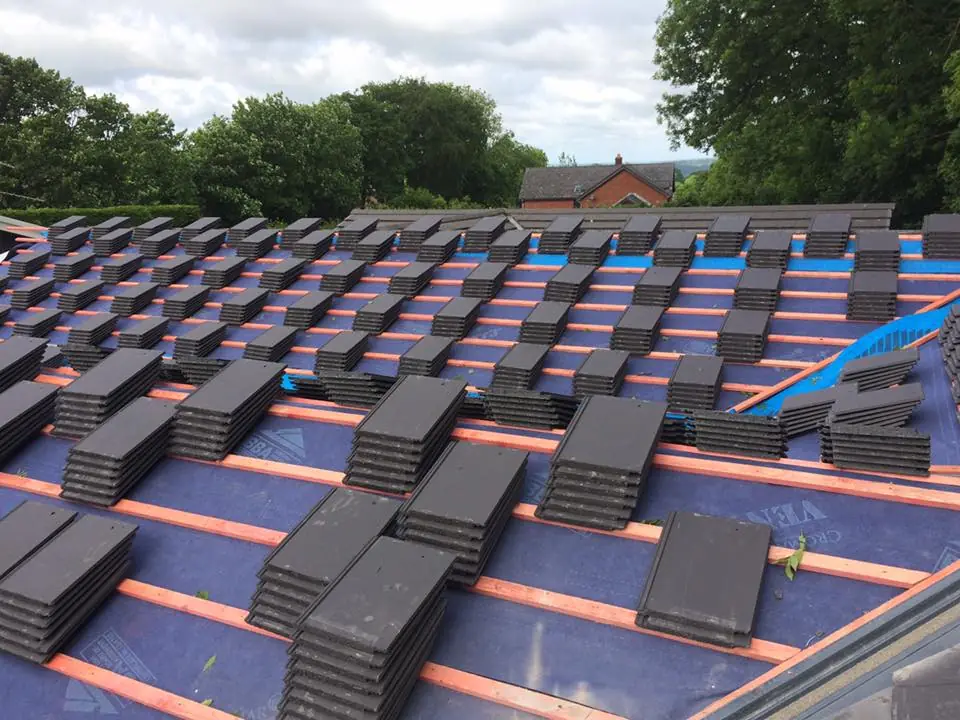
We'll tell you honestly at survey stage whether your roof needs testing, whether removal or overlay is the safer route, and what either option costs.
What Happens Before We Fit Your New Corrugated Roof
Every corrugated roofing job starts with a proper look at the structure underneath, not a guess from the ground.
- We carry out a free drone survey of the whole roof and its fixings — no ladders needed on a garage or outbuilding roof
- We check the purlins (the horizontal timber or steel rails the sheets fix onto) for rot, rust, or sagging
- We confirm whether the existing roof is asbestos and flag testing if there's any doubt
- We measure the roof pitch, since corrugated sheeting needs a minimum slope to shed water properly
- We recommend a material and sheet gauge that suits the building's use and your budget
- If you're near The Park or another conservation area, we flag anything needing sign-off before work starts
- You get a firm quote and an agreed scope before any tool comes out of the van
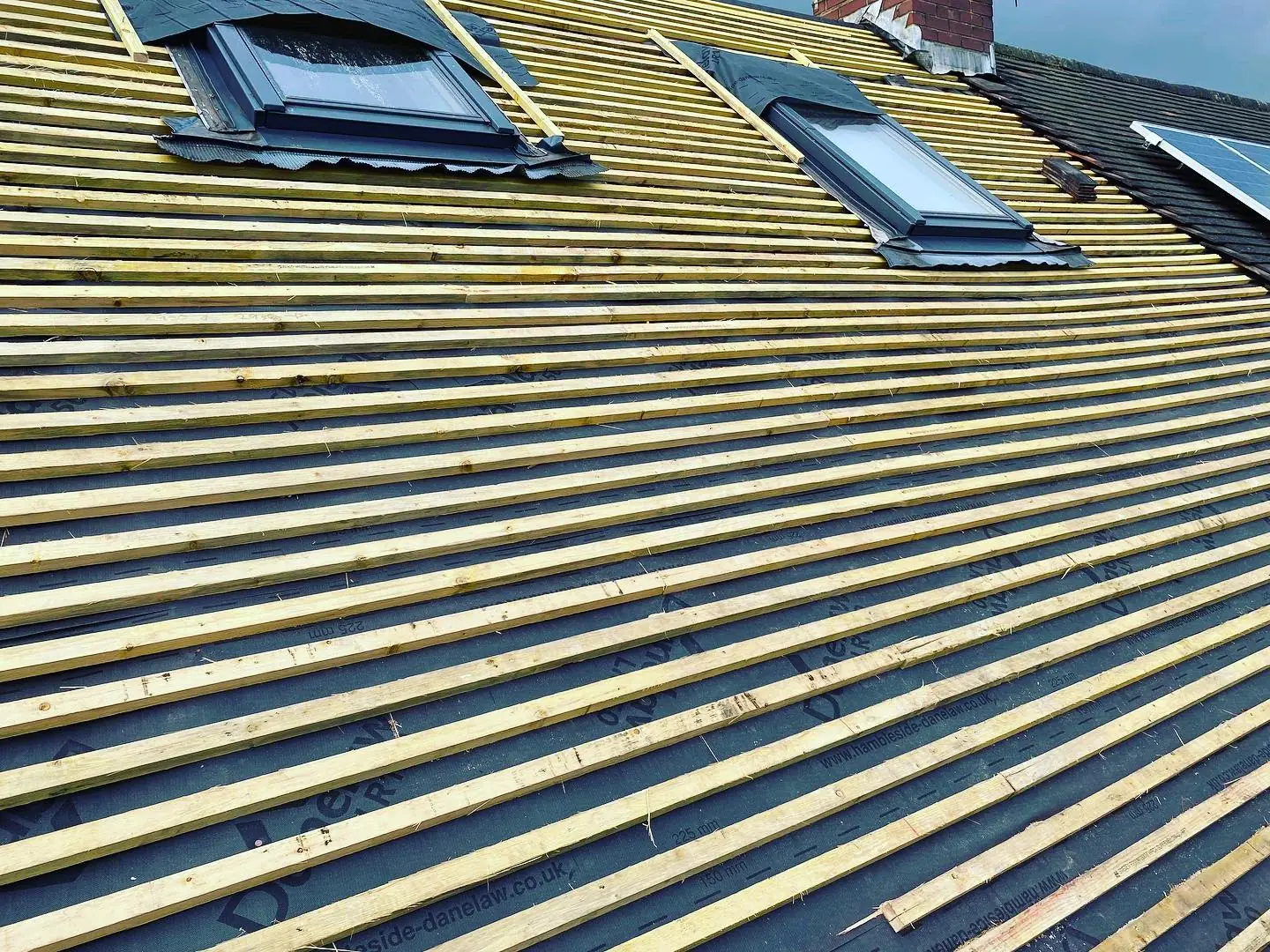
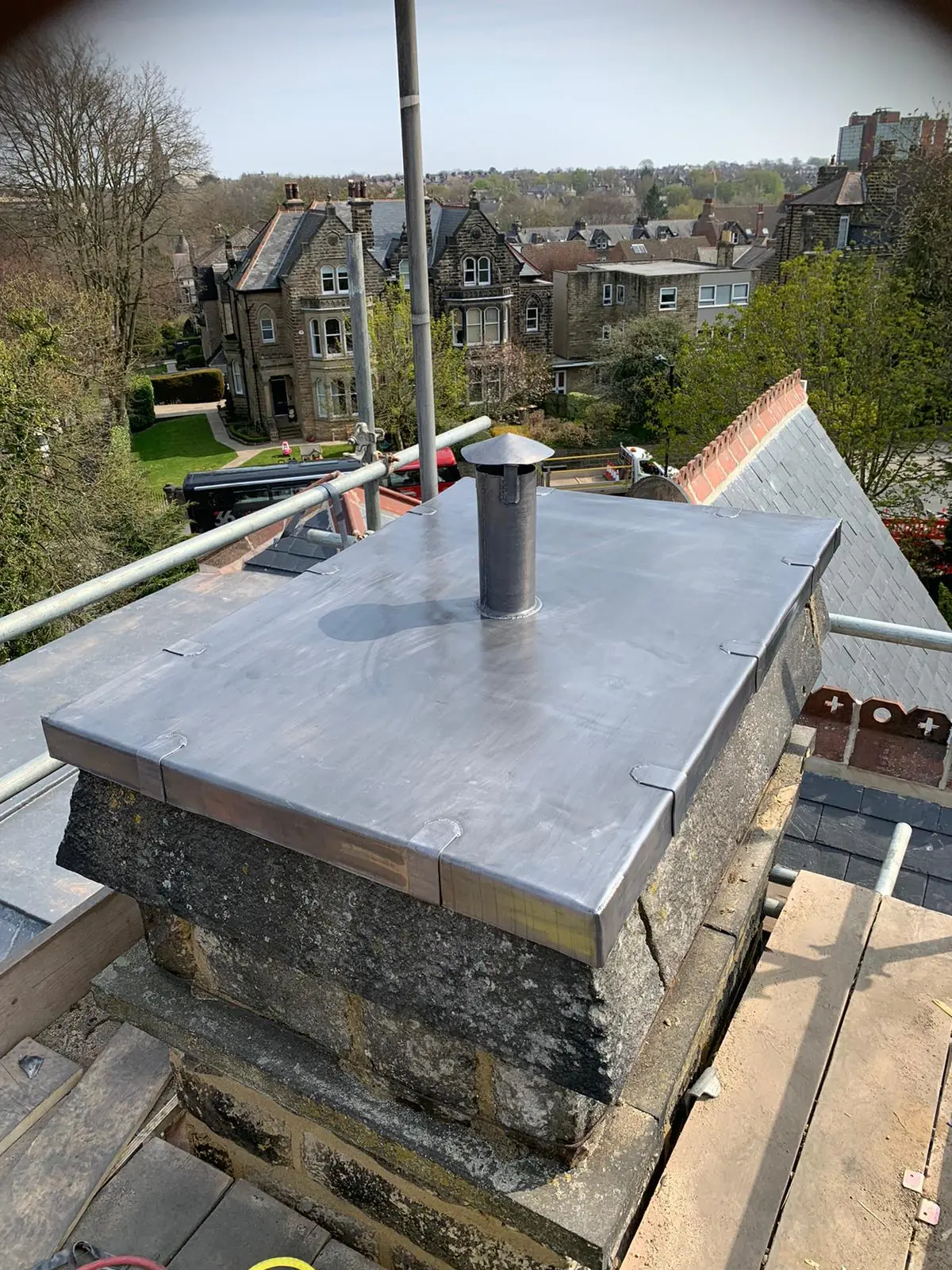
How We Install a Corrugated Roof That Won't Leak or Lift
Most corrugated roof failures come down to poor overlap or poor fixing, not the sheet itself. Here's how we fit one properly.
- Check and repair the purlins first — sheets fixed onto a rotten or sagging frame will never sit right
- Confirm the roof pitch meets the minimum for the chosen sheet profile, generally around 10 degrees for deep-profile steel and higher for shallower profiles
- Lay sheets with a minimum side overlap of two corrugations, so wind-driven rain can't track sideways through the join
- Overlap the end of each sheet by at least 150-250mm depending on pitch, always with a purlin sitting directly underneath the overlap
- Fix every sheet at the crest of the wave, never in the trough, using the correct screws with rubber washers to seal each fixing point
- Fit ridge caps with a minimum 200mm overlap and seal them with the right filler for the profile
- Clear the site and remove all offcuts and old sheeting, typically 1 to 2 days for a garage or outbuilding roof
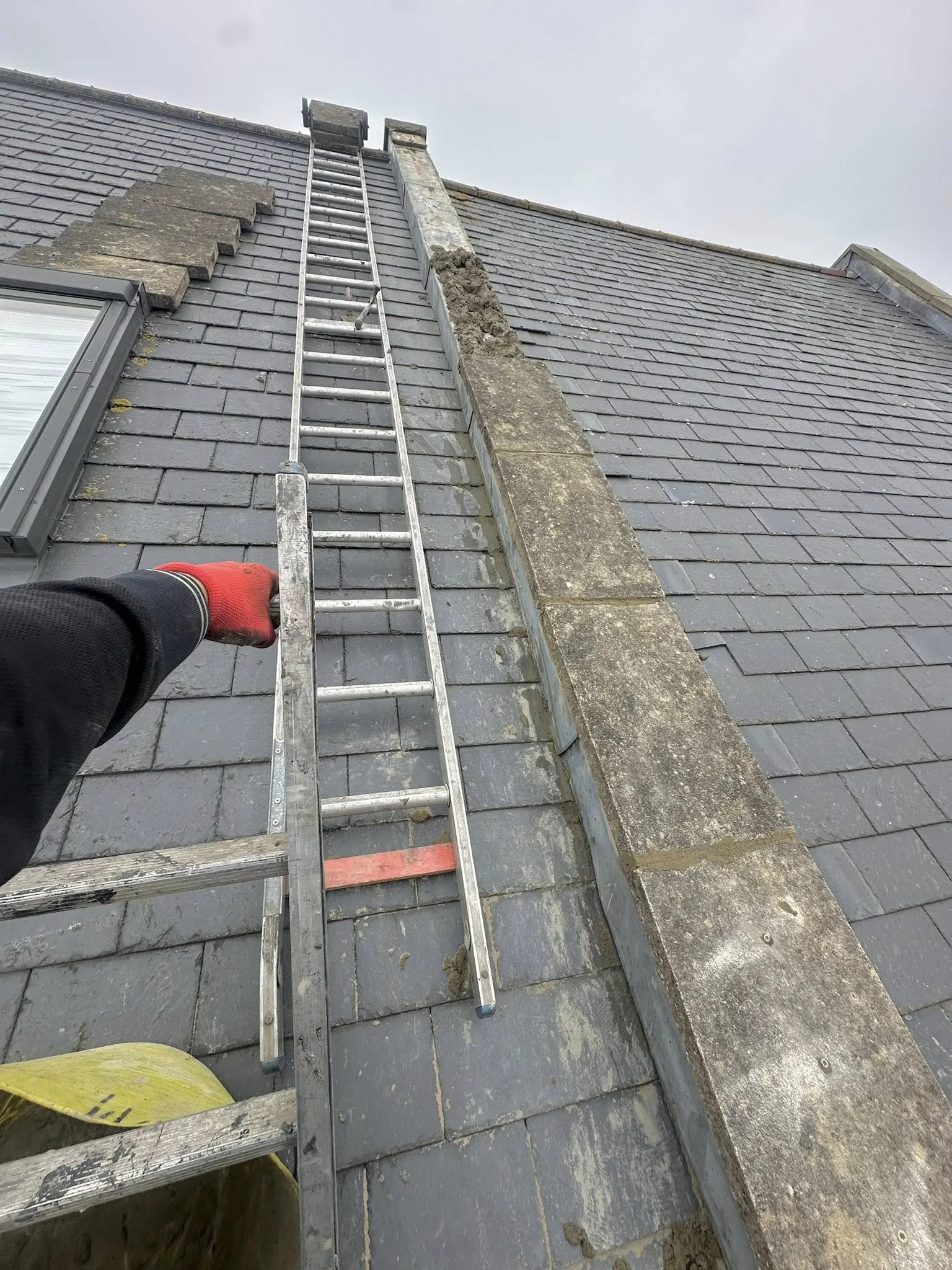
Signs of a Failing Corrugated Roof, and How to Check a New Job's Done Right
Whether you're worried about an existing roof or checking work we've just finished, here's what to look for.
Signs Your Corrugated Roof Is Failing
- Rust streaks running down the sheets or through fixing holes, a sign the coating has broken down
- Sheets lifting or rattling at the edges in wind, usually a fixing that's worked loose or missing its washer
- Daylight visible through the roof at the overlaps, meaning water can get in the same way
- Cracking or crumbling at the edges of fibre cement sheets
- A sagging ridge line or dipping sheets, usually a purlin problem underneath
- Green or black algae building up in shaded troughs, holding moisture against the sheet
How to Check a Corrugated Roofing Job Was Done Properly
- Every fixing should sit on the crest of the wave with a compressed rubber washer, never in the trough
- Overlaps should sit tight and even, with no visible gaps between sheets
- Ridge caps should be firmly fixed and properly sealed, not just sitting loose on top
- Ask to see photos of the purlins taken before sheets went on — proof the frame underneath was sound
- You should get written confirmation of the material, sheet gauge, and any asbestos test results
- We back every corrugated roof we fit with a 10-year workmanship guarantee, in writing, from day one
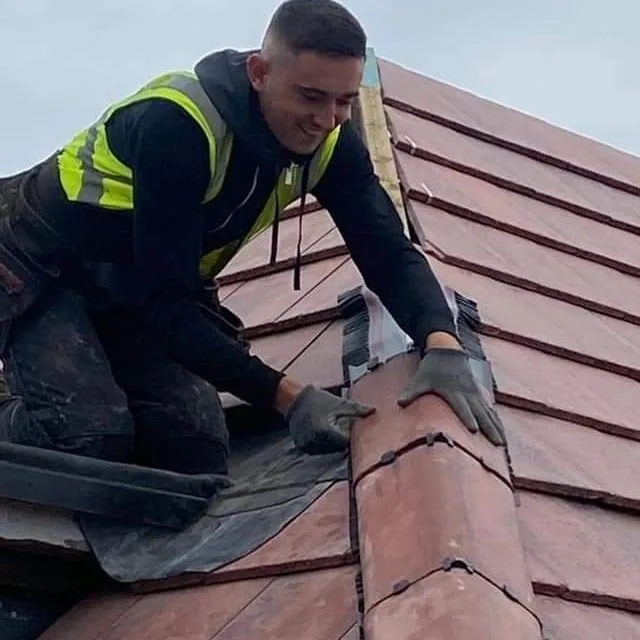
Keeping Your Corrugated Roof Watertight for Years to Come
A little maintenance twice a year keeps a corrugated roof doing its job for decades.
- Clear leaves and debris from the troughs of the sheets, especially after autumn leaf-fall
- Check fixing screws each year, as washers can perish and screws can work loose over time
- Look for early rust spots on steel sheets and treat them before they spread
- Trim back overhanging branches that scuff the coating or drop debris into the troughs
- Wash off algae and moss build-up in shaded corners rather than letting it sit and hold moisture
- Give the roof a five-minute check after any storm to catch a lifted sheet before it becomes a leak
Cost & Pricing Guidance
Corrugated roofing pricing across the UK for 2025/26 typically runs like this:
- Galvanised steel sheets: £8-£15 per m² (material only)
- Aluminium sheets: £15-£25 per m² (material only)
- PVC or GRP fibreglass sheets: £10-£20 per m² (material only)
- Fibre cement sheets: £15-£25 per m² (material only)
- Fully installed, including labour and fixings: £45-£90 per m²
A typical garage or single outbuilding roof costs £800 to £3,500 all in, depending on size, material, and access.
Asbestos cement roofs add extra cost. Removal alone typically runs £400-£900 for a single garage, with full removal and replacement usually landing between £1,200 and £3,500 depending on size, disposal, and whether scaffolding is needed. Straightforward repairs to a sound roof, such as replacing a cracked sheet or resealing loose fixings, run £150-£400.
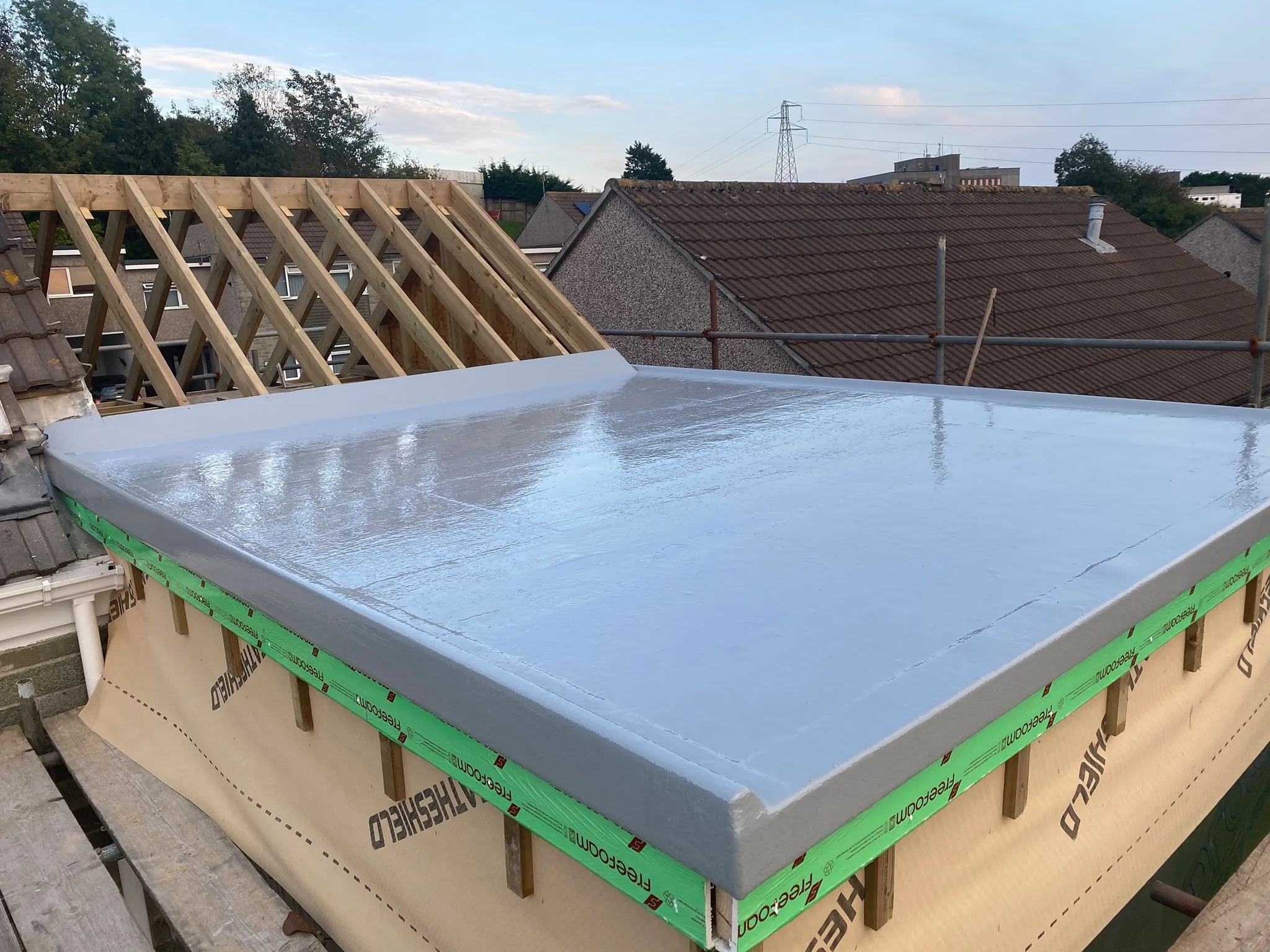
What pushes the price up or down: access, roof pitch, the number of penetrations for pipes or rooflights, whether old sheeting or asbestos needs removing first, and the sheet gauge you choose.
These are general ranges, not a quote. A fixed price needs a proper survey — and our drone survey is free, with no obligation.
Why Choose Tate & Sons for Your Corrugated Roof
Corrugated and metal roofing work is led by Daniel Oakland, Project Manager and Lead Roofer, who has 20+ years in the trade. He specialises in EPDM, GRP, and standing-seam metal systems, and brings that same eye for correct fixing and overlap detail to every corrugated roof we sheet, from a single garage re-cover to a full commercial unit near Colwick.
Tate & Sons was founded by James Tate on a simple idea: find out what's genuinely wrong, use the right materials, and leave something that holds for years, not months. Read more on our About page.
Our roofers are directly employed, not subcontracted. They hold NVQ Level 2 and 3 qualifications in Roofing Occupations and carry CSCS cards. Every corrugated roofing job comes with a free drone survey up front and a 10-year workmanship guarantee once the work is finished.
Corrugated Roofing Across Nottingham and the Wider County: Areas We Serve
We fit and repair corrugated roofs right across Greater Nottingham and out into the wider county. Wherever your garage, outbuilding, or commercial unit sits, our crews know the local building stock and access.
- Nottingham City Centre (NG1)
- The Park (NG1)
- West Bridgford (NG2)
- Sneinton (NG2)
- Wollaton (NG8)
- Lenton (NG7)
- Beeston (NG9)
- Chilwell (NG9)
- Stapleford (NG9)
- Arnold (NG5)
- Sherwood (NG5)
- Mapperley (NG3)
- Carlton (NG4)
- Gedling (NG4)
- Hucknall (NG15)
- Long Eaton (NG10)
- Mansfield (NG18)
- Sutton-in-Ashfield (NG17)
Got Questions?
Your Flat Roofing Questions, Answered Properly
How much does corrugated roofing cost in Nottingham?
Most garage or outbuilding corrugated roofs cost £800-£3,500 fully fitted, depending on size, material, and access. Galvanised steel is the cheapest material at roughly £8-£15 per m², while aluminium runs £15-£25 per m². Fully installed prices, including labour and fixings, generally sit between £45 and £90 per m². Asbestos removal adds extra cost on older roofs. A survey gives you an exact figure.
How long does corrugated roofing last?
A properly installed steel corrugated roof typically lasts 20 to 30 years, and aluminium can reach 35 to 50 years. Fibre cement sheets often last 30 to 40 years, while PVC and GRP sheets tend to sit at the shorter end, around 15 to 25 years. Coating quality, sheet gauge, and correct fixing all affect how close a roof gets to its maximum lifespan. Poor overlap or fixing is the most common reason a corrugated roof fails early.
What's the difference between corrugated metal, PVC, and fibre cement sheets?
Metal sheets, usually galvanised steel or aluminium, are the strongest and most common choice for garages and workshops. PVC and GRP fibreglass sheets are lighter and often used where you want some light through the roof, such as a lean-to or carport. Fibre cement sheets are heavier and more rigid, with strong fire resistance, and are common on agricultural and industrial buildings. Your budget, the building's use, and how much daylight you want decide which fits best.
Can you walk on a corrugated roof?
No, corrugated sheeting should never be walked on directly, whatever the material. The sheets are thin and can crack, dent, or give way under body weight, especially fibre cement and PVC. Anyone needing access for maintenance should use proper roof ladders or crawling boards that spread the weight across several purlins. If you need regular access to a roof space, tell us at survey stage so we can specify a suitable buildup.
Does corrugated roofing rust?
Steel corrugated sheets can rust if the protective zinc coating (galvanising) is scratched, worn, or cut through without resealing the edge. Aluminium doesn't rust in the same way, since it forms its own protective oxide layer naturally. Fibre cement and PVC sheets don't rust at all, since they contain no exposed steel. Cut edges on steel sheets are the most common place rust starts, so these need sealing during installation.
Do I need planning permission for a corrugated roof on my garage or outbuilding?
Most straightforward like-for-like replacements on an existing garage or outbuilding don't need planning permission. Permission is more likely required if you're changing the building's height, footprint, or use, or if the property sits in a conservation area such as The Park or parts of Lenton. Building Regulations can also apply to larger outbuildings depending on size and use. We flag anything that applies during your survey.
My old corrugated roof might be asbestos. What should I do?
Don't drill, cut, jet-wash, or walk on it until it's been tested, since disturbing asbestos cement is the real risk, not leaving it alone. Grey, flat-profiled corrugated sheeting on garages and outbuildings built before the early 2000s is the most likely candidate. Get a sample tested by a UKAS-accredited lab to confirm either way. Depending on the result and condition, you may be able to overlay new sheeting rather than remove the old, or you may need licensed removal.
Can you overlay new corrugated sheets over an old roof?
Yes, in some cases, as long as the existing sheeting and structure underneath are sound and can carry the extra weight. This is often used with undamaged asbestos cement roofs, since it avoids disturbing the material entirely. It only works if the purlins are in good condition and the pitch still suits the new profile. We check this at survey stage before recommending overlay over full removal.
What roof pitch do corrugated sheets need?
Most deep-profile steel corrugated sheeting needs a minimum pitch of around 10 degrees to shed water properly. Shallower or lower-profile sheets generally need a steeper minimum pitch to avoid water backing up at the overlaps. A roof laid too flat for its profile is one of the most common causes of leaks at the sheet joins. We measure your roof pitch during survey and match the profile to suit it.
Book Your Free Drone Roof Survey Today
See exactly what your roof needs before any work starts. No ladders, no pressure — just a clear picture from a local Nottingham team.
A tired roof only gets worse as water works deeper into the deck and timber beneath it. A quick, free drone survey today tells you exactly where you stand — and often the fix is smaller and cheaper than you feared. Book now, get an honest quote, and protect your home before the next East Midlands downpour finds the weak spot.
📍 57 Cyril Avenue, Nottingham, NG8 5BA
📞 0115 647 4455
Call the Nottingham team today on 0115 647 4455, or request your free drone survey online. We’re already working across your area.
Get in Touch
Tate & Sons Roofing — Nottingham
57 Cyril Avenue, Nottingham, NG8 5BA
📞 0115 647 4455
✉️ [email protected]