
🏠 Trusted Local Roofers
Corrugated Roofing Market Harborough
Corrugated roofing in Market Harborough sits over garages, workshops, stables and farm buildings right across the Welland Valley. It is the go-to covering when you want a large span sheeted quickly, cleanly and at a fair price. Tate & Sons Roofing fits and replaces corrugated sheet roofs for homeowners, smallholders and light-commercial sites across the Harborough District.
This page runs through the main sheet types — bitumen, fibre-cement, metal and PVC — with real costs, lifespans and the jobs each one suits best. You will also find honest guidance on old asbestos sheets, fitting over an existing roof, and stopping condensation drips for good. It starts with a free drone survey and a written price, with no scaffold just to take a look. Corrugated work is one part of the wider service we offer as a roofing contractor across Market Harborough.
- Fully Insured
- 10-Year Guarantee
- 5-Star Rated
Quick Free Estimate - No Obligation
We're not just roofers – we're your neighbours.
Fully Insured • Response within 15 mins
🔒 Your details are safe with us. No spam, ever.
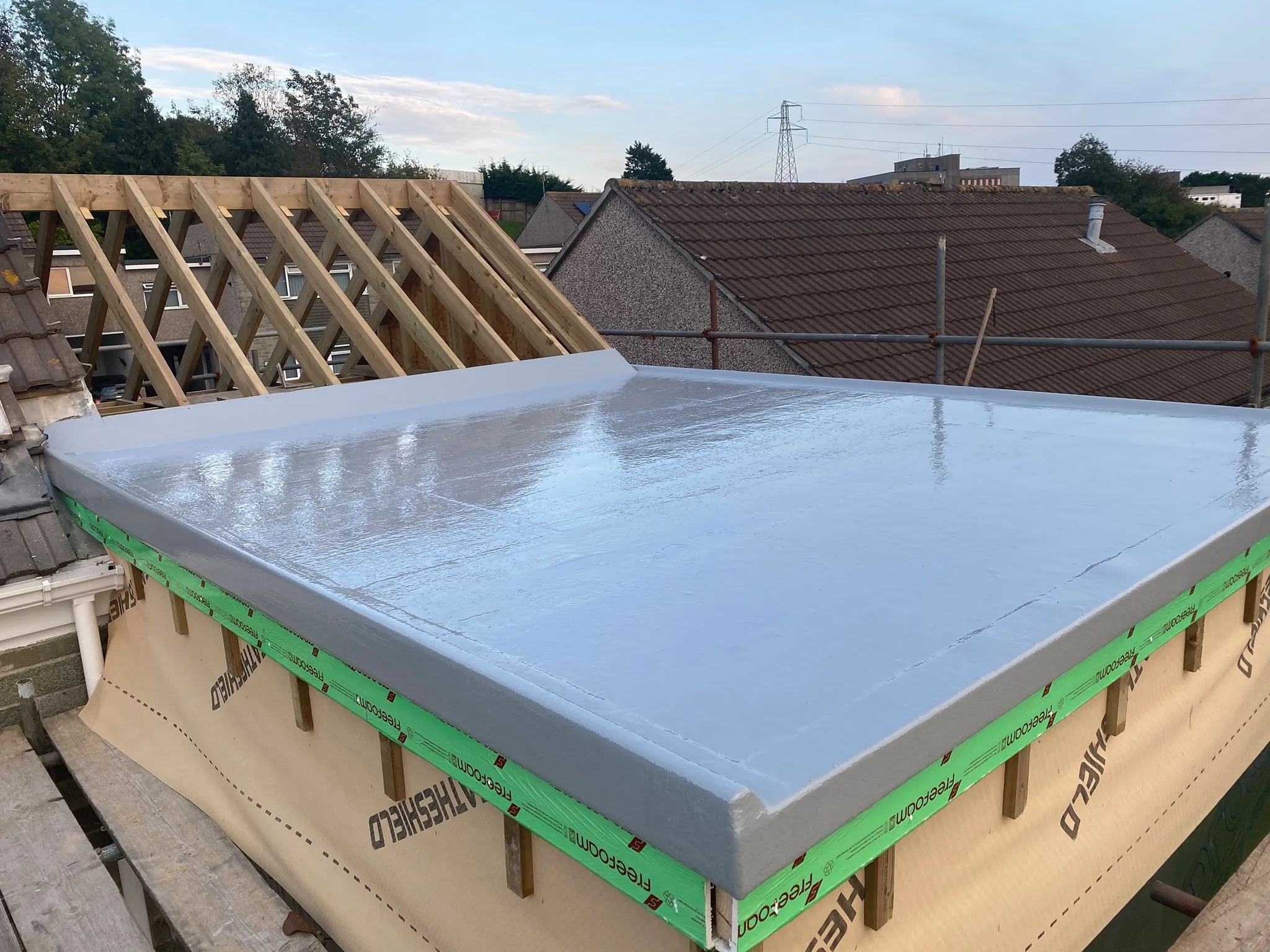
Know When Your Corrugated Roof Is Telling You It Needs Work
A corrugated roof usually gives you plenty of warning before it fails outright. Catch the signs early and a repair or a few new sheets will often see it right, long before water gets to whatever you are storing below.
Keep an eye out for these:
- Rust streaks or flaking paint spreading across metal sheets
- Cracked, chipped or flaking edges on old fibre-cement sheets
- Loose, missing or spinning fixings along the sheet crowns
- Perished washers letting water past the screw holes
- Sheets that lift or rattle in a strong Welland Valley wind
- Moss and green growth holding damp against the surface
- Daylight showing through at the ridge, eaves or overlaps
Not every drip means the roof has failed. On a cold morning a metal sheet roof can drip from the underside with no rain at all. That is condensation, not a leak, and the fix is different. A leak follows the weather, while condensation shows up on still, cold days regardless of it. A proper look tells the two apart before anyone reaches for sealant. Guess wrong and you pay for a repair that never solves the real problem.
The Four Corrugated Sheet Types, and What Each One Is Built For
Four materials cover almost every corrugated roof in this area. Each suits a different building, budget and lifespan. Bitumen sheets are the lightest and cheapest for a small garden store. Fibre-cement is the quiet, long-life choice for stables and farm buildings. Metal and box-profile give the longest life and the most modern look. PVC sheets bring daylight into a workshop or carport.
Larger farm and light-commercial sheeting is a job in its own right, which we cover on our Industrial Roofing Installation page. Whether you are in Great Bowden, Lubenham or out toward Medbourne, we will match the sheet to the building and how you use it. Ryan Tate walks you through it in plain terms, not sales patter.
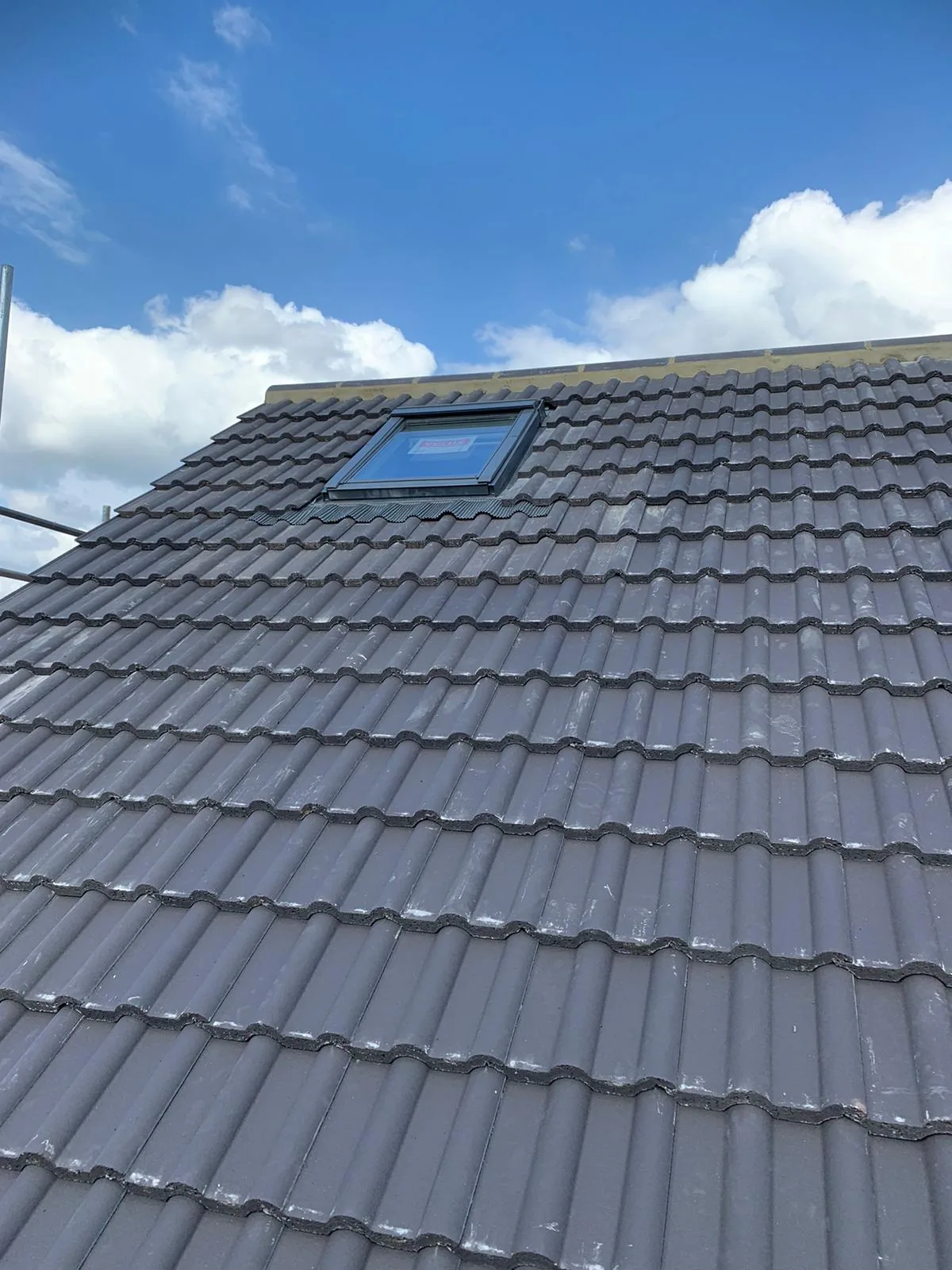
- **Bitumen (Onduline-style)*sheets are light, flexible and simple to fix. They suit sheds, log stores and small garages on a tight budget, and one person can carry a sheet with ease.
- **Fibre-cement*sheets are dense, quiet in the rain and very long-lived. They stay cool in summer, resist moss and rot, and are the traditional pick for stables and agricultural buildings around the villages.
- **Metal and box-profile*steel sheets give the longest service and a clean, modern finish. A plastisol coating shrugs off weather for decades — see our Metal Roofing page for the full range.
- **PVC*sheets are usually clear or translucent, fitted as rooflights or over a carport to let daylight through while keeping rain out.
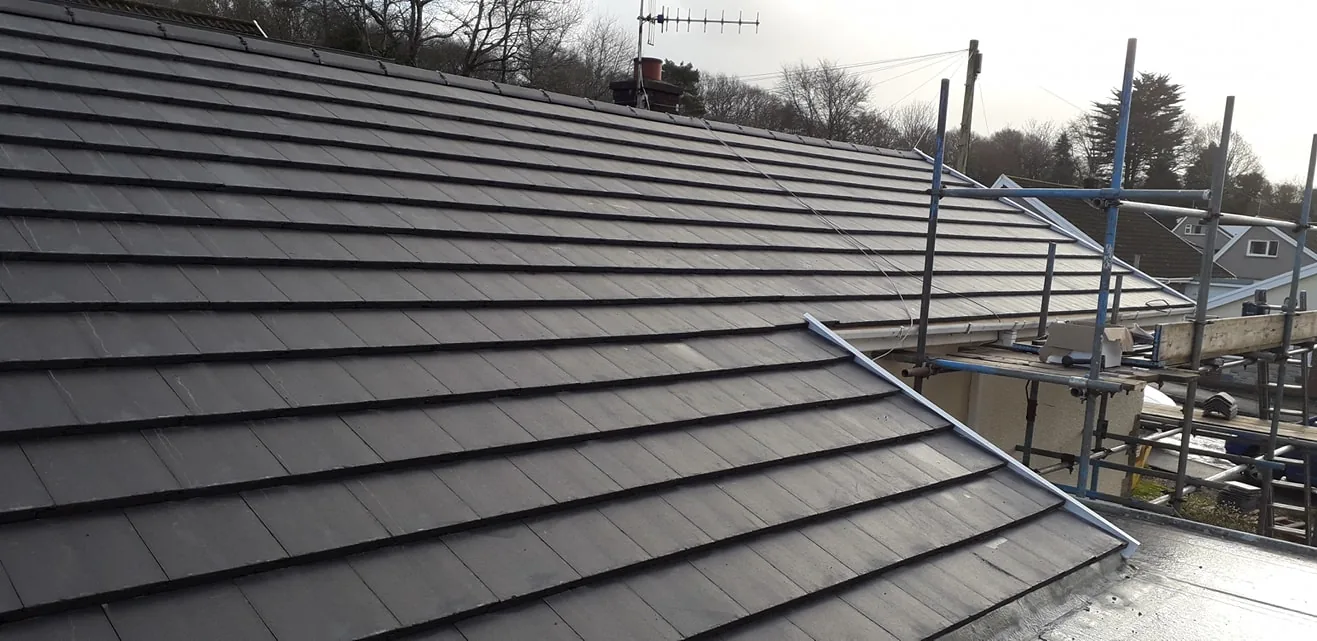
Compare the Sheet Types Side by Side Before You Commit
The table below sets the four main sheet types against each other on price, life and best use. Costs are a supply-and-fit guide for a straightforward garage or outbuilding roof. Your own figure depends on size, pitch and access, which is what a survey settles.
| :-: | :-: | :-: | :-: |
| Sheet type | Typical cost (per m²) | Typical lifespan | Best for |
| Bitumen (Onduline-style) | £25–£45 | 15–25 years | Sheds, log stores and small garages on a budget |
| Fibre-cement | £30–£55 | 30–50 years | Stables, barns and farm buildings; quiet and cool |
| Metal / box-profile | £30–£60 | 40+ years | Longest life and a modern look on garages and units |
| PVC (translucent) | £20–£40 | 10–15 years | Rooflights and carports where you want daylight |
People often ask about corrugated versus box-profile. Traditional corrugated has the rounded, wavy profile you picture on an old barn. Box-profile has square, upstanding ribs and a flatter look, and it will drain on a shallower pitch. Both come in steel, both last well, and box-profile is simply the more modern take on the same idea. The right one comes down to your roof pitch and the look you want.
What a Corrugated Roof Really Costs Around Market Harborough
Cost comes down to three things: the sheet material, the size of the roof and how easy it is to reach.
As a supply-and-fit guide, bitumen sheets run roughly £25–£45 per square metre, fibre-cement £30–£55, metal and box-profile £30–£60, and translucent PVC £20–£40. On a whole-job basis, a single garage roof typically lands around £750–£2,000, and a double garage or larger outbuilding around £1,600–£3,500, sheets and labour together.
What moves the price up or down:
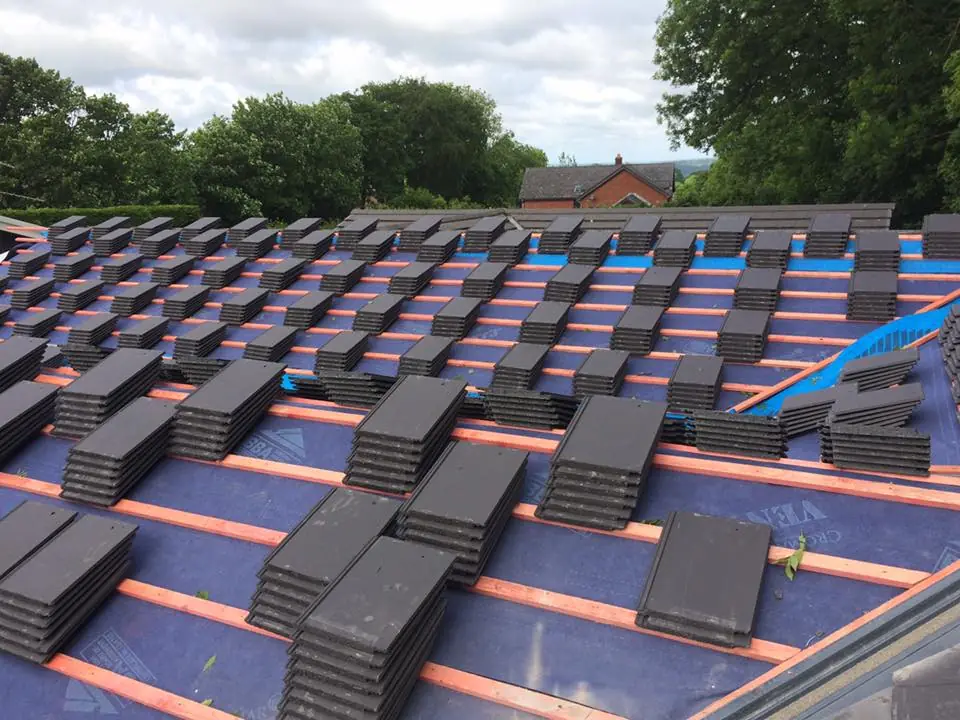
- **Roof size and pitch*— a bigger span or a shallow pitch changes the sheet and the overlap
- **Access*— a low garage reached by ladder costs far less than a two-storey unit needing scaffold, at roughly £550–£700
- **Timber condition*— rotten purlins or battens under the old sheets add cost before new sheets go on
- **Asbestos removal*— licensed disposal of old cement sheets typically adds £500–£1,000
- **Insulation or anti-condensation lining*— worth adding on a workshop you spend time in
These are general market ranges, not a quote for your roof. Two buildings the same size can price very differently once pitch, access and old-sheet disposal are factored in. The only way to a firm figure is a proper survey, which is what our free drone survey gives you — followed by a clear written price with nothing added later. A fixed price needs a survey.
Old Sheets and Asbestos: The Safety Check That Comes First
If your building went up before 2000, treat the old corrugated sheets as if they may contain asbestos until a test proves otherwise. Grey, dense, wavy cement sheets on garages, stables and farm buildings of that age were commonly made with white asbestos fibres bound into the cement.
There is a second safety point on any sheet roof. Old fibre-cement and corrugated sheets can become fragile with age, and a roofer can fall straight through one that looks solid. Any work is planned so nobody puts their weight on the sheets. The Advisory Committee for Roofsafety on non-fragile roofs explains why old sheets should always be treated as fragile during maintenance. We work to that standard on every job around Kibworth Beauchamp, Foxton and the wider district.
Left alone and in sound condition, those sheets are low risk. The danger comes from breaking, cutting or drilling them, which can release fibres into the air. The only reliable way to know is a sample tested by a UKAS-accredited lab — you cannot tell for certain by eye. If a test comes back positive, the sheets must be handled and disposed of the right way, double-bagged and taken to a licensed site. We will not cut or drill suspect sheets, and we never skip this step to save a day.
Fitting Over an Old Roof, and Stopping Condensation for Good
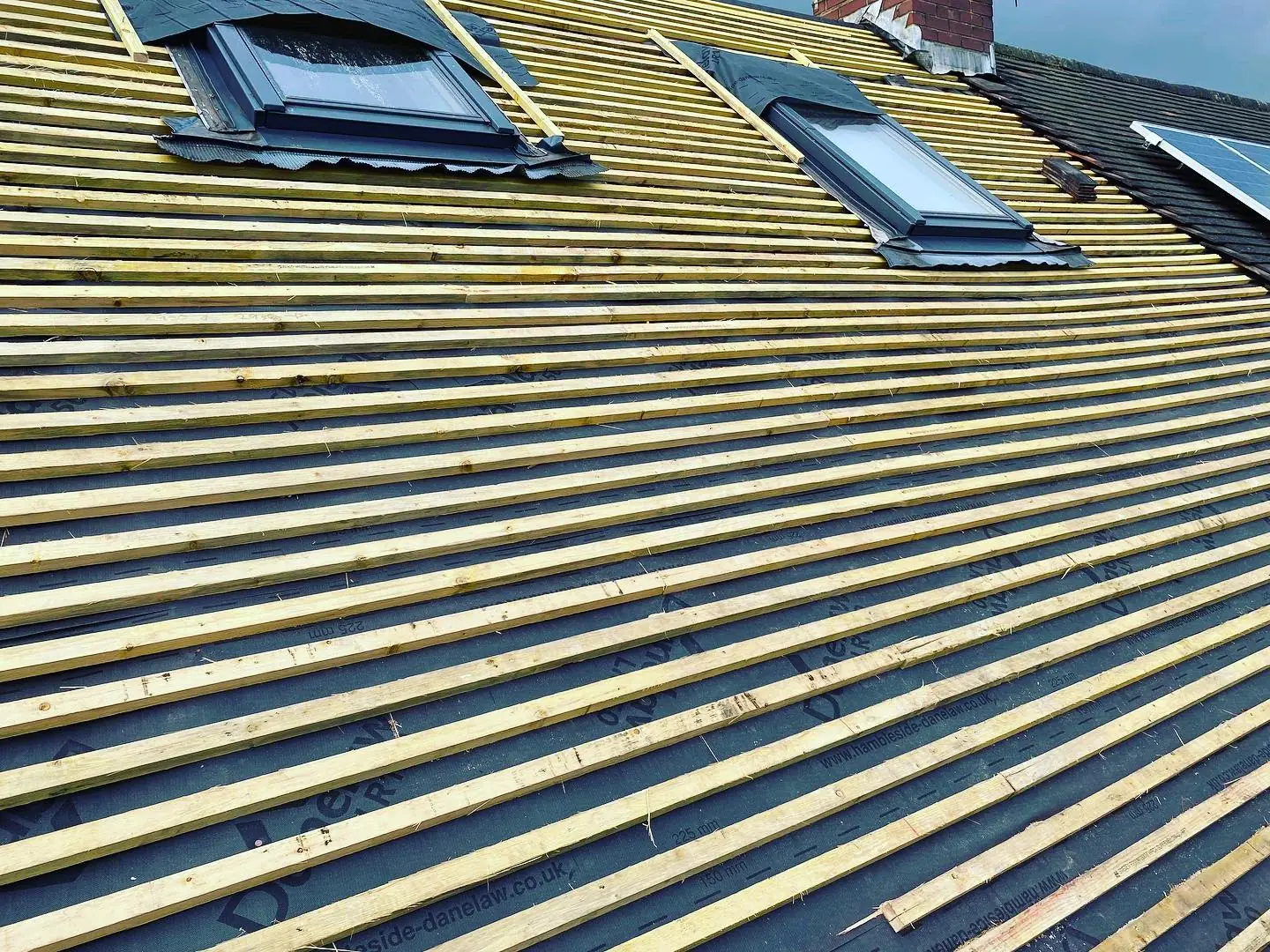
People often ask whether new sheets can go straight over an existing roof. Sometimes they can, but it is rarely the right call. Over-sheeting hides rotten timber, traps damp between the layers and adds weight the frame may not be rated for. On most jobs we strip the old sheets, check the purlins and battens, then fit clean new sheets to a sound structure.
Here is the order a re-sheet follows on nearly every job:
- Old sheets removed, with any asbestos sheets handled and disposed of correctly
- Purlins, battens and timbers checked, and rotten sections replaced
- Anti-condensation lining or insulation added where you want a drier building
- New sheets laid with correct overlaps and the right fixings and washers
- Ridge, eaves and flashings fitted to shed water cleanly
- Site cleared and the finished roof checked before we leave
Condensation is the complaint we hear most on metal sheet roofs. Warm, damp air inside meets a cold steel sheet and turns to water on the underside, which drips just like a leak. An anti-condensation liner or a breathable membrane under the sheets fixes it at the fitting stage. Get it right once and you forget about it. Most garage and outbuilding re-sheets take one to three days, weather allowing, and we give you a realistic timeframe before we start.
Why Market Harborough Owners Call Tate & Sons First
You are not just buying sheets — you are buying whoever fixes them down. Ryan Tate, our project manager, joined the trade full-time after his NVQ Level 3 in Roofing, and runs the modern sheet and box-profile systems on site day in, day out. He is part of the crew that turns up to your building, not just the man who quoted it.
Founder Michael Tate started his apprenticeship at sixteen and built the firm on one idea: survey the job properly and fix the cause, never patch a roof to look right for a season and fail the next. Between us we carry over 45 years of combined experience, hold NVQ Level 2 and 3 qualifications in Roofing Occupations, and keep CSCS cards and NFRC trade-body membership. Michael still handles much of the surveying himself, so the price you get is grounded in what the building actually needs. Read more about the people behind the work on our About Tate & Sons Roofing page.
Areas We Serve Across Market Harborough and the Harborough District
We fit and replace corrugated roofs across Market Harborough and the surrounding Welland Valley villages. If your area is not on the list below, call us anyway — if you are nearby, there is a strong chance we cover you.
- Market Harborough (LE16)
- Great Bowden (LE16 7)
- Little Bowden (LE16 8)
- Lubenham (LE16 9)
- Foxton (LE16 7)
- Medbourne (LE16 8)
- Kibworth Beauchamp (LE8)
- Great Glen (LE8 9)
- Fleckney (LE8 8)
- Husbands Bosworth (LE17 6)
- Desborough (NN14 2)
Got Questions?
Your Corrugated Roofing Questions, Answered Properly
What types of corrugated roofing sheet are there?
The four main types are bitumen, fibre-cement, metal and PVC. Bitumen sheets, such as Onduline, are light and cheap and suit sheds and small garages. Fibre-cement is dense, quiet and long-lived, and is the traditional choice for stables and farm buildings. Metal and box-profile steel give the longest life and a modern look, while translucent PVC is used for rooflights and carports where you want daylight through the roof.
How long does a corrugated roof last?
It depends entirely on the material. Bitumen sheets last around 15 to 25 years, fibre-cement 30 to 50 years, and coated metal or box-profile 40 years or more. Translucent PVC has the shortest life, usually 10 to 15 years, as sunlight breaks it down over time. Good fixings, correct overlaps and the odd wash-down of moss all help any sheet roof reach the top of its range.
How much does a corrugated roof cost?
As a supply-and-fit guide, expect roughly £20 to £60 per square metre depending on the sheet you choose. A single garage roof usually lands around £750 to £2,000, and a double garage or larger outbuilding around £1,600 to £3,500. Access, roof pitch, timber repairs and old-sheet disposal all move the figure. A free drone survey gives you an exact written price rather than a rough phone estimate, and a fixed price always needs a survey first.
What is the difference between corrugated and box-profile?
Corrugated has the rounded, wavy profile of a classic barn roof, while box-profile has square, upstanding ribs and a flatter, more modern look. Box-profile drains on a shallower pitch, down to around four degrees, where traditional corrugated needs a little more fall. Both come in coated steel and both last for decades. The right one comes down to your roof pitch, the span and the finish you prefer.
Could my old corrugated roof contain asbestos?
If the building went up before 2000, treat the sheets as if they might, until a test proves otherwise. Grey, dense, wavy cement sheets from that era were commonly made with white asbestos bound into the cement. In sound, undamaged condition they are low risk, but cutting or drilling them can release fibres. The only reliable check is a sample tested by a UKAS-accredited lab, and any confirmed asbestos must be handled and disposed of the correct way.
Can you fit new sheets over an existing corrugated roof?
Sometimes, but it is rarely the right choice. Over-sheeting hides rotten timber, traps damp between the layers and adds weight the frame may not be rated to carry. On most jobs we strip the old sheets, check the purlins and battens, and fit clean new sheets to a sound structure. That way you get the full lifespan out of the new roof rather than covering up a problem for the next owner.
Why does my metal corrugated roof drip when it has not rained?
That is almost always condensation, not a leak. Warm, damp air inside the building meets the cold underside of the steel sheet and turns to water, which then drips exactly like a leak would. An anti-condensation liner or a breathable membrane fitted under the sheets is the proper fix. Sealing the outside will not solve it, because the water is forming on the inside face of the sheet.
Do I need planning permission for a new corrugated roof?
A like-for-like re-sheet on an existing garage or outbuilding usually does not need planning permission. Changing the roof shape, raising the height, or work on a listed building or in a conservation area can need consent first. Parts of Great Bowden and Foxton sit in areas where the planning authority looks more closely at visible changes. We check this before quoting, so there are no surprises once the job is booked.
Book Your Free Drone Roof Survey Today
See exactly what your corrugated roof needs before any work starts. No ladders, no pressure — just a clear picture from a local Market Harborough team.
Every season a tired sheet roof waits, rust creeps further and old fixings loosen their grip on the frame. A quick, free survey today tells you exactly where you stand — and the fix is often smaller and cheaper than you feared. Book now, get an honest quote, and protect your building before the next storm finds the weak sheet.
ð 5 Hood Close, Market Harborough, LE16 9XS
ð 01858 457600
Call the Market Harborough team today on 01858 457600, or request your free drone survey online. We're already working across your area.
Book Your Free Drone Roof Survey
See exactly where your roof stands, with no obligation and no pressure. Call our Market Harborough team or request your free drone survey today.
Get in Touch
Tate & Sons Roofing — Market Harborough Office
5 Hood Close, Market Harborough, LE16 9XS
📞 01858 457600
✉️ [email protected]