
🏠 Trusted Local Roofers
Corrugated Roofing in Hinckley
Corrugated roofing in Hinckley covers more square footage than any other single roof type in the area, once you count every garage, workshop, stable and farm building scattered across the borough. It is the roof over the rural fringe around Sapcote and Sharnford, and over the farm outbuildings dotted along the lanes near Wolvey. Done properly, a corrugated roof sheds heavy rain, shrugs off wind, and asks for almost nothing back for twenty years or more.
This page covers the real signs a corrugated roof needs attention, which sheet material suits your building, the asbestos and planning questions owners genuinely ask, what fitting day looks like, and honest cost ranges for Hinckley. Tate & Sons Roofing fits and repairs corrugated roofing on garages, workshops, stables and agricultural buildings as part of the wider work we do as a roofing contractor across Hinckley. Start with a free drone survey before any price is agreed — no scaffold just to take a look, and no charge either way.
- Fully Insured
- 10-Year Guarantee
- 5-Star Rated
Quick Free Estimate - No Obligation
We're not just roofers – we're your neighbours.
Fully Insured • Response within 15 mins
🔒 Your details are safe with us. No spam, ever.
Spot the Warning Signs Before a Corrugated Roof Fails Outright
A corrugated roof rarely fails without warning. It usually gives a slow build-up of small clues, and most owners in Hinckley only notice once water is already dripping onto something underneath.
Watch for these signs on garages, workshops and outbuildings alike:
- Rust streaks running down steel sheets from fixing points or cut edges
- Cracked, chalky or crumbling patches on older fibre cement sheets
- Sagging between the purlins, visible as a wave when viewed side-on
- Daylight showing through fixing holes or overlaps from inside
- Damp patches or drip marks on stored items directly under the roof
- Moss and algae building up thickly in the troughs of each sheet
- Fixing screws that have backed out, worked loose, or lost their washers
A well-fitted steel or fibre cement roof can run for 25 to 40 years before it needs full replacement. Bitumen sheet has a shorter working life, closer to 15 to 25 years. Either way, a roof reaching the end of its life rarely fails all at once — it fails sheet by sheet, until patching costs more than it saves. A free drone survey settles the question with real footage of every sheet and overlap, not a guess from the ground.
Steel, Fibre Cement or Bitumen — Pick the Right Sheet for the Job
Three sheet materials cover almost every corrugated roof around Hinckley, and each suits a different building. In short: steel is the strongest and most common choice for garages and workshops; fibre cement handles agricultural buildings and larger spans well and resists corrosion; bitumen sheet is the lightest and most affordable, best suited to sheds and low-cost outbuildings that do not need decades of service.
| :-: | :-: | :-: | :-: |
| Material | Typical cost (per m²) | Typical lifespan | Best for |
| Corrugated steel | £15–£40 | 25–40 years | Garages, workshops, industrial units |
| Fibre cement | £20–£35 | 30–40 years | Barns, stables, agricultural buildings |
| Bitumen corrugated sheet | £15–£25 | 15–25 years | Sheds, low-cost outbuildings, quick cover |
Steel sheet comes pre-coated to resist rust, and a plastisol or PVC-type coating adds years of life over a bare galvanised finish, which matters on exposed sites out toward Wolvey where wind-driven rain hits hard. Fibre cement is the modern, asbestos-free replacement product used across agricultural buildings, and it shrugs off the corrosion that eventually catches up with steel near livestock housing. Bitumen sheet is light enough for one person to carry and fits fast, which suits a garden shed or a low-value store, but it is not the roof to choose if you want thirty years without a second thought.
Around the newer estates near Sapcote and Stoney Stanton, most garages already carry a modern steel or tile-effect corrugated roof, while older garages further into Hinckley and traditional farm buildings near Sharnford are more likely still running on original fibre cement or ageing bitumen sheet. If your garage needs more than a roof covering — new timbers or a full rebuild — our garage roof replacement service covers that larger scope. For the technical standards behind coated steel and metal sheet products, the Metal Cladding and Roofing Manufacturers Association's materials guidance sets out the standards manufacturers work to.
Asbestos, Planning and Building Rules Every Owner Should Check First
Corrugated cement sheets fitted before around 2000 have a real chance of containing asbestos, and it looks almost identical to modern fibre cement from ground level. This matters most on older farm buildings, stables and detached garages around Hinckley, where original sheeting has often stayed untouched for forty years or more.
We do not guess. Where a roof is likely to date from before 2000, we treat it as a possible asbestos roof until testing proves otherwise, and any confirmed asbestos sheet is removed by a licensed contractor under proper containment, not stripped off in the same way as a modern sheet. It is a genuine safety step, not an upsell — disturbing an asbestos cement sheet incorrectly is the one thing that turns a manageable roof into a health risk.
Most single-storey outbuildings, garages and agricultural buildings can be re-roofed without planning permission, since like-for-like re-covering usually falls under permitted development. Larger agricultural sheds, buildings near a listed property, or anything that changes the roof's height or shape can need a call to the local planning team first. Building Regulations mostly apply to habitable spaces rather than a detached single-storey garage or farm store. Farm outbuildings along the quieter lanes near Wolvey and Sharnford often fall well outside any conservation boundary, which keeps the process simple, but we confirm this before quoting rather than after.
What Actually Happens on Fitting Day, From Strip-Out to Sign-Off
A corrugated roof replacement follows a set order on every job we run in Hinckley:
- Site made safe and access set up for the roof height and pitch
- Old sheeting stripped, with any confirmed asbestos handled separately by licensed removal
- Purlins and timber structure checked, with any rot or damage replaced
- Breathable membrane fitted where condensation control is needed
- New sheets fitted from the eaves up, with correct overlap at every join
- Ridge, ridge caps and flashings fitted to shed water cleanly
- Site cleared and every fixing checked before we leave
Where a job covers a larger commercial or industrial unit rather than a domestic garage, our industrial roofing installation service covers the bigger spans, insulated panel options and higher-volume fixing that a large shed roof needs.
A single garage roof is usually finished in a day. A larger barn or agricultural building can take two to four days depending on size and access. Daniel Whitmore, our project manager, leads the fitting on most of these jobs personally, and has fitted corrugated sheet on everything from small garden garages to full agricultural roofs on the working farms past Sharnford. He knows the difference between a roof that looks finished and one that is watertight at every overlap, and that difference is where most cheap corrugated jobs go wrong.
What Corrugated Roofing Really Costs in Hinckley
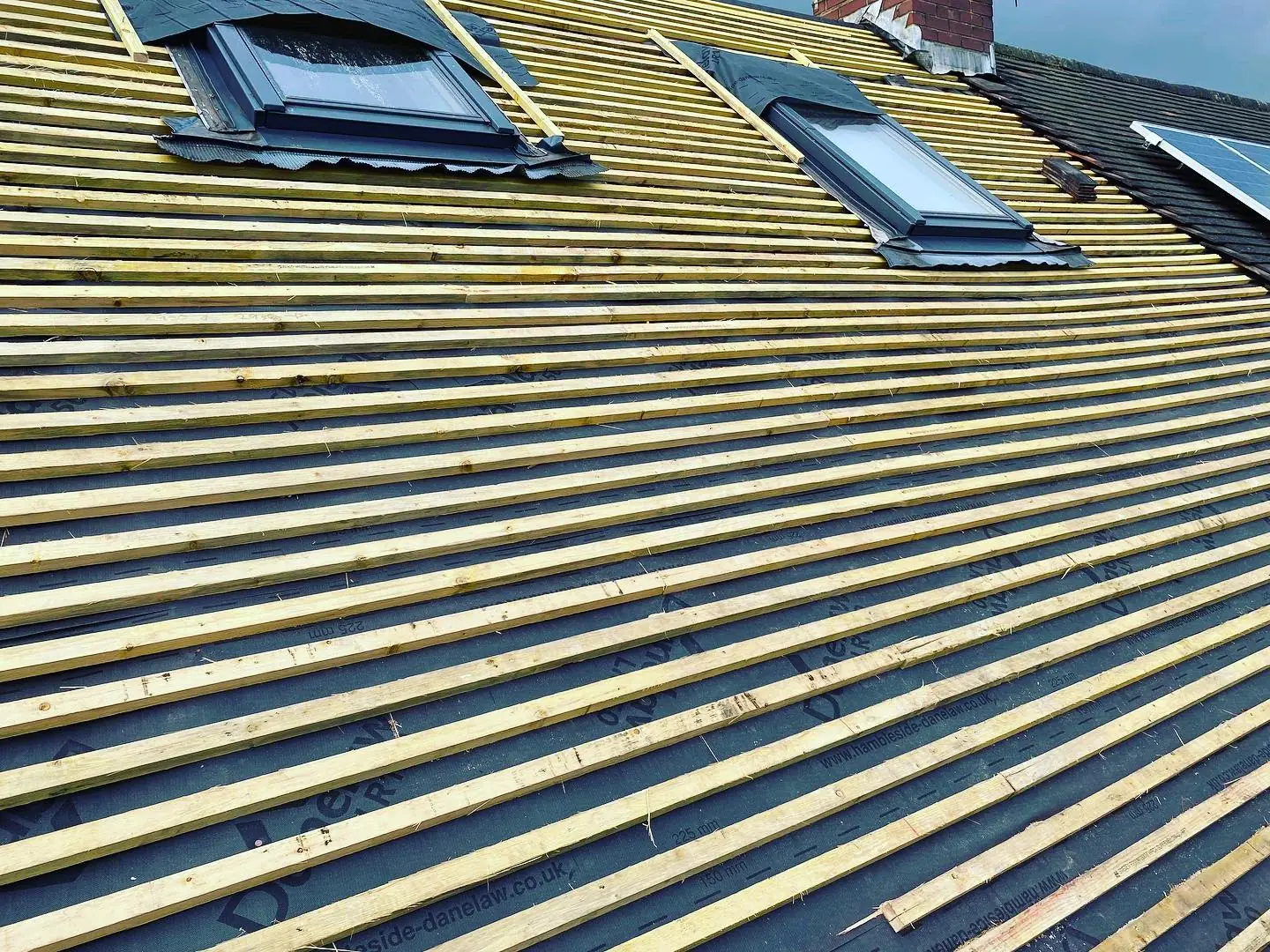
Corrugated is one of the more affordable roofing choices, but the final figure still depends on material, roof size and access. As a general guide, a single garage roof around 15 to 20 square metres typically runs £700–£1,800 fitted, depending on whether you choose bitumen, steel or fibre cement sheet. A larger workshop or stable roof runs roughly £1,800–£4,000. A full agricultural building roof, often well over 100 square metres, can run £4,000–£12,000 or more, particularly where old asbestos sheet has to come off first.
What pushes a price up or down:
- **Material*— bitumen costs least, fibre cement and coated steel cost more but last longer
- **Roof size and pitch*— larger, low-pitch roofs need more overlap and more sheets per square metre of cover
- **Access*— a freestanding garage costs less to scaffold than a barn boxed in by other structures
- **Asbestos removal*— licensed strip-out of old asbestos cement sheet typically adds £1,000–£3,500 depending on roof size
- **Purlin and timber condition*— rotten purlins or timbers usually add £400–£1,500 before new sheet goes on
- **Insulation or lining*— adding an insulated liner or breathable membrane typically adds £10–£20 per square metre
These are general market ranges for Hinckley and the surrounding borough, not a quote for your building — two garages the same size can price differently once pitch, access and sheet material are factored in. A free drone survey gives you exact measurements and a clear written price with nothing added later. A fixed price needs a survey.
Keep a Corrugated Roof Leak-Free, Quiet and Condensation-Free for Years
Most corrugated roof problems in Hinckley come down to two things: water finding its way in at overlaps and fixings, and warm, moist air condensing on the underside of an uninsulated sheet. Both are avoidable with the right detailing at fitting time.
A little seasonal attention keeps a corrugated roof performing:
- Clear moss and debris from the troughs each autumn before it holds water
- Check fixings and washers annually, especially after high winds
- Look for rust streaks or crumbling edges early, before they spread
- Book a free drone survey every few years, or straight after any major storm
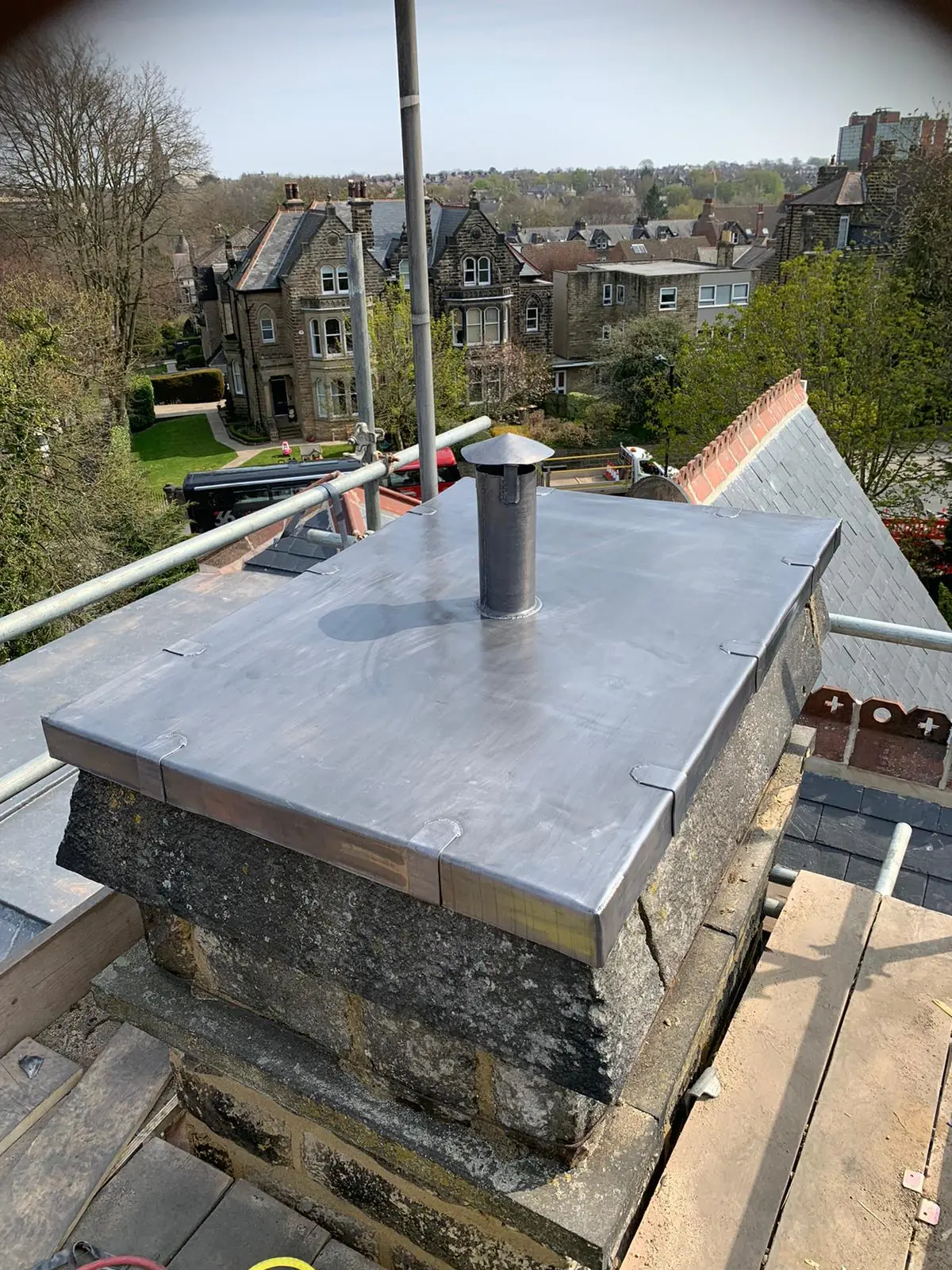
Overlaps need a minimum of one full corrugation at the sides, and enough overlap at the head to shed water in driving rain. Every fixing should sit at the top of a corrugation with a sealing washer, never in the trough where water collects. Condensation dripping onto stored tools, hay or vehicles is almost always a sign of poor ventilation or a missing anti-condensation membrane, not a leak at all — it is one of the most common calls we get from owners of older farm buildings near Elmesthorpe and Sharnford.
None of this needs a specialist visit on its own — just a regular look, and a call to us in Hinckley if anything seems off. Catching a loose fixing or a cracked sheet early is always cheaper than replacing a whole roof section later.
Why Hinckley and Bosworth Landowners Call Tate & Sons First
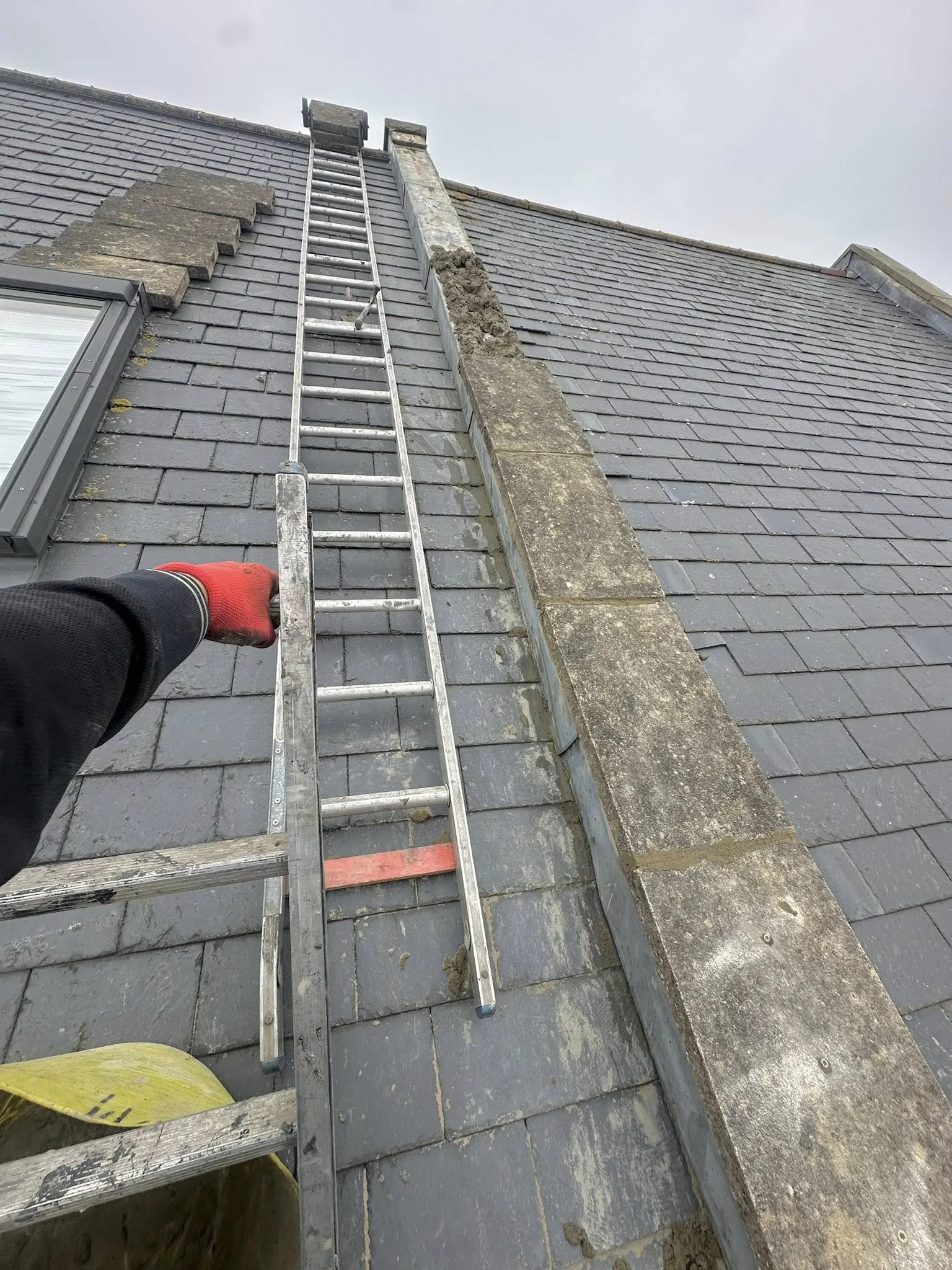
You are not just buying sheet material — you are buying whoever fits it, and how carefully they handle every overlap and fixing. Daniel Whitmore, our project manager, is the specialist behind almost every corrugated roof we fit in Hinckley, from single garages to full agricultural buildings, and he brings the same leadwork and detailing standards to a barn roof that he applies to a heritage slate roof on an older property.
Founder James Tate started on the tools more than 20 years ago and still quotes the majority of jobs personally, so the person pricing your roof is the one standing behind the finished work. Between us we bring 40 years of combined team experience, hold NVQ Level 2 and 3 qualifications in Roofing, and carry CSCS cards. Sophie Bennett, our office manager, keeps quotes and scheduling running smoothly from the first call through to the finished roof. Read more about the people behind the work on our About Tate & Sons Roofing page.
Areas We Serve Across Hinckley and Bosworth Country
We fit and repair corrugated roofing across Hinckley and the surrounding borough, from town-centre garages to farm buildings well outside the ring road. If your area is not listed below, call us anyway — there is a strong chance we already cover you.
- Hinckley (LE10)
- Burbage (LE10)
- Barwell (LE9)
- Earl Shilton (LE9)
- Sapcote (LE9)
- Sharnford (LE10)
- Wolvey (LE10)
- Higham on the Hill (CV13)
- Sutton Cheney (CV13)
- Stoke Golding (CV13)
- Market Bosworth (CV13)
- Nuneaton (CV10 / CV11)
- Bedworth (CV12)
Got Questions?
Your Corrugated Roofing Questions, Answered Properly
How long does corrugated roofing actually last?
A well-fitted steel or fibre cement corrugated roof typically lasts 25 to 40 years, while bitumen corrugated sheet usually runs 15 to 25 years before it needs replacing. Lifespan depends heavily on the coating quality, how exposed the building is, and whether fixings and overlaps were done correctly at installation. A roof on an exposed site near Wolvey will generally wear faster than the same sheet on a sheltered building in town. Regular checks catch problems early enough to extend that working life rather than cut it short.
What is the real difference between steel, fibre cement and bitumen corrugated sheets?
Steel is the strongest and most widely used option, coated to resist rust and suited to garages, workshops and industrial units. Fibre cement is the modern asbestos-free product used across agricultural buildings, prized for resisting corrosion near livestock and handling wide spans well. Bitumen corrugated sheet is the lightest and cheapest, best for sheds or low-value stores rather than a roof you want to last decades. The right choice depends on the building, the budget, and how long you need the roof to last.
How much does replacing a corrugated roof cost in Hinckley?
A single garage roof around 15 to 20 square metres typically costs 700 to 1,800 pounds fitted, depending on material. A larger workshop or stable roof runs roughly 1,800 to 4,000 pounds, and a full agricultural building can run 4,000 to 12,000 pounds or more, especially where old asbestos sheet needs licensed removal first. These are general ranges rather than a quote — a free drone survey gives you an exact written price for your building.
Can new corrugated sheets be fitted straight over an old roof?
Sometimes, but we do not recommend it as standard practice. Fitting new sheet over old traps moisture between the layers, hides the condition of the purlins underneath, and can mean the new roof does not fix the actual cause of any existing leak. We strip back to the structure on almost every job so purlins can be checked and any rot repaired before new sheet goes on, which protects the investment you are making in the new roof.
Why does my corrugated roof keep leaking at the overlaps?
Overlap leaks are almost always down to insufficient overlap for the roof's pitch, missing sealing washers, or fixings placed in the trough of the sheet instead of the crown. Water finds the smallest gap over time, especially on a low-pitch roof where rain sits longer before running off. A proper repair usually means re-fixing with the correct spacing and washers, or in some cases replacing sheets that have worn thin at the overlap edge. A drone survey shows exactly which overlaps are failing before any work starts.
Do I need planning permission to replace corrugated roofing on a garage or outbuilding?
Most like-for-like replacements on garages, sheds and agricultural buildings fall under permitted development and do not need planning permission. It becomes more likely you will need permission if the building sits near a listed property, within a conservation area, or if the new roof changes height or shape. We check a property's status before quoting on any job near Stoke Golding or Market Bosworth, where conservation boundaries are more common.
Is my old corrugated cement roof likely to contain asbestos?
If the sheeting was fitted before around 2000, there is a real chance it contains asbestos, and it can look almost identical to modern fibre cement. We treat any roof of that age as a possible asbestos roof until testing proves otherwise, and confirmed asbestos sheet is removed only by a licensed contractor under proper containment. This is especially common on older farm buildings and detached garages around Hinckley that have not been touched in decades.
How much overlap does a corrugated roof need on a low-pitch farm building?
Lower-pitch roofs need more side and end overlap than a steeply pitched roof, because rain runs off more slowly and has more chance to find a gap. As a rule, side overlaps increase and end laps lengthen as pitch drops, with manufacturers publishing minimum figures for each pitch band. Getting this wrong is one of the most common causes of leaks on flatter agricultural roofs. We set overlap to the specific pitch of your building rather than using one fixed figure for every job.
Can a stable or barn roof near Sapcote be replaced without disturbing the animals underneath?
In most cases, yes. We plan agricultural and stable roof work in stages where livestock cannot be moved out for the full job, working section by section so animals are never left without cover overhead. We also time noisy fixing work away from the quietest parts of the day wherever a schedule allows. Every farm building job near Sapcote or Sharnford gets a plan agreed with the owner beforehand, so there are no surprises on the day.
Book Your Free Drone Survey for Your Corrugated Roof Today
See exactly what your garage, barn or outbuilding roof needs before any work starts. No ladders on fragile old sheet, no pressure — just clear footage from a local Hinckley team.
Every season a tired corrugated roof is left alone, a small overlap leak works further into the purlins beneath it, and a job that could have been a straightforward re-sheet turns into a full structural repair. A quick, free survey today tells you exactly where you stand, and it is often more affordable than owners expect. Book now, get an honest quote, and get your corrugated roof sorted properly — first time.
Call the Hinckley team today on 01455 242595, or request your free drone survey online. We're already working across your area.
Book Your Free Drone Roof Survey
See exactly where your roof stands, with no obligation and no pressure. Call our Hinckley team or request your free drone survey today.
Get in Touch
Tate & Sons Roofing — Hinckley Office
10 Brosdale Drive, Hinckley, LE10 0SW
📞 01455 242595
✉️ [email protected]