
🏠 Trusted Local Roofers
Clay Roof Tiling in Hinckley
Clay roof tiling in Hinckley is the covering behind most of the warm red and orange rooftops you see on the older streets around town. It suits Victorian terraces, period cottages and any home where a flat grey concrete tile would look out of place. Fitted well, a clay tile roof settles in for 60 to 80 years, and a traditional handmade tile can run well past a century.
Tate & Sons Roofing fits and repairs clay tile roofs across Hinckley, Burbage and the wider borough, from a single row of slipped tiles on a terrace near the Druid Quarter to a full re-tile on a period home out toward Stoke Golding. This page covers when clay tiling is the right call, which profile suits your property, what installation actually involves, and real cost ranges, so you can make a decision with facts rather than a guess. We are a full roofing contractor across Hinckley, and clay tiling is one of the services we are asked for most on the town's older housing stock.
- Fully Insured
- 10-Year Guarantee
- 5-Star Rated
Quick Free Estimate - No Obligation
We're not just roofers – we're your neighbours.
Fully Insured • Response within 15 mins
🔒 Your details are safe with us. No spam, ever.
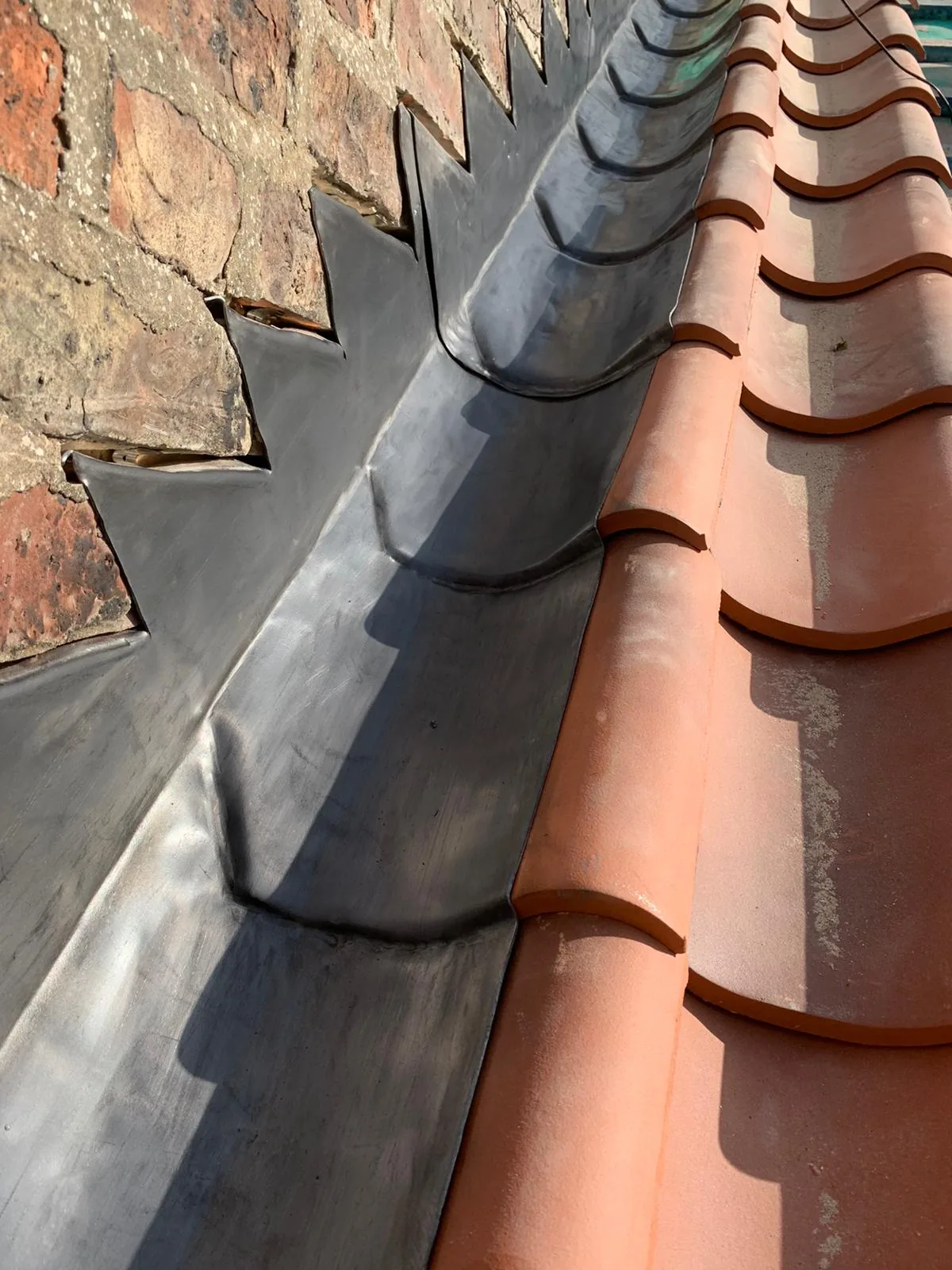
Spot the Signs Your Clay Tiles Need Attention, Not Just a Clean
Clay tiles fail slowly, tile by tile, rather than all at once. On the older streets of Hinckley, that slow decline is easy to miss until it is expensive. Catching the early signs saves you from a much bigger bill later.
Look out for these:
- Tiles that have slipped, cracked, or gone missing after strong wind
- A powdery, flaking surface, known as spalling, on older tiles
- Dark staining or heavy moss sitting on the north-facing slope
- Daylight showing through the roof timbers from inside the loft
- Ceiling stains that spread a little further after each spell of rain
- Tiles that sound hollow or feel loose when gently tested
- A roof over 60 years old that has never had a proper inspection
A single cracked tile is nothing to worry about. A pattern of failures spread across the roof, or heavy spalling on an older clay covering, usually means the roof is nearing the end of its working life. A free drone survey shows you which situation you are in, with footage of the whole roof rather than a guess from the pavement.
Repair, Re-Tile, or Full Re-Roof — Which One Does Your Roof Actually Need?
A handful of slipped or cracked tiles on an otherwise sound roof is a straightforward repair, and often the tiles can be matched and reused. Widespread spalling, rotten battens underneath, or a roof that has never been stripped in living memory points toward a full re-tile instead.
We check the full roof before recommending either route on any Hinckley property, using a free drone survey to see the ridge, valleys and hidden slopes that a ladder or a look from the street always misses.
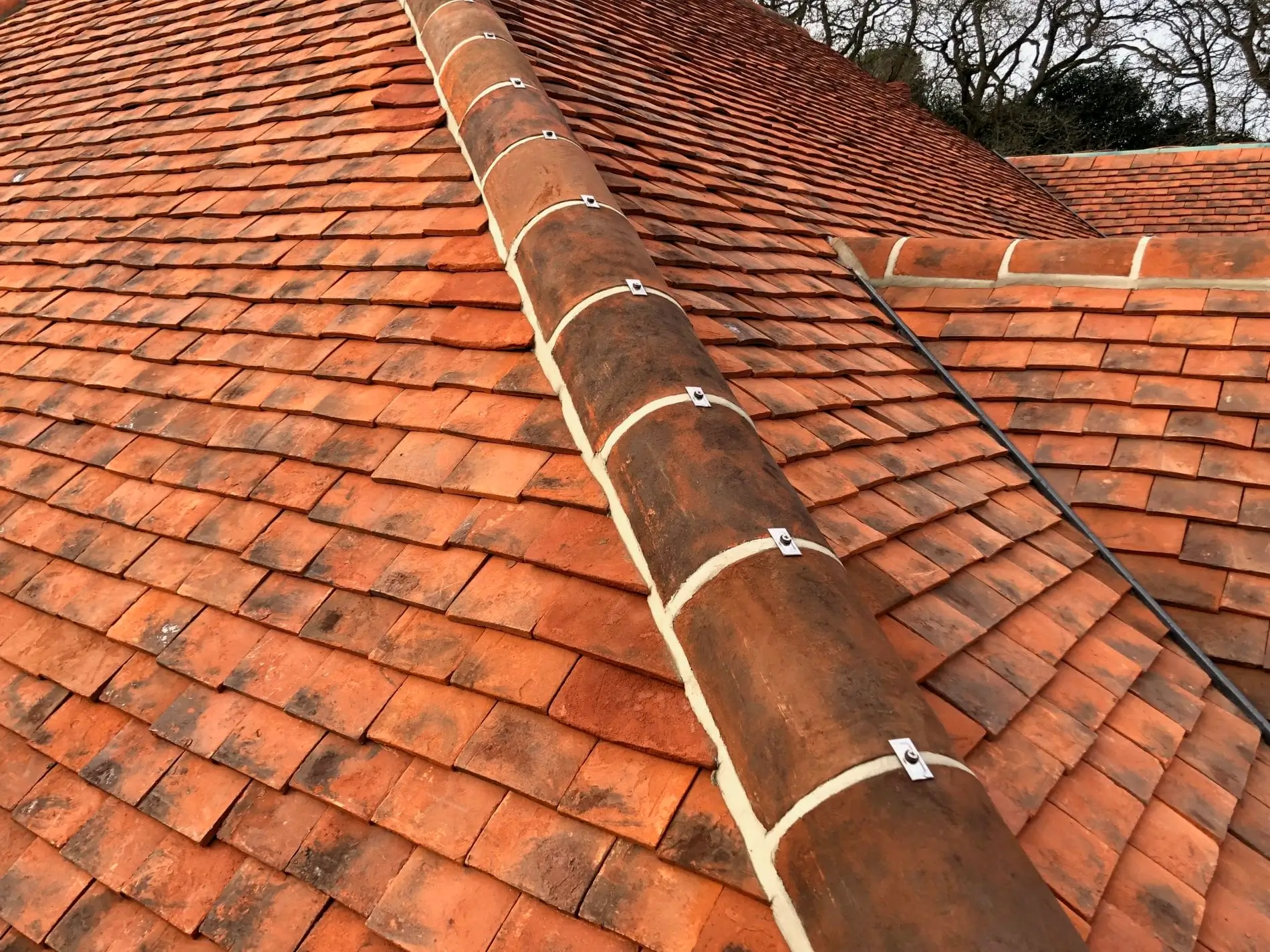
We see this pattern often on the Victorian terraces around the old Druid Quarter, where a roof has been patched piecemeal for years without anyone lifting the tiles to check the battens and felt underneath. Patching a failing roof keeps the water out for another season, but it does not fix what is actually going wrong beneath the surface. Where the whole roof structure needs attention rather than the covering alone, our roof replacement and re-roofing service covers the structural side that a straight re-tile does not.
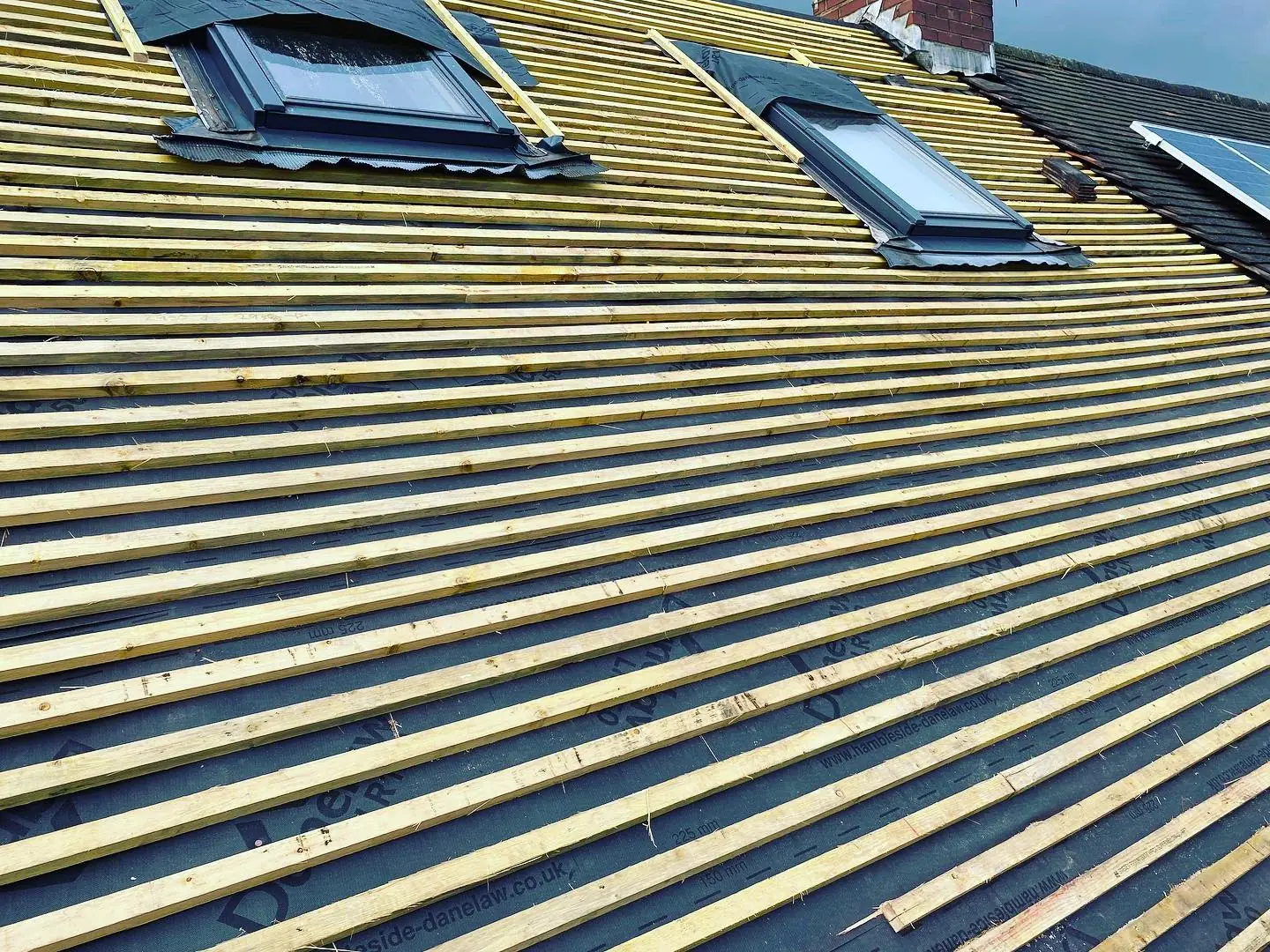
Plain Tile, Pantile or Interlocking Clay — Choosing the Right Profile for Your Hinckley Home
Clay tiling comes in three main profiles, and each suits a different type of property. In short: plain clay tile is the traditional double-lap choice for Victorian terraces and listed buildings; pantile brings a lighter, warmer S-shaped profile associated with older market towns; interlocking clay tile is the modern, budget-friendly option for extensions and lower-pitch roofs. The table below sets out how they compare.
| :-: | :-: | :-: | :-: |
| Profile | Typical cost (per m², fitted) | Typical lifespan | Best for |
| Plain clay tile | £90–£150 | 80–100+ years | Victorian terraces, listed and heritage matching, steep pitches |
| Pantile (traditional) | £70–£110 | 60–80 years | Character homes wanting a warm, traditional tone with fewer tiles per m² |
| Interlocking clay tile | £45–£90 | 60–80 years | Lower-pitch roofs, extensions, budget-conscious clay look |
Plain tile needs around 60 tiles per square metre and a steeper pitch to shed water properly, which is why it costs more to fit but lasts the longest and matches original Victorian terraces closest. Interlocking clay tile uses roughly a third as many tiles per square metre and can go down to a lower roof pitch, which suits extensions and dormers where a traditional double-lap tile will not sit correctly. Daniel Whitmore, our project manager, specialises in heritage tile detailing on the older properties around Hinckley and will talk you through which profile actually matches what your roof already has, rather than the one that is easiest to source.
What Clay Roof Tiling Really Costs in Hinckley
Cost depends on the tile profile, whether the tiles are machine-made or handmade, and how complex your roof shape is. Interlocking clay tile fitted on a straightforward roof typically runs £45–£90 per m². Traditional plain clay tile, laid double-lap with more tiles and more skilled labour, typically runs £90–£150 per m². Handmade heritage tiles, used to match listed buildings exactly, can push the fitted cost to £150–£220 per m² or more. These figures reflect what we typically quote across Hinckley and the surrounding villages.
What pushes the price up or down:
These are general market ranges, not a quote for your roof. Two similar-looking terraces can price very differently once tile matching, pitch and timber condition are factored in. A fixed price needs a survey.
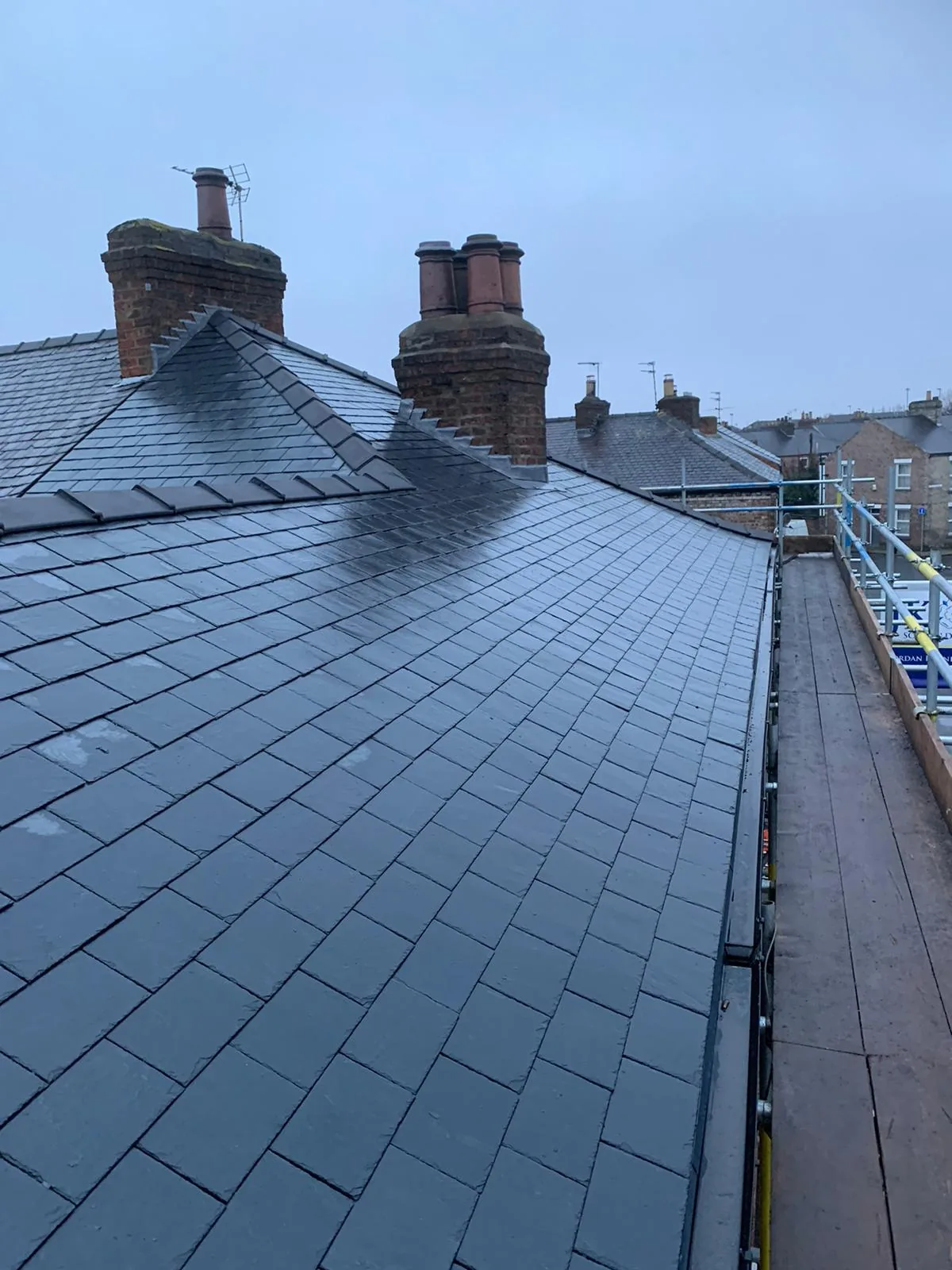
As a whole-roof guide, a semi-detached home of around 80–100m² re-tiled in interlocking clay typically costs £6,000–£9,000. The same roof in traditional plain clay tile, matched to an existing Victorian terrace, typically runs £10,000–£18,000. A larger or hipped roof, or one needing handmade tiles for a listed property, can reach £20,000–£28,000 or more.
- **Tile type*— machine-made interlocking clay costs least, handmade heritage tile costs most
- **Roof shape*— hips, valleys and dormers all add labour and cut tiles
- **Matching existing tiles*— sourcing reclaimed or handmade tiles to match a period roof adds cost and lead time
- **Listed building requirements*— conservation conditions can rule out cheaper machine-made alternatives
- **Timber condition*— rotten battens or rafters typically add £600–£2,000 before new tiles go on
- **Access*— scaffolding a terraced roof boxed in by neighbours costs more than a detached property
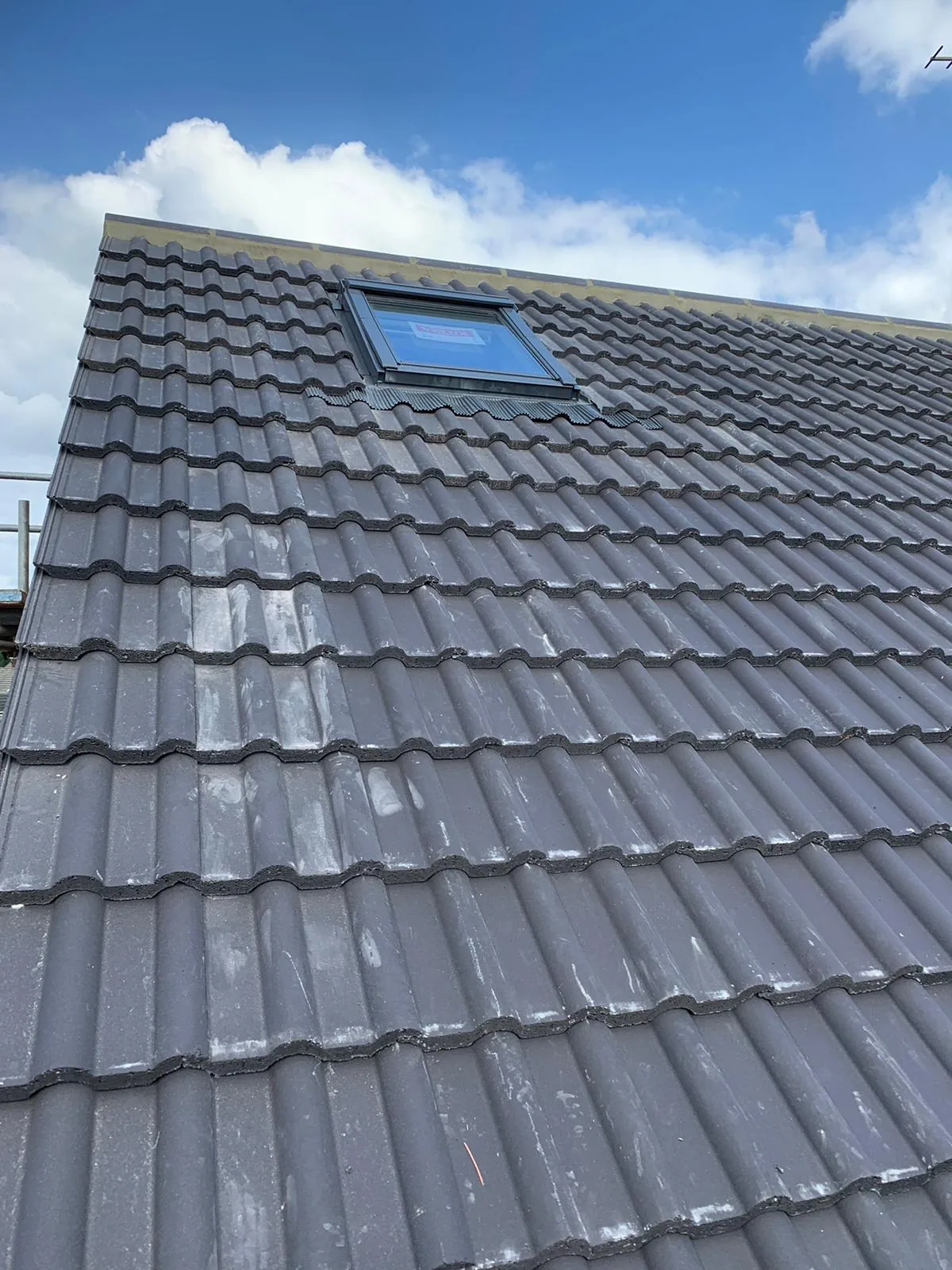
How We Fit Clay Tiles Properly, Start to Finish
A clay re-tile follows the same order on every job we do:
- Scaffold erected and the site made safe
- Old tiles stripped back and sorted for reuse where sound
- Battens and roofing felt checked, with any rot replaced
- BS 5534-compliant breathable underlay and treated battens fitted
- Clay tiles laid from the eaves up, with correct head-lap and gauge
- Ridge, hip and valley details bedded or dry-fixed to shed water cleanly
- Site cleared and the finished roof checked before we leave
Getting the underlay lap, batten gauge and fixing right matters more with clay than with most other coverings, since a poorly laid tile is far more likely to slip in Leicestershire's exposed winter winds. The Roof Tile Association's technical guidance on underlay and battens sets out the head-lap, batten grade and fixing standards we follow on every job, and it is worth a read if you want the detail behind the finish. A typical semi-detached re-tile in plain clay tile takes 5 to 8 working days, a little longer than pantile or interlocking clay, since the extra tiles per square metre and steeper pitch take more time to lay well. We schedule around Hinckley's weather rather than promising a date we cannot keep.
Checks We Make Before We Leave Your Roof
A finished clay tile roof gets checked properly before the scaffold comes down, not just glanced over from the ground.
- Every course checked for correct head-lap and gauge
- Ridge, hip and verge details checked for secure fixing
- Flashings around chimneys and abutments checked for a clean, dry line
- Loft space checked from inside for daylight, gaps or damp
- Guttering and valleys cleared of debris from the strip-out
You get a written summary of what was found and fitted, backed by our 10-year workmanship guarantee, so there is a clear record for any Hinckley homeowner if anything ever needs checking again.
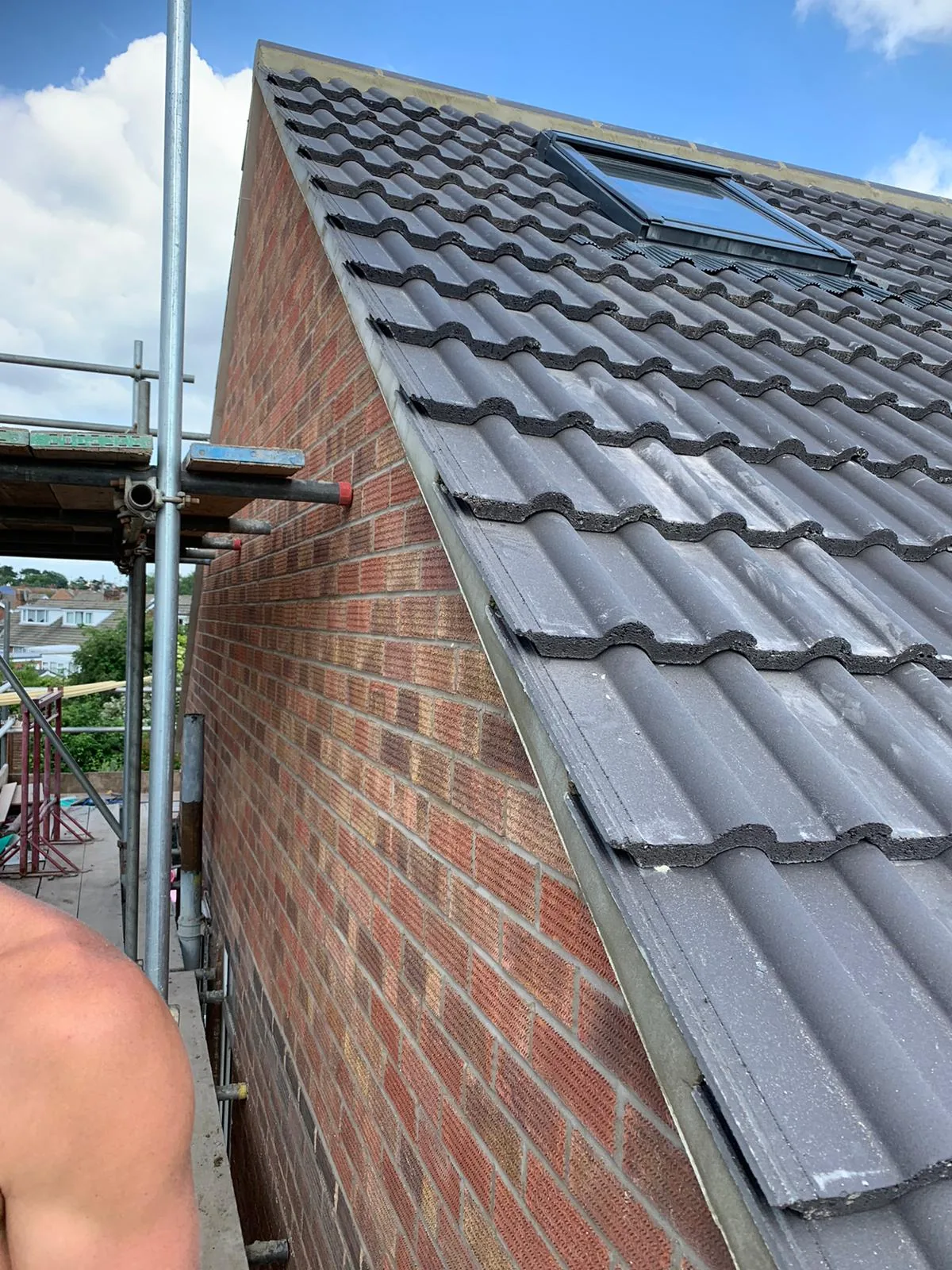
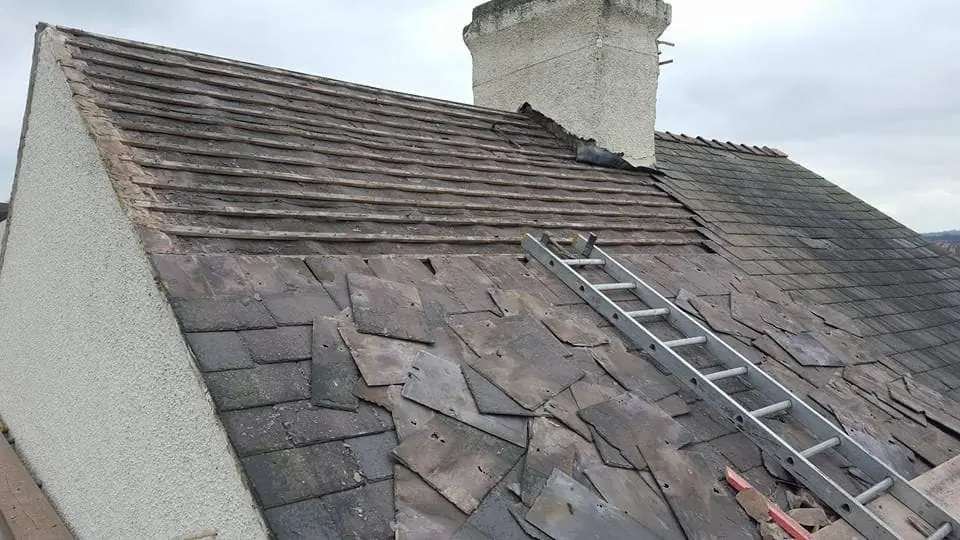
Keep a Clay Tile Roof Looking Its Best for Decades
Clay tiling needs very little upkeep, but a little attention keeps a Hinckley roof performing and looking sharp for its full lifespan.
- Clear gutters and valleys of moss and leaves each autumn
- Check the loft after storms for daylight or damp patches
- Have slipped or cracked tiles replaced promptly rather than left
- Book a free drone survey every few years, or after major storms
Homes near the Ashby Canal tend to hold more moisture in the air than a drier street in the town centre, which can speed up moss and lichen growth on shaded, north-facing slopes. A gentle clean and a check of the ridge every few years stops that build-up turning into blocked valleys and trapped damp. None of this needs a specialist visit on its own — just a regular look, and a call to us if something seems off.
Why Choose Tate & Sons for Clay Roof Tiling in Hinckley
Clay tiling rewards a roofer who has actually laid it before, not just concrete or slate. Daniel Whitmore, our project manager, leads every clay tiling job we take on and specialises in heritage tile detailing on the Victorian terraces around Hinckley, matching new tiles to old so a repair does not stand out on the street.
Founder James Tate started out on the tools more than 20 years ago and still quotes the majority of jobs personally, so the person weighing up your roof is the one standing behind the finished work. Between us we bring 40 years of combined team experience, hold NVQ Level 2 and 3 qualifications in Roofing, and carry CSCS cards. Sophie Bennett, our office manager, keeps quotes, scheduling and aftercare running smoothly from the first phone call through to the final check. Read more about the people behind the work on our About Tate & Sons Roofing page.
Areas We Serve Across Hinckley and Bosworth Country
We fit and repair clay tile roofs across Hinckley and the surrounding borough. If your area is not on the list below, call us anyway — there is a strong chance we already cover you.
- Hinckley (LE10)
- Burbage (LE10)
- Barwell (LE9)
- Earl Shilton (LE9)
- Sapcote (LE9)
- Sharnford (LE10)
- Wolvey (LE10)
- Higham on the Hill (CV13)
- Sutton Cheney (CV13)
- Stoke Golding (CV13)
- Market Bosworth (CV13)
- Nuneaton (CV10 / CV11)
- Bedworth (CV12)
Got Questions?
Your Clay Roof Tiling Questions, Answered Properly
How much does clay roof tiling cost in Hinckley?
As a general guide, interlocking clay tile typically costs £45–£90 per m² fitted, traditional plain clay tile £90–£150 per m², and handmade heritage tiles £150–£220 per m² or more. A whole semi-detached roof in interlocking clay usually runs £6,000–£9,000, rising to £10,000–£18,000 for plain clay tile matched to a period terrace. A fixed price always needs a survey, which is exactly what our free drone survey gives you.
How long do clay roof tiles last?
Most machine-made clay tiles last 60 to 80 years with reasonable upkeep. Traditional handmade plain clay tile, laid and maintained well, can run past 100 years, which is why so much of it survives on Hinckley's older streets. Lifespan depends on the quality of the original installation as much as the tile itself, particularly the underlay, battens and fixings underneath.
What's the difference between plain clay tiles and pantiles?
Plain clay tiles are small, flat and double-lapped, meaning each tile overlaps two courses below for strong weather protection, but they need around 60 tiles per square metre and a steeper pitch. Pantiles have an S-shaped profile that interlocks side to side, use roughly a third as many tiles, and can be laid to a lower pitch. Plain tile tends to suit Victorian terraces and listed buildings, while pantile suits a broader range of character homes.
Can clay tiles be fitted on a low-pitch roof?
Traditional plain clay tile generally needs a pitch of at least 35 degrees to shed water properly, and traditional pantile around 30 degrees. Interlocking clay tile, with its built-in weather bars, can often go down to 15–22 degrees depending on the specific product, which makes it the better choice for a shallow extension or dormer roof. We check your roof's actual pitch during survey before recommending a profile, rather than assuming.
Do I need planning permission or listed building consent for clay roof tiling near Stoke Golding or Market Bosworth?
It depends on the property. Both villages carry a strong concentration of listed and character buildings, and a listed building will almost always need consent for re-tiling, particularly where the tile type or colour would change. A straightforward like-for-like re-tile on a non-listed home usually does not need planning permission. We check a property's status before quoting, so there are no surprises once work is scheduled.
Can a single cracked or slipped clay tile be replaced without re-tiling the whole roof?
Yes, in most cases. A single slipped or cracked tile can usually be lifted out and replaced with a matching tile without disturbing the surrounding roof. The main challenge is sourcing a tile that matches the colour, size and weathering of the originals, which is easier on a common profile and harder on an old handmade tile that is no longer manufactured. We keep a stock of reclaimed clay tile for exactly this situation.
Do old clay tiles get more brittle with age, and how would I know?
Yes, clay tiles can spall over time, meaning frost gets into small cracks in the surface and causes the face of the tile to flake away in thin layers. It usually starts as a rough, powdery patch rather than an obvious crack, so it is easy to miss from ground level. Left alone, a spalled tile eventually lets water through, which is why we check tile condition tile by tile during a survey rather than just counting missing ones.
Are the Victorian terraces around Hinckley's old Druid Quarter usually plain tile or pantile, and does that affect repair matching?
Most of the terraces built during Hinckley's hosiery and framework-knitting years used plain clay tile, laid double-lap in the traditional way. It does affect repair matching, because plain tile needs roughly three times as many tiles per square metre as a pantile roof, and an original colour blend that is no longer made can be hard to source. We match by sourcing reclaimed plain tile wherever we can, rather than fitting a new tile that stands out against the weathered originals either side.
Does living near the Ashby Canal make moss and lichen worse on clay tiles?
It can. Properties close to the canal sit in slightly damper air than a drier spot in the town centre, and that extra moisture speeds up moss and lichen growth, particularly on shaded, north-facing slopes. It is rarely serious on its own, but heavy moss traps damp against the tile and can accelerate spalling over time. A periodic gentle clean, rather than aggressive pressure washing, keeps it in check without damaging the tile surface.
Book Your Free Drone Roof Survey Today
See exactly what your clay tile roof needs before any work starts. No ladders, no pressure — just a clear picture from a local Hinckley team.
Every winter a spalled or slipped clay tile is left alone, more water works its way past it and into the timber and plaster below, and a simple repair turns into a full re-tile. A quick, free survey today tells you exactly where your roof stands, and often the right answer is smaller and more affordable than you feared. Book now, get an honest quote, and get your clay tile roof sorted properly — first time.
Call the Hinckley team today on 01455 242595, or request your free drone survey online. We're already working across your area.
Book Your Free Drone Roof Survey
See exactly where your roof stands, with no obligation and no pressure. Call our Hinckley team or request your free drone survey today.
Get in Touch
Tate & Sons Roofing — Hinckley Office
10 Brosdale Drive, Hinckley, LE10 0SW
📞 01455 242595
✉️ [email protected]