
🏠 Trusted Local Roofers
Clay Roof Tiling Chesterfield
Clay tiles give a roof a warmth and texture that concrete struggles to copy, especially on the older streets around the town centre and off Derby Road. Tate & Sons Roofing fits and repairs clay roof tiling across Chesterfield, from a handful of cracked tiles to a full re-tile on a listed or character property. As a roofing contractor across Chesterfield, our tilers can tell you which profile suits which street, and which fixing method holds up on the exposed plots toward the Peak District edge.
This page covers the signs your clay tiles need attention, the real difference between plain tiles and pantiles, honest cost ranges, and what happens once work starts on your roof. You will also find direct answers to the questions Chesterfield homeowners ask us most about clay roof tiling.
- Fully Insured
- 10-Year Guarantee
- 5-Star Rated
Quick Free Estimate - No Obligation
We're not just roofers – we're your neighbours.
Fully Insured • Response within 15 mins
🔒 Your details are safe with us. No spam, ever.
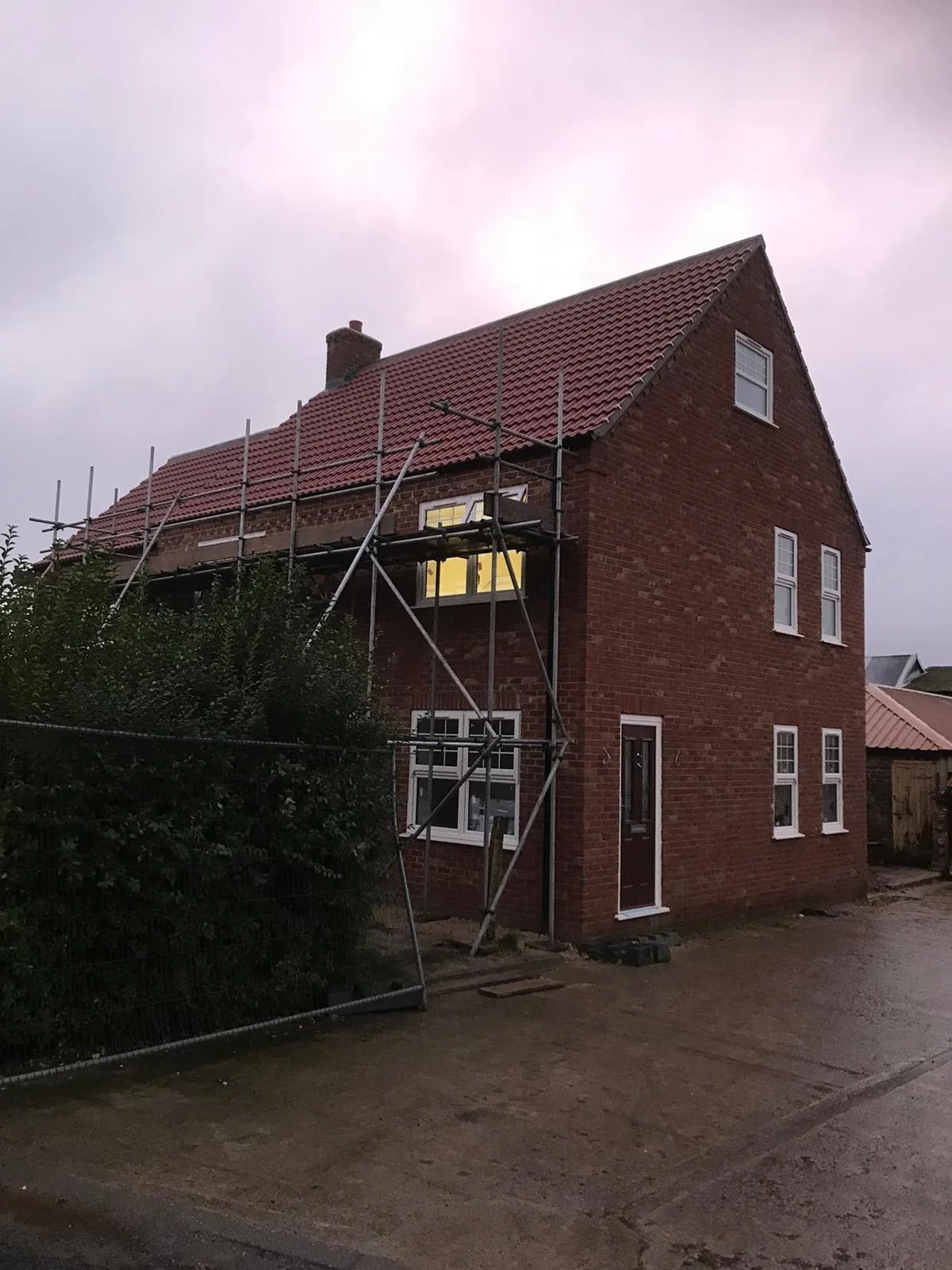
How to Tell Your Clay Tiles Need Attention, Not Just a Clean
A single slipped tile is a quick fix. Several problems appearing together usually mean your clay tiling needs closer attention before winter finds every weak spot.
Clay tiles laid before the 1980s were not made to today's frost standards, so older roofs around Hasland and Newbold often show cracking that newer tiles rarely suffer. Once a tile has frost-shattered, it will keep letting water in until it is replaced.
Watch for these signs before a small problem becomes a bigger repair bill:
- Tiles that have slipped, cracked or gone missing after wind or frost
- Thick moss growth holding damp against the tile surface
- Daylight showing through the roof timbers in your loft
- Powdery, crumbling tile edges, known as spalling or delamination
- Damp patches or staining on ceilings below the roof
- Nail fatigue, where tiles work loose from rotted or rusted fixings
A free drone survey shows exactly which tiles have failed and which are still sound, so you only pay to replace what actually needs it.
Plain Clay Tiles or Pantiles? Choosing the Right Match for Your Home
Plain clay tiles are small, flat and rectangular, laid in tight overlapping courses that suit terraces and cottages around the town centre. Each tile laps two others below it, giving a dense, textured finish that has covered Derbyshire homes for generations.
Pantiles are the curved, S-shaped tiles you see on many Derbyshire and East Midlands roofs. They interlock and only need a single lap, so they cover a roof faster and often cost less to fit than plain tiles of the same quality.
If budget matters more than an exact period match, concrete roof tiling gives a similar profile for less money, though it will not weather to the same warm tones as fired clay. For listed buildings, natural slate roofing is sometimes the correct heritage choice instead of tile, depending on the property's original covering.
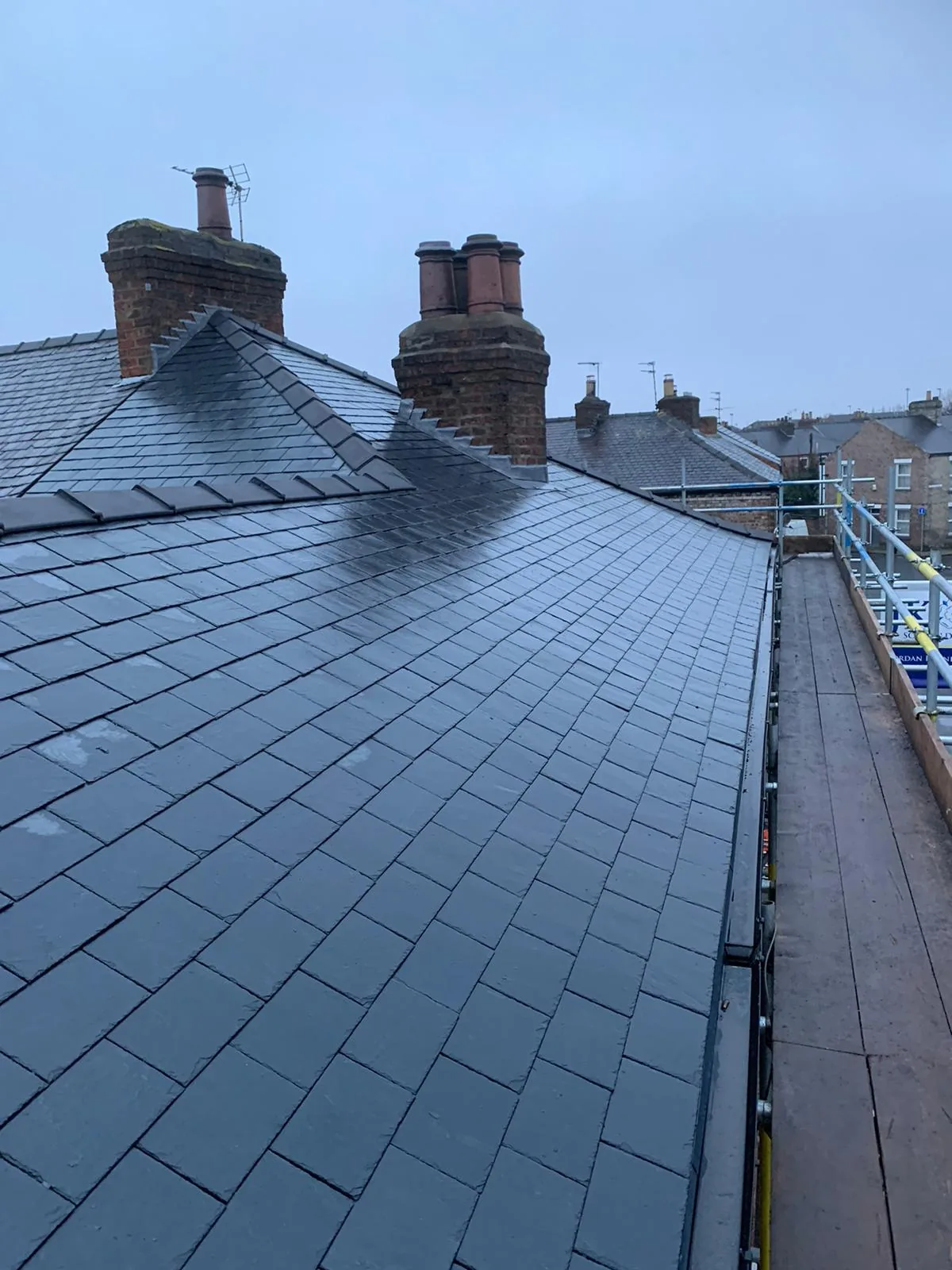
The table below sets out real cost, lifespan and best-use guidance so you can weigh up plain clay tiles, pantiles and concrete side by side.
We will talk through which tile suits your roof shape, street and budget during your free drone survey, with no pressure toward the most expensive option.
| Tile Type | Typical Cost (installed) | Typical Lifespan | Best For |
|---|---|---|---|
| Plain Clay Tiles | £110-£150 per m² | 60-100+ years | Period cottages, terraces, conservation areas |
| Clay Pantiles | £100-£130 per m² | 60-100 years | Traditional Derbyshire streets, faster re-tiles |
| Concrete Tiles (alternative) | £65-£90 per m² | 30-50 years | Budget-conscious re-roofs, modern estates |
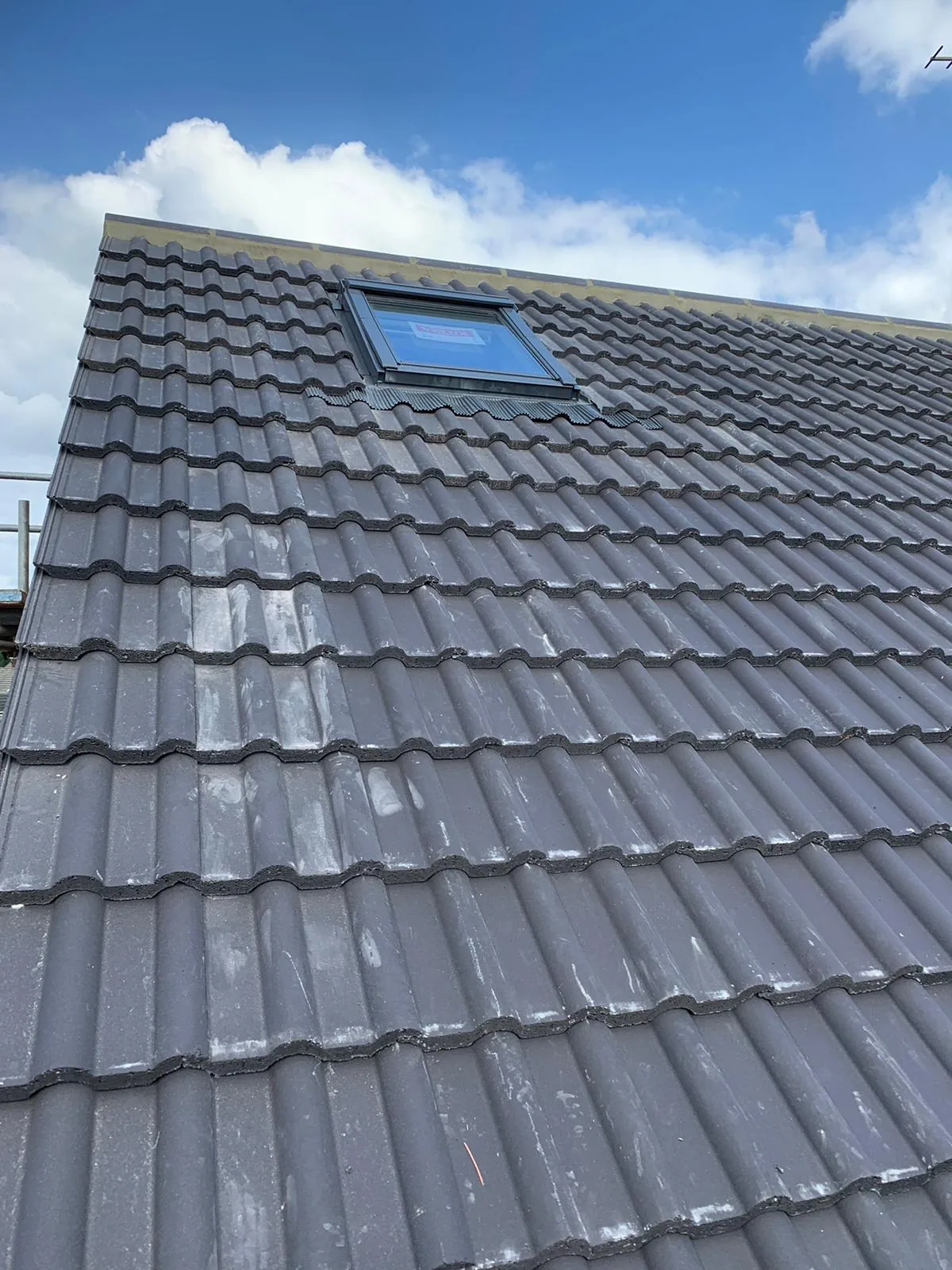
Clay Roof Tiling Cost in Chesterfield: What You'll Actually Pay
Most clay roof tiling in the UK costs between £100 and £150 per square metre installed, depending on the tile profile and how the roof is shaped. A full re-tile on a typical three-bed semi, around 80-100m², usually lands between £6,500 and £9,800 once scaffolding is included.
Small repairs cost far less. Replacing a handful of cracked or slipped clay tiles usually costs somewhere between £150 and £400, depending on access and how many tiles need matching.
Several things push cost up. Reclaimed or handmade tiles needed to match a listed building cost more than machine-made stock. Steep pitches, dormers, valleys and multiple chimneys all add labour time and lead work.
Cost comes down when the roof is a simple shape with easy access, which is common on some of the newer streets around Wingerworth and Brimington. Batten condition matters too. If timber underneath has rotted, replacing it adds to the bill but protects the new tiles above.
A fixed price for your clay roof tiling needs a survey. Two similar-looking roofs on the same road can need very different specifications once tile availability, exposure and batten condition are checked.
Matching Character Homes: Conservation Areas, Listed Buildings and Fixing Standards
Streets close to the Crooked Spire and other parts of central Chesterfield sit within conservation areas, where roof tiles usually need planning permission if you want to change the covering type. Like-for-like clay repairs on a like roof do not normally need permission, but a full change of tile does.
Listed buildings are stricter again. Any retiling on a listed property usually needs listed building consent, and the planning authority will expect a genuine clay match, not simply a similar colour. We work with reclaimed and specialist clay suppliers to source tiles that blend with the original roof rather than standing out as an obvious patch.
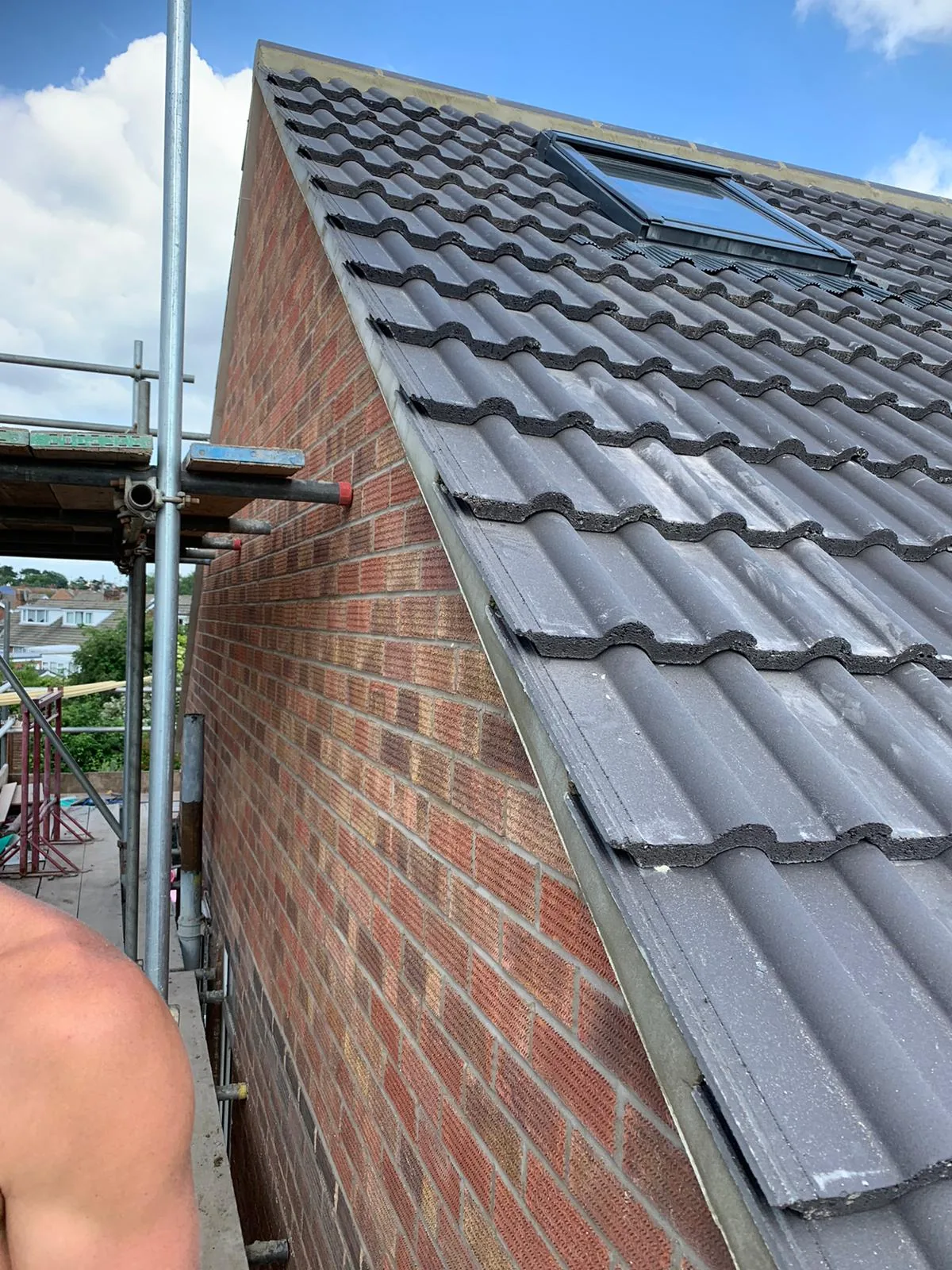
Fixing specification matters as much as the tile itself. British Standard BS 5534 sets out how tiles must be fixed depending on wind exposure, and Chesterfield's higher ground toward the Peak District gateway often falls into a more exposed category than the town centre. The NFRC's guidance on pitched roofing standards sets out how this exposure rating changes nailing and clip requirements, and we check it against your address before we quote.
The older brick-and-clay-tile homes around Old Whittington and New Whittington often carry their original tile profile, and matching it well keeps the street's character intact. We look at neighbouring roofs as well as your own before recommending a tile match.
Your Clay Roof Tiling Project, Step by Step
James Tate, our founder, takes the lead on character and period tiling work himself. After 15 years working roofs across Derbyshire before starting the business, matching an old clay roof properly is the job he still enjoys most.
Every project starts with a free drone survey, giving you close-up photos of every course without a ladder going anywhere near the roof. This shows exactly which tiles are sound, which are cracked, and whether the battens underneath need replacing too.
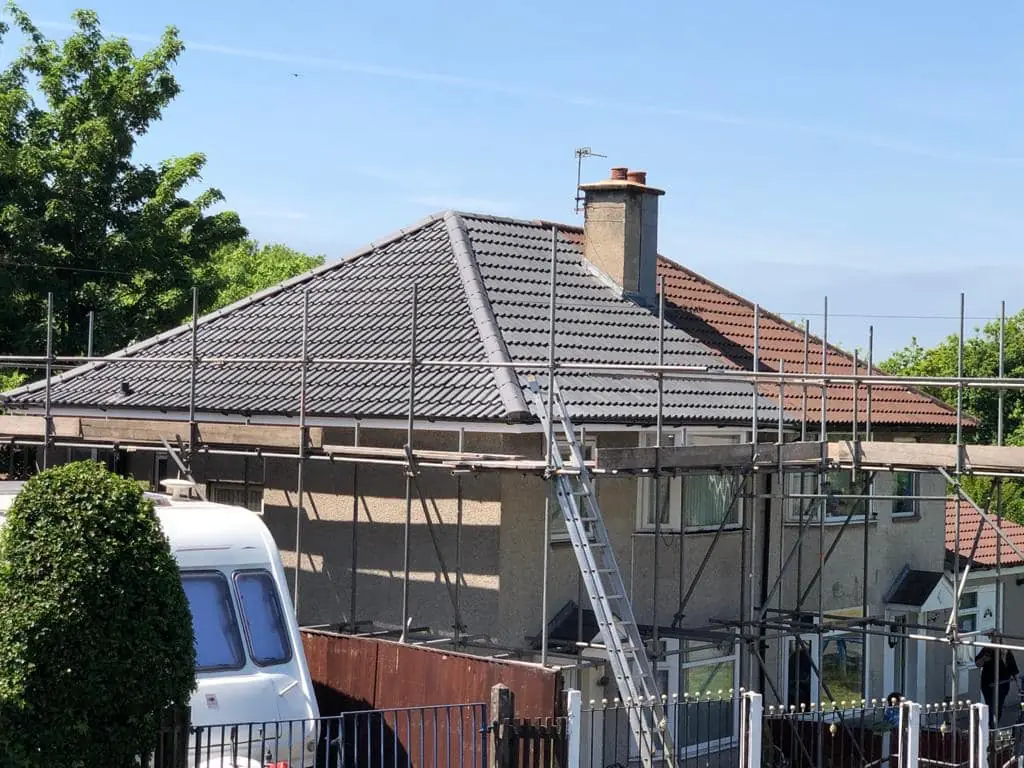
Once scaffold is up, we strip the old tiles carefully, setting aside any that can be reused or sold on to another period property nearby. Battens and underlay are replaced where needed, then tiles go back on at the correct gauge and lap for that profile.
Ridge tiles, hips and lead flashing around chimneys are finished by hand, since these details are where most leaks start on an older roof. A straightforward clay re-tile usually takes 5 to 10 working days, while larger homes with chimneys, valleys or dormers can take 2 to 3 weeks.
James checks tile colour and texture against the rest of the roof as work goes on, not just at the end, so a repaired section does not stand out from the untouched tiles around it.
Keeping Your Clay Roof Tiling Watertight for Years to Come
Every clay roof tiling job comes with a 10-year workmanship guarantee, on top of the manufacturer's warranty on the tiles themselves. We finish with a walk-round check, looking at ridge lines, flashing and gutter falls before we call the job complete.
Moss is the biggest ongoing risk to clay tiles, since it holds moisture against the surface through winter and can cause frost cracking over time. Clearing moss and gutters twice a year keeps water moving off the roof instead of sitting on it.
Check your roof after any strong wind, particularly if you are on higher ground toward the Peak District edge. A slipped tile spotted early is a five-minute fix. Left through a wet winter, it can mean a soaked ceiling and a much bigger repair.
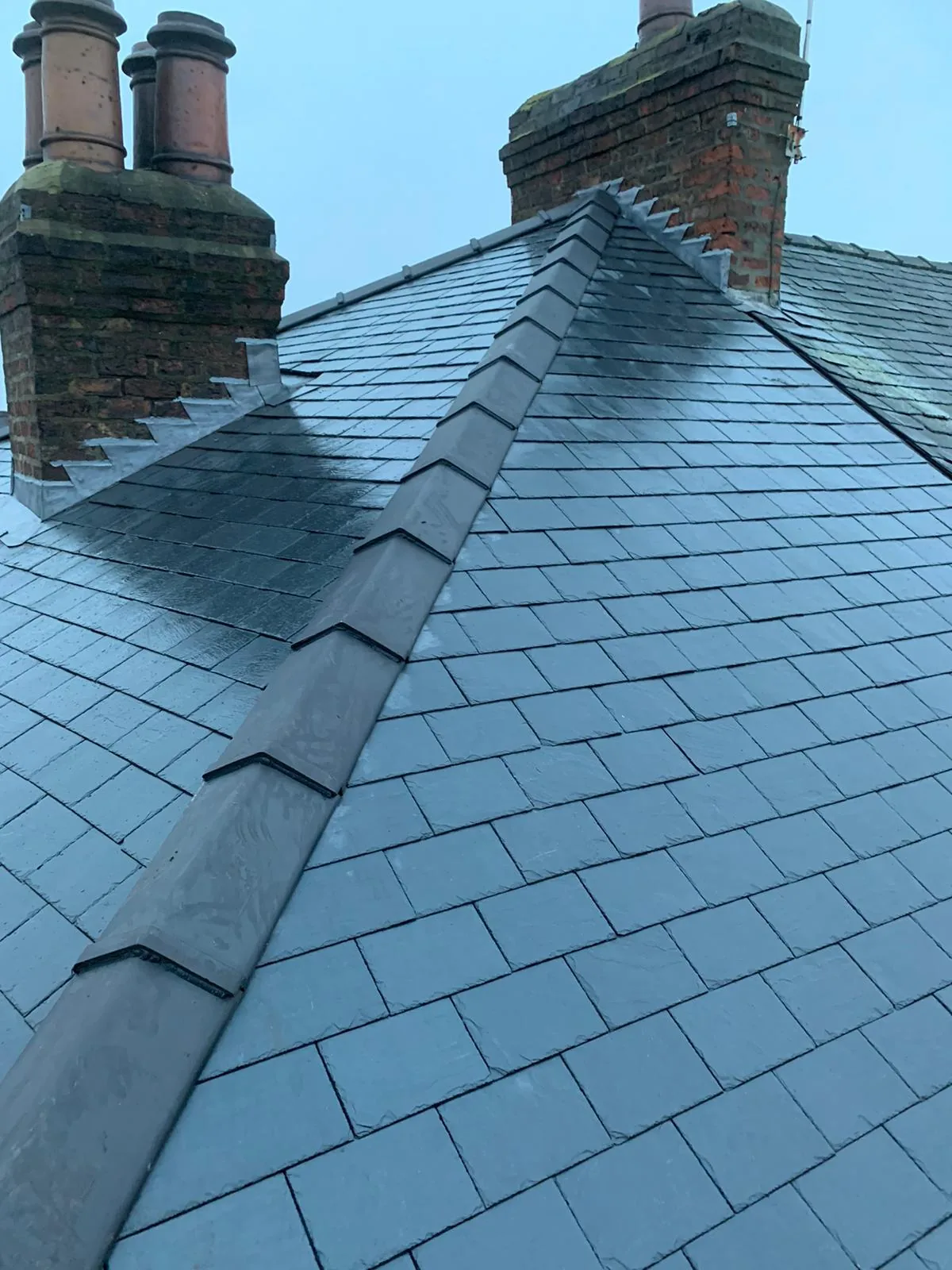
We keep a record of the tiles and fixing method used on every roof, which makes future repairs, insurance claims or a matching extension much easier to sort out.
Why Choose Tate & Sons for Clay Roof Tiling in Chesterfield
James Tate founded Tate & Sons after 15 years working roofs across Derbyshire and the East Midlands, and clay tiling on period property is where his experience shows most. He still prices most tiling jobs himself, working from the same rule he built the business on: find out what's genuinely wrong, use the right materials, and stand behind the result.
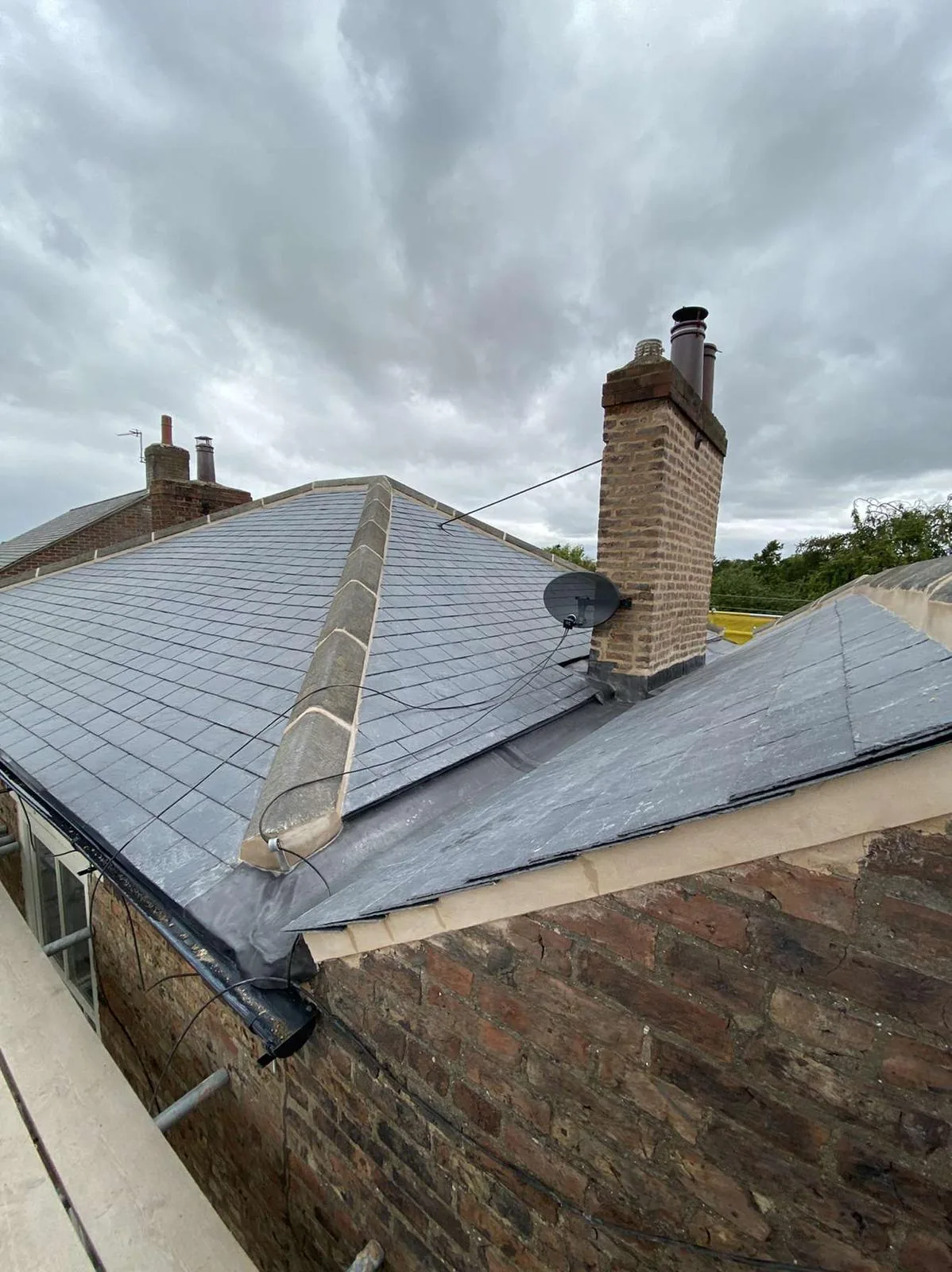
Daniel Oakland, our Project Manager and Lead Roofer, brings his own heritage slate and lead detailing skills to complex clay roofs, particularly where chimneys, valleys and dormers all meet on the same job. Between them, they cover both the traditional tiling knowledge and the modern site management a re-tile needs.
Our wider team holds NVQ Level 2/3 qualifications in Roofing Occupations, CSCS cards and NFRC trade membership, with over 40 years of combined experience between us. Read more about the people who will fit your clay roof tiling on our About page.
Every clay roof tiling job comes with a 10-year workmanship guarantee and starts with a free, no-obligation drone roof survey, so you know the full scope of work before scaffold goes up on your Chesterfield home.
Areas We Serve Around Chesterfield
We fit and repair clay roof tiling across Chesterfield and the surrounding towns and villages listed below.
- Chesterfield (S40 / S41)
- Brampton (S40)
- Hasland (S41)
- Newbold (S41)
- Staveley (S43)
- Brimington (S43)
- Whittington Moor (S41)
- Old Whittington (S41)
- Wingerworth (S42)
- Clay Cross (S45)
- Dronfield (S18)
- Eckington (S21)
- Holymoorside (S42)
Got Questions?
Your Clay Roof Tiling Questions, Answered Properly
How much does clay roof tiling cost in Chesterfield?
Clay roof tiling typically costs £100 to £150 per square metre installed, depending on the tile profile you choose. A full re-tile on a typical semi-detached home usually falls between £6,500 and £9,800 once scaffolding is included. Small repairs to a handful of tiles cost far less, often £150 to £400. We only confirm a fixed price after a free drone survey of your actual roof.
What is the difference between plain clay tiles and pantiles?
Plain clay tiles are small, flat rectangles laid in tight double-lapped courses, giving a dense, traditional texture. Pantiles are curved, S-shaped tiles that interlock and only need a single lap, so they cover a roof faster. Plain tiles suit period cottages and terraces, while pantiles are common across many Derbyshire and East Midlands streets. Both are genuine clay and both weather to warm, varied tones over time.
How long do clay roof tiles actually last?
Good-quality clay tiles typically last 60 to 100 years, and some well-maintained roofs go longer still. Older tiles fitted before the 1980s were not always made to today's frost standards, so they can fail earlier than modern clay. How long your roof lasts also depends on ventilation, moss control and how exposed your plot is to wind and rain.
Can you repair a few broken clay tiles instead of retiling the whole roof?
Yes, most clay tile damage is a repair job, not a full retile. We replace cracked, slipped or missing tiles with matching stock, either new or reclaimed, and check the surrounding battens while we are up there. A full retile only becomes the better option once damage is widespread or the underlying battens and felt have failed across most of the roof.
Do I need permission to fit clay tiles on a home in a Chesterfield conservation area?
Like-for-like clay repairs on an existing clay roof usually do not need planning permission. Changing the tile type, or any work on a listed building, is different and normally needs formal approval before work starts. Streets close to the Crooked Spire and other central conservation areas are checked closely by the planning authority, so we confirm what applies to your property before we quote.
Can new clay tiles be blended with the old ones without looking patchy?
Yes, with the right approach a repaired section can sit well against the untouched roof around it. We source reclaimed or closely matched new tiles, and sometimes move slightly weathered tiles from a less visible slope to the front elevation. This takes more planning than simply fitting the nearest stock size, but it keeps the roof looking like one job rather than two.
Does moss damage clay tiles, and should I remove it?
Yes, thick moss holds moisture against the tile surface, and that trapped water can freeze and crack the tile in winter. Light moss on a sound roof is mostly cosmetic, but a heavy build-up should be cleared carefully rather than left to spread. We check moss coverage as part of every drone survey and flag anywhere it is starting to cause real damage.
Do homes in Old Whittington and New Whittington need special matching for clay retiling?
Often, yes. Many of the brick-and-clay-tile homes in Old Whittington and New Whittington carry an older tile profile that is no longer made new, so a straightforward off-the-shelf tile can look out of place. We check the existing profile and colour against current reclaimed stock before quoting, so a repair or partial retile keeps the street's character rather than standing out.
Book Your Free Drone Roof Survey for Your Clay Tiles Today
Cracked and frost-damaged clay tiles rarely fix themselves, and every wet winter widens the gaps water can get through. Left alone, a handful of loose tiles can turn into rotten battens and a damp ceiling. Book your free, no-obligation drone roof survey today and get a clear, fixed price for your clay roof tiling in Chesterfield.
📍 3 Marsden Street, Chesterfield, S40 1JY
📞 01246 956550
Call the Chesterfield team today on 01246 956550, or request your free drone survey online. We’re already working across your area.
Get in Touch
Tate & Sons Roofing — Chesterfield
3 Marsden Street, Chesterfield, S40 1JY
📞 01246 956550
✉️ [email protected]