
🏠 Trusted Local Roofers
Chimney Repointing Market Harborough
The mortar between the bricks on your chimney is the first thing the weather attacks. Sitting high above the roof with no shelter, a chimney stack takes wind, rain and frost from every side, year after year. When the joints wash out, water tracks into the brickwork and down into the roof below. Tate & Sons Roofing handles chimney repointing in Market Harborough and the wider Harborough District, from a few soft joints on a stack to a full rake-out and re-point.
This page explains how to spot worn joints, why lime and cement mortar behave so differently, what repointing costs, and when a stack has gone too far to save. Start with a free drone chimney survey and a written quote before any work begins — no scaffold just to take a look, and no charge either way. Repointing is one part of the wider chimney services across Market Harborough that we offer.
- Fully Insured
- 10-Year Guarantee
- 5-Star Rated
Quick Free Estimate - No Obligation
We're not just roofers – we're your neighbours.
Fully Insured • Response within 15 mins
🔒 Your details are safe with us. No spam, ever.
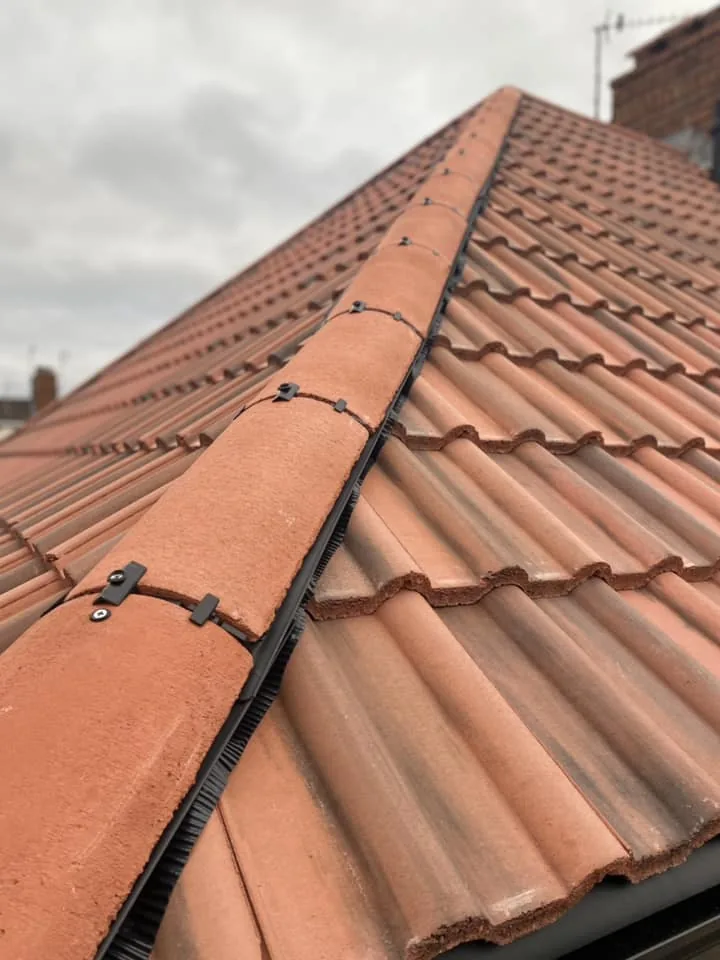
Spot Worn Joints Before Water Reaches Your Roof
A chimney rarely fails overnight. The mortar weathers back slowly, and the signs show for months before water gets inside. Catch them early and a repoint does the job, before the damp reaches the roof timbers.
Watch for these:
- Mortar joints crumbling, cracked or raked back below the brick face
- Bits of sandy mortar showing up on the roof or in the gutter
- Loose or rocking bricks near the top of the stack
- White powdery staining, called efflorescence, on the brickwork
- Damp patches on the chimney breast in the room below
- Green algae or moss holding wet against the joints
- A stain spreading on the ceiling near the chimney after rain
The joint depth tells you a lot. Once mortar has weathered back more than about 15mm, water runs straight into the wall instead of shedding off the face. From the ground you cannot judge this properly, which is why we send up a drone first. On older stacks around Lubenham and Foxton we often find the top few courses badly gone while the lower stack is still sound. If the brickwork itself is cracked or spalling, not just the joints, that points to a bigger job than a repoint — our Chimney Stack Repair page covers that side of the work.
Lime or Cement Mortar — Get the Mix Right or Pay for It Later
The mortar you point a chimney with matters as much as the workmanship. Pick the wrong one and the joints can pull the bricks apart within a decade. In plain terms: lime mortar suits older, solid-brick chimneys because it breathes and flexes; cement mortar suits modern stacks built after the war, where it is stronger and quicker to set. The age of your chimney usually decides it.
| :-: | :-: | :-: | :-: |
| Mortar type | Best for | Typical lifespan | Notes |
| NHL lime mortar | Pre-1930 solid-brick and heritage chimneys | 20–30 years | Breathable and flexible; protects soft old bricks; the safe default on period stacks |
| Cement mortar | Post-war and modern stacks built with hard bricks | 10–15 years | Strong and quick to set; wrong on old brick, where it traps water and causes spalling |
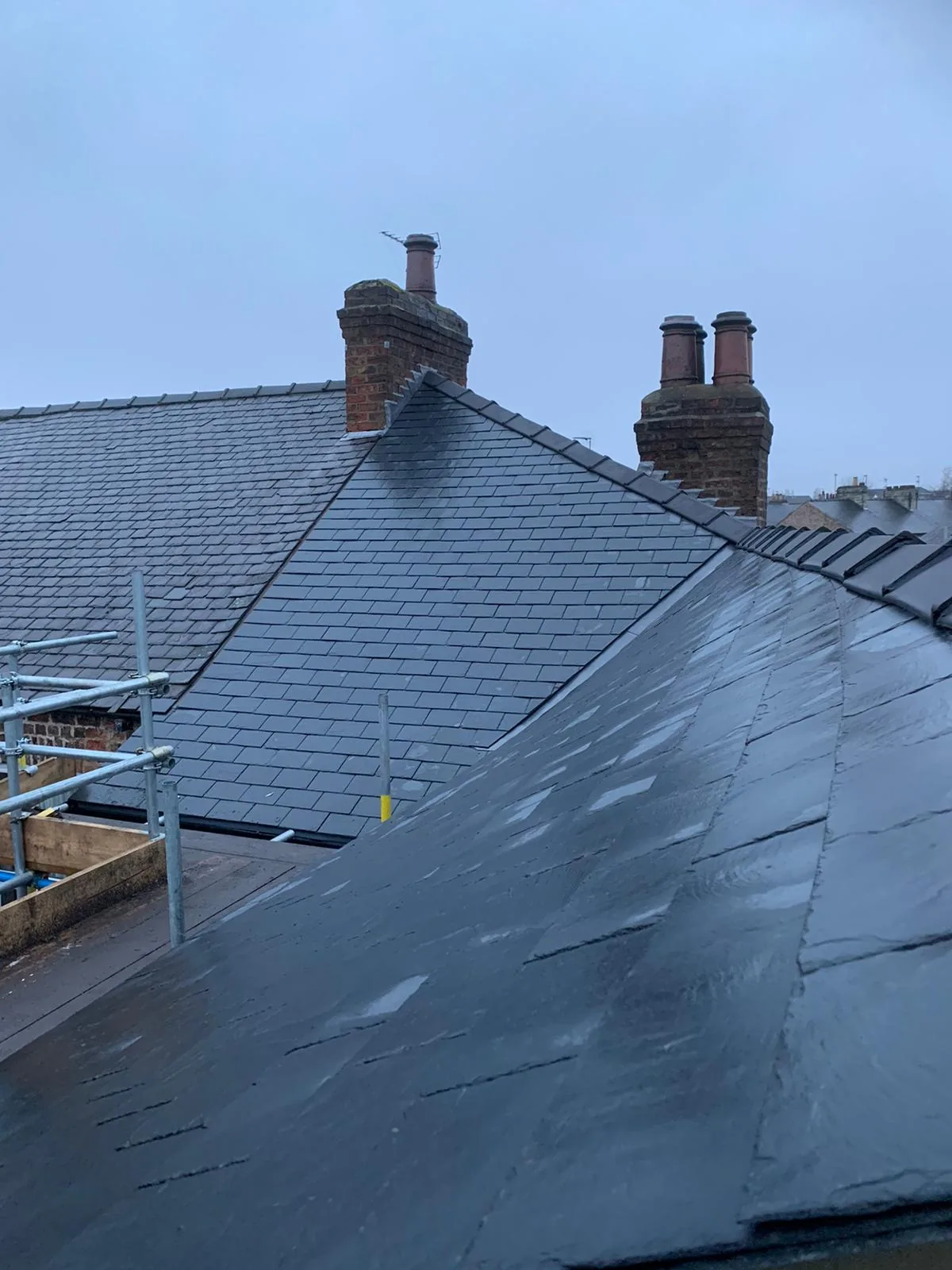
Lime mortar lets a wall dry out, so moisture escapes through the soft joints rather than the brick face. It also acts sacrificially — it wears back slowly and takes the damage instead of the brick, which is why period chimneys need repointing every generation or so. Cement is harder than many old bricks. On a solid-brick stack it traps water behind the face, and frost then flakes the outer skin away. That flaking is called spalling, and it turns a mortar job into a brick-replacement job.
The rule of thumb is simple: for any chimney on a property built before roughly 1930, we start from lime unless there is clear sign the stack was built in cement. For a modern Market Harborough home, cement is usually the right and sensible call. Michael Tate checks the brick and the existing mortar on every survey, so the mix matches what the chimney was built with — not just what is quickest to throw up.
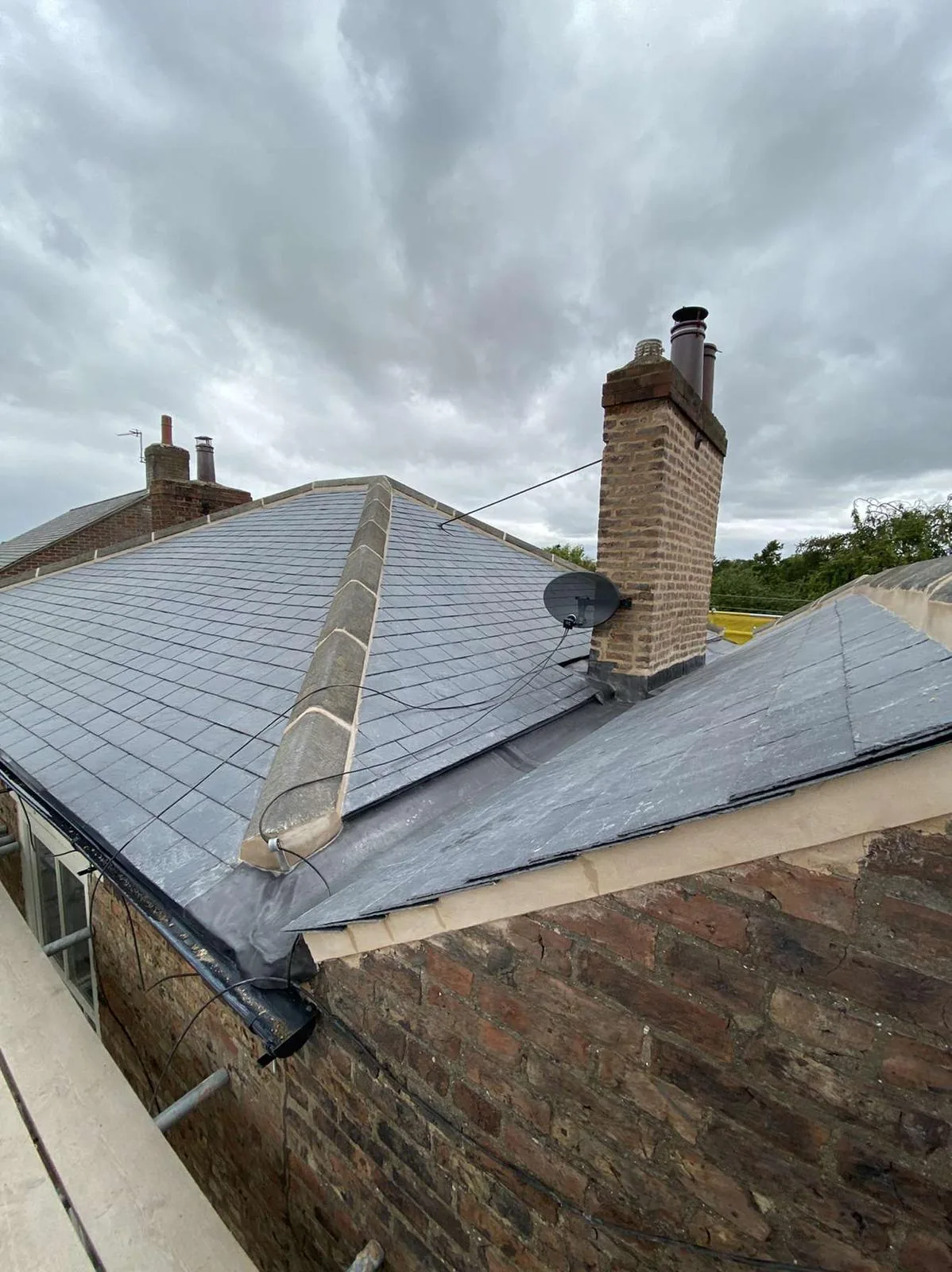
Repoint or Rebuild? You Get a Straight Answer, Not the Biggest Invoice
Worn joints on their own almost never mean the whole stack is finished. If the bricks are sound and only the mortar has weathered back, a rake-out and repoint is the right fix and by far the cheaper one. A rebuild only comes into it once the brickwork itself has failed.
Certain signs push a stack past repointing. Bricks that are badly spalled, cracked or crumbling will not hold new mortar for long. A stack that leans, or one where the joints crack open again within a season of being pointed, is telling you the brickwork or the flaunching underneath has gone. In those cases fresh mortar is money down the drain, and taking the stack down to a sound course and rebuilding is the honest long-term answer — our Chimney Rebuilding page walks through when that is the better route.
We check the whole stack before recommending either way. A free drone survey shows every face of the chimney, the flaunching around the pots and the flashings at the base — the parts a ground-level look always misses. You see the footage yourself, not just our word for it. Most repointing is straightforward maintenance and needs no planning consent. A listed building or a chimney in a conservation area is the exception, where the mortar type and finish can be controlled, and we check that before quoting so nothing trips you up later.
What Chimney Repointing Really Costs in Market Harborough
Cost comes down to three things: the height and size of the stack, how the mortar is mixed, and access.
As a general guide across the UK in 2025 and 2026, a straightforward chimney repoint runs from around £500 for a low, easily reached stack up to £2,500 or more for a tall stack needing full scaffold and some brick repair. The average job lands near £750. Raking out and repointing brickwork works out at roughly £55 per square metre of face, and two roofers on a stack cost around £300 to £720 a day between them.
What moves the price up or down:
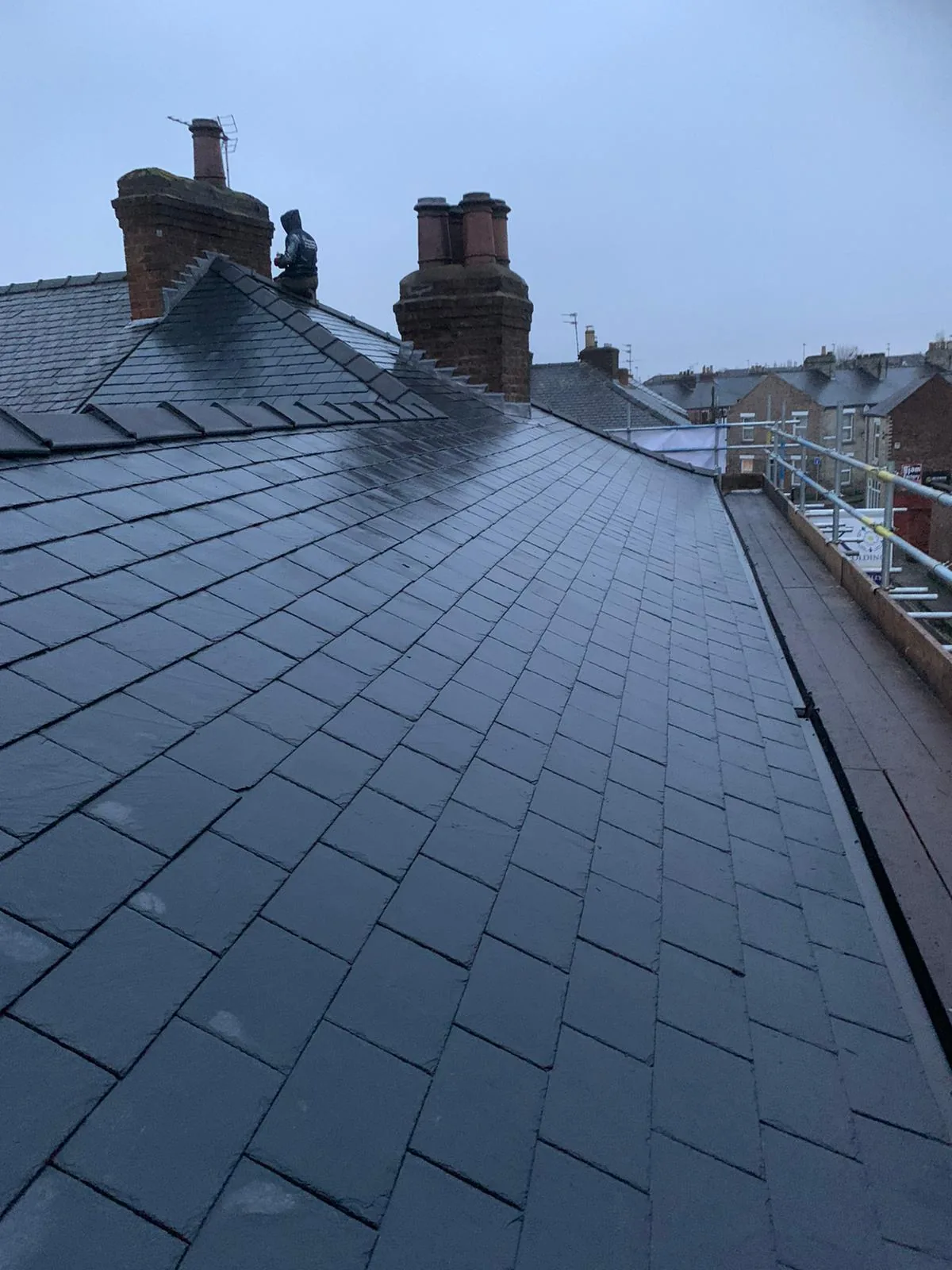
- **Access and scaffold*— a safe working platform around a stack often adds £400 to £1,200, and it is the single biggest line on most jobs
- **Stack height and position*— a tall stack, or one set on a steep or awkward roof, takes longer and needs more platform
- **Mortar type*— lime work is slower and more skilled than cement, so it carries more labour
- **Brick condition*— spalled or cracked bricks that need cutting out and replacing add to a plain repoint
- **Extra work*— renewing flaunching around the pots or the lead flashing at the base is often worth doing while the scaffold is up
These are general market ranges, not a quote for your chimney. Two stacks the same height can price very differently once scaffold, mortar and brick condition are factored in. The only way to a firm figure is a proper survey — which is exactly what our free drone survey gives you, followed by a clear written price with nothing added later. A fixed price needs a survey.
How Long a Chimney Repoint Lasts When It Is Done Right
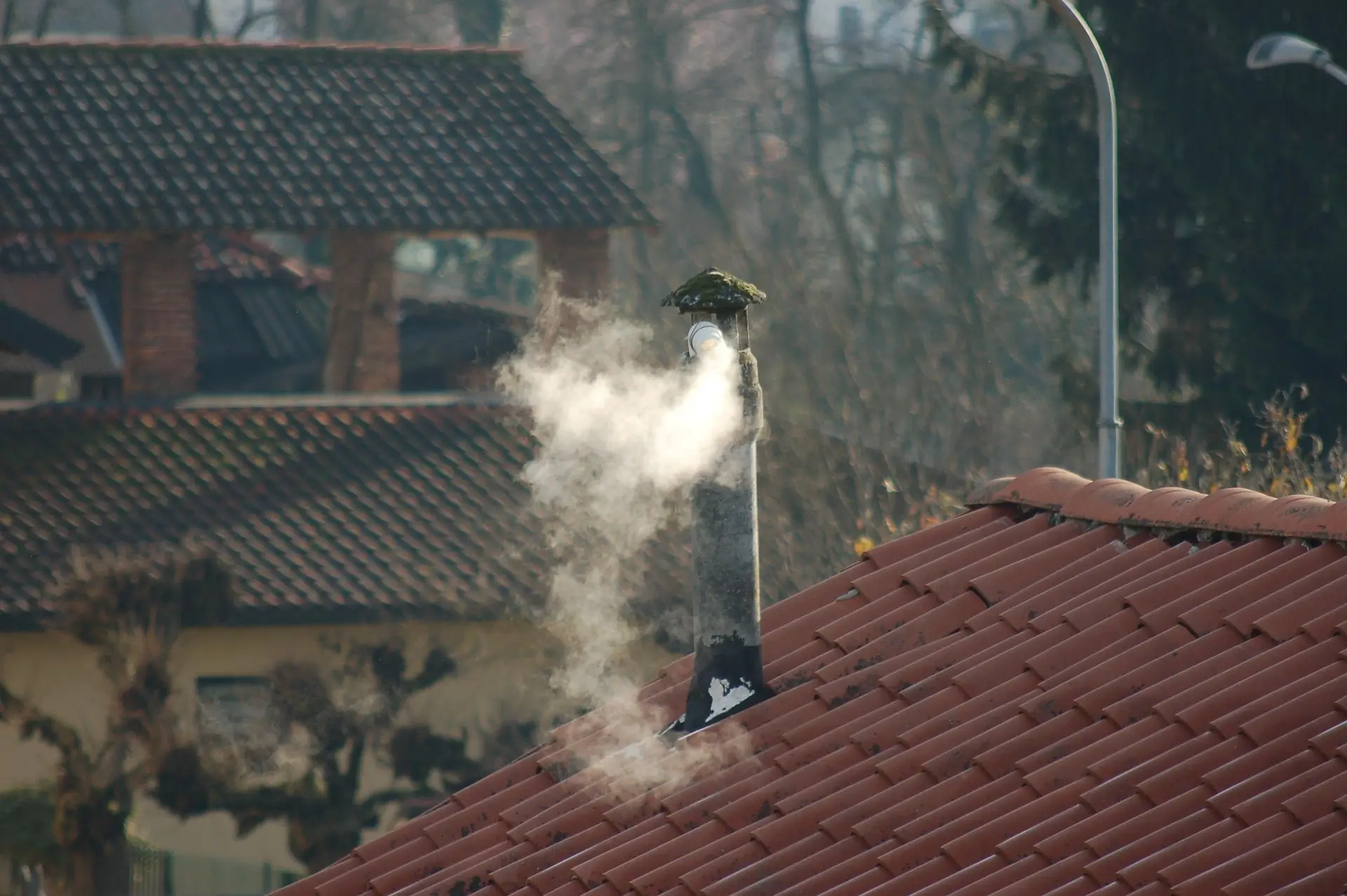
A repoint is not a job you want to redo in five years. Done properly, with the right mortar for the brick and the joints raked out to a proper depth, chimney repointing lasts a long time. On a period stack, correctly applied lime mortar holds for 20 to 30 years before it needs looking at again.
The mix and the depth are what decide it. Joints have to be raked back to a sound edge, not just skimmed over the top, or the new mortar washes out within a season. The mortar also has to be slightly softer than the brick, so the joint takes the wear rather than the brick face. Cement pointing on an old stack gives 10 to 15 years at best, and by the time it fails it has usually started spalling the bricks — which is why matching the mortar to the chimney saves money over the life of the stack.
Why DIY Chimney Repointing So Often Ends Badly
Repointing looks simple from the ground, and on a low garden wall it can be a fair weekend job. A chimney is a different matter. The work sits two storeys up on an exposed stack, reached only over a pitched roof, and that is where the real danger is.
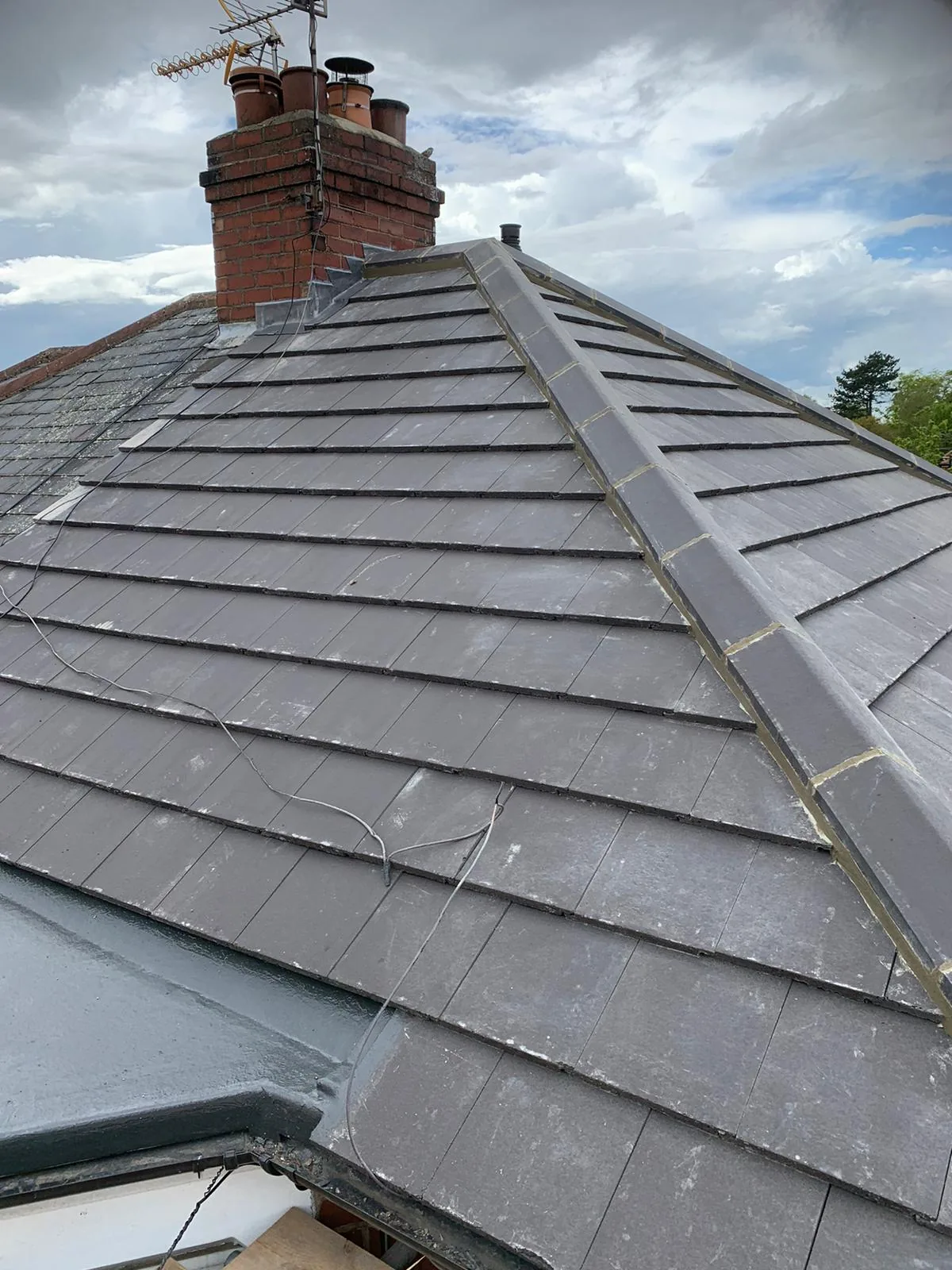
Two things catch people out. The first is the height — working off a ladder or a roof edge around a chimney is how serious falls happen, which is why we scaffold every stack before anyone goes near it. The second is the mortar. Point an old lime-built stack with general-purpose cement and you have not saved the chimney, you have started the clock on spalled bricks and a bigger bill. The LABC set this out plainly in their guidance on repointing brickwork, worth a read before anyone reaches for a trowel.
From Rake-Out to Sign-Off: What Happens on the Job
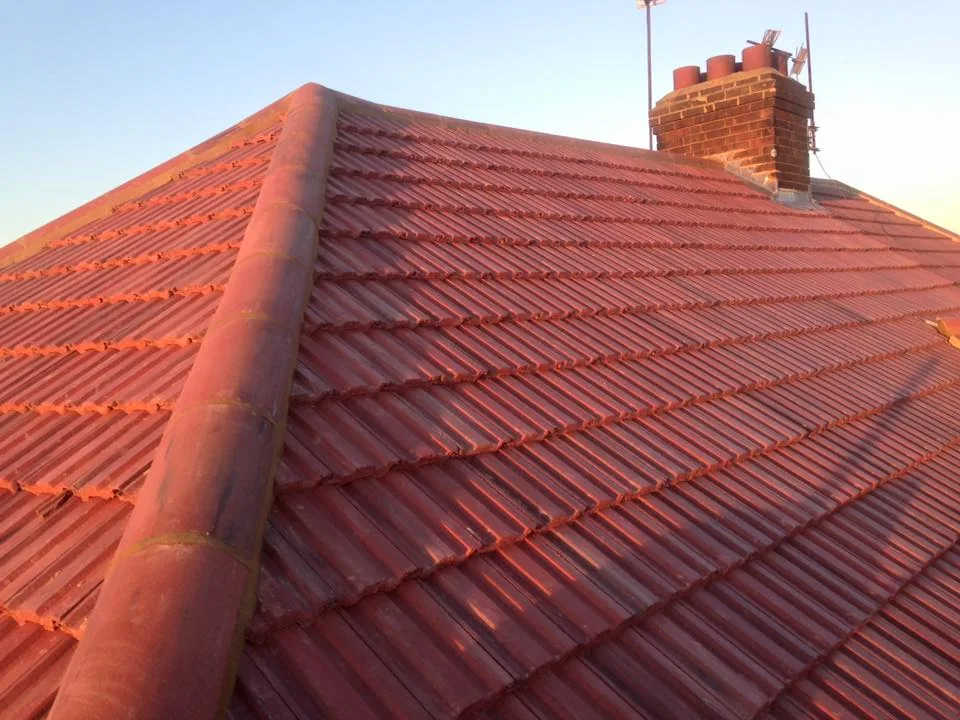
A chimney repoint follows the same order on every job we run across Market Harborough:
- Scaffold or a safe platform built around the stack
- Old, soft mortar raked out to a sound depth on every joint
- Joints brushed and dampened so the new mortar bonds properly
- Fresh mortar, matched to the brick, pressed in and struck to shed water
- Flaunching around the pots checked and renewed if it has cracked
- Stack left clean, the scaffold struck, and the finished work checked before we leave
Most single stacks take one to three days once the platform is up, weather allowing. Lime work runs a little longer, as the mortar needs time between stages and cannot be rushed. We give you a realistic timeframe before work starts, not an optimistic one designed to win the job. You will know who is turning up and roughly how long they will be there.
Why Market Harborough Homeowners Call Tate & Sons First
You are not just buying mortar — you are buying the eye that reads the stack and the hands that point it. Founder Michael Tate has more than 30 years on the tools and a real feel for heritage brickwork and lime mortar. He surveys every job himself, matches the mix to the chimney, and never talks a customer into a rebuild that a repoint would settle. Fix the cause, not just the symptom, is the rule he built the firm on.
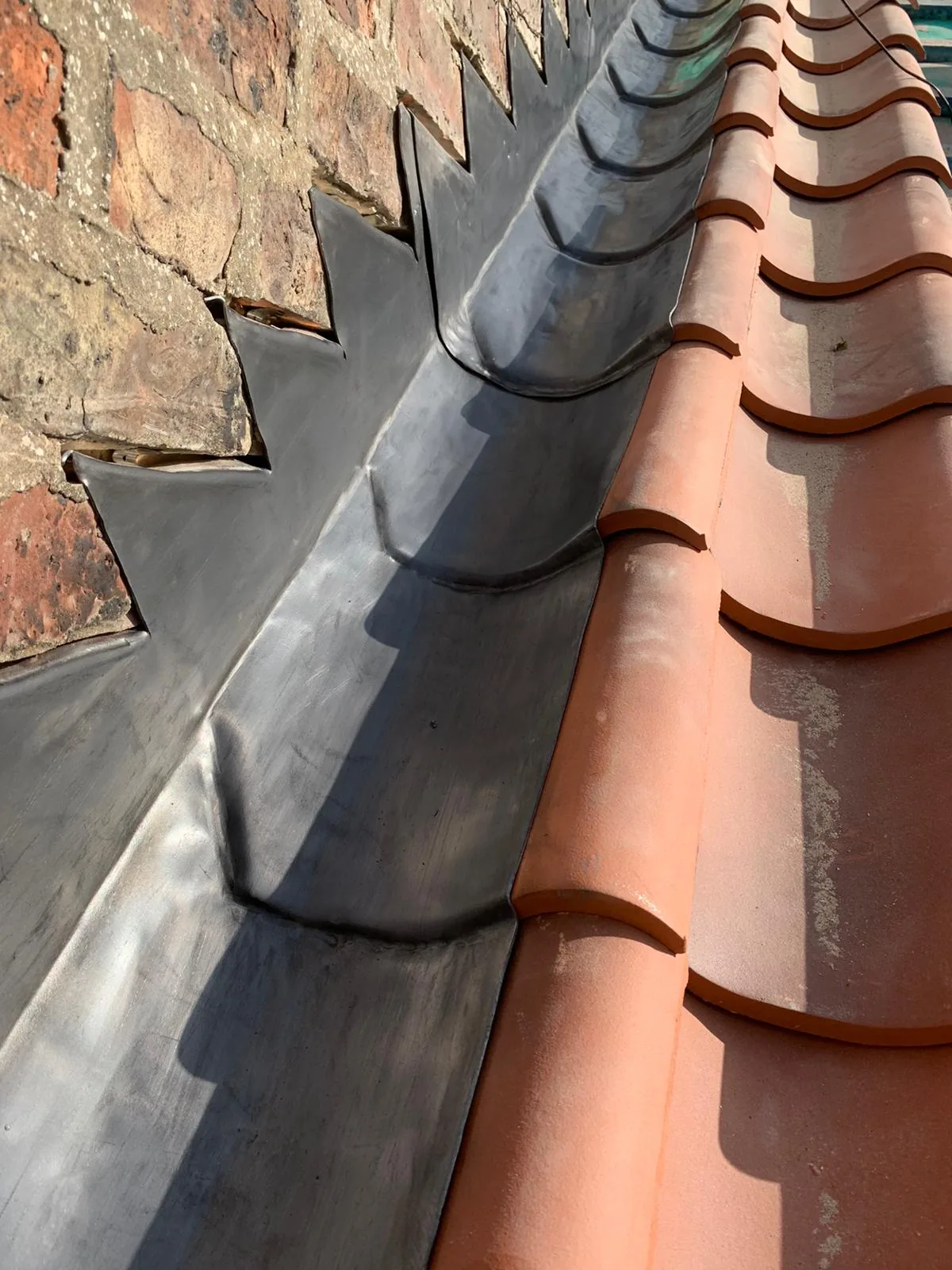
His son Ryan Tate runs the site work, so the crew that quotes your stack is the crew that points it. Between them the team carries over 45 years of combined experience, holds NVQ Level 2 and 3 qualifications in Roofing Occupations, and keeps CSCS cards and NFRC trade-body membership. That mix of a heritage eye and modern site standards is why period-property owners around Great Bowden and Kibworth Beauchamp call us first. Read more about the people behind the work on our About Tate & Sons Roofing page.

Areas We Serve Across Market Harborough and the Harborough District
We repoint and repair chimneys across Market Harborough and the surrounding Welland Valley villages. If your area is not on the list below, call us anyway — if you are nearby, there is a strong chance we cover you.
- Market Harborough (LE16)
- Great Bowden (LE16 7)
- Little Bowden (LE16 8)
- Lubenham (LE16 9)
- Foxton (LE16 7)
- Medbourne (LE16 8)
- Kibworth Beauchamp (LE8)
- Great Glen (LE8 9)
- Fleckney (LE8 8)
- Husbands Bosworth (LE17 6)
- Desborough (NN14 2)
Got Questions?
Your Chimney Repointing Questions, Answered Properly
How do I know when my chimney needs repointing?
The clearest sign is mortar that has crumbled or weathered back below the face of the bricks, often with sandy grit showing up in the gutter or on the roof. You may also see loose bricks near the top, white efflorescence staining, or a damp patch on the chimney breast indoors. Once the joints are raked back more than about 15mm, water runs straight into the wall and the job turns urgent. A drone survey settles it, since none of this is easy to judge from the ground.
Should I use lime or cement mortar on my chimney?
It depends on the age of the chimney. For a stack on a property built before roughly 1930, lime mortar is almost always the right choice, because it breathes and flexes with the soft old brick. For a modern post-war home, cement mortar is stronger and perfectly sound. Using hard cement on an old lime-built stack traps water and flakes the brick faces over ten to twenty years, which is why we match the mix to the chimney every time.
How much does it cost to repoint a chimney in Market Harborough?
As a general guide, a chimney repoint runs from around £500 for a low, easily reached stack up to £2,500 or more for a tall stack needing full scaffold and some brick repair, with the average near £750. Scaffold is usually the biggest single cost, often adding £400 to £1,200 on its own. Lime work carries more labour than cement, as it is slower and more skilled. A free drone survey gives you an exact written price rather than a rough estimate over the phone, and a fixed price always needs a survey first.
How long does chimney repointing last?
Done properly, a chimney repoint lasts a long time. Lime mortar on a period stack holds for 20 to 30 years before it needs attention again, provided the joints were raked out to a sound depth and the mix matched the brick. Cement pointing on an old stack tends to give only 10 to 15 years, and it often starts spalling the bricks before it fails. Getting the mortar and the depth right is what buys you the decades.
Can I repoint my own chimney?
We would not advise it. The work sits two storeys up on an exposed stack reached over a pitched roof, and falls from that height are how serious injuries happen. On top of the danger, the wrong mortar mix can damage the brickwork beyond repair rather than protect it. A low garden wall is one thing, but a chimney needs a proper working platform and the right mortar for the age of the brick. It is a job worth leaving to a scaffolded crew.
Does repointing a chimney need scaffolding?
Almost always, yes. A chimney sits above the roofline with no safe footing nearby, so a scaffold or a stable working platform is the only sound way to reach it and work steadily. Scaffold is often the largest single cost on a chimney job, which is why it is worth handling any flaunching or flashing work at the same time while the platform is up. We price the platform clearly in the written quote so it is never a surprise.
Is my chimney better off repointed or rebuilt?
If the bricks are sound and only the mortar has worn back, a repoint is the right and far cheaper fix. A rebuild only comes into it once the brickwork itself has failed — badly spalled or cracked bricks, a leaning stack, or joints that crack open again within a season of being pointed. We check the whole stack on the drone survey and give you a straight answer, rather than steering you toward the bigger invoice.
Will you point over conservation area or listed building rules?
We check that first. Parts of Great Bowden and Foxton fall within areas where the planning authority takes a closer look at visible work on period property, and a listed building can have the mortar type and finish controlled. We confirm the position before quoting, match a lime mix and joint finish that suits the building, and flag anything that needs consent, so there are no surprises once work is scheduled.
Book Your Free Drone Chimney Survey Today
See exactly what your chimney needs before any work starts. No ladders, no pressure — just a clear picture from a local Market Harborough team.
Every winter a worn stack waits, frost works deeper into the open joints and the damage spreads to the bricks. A quick, free survey today tells you exactly where you stand — and often the fix is a straightforward repoint rather than the rebuild you feared. Book now, get an honest quote, and protect your chimney before the next frost finds the weak spot.
ð 5 Hood Close, Market Harborough, LE16 9XS
ð 01858 457600
Call the Market Harborough team today on 01858 457600, or request your free drone survey online. We're already working across your area.
Book Your Free Drone Roof Survey
See exactly where your roof stands, with no obligation and no pressure. Call our Market Harborough team or request your free drone survey today.
Get in Touch
Tate & Sons Roofing — Market Harborough Office
5 Hood Close, Market Harborough, LE16 9XS
📞 01858 457600
✉️ [email protected]