
🏠 Trusted Local Roofers
Chimney Removal in Hinckley
A chimney that leans, cracks, or drips into the loft rarely settles down on its own. Chimney removal in Hinckley takes that risk away for good, rather than another round of patching a stack that keeps failing. You might want the whole structure gone from roof to foundation, or just the section above the roofline taken down and the roof made good. Either way, the job needs planning, the right support, and someone who has done it before.
Tate & Sons Roofing is one of the chimney service specialists across Hinckley, and chimney removal sits alongside stack repairs, repointing, and flashing work as part of that wider service. We survey the chimney and the roof around it before recommending anything, so you know exactly what you are paying for.
This page covers when removal beats repair, the difference between full removal, stack-only removal, and simply capping a disused flue, the planning and Building Regulations rules that apply, and real cost ranges for Hinckley properties. Start with a free drone survey and a written quote before agreeing to anything.
- Fully Insured
- 10-Year Guarantee
- 5-Star Rated
Quick Free Estimate - No Obligation
We're not just roofers – we're your neighbours.
Fully Insured • Response within 15 mins
🔒 Your details are safe with us. No spam, ever.
Know When a Chimney Should Come Down, Not Just Be Patched Up
Not every damaged chimney needs to come down. A stack with a few loose bricks or failing pointing is often better served by a straightforward repair than a full removal. If yours just needs the brickwork and mortar joints sorted, our chimney stack repair service across Hinckley usually costs far less than removal, and keeps the roofline intact.
A handful of signs point the other way, toward removal instead of repair:
We see a lot of the last two points on the Victorian terraces around the Druid Quarter, where many stacks still stand tall over a fireplace that has not held a fire in decades. A disused stack costs nothing extra sitting there quietly, but a failing one keeps costing money until it is dealt with properly.
- A stack leaning visibly out of line with the roof
- Cracks running through several courses of brickwork
- Damp patches that return no matter how often the stack is repointed
- A flue that has not held a fire or boiler flame for years
- A chimney that blocks a planned loft conversion or roof extension
- Repeated repairs that cost more, more often, every time
Full Removal, Stack-Only, or Capping — Choosing the Right Option for Your Roof
Chimney removal in Hinckley is not all-or-nothing. Three options cover almost every job we quote: taking the whole structure out from roof to foundation, removing just the section above the roofline, or capping a disused flue and leaving the rest in place.
A full removal takes the chimney breast out on every floor it passes through, fits a steel beam or bracket support where the brickwork used to stand, and removes the stack down to roof level. It suits homeowners after a loft conversion, extra room downstairs, or a structurally unsound chimney that has to go completely.
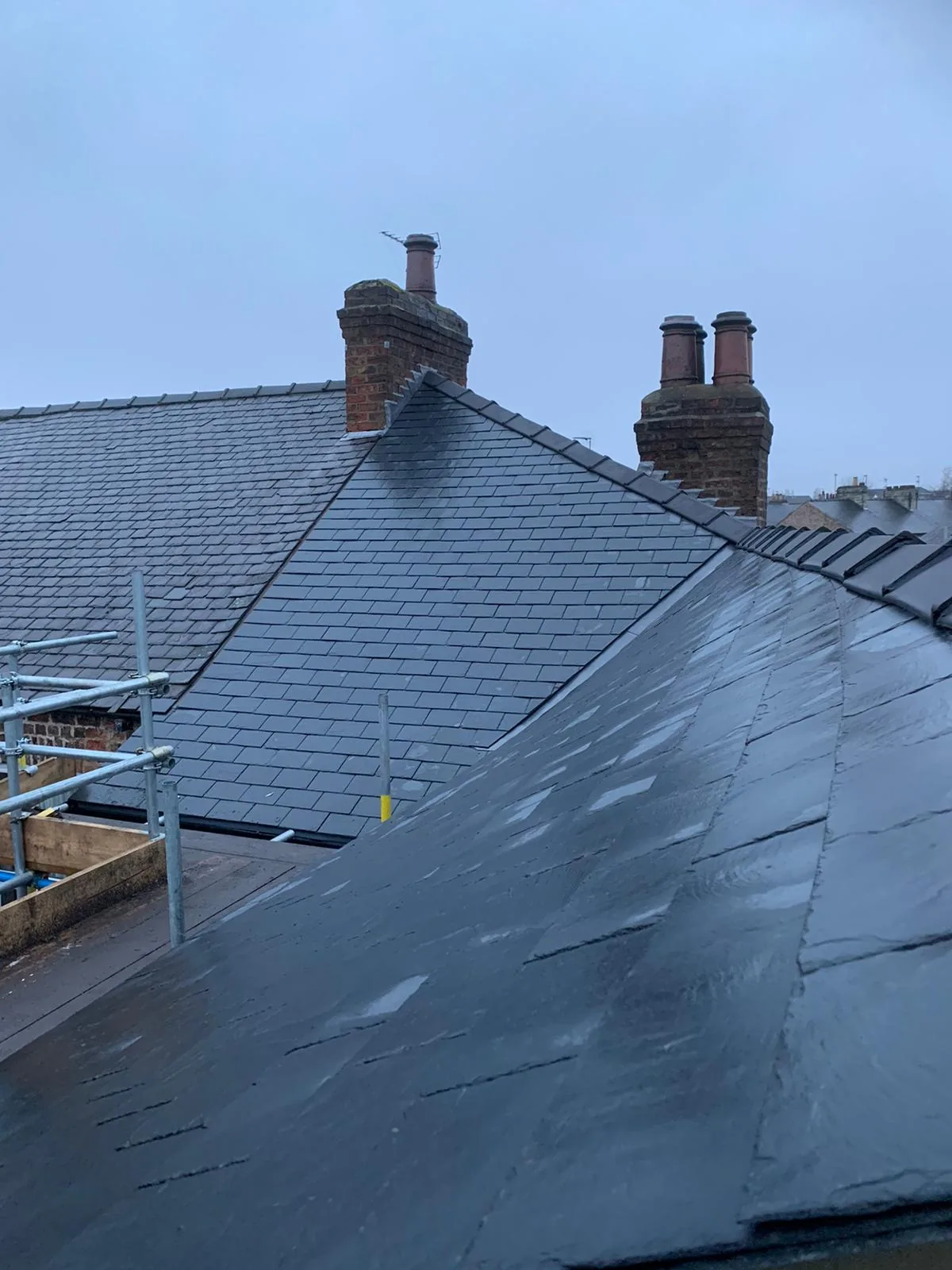
Removing the stack above the roofline only leaves the chimney breast and any fireplace downstairs untouched. The stack comes down to just below the roof, and the roof is felted and tiled over the gap. It suits a leaning or leaking stack where you want the problem gone but don't need the internal structural work a full removal involves.
Capping and retaining involves no structural removal at all. We fit a weatherproof cap or cowl over the flue and ventilate it correctly, so the stack stays as a feature on the roofline. It suits a sound chimney you want to keep for character or resale value, and it's by far the cheapest of the three options.
| :-: | :-: | :-: | :-: |
| Option | Typical Cost | What It Involves | Best For |
| Full removal (stack & breast) | £3,000–£6,000 | Breast removed on every floor, steel support fitted, stack taken down to roof level, roof made good | Loft conversions, reclaiming room space, structurally unsound chimneys |
| Removal above roofline only | £800–£1,800 | Stack taken down to just below the roof, breast left in place, roof re-felted and re-tiled over the gap | Leaning or leaking stacks where you want to keep the fireplace below |
| Capping and retaining | £150–£400 | Weatherproof cap or cowl fitted, flue ventilated correctly, no structural work carried out | Sound, disused stacks kept for roofline character or resale value |
If capping sounds like the better fit for a stack you want to keep, our chimney cap installation and weatherproofing service across Hinckley covers that job on its own, without any of the structural work described above.
Planning Permission, Building Regs and Party Walls — What Chimney Removal Actually Requires
Removing a chimney breast rarely needs planning permission on its own. Most homes in England carry permitted development rights that cover it, provided the property is not listed and sits outside a conservation area.
Removing or altering the visible stack is treated a little differently, and height and position both matter. The Planning Portal's guidance on flues and chimneys sets out when permitted development applies and when it does not, and it's worth a read before any quote is agreed.
Building Regulations approval is a separate matter, and it almost always applies. Removing a chimney breast is structural work, so Building Control needs to see calculations for whatever support replaces the brickwork, usually a steel beam sized by a structural engineer.
Party wall rules apply if the chimney is shared with next door, which is common on the older terraces near Hollycroft Park and through much of Hinckley town centre. You need to serve formal notice under the Party Wall Act before work starts, and we can point you toward a surveyor if your neighbour raises any objection.
What Chimney Removal Day Actually Involves, Start to Finish
A chimney removal in Hinckley follows the same broad order on every job:
- Scaffold erected and the site made safe
- Chimney breast stripped out floor by floor, working from the top down
- Steel beam or bracket support fitted and checked by Building Control
- Stack taken down to the agreed point — foundation, roofline, or capped
- Roof opening felted, battened and re-tiled to match the existing covering
- Internal walls and ceilings plastered and made good
- Site cleared and Building Control sign-off arranged
We plan every job around Hinckley's older housing stock, where fireplaces were often bricked up decades ago but the flue behind them was never properly checked.
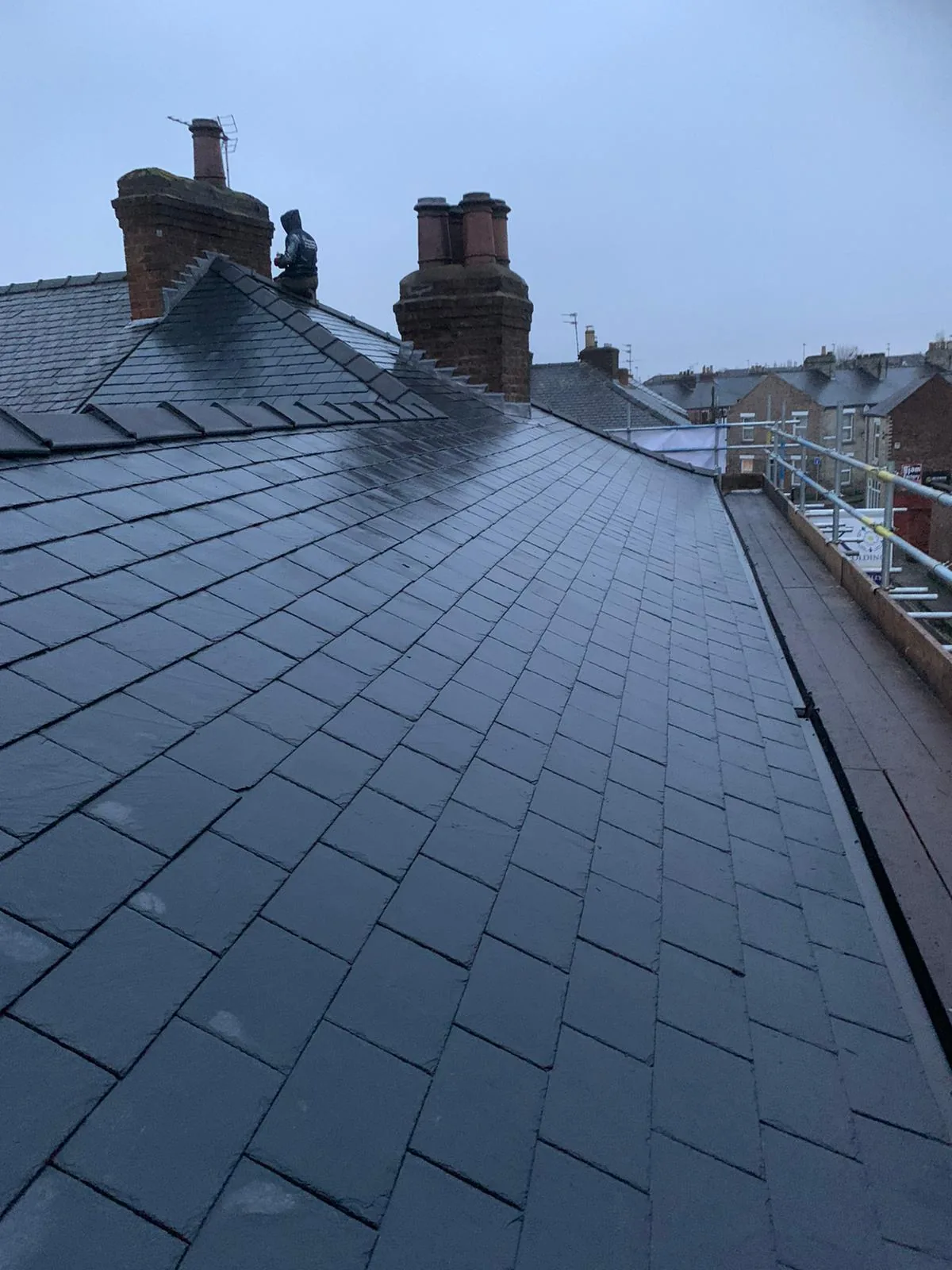
A straightforward stack-only removal on a semi-detached roof usually takes 2 to 4 days. A full removal with a steel beam and re-plastering on every floor typically runs 5 to 10 days, depending on how many fireplaces are involved. Older flues sometimes contain asbestos lining material, so we check before starting and bring in a licensed specialist if anything needs testing.
What Chimney Removal Really Costs in Hinckley
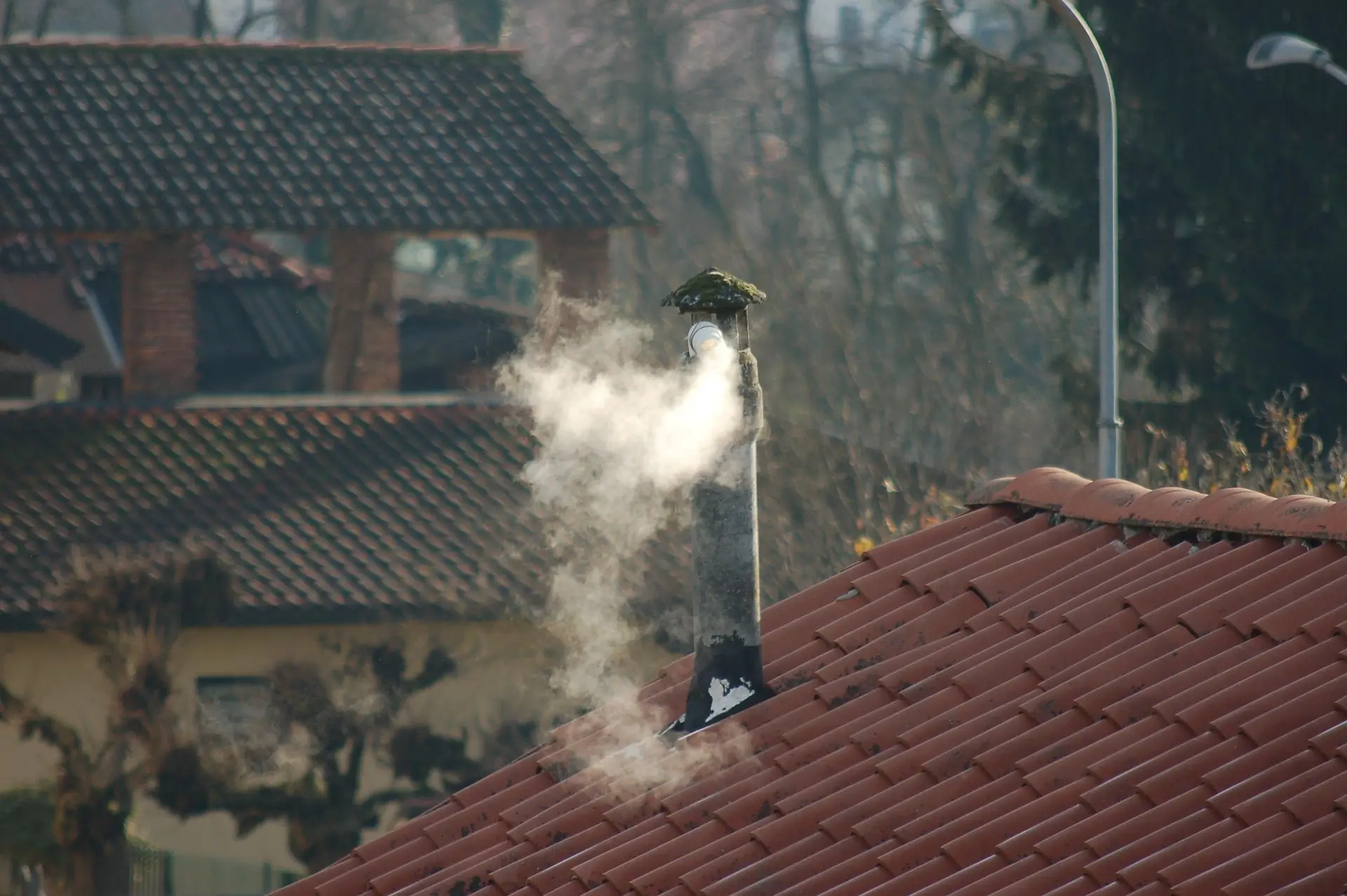
Chimney removal in Hinckley typically costs between £800 and £6,000, and the type of removal decides where you land in that range. Taking the stack down to just below roof level usually costs £800 to £1,800. Removing a full chimney breast runs £1,500 to £2,500 per floor, and a full removal covering the breast on every floor plus the stack typically costs £3,000 to £6,000 in total.
What pushes a price up or down:
These are general market ranges, not a quote for your chimney — two similar-looking terraces can price very differently once access, floors and party wall status are factored in. A fixed price needs a survey.
- Number of floors the chimney breast passes through
- Whether a steel beam and structural engineer's calculations are needed
- Scaffolding and access, especially on a terrace with limited rear access
- Party wall surveyor fees if the stack is shared with a neighbour
- Asbestos testing or removal if the flue lining needs checking
- Matching roof tiles and felt once the stack comes out
- Making good internal walls and ceilings on every floor affected
Get the Roof Made Good Properly Once the Chimney Comes Down
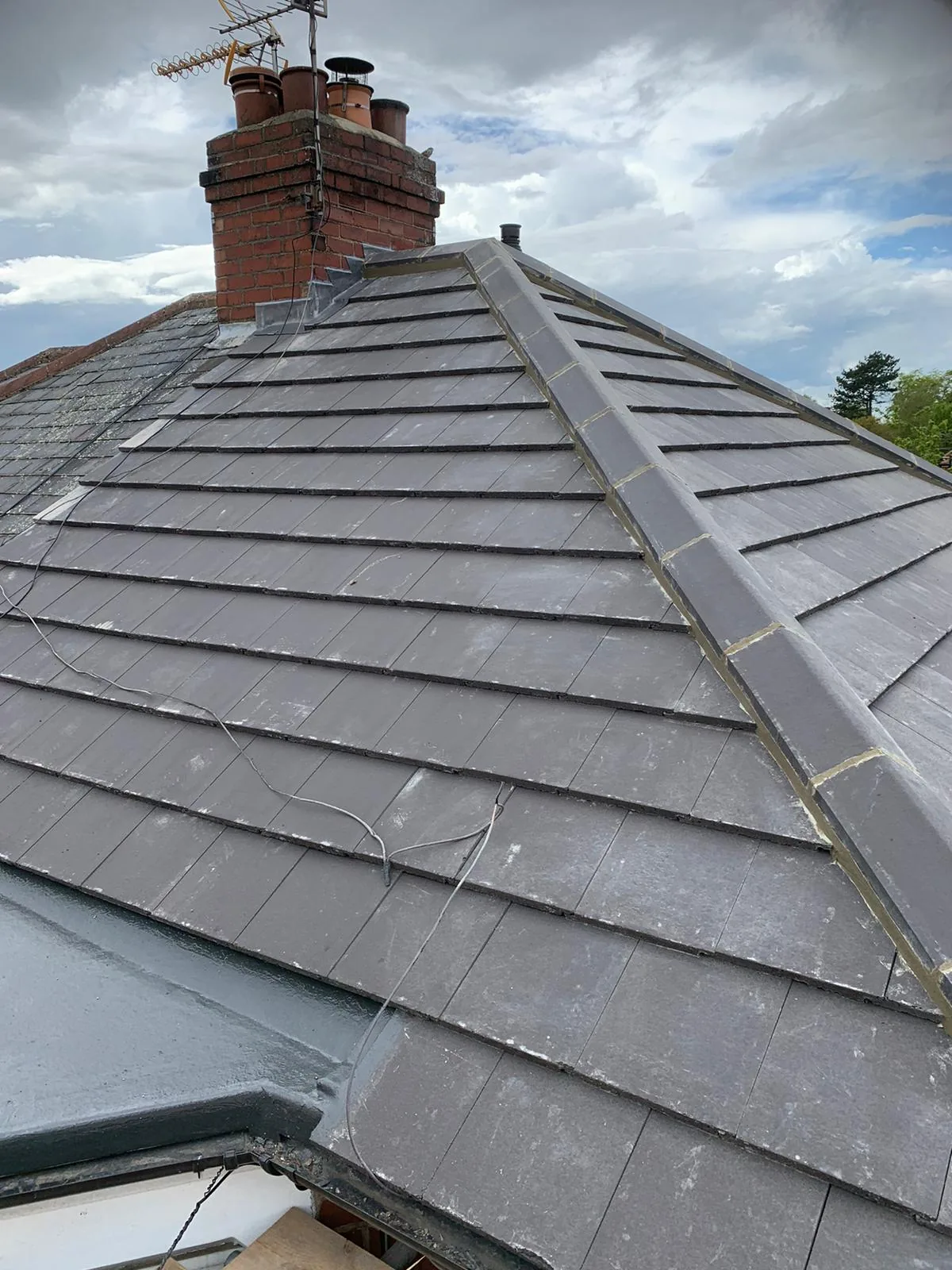
Taking a chimney out leaves a gap in the roof that has to be closed properly, not just tiled over and hoped for the best. The felt underneath needs to run continuous across the opening, and the battens need to tie into the existing structure so the new section performs the same as the rest of the roof.
Matching tiles gets harder the older the roof. A roof with the original clay or concrete tiles from decades ago rarely has an exact match sitting on a merchant's shelf, so we source close matches and place them where the difference is least visible, usually toward the ridge rather than the eaves.
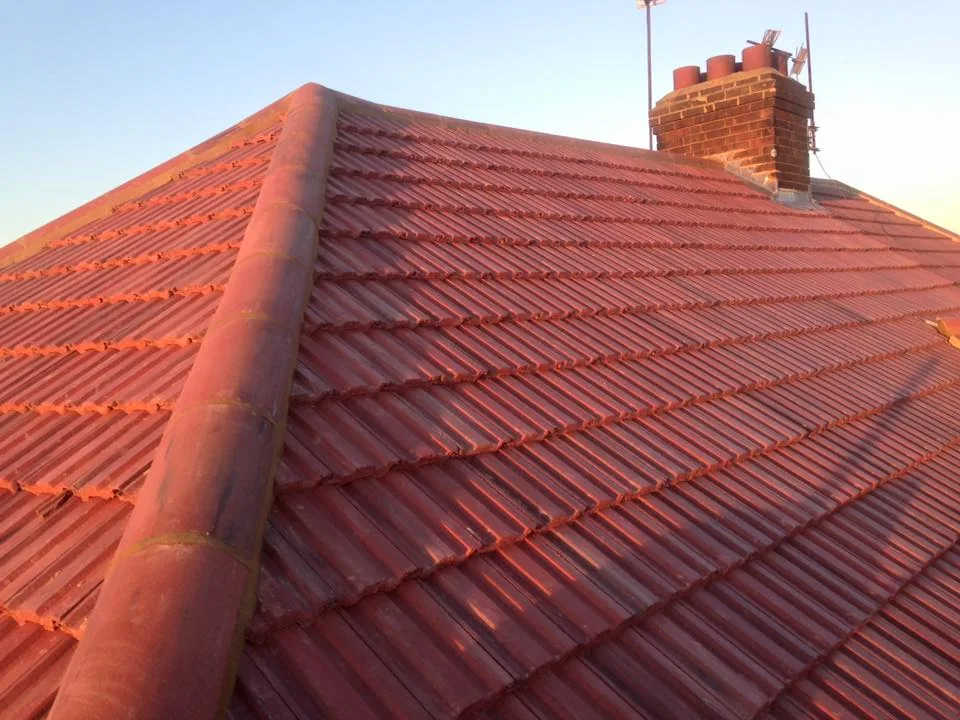
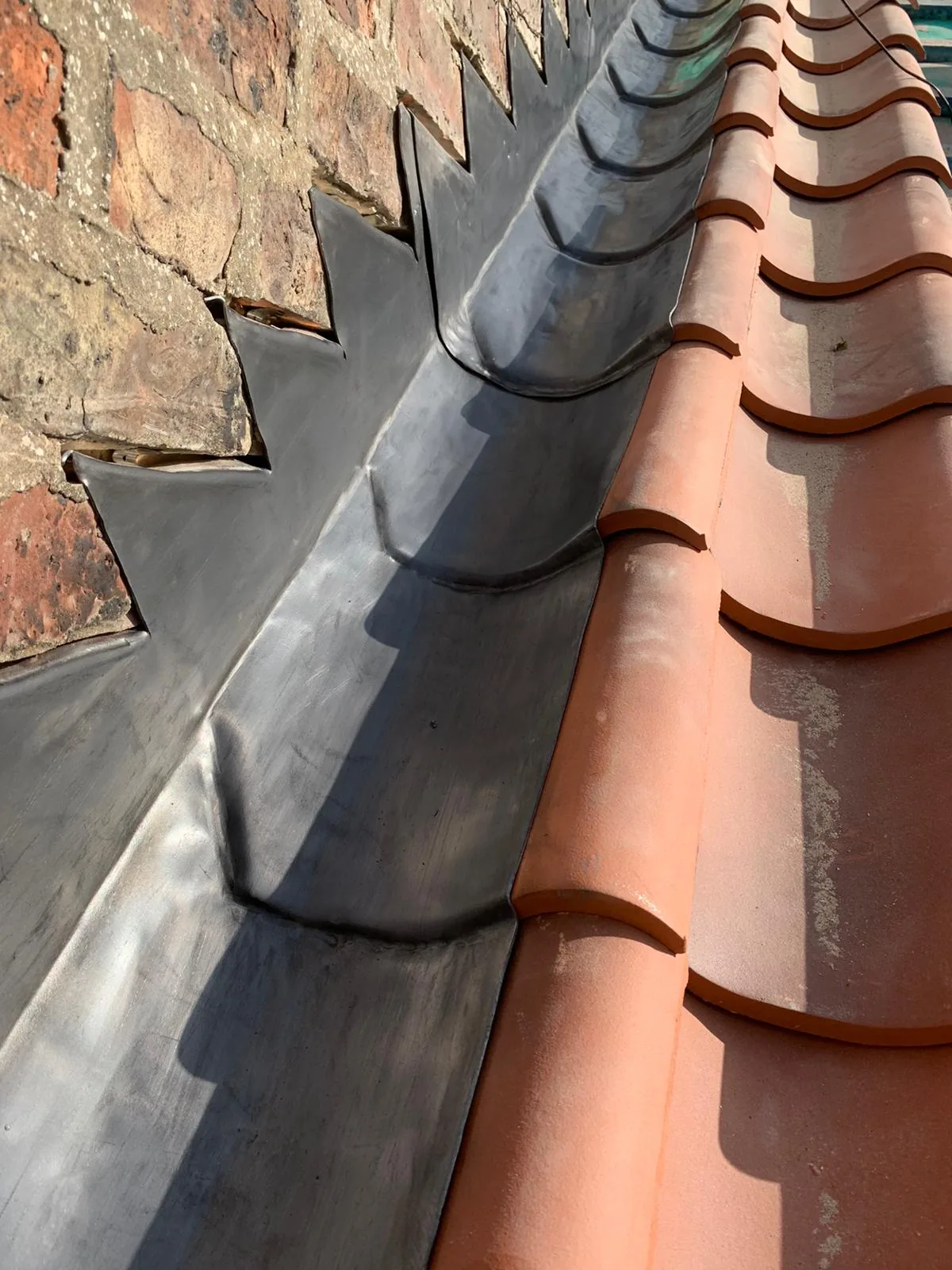
Where the stack met the roof, any lead flashing has to come out and the joint needs to be properly weathered, since flashing left half-attached is one of the most common causes of a leak after chimney work. If flashing around other stacks or abutments on your roof needs attention too, our lead flashing around chimneys service across Hinckley covers that separately.
Keep the Result Safe and Sound for Years After
A chimney removal is finished the day the roof is made good, but a few checks in the months after are worth doing. Keep an eye on the ceiling below where the breast used to run, since any missed damp usually shows up there first.
- Check the loft near the old stack after the first heavy rain
- Watch for hairline cracks in ceilings on the floors the breast passed through
- Keep vents clear if any part of the flue was capped rather than removed
- Book a follow-up drone survey after the first winter if you have any doubts
Properties out toward Sharnford and Wolvey take more wind-driven rain across an exposed roof than a sheltered street in Hinckley town centre, so we pay close attention to how the new roof section is dressed on those jobs.
Why Hinckley Homeowners Trust Tate & Sons With Chimney Work
Chimney removal is structural work, and the person running your job matters as much as the price. Daniel Whitmore, our project manager, leads chimney and re-roofing work on site and specialises in leadwork and heritage tile detailing on Hinckley's older properties — exactly the skill set a stack removal on a Victorian terrace needs.
Founder James Tate started out on the tools more than 20 years ago and still quotes the majority of jobs personally, so the person pricing your chimney is the one who understands what is really under the render. Between the team we bring 40 years of combined experience, NVQ Level 2 and 3 qualifications in Roofing, and CSCS cards. Sophie Bennett, our office manager, keeps quotes, scheduling and Building Control paperwork moving from the first call through to final sign-off. Read more about the people behind the work on our About Tate & Sons Roofing page.
Areas We Serve Across Hinckley and Bosworth Country
We remove and cap chimneys across Hinckley and the surrounding borough. If your area is not on the list below, call us anyway — there is a strong chance we already cover you.
- Hinckley (LE10)
- Burbage (LE10)
- Barwell (LE9)
- Earl Shilton (LE9)
- Sapcote (LE9)
- Sharnford (LE10)
- Wolvey (LE10)
- Higham on the Hill (CV13)
- Sutton Cheney (CV13)
- Stoke Golding (CV13)
- Market Bosworth (CV13)
- Nuneaton (CV10 / CV11)
- Bedworth (CV12)
Got Questions?
Your Chimney Removal Questions, Answered Properly
How much does chimney removal cost in Hinckley?
Chimney removal in Hinckley typically costs £800 to £6,000, depending on how much of the chimney comes out. Stack-only removal above the roofline usually runs £800 to £1,800. A full chimney breast removed on every floor, plus the stack, typically costs £3,000 to £6,000 once structural support and making good are included. A free drone survey gives you an exact written price rather than a rough estimate over the phone.
Do I need planning permission to remove a chimney?
Most chimney breast removals do not need planning permission, since permitted development rights cover them on standard, unlisted homes outside conservation areas. Removing or altering the external stack is judged a little more carefully, particularly on height and position. Listed buildings and conservation areas — including parts of Hinckley's older streets — are more likely to need formal approval, so we check your property's status before quoting.
Do I need a party wall agreement to remove a chimney?
Yes, if the chimney is built into a wall shared with your neighbour, which is common on semi-detached and terraced properties around Hinckley. The Party Wall Act requires formal written notice at least two months before work starts. We can guide you through the notice and recommend a surveyor if it's needed.
What holds up the chimney stack once the breast is removed?
A steel beam, usually called an RSJ, fitted under the remaining brickwork is the standard, Building Control-approved solution. Gallows brackets are sometimes accepted for lighter loads, but most Building Control officers now prefer a steel beam, especially on shared party walls. A structural engineer calculates the exact beam size needed for your property before any work starts.
Can I remove just the chimney breast and leave the stack, or the other way round?
Yes, and it's one of the most common jobs we quote. Removing the stack above the roofline while leaving the breast and fireplace downstairs is a smaller, cheaper job than a full removal. Removing the breast while leaving the stack in place is less common structurally, since the stack usually needs support once the breast underneath it is gone.
How long does chimney removal take?
A stack-only removal above the roofline usually takes 2 to 4 days on a typical semi-detached roof. A full removal, including a steel beam and plastering on every floor, generally takes 5 to 10 days depending on how many fireplaces the breast serves. Weather and access can add time, and we build a realistic allowance into every schedule.
Is it worth removing a disused stack in the Druid Quarter even if it isn't causing problems?
It can be, especially if the stack is old enough that a proper survey has never been done. Many Victorian terraces in the Druid Quarter carry stacks that have not served a working fireplace in decades, and age alone doesn't mean they're sound. A free drone survey tells you whether the stack is stable enough to leave capped, or whether it's quietly deteriorating and better removed before it becomes a bigger job.
Do semi-detached homes near Hollycroft Park with a shared stack cost more to work on?
Often, yes, mainly because of the party wall process rather than the building work itself. A shared stack near Hollycroft Park or similar older streets usually means serving formal notice to your neighbour and allowing time for that process before work can start. The removal itself isn't necessarily harder, but the paperwork and timeline both take longer than on a detached property.
What happens if asbestos is found in the flue during removal?
Work stops on that section until the material is tested and dealt with properly. Older flue linings, particularly in properties built before 1980, sometimes contain asbestos cement products. If testing confirms asbestos, a licensed specialist removes or seals it before we continue, which can add a few days and a separate cost to the job.
Book Your Free Drone Roof Survey Today
See exactly what state your chimney and roof are in before any work starts. No ladders, no pressure — just clear drone footage from a local Hinckley team.
Every month a cracked or leaning stack is left alone, water works further into the brickwork and the timber below it, and a straightforward removal can turn into a bigger repair bill. A quick, free survey today tells you exactly where you stand, and often the right answer costs less than you feared. Book now and get an honest quote before the next spell of wet weather finds its way in.
Call the Hinckley team today on 01455 242595, or request your free drone survey online. We're already working across your area.
Book Your Free Drone Roof Survey
See exactly where your roof stands, with no obligation and no pressure. Call our Hinckley team or request your free drone survey today.
Get in Touch
Tate & Sons Roofing — Hinckley Office
10 Brosdale Drive, Hinckley, LE10 0SW
📞 01455 242595
✉️ [email protected]