
🏠 Trusted Local Roofers
Chimney Rebuilding Chesterfield
Some chimneys are past saving with mortar and a few new bricks. When a stack leans, sheds bricks or fails a survey, rebuilding is the only fix that lasts. Tate & Sons Roofing takes down and rebuilds chimney stacks across Chesterfield, from Victorian terraces near Old Whittington to modern homes on the town's newer estates. We are part of the wider chimney services across Chesterfield we offer, and rebuilding is the job we reach for when repointing or patching will not hold any longer.
This page covers how to tell if your stack needs a full rebuild rather than a repair, what a rebuild actually involves, real cost ranges, and the standards we build to. You will also find straight answers to the questions Chesterfield homeowners ask us most about chimney rebuilds.
- Fully Insured
- 10-Year Guarantee
- 5-Star Rated
Quick Free Estimate - No Obligation
We're not just roofers – we're your neighbours.
Fully Insured • Response within 15 mins
🔒 Your details are safe with us. No spam, ever.
How to Tell Your Chimney Needs a Rebuild, Not a Repair
A repair fixes mortar and the odd cracked brick while the structure underneath is still sound. A rebuild is what you need once the structure itself has failed. Getting this call right saves you paying for a repair that will not hold.
We offer three levels of chimney masonry work, and this page focuses on the most involved of the three: a full or partial rebuild. If your mortar joints are simply eroding but the brickwork is straight and sound, our chimney repointing service is usually the right and cheaper fix. If a handful of bricks or the pot need attention but the stack itself stands true, our chimney stack repair service covers that ground.
Look out for these signs that point toward a rebuild rather than a patch:
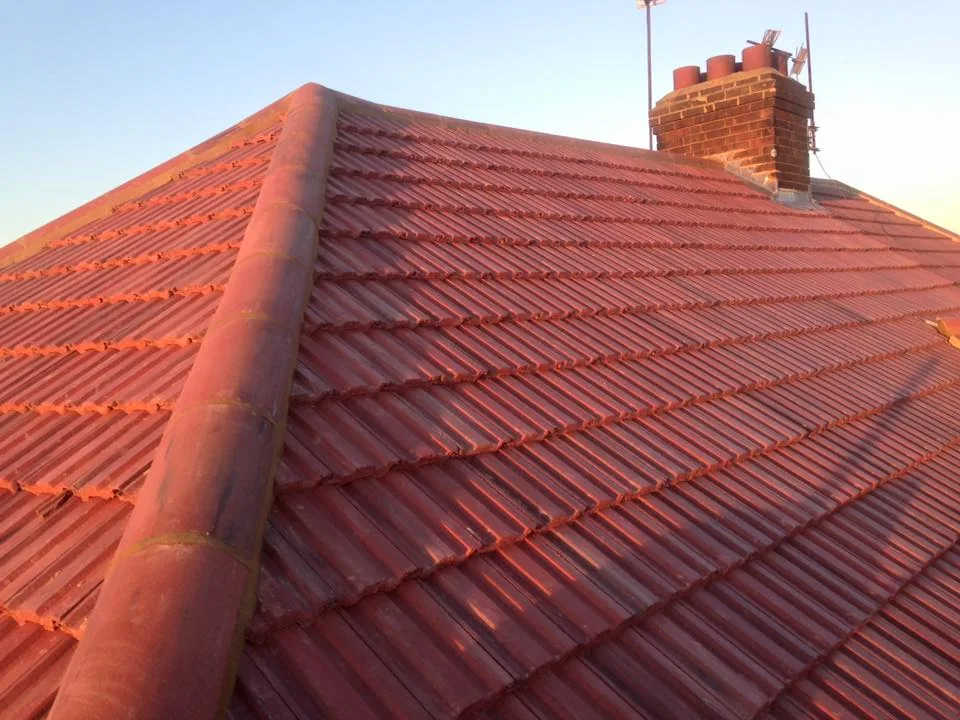
- A stack that visibly leans away from the roofline or a gap opening up where it meets the roof
- Bricks that are spalling, crumbling or falling away in pieces, not just surface weathering
- Mortar joints so far gone that bricks move or rock when pushed by hand
- Cracks running through several courses of brickwork, not just one or two joints
- A stack that has already failed a structural check or been flagged unsafe by a surveyor
- Older stacks around Chesterfield built without a damp-proof course, letting decades of water damage the core
A chimney with one or two of these signs might still be repairable. A stack with several at once, especially with a lean or loose bricks, usually needs taking down and rebuilding from a safety point.
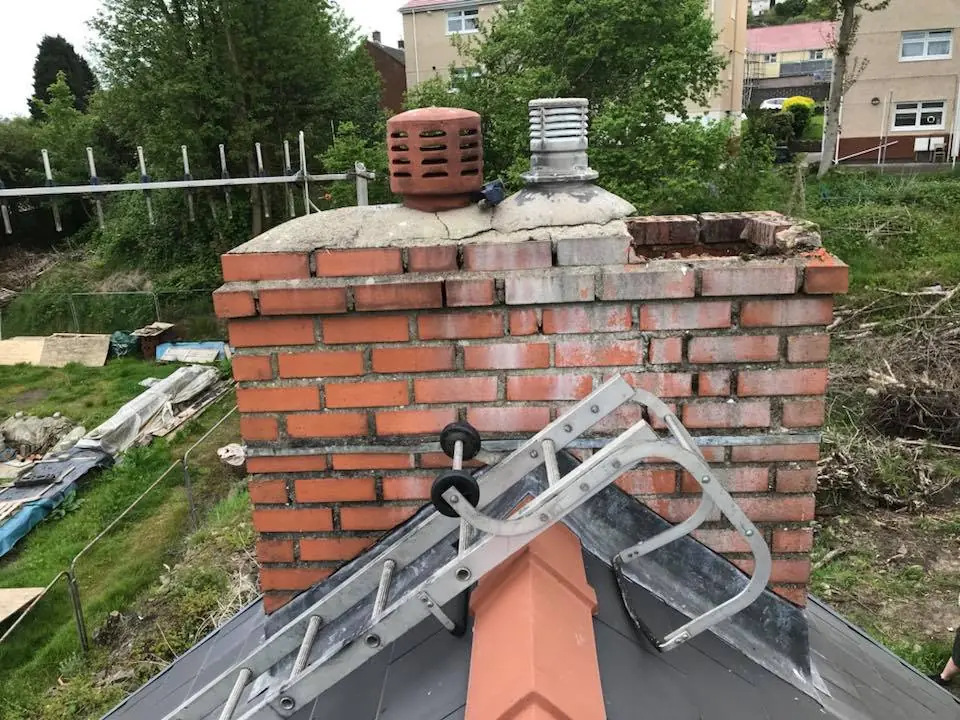
What Happens During a Full or Partial Chimney Rebuild
A rebuild means taking the stack down brick by brick to sound brickwork, then reconstructing it to match. It is slower and more involved than repointing, and it needs proper access and planning to do safely.
Most rebuilds fall into one of two categories. A partial rebuild takes the stack down to roofline level or just below it, then rebuilds upward using matched brick and fresh flashing. A full rebuild goes further, taking the chimney down through the roof structure to a sound base, usually because the damage or lean extends below the roofline.
We photograph and measure the existing stack before any brick comes down, noting the bond pattern, brick size and mortar colour. Every brick is recorded so the rebuilt stack matches the original in height, pitch and detail, not just in a general sense.
Scaffolding goes up first on almost every rebuild, since safe access to a stack above roofline height is not optional. The old brickwork comes down in a controlled sequence, checked at each stage for the condition of the flue liner and any timber close to the stack.
Rebuilding then works upward course by course, using matched or reclaimed brick bedded in the correct mortar mix for your property's age. New flashing, a fresh flaunching around the pots and a damp-proof course go in as the stack is finished, so the new work sheds water properly from day one.
Matching Original Brick and Mortar on Chesterfield's Period Homes
A rebuilt stack that clashes with the roof below it stands out from the street. Getting the brick, bond and mortar colour right matters as much as the structural work itself, especially on the stone terraces and Victorian villas common around Ashgate and Old Whittington.
Handmade or older bricks vary in size, colour and texture far more than modern factory bricks. We source reclaimed brick where we can, or use custom-matched brick from specialist suppliers when reclaimed stock is not available in the right size and colour.
Mortar matters just as much as brick on older properties. Many Chesterfield homes built before the 1920s were built with lime mortar, which flexes and lets moisture escape. Modern cement-based mortar is too hard for this brickwork and can force the bricks themselves to crack and spall over time.
The Society for the Protection of Ancient Buildings sets out clear technical guidance on chimney mortar and maintenance for older buildings, and we follow the same lime-based approach on period rebuilds. On a listed building or one inside a conservation area near the town centre, we check what your local authority expects before ordering any brick.
Chimney Rebuild Cost in Chesterfield: What You'll Actually Pay
A partial rebuild, taking the stack down to roof level and reconstructing the top courses, typically costs between 800 and 1,800 pounds. A full rebuild, taken down further through or below the roofline, generally runs from 2,000 to 6,000 pounds or more on larger or more complex stacks.
Scaffolding is usually the single biggest addition to a chimney rebuild quote, adding roughly 500 to 1,200 pounds depending on your roof height and how easily we can access the stack. A stack with two or three flues costs more to rebuild than a simple single-flue chimney, since there is more brickwork and more flue lining to work around.
Cost rises when reclaimed or custom-matched brick is needed to suit a period property, when the flue lining needs replacing at the same time, or when a damp-proof course was never fitted and has to go in during the rebuild. Cost falls on simpler, single-flue stacks with straightforward access and standard modern brick.
Weather plays a part too. Brickwork and lime mortar both need settled, dry conditions to cure properly, so a rebuild booked for a wet spell can take longer or cost more in lost days. A fixed price for your chimney rebuild needs a survey, since stack height, flue count and brick matching all vary from house to house.
Partial Rebuild, Full Rebuild or Repair: Which Does Your Chimney Need
The table below sets out how these three chimney services compare, so you can see roughly where your stack sits before we survey it.
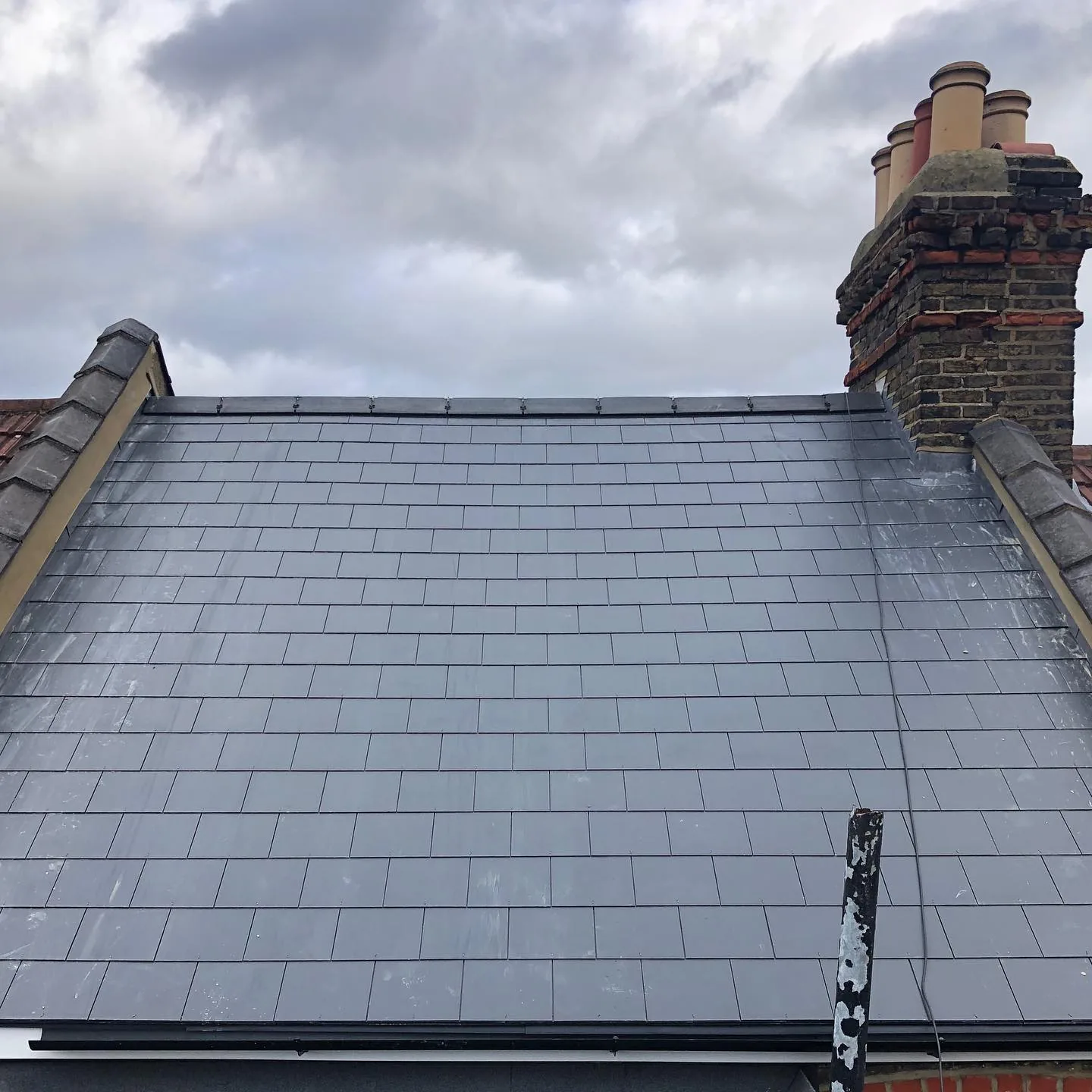
| Service | Typical Cost | When It Makes Sense | Best For |
|---|---|---|---|
| Repair in place | 150-600 pounds | Brickwork is sound; only a few bricks, the pot or flaunching need attention | Otherwise healthy stacks with isolated damage |
| Partial rebuild (above roofline) | 800-1,800 pounds | Top courses are damaged, spalling or loose, but the base below roofline is sound | Stacks with weathering concentrated at the top |
| Full rebuild | 2,000-6,000+ pounds | Lean, structural cracking or damage extends below roofline, or the stack has failed a survey | Unstable, badly damaged or unsafe stacks |
If you are not sure which category your chimney falls into, a free drone survey gives us a close look at the stack without anyone going up a ladder first.
Building Regulations, Access and Neighbours: What a Rebuild Involves
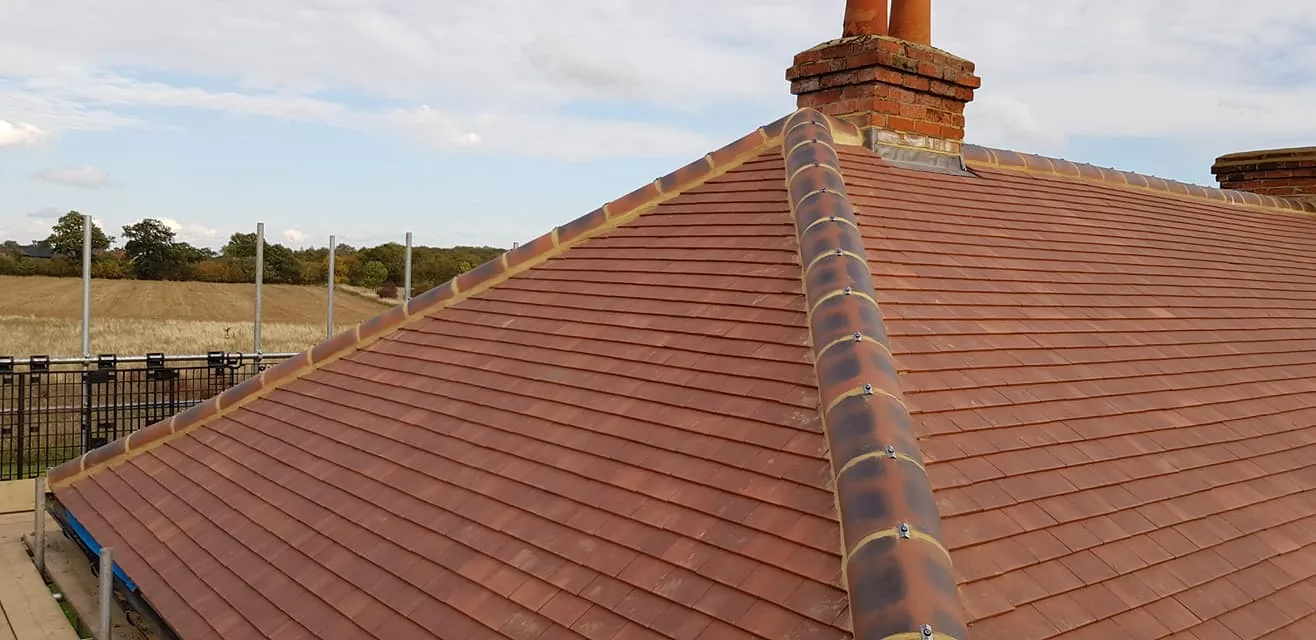
Rebuilding a chimney stack is structural work, so it falls under building regulations even when no planning permission is needed. Building control checks that the rebuilt stack is sound, correctly supported and finished with proper flashing and a damp-proof course.
Chimney height and width are linked under current guidance, since a taller stack needs a wider base to stay stable. We factor this into every rebuild design rather than simply replacing what was there if the original stack was ever unstable.
If your chimney sits on a party wall shared with a neighbouring Chesterfield property, work above a certain scale may need a party wall agreement before scaffolding goes up. We flag this during your survey so there are no delays once a start date is booked.
Homes on higher ground, including parts of Wingerworth and Holymoorside, take more weather on an exposed stack than those closer to the town centre. We build extra allowance into the mortar mix and flashing detail on these more exposed rebuilds, so the new stack copes with the wind and rain those villages see.
Why Choose Tate & Sons Roofing for Your Chimney Rebuild
James Tate founded the business after 15 years working roofs and chimneys across Derbyshire, and he is happiest on a tricky period property where brick matching matters. He prices most chimney rebuilds himself, so the quote you get reflects what your specific stack actually needs.
Daniel Oakland, our Project Manager and Lead Roofer, runs rebuild projects on site day to day. With over 20 years in the trade covering heritage slate and lead detailing alongside modern roofing systems, he oversees scaffolding, brick delivery and the finished flashing on every stack we take down and rebuild.
Our wider team holds NVQ Level 2/3 qualifications in Roofing Occupations, CSCS cards and NFRC trade membership, with over 40 years of combined experience between us. Read more about the people who will rebuild your chimney on our About page.
Every chimney rebuild comes with a 10-year workmanship guarantee and starts with a free, no-obligation drone roof survey, so you know the full scope of work before the scaffolding goes up on your Chesterfield home.
Keeping a Rebuilt Chimney Sound for Years to Come
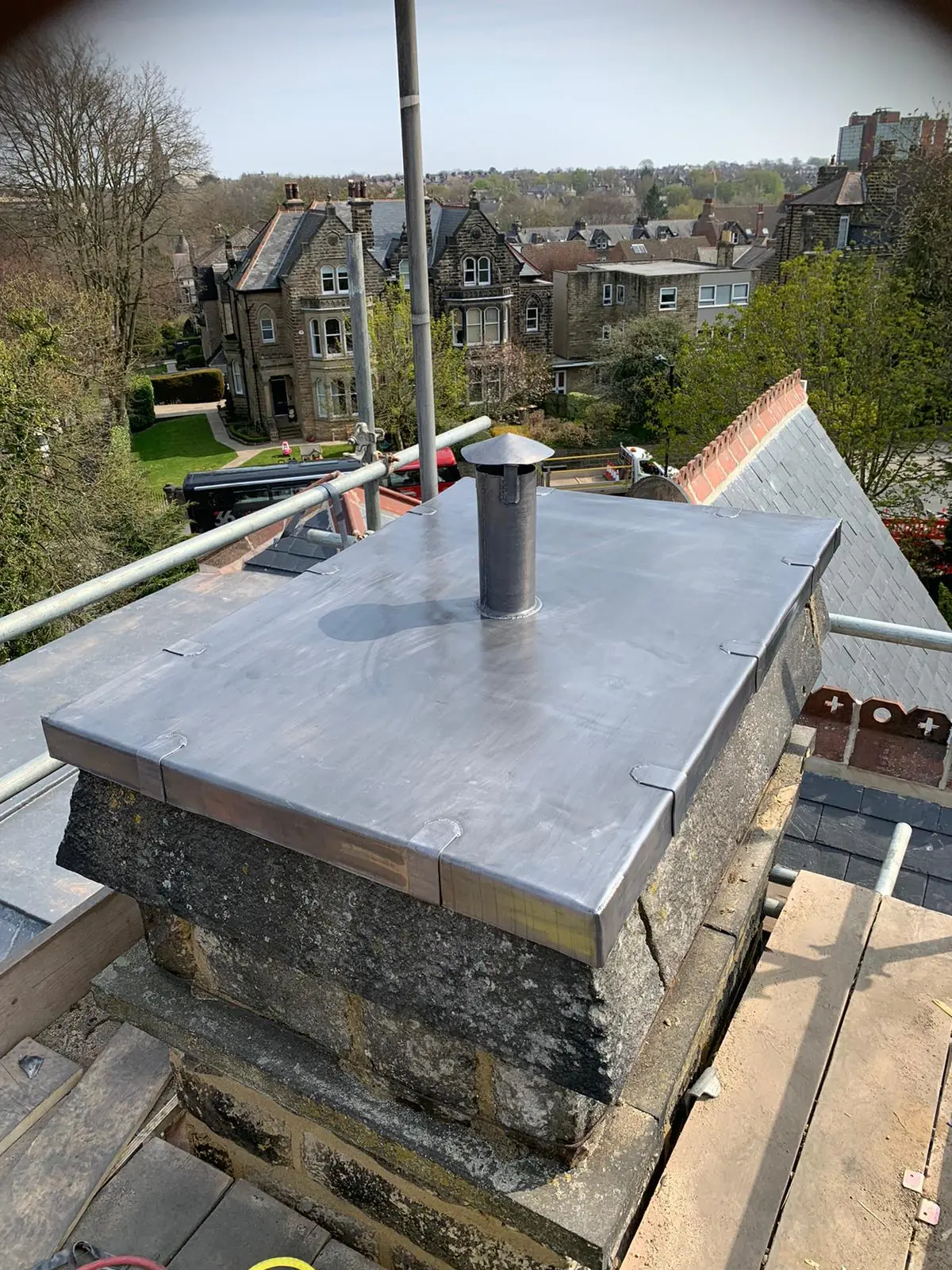
A freshly rebuilt stack still needs occasional care to reach its full lifespan. New brick and lime mortar are strongest once fully cured, so we avoid heavy pressure washing or aggressive cleaning in the first year after a rebuild.
Book a check after major storms, since even a well-built stack can lose a pot cap or take flashing damage in high wind off the Peak District. A chimney sweep on any working flue also gives an early look at the flue lining from the inside, catching problems before they reach the brickwork.
We record the brick, mortar mix and build detail used on every rebuild we complete. That record makes any future repair, insurance query or resale survey far simpler for you, since the next surveyor knows exactly what is up there.
Areas We Serve Around Chesterfield
We rebuild chimney stacks across Chesterfield and the surrounding towns and villages listed below.
- Chesterfield (S40 / S41)
- Brampton (S40)
- Hasland (S41)
- Newbold (S41)
- Staveley (S43)
- Brimington (S43)
- Whittington Moor (S41)
- Old Whittington (S41)
- Wingerworth (S42)
- Clay Cross (S45)
- Dronfield (S18)
- Eckington (S21)
- Holymoorside (S42)
Got Questions?
Chimney Rebuilding FAQs
How do I know if my chimney needs rebuilding rather than repointing?
Rebuilding is needed once the brickwork itself has failed, not just the mortar between the bricks. Signs include a visible lean, bricks that rock when pushed, cracks running through several courses, or crumbling brick faces beyond surface weathering. If the mortar is failing but the brick underneath is still straight and sound, repointing is usually enough. A free survey settles the question with a proper look rather than guesswork.
How much does a chimney rebuild cost in Chesterfield?
A partial rebuild above the roofline typically costs 800 to 1,800 pounds, while a full rebuild through the roofline generally runs 2,000 to 6,000 pounds or more. Scaffolding, flue count, brick matching and access all affect the final price. Older properties needing reclaimed or custom brick usually sit toward the higher end. We only give a fixed price after a free drone survey of your actual stack.
How long does a chimney rebuild take?
A partial rebuild usually takes 2 to 4 working days once the scaffolding is up. A full rebuild through the roofline typically takes 5 to 14 days, longer on larger or more complex stacks. Brick and mortar both need settled weather to cure properly, so wet spells can add extra days. Scaffold erection and removal add time either side of the build itself.
Will my rebuilt chimney match the rest of my house?
Yes, matching your existing brick, bond pattern and mortar colour is central to how we plan every rebuild. We photograph and measure the original stack before any brick comes down, then source reclaimed or custom-matched brick where needed. On period properties around Ashgate and Old Whittington, we also match lime-based mortar rather than modern cement mixes. The result should read as part of the original house, not an obvious repair.
Do I need planning permission to rebuild my chimney?
Most straightforward chimney rebuilds that keep the same height, position and appearance do not need planning permission. You are more likely to need permission if your home is listed, sits in a conservation area near the town centre, or if the rebuilt stack will be taller or a different shape than the original. Building regulations approval is still required for the structural work itself, separately from planning permission. We check both against your property before quoting.
Is scaffolding always needed for a chimney rebuild?
Almost always, yes, since safe access to a stack above roofline height needs proper scaffolding rather than a ladder. Scaffolding also protects your roof covering and gutters from damage while brick and materials are moved up and down. It typically adds 500 to 1,200 pounds to the overall job, depending on your roof height and how close the scaffold can sit to the house. We include scaffold cost in every fixed price we give.
Can I still use my fireplace or boiler flue during a chimney rebuild?
No, the flue serving a rebuilt section cannot be used safely while work is underway. We agree a start date with you in advance so you can plan around this, and rebuilds are usually finished within one to two weeks. If your boiler flue runs through the stack being rebuilt, we will talk through temporary options with you before work starts. Once the rebuild is signed off, the flue is checked and cleared for use again.
What happens if my chimney is on a shared wall with my next door neighbour?
Chimney stacks on a party wall shared with a neighbouring property may need a party wall agreement before significant rebuild work starts. This is common on the Victorian terraces found around Whittington Moor and Old Whittington. We flag this during your survey, and a formal notice period usually needs to run before the scaffold goes up. Getting this right early avoids delays once your rebuild is booked in.
Why did my chimney start leaning in the first place?
A lean usually develops slowly, from water getting into failed mortar joints over years and gradually weakening the bond between bricks. Older stacks built without a damp-proof course are especially prone to this, since moisture works its way down through the brickwork over decades. Ground movement, a poorly supported base, or old lead flashing that has failed can also contribute. By the time a lean is visible from the street, the structure usually needs a full rebuild rather than a repair.
Book Your Free Drone Roof Survey Today
A leaning or crumbling stack does not stabilise on its own, and every storm off the Peak District puts more strain on brickwork that is already failing. Left too long, a chimney rebuild can turn into an emergency job once bricks start falling or water reaches the timbers below. Book your free, no-obligation drone roof survey today and get a clear, fixed price for rebuilding your chimney in Chesterfield.
📍 3 Marsden Street, Chesterfield, S40 1JY
📞 01246 956550
Call the Chesterfield team today on 01246 956550, or request your free drone survey online. We’re already working across your area.
Get in Touch
Tate & Sons Roofing — Chesterfield
3 Marsden Street, Chesterfield, S40 1JY
📞 01246 956550
✉️ [email protected]