
🏠 Trusted Local Roofers
Chimney Cap Installation & Weatherproofing in Market Harborough
An open or tired chimney is the easiest way for water to get into your home. Rain runs down the flue, soaks the brickwork and shows up as a stain on the chimney breast weeks later. Chimney cap installation in Market Harborough puts a stop to that, and Tate & Sons Roofing fits the right cap for your flue, used or unused. This work sits alongside the wider chimney services across Market Harborough we handle every week.
This page walks you through vented caps, full caps, cowls and hoods, why a capped flue still needs air, how we weatherproof the stack, and what it all costs. You get a free drone survey of the stack and a written price before any work starts. No scaffold just to take a look, and no charge either way. Get the cap right and the flaunching sound, and your chimney sheds water for years instead of feeding damp into the room below.
- Fully Insured
- 10-Year Guarantee
- 5-Star Rated
Quick Free Estimate - No Obligation
We're not just roofers – we're your neighbours.
Fully Insured • Response within 15 mins
🔒 Your details are safe with us. No spam, ever.
Why a Capped Chimney Still Needs to Breathe
Sealing a chimney fully at the top is the most common mistake we see. A flue that is shut tight with no airflow traps moist air inside the brickwork. When the house warms up, that damp collects and shows as staining on the chimney breast. The fix people reach for becomes the cause of a new problem.
An unused flue needs venting at both ends. At the top, a vented cap or hooded cowl keeps rain out while letting a trickle of air pass through. In the room below, a small vent near the base of the breast lets air move up and out. That gentle flow keeps the flue dry and stops condensation forming inside the stack.
Watch for these signs before you decide how to cap:
- Damp patches or tide marks on the chimney breast indoors
- A musty smell in the room with the old fireplace
- Bird nests or debris dropping down the flue
- Rain water running down inside after a storm
- Crumbling mortar or a loose pot up on the stack
If you want the pot left open for airflow but kept clear of birds and leaves, a guard often does the job. Our Chimney Bird Guard and Cowl Fitting page covers that route in full. We talk you through which suits your flue on the survey.
Stop Rain and Damp Getting Into the Flue
Rain gets into a chimney in more ways than one. It falls straight down an open pot, soaks a porous stack, or tracks through cracked mortar and worn flashing. Each route needs a different answer, and a cap on its own does not always fix the lot.
A cap or cowl stops rain dropping down the flue. That handles the water coming in from the top. But if the stack itself is drinking in rain through open joints, the cap will not touch it. This is why we survey the whole stack, not just the pot, before we quote. You get the full picture and the right fix for the actual problem.
Damp on a chimney breast almost never comes from one fault alone. A worn cap, cracked flaunching and tired flashing often act together. We check each part and treat the cause, not just the surface stain in the room below.
Cap Options for a Used or Unused Flue
The right cap depends on one thing above all: is the flue still in use? A live fire or flued appliance needs air and a clear path for fumes. A dead flue needs weather kept out and a little air kept moving. Fit a fully sealed cap on a working flue and you risk fumes backing up, so the choice matters.
Here is how the common options compare:
A ventilated cap is the standard choice for a retired flue in this area. It seals the top against rain but still moves air, so the stack stays dry. A full solid cap only goes on when we also add a vent in the room below, keeping the flue breathing at both ends.
| :-: | :-: | :-: | :-: |
| Cap option | Best for | Ventilated? | Notes |
| Ventilated cap (louvred) | Unused flue you want kept dry | Yes | Keeps rain out, lets air pass. Supply and fit around £150–£300 |
| Full solid cap | A pot being fully retired | No — needs a wall vent added | Only safe with a vent fitted lower down the breast to avoid trapped damp |
| Hooded cowl | Live or dead flue in an exposed spot | Yes | Sheds driving rain, cuts down draught. Around £120–£280 fitted |
| Half-round hood | Working flue that draws poorly in wind | Yes | Deflects gusts, keeps the fire drawing. Fitted from roughly £120 |
Ryan Tate runs our site work and fits these caps day in, day out across the Harborough District. He will tell you straight which option your flue needs, based on what the survey shows, not on what carries the biggest price tag.
Sort the Flaunching Before It Lets Water In
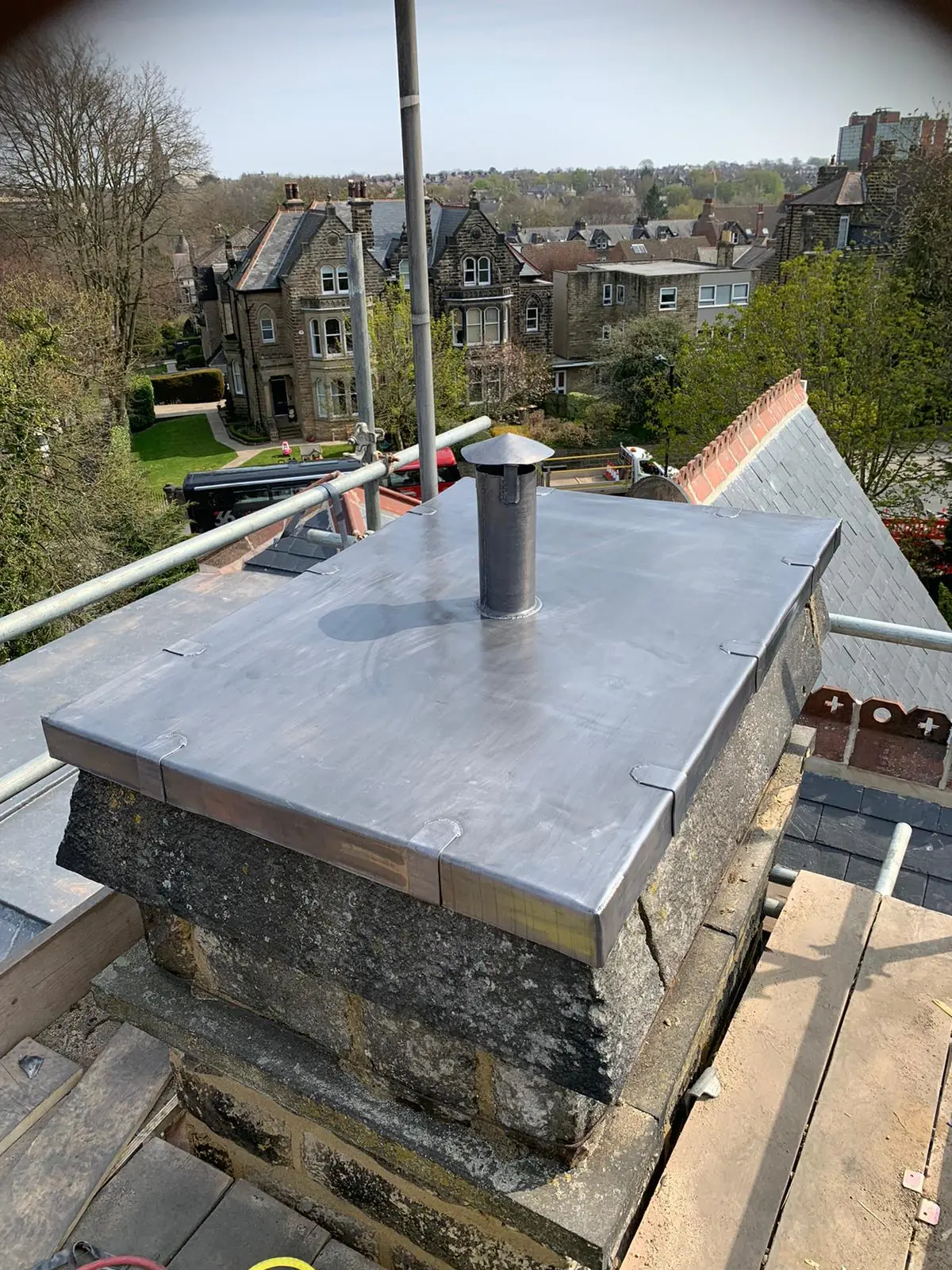
Flaunching is the sloped bed of mortar that holds the pot and sheds rain off the top of the stack. Over the years, frost and weather break it up. Once it cracks, water pools around the pot and seeps down into the brickwork below.
A new cap fitted over cracked flaunching only masks the trouble. Water still gets in through the split mortar and runs down the inside of the stack. We check the flaunching on every survey and re-bed it where it has gone. On older and period stacks, a lime-based mix suits the original build better than hard cement.
Where the joints below the flaunching have opened up too, the whole stack takes in water. That is a repointing job, not a capping one. Our Chimney Repointing page covers that work, and we often pair it with capping on the same visit around Lubenham and Foxton to save you a second scaffold.
Water Repellent on the Stack — When It Helps and When It Harms
A breathable water repellent brushed onto the brickwork can shrug off driving rain. It sits in the surface of the masonry and blocks rain, while still letting trapped moisture escape as vapour. On an exposed stack that keeps soaking through, it buys real protection.
The wrong product does the opposite. A film-forming sealant traps moisture inside the brick, and the damp has nowhere to go. In frost, that trapped water can spall the face off the brick. We only ever use a breathable repellent, and only once the mortar and flaunching are sound. Sealing over a fault locks the water in.
For heritage and older stacks, the SPAB guidance on chimney maintenance is a sound read before you commit to any treatment. It backs lime mortar and breathable repairs, which is exactly how we approach period work in Market Harborough.
What Chimney Capping and Weatherproofing Cost in Market Harborough
Cost comes down to the cap, the state of the stack, and how we reach it.
As a general guide, a supplied and fitted chimney cap runs roughly £150–£400 for a standard job with easy access. A hooded cowl lands around £120–£280 fitted. Capping a redundant flue with a vent added below sits closer to £200–£500. Labour only, where you supply the cap and access is simple, often comes in near £100.
What moves the price up or down:
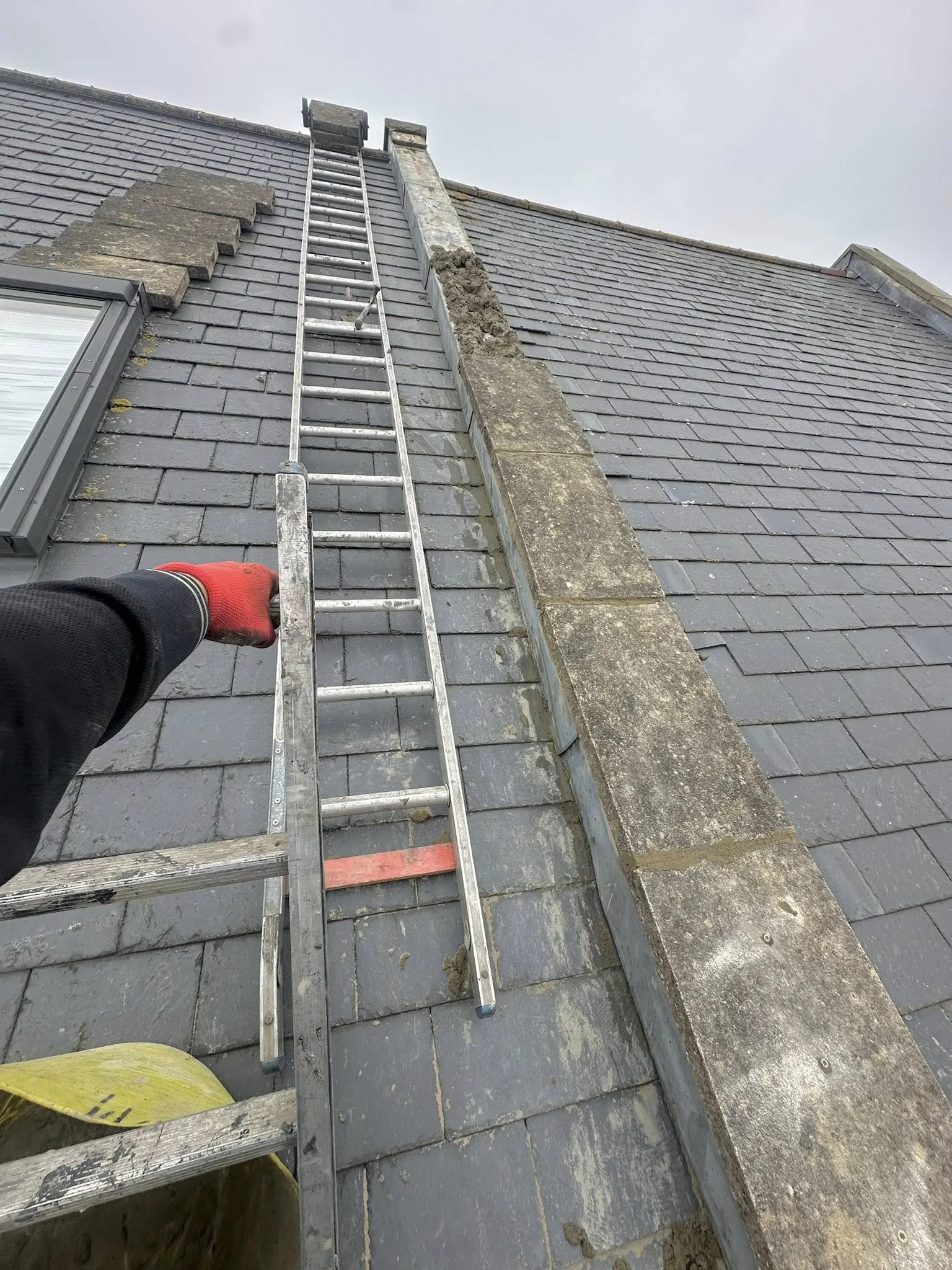
- **Access*— scaffolding to reach a tall or awkward stack runs roughly £400–£600 and often costs more than the cap itself
- **Flaunching*— re-bedding cracked mortar around the pot adds around £150–£400
- **Number of pots*— a stack with two or three flues means more caps and more labour
- **Weatherproofing*— a breathable repellent on the whole stack adds to a plain cap fit
- **Draught protection*— fitting a vent or draught excluder below runs around £195
These are general market ranges, not a quote for your stack. Two chimneys the same height can price very differently once access and mortar condition are weighed up. The only way to a firm figure is a proper look — which our free drone survey gives you, followed by a clear written price with nothing added later. A fixed price needs a survey.
Why Market Harborough Homeowners Call Tate & Sons First
You are not just buying a cap — you are buying whoever fits it and reads the stack. Founder Michael Tate handles the chimney and heritage work, and surveys the jobs himself. He built Tate & Sons on one rule: fix the cause, not just the symptom. He will not cap a flue over cracked flaunching to make it look right for a season and let it fail the next.
Ryan Tate runs the site work and fits the caps, cowls and vents on the day. Between the team we carry over 45 years of combined experience, hold NVQ Level 2 and 3 qualifications in Roofing Occupations, and keep CSCS cards and NFRC trade-body membership. You get people who know old stacks, not a passing subcontractor. Read more about the crew on our About Tate & Sons Roofing page.
Areas We Serve Across Market Harborough and the Harborough District
We cap chimneys and weatherproof stacks across Market Harborough and the surrounding Welland Valley villages. If your area is not on the list below, call us anyway — if you are nearby, there is a strong chance we cover you.
- Market Harborough (LE16)
- Great Bowden (LE16 7)
- Little Bowden (LE16 8)
- Lubenham (LE16 9)
- Foxton (LE16 7)
- Medbourne (LE16 8)
- Kibworth Beauchamp (LE8)
- Great Glen (LE8 9)
- Fleckney (LE8 8)
- Husbands Bosworth (LE17 6)
- Desborough (NN14 2)
Got Questions?
Your Chimney Capping Questions, Answered Properly
Do you need ventilation when capping an unused chimney?
Yes, always. A flue capped fully tight with no airflow traps damp air inside the stack, and that shows as staining on the chimney breast indoors. An unused flue needs venting at both ends — a vented cap or cowl at the top, and a small vent near the base of the breast in the room below. That gentle flow of air keeps the flue dry. We fit both parts as one job, so the chimney is never left sealed and airless.
Can you cap a chimney and stop rain getting in the flue?
Yes, that is exactly what a cap or cowl does. It sits over the pot and stops rain dropping straight down the flue. What a cap will not fix on its own is water soaking through a porous or cracked stack. If the brickwork or flaunching is the way in, that needs sorting too. We survey the whole stack so the fix matches the actual fault, not just the part you can see.
How much does chimney capping cost in Market Harborough?
As a general guide, a supplied and fitted cap runs around £150–£400, a hooded cowl around £120–£280, and capping a redundant flue with a vent added closer to £200–£500. Access is the big variable — scaffolding to a tall stack can add £400–£600 on its own. A free drone survey gives you an exact written price rather than a rough figure over the phone. A fixed price always needs a survey first.
What is flaunching and does mine need repair?
Flaunching is the sloped mortar bed that holds the pot and sheds rain off the top of the stack. Once it cracks with age and frost, water pools around the pot and seeps down into the brickwork. If you can see splits, missing lumps or a pot that wobbles, the flaunching likely needs re-bedding. Fitting a new cap over broken flaunching only hides the leak. We check and repair it as part of the capping work.
Should I put a water repellent on my chimney stack?
Only a breathable one, and only once the mortar is sound. A breathable repellent blocks driving rain while still letting trapped moisture escape as vapour. A film-forming sealant does the opposite — it locks damp inside the brick, and frost can then spall the face off. We only use breathable products, and never over cracked joints, since that would seal the water in rather than keep it out.
Will capping my chimney cause damp inside?
It can, but only if it is done wrong. A flue sealed tight with no vent traps moist air, which collects and stains the chimney breast. Done properly, with a vented cap up top and a vent in the room below, the flue keeps breathing and stays dry. This is why we never fit a solid cap on its own. The airflow at both ends is what keeps damp from ever building up.
Can I still use my fireplace once a cap is fitted?
Yes, as long as the right cap goes on. A working flue needs a cap or cowl that lets fumes out and air in, such as a hooded cowl or half-round hood. Fitting a sealed cap on a live flue is dangerous, since fumes can back up into the room. Tell us on the survey whether the fire is still in use, and we fit a cap that keeps it drawing safely.
Do you need scaffolding to fit a chimney cap?
Sometimes, and it depends on the stack. A low, easily reached chimney can often be done from a tower or roof ladder. A tall stack, a steep roof or a mid-terrace position usually calls for scaffolding, which runs around £400–£600. Our drone survey shows the access before we quote, so the scaffolding cost is clear from the start rather than sprung on you later.
Book Your Free Drone Chimney Survey Today
See exactly what your stack needs before any work starts. No ladders, no pressure — just a clear picture from a local Market Harborough team.
Every week an open or tired chimney waits, rain works deeper into the stack and the damp spreads on the breast below. A quick, free survey today tells you exactly where you stand — and often the fix is smaller and cheaper than you feared. Book now, get an honest quote, and keep the water out before the next storm finds the way in.
ð 5 Hood Close, Market Harborough, LE16 9XS
ð 01858 457600
Call the Market Harborough team today on 01858 457600, or request your free drone survey online. We're already working across your area.
Book Your Free Drone Roof Survey
See exactly where your roof stands, with no obligation and no pressure. Call our Market Harborough team or request your free drone survey today.
Get in Touch
Tate & Sons Roofing — Market Harborough Office
5 Hood Close, Market Harborough, LE16 9XS
📞 01858 457600
✉️ [email protected]