
🔧 Dry Ridge Specialists
Dry Ridge System Melton Mowbray — Stop Ridge Tiles Failing Before the Next Storm
- FREE Drone Survey
- 10-Year Guarantee
- BS 5534 Compliant
Free Drone Survey - No Obligation
Stop ridge tiles failing for good.
Free Drone Survey • 10-Year Guarantee
🔒 Your details are safe with us. No spam, ever.
Up on the Wolds, wind gets a clear run at every roof before it even reaches the ridge. A dry ridge system in Melton Mowbray swaps out crumbling sand-and-cement bedding for a mechanically fixed, ventilated system that holds firm through the kind of gusts that come straight off the Vale of Belvoir scarp. It is not a repair. It is an upgrade that stops the same failure happening again in five years’ time.
This page covers how to tell your ridge needs more than another patch, what a dry ridge system actually is, real cost ranges, what installation day looks like, and the British Standard behind it all. Start with a free drone survey and a written quote before anything is agreed. Fitting a dry ridge system is one part of the wider service we offer as a roofing contractor across Melton Mowbray.
Spot the Signs Your Mortar Ridge Is on Borrowed Time
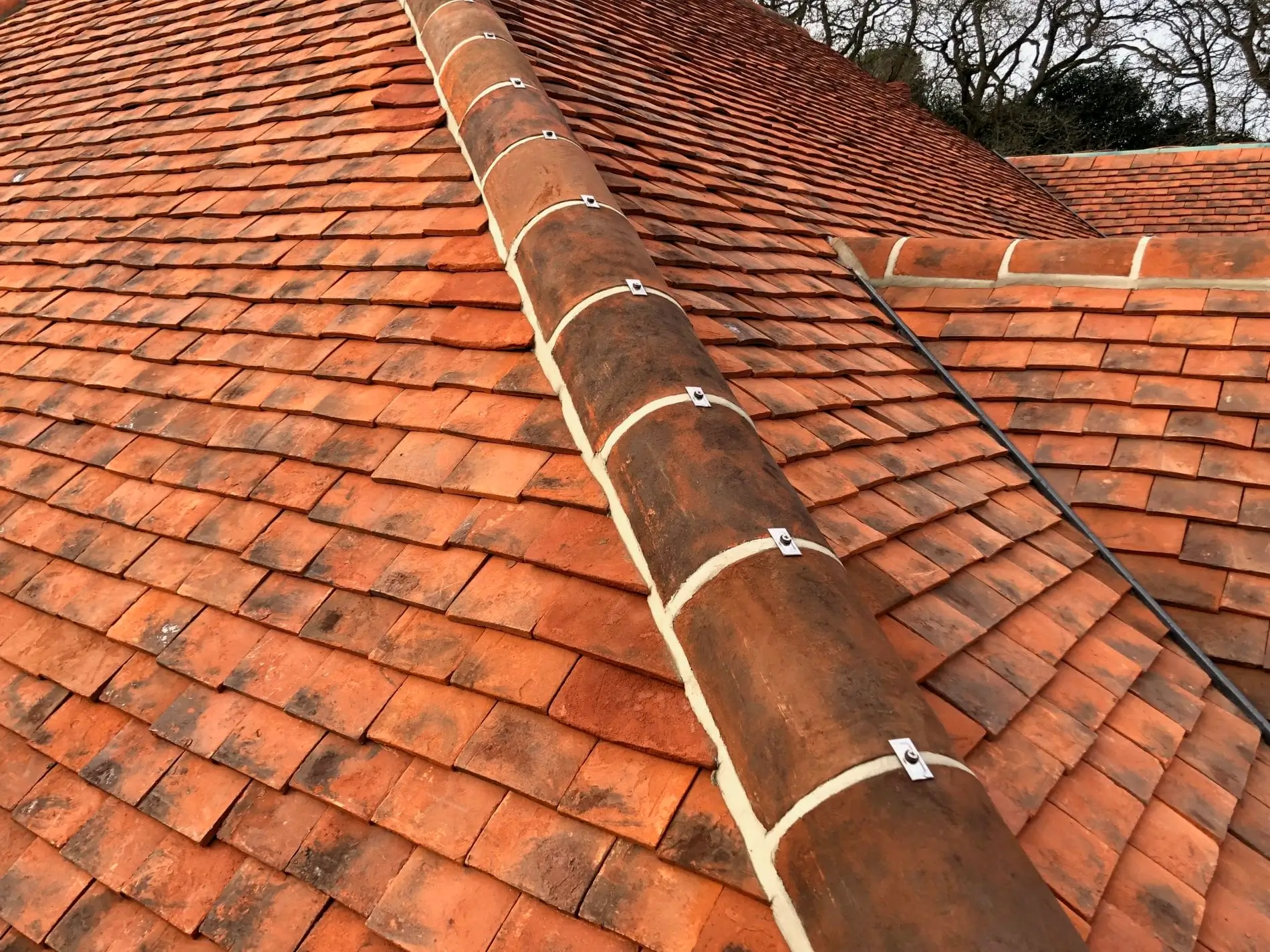
Mortar-bedded ridges give warning before they fail outright, but the warning is easy to miss from the ground. By the time a tile actually shifts, the bond underneath has usually been failing for a year or more.
Watch for these signs:
- Grey or white crumbs of mortar collecting in the gutter below the ridge
- Hairline cracks running along the mortar fillet between ridge tiles
- A ridge tile that rocks or looks slightly out of line from the street
- Daylight or a draught noticed at the top of the loft space
- Repeated re-pointing or re-bedding on the same stretch of ridge
- Moss or lichen growing thick along the mortar joints
Mortar is rigid, but a roof is not. Every temperature swing makes the timber structure move slightly, and the mortar cannot flex with it. Add frost, driving rain and wind buffeting, and the bond eventually cracks, shrinks back from the tile edges, and lets go. Once that happens, the tiles it was holding become loose in the next gust. A free drone survey shows exactly how far the mortar has degraded, without anyone going up a ladder.
Decide Between Re-Bedding and a Proper Dry Ridge Upgrade
A single loose tile on an otherwise sound mortar ridge can sometimes be re-bedded and left at that. But if the mortar is failing along most of the run, re-bedding just buys another few years before the same problem returns, because the underlying weakness — rigid mortar on a moving roof — has not changed.
A dry ridge system replaces that rigid bond with mechanical fixings: screws and clamps that hold each tile to the ridge batten, with flexible unions that move with the roof instead of fighting it. If your ridge keeps needing attention every couple of winters, our ridge tile repairs and rebedding service can patch a small, isolated section, but a full dry ridge upgrade is usually the better long-term call once failure spreads along the run.

We see this most often on the older mortar-ridge terraces around Scalford, where exposure to wind off the high ground wears bedding out faster than in a sheltered street in town. A free drone survey tells you honestly which route your roof actually needs, rather than defaulting to whichever job is easier to sell.
Understand What a Dry Ridge System Actually Is
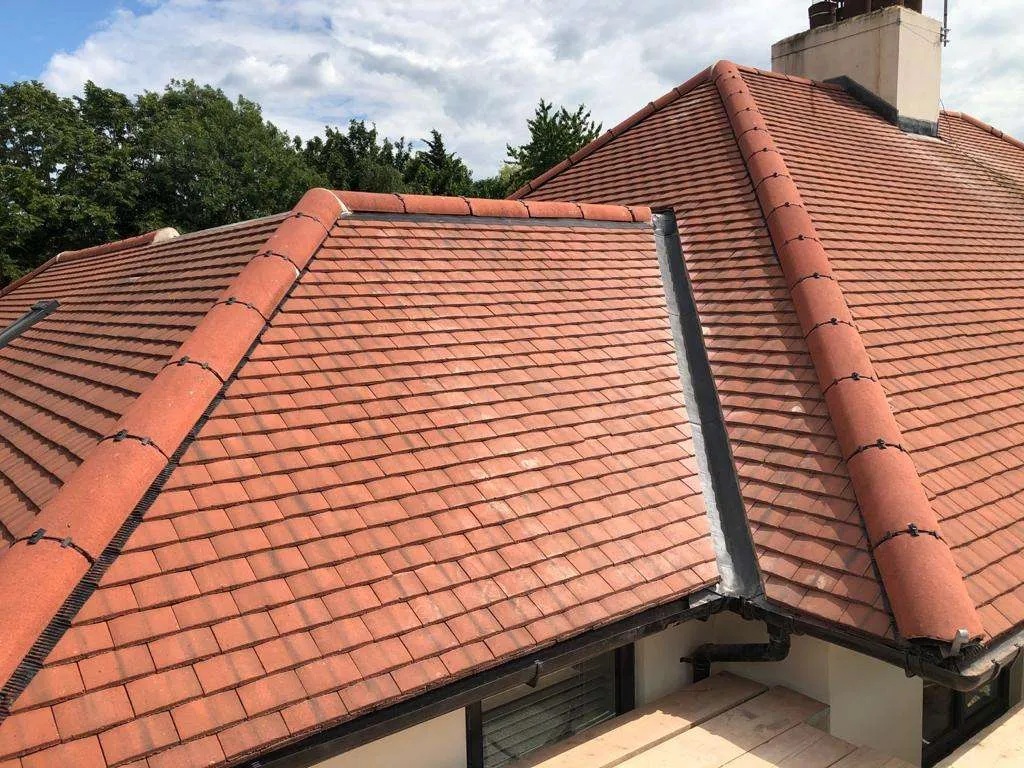
A dry ridge system fixes ridge and hip tiles to the roof using stainless steel screws and clamps instead of mortar. Each tile is mechanically fastened to a treated timber ridge batten, with a flexible, self-sealing union underneath that keeps water out while letting the roof structure move naturally beneath it. There is no sand, no cement, and nothing left to crack or crumble over time.
Most dry ridge kits also build in a ventilation strip along the ridge line, letting warm, moist air escape from the loft space without needing separate roof vents. That single detail cuts down condensation risk inside the roof structure, which matters just as much as keeping rain out.
Since 2015, British Standard BS 5534 has required every ridge and hip tile to be mechanically fixed, even where mortar bedding is still used for appearance. A companion standard, BS 8612, sets the performance and wind-load testing requirements specifically for dry-fix ridge, hip and verge systems. The Roof Tile Association’s introduction to dry-fix roofing covers the standard in more detail if you want the technical background before your survey. Daniel Oakland, our project manager, fits dry ridge systems to the current standard as a matter of course, not as an upgrade you have to ask for.
Get Your Roof Ready for a Dry Ridge Upgrade
Before any dry ridge system goes on, the roof underneath needs checking properly. Fitting a modern fixing system over a hidden problem just hides that problem for longer.
We check for:
- Sound, un-cracked ridge tiles worth reusing rather than replacing
- Battens and rafters free of rot at the ridge line
- Underlay in good condition beneath the ridge
- Roof shape and pitch, since some complex or multi-hip layouts need extra detailing
- Existing loft ventilation, so the new ridge vent strip is not fighting the current setup
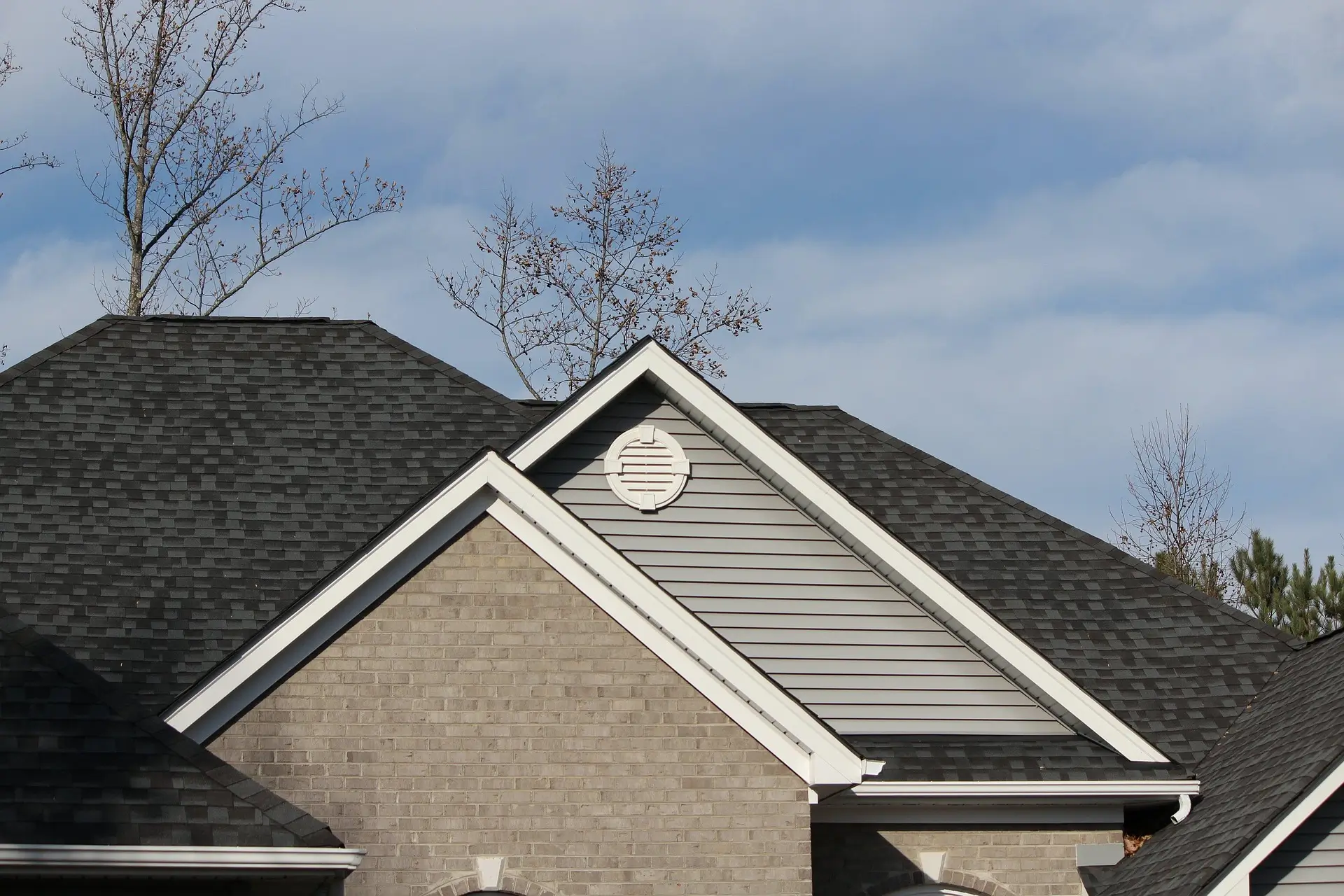
A free drone survey covers all of this from the air, giving genuine footage of the ridge, hips and valleys rather than a guess from the pavement. On listed or older properties near Thorpe Arnold and Burton Lazars, we also check whether a mortar finish needs to be kept for appearance, in which case mechanical fixings still go in underneath, keeping the roof compliant without changing how it looks from the street.

See What Happens on Dry Ridge Installation Day
Installing a dry ridge system follows a set order on every job:
- Scaffold or roof ladders set up and the site made safe
- Existing ridge tiles carefully lifted and set aside where reusable
- Old mortar bedding chipped out and cleared from the ridge line
- A new treated ridge batten fitted along the full run
- Dry ridge unions and clamps fitted, with ventilation strip built in
- Ridge tiles refitted and mechanically screwed down to the batten
- Site cleared and the finished ridge checked before we leave
A standard semi-detached roof with one continuous ridge run usually takes one to two working days. A more complex hipped roof with multiple ridges and hip lines can take three to four days, since each hip needs its own fixings and detailing. Weather has some say — wet or high-wind days are not safe for ridge work, and we build a realistic allowance into the schedule instead of promising a date we cannot keep.
You do not need to leave the property while the work is done. Expect some noise overhead, and we protect anything stored below the working area for the duration of the job.
Know What a Dry Ridge System Really Costs in Melton Mowbray
Dry ridge installation is typically priced by the linear metre. As a general guide, expect £40–£65 per metre, covering both materials and labour. For a standard semi-detached roof with one ridge run, that usually works out to a total of £900–£1,600. A larger or more complex hipped roof, with several ridge and hip lines, can run £1,500–£3,000 or more.
What pushes the price up or down:
- Ridge length and roof complexity — a single straight ridge costs less than a roof with several hips and valleys
- Access — scaffolding adds cost over a roof reachable safely by ladder alone
- Tile condition — cracked or damaged ridge tiles that need replacing add to the material cost
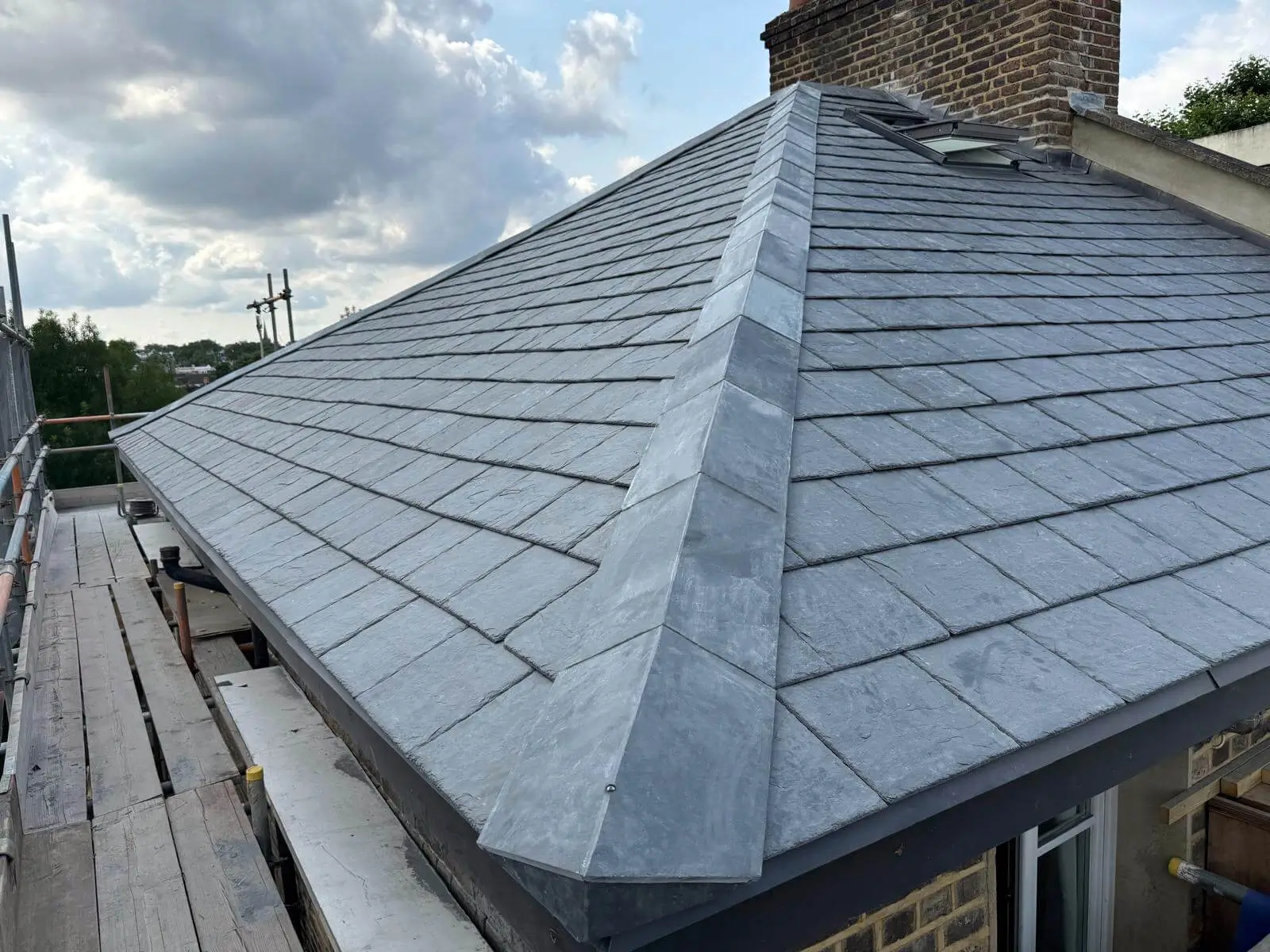
- Old mortar removal — a heavily bedded ridge takes longer to strip back than one lightly pointed
- Batten and timber condition — rot found at the ridge line typically adds £150–£400 to replace
These are general market ranges, not a quote for your roof. Two roofs the same size can price differently once ridge length, access and tile condition are factored in. A fixed price needs a survey.
Compare Dry Ridge Against Traditional Mortar Bedding
Mortar bedding costs less to fit today, but it needs re-pointing or full re-bedding every decade or so, and each repair adds up over the life of the roof. A dry ridge system costs more upfront and pays that back through decades without a callout. On an exposed site like the ridge line of a home near the Vale of Belvoir scarp, that difference matters more than on a sheltered terrace in town.
| Feature | Dry Ridge System | Traditional Mortar Bedding |
|---|---|---|
| Typical cost | £40–£65 per metre | £25–£45 per metre |
| Typical lifespan | 30+ years, largely maintenance-free | 10–15 years before re-bedding needed |
| Best for | Exposed sites, full re-roofs, new roofs, long-term value | Sheltered sites, listed properties matching original appearance, small budgets |
Why Choose Tate & Sons for Your Dry Ridge System
You are trusting someone to fix tiles above your head that need to stay fixed through every storm for the next thirty years. Daniel Oakland, our project manager, has more than twenty years in the trade and fits dry ridge systems as standard on every re-roof and repair where mortar bedding has failed, working to current BS 5534 and BS 8612 specifications rather than cutting corners on fixings.
Founder James Tate started the business after fifteen years working roofs across Melton Mowbray and the East Midlands, and still prices most jobs himself.
He set Tate & Sons up around one simple idea — find out what is genuinely wrong, use the right materials, and stand behind the result, rather than selling the cheapest fix available. Between us we bring over 40 years of combined team experience, hold NVQ Level 2 and 3 qualifications in Roofing Occupations, and carry CSCS cards. Every dry ridge system we fit comes with our 10-year workmanship guarantee. Read more about the people behind the work on our About Tate & Sons Roofing page.
Keep a Dry Ridge System Performing for Decades
A dry ridge system needs far less looking after than mortar, but a little attention keeps it working properly for its full lifespan.
- Check the ridge visually after any major storm for a lifted or loose clamp
- Keep gutters clear so water shed from the ridge drains away properly
- Check the loft after heavy rain for any sign of damp near the ridge line
- Book a free drone survey every few years to catch anything early
None of this needs a specialist visit — just a regular look, and a call to us if anything seems off. A dry ridge system rarely fails suddenly, but a five-minute check after a bad storm is still worth doing.
Areas We Serve Across Melton Mowbray and the Vale of Belvoir
We fit dry ridge systems across Melton Mowbray and the surrounding villages and borough. If your area is not on the list below, call us anyway — there is a strong chance we already cover you.
- Melton Mowbray (LE13)
- Asfordby (LE14 3)
- Old Dalby (LE14 3)
- Nether Broughton (LE14 3)
- Frisby on the Wreake (LE14 2)
- Wymondham (LE14 2)
- Long Clawson (LE14 4)
- Harby (LE14 4)
- Stathern (LE14 4)
- Waltham on the Wolds (LE14 4)
- Bottesford (NG13)
Got Questions?
Dry Ridge System in Melton Mowbray — Frequently Asked Questions
What is a dry ridge system and how is it different from mortar?
A dry ridge system fixes ridge tiles to the roof with stainless steel screws and clamps instead of sand-and-cement mortar. Each tile is mechanically fastened to a ridge batten, with a flexible union underneath that seals against rain while allowing the roof to move naturally. Mortar, by contrast, is rigid and cracks over time as the roof structure shifts with temperature and wind. The result is a fixing that holds for decades rather than needing repointing every ten to fifteen years.
How much does a dry ridge system cost in Melton Mowbray?
As a general guide, dry ridge installation runs £40–£65 per linear metre, working out to roughly £900–£1,600 for a standard semi-detached roof with one ridge run. A larger or more complex hipped roof with multiple ridges can cost £1,500–£3,000 or more. Access, tile condition and batten repairs all affect the final figure. A free drone survey gives you an exact written price rather than a rough estimate over the phone.
Is a dry ridge system a legal requirement on my roof?
Mechanical fixing of ridge and hip tiles has been required under BS 5534 since 2015 on new roofs and full re-roofs, even where mortar is used for the visible finish. Existing roofs with failing mortar are not legally forced to upgrade, but once bedding starts to fail, a dry ridge system is the standard, compliant way to fix it properly rather than simply re-bedding with the same mortar that failed before.
Can a dry ridge system be fitted to an older roof?
In most cases, yes. As long as the ridge battens, rafters and underlay underneath are sound, fitting a dry ridge system to an older roof is a straightforward upgrade. If rot is found at the ridge line during the survey, that timber gets replaced first, which adds a small amount to the job but is essential for the fixings to hold properly long-term.
Will a dry ridge system look different from my existing mortar ridge?
From the ground, a well-fitted dry ridge system looks almost identical to a mortar-bedded ridge, since the same ridge tiles are typically reused or matched. The visible difference is a slim ventilation strip running along the ridge line, which most homeowners barely notice once fitted. On listed or period properties, we can discuss finishes that keep the traditional appearance while still meeting current fixing standards underneath.
How long does a dry ridge system last compared to mortar?
A dry ridge system typically lasts 30 years or more with almost no maintenance, since there is no mortar to crack or crumble. Traditional mortar bedding usually needs re-pointing or full re-bedding every ten to fifteen years, especially on exposed sites. Over the life of a roof, a dry ridge system usually works out better value once repeated re-bedding costs are added up.
Does a dry ridge system help with roof ventilation?
Yes. Most dry ridge kits include a built-in ventilation strip along the ridge, which lets warm, moist air escape from the loft space without needing separate tile vents. This reduces the risk of condensation forming inside the roof structure, which over time can be just as damaging to timber as a direct leak.
Why does my ridge keep failing when a neighbour’s roof further into town seems fine?
Properties out toward the Vale of Belvoir scarp and higher ground like Scalford take a harder battering from wind-driven rain and gusting than a sheltered street closer to the town centre. That extra exposure accelerates mortar breakdown at the ridge, since wind buffeting and driving rain work the bond loose faster than in a sheltered spot. A dry ridge system is mechanically resistant to that wind load in a way mortar was never designed to be.
Can I have a dry ridge system fitted without replacing my whole roof?
Yes, in most cases a dry ridge system can be fitted as a standalone job without touching the rest of the roof covering, provided the tiles, battens and underlay elsewhere are in reasonable condition. It is one of the few upgrades that meaningfully improves a roof’s storm resistance without the cost or disruption of a full re-roof. If our survey finds wider problems, we will tell you honestly rather than upselling a job you do not need.
Book Your Free Drone Roof Survey Before the Next Storm
See exactly how your ridge is holding up before any work starts. No ladders, no pressure — just a clear picture from a local Melton Mowbray team.
Every storm that hits an already-failing mortar ridge loosens it a little further, until a tile eventually lets go over a driveway, car, or conservatory below. A quick, free survey today tells you exactly where your ridge stands, and a dry ridge upgrade now is almost always cheaper than an emergency callout later. Book now, get an honest quote, and get your ridge sorted properly — first time.
📞 Call now on 01664 490955
Get in Touch
Tate & Sons Roofing — Melton Mowbray Office
13 Cromwell Road, Melton Mowbray, LE13 0AD
📞 01664 490955
✉️ [email protected]