
🏠 Trusted Local Roofers
Valley Gutter Repairs Chesterfield
A roof valley carries more rainwater than any other part of your roof, and it wears out long before your ordinary guttering does. Tate & Sons Roofing has repaired and relined valley gutters across Chesterfield for years, from period semis near Ashgate to newer estates on the edge of town. Valley gutter repair sits alongside our wider guttering services across Chesterfield, and it is one of the jobs we get called out to most.
This page covers the difference between a valley gutter and your ordinary perimeter guttering, the warning signs of a failing valley, real cost ranges, and what happens when Daniel Oakland and our team come to fix yours. You will also find straight answers to the questions Chesterfield homeowners ask us most about valley gutter repairs.
- Fully Insured
- 10-Year Guarantee
- 5-Star Rated
Quick Free Estimate - No Obligation
We're not just roofers – we're your neighbours.
Fully Insured • Response within 15 mins
🔒 Your details are safe with us. No spam, ever.
Spot the Warning Signs of a Failing Valley Gutter
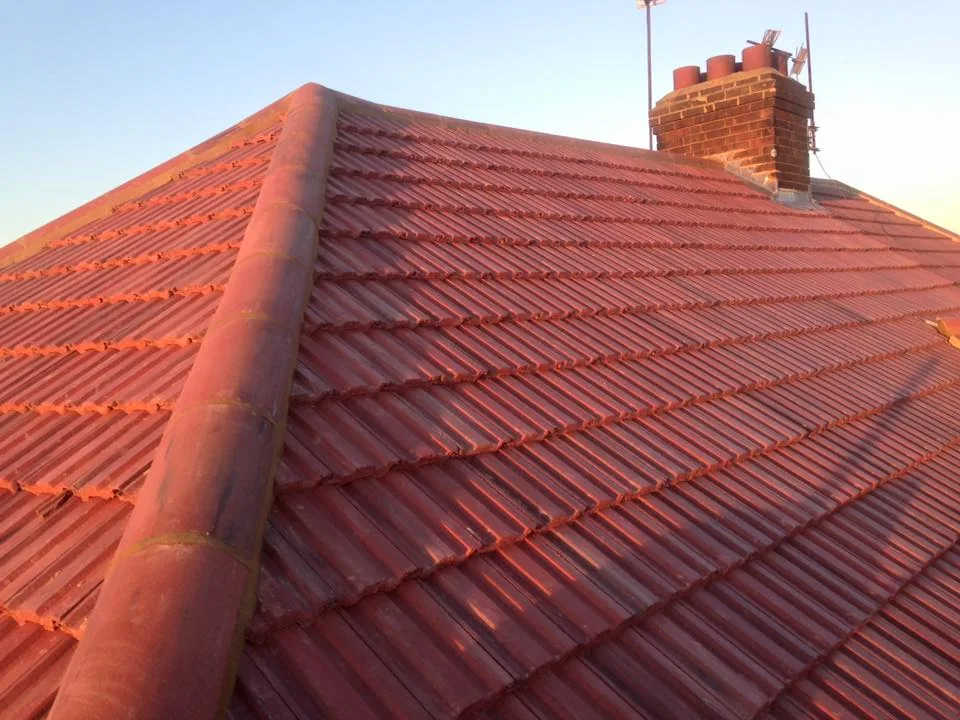
A valley gutter sits where two roof pitches meet, channelling rainwater from both slopes into one narrow lead or GRP-lined channel. That concentration of water is exactly why valleys wear out faster than the guttering running around your roof edge.
Watch for these signs that your valley gutter needs attention:
- Damp patches on a ceiling directly below where two roof slopes join
- Green staining or moss growing in a line down the roof slope
- Water overflowing onto tiles during heavy rain instead of running away cleanly
- Cracked or split lining visible when you look up at the valley from ground level
- Silt, leaves or moss sitting in the channel after wet weather
- Fixing nails or clips showing through a lining that has thinned or worn
A leak in a valley rarely stays small for long. Water finds the nearest gap in the lining, runs under the tiles on either side, and soaks into the timber below before it ever shows on your ceiling. By the time you see a stain indoors, the felt and battens under that valley have often been wet for months.
Homes around Old Whittington and other parts of Chesterfield with complex, multi-pitch roofs often have two or three valleys, and it is common for only one to be failing while the others still look sound. A free drone survey shows us exactly which valley needs work, rather than guessing from the ground.
Lead or GRP: Which Valley Lining Suits Your Chesterfield Roof?
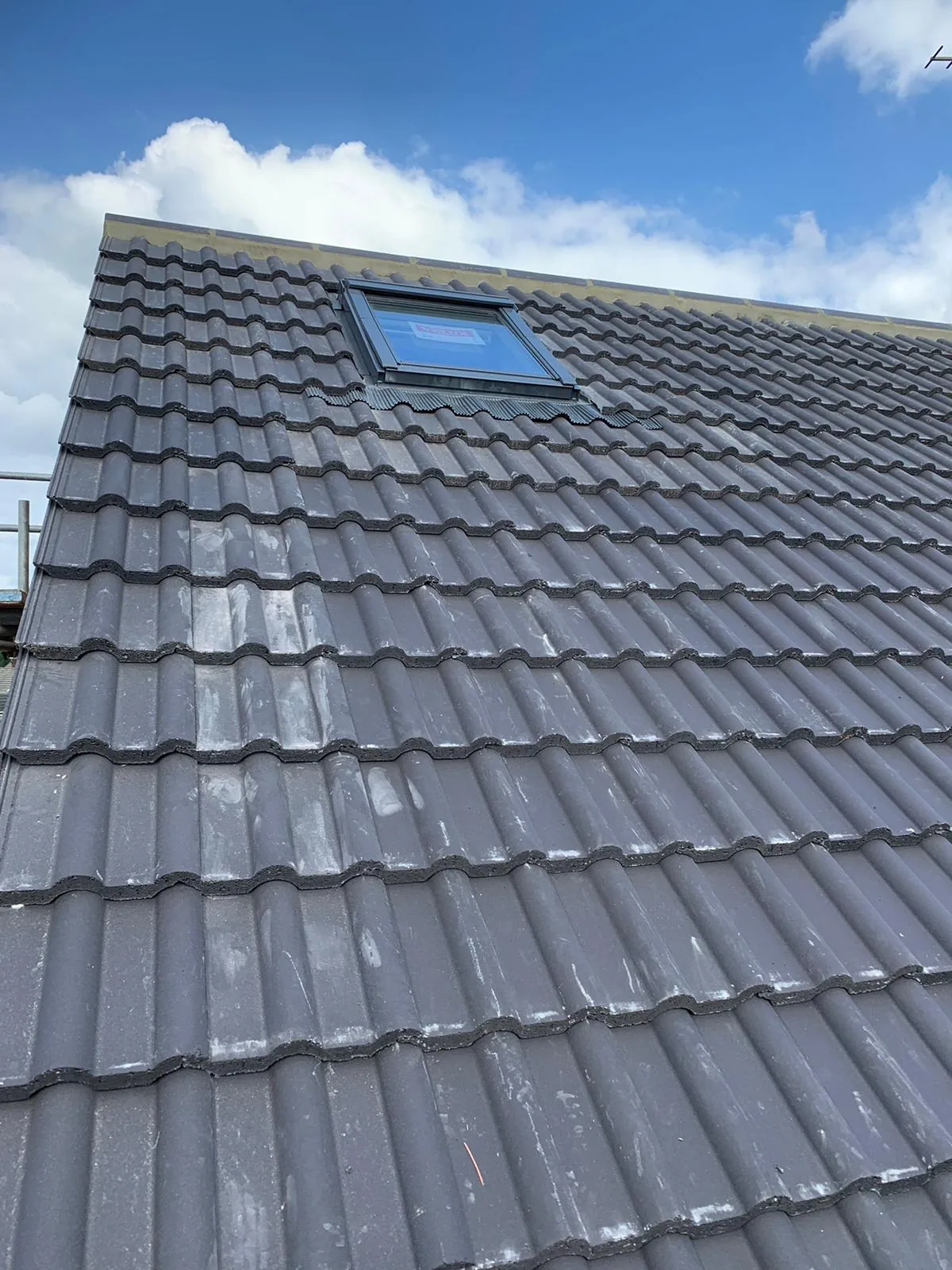
Most Chesterfield roofs use one of three valley systems: lead lining, GRP fibreglass lining, or valley tiles that interlock without a separate lining at all. Each has a different lifespan, cost and best use, and the right choice depends on your roof's age and pitch.
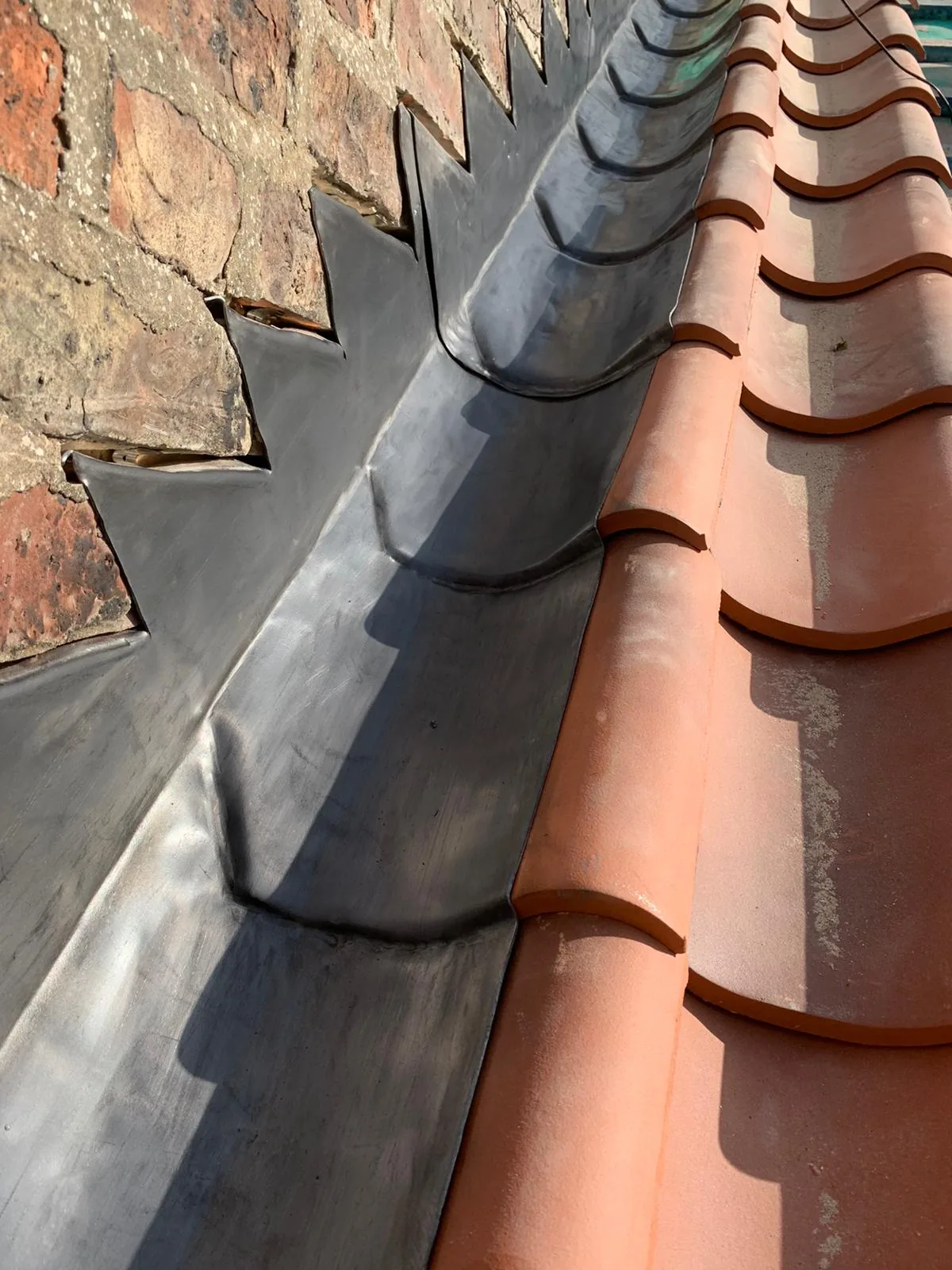
Lead is the traditional choice and the material usually specified on listed and conservation-area properties. Correctly detailed lead, laid on a solid valley board with the right fall and bay lengths, easily outlasts the tiles around it. GRP costs less to fit and suits modern roofs well, though it does not match lead's lifespan. Valley tiles avoid a separate lining altogether by interlocking directly, which suits some newer roof shapes but is not always practical on an older, uneven roof structure.
| Valley System | Typical Cost | Typical Lifespan | Best For |
|---|---|---|---|
| Lead Valley Lining | £350-£700 per valley | 60-100+ years | Period and listed properties, steep or complex roofs |
| GRP Valley Lining | £200-£450 per valley | 20-30 years | Modern homes, budget-conscious repairs |
| Valley Tile System | £250-£500 per valley | 30-50 years | Newer roofs with a compatible tile profile |
We talk you through which system suits your roof during your free drone survey, based on its age, pitch and exposure, not a single standard answer for every home.
Valley Gutter Repair Cost in Chesterfield: What You'll Actually Pay
Small repairs to a lead, GRP or valley tile system typically cost between £75 and £300. That covers resealing a joint, refitting a lifted section, or clearing a blocked channel that has started to overflow onto the tiles below.
A full valley reline usually costs between £350 and £700 per valley, depending on material and access. Lead sits toward the top of that range and GRP toward the bottom, though lead's much longer lifespan often makes it the cheaper option over the life of your roof.
Cost rises when scaffolding is needed, when more than one valley needs attention, or when the timber board under the old lining has rotted and needs replacing before new lead or GRP goes down. Cost falls when the valley is easy to reach from an existing extension roof or single-storey section, and when only resealing or a patch repair is needed rather than a full strip-out.
Roofs with two or three valleys, common on the bay-fronted and multi-pitch homes around Ashgate and Old Whittington, cost more to fully reline than a simple single-valley roof on a modern estate home. A fixed price for your valley gutter repair needs a survey, since every roof's pitch, access and lining condition is different.
What Happens Before We Start: Survey, Standards and Access
We begin every enquiry with a free drone roof survey, giving us close-up photos of the valley lining without anyone needing to climb a ladder first. This shows us splits, thinning or lifted sections that are hard to judge safely from the ground.
Lead valley work on your Chesterfield home follows the technical guidance published by the Lead Contractors Association, covering minimum channel width, fall, bay length and fixing method. Getting these details right is what separates a lead valley that lasts decades from one that splits again within a few years.
If the valley board underneath has rotted, we replace it before any new lining goes on. Fitting new lead or GRP over a soft, uneven board is one of the most common reasons a "repaired" valley fails again within a year or two.
Some valley repairs need scaffolding, particularly on steep or two-storey roofs, while single-storey extensions and bungalows can often be reached safely from a tower or roof ladder. We confirm access requirements as part of your survey, so your quote reflects the real job on your roof.
Your Valley Gutter Repair, Step by Step With Daniel Oakland
Daniel Oakland, our Project Manager and Lead Roofer, leads valley gutter repairs on site. With over 20 years in the trade, he specialises in lead and GRP valley lining alongside EPDM and standing-seam roofing, and he still gets on the roof himself for the detailing that matters most.
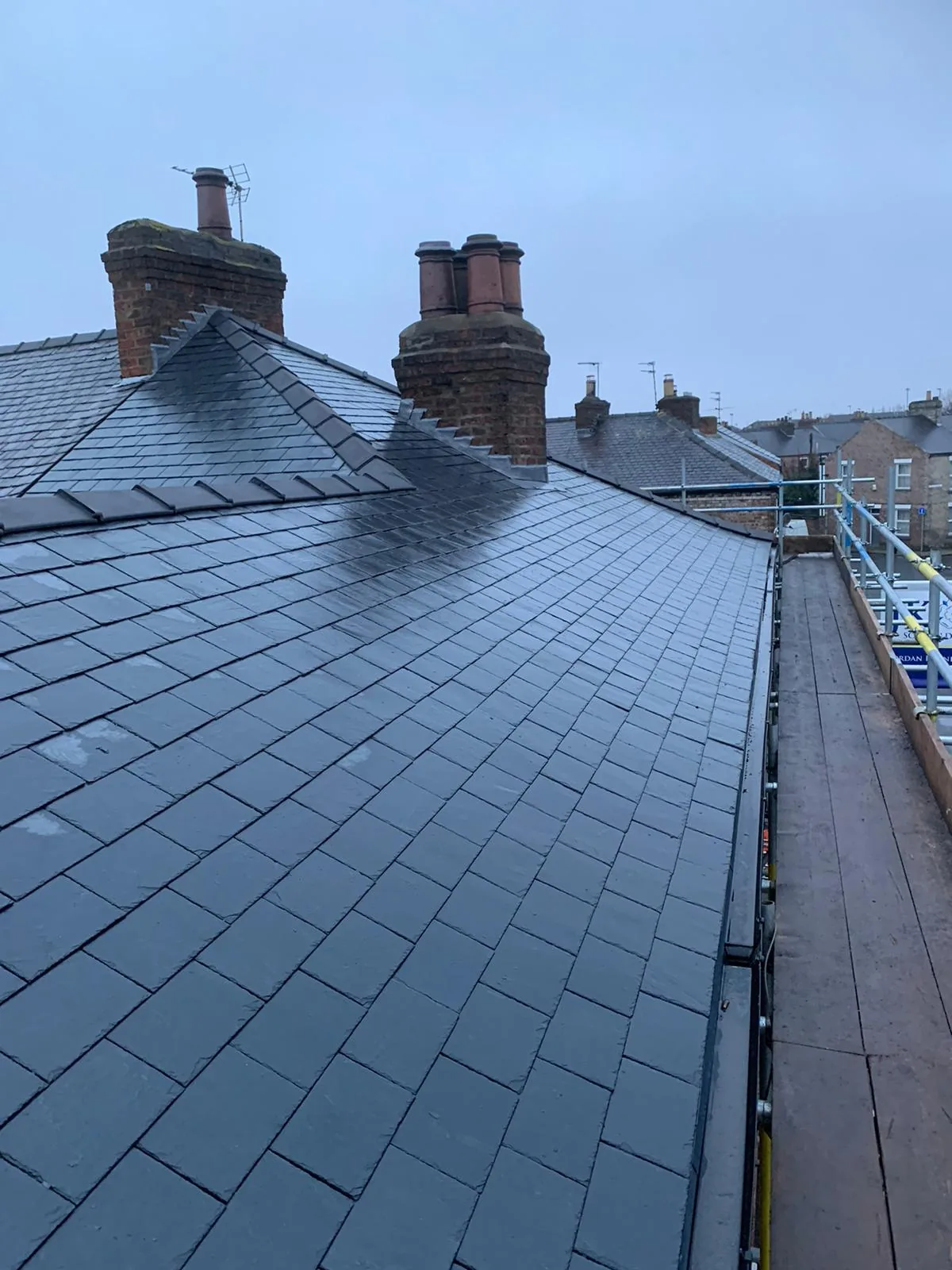
Tiles either side of the valley are carefully lifted and set aside first, rather than broken and replaced, wherever they are in good enough condition to reuse. The old lining comes out next, along with a check of the timber board and felt underneath for rot or damp.
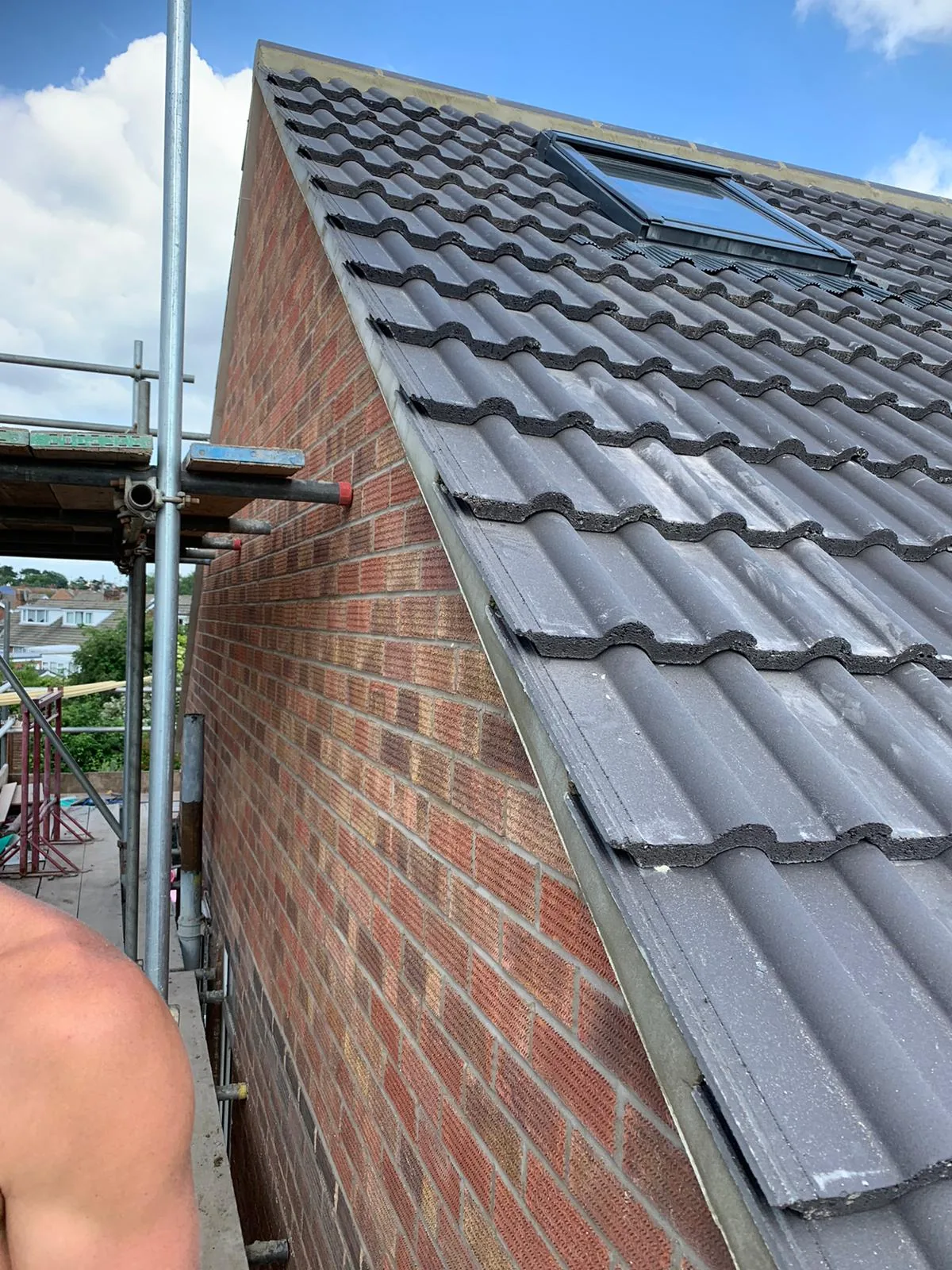
New lead or GRP lining goes down to the correct width and fall, with bay lengths and fixings following trade-body specification rather than guesswork. The tiles are then reset either side, with cut edges dressed neatly against the new lining so water sheds cleanly instead of catching on a rough edge.
A straightforward single-valley repair or reline is often finished within a day. Roofs with two or three valleys, or where a valley board needs replacing, typically take two to three days depending on access and weather.
If your valley lining is sound but sits alongside failing perimeter guttering, that is a separate job. Our gutter repairs service covers eaves guttering, downpipes and fascia-line drainage, distinct from the valley lining work covered on this page. Where lead detailing extends beyond the valley itself, such as around chimneys or abutments, our lead work and flashing service picks up the wider job.
Keep Your Valley Gutters Watertight for Years to Come
Before we leave, Daniel checks the new lining with water, running a hose down the valley to confirm it clears cleanly with no ponding or back-up under the tiles. He also checks the tiles either side sit flush and the fixings are hidden from view.
Valley gutters collect more debris than perimeter guttering because they sit lower on the roof slope, catching leaves and moss washed down from above. Left uncleared, that debris holds moisture against the lining and speeds up the wear that eventually causes a split or pinhole leak.
Clear your valley gutters at least twice a year, and more often if overhanging trees are nearby, common on the leafier streets around Holymoorside and Brampton. A quick check after any storm strong enough to shift roof tiles is worth the ten minutes it takes.
We keep a record of every valley repair we carry out, including the lining material used and the date fitted. That makes any future work, insurance query or resale check simpler for you.
Why Choose Tate & Sons Roofing for Your Valley Gutter Repair
James Tate founded the business after 15 years working roofs across Derbyshire and the East Midlands, and he still prices most valley and lead jobs himself. He is personally strong on heritage lead detailing, exactly the kind of work older Chesterfield valleys often need.
Daniel Oakland leads valley gutter repairs on site day to day, bringing over 20 years of hands-on experience in lead and GRP valley lining. His background covers everything from a straightforward GRP reline on a modern estate home to full lead valley replacement on a period property near the town centre.
Our wider team holds NVQ Level 2/3 qualifications in Roofing Occupations, CSCS cards and NFRC trade membership, with over 40 years of combined experience between us. Read more about the people who will repair your valley gutter on our About page.
Every valley gutter repair comes with a 10-year workmanship guarantee and starts with a free, no-obligation drone roof survey, so you know what is actually wrong before we quote your Chesterfield home.
Areas We Serve Around Chesterfield
We repair and reline valley gutters across Chesterfield and the surrounding towns and villages listed below.
- Chesterfield (S40 / S41)
- Brampton (S40)
- Hasland (S41)
- Newbold (S41)
- Staveley (S43)
- Brimington (S43)
- Whittington Moor (S41)
- Old Whittington (S41)
- Wingerworth (S42)
- Clay Cross (S45)
- Dronfield (S18)
- Eckington (S21)
- Holymoorside (S42)
Got Questions?
Valley Gutter Repair FAQs
How do I know if my roof valley is leaking?
The clearest sign is a damp patch or brown stain on a ceiling directly below where two roof slopes meet. From outside, look for water overflowing onto the tiles either side of the valley during heavy rain, rather than running away cleanly down the channel. Cracked or split lining, visible fixing nails, or moss and silt sitting in the channel are all early warning signs. If you spot any of these, a free drone survey will show us exactly what is happening before the leak gets worse.
What causes a roof valley to leak in the first place?
Most valley leaks come from the lining splitting, thinning, or lifting away from the tiles at the edges. Lead can fatigue and crack over time if it was fixed incorrectly or laid without proper expansion joints, while GRP can crack or become brittle as it ages past its expected lifespan. Debris build-up is another major cause, since trapped leaves and moss hold moisture against the lining and stop water draining away. Poor original detailing, such as nails placed too close to the centre of the valley, can also create a leak point that gets worse every winter.
How much does it cost to repair a valley gutter?
Small repairs such as resealing or refitting a lifted section typically cost between £75 and £300. A full valley reline usually costs between £350 and £700 per valley, depending on whether you choose lead or GRP and how easy the roof is to access. Costs rise if scaffolding is needed or if the timber valley board underneath has rotted. We only give a fixed price after a free drone survey of your actual roof.
Is lead or GRP better for my valley gutter?
Lead generally lasts far longer, often 60 to 100 years or more when detailed correctly, and is usually required on listed or conservation-area properties. GRP costs less to fit and performs well on modern roofs, but typically lasts 20 to 30 years rather than lead's lifetime. The right choice depends on your roof's age, your budget, and whether your property sits in a conservation area. We recommend the system that suits your specific roof during your survey, not a single default answer.
Can a valley gutter be repaired, or do I need a full replacement?
Minor splits, lifted joints or a blocked channel can often be repaired without a full reline, especially if the lining and valley board are otherwise sound. Once the lining has thinned across a wide area, or the timber board underneath has started to rot, a full replacement is the more reliable and often more cost-effective option. We inspect the whole valley, not just the visible leak point, before recommending which route to take. A patch on a failing lining rarely lasts more than a season or two.
How often should I have my valley gutters cleared?
Clear your valley gutters at least twice a year, ideally in spring and autumn, to stop leaves and moss building up. Homes with overhanging trees, common in leafier parts of Chesterfield such as Holymoorside and Brampton, often need clearing more frequently. A quick check after any strong storm is also worth doing, since debris and shifted tiles both show up quickly after bad weather. Regular clearing is one of the cheapest ways to protect an expensive lead valley from early failure.
Why do valley gutters fail before the rest of the roof?
Valley gutters carry water from two roof slopes at once, so they handle far more volume than any single tile or length of perimeter guttering. That concentrated flow accelerates wear on the lining, especially at joints and fixing points, long before the surrounding tiles show their age. Valleys also collect more debris than flat sections of roof, since they sit at the lowest point of two pitches and catch everything washed down from above. This combination of extra water and extra debris is why a 20-year-old roof can have a 40-year-old covering everywhere except a failing valley.
Do older Chesterfield homes near Old Whittington need wider valley gutters than newer estates?
Often, yes. Period properties around Old Whittington and Ashgate frequently have steeper pitches and more complex roof shapes, with two or three valleys draining a larger catchment area than a simple modern roof. A valley sized correctly for that extra water volume needs a wider channel and, in most cases, a heavier lead code than a standard estate home. We size every valley to the actual roof during the survey rather than fitting a standard width regardless of the property.
Book Your Free Drone Roof Survey Before Your Valley Leak Spreads
A valley leak left alone rarely stays behind one tile. Water tracks along the felt and battens beneath a failing lining, and what starts as a small damp patch can spread into rotten timber and damaged plaster within a season. Book your free, no-obligation drone roof survey today and get a clear, fixed price for your valley gutter repair in Chesterfield.
📍 3 Marsden Street, Chesterfield, S40 1JY
📞 01246 956550
Call the Chesterfield team today on 01246 956550, or request your free drone survey online. We’re already working across your area.
Get in Touch
Tate & Sons Roofing — Chesterfield
3 Marsden Street, Chesterfield, S40 1JY
📞 01246 956550
✉️ [email protected]