
🏠 Trusted Local Roofers
New Roof Installation Nottingham
A new roof is one of the biggest jobs your home will ever need, and it only pays off if it's done right the first time. This page covers how to tell if you need one, what the main coverings cost, and how a proper install should go from strip-off to final tile. As a roofing contractor working across the city, we handle full re-roofs on everything from a 1930s semi in Wollaton to a period villa in The Park, backed by a written guarantee.
- Fully Insured
- 10-Year Guarantee
- 5-Star Rated
Quick Free Estimate - No Obligation
We're not just roofers – we're your neighbours.
Fully Insured • Response within 15 mins
🔒 Your details are safe with us. No spam, ever.
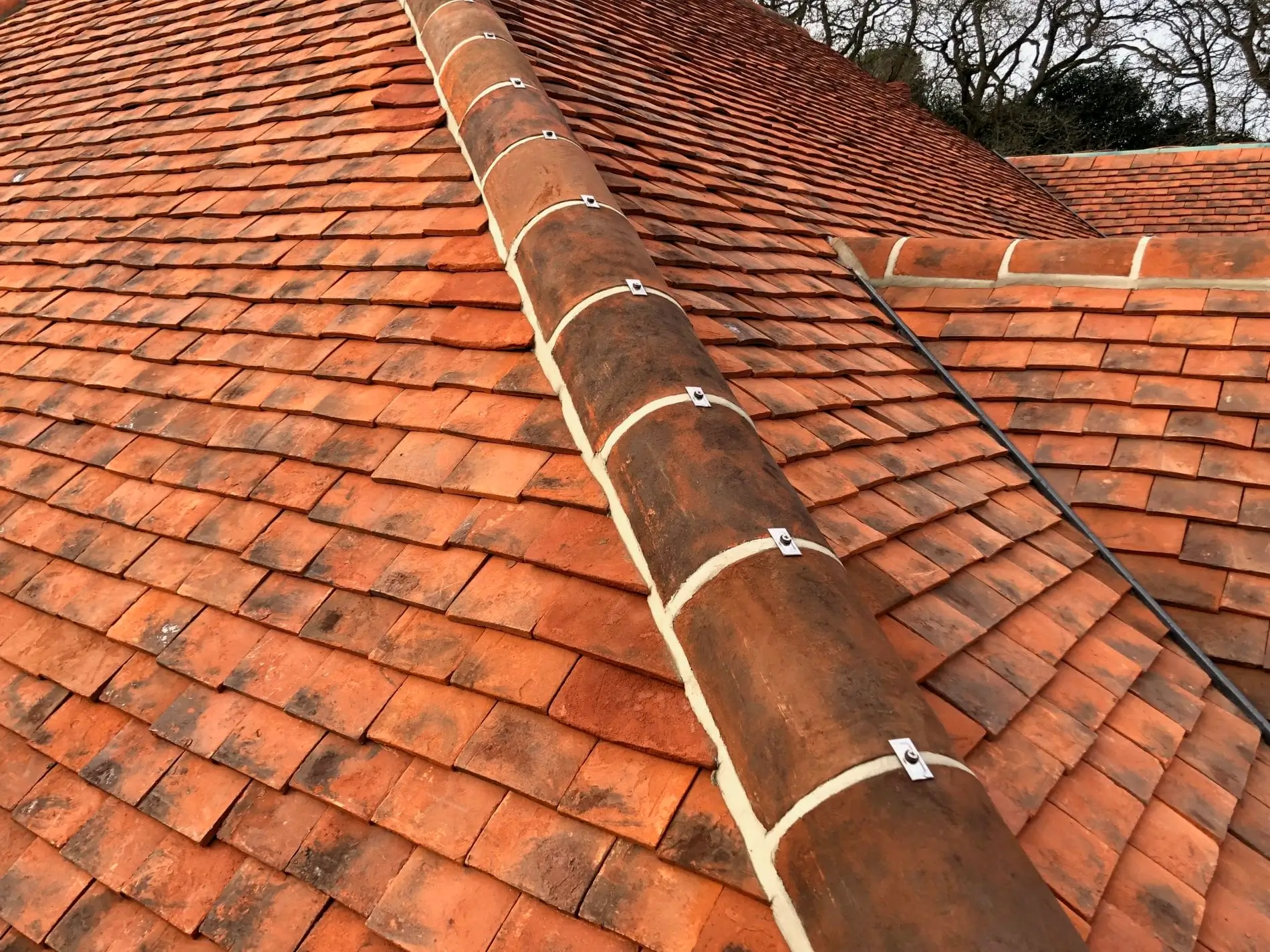
New Roof or Repair? How to Tell Which One Your Nottingham Home Needs
Most roofs give plenty of warning before they fail outright. If your roof is over 20 to 25 years old, has more than a handful of slipped or cracked tiles, or shows daylight through the felt in the loft, a full new roof is usually the better long-term option over patching individual faults. A single leak or a few loose tiles on an otherwise sound roof normally just needs a repair. The deciding factor is how much of the covering, timber, and underlay is still in good condition underneath.
Watch for these warning signs, then get a proper inspection before deciding either way:
- Roof covering older than 20-25 years, especially if tiles are visibly worn or brittle
- Multiple slipped, cracked, or missing tiles rather than just one or two
- Daylight visible through the roof timbers or felt when you're up in the loft
- Damp patches, staining, or peeling paint on ceilings below the roof
- A sagging ridge line or a dip anywhere in the roof plane, which usually points to rotten rafters
- Heavy moss build-up, which traps moisture and speeds up frost damage to tiles
- Rising heating bills with no other obvious cause, often a sign of failing insulation or gaps in the covering
If several of these apply at once, patch repairs usually just delay the inevitable and cost more over time than one properly planned new roof. We handle both residential roofing repairs and full replacements, and our free drone survey tells you honestly which one your roof actually needs.
What's the Best Roof Covering for Your Nottingham Home?
For most Nottingham homes, concrete tile is the most practical choice. It typically costs £60-£90 per m² and lasts 30-50 years. Clay tile costs more, at £90-£130 per m², but suits period brick housing and lasts 50-100 years. Natural slate is the premium option at £100-£180 per m², and can last well over 100 years if it's laid properly. The right choice depends on your budget, your roof's pitch, and whether the property is period or conservation-sensitive. See the comparison table further down this page for lifespan and cost at a glance.
The structure underneath the covering matters just as much as the tile or slate on top. If your roof needs new timbers as well as a new covering, see our page on pitched roof construction for how we build and strengthen the frame before anything goes on top of it.
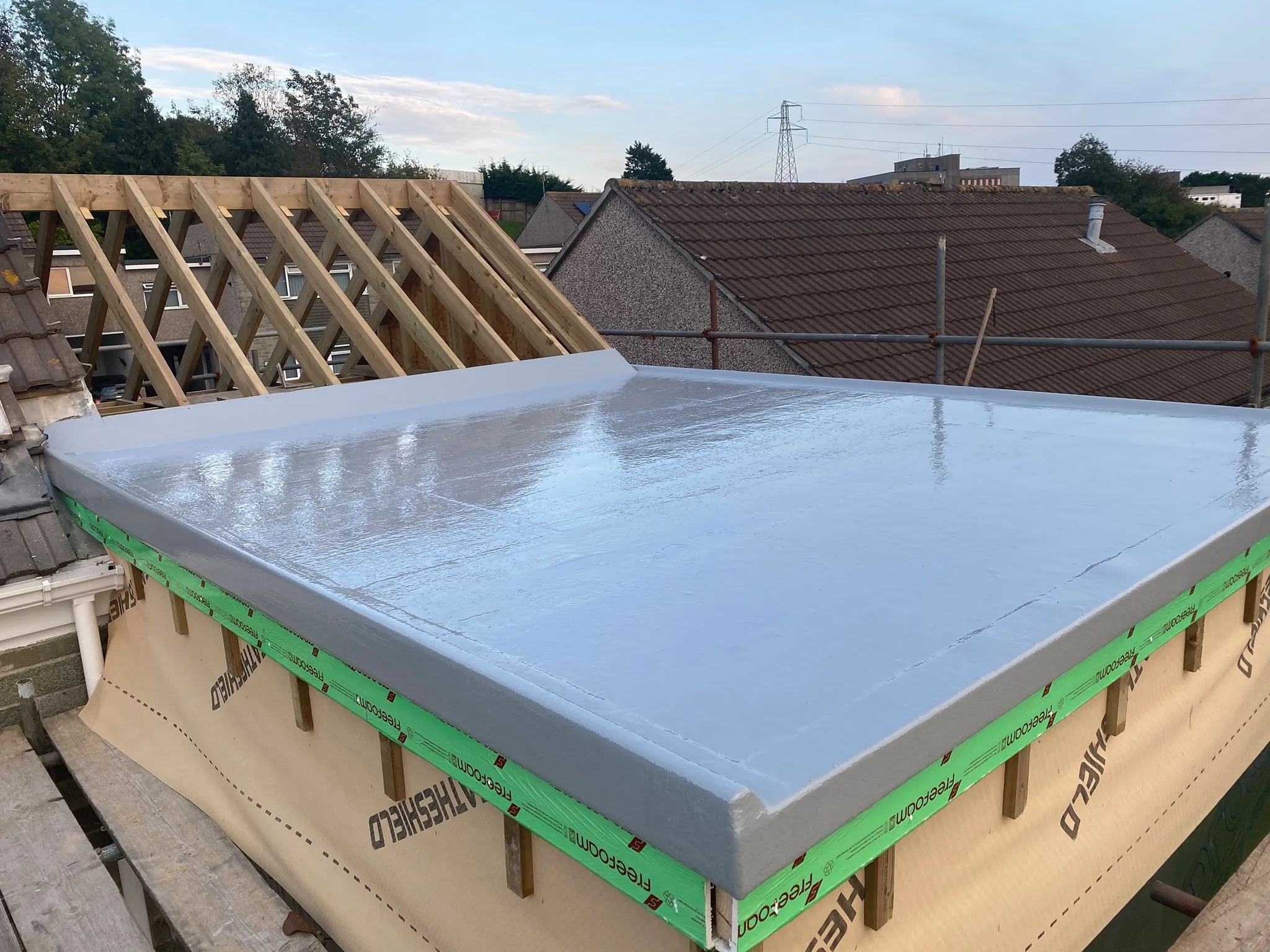
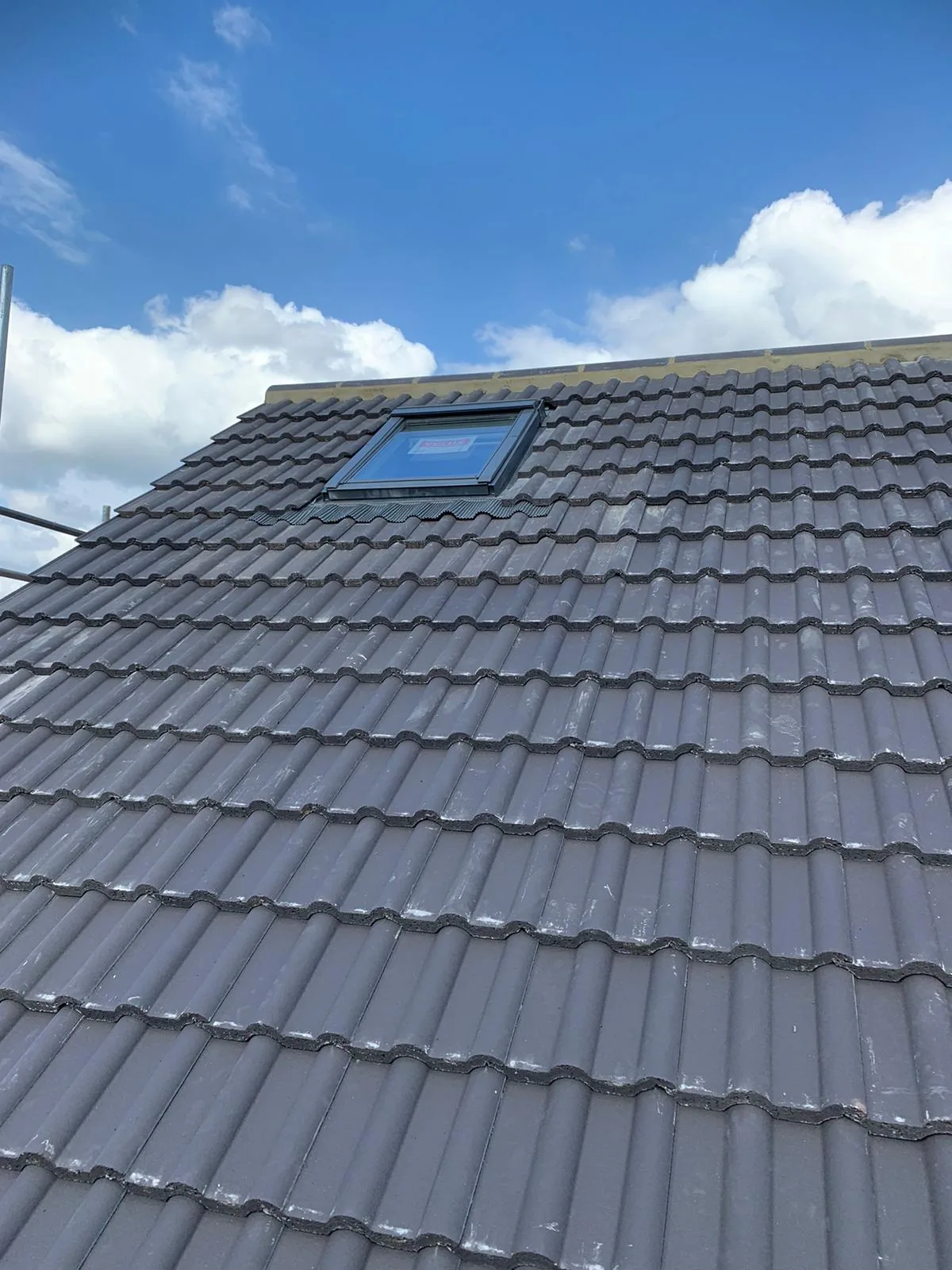
Slate vs Clay Tile vs Concrete Tile: What Each One Suits
Lifespan and cost only tell half the story. Here's how each covering behaves once it's on your roof, and where it fits best.
Natural Slate
- Needs a steeper pitch, generally 25 degrees or more, to shed water properly
- The most common choice for Victorian and Edwardian houses around The Park and Mapperley
- Heavier than tile, so the roof structure (the rafters and battens underneath) needs checking before you commit
- Gives a natural colour variation that manufactured materials can't fully copy
- Usually the material conservation officers expect on listed and heritage properties
Clay Tile
- Can be laid down to a 15-degree pitch, so it suits a wider range of roof shapes than slate
- Keeps its colour for decades rather than fading like some concrete tiles do
- A close match for the original coverings on much of Nottingham's older terraced and semi-detached stock
- Lighter than slate but heavier than most concrete tiles
- A strong middle-ground choice between slate's heritage look and concrete's lower cost
Concrete Tile
- The most widely fitted covering on modern Nottingham housing, from Arnold to Hucknall
- Comes in a wide range of colours and profiles, including interlocking designs that speed up installation
- The lightest of the three main coverings, which keeps structural costs down on newer roof timbers
- A sensible default for straightforward re-roofs where matching a heritage look isn't a factor
- Colour can fade over several decades, more noticeably than clay
What Happens Before Work Starts on Your New Roof
Every job starts with a clear look at what's actually going on, not a guess from the pavement.
- We carry out a free drone survey of the whole roof, timbers where visible, and all flashings and junctions — no ladders needed
- You get clear photos and an honest recommendation on covering type and scope
- We check whether Building Regulations notification applies, which it does if you're replacing more than 25% of the roof covering — see the Planning Portal's guidance on Building Regulations for new roofs for the full detail
- Most straightforward re-roofs on a house don't need planning permission, but conservation areas around The Park and parts of Lenton can bring extra restrictions, and we flag these upfront
- We arrange scaffolding and confirm access, parking, and how long it'll be up
- If your re-roof falls in bird nesting season, roughly March to August, we check for active nests before starting, since disturbing an active nest is a legal offence
- We tell you whether the loft needs partially clearing so our team can check timbers properly, though a full clear-out usually isn't necessary
- You get a firm quote and an agreed scope in writing before any tool comes out of the van
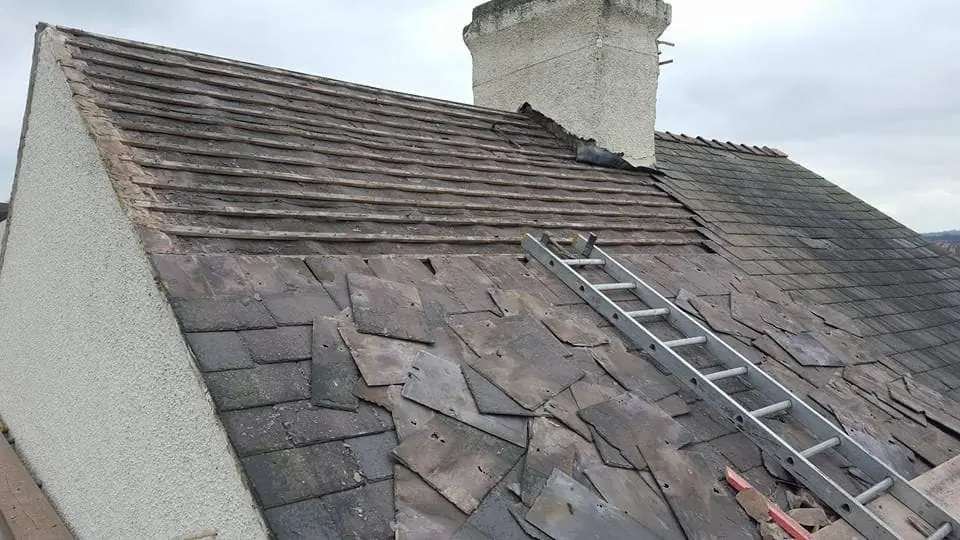
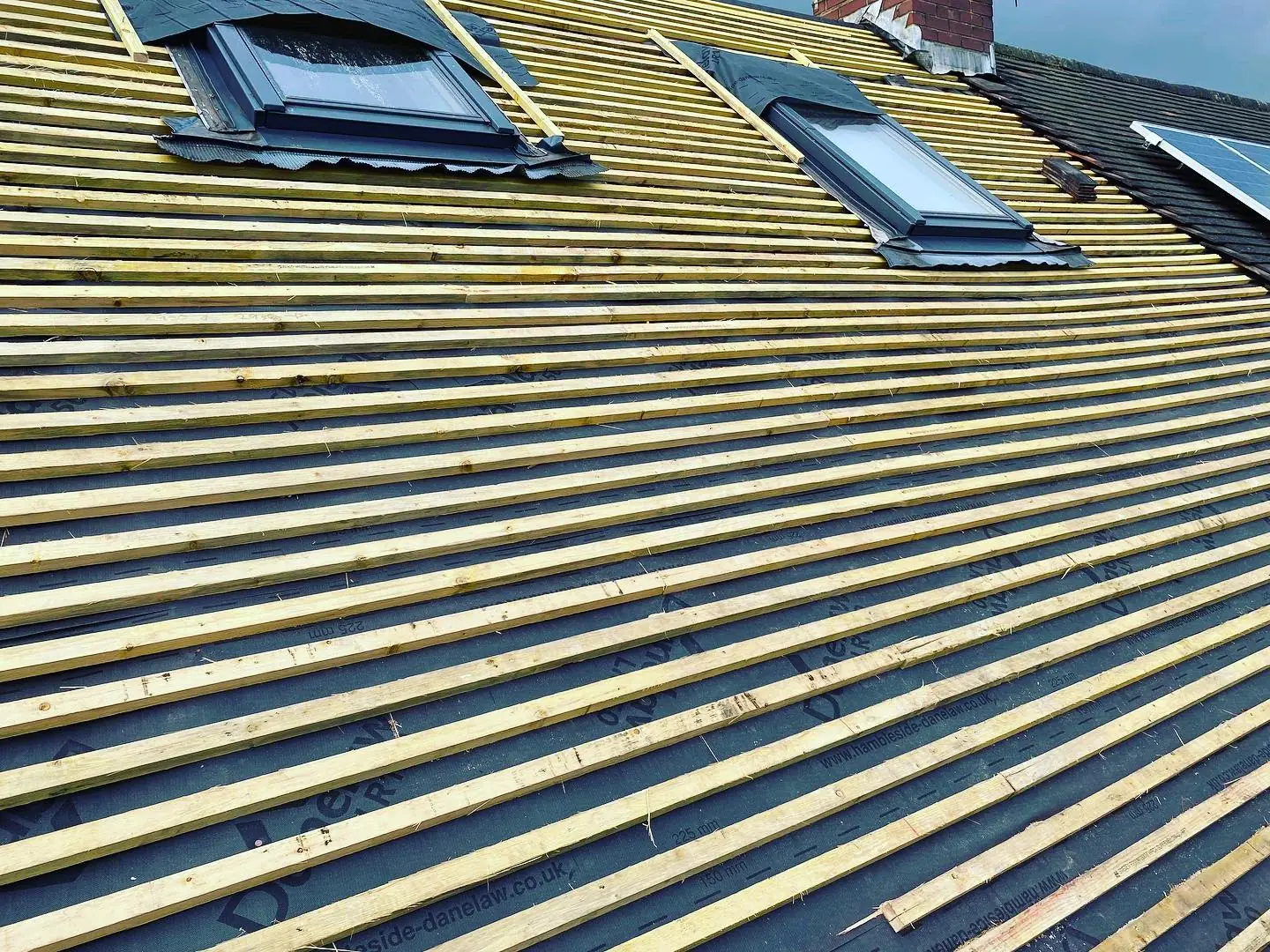
How We Fit a New Roof That's Built to Last
Most roof failures trace back to poor detailing, not poor material. Here's how we install a new roof properly, start to finish.
- Strip the existing covering back to the rafters and clear the site as we go, keeping the property protected below
- Inspect every rafter and replace any that are rotten, split, or undersized for current standards
- Fit a breathable roofing membrane (an underlay that lets trapped moisture escape while keeping rain out) across the whole roof
- Batten to the correct gauge for your chosen tile or slate size, so each course lines up evenly
- Lay the covering from eaves to ridge, working in straight, consistent courses
- Dress lead flashings around chimneys, valleys, and abutments by hand, where most leaks start if it's rushed
- Fit a dry-ridge or dry-verge system rather than traditional mortar bedding, which avoids the cracking and pointing failures that plague older roofs
- Top up loft insulation to current Building Regulations standard while the roof timbers are exposed
- Clear the site fully and remove all waste, including the old tiles
Timescales vary by material and complexity. A concrete tile re-roof on a typical semi usually takes 3-6 days, clay tile 4-7 days, and natural slate 5-9 days, weather allowing. Chimneys, dormers, and multiple valleys add time to any of the three.
How to Check Your New Roof Was Installed Properly
Whether you're checking your own finished job or sizing up a quote, here's what separates a proper install from a rushed one.
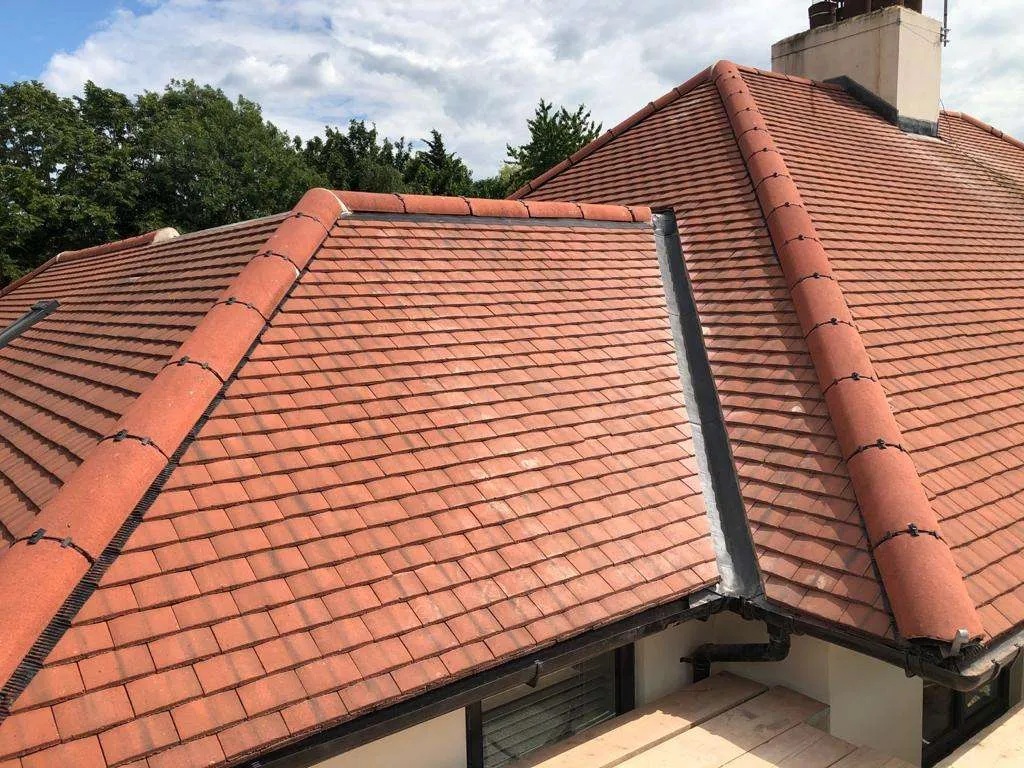
- Tile or slate courses should run in straight, even lines with no visible dips or humps
- Ridge and verge fittings should be firmly fixed, not just sitting loose or lightly bedded
- Lead flashing around chimneys and valleys should be neatly dressed and fully tucked into the brickwork, not just caulked over the top
- Ask to see photos of the exposed timbers before the covering went on, proof that any rot was actually replaced, not covered up
- You should receive a Building Regulations compliance certificate where the job required one
- Get written confirmation of the exact materials, thickness of insulation fitted, and guarantee terms
- We back every new roof we fit with a 10-year workmanship guarantee, in writing, from day one
Protecting Your New Roof Once It's Fitted
A little upkeep keeps a new roof performing for its full lifespan instead of needing early attention.
- Have a visual check done every year or two, ideally with a drone rather than someone on a ladder
- Clear valleys and gutters twice a year so water doesn't back up under the tiles
- Watch for moss building up in shaded, north-facing sections and have it removed before it spreads
- Trim back overhanging branches that scuff the surface or drop debris into valleys
- Give the roof a five-minute look after any severe storm, checking for slipped tiles or dislodged flashing
- Avoid pressure-washing tiles or slates, which can strip the surface and shorten their working life
Cost & Pricing Guidance
New roof pricing across the UK for 2025/26 typically runs like this:
- Concrete tile: £60-£90 per m²
- Clay tile: £90-£130 per m²
- Natural slate: £100-£180 per m²
- Scaffolding hire: £900-£1,800 for a typical 2-3 week job
A full re-roof on a typical three-bedroom semi, around 70-90 m², usually costs £7,000-£16,000 all in, depending on covering and access. Larger detached properties, or ones with multiple chimneys and valleys, run higher.
What pushes the price up or down: the covering you choose, roof pitch and complexity, how much timber needs replacing, scaffolding access, and how many chimneys, valleys, or dormers need dressing.
These are general ranges, not a quote. A fixed price needs a survey — and our drone survey is free, with no obligation.
Comparison Table: New Roof Coverings and Systems
| System | Typical Lifespan | Best For | Relative Cost |
|---|---|---|---|
| Concrete Tile | 30-50 years | Standard re-roofs, modern housing, budget-conscious jobs | £ (lowest) |
| Clay Tile | 50-100 years | Period terraces, homes matching an original clay covering | ££ |
| Natural Slate | 100+ years | Heritage and listed properties, conservation areas | £££ (highest) |
| Dry-Ridge & Dry-Verge Upgrade | 25+ years, no repointing | Any new roof, replaces failure-prone mortar bedding | £ (add-on) |
Why Choose Tate & Sons for Your New Roof
New roof installations are led by James Tate, Founder and Managing Director, who still prices most re-roof jobs himself. He's happiest working out how to fit a new roof onto a tricky period property in Wollaton Park or West Bridgford without losing its character, and he set Tate & Sons up on one simple idea: find out what's genuinely wrong, use the right materials, and leave a roof that holds for years, not months.
That founding approach still shapes every re-roof we quote today. Read more about the team and how the business started on our About page.
Our roofers are directly employed, not subcontracted. They hold NVQ Level 2 and 3 qualifications in Roofing Occupations and carry CSCS cards. Every new roof comes with a free drone survey up front, so your quote is based on what's actually up there rather than a guess from ground level, and a 10-year workmanship guarantee once the work is finished.
New Roof Installation Across Nottingham and the Wider County: Areas We Serve
We fit new roofs right across Greater Nottingham and out into the wider county. Wherever your property sits, our crews know the local housing stock, weather, and access.
- Nottingham City Centre (NG1)
- The Park (NG1)
- West Bridgford (NG2)
- Sneinton (NG2)
- Wollaton (NG8)
- Lenton (NG7)
- Beeston (NG9)
- Chilwell (NG9)
- Stapleford (NG9)
- Arnold (NG5)
- Sherwood (NG5)
- Mapperley (NG3)
- Carlton (NG4)
- Gedling (NG4)
- Hucknall (NG15)
- Long Eaton (NG10)
- Mansfield (NG18)
- Sutton-in-Ashfield (NG17)
Got Questions?
Your Flat Roofing Questions, Answered Properly
How much does a new roof cost in Nottingham?
Most Nottingham three-bedroom semis cost £7,000-£16,000 for a full re-roof, depending on the covering chosen. Concrete tile runs £60-£90 per m², clay tile £90-£130 per m², and natural slate £100-£180 per m². Scaffolding, timber replacement, and the number of chimneys or valleys all affect the final figure. A free drone survey gives you an exact price rather than a rough estimate.
How do I know if I need a full new roof or just a repair?
A full new roof usually makes sense once the covering is over 20-25 years old, or when several tiles have slipped or cracked rather than just one or two. A single leak or a handful of loose tiles on an otherwise sound roof normally just needs a repair. The deciding factor is the condition of the timbers, underlay, and covering underneath, which a proper survey checks rather than guessing from the ground.
How long does new roof installation take?
A concrete tile re-roof on a typical semi usually takes 3-6 days, clay tile 4-7 days, and natural slate 5-9 days. Chimneys, dormers, and multiple valleys add time to any of these. Bad weather can also push the schedule back a day or two, since tiling and lead work both need reasonably dry conditions to go in properly.
Do I need planning permission for a new roof?
Most straightforward re-roofs on a standard house don't need planning permission if the new materials and appearance stay broadly similar to the old ones. Conservation areas around The Park and parts of Lenton can bring extra restrictions, and listed buildings almost always need consent. Changing the roof's shape, height, or pitch is more likely to trigger a planning application than a like-for-like covering swap. We check this during your survey and flag anything that applies.
Do I need Building Regulations approval for a new roof?
Yes, generally, if you're replacing more than 25% of the roof covering. Building Regulations cover thermal insulation, weather resistance, and fire spread between properties, and a compliant job gets you a certificate you'll need if you sell the house later. Our team handles this notification as part of every full re-roof, so you're not left chasing paperwork after the scaffolding comes down.
Can a new roof be fitted over the old covering instead of stripping it back?
In most cases, no, and we wouldn't recommend it even where it's technically possible. Overlaying tiles onto an existing covering hides rotten timbers and failed underlay instead of fixing them, and it adds weight the original structure may not have been built to carry. Stripping back to the rafters is the only way to actually see what condition your roof is in and fix problems properly, which is why it's standard practice on every re-roof we carry out.
Does nesting bird season affect when a new roof can be fitted?
It can, roughly between March and August, when wild birds are most likely to be nesting in roof spaces or under eaves. Disturbing an active nest is a legal offence under the Wildlife and Countryside Act, so we check for signs of nesting before starting any strip-off during this period. If nests are found, work is planned around them rather than cancelled outright, which usually means a short delay rather than a lost job.
Will a new roof installation get my house ready for solar panels?
It can, if you tell us at survey stage that solar is on your plans. We can fit extra batten strength and cabling routes for panel mounts while the roof is stripped back, which is far cheaper than retrofitting them onto a finished roof later. It also means you won't need to disturb a brand-new covering within a few years of having it fitted. Mention it early, even if you're not ready to install panels straight away.
Book Your Free Drone Roof Survey Today
See exactly what your roof needs before any work starts. No ladders, no pressure — just a clear picture from a local Nottingham team.
A tired roof only gets worse as water works deeper into the deck and timber beneath it. A quick, free drone survey today tells you exactly where you stand — and often the fix is smaller and cheaper than you feared. Book now, get an honest quote, and protect your home before the next East Midlands downpour finds the weak spot.
📍 57 Cyril Avenue, Nottingham, NG8 5BA
📞 0115 647 4455
Call the Nottingham team today on 0115 647 4455, or request your free drone survey online. We’re already working across your area.
Get in Touch
Tate & Sons Roofing — Nottingham
57 Cyril Avenue, Nottingham, NG8 5BA
📞 0115 647 4455
✉️ [email protected]