
🏠 Trusted Local Roofers
Concrete Roof Tiling Nottingham
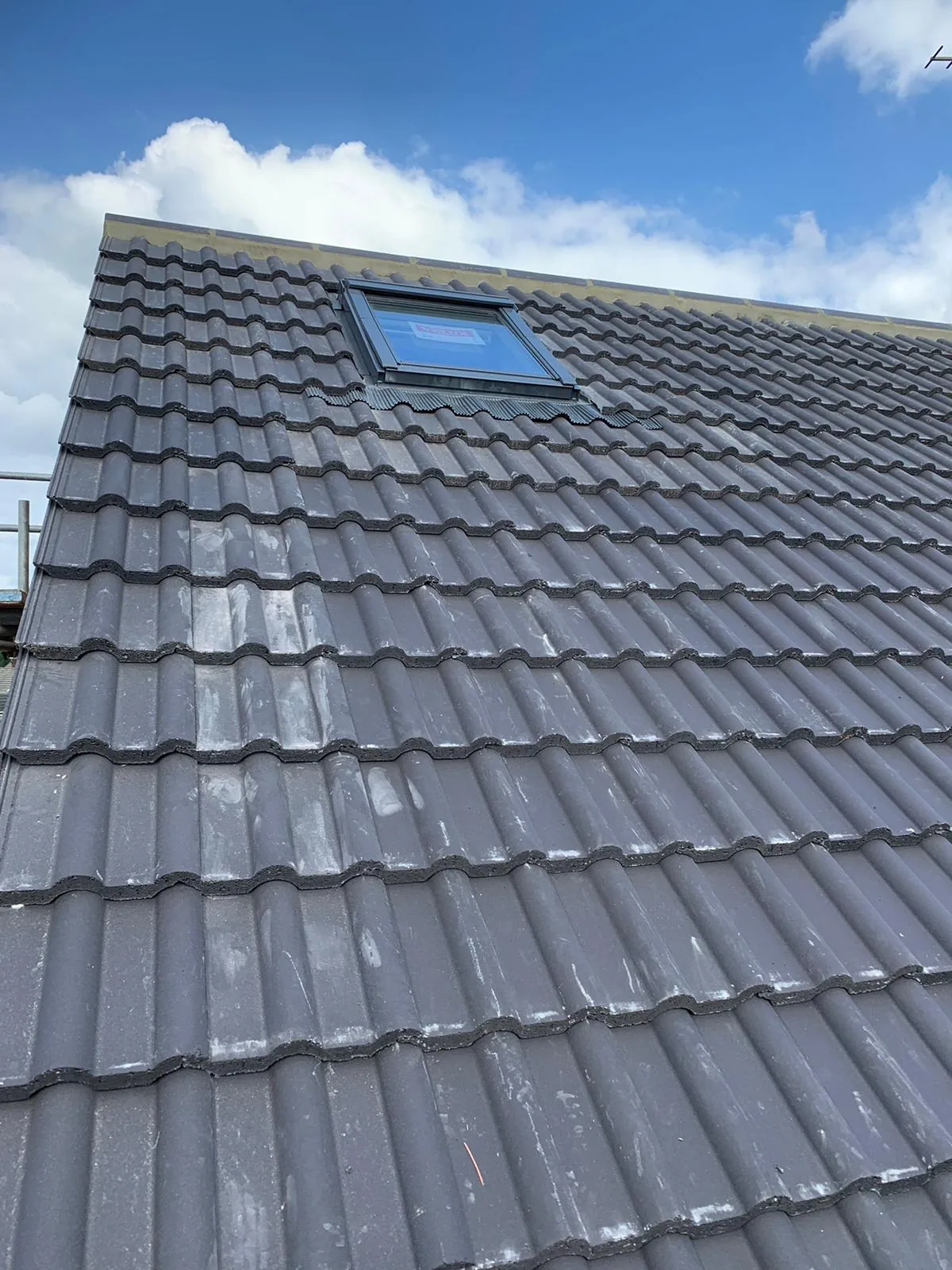
A concrete tile roof only earns its keep if it's fitted right. The wrong profile, a rushed batten job, or tiles laid without enough overlap, and you're back up a ladder within a decade. This page covers what good concrete roof tiling costs, which profile suits your house, and how to check the job was done properly. As a roofing contractor working across the city, we tile roofs the way we'd want our own done: right tile, right fixing, built to last.
- Fully Insured
- 10-Year Guarantee
- 5-Star Rated
Quick Free Estimate - No Obligation
We're not just roofers – we're your neighbours.
Fully Insured • Response within 15 mins
🔒 Your details are safe with us. No spam, ever.
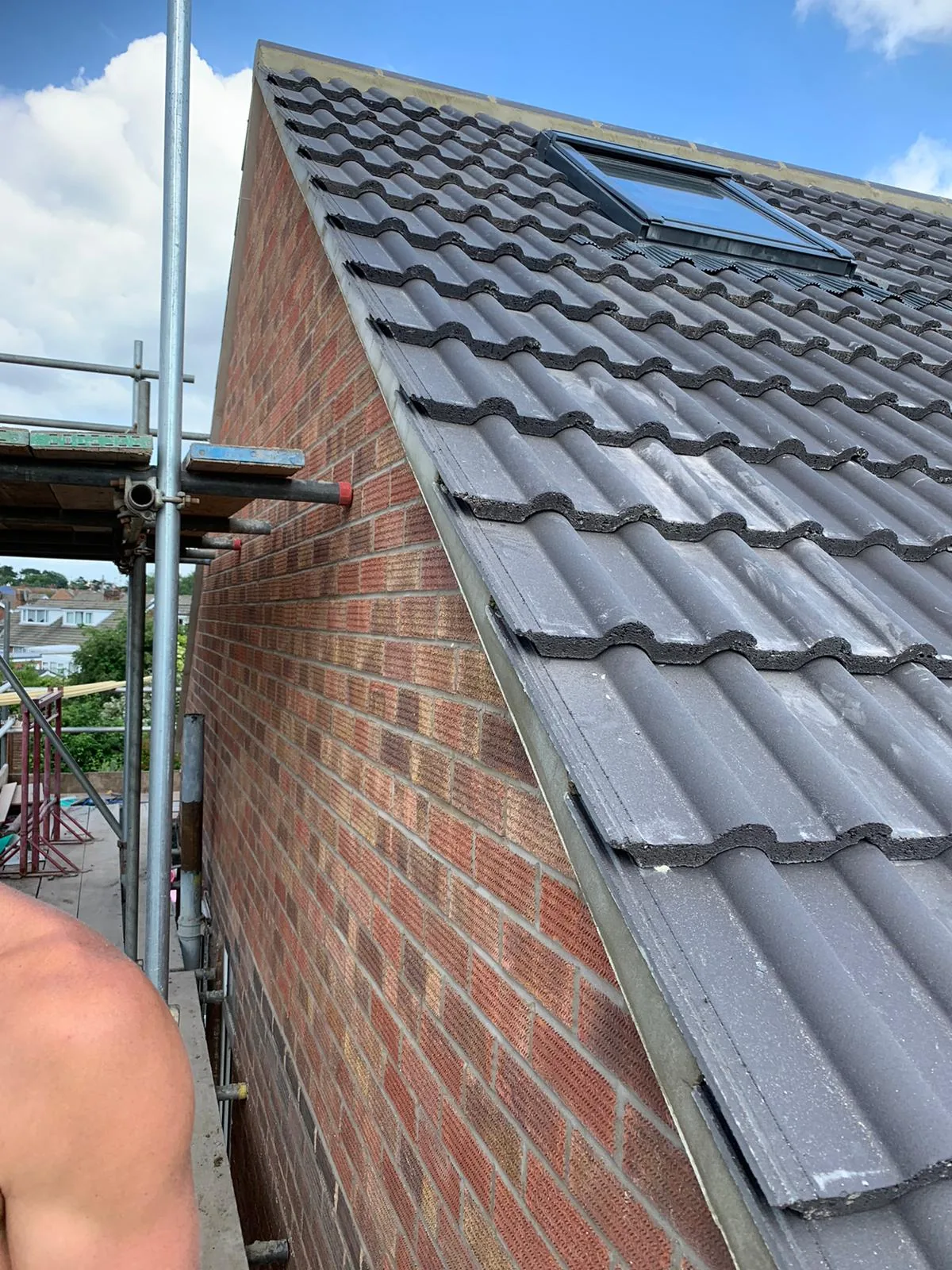
Concrete or Clay: Which Roof Tile Actually Suits Your Nottingham Home?
For most Nottingham homes, concrete roof tiles are the practical choice. They cost roughly 20-30% less than clay tiles fitted, come in a wide range of colours and profiles, and typically last 40-50 years when they're fitted and looked after properly. Clay tiles last longer, often 75-100+ years, and hold their colour better, but cost more upfront and suit period or heritage properties where planning rules call for a traditional finish. Concrete works well on most modern, inter-war, and post-war housing across the city. A free survey confirms which fits your roof, your street, and your budget.
A few things tip the decision one way or the other:
- Budget: concrete costs less to buy and fit than clay, tile for tile
- Property age and character: period homes in The Park or parts of Lenton often need a traditional clay or slate look to satisfy conservation area rules
- Roof structure: concrete tiles add real weight, so older rafters sometimes need checking first (more on this below)
- Colour retention: clay holds its colour for decades, while concrete can fade or streak over time
- Repair matching: concrete tiles are easier to source and colour-match later if you need spot repairs
If you're planning a full new pitched roof rather than a straightforward re-tile, our pitched roof construction page covers rafters, trusses, and the structural side in more depth.
Will Your Roof Take the Weight? What We Check Before We Touch a Tile
Concrete tiles are heavier than most other coverings, so a proper look at your roof's structure comes before any tile gets ordered. Older Nottingham homes built for slate or lightweight coverings sometimes need extra checks, particularly around purlins (the horizontal timbers that support the rafters) and the rafters themselves.
- We carry out a free drone survey of the whole roof, its structure, and its condition, no ladders needed
- We check rafters, purlins, and battens for rot, sagging, or past repairs that need attention first
- We confirm the structure can carry the added weight of concrete tiles, especially on older Victorian or Edwardian homes built for lighter coverings
- We measure the roof pitch, since most concrete interlocking tiles need a minimum pitch, commonly around 17.5-22.5 degrees depending on the profile, to shed water properly
- We check eaves, ridges, and valleys to plan cuts and dry-fix components before ordering
- If you're near The Park, Lenton, or another conservation area, we flag anything that needs sign-off before work starts
- You get a firm quote and an agreed tile spec and colour before any tool comes out of the van
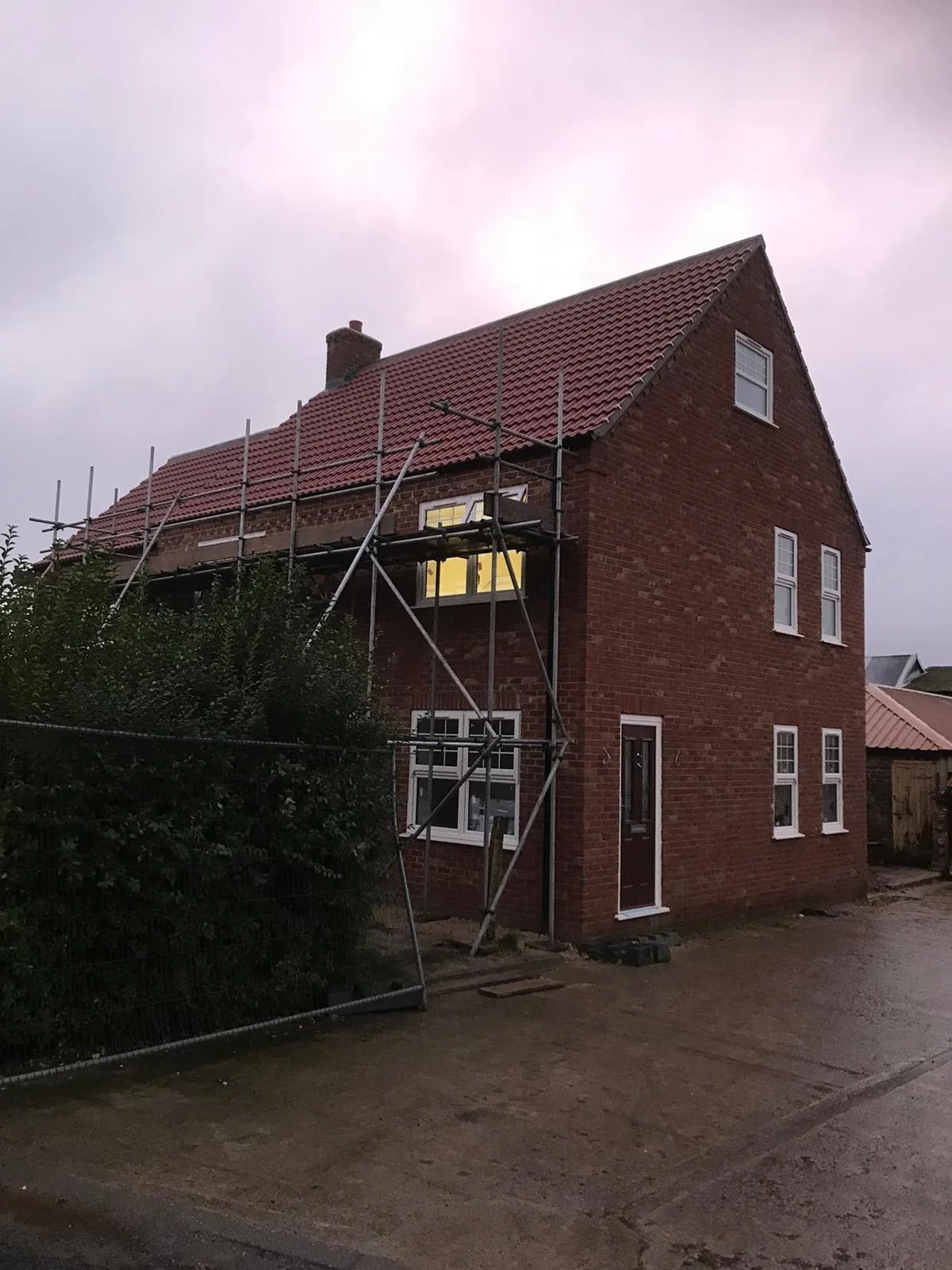
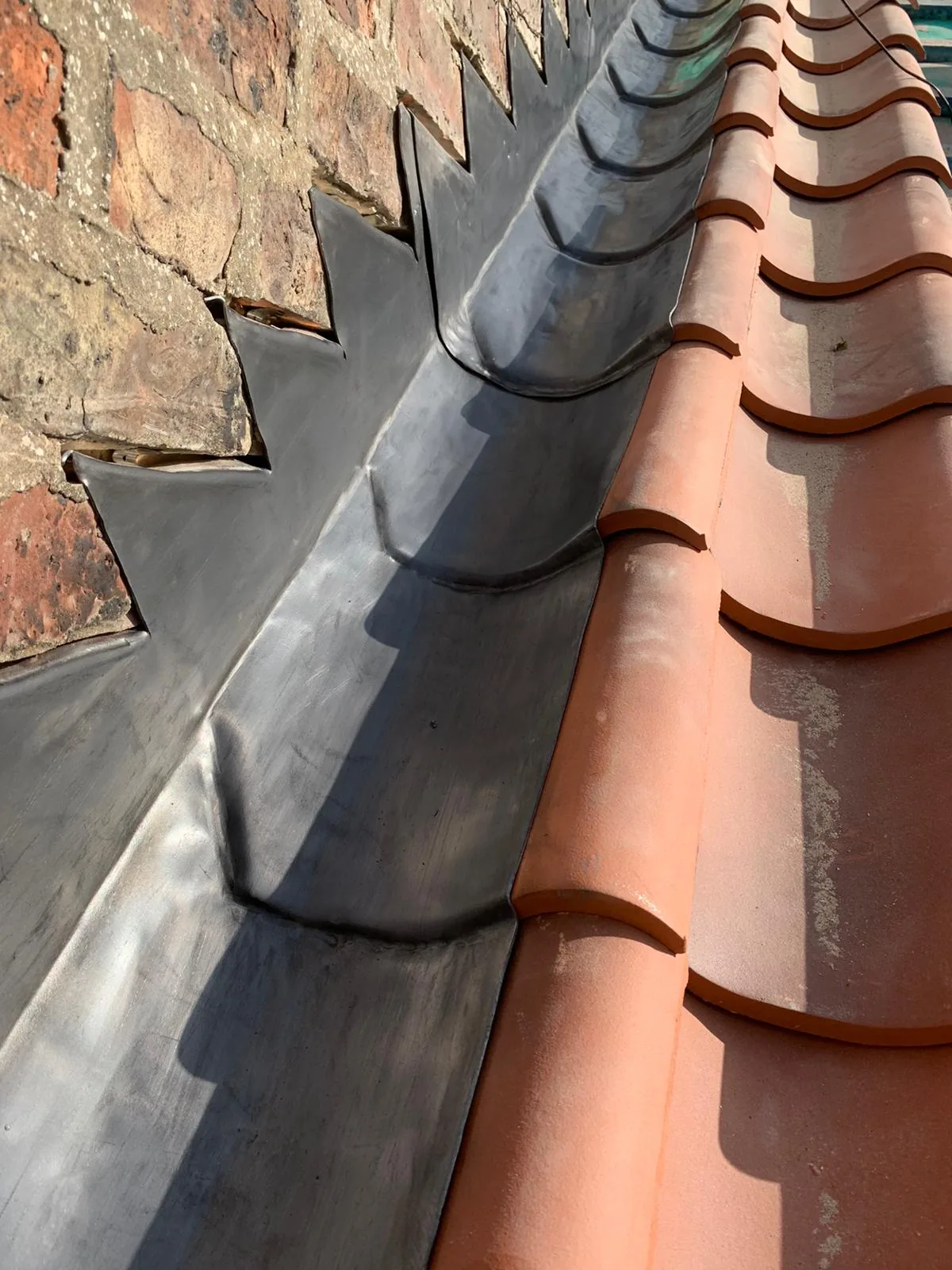
How We Fit a Concrete Tile Roof That Stays Put for Decades
Most tiled roof failures come down to poor detailing at the fixings and edges, not the tiles themselves. Here's how we install one properly.
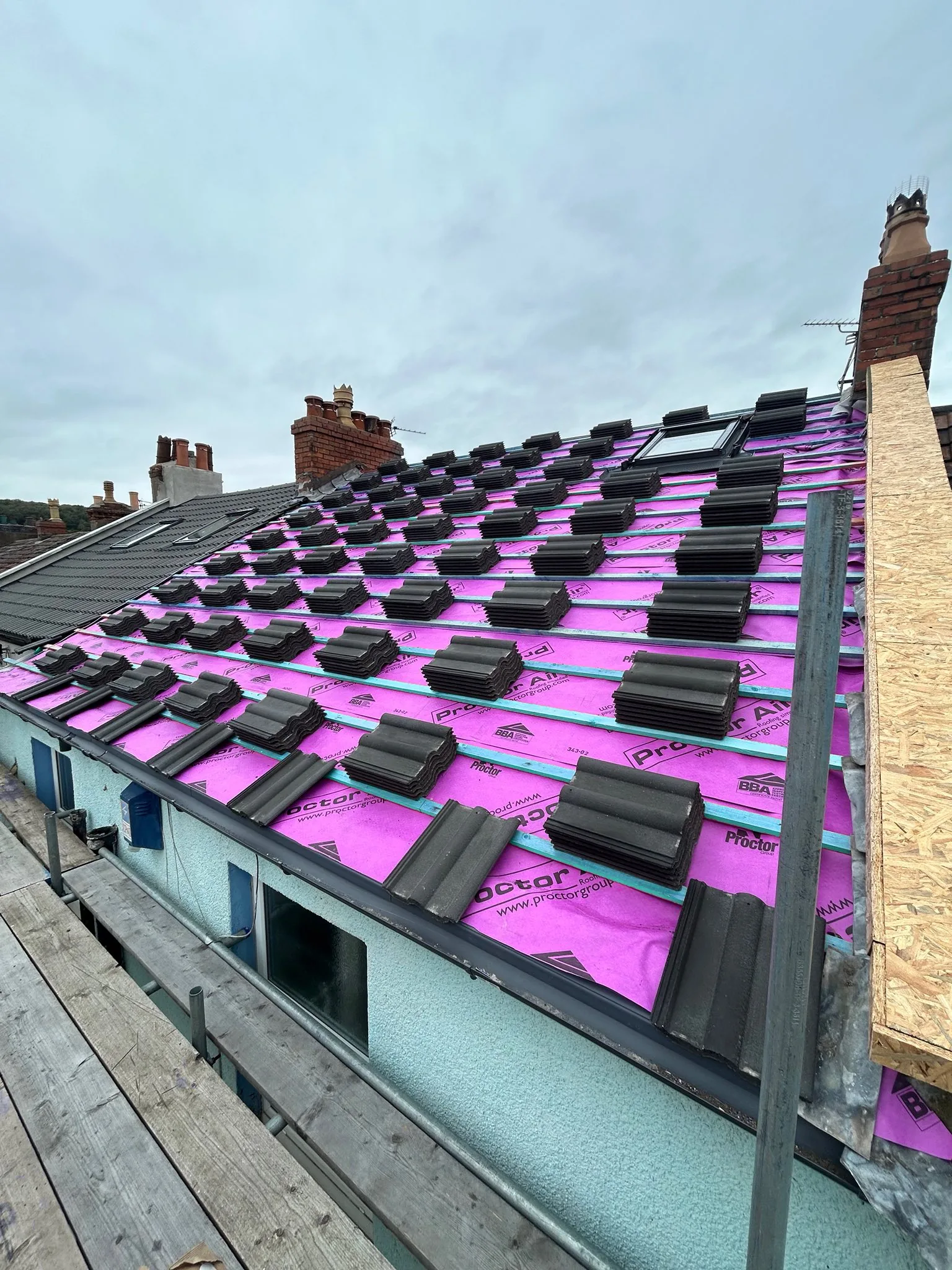
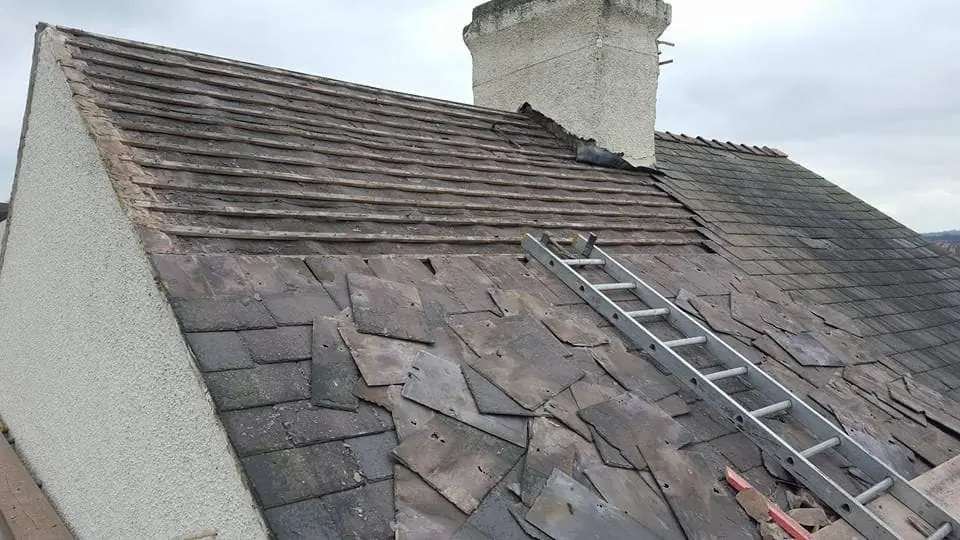
- Strip the roof back to the rafters, replacing any rotten timber we find along the way
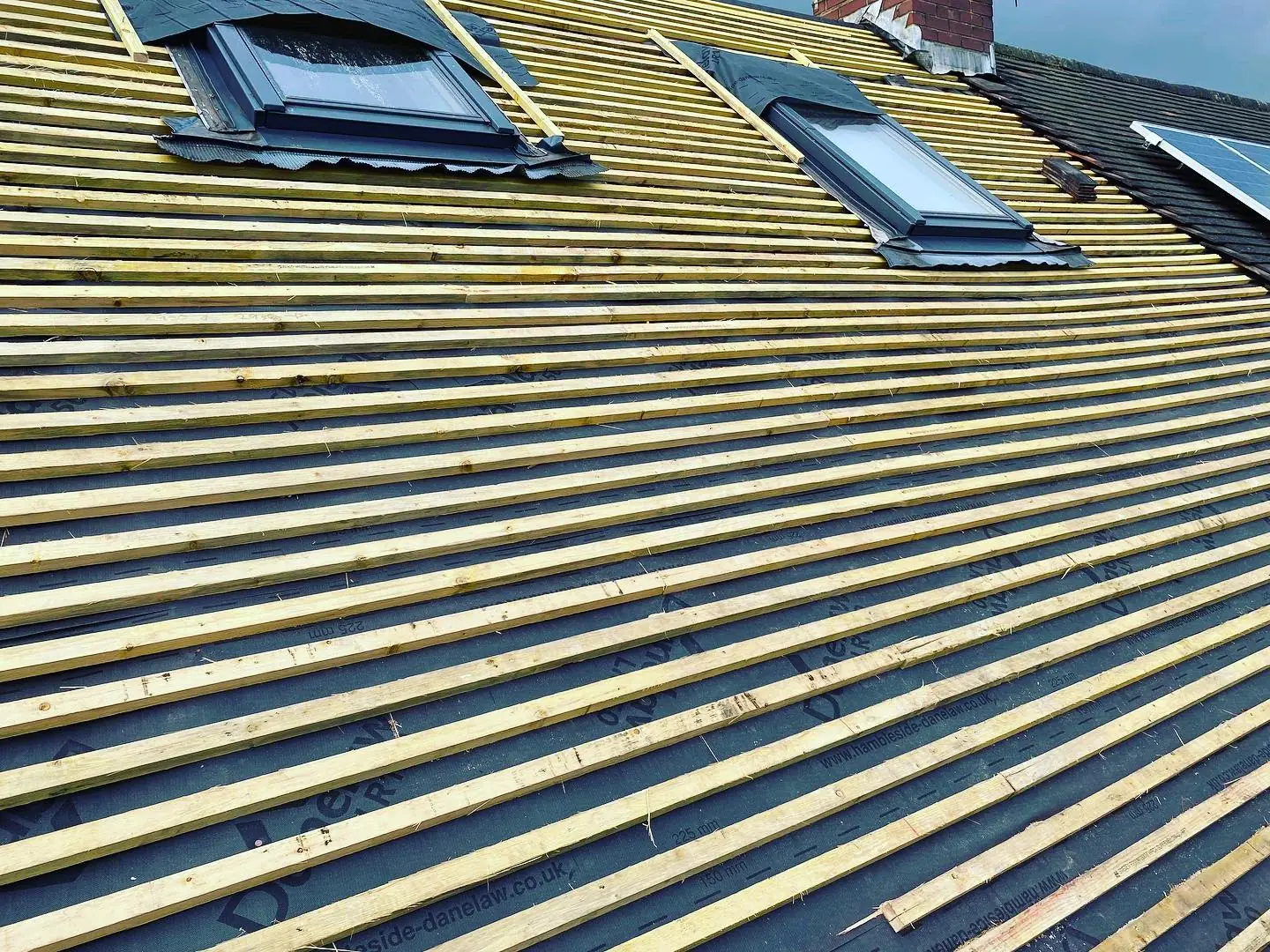
- Fit a breathable roofing underlay, a membrane that lets trapped moisture escape while stopping wind-driven rain getting in
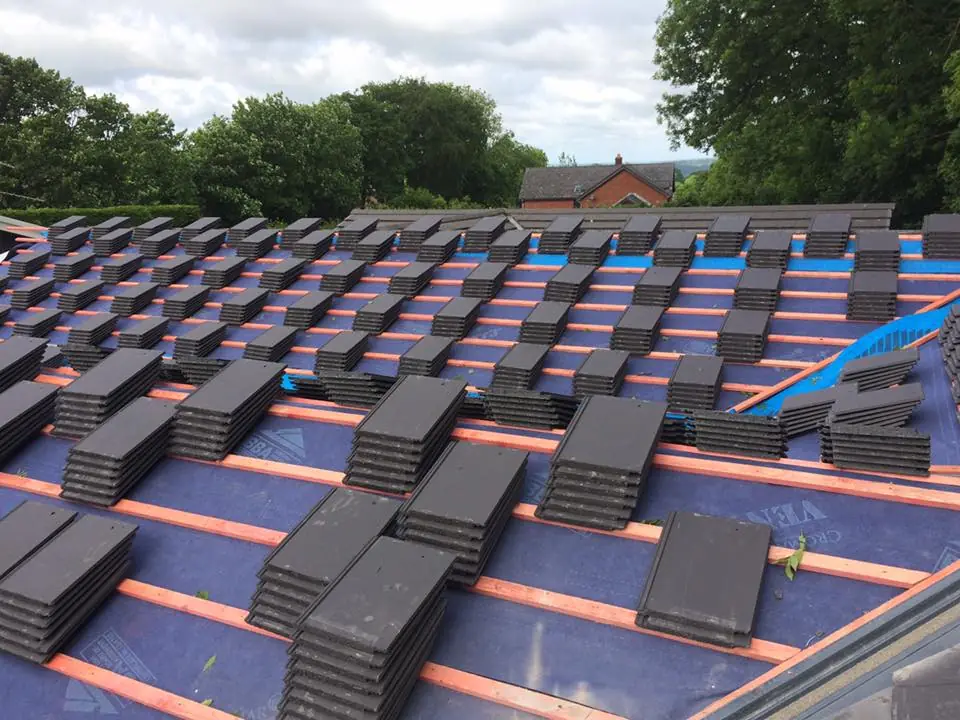
- Set battens to the tile manufacturer's gauge, the fixed spacing between each batten, so every tile sits with the correct overlap
- Fix tiles to BS 5534 nailing and clip requirements, with extra fixings at exposed edges, ridges, and verges where wind uplift hits hardest
- Fit dry-ridge and dry-verge systems, mechanical fixings that replace the old sand-and-cement pointing prone to cracking and falling away within a few winters
- Dress valleys, abutments, and chimney flashing in lead so water sheds cleanly rather than tracking sideways
- Clear the site and hand over photos of the completed batten and underlay work before the tiles went on
We only fit tiles tested to UK standards. The Roof Tile Association's guide to testing and standards sets out the strength, water permeability, and freeze-thaw checks concrete tiles must pass under BS EN 490 and BS EN 491 before they're fit to go on a British roof.
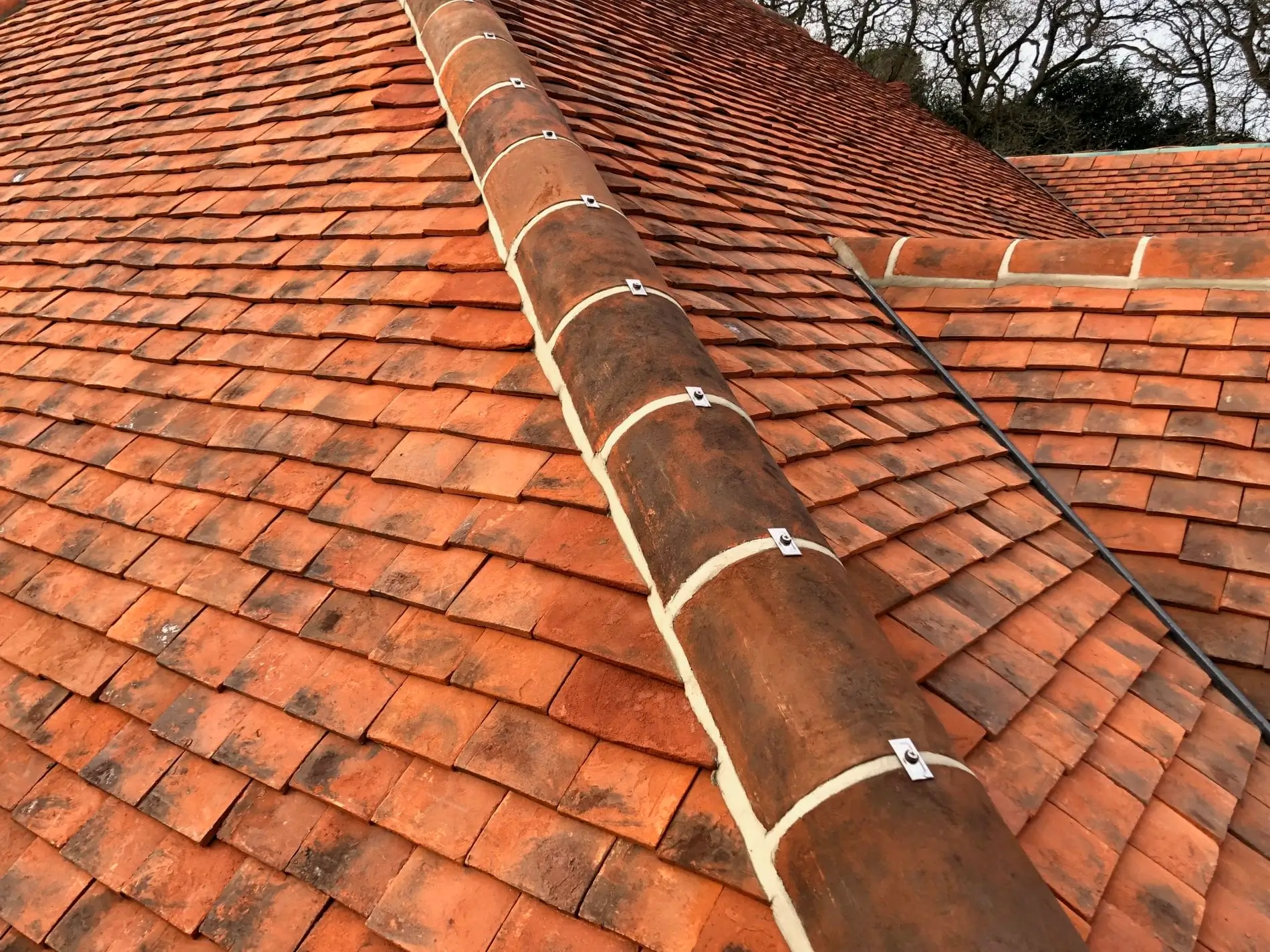
How to Check Your New Tiled Roof Was Fitted Right
Whether you're checking a finished job or worried about an existing roof, here's what good work looks like.
- Tiles should sit flat and evenly spaced, with no visible cracks, chips, or lifted corners
- Ridge and verge fixings should be mechanical dry-fix components, not crumbling sand-and-cement pointing
- Ask to see photos of the battens and underlay taken before the tiles went on, proof the deck and structure were sound
- Valleys and abutments should be neatly dressed in lead, not just sealed over with mastic
- You should receive written confirmation of the tile spec, colour, guarantee, and any Building Regulations notification needed
- We back every tiled roof we fit with a 10-year workmanship guarantee, in writing, from day one
Stopping Moss, Fading, and Slipped Tiles Before They Start
A little maintenance twice a year keeps small problems from turning into a leak.
- Clear moss and debris from valleys and gutters twice a year, especially after autumn leaf-fall
- Get loose or slipped tiles re-fixed quickly, since a single displaced tile lets water track onto the underlay and can dislodge tiles nearby
- Leave pressure-washing to a professional, since too much force strips the tile surface and shortens its life
- Check flashing and dry verges after any major storm for cracks or displacement
- Watch for colour fading and staining, most common on shaded, north-facing slopes with heavy moss growth, and consider a professional clean where it's building up
- Give the roof a five-minute visual check after any named storm, it catches small damage before it becomes a bigger repair
Cost & Pricing Guidance
Concrete roof tiling pricing across the UK for 2025/26 typically runs like this:
- Concrete interlocking tiles (pantile, double roman): £45-£75 per m² supply and fit
- Concrete plain tiles (traditional double-lap style): £70-£110 per m², since they need more tiles and more labour per m²
- Full re-tile of a typical 3-bed semi in concrete interlocking tiles: £5,000-£9,000
- Full re-tile of the same roof in concrete plain tiles: £8,000-£14,000
- Minor repairs, a handful of slipped or cracked tiles re-fixed or replaced: £150-£350
- Larger patch repairs, including new battens and underlay to a section: £400-£900
What pushes the price up or down: roof pitch and complexity (valleys, hips, dormers add labour), access and scaffolding needs, the tile profile you choose, whether the battens and underlay need full replacement, and whether the structure needs strengthening to carry the extra weight.
These are general ranges, not a quote. A fixed price needs a survey.
Comparison Table: Concrete Roof Tile Profiles
| Profile | Look & Weight | Best For | Relative Cost |
|---|---|---|---|
| Interlocking Pantile | S-shaped single lap, lighter per m² than plain tiles | Traditional East Midlands streets, most re-tiles | £ (lowest) |
| Double Roman | Bold twin-roll profile, mid-heavy weight | 1970s-90s detached and semi-detached homes | ££ |
| Concrete Plain Tile | Small-format double-lap, heaviest per m² | Heritage-style streets wanting a traditional look | £££ |
| Slate-Effect Concrete | Flat riven finish mimicking natural slate, mid weight | Conservation-sensitive streets on a tighter budget | £££ (highest) |
Why Choose Tate & Sons for Your Concrete Tile Roof
Concrete roof tiling work is led by James Tate, our Founder and Managing Director, who still prices most tiling jobs himself. After fifteen years working roofs across Nottinghamshire before starting the business, James is happiest working out how to re-tile a tricky period roof without losing its character, and that same attention carries over to every straightforward re-tile too.
Tate & Sons was founded on a simple idea: find out what's genuinely wrong, use the right materials, and leave a roof that holds for years, not months. Read more on our About page.
Our roofers are directly employed, not subcontracted. They hold NVQ Level 2 and 3 qualifications in Roofing Occupations and carry CSCS cards. Every concrete tile roof comes with a free drone survey up front and a 10-year workmanship guarantee once the work is finished.
Concrete Roof Tiling Across Nottingham and the Wider County: Areas We Serve
We fit and repair concrete tile roofs right across Greater Nottingham and out into the wider county. Wherever your property sits, our crews know the local weather, the housing stock, and the access.
- Nottingham City Centre (NG1)
- The Park (NG1)
- West Bridgford (NG2)
- Sneinton (NG2)
- Wollaton (NG8)
- Lenton (NG7)
- Beeston (NG9)
- Chilwell (NG9)
- Stapleford (NG9)
- Arnold (NG5)
- Sherwood (NG5)
- Mapperley (NG3)
- Carlton (NG4)
- Gedling (NG4)
- Hucknall (NG15)
- Long Eaton (NG10)
- Mansfield (NG18)
- Sutton-in-Ashfield (NG17)
Got Questions?
Your Flat Roofing Questions, Answered Properly
How much does it cost to re-tile a roof with concrete tiles in the UK?
Most concrete re-tiles run £45-£110 per m², depending on the profile you choose. A typical 3-bed semi with interlocking pantiles costs £5,000-£9,000 all in, while plain concrete tiles push that to £8,000-£14,000 because they need more tiles and more labour per m². Access, roof complexity, and whether the battens and underlay need full replacement all move the figure. A survey gives you an exact price rather than a general range.
How long do concrete roof tiles last?
Concrete roof tiles typically last 40-50 years, and well-maintained roofs can push past that. The tiles themselves usually outlast the underlay and battens beneath them, which is why a re-tile often becomes necessary even when the tiles look fine on the surface. Fixings, mortar bedding, and flashing tend to fail before the concrete itself does. Regular checks and prompt repairs to slipped tiles keep a roof at the longer end of that range.
What's the difference between concrete and clay roof tiles?
Concrete tiles are cast from cement, sand, and pigment, while clay tiles are fired from natural clay at high temperature. Concrete costs roughly 20-30% less and comes in a wider range of colours and profiles, but it can fade over time and generally lasts 40-50 years. Clay holds its colour for the life of the tile, often runs 75-100+ years, and suits period and conservation-area properties, but costs more to buy and is usually lighter to handle on site.
Is my roof strong enough to take concrete tiles?
Most modern roofs built with standard rafters handle concrete tiles without any changes, but older homes built for slate or lightweight coverings sometimes need reinforcement first. Concrete tiles add real weight across the whole roof structure, so it matters most when you're switching from a lighter material or working on an older Victorian or Edwardian property. Our free drone survey checks the rafters, purlins, and battens before we recommend a tile. If reinforcement is needed, we'll tell you honestly and price it into the job.
Why is moss growing on my concrete tile roof, and does it matter?
Moss grows on concrete tiles because their slightly porous surface holds moisture better than smoother materials like clay or slate, especially on shaded, north-facing slopes. Left alone, moss traps damp against the tile and speeds up wear, and heavy build-up in valleys can block water flow and force it under the tiles. It's worth clearing twice a year rather than leaving it to spread. Avoid scrubbing or pressure-washing it yourself, since too much force damages the tile surface faster than the moss does.
Can a few damaged concrete tiles be repaired, or do I need a full re-tile?
A handful of cracked or slipped tiles can almost always be repaired by re-fixing or replacing individual tiles, which is far cheaper than a full re-tile. Widespread cracking, tiles that have lost their surface coating, or a roof past 40-50 years old usually points toward full replacement instead. The underlay and battens matter as much as the tiles themselves, so a roof with sound tiles but perished underlay can still need stripping back. Our free drone survey tells you honestly which category your roof falls into.
Do I need planning permission or Building Regulations sign-off to re-tile my roof?
Most straightforward re-tiles on a house don't need planning permission if you're using a similar tile in a similar colour. Building Regulations notification is generally required once you're recovering more than 25% of the roof area, since it triggers a check on insulation and ventilation standards. Conservation areas around The Park and parts of Lenton and Sherwood can bring extra restrictions on tile type and colour. We flag anything that applies during your survey, before any tiles are ordered.
Can faded concrete tiles be restored, or do they need replacing?
Faded concrete tiles can often be cleaned and re-coated rather than replaced outright, provided the tiles themselves are still sound and not cracked or crumbling. A professional clean removes algae and staining, and a breathable protective coating can restore some colour and slow further fading. This only works while the tile's structure is intact. Once a tile is cracking, flaking, or letting water through, re-coating won't fix it and replacement is the honest answer.
Can new concrete tiles be mixed with old ones on a repair without looking patchy?
New concrete tiles will usually stand out against weathered originals at first, since factory colour rarely matches years of natural fading exactly. The gap narrows over a year or two as new tiles weather in, and picking replacements from a reclaimed or salvage stock can close the difference sooner. For a small, low-visibility patch, this is rarely worth worrying over. For a repair on a prominent front slope, it's worth discussing at survey stage whether a slightly wider re-tile gives a tidier result.
Book Your Free Drone Roof Survey Today
See exactly what your roof needs before any work starts. No ladders, no pressure — just a clear picture from a local Nottingham team.
A tired roof only gets worse as water works deeper into the deck and timber beneath it. A quick, free drone survey today tells you exactly where you stand — and often the fix is smaller and cheaper than you feared. Book now, get an honest quote, and protect your home before the next East Midlands downpour finds the weak spot.
📍 57 Cyril Avenue, Nottingham, NG8 5BA
📞 0115 647 4455
Call the Nottingham team today on 0115 647 4455, or request your free drone survey online. We’re already working across your area.
Get in Touch
Tate & Sons Roofing — Nottingham
57 Cyril Avenue, Nottingham, NG8 5BA
📞 0115 647 4455
✉️ [email protected]