
🏠 Trusted Local Roofers
Slate Roofs Nottingham
A good slate roof is one of the few parts of a house built to outlive everyone who lives in it. That only holds true in Nottingham if the slates went on properly the first time — sound fixings, the right underlay, and slate that matches what came off. This page covers real slate roofs: what they cost, how to tell one is failing, and what a repair or full re-slate actually involves. As a roofing contractor working across the city, we treat slate the way a period property deserves — matched carefully, fixed properly, and left to do its job for decades.
- Fully Insured
- 10-Year Guarantee
- 5-Star Rated
Quick Free Estimate - No Obligation
We're not just roofers – we're your neighbours.
Fully Insured • Response within 15 mins
🔒 Your details are safe with us. No spam, ever.
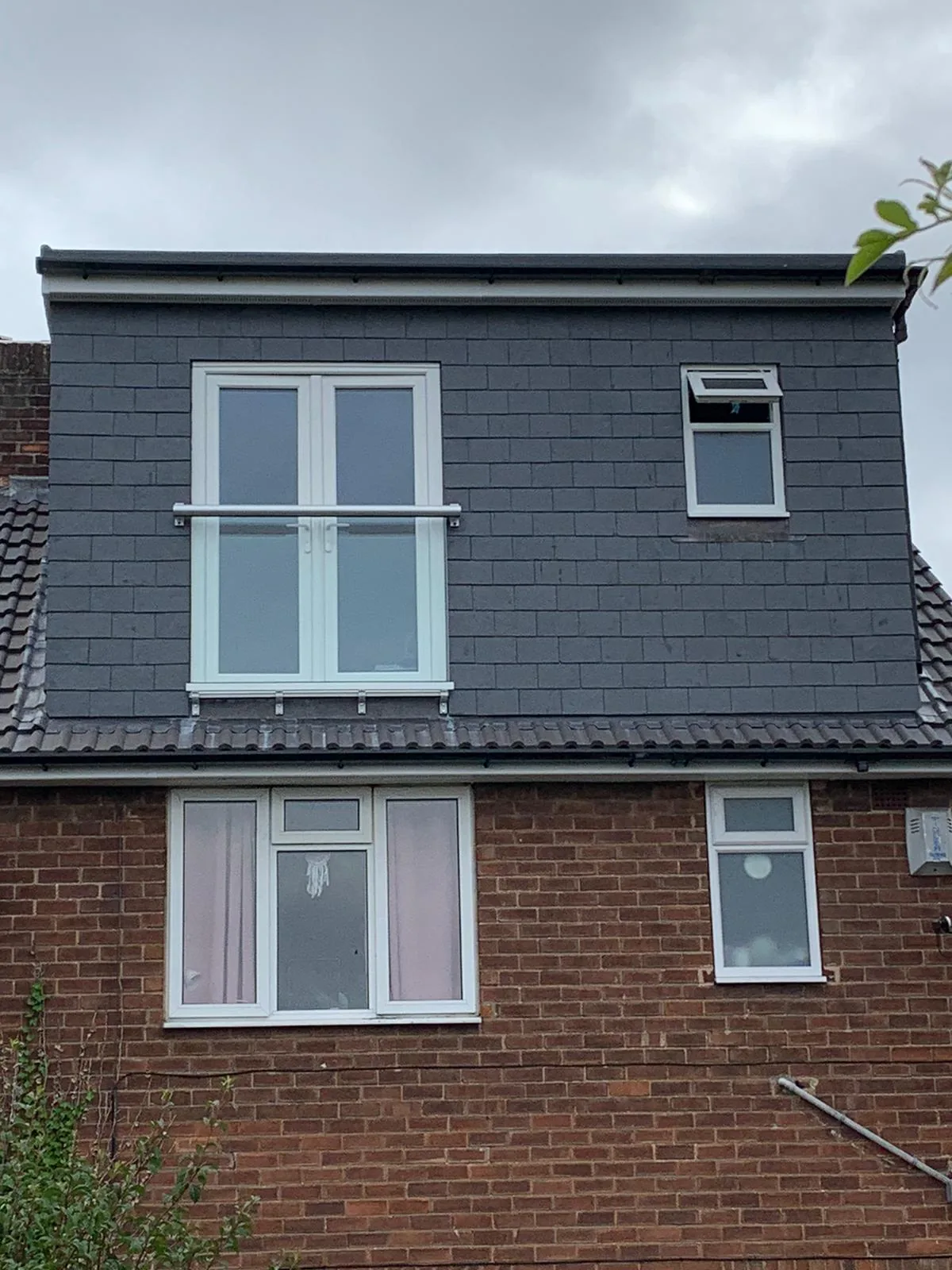
Natural Slate or Fibre Cement? Choosing the Right Slate for Your Nottingham Roof
For most Victorian and Edwardian homes around Sherwood, Mapperley, and The Park, natural slate is the right long-term choice. Properly laid, it commonly lasts 75 to 100+ years, and matching the original slate keeps the roof looking right on a period street. Fibre cement slate is a lighter, budget-friendly alternative that lasts roughly 30 to 40 years and suits newer builds or tighter budgets well. Spanish and reclaimed slate sit in between on cost. Slate is a pitched roof covering, so if you're building from scratch our pitched roof construction page covers the structure underneath it. The comparison table further down this page sets out lifespan and cost for each option side by side.
What Each Slate Type Actually Suits
- Welsh slate — dense, fine-grained, and the traditional choice for Nottinghamshire's grander Victorian villas; the most expensive option but the longest-lived
- Spanish slate — a widely used, slightly more affordable natural slate with a similar dense, low-absorption structure to Welsh stock
- Reclaimed slate — genuine old slate salvaged from other roofs, useful for matching a listed or conservation-area property exactly
- Fibre cement slate — a manufactured slate substitute made from cement, sand, and cellulose fibres; lighter, cheaper, and easier to install, but shorter-lived and less convincing up close
Genuine slate is laid in what's called diminishing courses — larger slates near the eaves, smaller ones towards the ridge, following the traditional quarry-splitting pattern. Uniform Welsh-cut slate, by contrast, is machine-sized to one consistent width throughout. On a Victorian Nottingham terrace, mixing the two styles on the same slope looks wrong the moment you stand back from the house, so we always match the pattern already on the roof, not just the colour.
Repair or Full Re-Slate? Reading the Signs on an Ageing Roof
Most slate roofs don't fail because the slate wears out — they fail because the fixings holding it on give up first. Nails corrode, timber battens rot, and slates that are otherwise sound start sliding or dropping off. A handful of slipped slates is usually a straightforward repair. Once you're losing slates across several slopes, or more than around a fifth of the roof needs individual slates replacing, a full re-slate is almost always the cheaper long-term option rather than chasing repairs slope by slope.
What Causes Slate Roofs to Fail
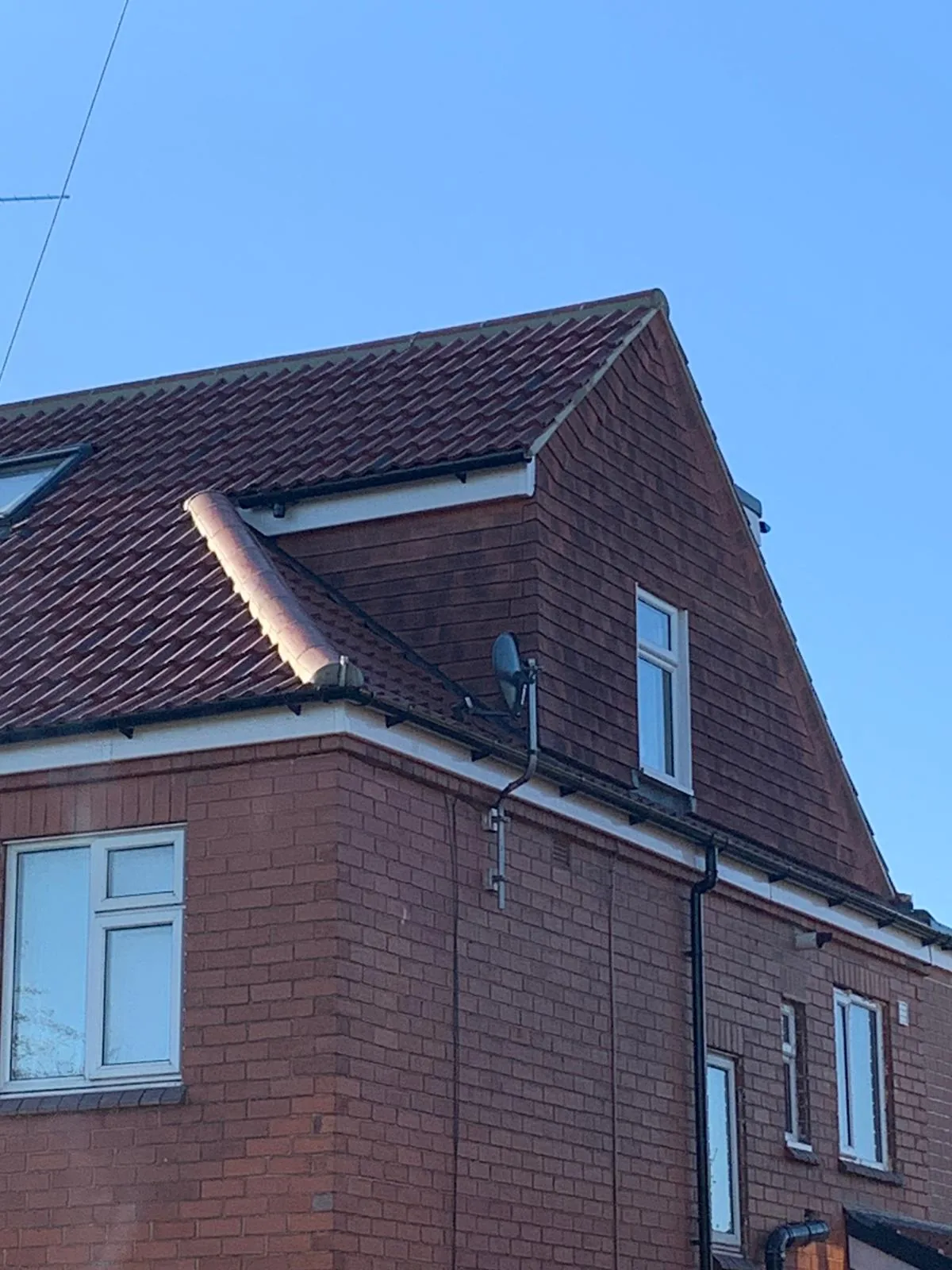
- Nail sickness — the fixing nails corrode and snap inside the slate, so the slate itself is fine but nothing holds it in place any more; extremely common on roofs over 60-70 years old
- Rotten roof battens or rafters underneath, usually from a slow leak that went unnoticed for years
- Delamination — the slate itself splitting into thin layers, a sign of poor-quality stone rather than a fixing problem
- Storm damage, particularly on exposed roofs towards Mapperley Top or the rural fringes of the county
- Mortar deterioration around ridge tiles and verges, letting wind get under the courses below
- Poor repair work from a previous job — foam or bituminous patching that traps moisture against sound timber instead of letting it breathe
If your roof is genuinely old slate on original battens, a full re-slate is effectively a new roof installation in every sense that matters — new battens, new underlay, and slate refixed from scratch. The Society for the Protection of Ancient Buildings' guidance on true slate roofing makes the same point: reslating only pays off once damage is widespread, and any new slate should match the old in size, thickness, and texture.
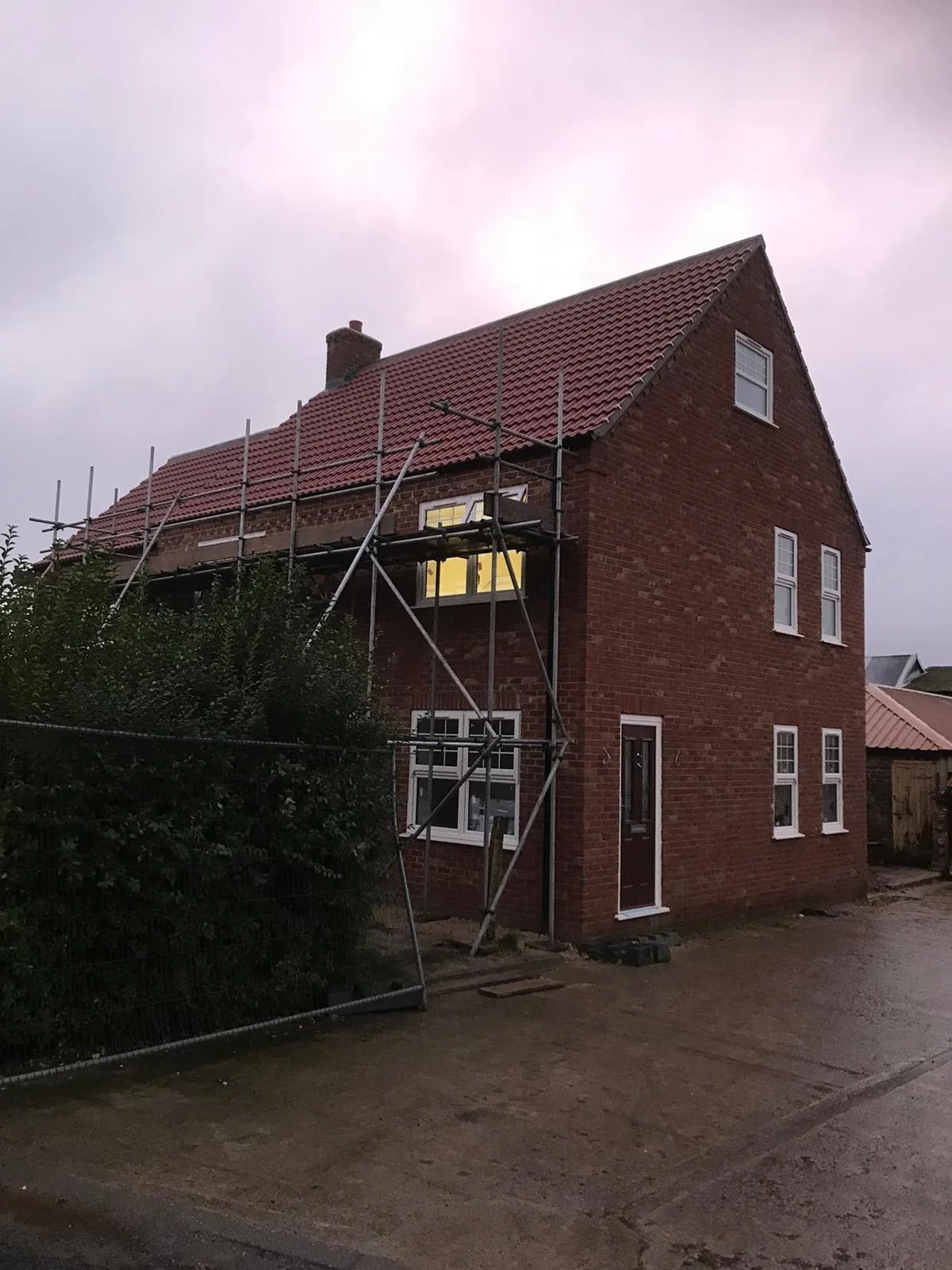
What Happens Before We Touch a Single Slate
Every job starts with an honest look at what's actually happening on the roof, not a guess from the street.
- We carry out a free drone survey of every slope, ridge, and valley — no ladders or scaffolding just to have a look
- You get clear photos showing exactly which slates and fixings have failed
- We check the battens and rafters underneath for rot before quoting anything
- We tell you honestly whether individual repairs will hold or whether a full re-slate makes more sense
- We match slate type, colour, and thickness to what's already on the roof, or source reclaimed slate where an exact match matters
- If you're in The Park, Lenton, or another conservation area, we flag any listed building or planning considerations before work starts
- You get a firm quote and an agreed scope before a single tool comes off the van
How We Fit and Repair Slate Roofs That Last Generations
Slate work rewards patience far more than speed. Here's how we handle it, whether it's a repair or a full re-slate.
- Strip back only what needs replacing, keeping and reusing sound original slate wherever it's still fit for purpose
- Replace any rotten battens or rafters we find underneath, and fit a breathable underlay to manage moisture properly
- Fix every slate with broad-shanked copper or stainless nails, which won't corrode and cause nail sickness the way old mild-steel nails do
- Lay slates in diminishing courses to match the original pattern, working larger sizes near the eaves up to smaller ones at the ridge
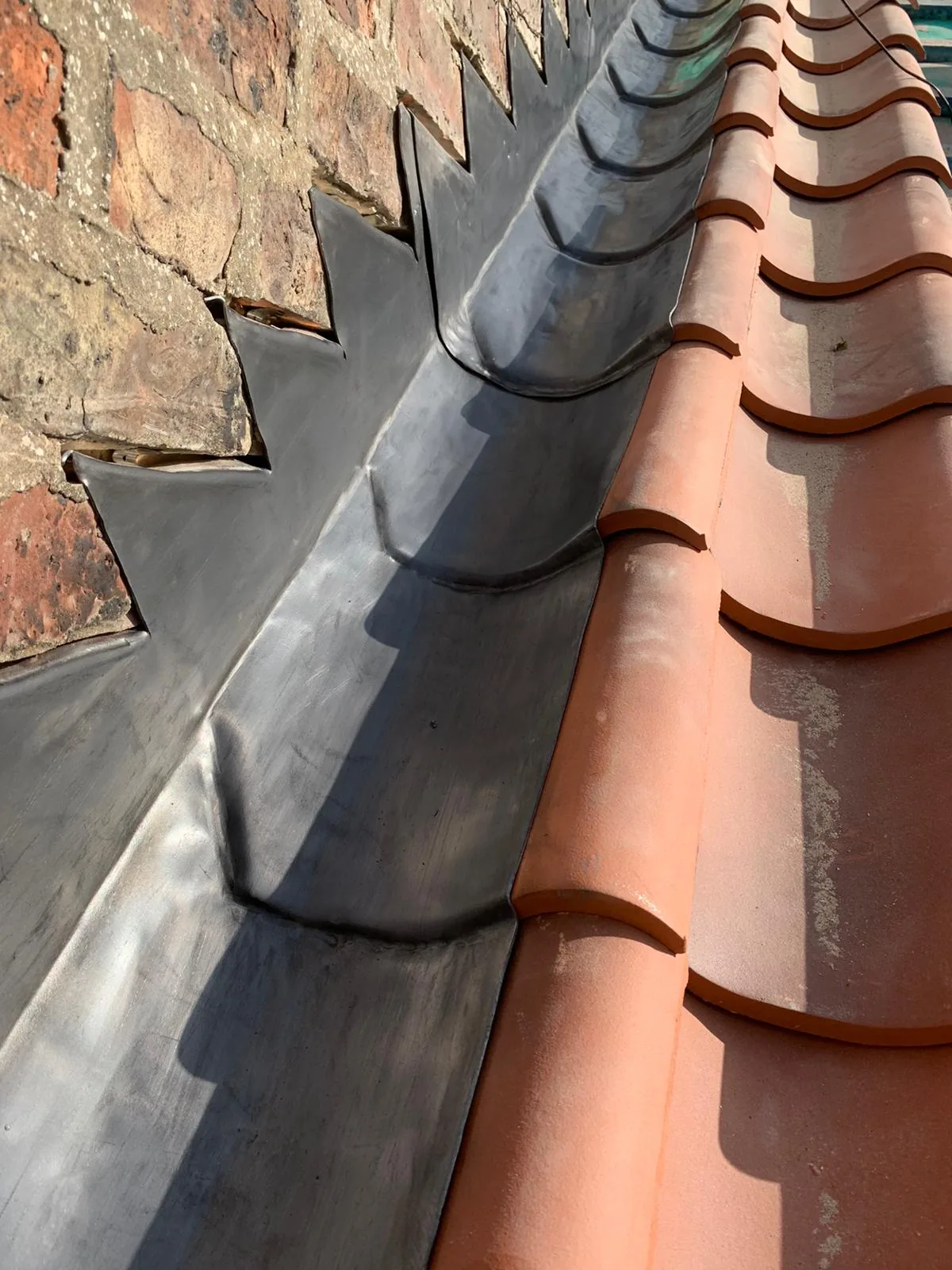
- Give particular attention to valleys, abutments, and chimney junctions, where lead flashing detail is where most slate roof leaks actually start
- Bed and point ridge tiles properly, or fit a dry-ridge system where it suits the property, so mortar cracking doesn't undo the work in a few years
- Clear the site fully and leave gutters free of slate dust and off-cuts before we go
Most single-slope repairs take a day. A full re-slate on an average semi runs roughly one to two weeks, weather and access allowing.
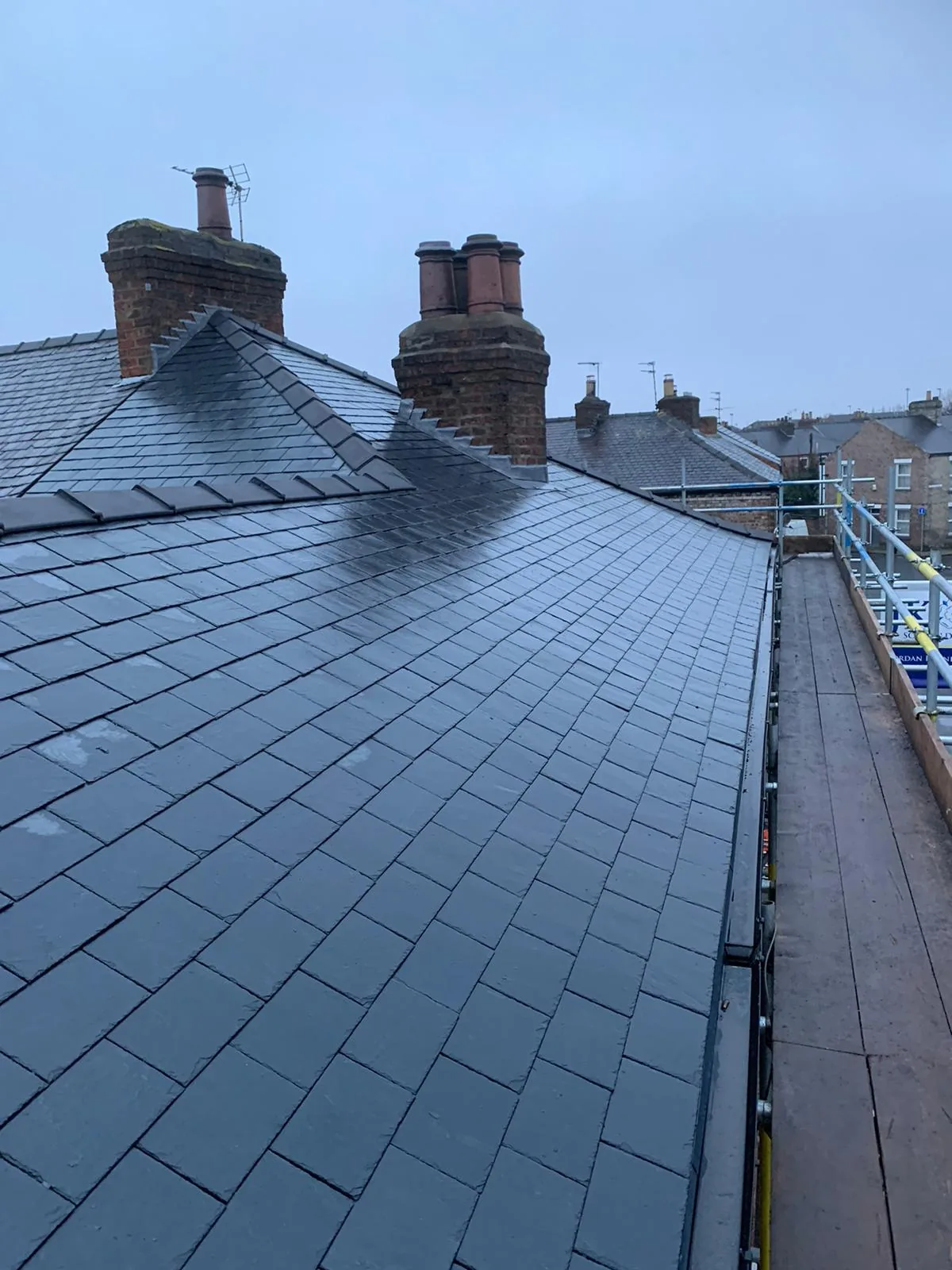
Spot the Warning Signs, Then Check the Work
Whether you're worried about an existing roof or checking a job we've just finished, here's what to look for.
Signs Your Slate Roof Needs Attention
- Slates visibly slipped out of line, or gaps where one has come off completely
- Slate fragments or whole slates found in the gutter or garden after windy weather
- Daylight visible through the roof from inside the loft
- Damp patches or staining on ceilings, especially near a chimney or valley
- A greyish, flaking texture on individual slates, or a hollow sound when tapped — signs of delamination
- Sagging visible along a roof slope, usually meaning the battens or rafters underneath have weakened
How to Check a Slate Roof Job Was Done Properly
- New slates should match the existing roof in colour, size, and thickness, laid in the same diminishing-course pattern
- Fixings should be copper or stainless steel nails, never plain steel that will corrode again within a couple of decades
- Ridge and valley lead work should sit flat and neatly dressed, with no visible gaps or exposed nail heads
- Ask to see photos of the battens and rafters taken before they were covered — proof the timber underneath was sound
- You should receive written details of your guarantee, the slate type and source used, and confirmation of any Building Regulations notification needed
- We back every re-slate with a 10-year workmanship guarantee, in writing, from day one
Stopping Slipped Slates and Leaks Before They Start
A slate roof needs very little upkeep, but a couple of checks a year catch small problems early.
- Check the loft after heavy storms for daylight, damp patches, or fresh staining
- Clear gutters twice a year, and note whether slate fragments are turning up in them
- Get ridge and valley pointing looked at every few years — mortar fails long before the slate does
- Keep an eye on chimney flashings, a common weak point on older Nottingham terraces
- Trim back branches that scuff slates or drop debris into valleys
- Have a full inspection every five years or so, even if nothing looks obviously wrong
Cost & Pricing Guidance
Slate roofing prices across the UK for 2025/26 typically run like this:
- Fibre cement slate, fully installed: £62-£85 per m²
- Spanish natural slate, fully installed: £70-£95 per m²
- Standard natural UK slate: £100-£130 per m², rising to £120-£150 per m² on more complex roofs
- Premium Welsh slate: £160-£210 per m²
A full re-slate on an average three-bedroom semi (roughly 80-100m²) typically lands between £10,000 and £20,000 with natural slate, or £6,000-£10,000 with fibre cement, depending on complexity and access. Minor repairs — refixing a handful of slipped or cracked slates — usually cost £150-£350. Larger repairs involving batten replacement, valley work, or a full slope run £600-£1,200.
What pushes the price up or down: access and scaffolding needs, how much of the timber underneath needs replacing, whether reclaimed slate is required to match a listed property, and the number of valleys, chimneys, and abutments on the roof.
These are general ranges, not a quote. A fixed price needs a survey — and our drone survey is free, with no obligation.
Comparison Table: Slate Roofing Options
| Slate Type | Typical Lifespan | Best For | Relative Cost |
|---|---|---|---|
| Fibre Cement Slate | 30-40 years | Newer builds, budget re-roofs, non-heritage properties | £ (lowest) |
| Spanish Natural Slate | 75-100 years | Standard re-slates where cost matters but longevity still counts | ££ |
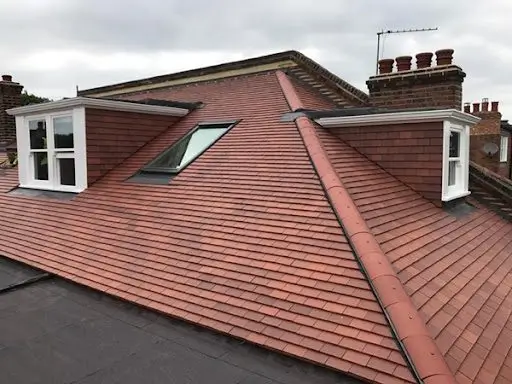
| Reclaimed Slate | Depends on original slate, often 50+ years remaining | Listed buildings, conservation areas, exact colour matching | £££ |
| Welsh Slate | 100+ years | Period villas, grade-listed properties, prestige re-roofs | £££ (highest) |
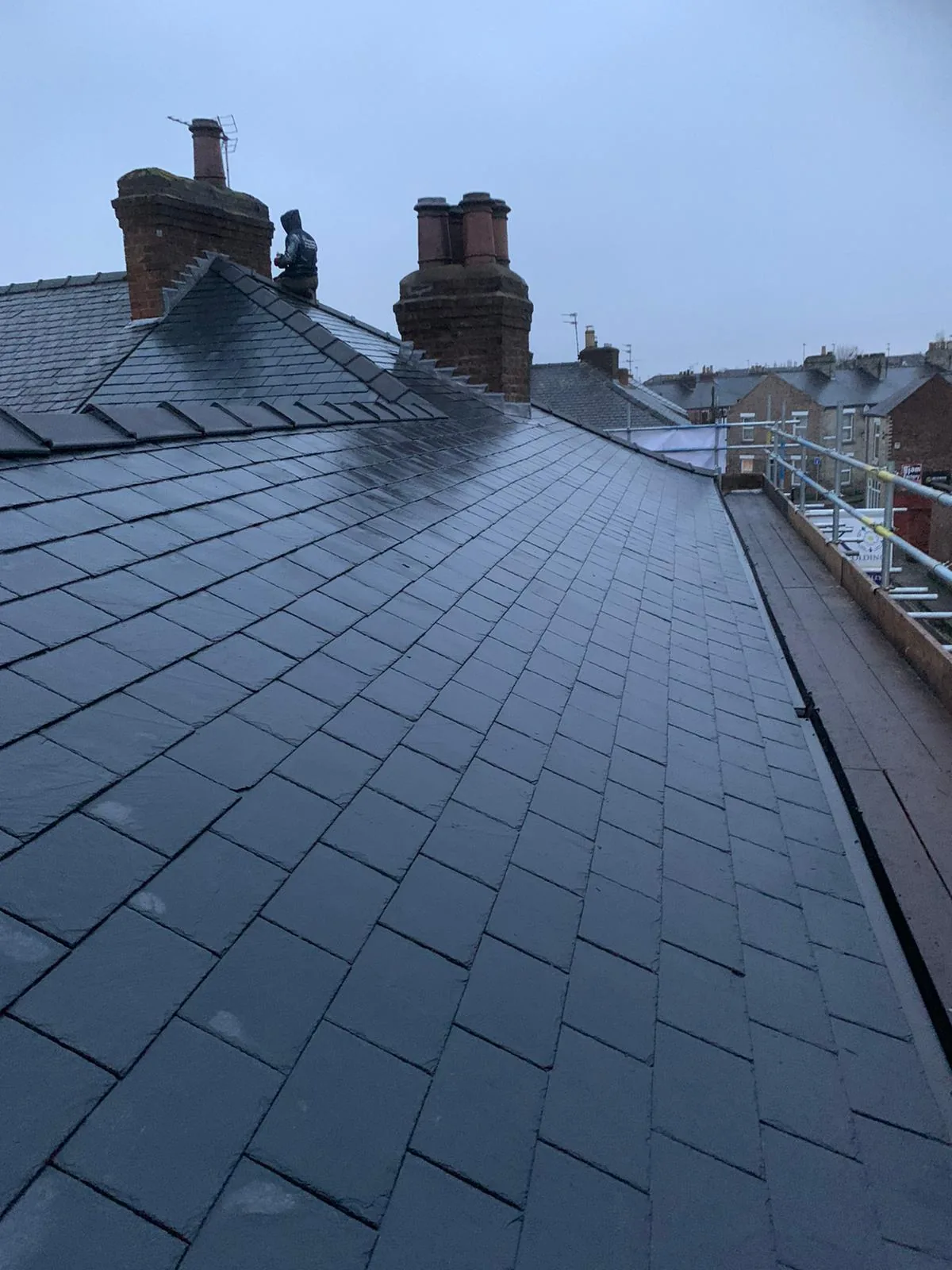
Why Choose Tate & Sons for Your Slate Roof
Slate and heritage roofing is led by Daniel Oakland, Project Manager and Lead Roofer, who has 20+ years in the trade and specialises in heritage slate and lead detailing on older Nottingham homes, alongside modern flat and standing-seam systems. He runs every slate job day to day, from a single repaired slope to a full re-slate on a period villa in Wollaton or West Bridgford.
Tate & Sons was founded by James Tate on a simple idea: find out what's genuinely wrong, use the right materials, and leave something that holds for years, not months. James still prices most jobs himself and is happiest working out how to put a tricky period roof right without losing its character. Read more on our About page.
Our roofers are directly employed, not subcontracted. They hold NVQ Level 2 and 3 qualifications in Roofing Occupations and carry CSCS cards. Every slate roof comes with a free drone survey up front and a 10-year workmanship guarantee once the work is finished.
Slate Roofing Across Nottingham and the Wider County: Areas We Serve
We fit and repair slate roofs right across Greater Nottingham and out into the wider county. Wherever your property sits, our crews know the local housing stock, the weather, and the access.
- Nottingham City Centre (NG1)
- The Park (NG1)
- West Bridgford (NG2)
- Sneinton (NG2)
- Wollaton (NG8)
- Lenton (NG7)
- Beeston (NG9)
- Chilwell (NG9)
- Stapleford (NG9)
- Arnold (NG5)
- Sherwood (NG5)
- Mapperley (NG3)
- Carlton (NG4)
- Gedling (NG4)
- Hucknall (NG15)
- Long Eaton (NG10)
- Mansfield (NG18)
- Sutton-in-Ashfield (NG17)
Got Questions?
Your Flat Roofing Questions, Answered Properly
How much does a slate roof cost to install in the UK?
A full re-slate on an average semi-detached house typically costs £10,000-£20,000 with natural slate, or £6,000-£10,000 with fibre cement. Natural UK slate runs £100-£150 per m² installed, and premium Welsh slate can reach £160-£210 per m². Fibre cement is the cheapest option at £62-£85 per m² installed. Access, roof complexity, and how much of the timber underneath needs replacing all move the final figure, so a survey gives you an exact number rather than a guess.
How long do slate roofs last?
Natural slate, properly fitted, commonly lasts 75 to 100 years and often well beyond that. Welsh slate in particular is known to reach well over a century when the fixings are sound. Fibre cement slate lasts a shorter 30 to 40 years, since the material itself weathers faster than real stone. In nearly every case, it's the fixings and battens that fail long before the slate itself gives out.
What's the difference between natural slate and fibre cement slate?
Natural slate is quarried stone, split by hand into individual roofing slates, while fibre cement slate is a manufactured product made from cement, sand, and cellulose fibres shaped to imitate it. Natural slate lasts far longer, weathers to a more authentic finish, and suits period properties in conservation areas. Fibre cement is lighter, cheaper, and easier to install, which makes it a sensible choice on newer builds where matching an original isn't a factor. Up close, the difference in texture and colour variation is noticeable.
How do I know if my roof needs a repair or a full re-slate?
A handful of slipped or cracked slates on an otherwise sound roof usually just needs a repair. Once roughly a fifth or more of the slates need individual replacement, or the battens underneath are failing across several slopes, a full re-slate is generally the more cost-effective route. Chasing repeated small repairs on a roof that's genuinely at the end of its life ends up costing more over a few years than doing the job properly once. Our free drone survey tells you honestly which category your roof falls into.
What causes slates to slip or fall off?
Most slipped slates are caused by nail sickness, where the original fixing nails corrode and snap inside the slate rather than the slate itself failing. Rotten battens, storm damage, and mortar breaking down around ridges and verges all contribute too. A roof over 60-70 years old fixed with old mild-steel nails is especially prone to it. Copper or stainless-steel nails, used on every re-slate we carry out, don't suffer the same corrosion problem.
Is Welsh slate better than Spanish slate?
Welsh slate is generally considered the highest-quality natural slate available in the UK, with a very fine grain and a lifespan that often exceeds a century. Spanish slate is also a genuine, dense natural slate and performs well, at a lower price point than Welsh stock. For a grade-listed or particularly prestigious property, Welsh slate is usually worth the extra cost. For a standard re-slate where budget matters more, Spanish slate is a solid, long-lasting choice.
Do I need planning permission to re-slate my roof in Nottingham?
Most straightforward like-for-like re-slates don't need planning permission, since the roof's appearance stays essentially the same. Listed buildings and properties in conservation areas such as The Park or parts of Lenton can have extra restrictions, particularly around slate type and colour matching. Building Regulations notification is generally required if more than 25% of the roof is being recovered. We flag anything that applies to your property during the survey, before any work is agreed.
What is nail sickness, and does my roof have it?
Nail sickness is the term for old fixing nails corroding inside slate roofs until they snap, leaving otherwise sound slates loose or sliding. It's extremely common on roofs originally fixed with mild-steel nails more than 60-70 years ago. Signs include slates that have slipped out of line even though the slate itself looks undamaged, or multiple slates coming loose in a short space of time without an obvious cause like a storm. If your roof is showing this pattern, it usually points towards a full re-slate rather than repeated individual repairs.
Can I add solar panels to a slate roof?
Yes, slate roofs can take solar panels, but the fixings need specialist slate roof hooks rather than the standard brackets used on tiled roofs, to avoid cracking slates during installation. It's worth having a slate roof checked for its remaining life and fixing condition before panels go on, since removing and refitting panels for a later re-slate adds cost. We can assess whether your roof structure and slate condition are suitable as part of your free survey, and advise on sequencing if a re-slate is also on the horizon.
Book Your Free Drone Roof Survey Today
See exactly what your roof needs before any work starts. No ladders, no pressure — just a clear picture from a local Nottingham team.
A tired roof only gets worse as water works deeper into the deck and timber beneath it. A quick, free drone survey today tells you exactly where you stand — and often the fix is smaller and cheaper than you feared. Book now, get an honest quote, and protect your home before the next East Midlands downpour finds the weak spot.
📍 57 Cyril Avenue, Nottingham, NG8 5BA
📞 0115 647 4455
Call the Nottingham team today on 0115 647 4455, or request your free drone survey online. We’re already working across your area.
Get in Touch
Tate & Sons Roofing — Nottingham
57 Cyril Avenue, Nottingham, NG8 5BA
📞 0115 647 4455
✉️ [email protected]