
🏠 Trusted Local Roofers
Felt Roofing Nottingham
A cheap felt roof job shows up fast around here — a blistered patch on a garage roof, a lifted edge after the first hard frost, or a damp patch spreading across a kitchen extension ceiling. This page covers what a proper felt roof needs, what it costs, and how to check the work was done right. As a roofing contractor working across the city, we fit felt roofs built to last, not just to pass inspection on handover day.
- Fully Insured
- 10-Year Guarantee
- 5-Star Rated
Quick Free Estimate - No Obligation
We're not just roofers – we're your neighbours.
Fully Insured • Response within 15 mins
🔒 Your details are safe with us. No spam, ever.
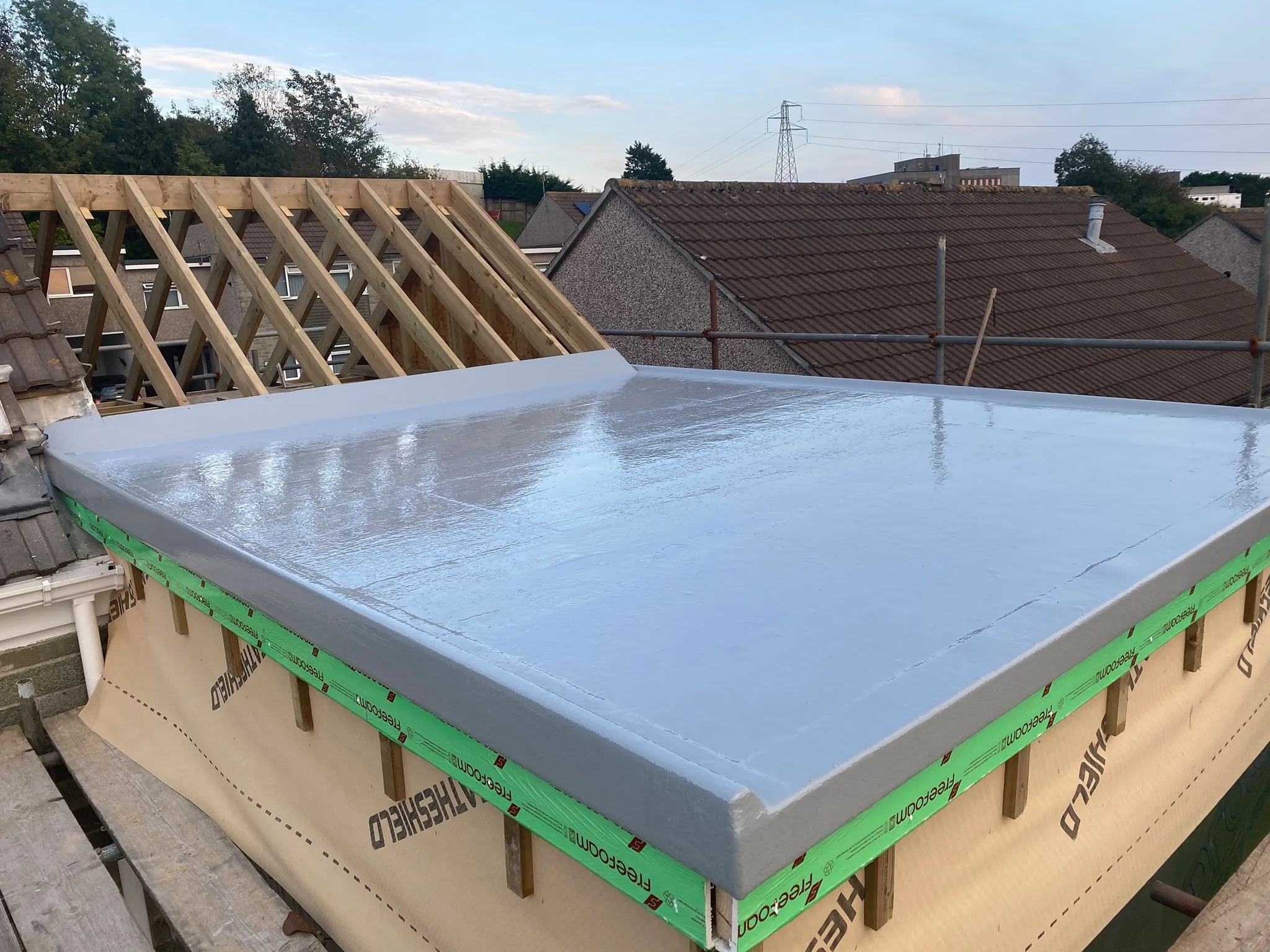
What's the Right Felt System for Your Nottingham Roof?
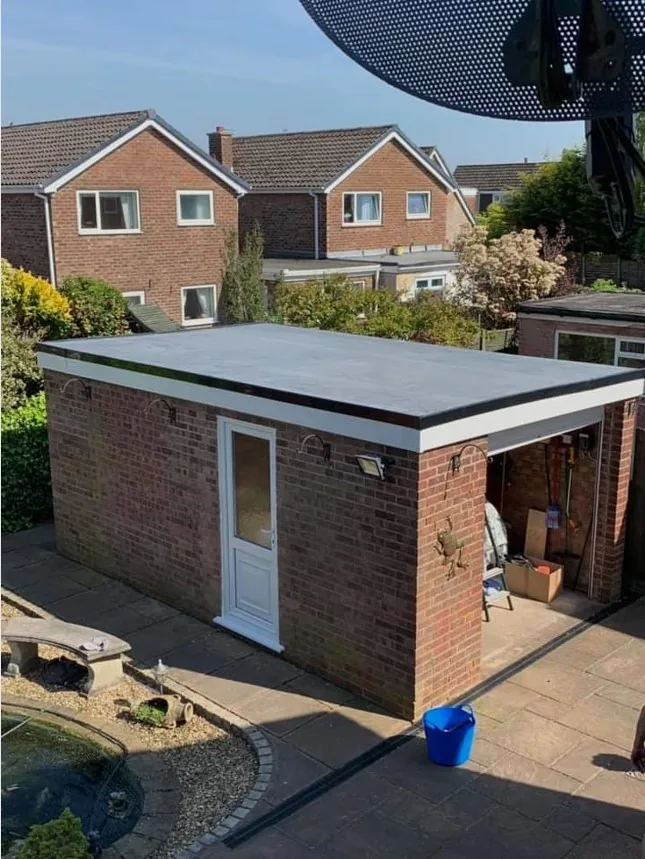
For sheds, garages, and tighter budgets, three-layer torch-on felt is still the best value flat roofing system around. It's the cheapest system to fit, at roughly £40-£70 per m², and modern polymer-modified felt performs far better than the old three-layer mineral felt still sitting on many Nottingham garages. A correctly installed torch-on system lasts 15 to 20 years. If you want a longer-life, lower-maintenance system for a house extension or a roof you'd rather not think about again, EPDM rubber is worth comparing — a free survey tells you honestly which suits your roof and budget.
Felt roofing suits:
- Garages and outbuildings
- Shed and workshop roofs
- Porch and bay window roofs
- Budget-conscious extension roofs
- Roofs you expect to replace again within 15-20 years anyway
If your felt roof is past patching and part of a wider job, our new roof installation team can scope the whole project, not just the flat section.
Torch-On, Self-Adhesive, or Pour-and-Roll: Which Felt System Fits?
Not all felt is fitted the same way, and the method matters as much as the material.
- Torch-On Felt (3-layer): The layers are heat-bonded — fused together with a gas torch that melts the bitumen so each sheet fully welds to the one below. This is the standard for habitable extensions and full replacements, and gives the strongest seal at joints.
- Self-Adhesive (Cold-Applied) Felt: A peel-and-stick system with no naked flame involved, which makes it the safer choice near timber fascias, sheds, or anywhere a blowtorch is a genuine fire risk. It costs slightly more than torch-on but installs faster.
- Pour-and-Roll (Traditional) Felt: An older method where hot bitumen is poured and the felt roll is pushed into it as it goes. It's largely been superseded, but you'll still find it under many older Nottingham garage and outbuilding roofs. It's the cheapest option going in, and the shortest-lived once it's down.
Two-layer felt (a base sheet plus a mineral-finished cap sheet, without the reinforced middle layer) is sometimes acceptable on sheds and garages, but three layers is the standard specification for any habitable extension or main house roof — it adds a reinforced middle sheet that meaningfully cuts leak risk at joints.
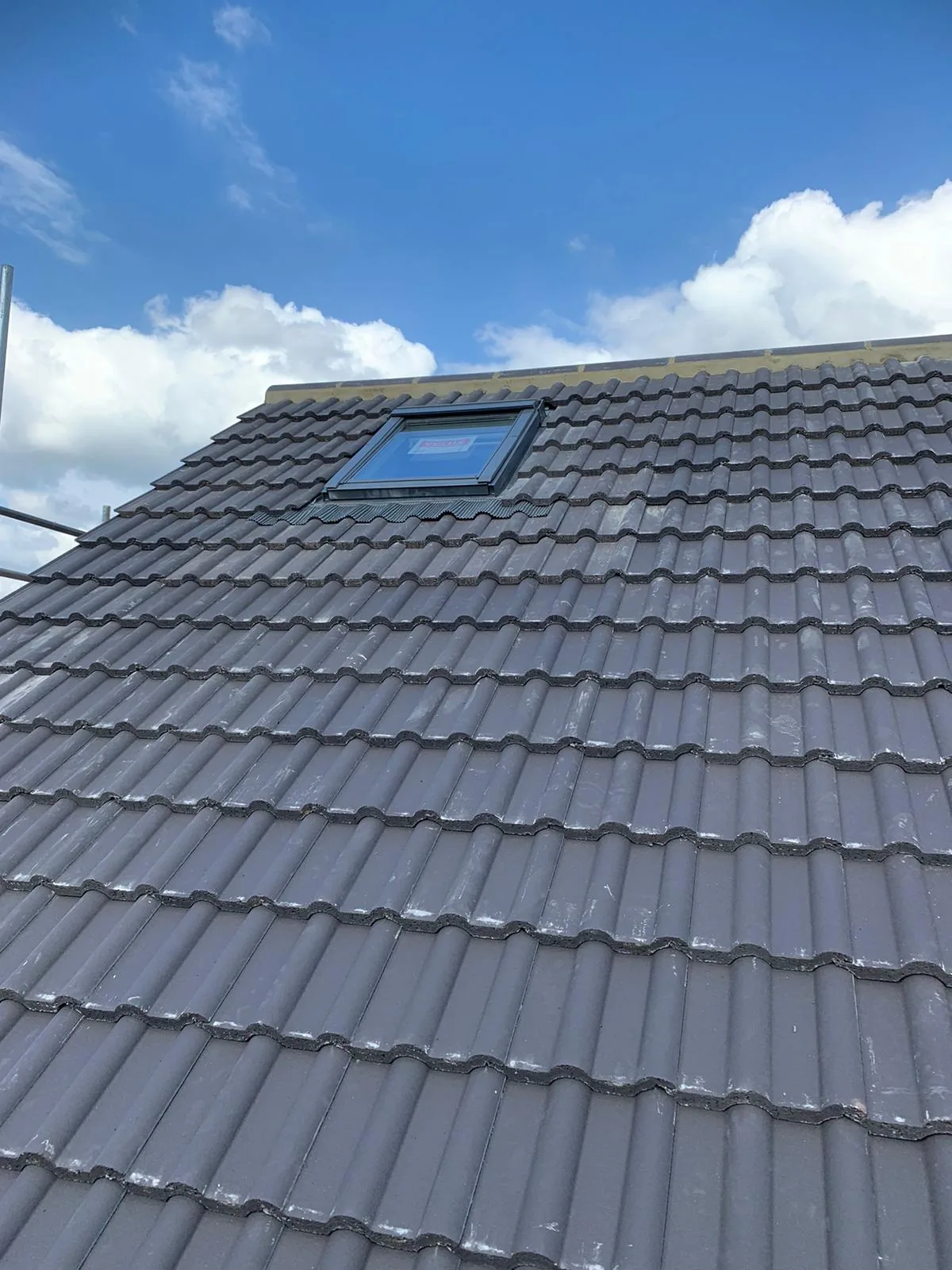
If your roof is pitched rather than flat, surface felt like this isn't what you need at all — a breathable membrane sits under the tiles instead, fixed to the rafters before battens and tiles go on. See our pitched roof construction page for that build-up.
What Happens Before We Felt Your Roof
Every felt roof job starts with a proper look at the deck and the detailing, not a guess from ground level.
- We carry out a free drone survey of the roof surface, edges, and any upstands or penetrations — no ladders needed
- You get clear photos showing exactly what condition your existing felt and deck are in
- We tell you honestly whether a repair, an overlay, or a full strip-and-replace makes sense
- We check the timber deck underneath for rot or sagging before quoting a firm price
- We confirm whether Building Regulations notification applies — generally required if you're recovering more than 25% of the roof, per Planning Portal's guidance on re-roofing
- If you're near The Park or Lenton, we flag anything needing conservation area sign-off before work starts
- You get an agreed scope and fixed quote before any tool comes out of the van
How We Fit a Felt Roof That Won't Fail at the Edges
Most felt roof failures start at the edges and joints, not across the flat surface. Here's how we install one properly.
- Strip the old felt back to a sound deck, or confirm an overlay is genuinely suitable
- Replace any rotten timber we find — a felt roof is only as good as what's underneath it
- Fit a vapour control layer first where needed — a sheet that stops moisture from inside the building rising up into the roof buildup and causing damp from below
- Lay the base felt layer, then the reinforced middle layer on three-layer jobs
- Bond or torch-weld the mineral-finished cap sheet on top, giving the roof its final waterproof surface and UV protection
- Dress edges, upstands, and any pipe or rooflight penetrations with extra care — this is where a rushed job fails first
- Build in enough fall — a slight slope, typically a minimum of 1:40 — so rainwater reaches the outlets instead of sitting still
- Finish and clear the site, typically 1 to 2 days for a garage or shed roof, weather allowing
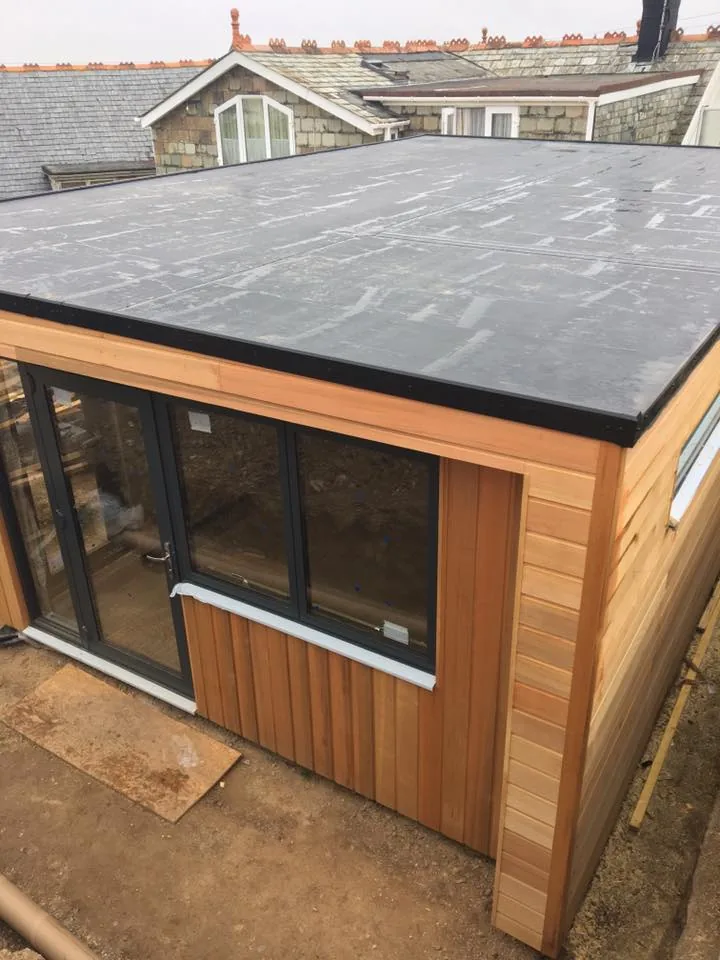
Felt Roof Warning Signs, and How to Check a New Installation
Signs Your Felt Roof Is Failing
- Blisters or bubbles under the surface — trapped air or moisture pushing the felt up from the deck
- Cracking or splitting, especially along edges and joints where the felt flexes most
- Lifted or curling edges, often the first sign wind has started working underneath the felt
- Mineral granules washing into the gutters, meaning the protective cap sheet is wearing thin
- Standing water still sitting on the roof more than 48 hours after rain
- A damp smell, ceiling stain, or peeling paint in the room below
- Moss or algae building up in shaded corners, holding moisture against the felt
How to Check a Felt Roof Job Was Done Properly
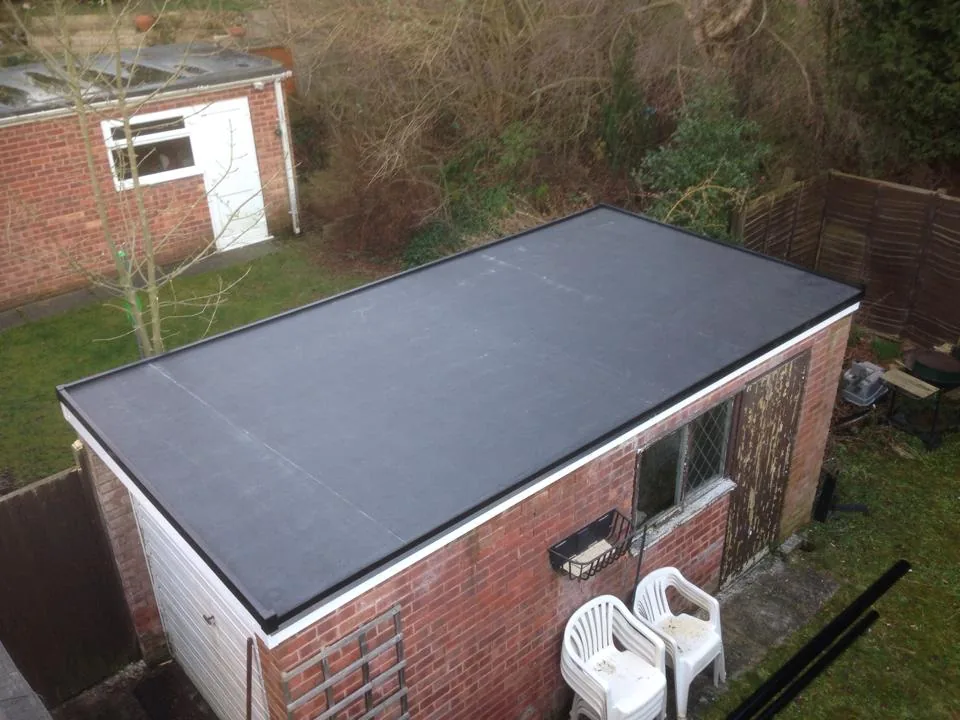
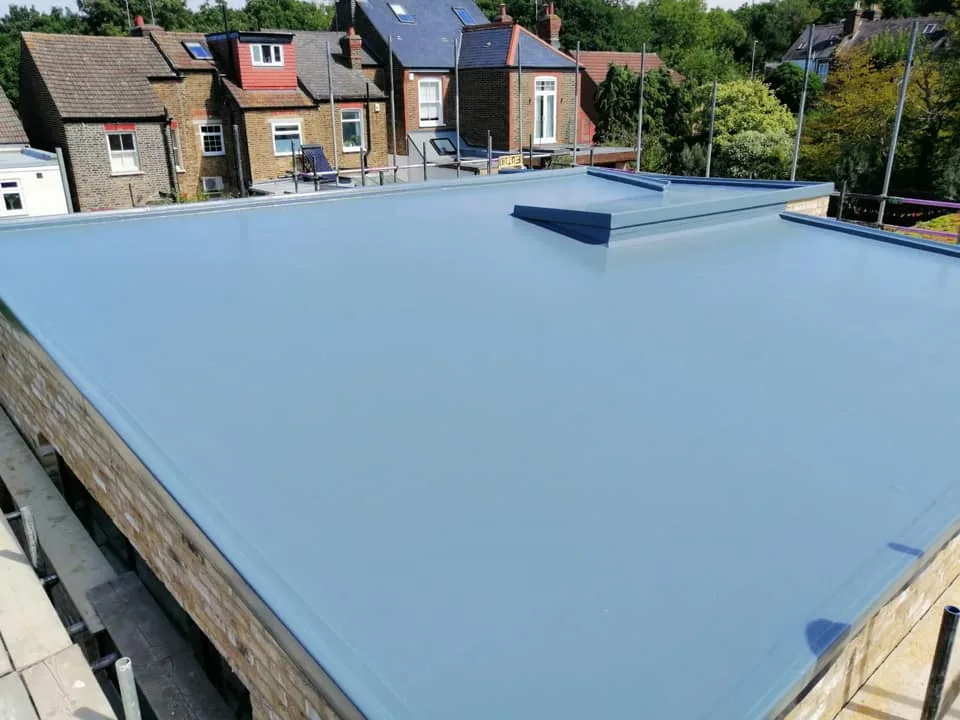
- The surface should be flat and taut, with no ripples, soft spots, or trapped air
- Edges and upstands should be neatly dressed and fully bonded, not just tucked and hoped for
- There should be no scorch-throughs or thin, uneven torch marks where the felt was welded
- Ask to confirm the number of layers fitted matches what was quoted — three-layer jobs should show three distinct sheets, not two badged as three
- You should receive written confirmation of the guarantee, the exact felt specification used, and any Building Regulations notification made
- We back every felt roof we fit with a 10-year workmanship guarantee, in writing, from day one
Keeping a Felt Roof Watertight Between Services
A little maintenance twice a year keeps a felt roof going for its full expected lifespan.
- Clear outlets and gutters twice a year, especially after autumn leaf-fall
- Check for standing water a couple of days after heavy rain — if it's still there, the fall has likely dropped
- Remove moss from shaded corners before it builds up and holds moisture against the felt
- Trim back overhanging branches that drop debris or scuff the surface
- Avoid dragging anything heavy or sharp across the felt, which can puncture the cap sheet
- Give the roof a five-minute check after any storm to catch lifted edges early
- Book a check-up once the felt is 10-12 years old, before it reaches the end of its working life
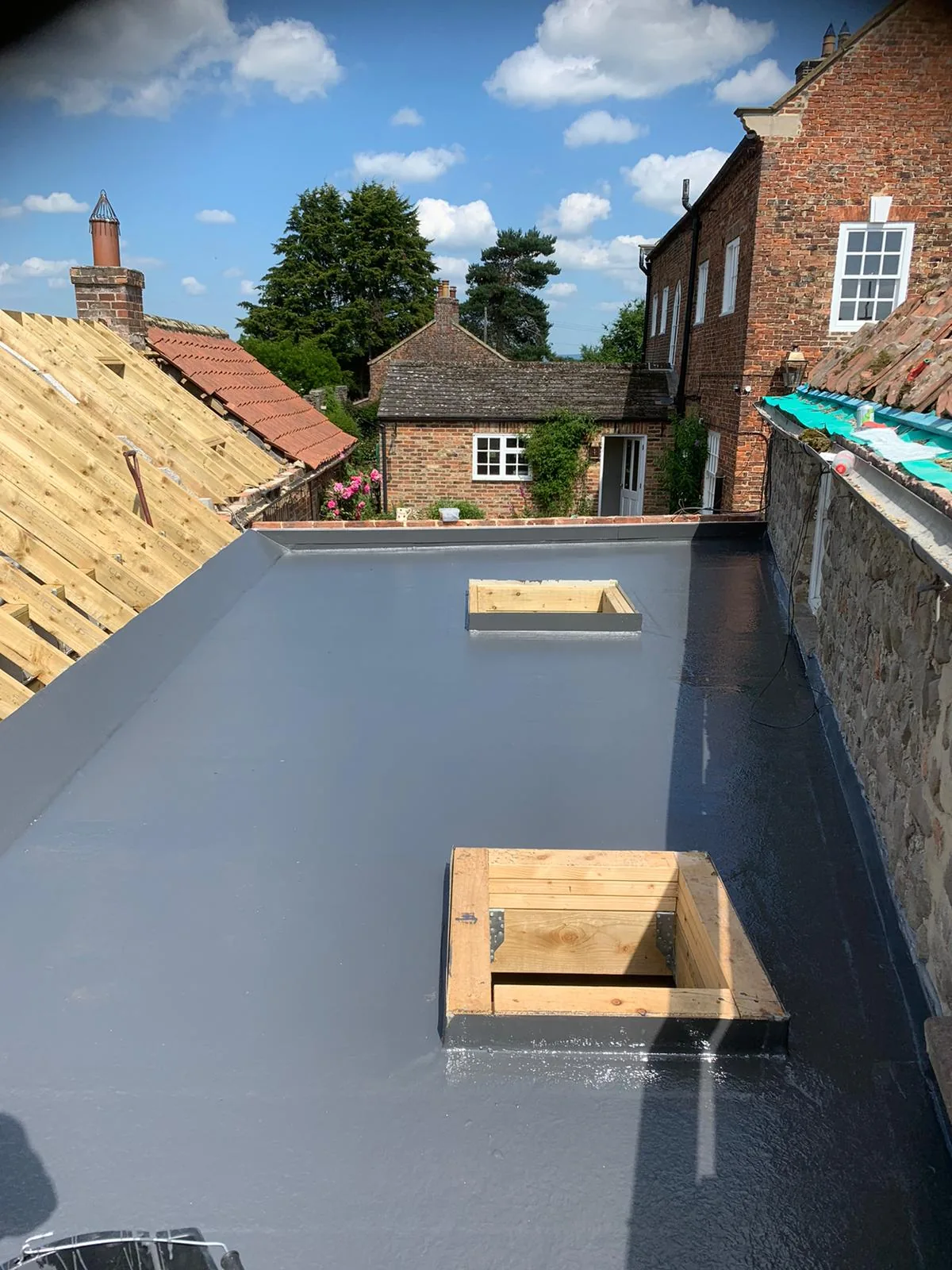
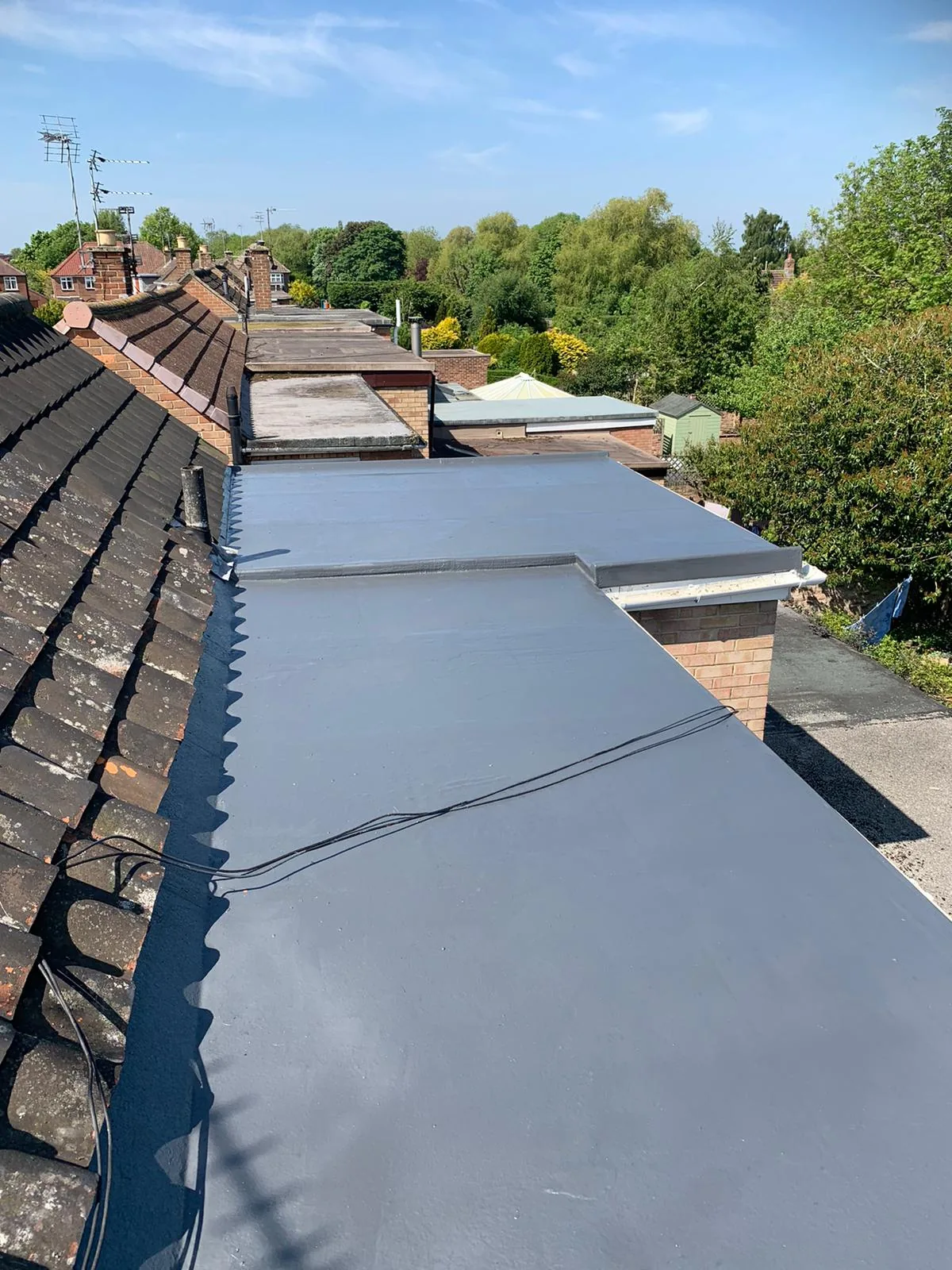
Cost & Pricing Guidance
Felt roofing pricing across the UK for 2025/26 typically runs like this:
- Three-layer torch-on felt: £40-£70 per m²
- Self-adhesive felt: £45-£75 per m²
- Two-layer felt (sheds/garages): £35-£55 per m²
- Full garage or shed roof, all in: £900-£2,000
- Larger extension roof, all in: £2,000-£5,500
Repairs are cheaper than full replacement where the deck is still sound. Minor patch repairs run £100-£300. Larger repairs to edges, upstands, or a bigger damaged area run £300-£600.
What pushes the price up or down: access (scaffolding versus a ladder), the condition of the deck, how many edges and penetrations there are, and whether old felt needs stripping off first or can be overlaid. Polymer-modified bitumen material costs have been rising through 2026, so prices toward the top of these ranges are increasingly common.
These are general ranges, not a quote. A fixed price needs a proper survey — and our drone survey is free, with no obligation.
Comparison Table: Felt Roofing Systems
| System | Typical Lifespan | Best For | Relative Cost |
|---|---|---|---|
| Two-Layer Torch-On | 10-15 years | Sheds, garages, tightest budgets | £ (lowest) |
| Three-Layer Torch-On | 15-20 years | Extensions, porches, main house flat sections | ££ |
| Self-Adhesive (Cold-Applied) | 15-20 years | Roofs near timber fascias or fire-sensitive structures | ££ |
| Pour-and-Roll (Traditional) | 8-12 years | Older outbuildings, like-for-like patch jobs only | £ (lowest) |
Why Choose Tate & Sons for Your Felt Roof
Felt and flat roof work is led by Daniel Oakland, Project Manager and Lead Roofer, who has 20+ years in the trade. He specialises in EPDM, GRP, and felt systems, and runs every flat roof job day to day, from a single garage re-felt to a full extension roof.
Tate & Sons was founded by James Tate on a simple idea: find out what's genuinely wrong, use the right materials, and leave something that holds for years, not months. That's why we won't sell you three-layer torch-on when two layers genuinely suits a garden shed, and won't sell you a bargain pour-and-roll job on a habitable extension either. Read more on our About page.
Our roofers are directly employed, not subcontracted. They hold NVQ Level 2 and 3 qualifications in Roofing Occupations and carry CSCS cards. Every felt roof comes with a free drone survey up front and a 10-year workmanship guarantee once the work is finished.
Felt Roofing Across Nottingham and the Wider County: Areas We Serve
We fit and repair felt roofs right across Greater Nottingham and out into the wider county. Wherever your property sits, our crews know the local weather, the housing stock, and the access.
- Nottingham City Centre (NG1)
- The Park (NG1)
- West Bridgford (NG2)
- Sneinton (NG2)
- Wollaton (NG8)
- Lenton (NG7)
- Beeston (NG9)
- Chilwell (NG9)
- Stapleford (NG9)
- Arnold (NG5)
- Sherwood (NG5)
- Mapperley (NG3)
- Carlton (NG4)
- Gedling (NG4)
- Hucknall (NG15)
- Long Eaton (NG10)
- Mansfield (NG18)
- Sutton-in-Ashfield (NG17)
Got Questions?
Your Flat Roofing Questions, Answered Properly
How much does felt roofing cost in Nottingham?
Most garage or shed felt roofs in Nottingham cost £900-£2,000 all in, while larger extension roofs run £2,000-£5,500. Material costs sit around £40-£70 per m² for standard three-layer torch-on felt, with two-layer systems slightly cheaper. Access, deck condition, and the number of edges or penetrations all affect the final figure. A survey gives you an exact price rather than a range.
How long does felt roofing actually last?
A well-installed three-layer torch-on felt roof typically lasts 15 to 20 years, while a basic two-layer system on a shed or garage usually runs 10 to 15 years. Older pour-and-roll felt tends to fail sooner, often within 8 to 12 years. Poor detailing at edges and joints is the most common reason felt fails early, whatever the layer count.
What's the difference between torch-on felt and old-style felt?
Torch-on felt uses polymer-modified bitumen that's heat-welded into a fully bonded, seamless layer, while old-style pour-and-roll felt is laid with hot bitumen poured between rolls as they're pushed down. Torch-on gives a stronger bond at joints and handles UK weather far better over time. Most Nottingham garages built before the 1990s still carry the older pour-and-roll system, which is usually why they're due for replacement.
Can a felt roof be repaired, or does it need replacing?
A felt roof with one isolated problem, like a split or a lifted edge, can usually be patched if the deck underneath is still sound. Widespread blistering, cracking at multiple points, or a felt roof already past its expected lifespan usually points to full replacement instead. Leaks appearing in more than one unrelated spot are a strong sign the whole system has reached the end of its life, not just one patch. Our free drone survey tells you honestly which situation you're in.
How many layers of felt do I need?
Three layers is the standard specification for any habitable extension or main house flat roof, since the middle reinforced sheet adds real protection against leaks. Two layers can be acceptable for a shed, garage, or other outbuilding where budget matters more than a few extra years of life. We'll recommend the right layer count for your specific roof and use at survey stage, not a one-size-fits-all answer.
Can you felt a roof in winter or wet weather?
Felt can be fitted in winter, but cold and wet weather both add real risk to the job. Cold temperatures can make felt stiff and prone to cracking as it's handled, and torch-on adhesion needs dry conditions to bond properly. Working in rain risks water getting into the building the moment the old covering comes off. We plan felt jobs around dry weather windows wherever possible and won't rush a job into conditions that risk the finished result.
Do I need planning permission or Building Regulations sign-off for felt roofing?
Most straightforward felt replacements on an existing flat roof don't need planning permission if the appearance and materials stay broadly the same. Building Regulations notification is generally required if you're recovering more than 25% of the roof, since a roof counts as a thermal element and re-covering it should include improving insulation where practical. Conservation areas around The Park and parts of Lenton can bring extra restrictions on top. We flag anything that applies during your survey.
Can you felt over old felt, or does it need stripping first?
Overlaying is sometimes possible if the existing felt is flat, dry, and firmly bonded to a sound deck underneath. In practice, most older Nottingham garage and extension roofs have blistering, damp decking, or multiple past patch repairs that make an overlay a false economy. Stripping back to bare deck lets us check the timber properly and fix any rot before it's hidden under a new surface. We'll tell you honestly at survey stage which approach your roof actually needs.
Does felt roofing affect my home insurance?
A properly specified, compliant felt roof causes no insurance issues on its own. Problems tend to come from unapproved or poorly documented work, which can complicate a future claim or slow down a house sale. Keep your Building Regulations notification paperwork and workmanship guarantee together with your policy documents. If you're planning to sell, a documented felt roof replacement with a valid guarantee is generally seen as a positive by buyers and surveyors alike.
Book Your Free Drone Roof Survey Today
See exactly what your roof needs before any work starts. No ladders, no pressure — just a clear picture from a local Nottingham team.
A tired roof only gets worse as water works deeper into the deck and timber beneath it. A quick, free drone survey today tells you exactly where you stand — and often the fix is smaller and cheaper than you feared. Book now, get an honest quote, and protect your home before the next East Midlands downpour finds the weak spot.
📍 57 Cyril Avenue, Nottingham, NG8 5BA
📞 0115 647 4455
Call the Nottingham team today on 0115 647 4455, or request your free drone survey online. We’re already working across your area.
Get in Touch
Tate & Sons Roofing — Nottingham
57 Cyril Avenue, Nottingham, NG8 5BA
📞 0115 647 4455
✉️ [email protected]