
🏠 Trusted Local Roofers
Chimney Repointing Nottingham
Crumbling mortar on your chimney stack looks minor until rain finds its way through. Chimney repointing in Nottingham stops that water at the source, before it soaks your loft or stains a bedroom ceiling. As part of our wider chimney services across Nottingham, we repoint stacks on Victorian terraces, 1930s semis, and modern builds, matching the mortar to your brick.
- Fully Insured
- 10-Year Guarantee
- 5-Star Rated
Quick Free Estimate - No Obligation
We're not just roofers – we're your neighbours.
Fully Insured • Response within 15 mins
🔒 Your details are safe with us. No spam, ever.
What Is Chimney Repointing, and Does Your Chimney Need It?
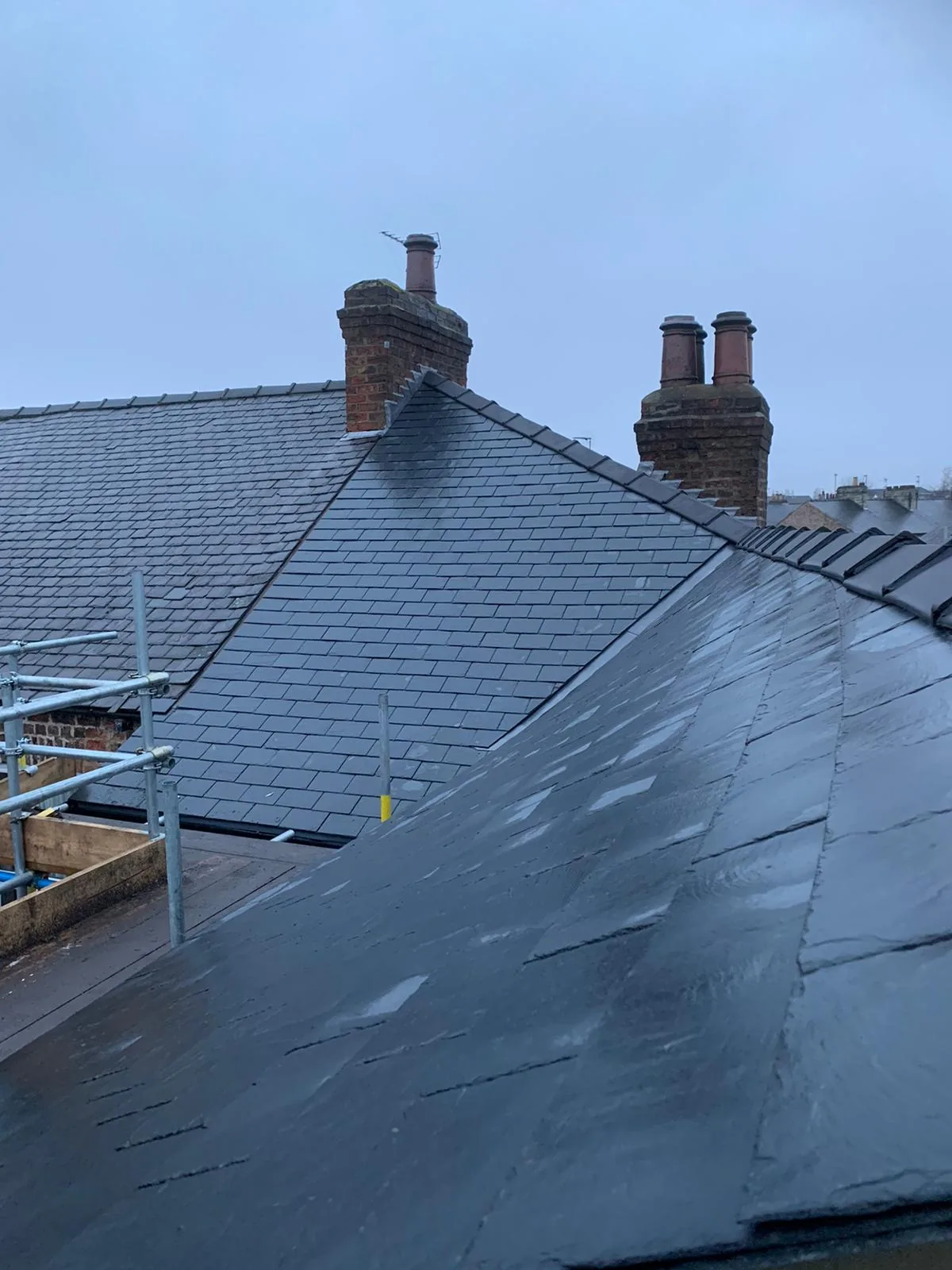
Chimney repointing means raking out the old, crumbled mortar between your chimney bricks and packing the joints with fresh mortar. It's different from a full rebuild, which replaces bricks and the stack's structure itself. Most chimneys need repointing every 20 to 30 years, sooner if they sit high up or face the worst of the weather. Nottingham's mix of Victorian terraces, 1930s semis, and taller stacks on elevated ground means some chimneys wear out faster than others. A quick check for crumbling, sandy, or missing mortar tells you where yours stands.
Look out for these warning signs:
- Mortar that crumbles or turns to sand when you rub it between your fingers
- Recessed joints where the mortar has washed out, leaving visible gaps
- Cracks running across several joints, not just one hairline crack
- Loose bricks that move when nudged, or bricks that have slipped out of line
- Damp patches on a ceiling or wall near the chimney breast
- Debris, grit, or old mortar collecting in the fireplace or on the roof
- Draughts around the chimney breast that weren't there before
If the bricks themselves are crumbling or the stack leans, repointing alone won't fix it. That's a job for chimney stack repair. And if the chimney is no longer used and causing more trouble than it's worth, chimney removal can be the better long-term answer. Repointing only makes sense when the brickwork underneath is still sound.
Lime Mortar or Cement: Getting the Mix Right for Your Nottingham Home
Most pre-1919 Nottingham homes were built with lime mortar, not cement. Lime mortar flexes with the building and lets moisture escape through the joints instead of trapping it inside the brick. Cement mortar is harder and cheaper, but on an older chimney it holds water inside the brick, causing it to flake and crack in frost. Local Authority Building Control's guidance on repointing brickwork makes the same point: mortar that's harder than the surrounding brick causes more damage than it prevents.
As a rough guide for Nottingham properties:
We also match the joint profile and mortar colour to your existing brickwork, so a repointed stack doesn't stand out from the rest of the roof.
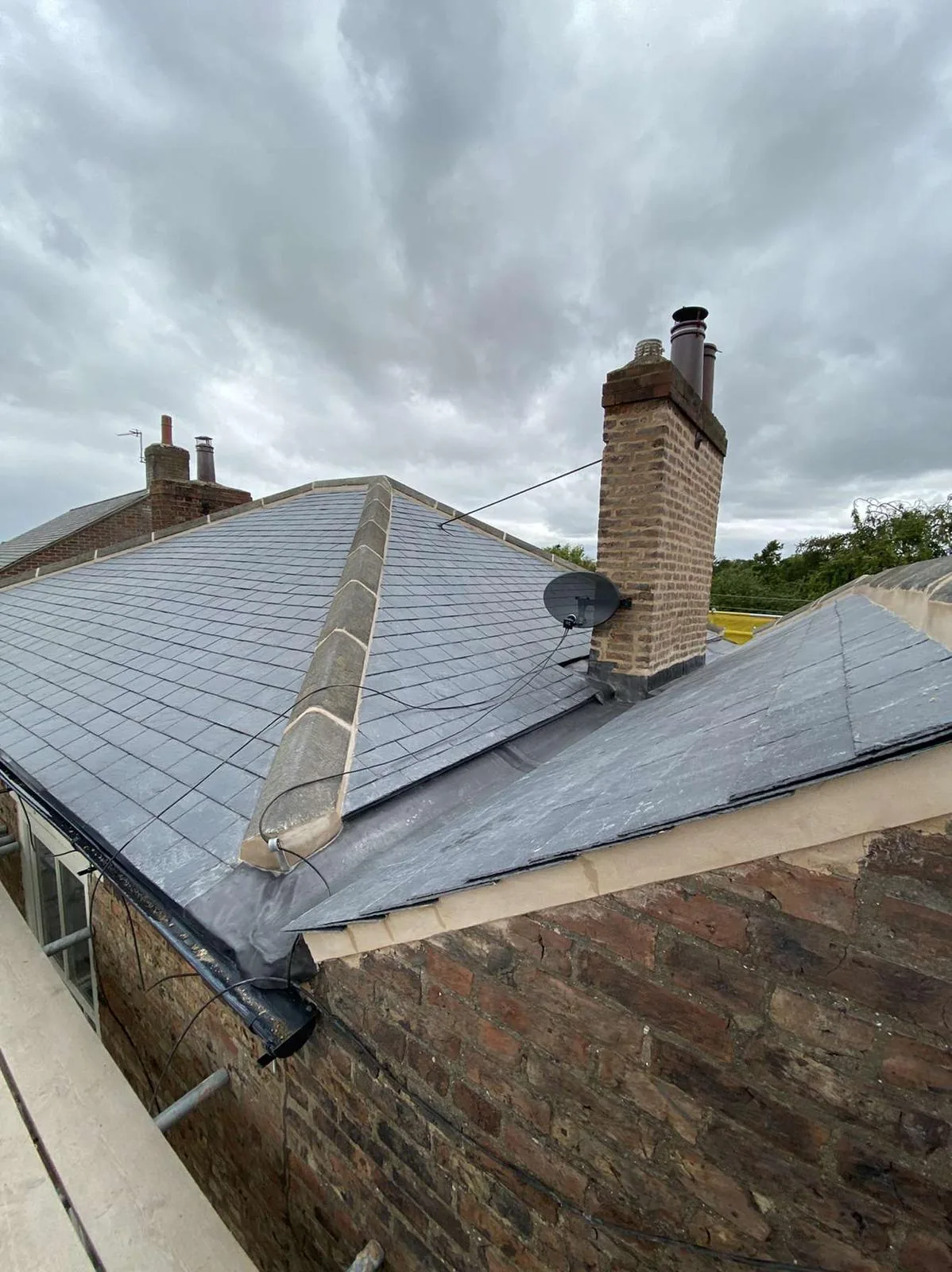
- Victorian and Edwardian terraces around Sherwood, Mapperley, and Lenton: lime mortar, usually NHL 3.5 (a natural hydraulic lime graded by strength)
- 1930s and post-war semis: a lime-cement mix or a moderate-strength cement mortar
- Modern builds from the 1980s onward: standard cement mortar is usually fine
- Listed buildings and conservation areas, including parts of The Park and Lenton: lime mortar is often a condition of consent, not just good practice
What Happens Before We Touch a Single Joint
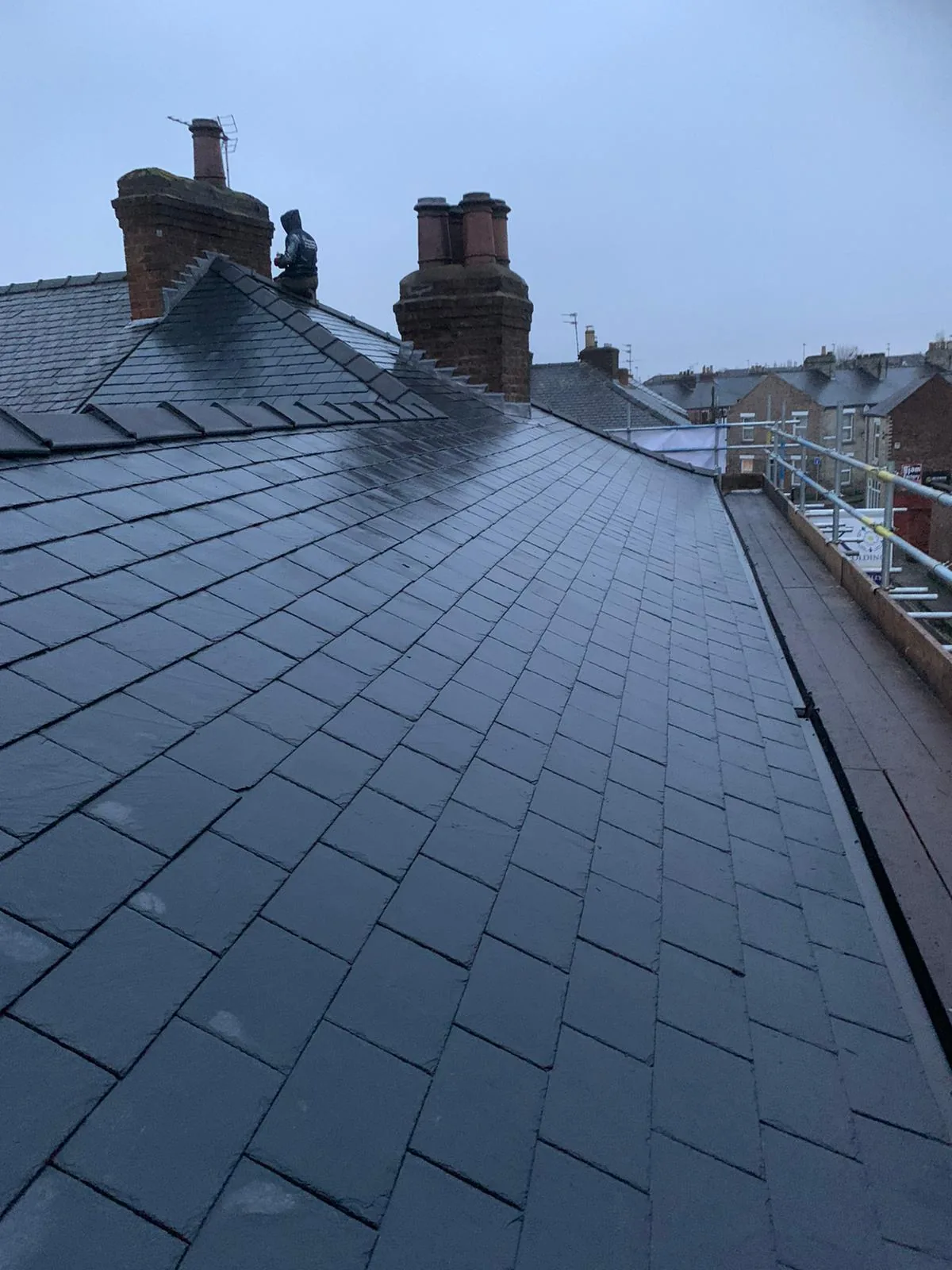
Every repointing job starts with a proper look at the stack, not a guess from ground level.
- A free drone survey of the whole stack, pots, flashing, and flaunching (the mortar fillet that seals the pots into the stack) — no ladders needed
- Close-up photos showing exactly which joints have failed and which are still sound
- A check on whether the brick itself needs any repair alongside the mortar
- Confirmation of the right mortar mix and colour match for your property
- Where access needs scaffolding, we tell you before work starts, not after
- For homes in The Park or Lenton's conservation areas, we flag any consent needed before we touch the stack
- A firm quote and agreed scope, so there's no surprise bill later
How We Repoint a Chimney That Actually Lasts
Once the scope is agreed, here's how we repoint a chimney properly:
- Rake out old mortar to a consistent depth, usually 15-20mm, without damaging the brick edges
- Brush and dampen the joints so the new mortar bonds instead of drying out too fast
- Pack fresh mortar into each joint by hand, working in manageable sections
- Tool the joints to match the original profile, whether that's flush, bucket-handle, or weathered
- Rebuild or reseal the flaunching around the pots, since this is where a lot of leaks start
- Let the mortar cure slowly, covering it if rain or frost threatens before it's set
- Clear the site and leave the roof and gutters free of mortar dust and debris
How to Check Your Repointing Job Was Done Properly
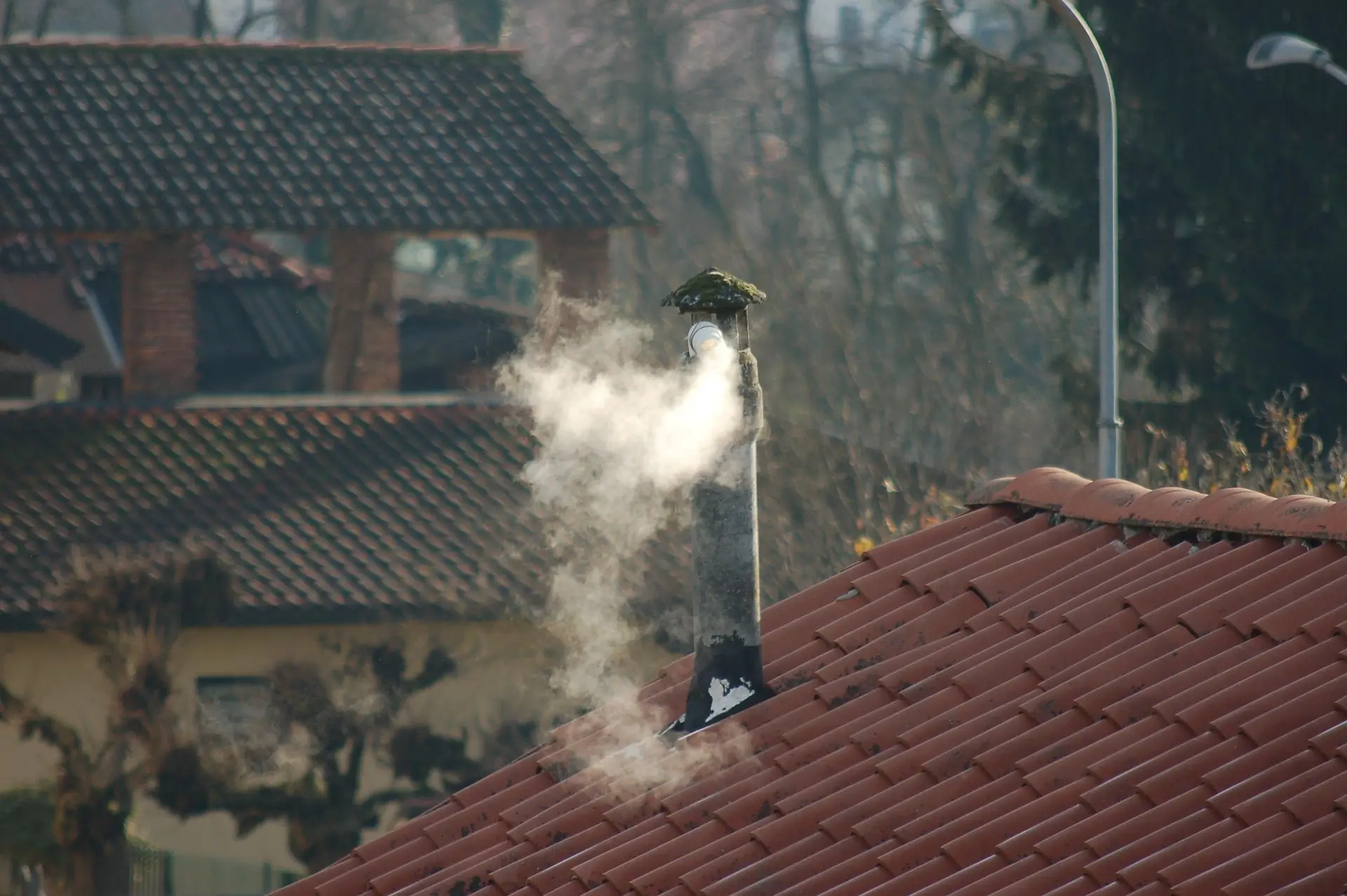
Whether you're checking a chimney we've just repointed or one another contractor finished, here's what to look for.
- Joints should be a consistent depth and colour across the whole stack, not patchy
- The mortar should sit slightly recessed from the brick face, not smeared over it
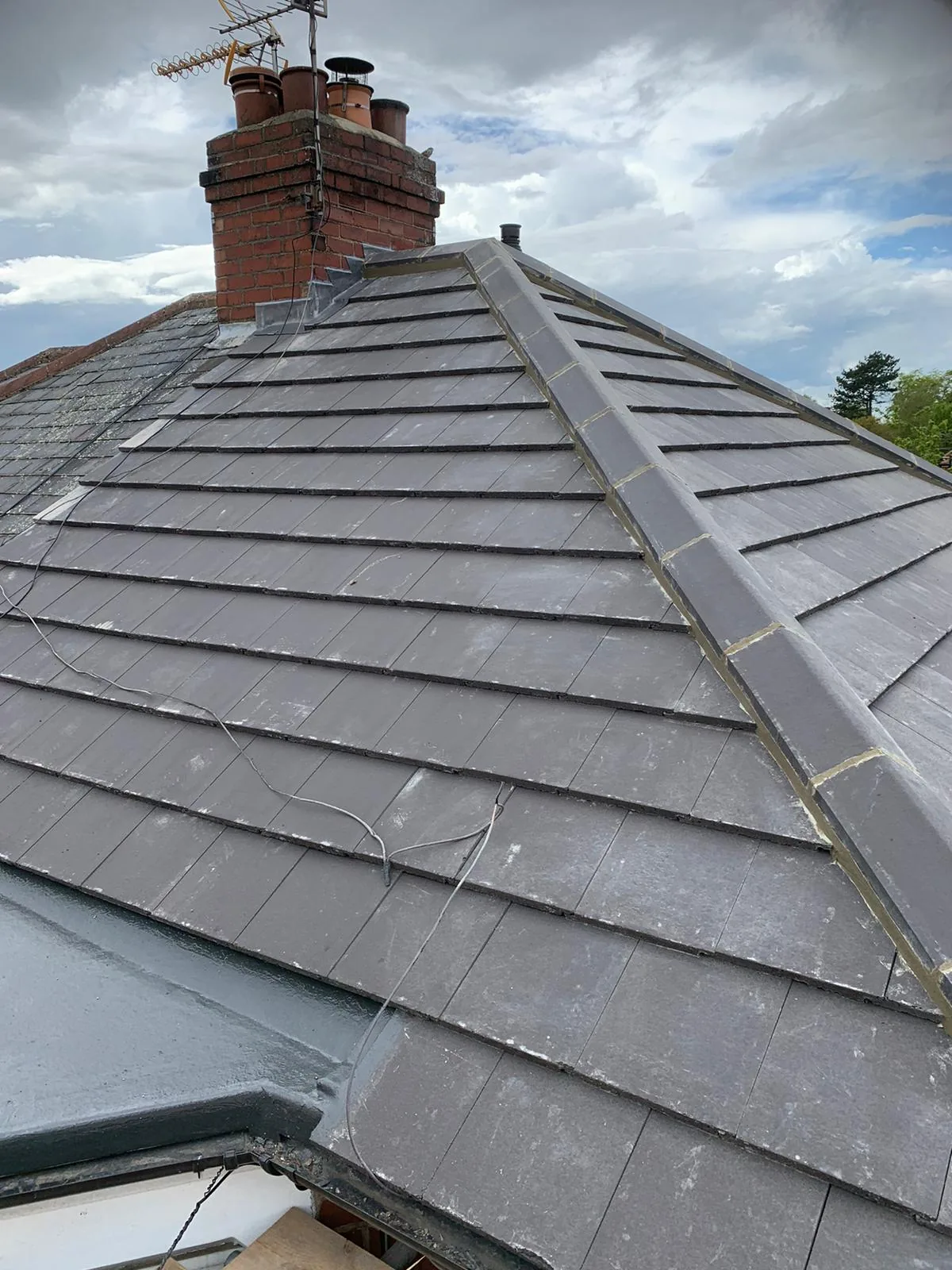
- Flaunching around the pots should be smooth, unbroken, and sloped to shed water
- No mortar splashes left on the brick face, roof tiles, or in the gutters
- Ask what mortar mix was used and whether it matches your property's age
- You should get written confirmation of the guarantee and materials used
- We back every repointing job with a 10-year workmanship guarantee, in writing, from day one
Keeping Your Repointed Chimney Watertight for Decades
A little attention keeps a freshly repointed stack watertight for decades.
- Have your chimney checked every few years, more often if it sits high or exposed — stacks on elevated ground around Mapperley Top and Woodthorpe take a harder battering from wind-driven rain
- Keep pots capped or guarded if the flue isn't in regular use, to stop water pooling in the stack
- Watch for staining or damp appearing on a chimney breast wall after heavy rain
- Clear moss from the stack and surrounding roof, since it holds moisture against the mortar
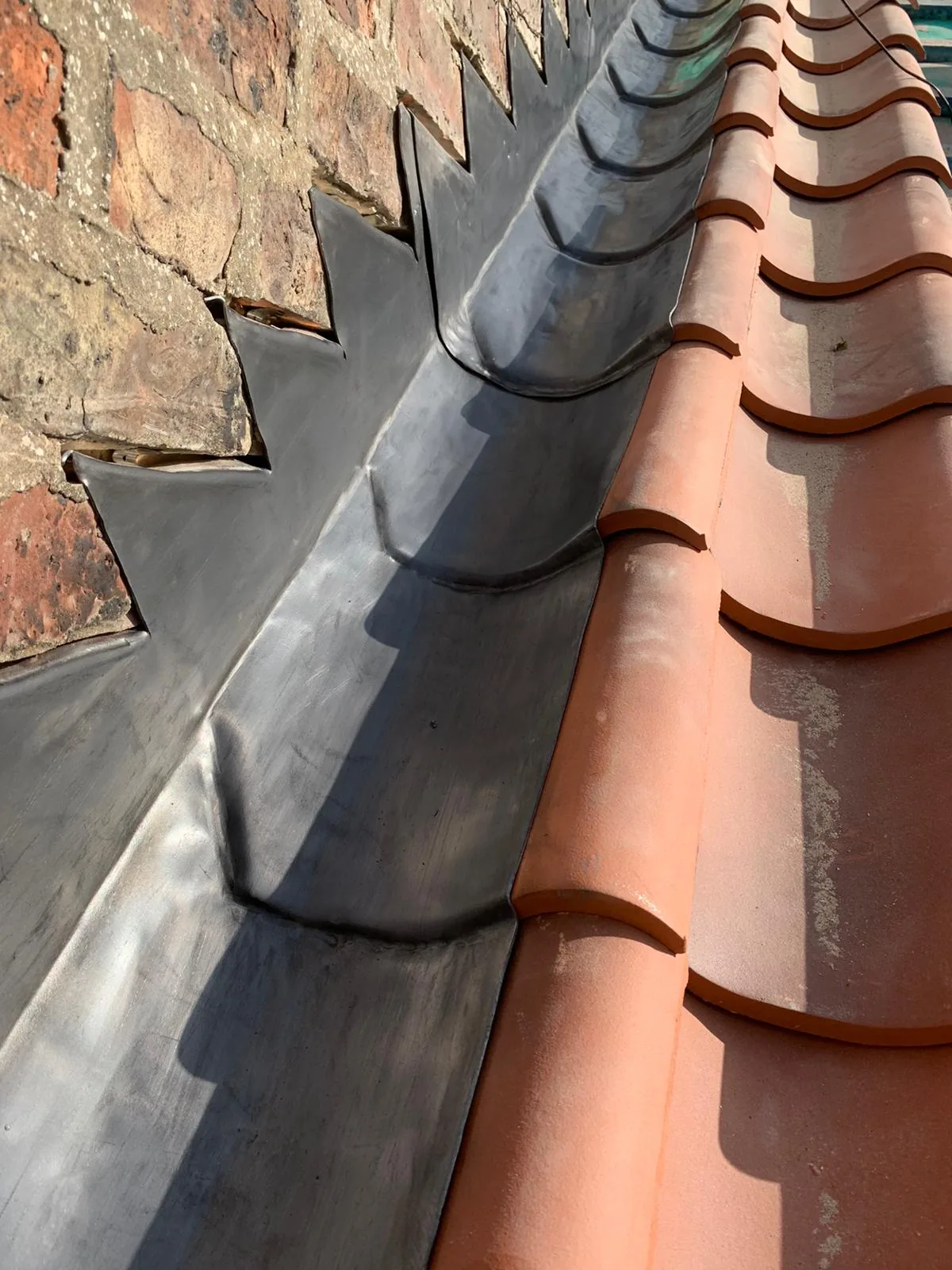
- Get flashing checked alongside the mortar — a failed lead flashing lets water in even when the pointing is sound
- Book a follow-up look after any severe storm
Cost & Pricing Guidance
Chimney repointing pricing across the UK for 2025/26 typically runs like this:
- Standard chimney stack, cement mortar: £300-£800
- Chimney stack with lime mortar (period properties): £700-£1,200
- Scaffolding hire, typical terraced house: £500-£1,500
- Full repointing job including scaffolding: £1,000-£2,200
Lime mortar costs roughly 20-30% more than cement, because the materials cost more and it takes longer to apply correctly. What pushes the price up or down: chimney height and access, how many joints have failed, whether the flaunching needs rebuilding, and whether scaffolding is needed or a tower will do the job. A stack on a bungalow with ladder access costs far less than a tall stack on a three-storey terrace.
These are general ranges, not a quote. A fixed price needs a survey.
Comparison Table: Mortar Types for Chimney Repointing

| Mortar Type | Breathability | Best For | Relative Cost |
|---|---|---|---|
| Lime mortar (NHL 3.5) | High — lets moisture escape | Pre-1919 brick, soft or handmade brick | ££ |
| Lime mortar (NHL 5) | Moderate-high | Exposed stacks facing driving rain | ££ |
| Lime-cement mix | Moderate | 1930s-1960s semis, general repairs | £ |
| Cement mortar | Low — traps moisture | Modern brick built after the 1980s | £ (lowest, but wrong choice on older brick) |
Why Choose Tate & Sons for Your Chimney Repointing
Chimney repointing is grounded in the same idea James Tate built this business on: find out what's genuinely wrong, use the right materials, and leave something that holds for years, not months. On a chimney, that means checking the brick's age and condition before deciding on lime or cement, not reaching for whatever mortar is quickest to mix. James still prices most chimney jobs himself, and he's happiest working out how to repoint a period stack without losing its character. Read more about the whole team on our About page.
Our roofers are directly employed, not subcontracted. They hold NVQ Level 2 and 3 qualifications in Roofing Occupations and carry CSCS cards. Every chimney repointing job comes with a free drone survey up front and a 10-year workmanship guarantee once the work is finished.
Chimney Repointing Across Nottingham and the Wider County: Areas We Serve
We repoint chimneys right across Greater Nottingham and out into the wider county. Wherever your stack sits, our crews know the local brick, the weather, and the access.
- Nottingham City Centre (NG1)
- The Park (NG1)
- West Bridgford (NG2)
- Sneinton (NG2)
- Wollaton (NG8)
- Lenton (NG7)
- Beeston (NG9)
- Chilwell (NG9)
- Stapleford (NG9)
- Arnold (NG5)
- Sherwood (NG5)
- Mapperley (NG3)
- Carlton (NG4)
- Gedling (NG4)
- Hucknall (NG15)
- Long Eaton (NG10)
- Mansfield (NG18)
- Sutton-in-Ashfield (NG17)
Got Questions?
Your Flat Roofing Questions, Answered Properly
How much does chimney repointing cost in Nottingham?
Most Nottingham chimney repointing jobs cost £300-£800 for a standard stack with cement mortar, or £700-£1,200 with lime mortar on a period property. Scaffolding adds £500-£1,500 depending on the house and access. A bungalow with ladder access costs far less than a tall stack on a terraced house. Flaunching repairs or extra brick repair add to the price. A free survey gives you an exact figure rather than a guess.
What are the signs my chimney needs repointing?
Crumbling, sandy, or missing mortar between the bricks is the clearest sign your chimney needs repointing. Look for recessed joints, cracks running across several courses, and bricks that feel loose when you nudge them. Damp patches on a ceiling or wall near the chimney breast often mean water is already getting in. Debris or grit collecting in the fireplace or gutters is another giveaway. If you spot any of these, get it checked before the next heavy rain.
How often should a chimney be repointed?
Most chimneys need repointing every 20 to 30 years, depending on the mortar and how exposed the stack is. Chimneys take a harder battering than the rest of your roof, since they stand proud into the wind and rain. Stacks on elevated ground, like parts of Mapperley Top or Woodthorpe, tend to wear out sooner. Lime mortar generally lasts longer than cement if it's applied correctly. A visual check every few years tells you where yours stands.
Should I use lime mortar or cement mortar on my chimney?
Lime mortar suits most Nottingham homes built before 1919, because it flexes with the building and lets moisture escape. Cement mortar is harder and cheaper, but on older, softer brick it traps water and causes the brick to crack in frost. Newer chimneys, from the 1980s onward, usually cope fine with cement mortar. If your property sits in a conservation area like The Park, lime mortar may be a condition of consent rather than a choice. When in doubt, match whatever mortar was originally used.
How long does chimney repointing take?
A standard chimney stack usually takes one to two days to repoint. Larger stacks, or ones with serious mortar decay, can take up to three days. Time also depends on access, since scaffolding takes longer to put up and take down than a tower or ladder system. Weather plays a part too, because fresh mortar needs time to cure without rain or frost. We give you a realistic timeframe once we've surveyed the stack.
Do I need scaffolding to repoint a chimney?
It depends on your chimney's height and how it's positioned on the roof. Bungalows and single-storey properties often only need a ladder or a mobile tower. Anything taller than that, especially a stack on a two or three-storey terrace, usually needs scaffolding for safe access. Scaffolding adds cost but it also means a safer, steadier job with fewer shortcuts. We assess access during your free survey and tell you what's needed before we quote.
Can I repoint a chimney myself?
DIY chimney repointing is only realistic on a very low, easily accessed stack, and even then it's risky. Getting the mortar mix wrong, especially using cement on an old lime-mortared chimney, can cause more damage than it fixes. Working at height without proper training and equipment is genuinely dangerous. A rushed or badly tooled joint often fails again within a few years, costing more in the long run. For anything above a single-storey bungalow, it's worth hiring a professional.
What's the difference between repointing and rebuilding a chimney stack?
Repointing replaces the mortar between sound bricks, while rebuilding replaces the bricks and structure themselves. If the brickwork is basically solid and just the mortar has failed, repointing is the cheaper, quicker fix. If bricks are crumbling, the stack is leaning, or there's serious structural movement, you need a stack repair or rebuild instead. A survey tells you honestly which category your chimney falls into. Trying to repoint a structurally unsound stack just delays a bigger repair.
Will repointing stop damp patches on my ceiling?
Repointing stops water getting in through failed mortar joints, which is a common cause of damp near a chimney breast. But it won't fix damp caused by a failed lead flashing, a cracked chimney pot, or damage inside the flue. If your damp patch keeps appearing after repointing, the cause is likely somewhere else on the stack. That's why a full survey checks flashing and pots at the same time as the mortar. Fixing only the mortar when the flashing has failed leaves the problem unsolved.
Book Your Free Drone Roof Survey Today
See exactly what your roof needs before any work starts. No ladders, no pressure — just a clear picture from a local Nottingham team.
A tired roof only gets worse as water works deeper into the deck and timber beneath it. A quick, free drone survey today tells you exactly where you stand — and often the fix is smaller and cheaper than you feared. Book now, get an honest quote, and protect your home before the next East Midlands downpour finds the weak spot.
📍 57 Cyril Avenue, Nottingham, NG8 5BA
📞 0115 647 4455
Call the Nottingham team today on 0115 647 4455, or request your free drone survey online. We’re already working across your area.
Get in Touch
Tate & Sons Roofing — Nottingham
57 Cyril Avenue, Nottingham, NG8 5BA
📞 0115 647 4455
✉️ [email protected]