
🏠 Trusted Local Roofers
Clay Roof Tiling Market Harborough
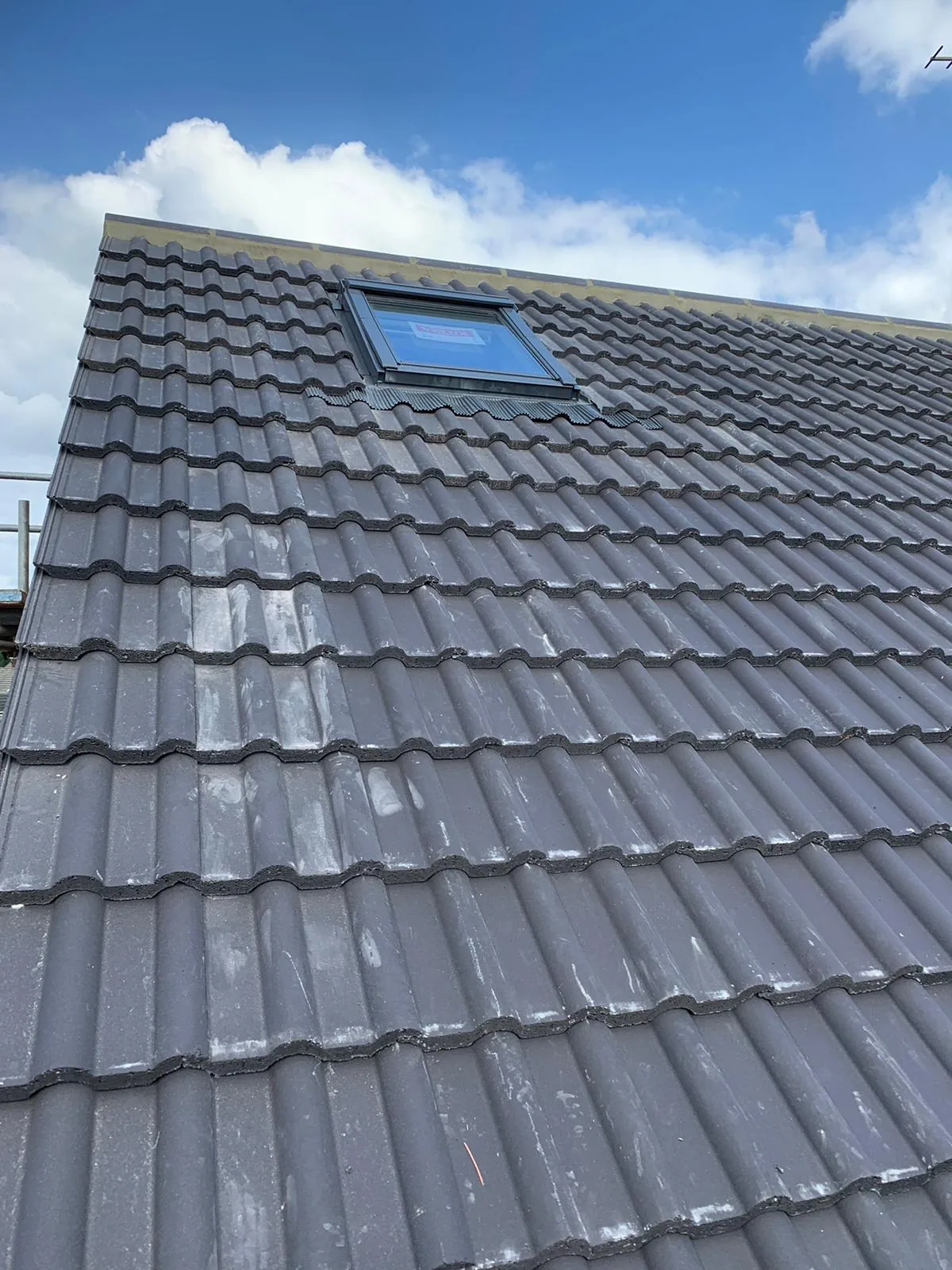
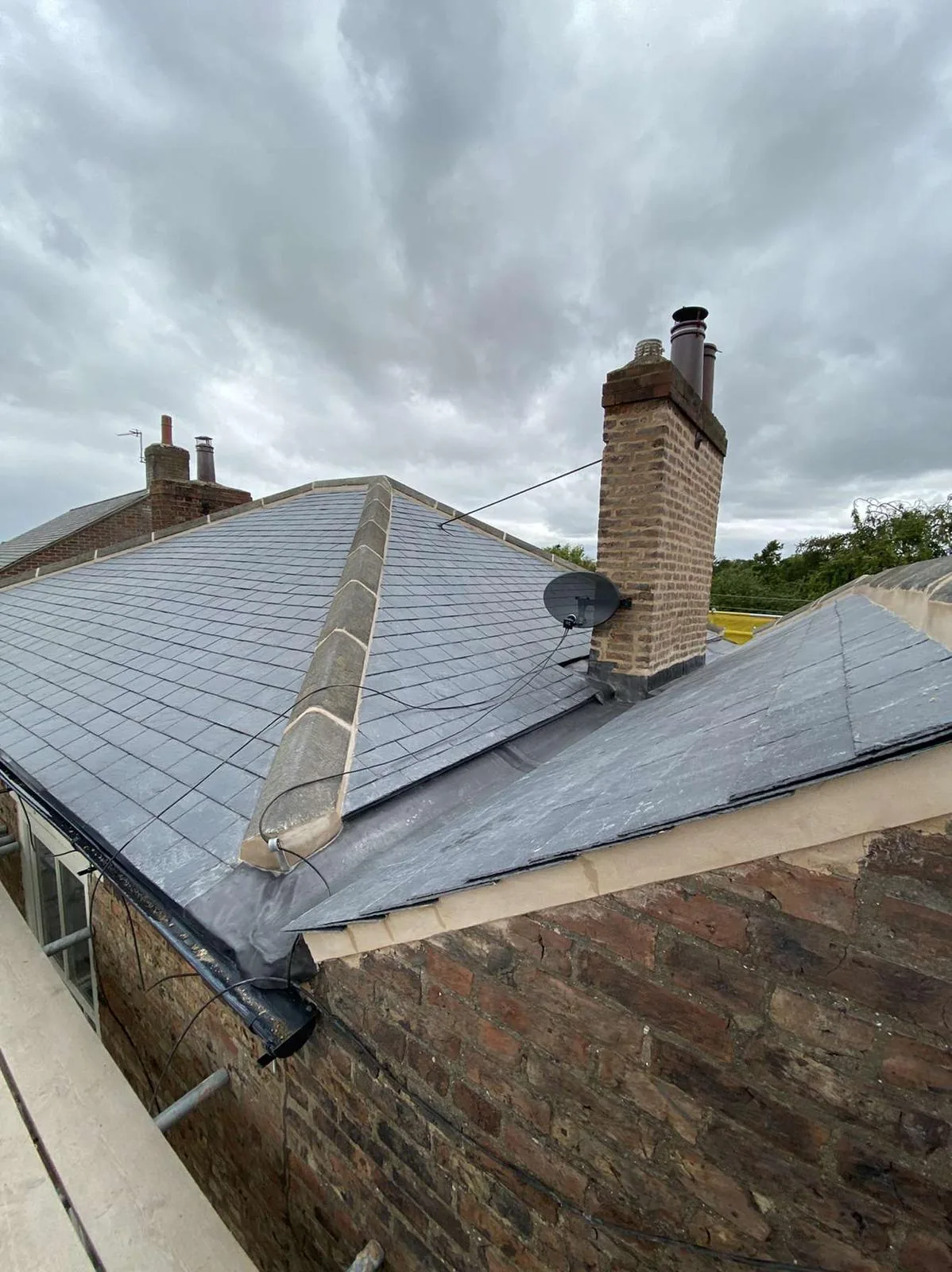
Clay roof tiling in Market Harborough sits on some of the finest homes in the Welland Valley, from period cottages to solid Victorian semis. A well-laid clay roof shrugs off frost, rain and sun for the best part of a century. When the tiles are right, the roof looks warm and settled the day it goes on, then only deepens in colour as the years pass. Tate & Sons Roofing lays and re-tiles clay roofs across Market Harborough and the wider Harborough District.
This page covers plain tiles and pantiles, how long clay really lasts, why the colour never fades, and what a re-tile costs in plain figures. You will see how clay stacks up against concrete and slate, and what happens on fitting day. Start with a free drone survey and a written quote before any work begins — no scaffold just to take a look, and no charge either way. Clay tiling is one part of the wider service we offer as a roofing contractor across Market Harborough.
- Fully Insured
- 10-Year Guarantee
- 5-Star Rated
Quick Free Estimate - No Obligation
We're not just roofers – we're your neighbours.
Fully Insured • Response within 15 mins
🔒 Your details are safe with us. No spam, ever.
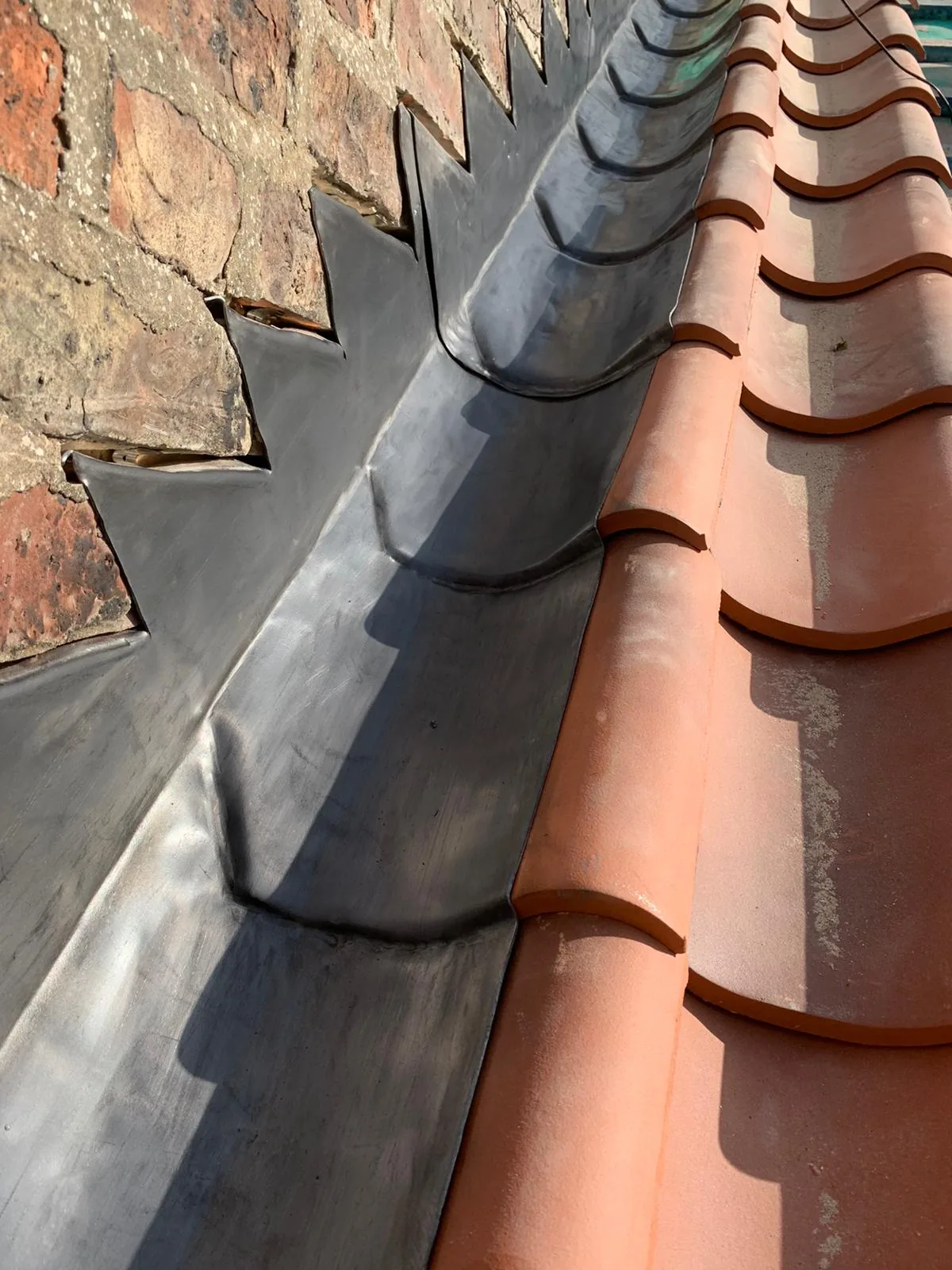
Buy the Roof Once and Pass It to the Next Owner
Clay is the longest-serving pitched roof covering you can put on a home. Most quality clay tiles carry a 30-year guarantee, yet a properly laid clay roof commonly lasts 60 to 100 years or more. That is two or three times the life of a concrete tile roof. Fit clay once and you rarely think about the roof again in your lifetime.
You are not just paying for a covering. You are buying a roof that adds value at sale and reassures a surveyor. A tidy clay roof tells a buyer the house has been looked after from the top down.
The reason sits in the material itself. Clay is fired hard at high heat, so it barely absorbs water and stands up to frost year after year. Concrete soaks up more moisture, which invites moss, staining and slow crumbling at the edges. Around Market Harborough we still work on clay roofs laid before the war that have decades of life left in them. The battens, felt and nails under the tiles wear out first, which is why a re-tile often reuses sound tiles on fresh timber.
Plain Tiles or Pantiles — Get the Right Clay Profile for Your Home
Two clay profiles cover almost every pitched roof in this area, and they look very different once they are up.
Plain tiles are small, flat and laid in a double-lap pattern, so two tiles overlap at every course. They suit steeper roofs and give that classic close-grained look you see on cottages around Great Bowden and Medbourne. Pantiles are larger, with a rolling S-shaped curve, and they lay faster with a single lap. Pantiles throw a bold shadow line and cover more roof per tile, which keeps the weight and the labour down.
Here is how the two profiles compare in practice:
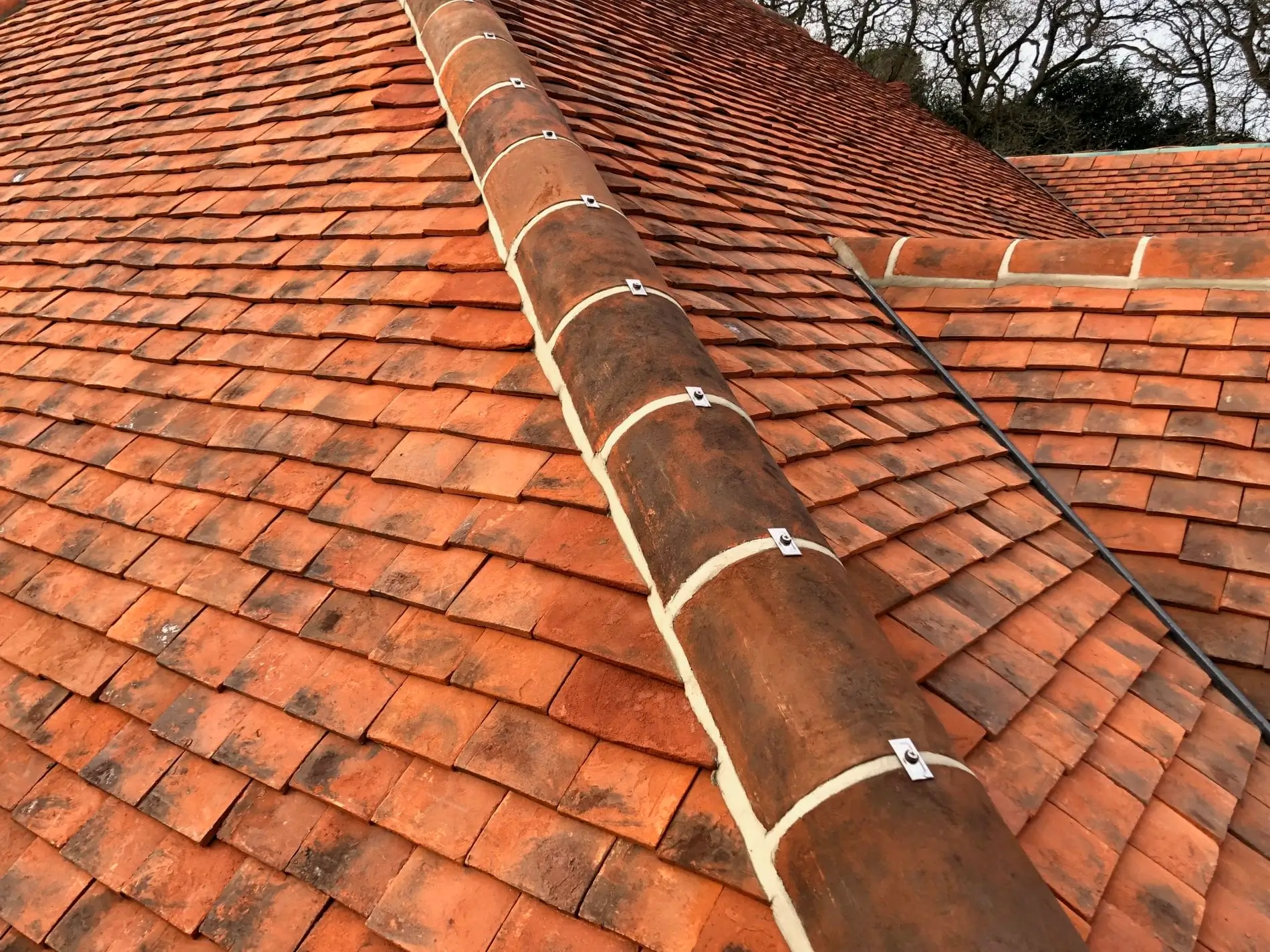
- **Plain clay tiles*— small and flat, double-lapped, best on steeper pitches and period homes; more tiles per square metre and a fine, traditional finish
- **Clay pantiles*— large and curved, single-lapped, quicker to lay with fewer tiles per square metre; a strong shadow line and a lighter roof load
- **Handmade clay tiles*— sand-faced with subtle colour and shape variation, first choice for a listed cottage or a conservation-area roof
- **Machine-made clay tiles*— dense, uniform and lower in cost, a sound pick for a straightforward semi or a barn conversion
Choosing between them comes down to the age of the house, the pitch of the roof and the look you want. On a listed property in the Welland Valley, the planners may set the profile for you. Michael Tate surveys every clay job himself and matches the tile to the roof, not to a price list.
The Colour That Deepens Instead of Fading
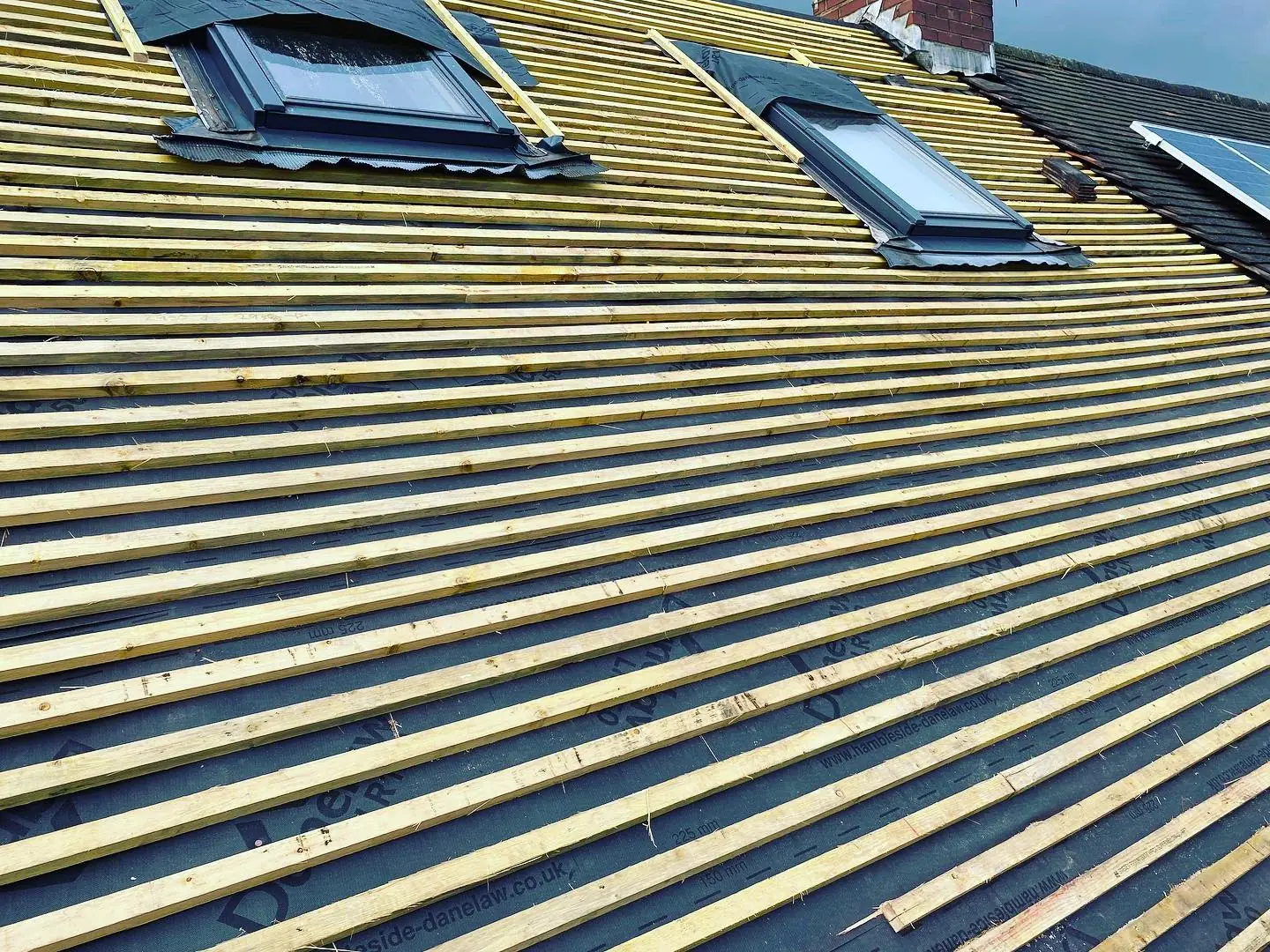
Colour is where clay pulls well ahead of concrete. A concrete tile takes its colour from a surface coating that wears thin and dulls within fifteen to twenty years. Clay takes its colour from the fired earth itself, right through the tile. That colour does not fade in the sun or wash out in the rain.
What clay does over time is mature. The tone slowly darkens and richens, so an old clay roof looks better at fifty years than the day it went on. You never face the tired, patchy grey that a concrete roof drifts towards. On a period home this matters, since a faded roof drags down the whole front of the house.
Both handmade and machine-made clay hold their colour just as well. Handmade tiles simply carry more variation in tone across the roof, which is what gives an old cottage its character. Clay tiling is made to British and European standards for strength, frost and water resistance, set out in the Roof Tile Association standards. We fit tiles that meet those marks, so the roof performs as long as it should.
Clay, Concrete or Slate — Which Roof Covering Earns Its Keep?
Clay is not the only pitched roof covering, and it is not always the right one. Concrete costs less upfront and does a solid job on a modern semi. Natural slate suits heritage roofs and gives the longest life of all. The table below sets the three side by side on real figures.
| :-: | :-: | :-: | :-: |
| Covering | Typical cost (per m²) | Typical lifespan | Best for |
| Clay tiles | £100–£150 | 60–100 years | Period homes and anyone who wants lasting colour and one roof for life |
| Concrete tiles | £80–£130 | 30–50 years | Modern semis and budget-led re-roofs where upfront cost decides it |
| Natural slate | £140–£220 | 80–100+ years | Heritage roofs and a premium finish where nothing but real slate will do |
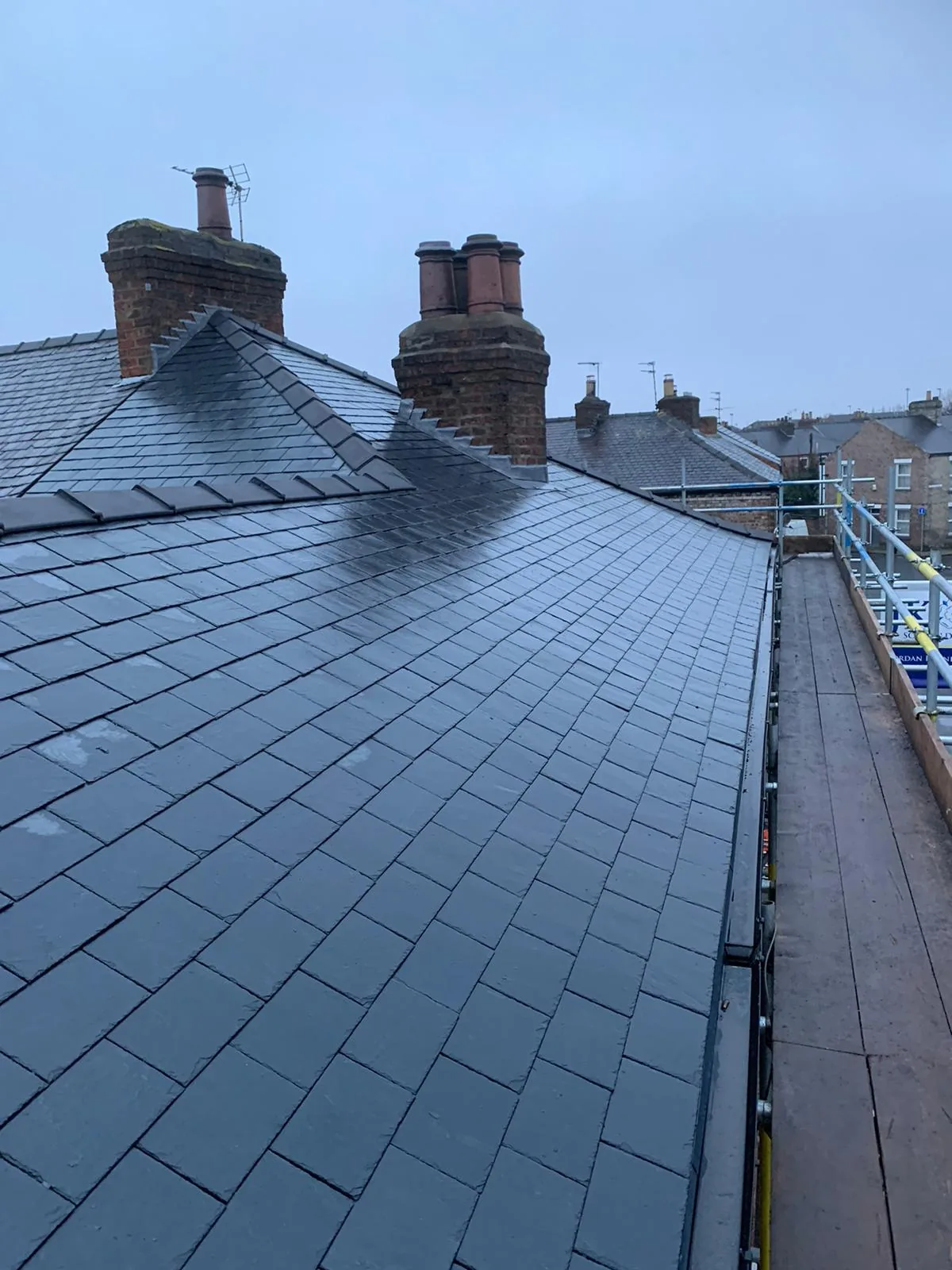
The right choice depends on the age of your house, the load your roof can carry and how long you plan to stay. Clay lands in the middle on price but pulls ahead on colour and lifespan. If concrete is the better fit for your budget, our Concrete Roof Tiling page walks through it. For a period roof where slate is the natural match, see our Slate Roofs page. A survey settles the choice in plain terms.
What Clay Roof Tiling Costs in Market Harborough
Price on a clay roof comes down to the tile, the roof size and the access.
As a general guide, machine-made clay tiling runs roughly £100 to £150 per square metre fitted, and handmade tiles push higher, often 40 to 50 percent more per tile. Buying the tiles alone, a machine-made clay tile costs from around £0.80 to £2.50 each, which works out near £800 to £2,500 per thousand. A full re-tile on a three-bed semi around Little Bowden or Lubenham usually lands between £6,000 and £12,000 once scaffold, labour and materials are in.
What moves the figure up or down:
- **Tile choice*— handmade and premium clay tiles cost well above standard machine-made ranges
- **Roof size and pitch*— steeper and more cut-up roofs take more tiles and more labour per square metre
- **Access and scaffold*— a full pitched-roof re-tile needs scaffold, usually £800 to £1,500
- **Battens and felt*— fresh timber battens and a breathable membrane add around £5 to £8 per square metre
- **Timber repairs*— rotten rafters or a sagging ridge typically add £500 to £2,000 before tiling starts
- **Waste removal*— stripping and skipping the old covering runs around £200 to £400
These are general market ranges, not a quote for your roof. Two clay roofs the same size can price very differently once tile choice, pitch and timber condition are counted in. The only way to a firm figure is a proper survey — which is exactly what our free drone survey gives you, followed by a clear written price with nothing added later. A fixed price needs a survey.
Re-Tile or Repair? You Get a Straight Answer, Not the Biggest Invoice
A few slipped clay tiles rarely mean the whole roof is finished. Clay itself outlives the timber beneath it, so the tiles are often sound long after the battens, felt and nails have gone. A handful of cracked tiles, a slipped course or a worn valley is usually a repair, not a re-tile.
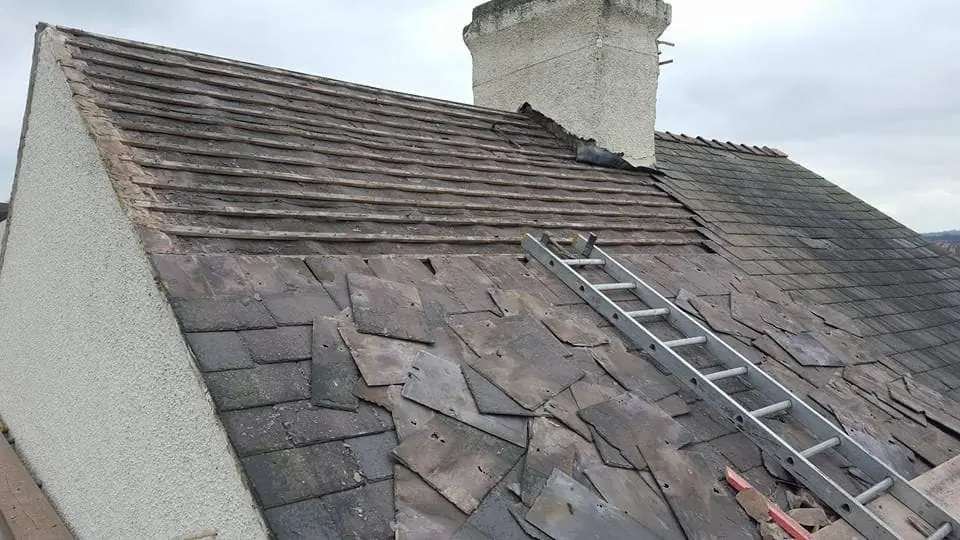
Widespread nail sickness tells a different story. When old iron nails rust through, tiles slip across the whole roof no matter how many you re-fix. At that point a full strip and re-tile on fresh battens is the honest fix. Where the clay tiles are sound, we lift and reuse them, so you keep the weathered look and pay only for new timber, felt and labour.
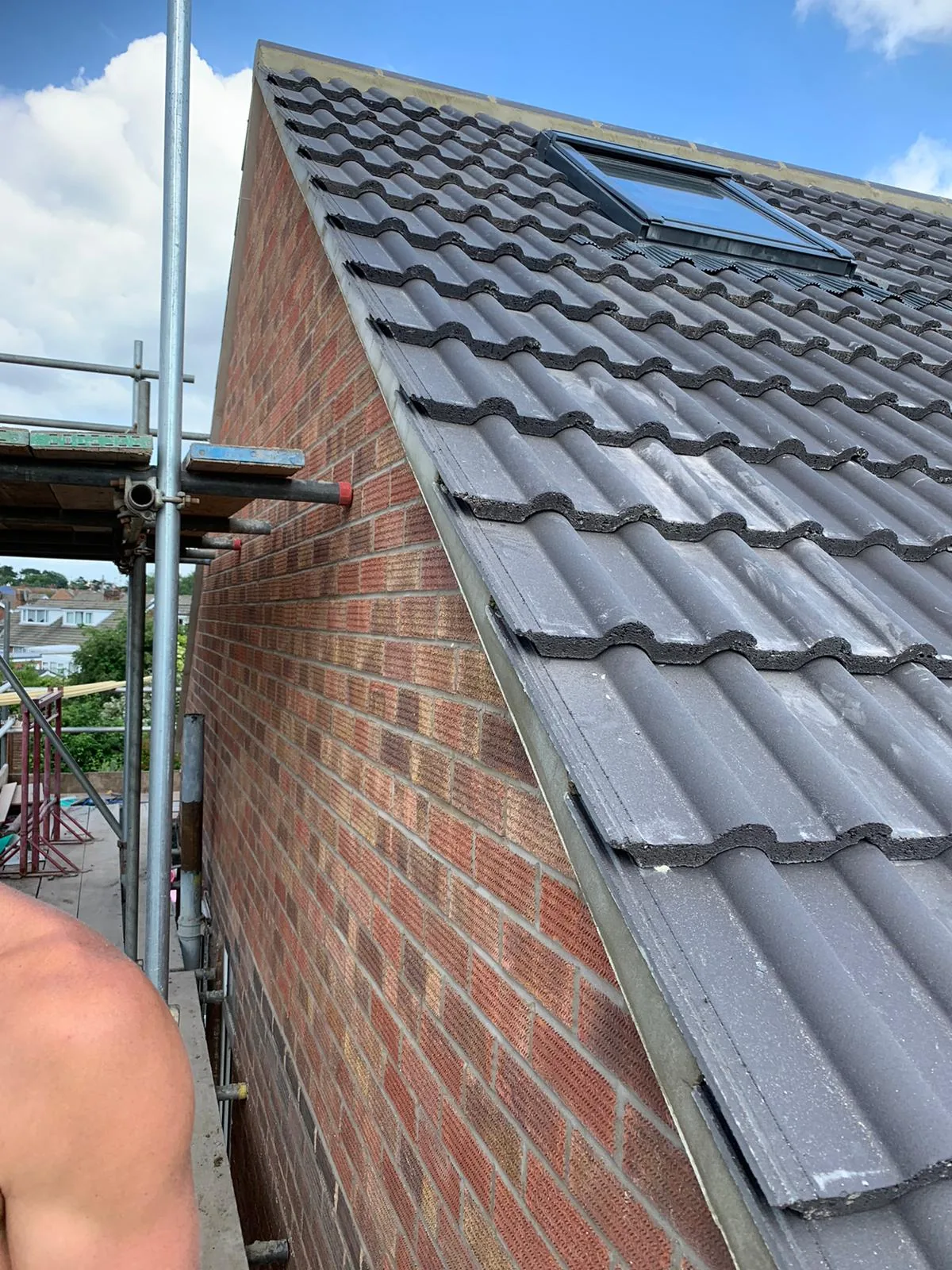
We check the whole roof before recommending either route. A free drone survey shows the ridge, valleys and flashings that a ground-level look always misses. You get the footage, not just our word for it. Around Foxton and Kibworth Beauchamp we often find one tired slope patched three times over, while the real problem was rusted nails all along. Fixing the cause once beats paying for the same repair every other winter.
From Strip-Off to Ridge: What Happens on Fitting Day
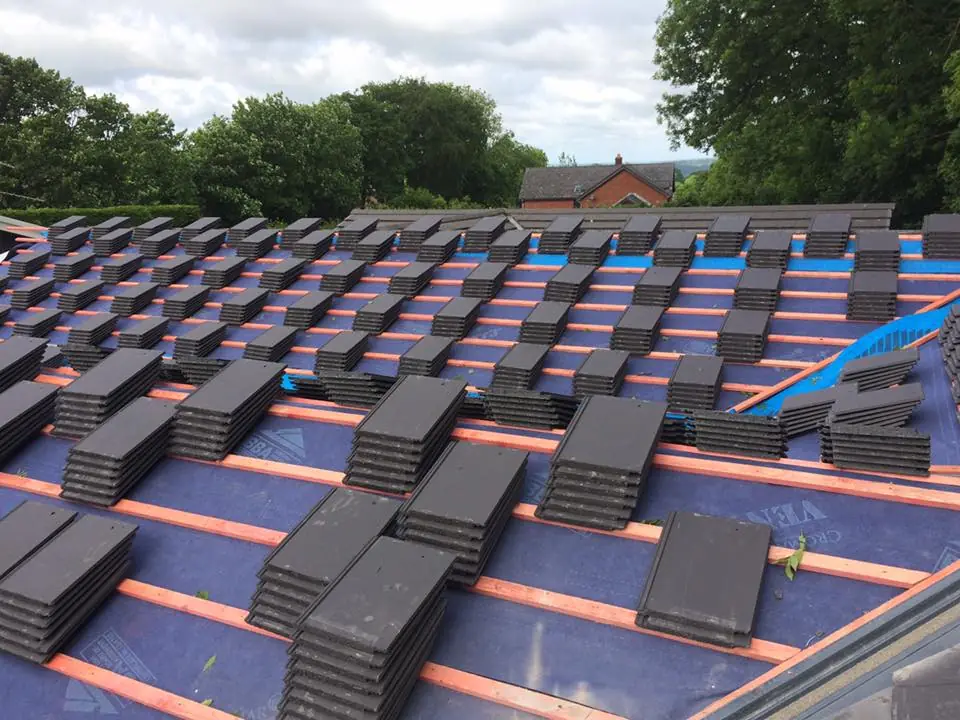
A clay re-tile follows the same order on every job:
- Scaffold up and the old covering stripped back to the rafters
- Rafters and ridge checked, with any rotten timber replaced
- Breathable membrane laid and fresh treated battens fixed to gauge
- Clay tiles set out and laid course by course up each slope
- Ridge, hips and valleys bedded and pointed to shed water cleanly
- Site cleared and the finished roof checked before we leave
Most house re-tiles take several days to a couple of weeks, depending on size and weather. We give you a realistic timeframe before work starts, not an optimistic one to win the job. You will know who is turning up and roughly how long they will be there. Ryan Tate runs the site work, so the crew laying your tiles is directly employed, not a set of subbies passing through.
Why Market Harborough Homeowners Call Tate & Sons First
You are not just buying tiles — you are buying whoever lays them. Founder Michael Tate started his apprenticeship at sixteen and has spent over 30 years on traditional tiling and heritage roofs. He has the eye for matching an old clay profile and reading a period roof, and he surveys every clay job himself. His one rule built the firm: fix the cause, not just the symptom — never patch a roof to look right for a season and slip again the next winter.
Ryan Tate runs the site work day to day, so the crew on your roof is the same team that quoted it. Between us we carry over 45 years of combined experience, hold NVQ Level 2 and 3 qualifications in Roofing Occupations, and keep CSCS cards and NFRC trade-body membership. That mix of a heritage eye and directly employed labour is why clay roofs across the Welland Valley last as long as they should. Read more about the people behind the work on our About Tate & Sons Roofing page.
Areas We Serve Across Market Harborough and the Harborough District
We lay and re-tile clay roofs across Market Harborough and the surrounding Welland Valley villages. If your area is not on the list below, call us anyway — if you are nearby, there is a strong chance we cover you.
- Market Harborough (LE16)
- Great Bowden (LE16 7)
- Little Bowden (LE16 8)
- Lubenham (LE16 9)
- Foxton (LE16 7)
- Medbourne (LE16 8)
- Kibworth Beauchamp (LE8)
- Great Glen (LE8 9)
- Fleckney (LE8 8)
- Husbands Bosworth (LE17 6)
- Desborough (NN14 2)
Got Questions?
Your Clay Roof Tiling Questions, Answered Properly
How long do clay roof tiles last?
A properly laid clay roof commonly lasts 60 to 100 years or more. Most quality clay tiles carry a 30-year guarantee, but the tiles themselves easily outlive that. What wears out first is the timber battens, the felt and the nails underneath, not the clay. Around Market Harborough we still work on pre-war clay roofs with decades of life left in the tiles.
Are clay or concrete tiles better?
It depends on your budget and how long you plan to stay. Clay lasts 60 to 100 years and holds its colour for life, while concrete lasts around 30 to 50 years and fades sooner. Concrete costs less upfront, which suits a tighter budget or a modern semi. Clay costs more at the start but works out cheaper over a full lifetime, since you fit it once and forget it.
Do clay roof tiles fade over time?
No, clay tiles do not fade. The colour runs right through the fired clay, so sun and rain cannot wash it out. Over the years the tone slowly darkens and richens, so an old clay roof looks better than a new one. This is the clearest difference from concrete, which loses its surface colour within fifteen to twenty years.
How much does a clay tile roof cost in Market Harborough?
As a general guide, machine-made clay tiling runs roughly £100 to £150 per square metre fitted, with handmade tiles higher again. A full re-tile on a three-bed semi usually lands between £6,000 and £12,000 once scaffold, labour and materials are in. The final figure depends on tile choice, roof pitch and the state of the timber underneath. A free drone survey gives you an exact written price rather than a rough estimate over the phone.
What is the difference between machine-made and handmade clay tiles?
Machine-made tiles are dense, uniform and lower in cost, which suits a straightforward semi or barn conversion. Handmade tiles are sand-faced with subtle shape and colour variation, and they cost up to 50 percent more per tile. That variation is what gives a listed cottage its character, so handmade is often the first choice on period and conservation-area roofs. Both types hold their colour and stand up to frost equally well.
Can I re-tile just part of my clay roof?
Often yes, and it can save you a good deal of money. Where the clay tiles are sound and only one slope or valley has failed, we repair or re-lay that section. If the whole roof suffers from nail sickness, with tiles slipping everywhere, a full strip and re-tile is the honest fix. A drone survey tells us which it is before you commit to anything.
Are clay tiles heavier than concrete tiles?
No, clay tiles are usually lighter than concrete for the same coverage. Concrete is a denser material, so a concrete roof puts more load on the rafters and walls. This matters on older homes, where the roof structure was often built for lighter clay or slate in the first place. We check the roof timbers on every survey, so the covering always suits what the structure can carry.
Do clay roof tiles need much maintenance?
Clay roofs are low-maintenance, but they are not no-maintenance. A quick look each autumn to clear the gutters and spot any slipped tiles keeps small faults small. Clay resists moss far better than concrete, so you get less of the green growth that holds damp against a roof. Catch a slipped tile early and a simple repair keeps water out of the loft.
Book Your Free Drone Roof Survey Today
See exactly what your clay roof needs before any work starts. No ladders, no pressure — just a clear picture from a local Market Harborough team.
Every winter a tired clay roof waits, rusted nails let more tiles slip and rain works its way into the battens and felt. A quick, free survey today tells you exactly where you stand — and often the fix is smaller and cheaper than you feared. Book now, get an honest quote, and protect your home before the next frost loosens another course.
ð 5 Hood Close, Market Harborough, LE16 9XS
ð 01858 457600
Call the Market Harborough team today on 01858 457600, or request your free drone survey online. We're already working across your area.
Book Your Free Drone Roof Survey
See exactly where your roof stands, with no obligation and no pressure. Call our Market Harborough team or request your free drone survey today.
Get in Touch
Tate & Sons Roofing — Market Harborough Office
5 Hood Close, Market Harborough, LE16 9XS
📞 01858 457600
✉️ [email protected]