
🏠 Trusted Local Roofers
Ridge Tile Repairs & Rebedding in Market Harborough
The ridge runs along the very top of your roof, and the tiles that cap it take the full force of every gale. When the mortar under them cracks and crumbles, those tiles work loose, slip, or blow off in a storm. Tate & Sons Roofing carries out ridge tile repairs in Market Harborough and across the Welland Valley, from a single lifted tile to a full ridge line rebedded from end to end.
This page explains why ridge tiles come loose, the difference between repointing, rebedding and a dry ridge system, what each one costs, and whether your job needs scaffolding. Start with a free drone survey and a written quote before any work begins — no scaffold just to take a look, and no charge either way. Ridge work is one part of the wider service we offer as a roofing contractor across Market Harborough.
- Fully Insured
- 10-Year Guarantee
- 5-Star Rated
Quick Free Estimate - No Obligation
We're not just roofers – we're your neighbours.
Fully Insured • Response within 15 mins
🔒 Your details are safe with us. No spam, ever.
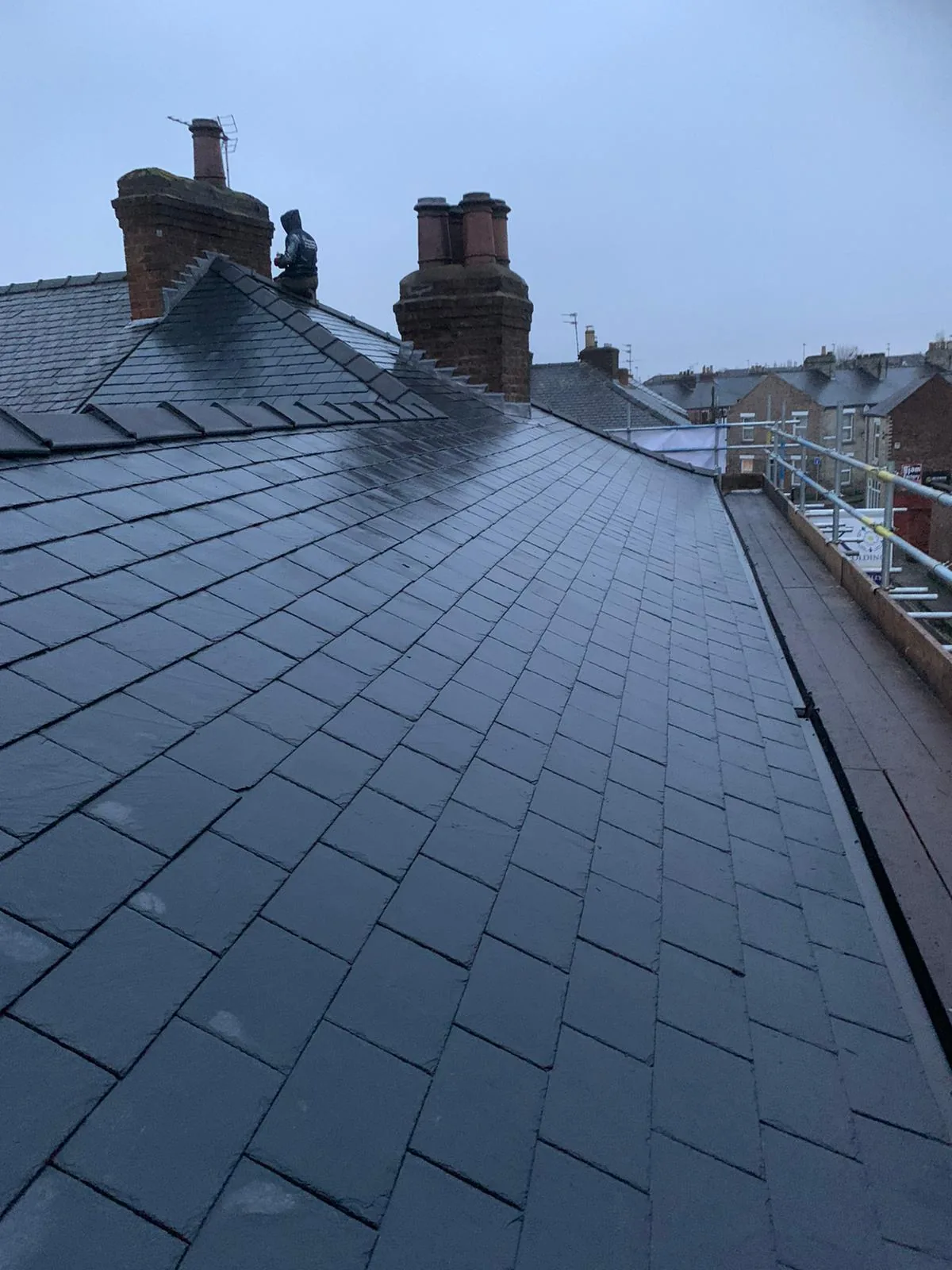
Spot the Signs Your Ridge Tiles Are Working Loose
A failing ridge rarely gives way all at once. Catch it early and a repair does the job, before a tile slides off and cracks on the ground below.
Watch for these:
- Chunks of mortar in the gutter or on the ground after wind
- Gaps or dark cracks along the mortar joints on the ridge line
- A ridge tile sitting crooked or standing slightly proud of its neighbours
- Mortar you can crumble between finger and thumb
- A ridge tile that rocks or shifts when the roof is walked
- Damp patches on the ceiling of the top floor or in the loft
- Daylight showing through the ridge when you look up from inside the loft
A loose ridge tile is not just a leak risk. High up on the roof, a tile that lets go becomes a heavy object over a footpath, a car or a doorway. On older homes around Great Bowden and Lubenham we still see ridges bedded on nothing but tired sand and cement. Once that mortar goes, the tiles rely on gravity alone, which is exactly why they slip. A quick look now saves a much bigger bill later.
Why Ridge Mortar Cracks and Lets Tiles Slip
Old ridges were held on with a bed of sand and cement, and nothing else. That mortar has a hard life at the top of the roof, baked in summer and soaked in winter.
Constant heat, cold and wind movement open small cracks in the joint. Rain seeps in, then freezes, and the ice pushes those cracks wider. Bit by bit the mortar breaks up and drops out, and the tile it once held loses its grip. Industry figures put roughly 70% of roof failures down to mortar-related problems, which tells you how common this is. A ridge bedded twenty or thirty years ago is often well past its time.
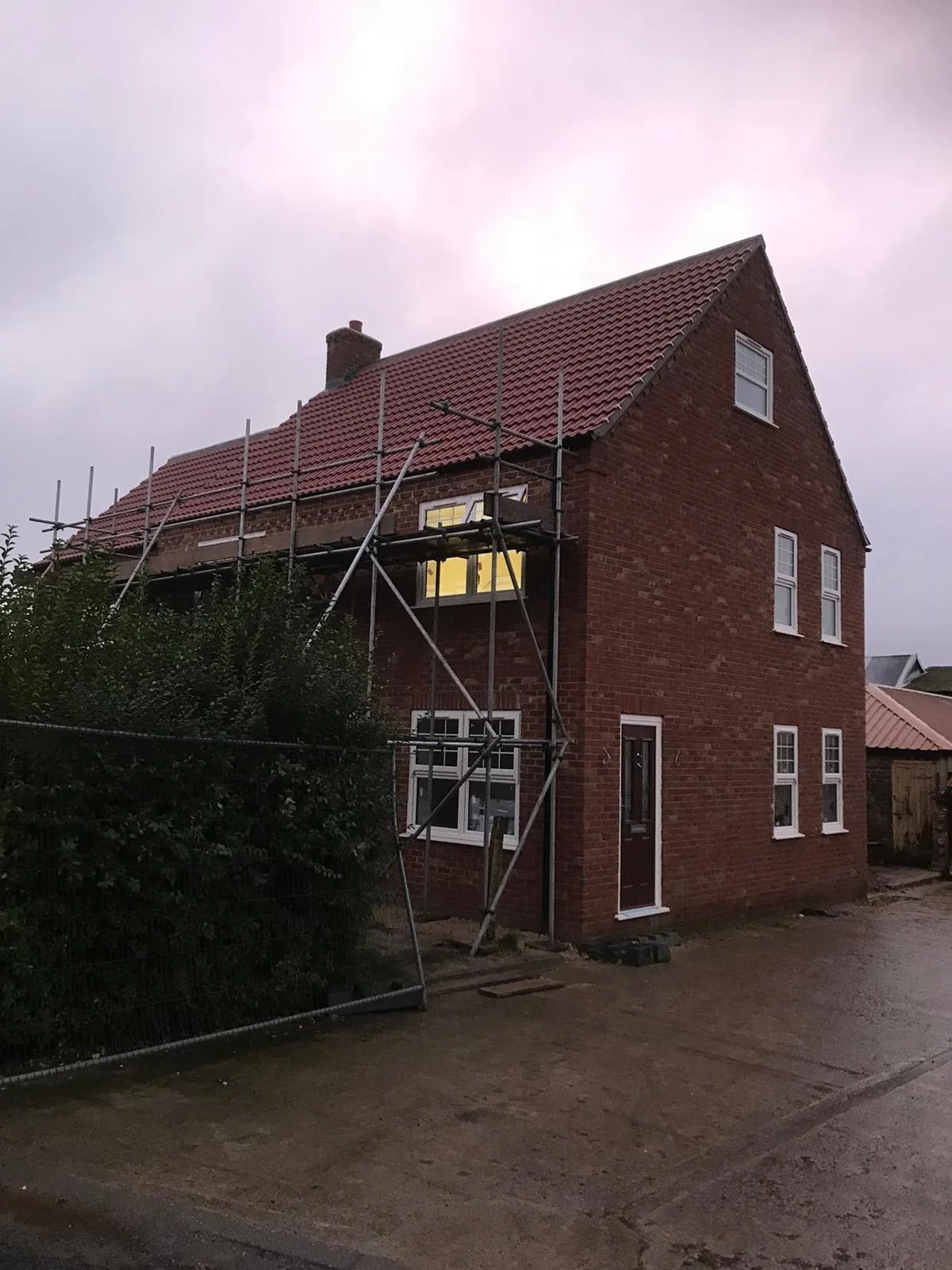
Poor original workmanship makes it worse. A weak mortar mix, or bedding laid in cold or wet weather, never sets properly and fails early. Once one tile shifts, wind gets under the whole run and the rest follow. We fix the cause, not just the loose tile you can see. If the bedding along the ridge has broken down, patching one joint only buys a season before the next tile lets go.
Repointing, Rebedding or a Dry Ridge — Which One You Actually Need
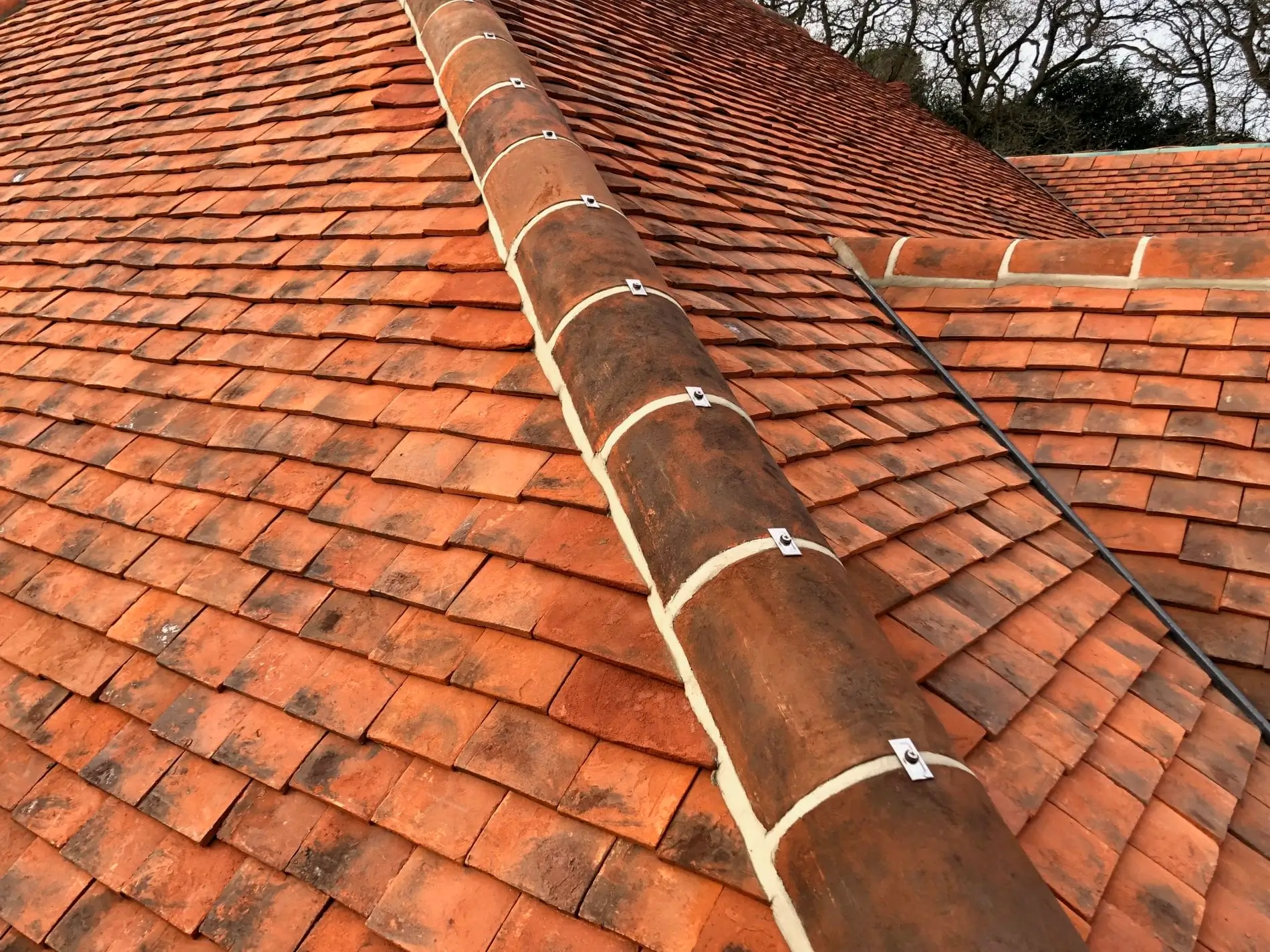
Three routes fix a ridge, and they are not the same job. Repointing renews only the outer joint of mortar, and suits a ridge where the tiles are still sound and firmly bedded. Rebedding lifts the tiles, strips the old bedding right off, and sets them back on fresh mortar — the proper fix once tiles have gone loose. A dry ridge system swaps mortar for a mechanically fixed ridge roll, screwed and clamped down for a near maintenance-free life.
Ryan Tate, who runs our site work, fits both mortar and dry ridge day in, day out around Medbourne, Foxton and the Kibworth Beauchamp villages. He will talk you through which suits your roof and your budget in plain terms, not sales patter.
The right choice depends on the state of the bedding, how exposed your roof is, and how long you want the fix to hold. Repointing over failed bedding rarely lasts. If a tile rocks or lifts, sealing the outside of the joint does nothing for the base support underneath. A survey settles which route your ridge needs.
| :-: | :-: | :-: | :-: |
| Method | Typical cost | Typical lifespan | Best for |
| Repointing (joint only) | £15–£30 per metre | 10–15 years | Sound, firmly bedded ridges with only weathered joints |
| Mortar rebedding | £40–£70 per metre | 10–15 years | Loose tiles and period roofs where a traditional look matters |
| Dry ridge system | £35–£55 per metre | 40+ years | Exposed roofs and anyone who wants a near maintenance-free ridge |
- **Repointing*renews the visible mortar joint to keep wind-driven rain out. It is the cheapest option, but only works when the tiles below are still firmly held.
- **Mortar rebedding*lifts each tile, clears the old bed, and sets it back on fresh mortar with a mechanical fixing added. This is our go-to on heritage roofs where the ridge must still look traditional.
- **Dry ridge*uses a ventilated roll and stainless fixings instead of mortar, so there is nothing to crack or wash out — our Dry Ridge System page covers it in full.
What Ridge Tile Rebedding Costs in Market Harborough
Cost comes down to the length of the ridge, the height and pitch of the roof, and how the work is reached.
As a general guide, repointing runs roughly £15–£30 per metre, mortar rebedding £40–£70 per metre, and a dry ridge system £35–£55 per metre fitted. For a typical semi-detached ridge, a re-cement job often lands somewhere between £300 and £800 all in. A full dry ridge on a standard semi-detached house works out around £800, once fixings and end caps are counted.
What pushes a price up or down:
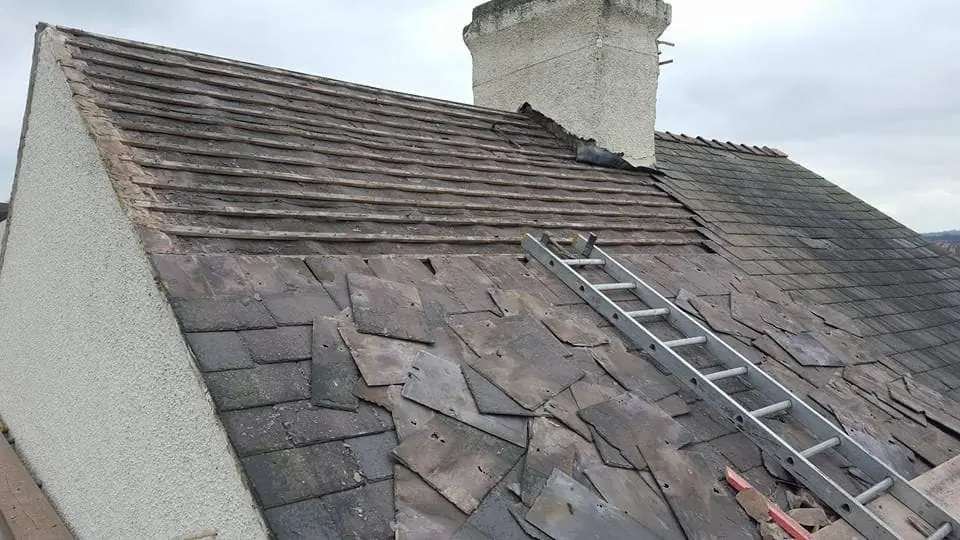
- **Ridge length*— a longer run of tiles means more metres of bedding and pointing
- **Roof height and pitch*— a tall or steep roof takes longer and needs safer access
- **Access and scaffolding*— a ridge reached over a conservatory or extension costs more to set up
- **Tile condition*— cracked or spalled ridge tiles that cannot be reused add the price of new ones
- **Extras*— replacing a rotten timber ridge board or adding ventilation adds to the figure
These are general market ranges, not a quote for your roof. Two ridges the same length can price very differently once height, access and tile condition are factored in. The only way to a firm figure is a proper survey — which is exactly what our free drone survey gives you, followed by a clear written price with nothing added later. A fixed price needs a survey.
Do You Need Scaffolding for Ridge Tile Work?
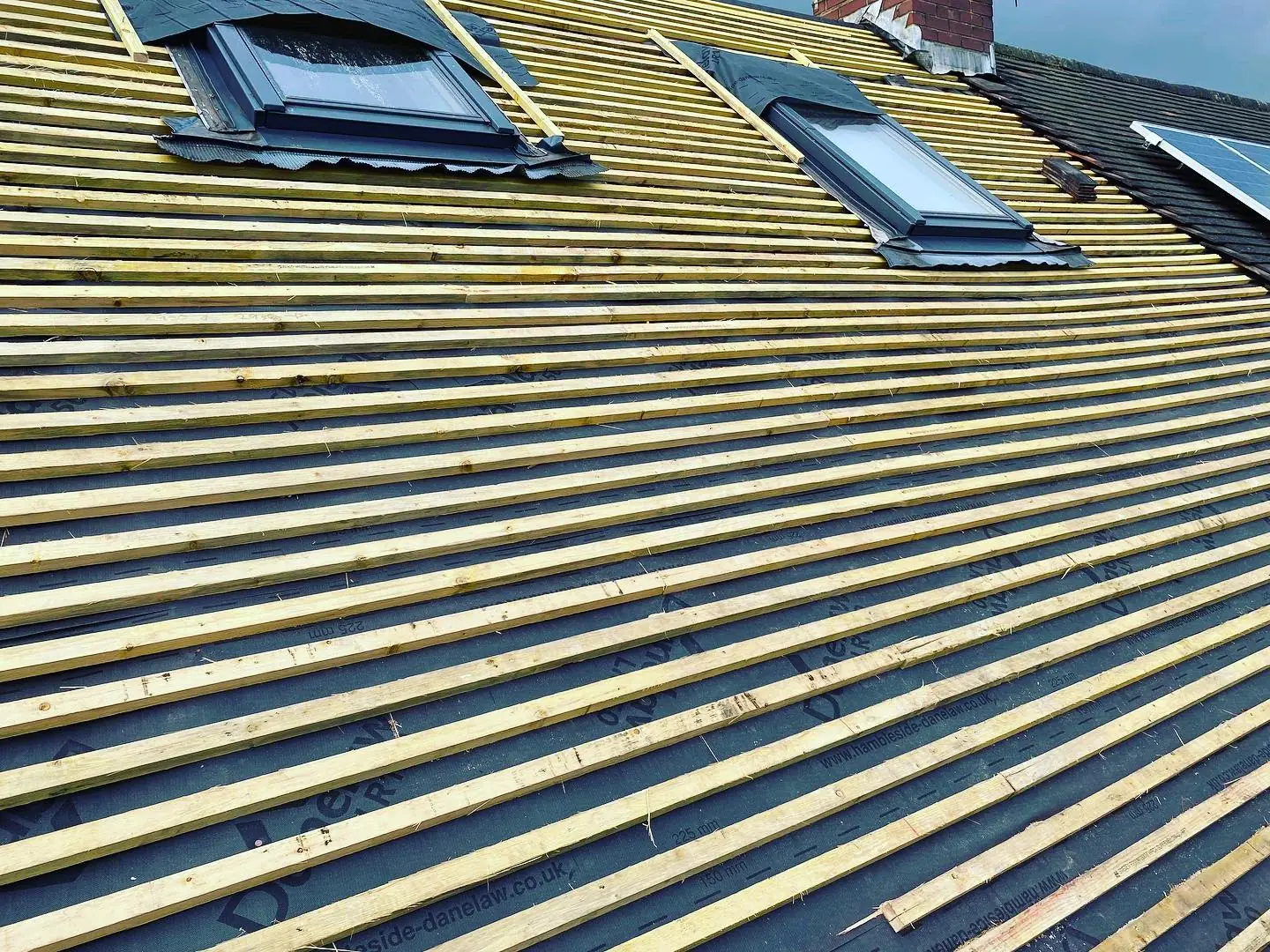
Not every ridge job needs a full scaffold, and we never add one just to pad a bill. What the roof needs depends on its height, pitch and how the ridge is reached.
A minor pointing repair on a low terrace can sometimes be done safely from a roof ladder. A full rebed along the whole ridge is different work. It means kneeling and working at the very top of the roof for hours, lifting and setting heavy tiles. That calls for a stable platform and edge protection, so a scaffold or tower is usually the safe, sensible choice. We price access honestly and explain why it is there, so you are never paying for kit the job does not need.
Safety at height is not a corner we cut. Our roofers hold CSCS cards and work to proper site standards on every job, whether it is a single tile in Little Bowden or a full ridge in Husbands Bosworth.
Mortar or Dry Fix — What the Current Roofing Standard Expects
The rules on fixing ridge tiles have moved on. The British Standard for roof tiling, BS 5534, now expects ridge and hip tiles to be mechanically fixed, not held on by mortar alone.
In practice, that means a screw or clamp holds each tile, even where we rebed it on traditional mortar. Mortar still gives the neat, solid look many homeowners want on a period property, but it no longer does the holding on its own. A dry ridge system takes this further and drops mortar altogether, using a ventilated roll and stainless fixings that shrug off frost and wind. For a plain-English guide to how this works, the Roof Tile Association on dry-fix roofing is a useful read before you decide.
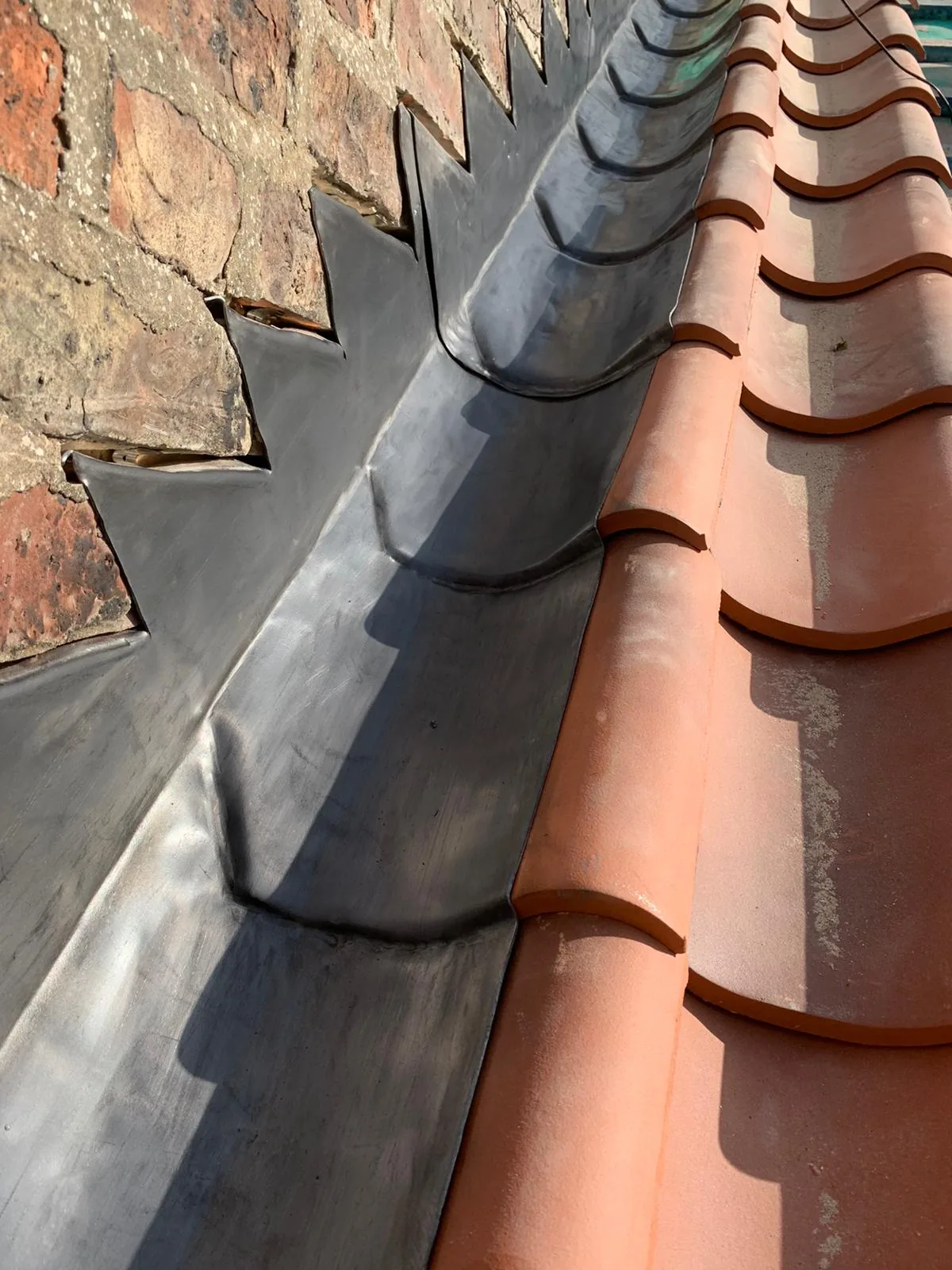
Which way you go is a judgement call, and it is one Michael Tate makes on site with a heritage eye. On a modern estate home, dry fix is often the low-fuss answer. On an older cottage in the Welland Valley, a properly bedded and pointed ridge keeps the roof looking right. Get the fixing method wrong for the property and you either spoil the look or store up another loose ridge for later.
How Long a Rebedded Ridge Lasts — and How to Make It Last
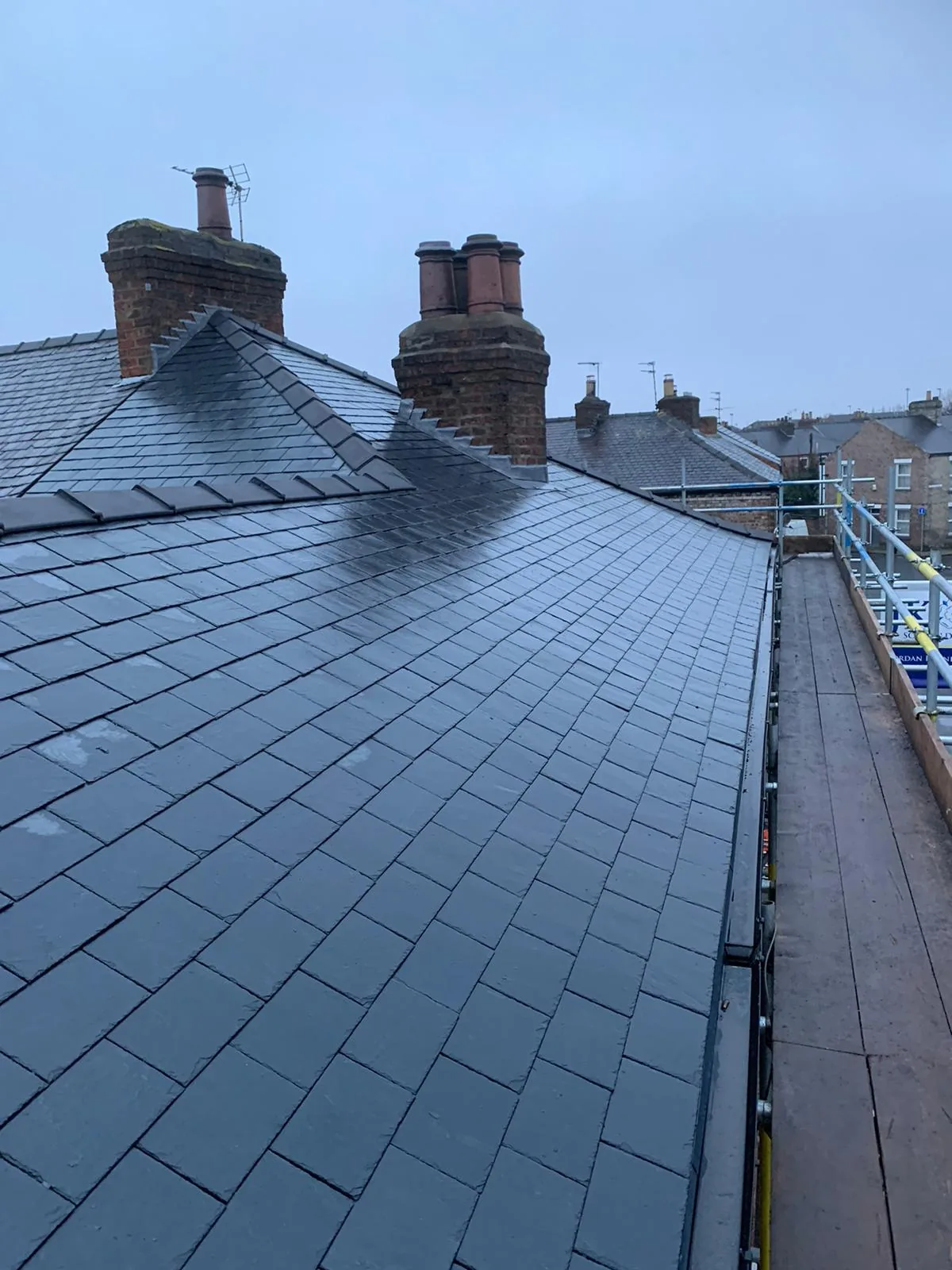
A ridge rebedded properly, on the right mortar mix and in dry weather, holds for around 10 to 15 years and often longer. A dry ridge system pushes that well past 40 years with next to no upkeep. The difference nearly always comes down to how the job was done in the first place.
You can help it along with a quick look now and then. None of this needs a specialist — just a glance from the ground, a couple of times a year.
- Scan the ridge line for gaps or crooked tiles after a big storm
- Check the gutters for lumps of fallen mortar
- Look up at the ridge from the loft for any daylight
- Book a free drone survey if you spot any warning sign above
Ridge tiles rarely sit alone. If your ridge is failing, the slates or plain tiles nearby are often the same age and worth a look at the same time — our Slate Roof Repair page covers that side of the work.
Why Market Harborough Homeowners Call Tate & Sons First
Founder Michael Tate started his apprenticeship at sixteen and has more than 30 years on the tools. He built Tate & Sons on one conviction: fix the cause, not just the symptom — never patch a ridge to look right for a season and fail again the next. He surveys the jobs himself, and his heritage eye means a rebedded ridge on an older home matches the roof it belongs to.
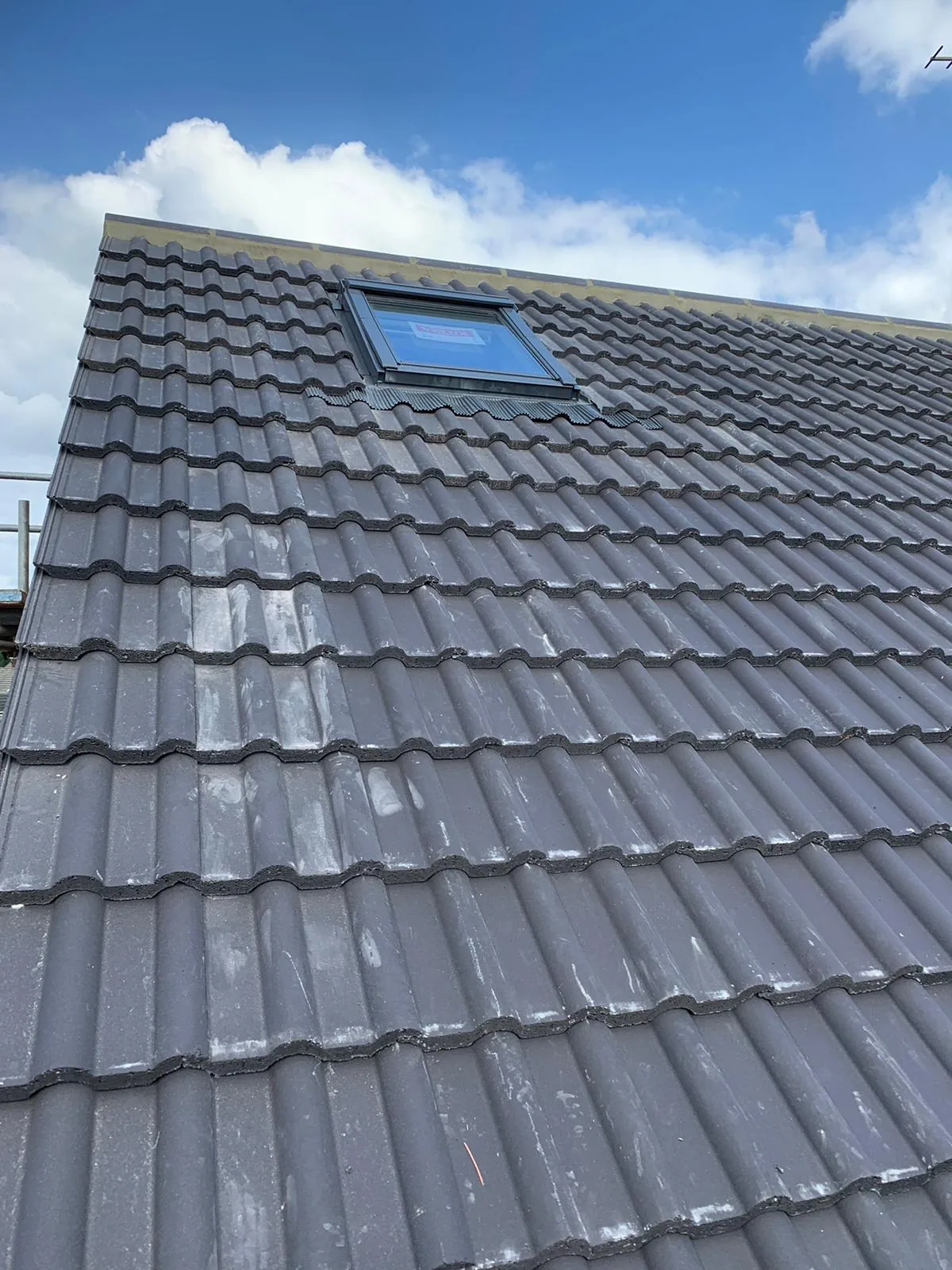
His son Ryan Tate runs the site work and leads the crew that turns up to fit your ridge. Between them the team carries over 45 years of combined experience, holds NVQ Level 2 and 3 qualifications in Roofing Occupations, and keeps CSCS cards and NFRC trade-body membership. You get directly employed roofers, not a subcontracted stranger. Read more about the people behind the work on our About Tate & Sons Roofing page.
Areas We Serve Across Market Harborough and the Harborough District
We repair and rebed ridge tiles across Market Harborough and the surrounding Welland Valley villages. If your area is not on the list below, call us anyway — if you are nearby, there is a strong chance we cover you.
- Market Harborough (LE16)
- Great Bowden (LE16 7)
- Little Bowden (LE16 8)
- Lubenham (LE16 9)
- Foxton (LE16 7)
- Medbourne (LE16 8)
- Kibworth Beauchamp (LE8)
- Great Glen (LE8 9)
- Fleckney (LE8 8)
- Husbands Bosworth (LE17 6)
- Desborough (NN14 2)
Got Questions?
Your Ridge Tile Questions, Answered Properly
Why do ridge tiles come loose?
The mortar bedding underneath them breaks down. Years of heat, frost and wind open cracks in the joint, water gets in and freezes, and the mortar crumbles away. Once the bed gives up, the tile has nothing holding it and starts to slip or rock. A heavy storm then lifts it off entirely. Older ridges held on mortar alone are the ones most at risk.
How much does it cost to rebed ridge tiles?
As a general guide, re-cementing a ridge runs roughly £300 to £800 for a typical semi-detached house. Mortar rebedding works out around £40 to £70 per metre, and a dry ridge system around £35 to £55 per metre fitted. The final figure depends on ridge length, roof height, access and whether the tiles can be reused. A free drone survey gives you an exact written price rather than a phone estimate.
What is the difference between repointing and rebedding ridge tiles?
Repointing renews only the outer mortar joint, sealing cracks that let rain in. Rebedding is the bigger job — the tiles are lifted, the old bed stripped off, and each tile set back on fresh mortar. Repointing works when the tiles are still firmly held. If a tile is loose or rocking, sealing the outside rarely lasts, and it needs rebedding to restore the support underneath.
How long does ridge mortar last?
A ridge rebedded properly on a good mortar mix holds for around 10 to 15 years, and often longer on a sheltered roof. Repointing alone tends to last a similar span, but only when the bedding beneath is still sound. Weather, exposure and the quality of the original work all play a part. A dry ridge system lasts far longer, well past 40 years with almost no upkeep.
Is a dry ridge system better than mortar?
It depends on the roof. A dry ridge has no mortar to crack or wash out, so it needs almost no maintenance and lasts decades. On an exposed or modern roof it is often the smarter choice. On an older or period property, a traditional bedded and pointed ridge keeps the look right, which matters on a cottage or listed home. We advise on site rather than pushing one system for every roof.
Do you need scaffolding to rebed ridge tiles?
Not always. A small pointing repair on a low roof can sometimes be done safely from a roof ladder. A full rebed along the whole ridge means hours of work at the very top, so a scaffold or tower is usually the safe choice. The need comes down to the roof height, pitch and access. We price access honestly and only include what the job genuinely needs.
Can you just repoint instead of rebedding?
Only if the tiles are still firmly bedded and just the joints have weathered. Repointing is cheaper and quicker, and it is the right call on a sound ridge with tired mortar. Once the bedding underneath has failed and tiles have started to move, repointing over the top buys little time. We check the state of the bed first and tell you straight which route your ridge needs.
Do ridge tiles have to be mechanically fixed now?
Yes, under the current standard. BS 5534 expects ridge and hip tiles to be mechanically fixed with a screw or clamp, not held on by mortar alone. This applies to new work and re-roofing. We add the fixing even where we rebed on traditional mortar, so your ridge meets the standard and stays put in a gale. It is a small step that stops the whole run lifting in the next storm.
Book Your Free Drone Roof Survey Today
See exactly what your ridge needs before any work starts. No ladders, no pressure — just a clear picture from a local Market Harborough team.
Every storm that passes over a loose ridge is a chance for a tile to let go. A quick, free survey today tells you exactly where you stand — and often the fix is smaller and cheaper than you feared. Book now, get an honest quote, and protect your home before the next gale finds the weak spot.
ð 5 Hood Close, Market Harborough, LE16 9XS
ð 01858 457600
Call the Market Harborough team today on 01858 457600, or request your free drone survey online. We're already working across your area.
Book Your Free Drone Roof Survey
See exactly where your roof stands, with no obligation and no pressure. Call our Market Harborough team or request your free drone survey today.
Get in Touch
Tate & Sons Roofing — Market Harborough Office
5 Hood Close, Market Harborough, LE16 9XS
📞 01858 457600
✉️ [email protected]