
🏠 Trusted Local Roofers
Dry Verge System Market Harborough
Look up at the gable end of most older homes in Market Harborough and you will see mortar along the edge tiles. Over the years that mortar cracks, crumbles and drops into the garden. A dry verge system in Market Harborough swaps that failing mortar for tough interlocking caps that screw straight to the roof. Tate & Sons Roofing fits dry verge across Market Harborough and the wider Harborough District, on new roofs and existing ones.
This page explains what a dry verge is, how it beats mortar, what colours you can pick, and what it really costs. You will also see whether it fits over your current roof without a full strip. Start with a free drone survey and a written quote before any work begins — no scaffold just to take a look, and no charge either way. Dry verge is one part of the wider service we offer as a roofing contractor across Market Harborough.
- Fully Insured
- 10-Year Guarantee
- 5-Star Rated
Quick Free Estimate - No Obligation
We're not just roofers – we're your neighbours.
Fully Insured • Response within 15 mins
🔒 Your details are safe with us. No spam, ever.
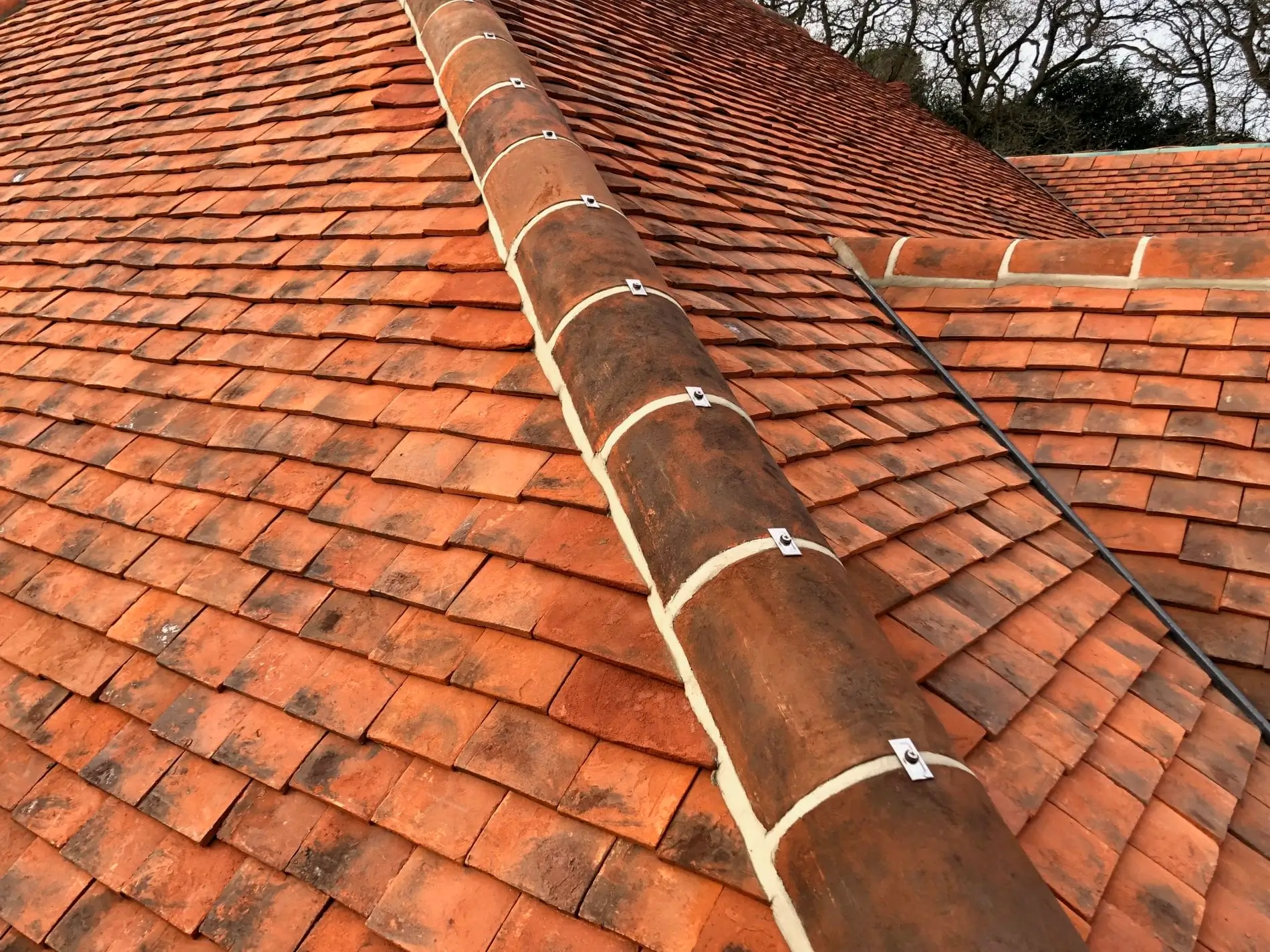
What a Dry Verge System Does at Your Gable End
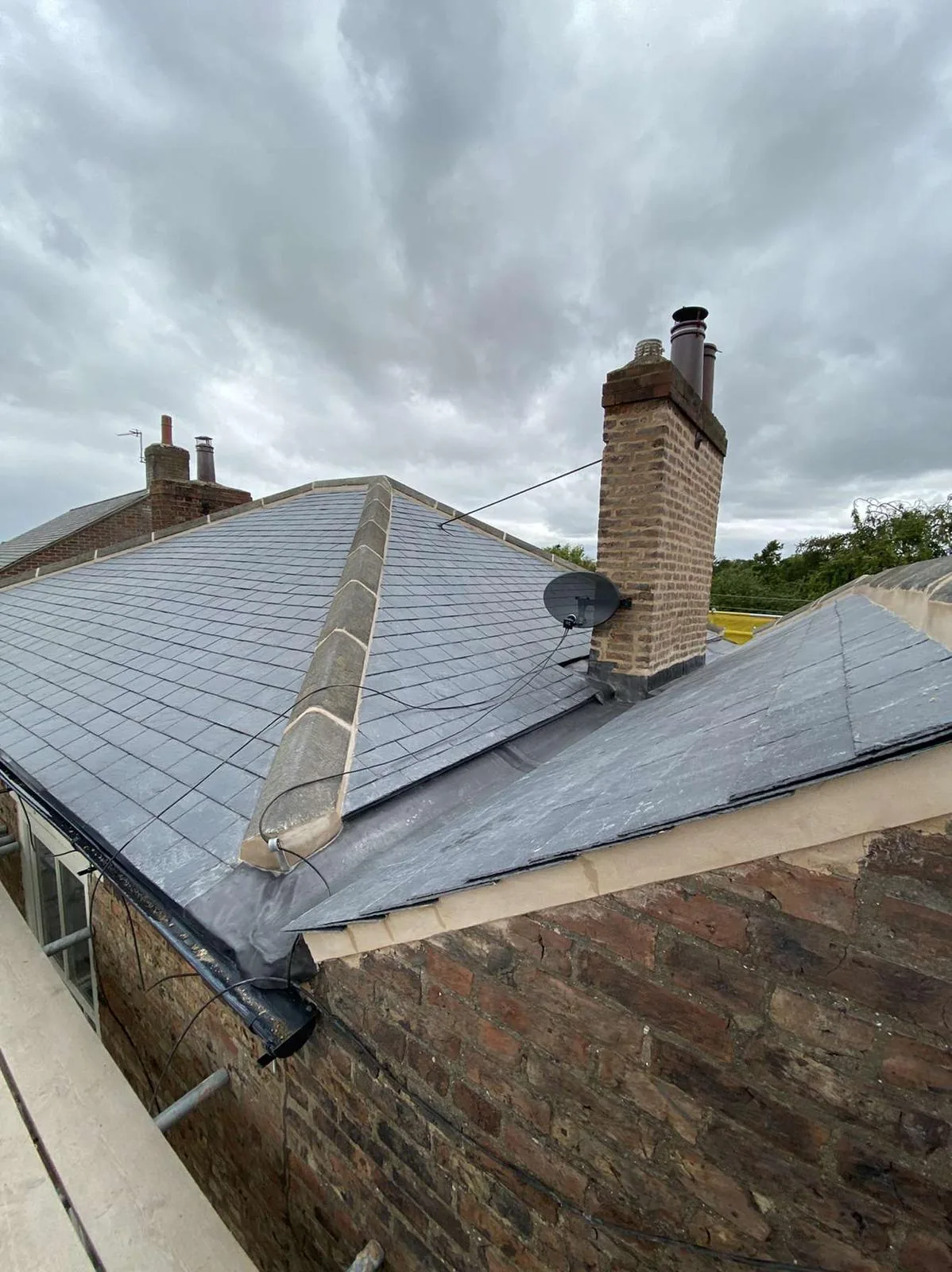
The verge is the sloping edge of your roof at each gable end. It is where the tiles meet fresh air, with no wall or gutter to hold them. For centuries roofers sealed that edge with sand-and-cement mortar. A dry verge does the same job with a mechanical fixing instead.
Each dry verge is a moulded cap that clips over the end of a tile. The cap screws down to the batten or bargeboard below. The caps interlock down the whole verge, from eaves to ridge, in one clean run. No wet mortar, no drying time, and nothing to crack loose later.
The system also guides water away from the tile edge and the timber behind it. That keeps the ends of your battens dry and sound. A dry edge that sheds water well is a roof edge that lasts.
Dry Verge vs Mortar Verge — Why the Old Edge Keeps Cracking
Mortar and a roof pull against each other. The roof flexes with heat, cold and wind, while the mortar stays rigid. In short: mortar cracks because it cannot move, and once it cracks, water and wind get behind it. A dry verge flexes with the roof and stays fixed, which is why it lasts two to three times longer. The table below sets the two side by side with real figures.
| :-: | :-: | :-: | :-: |
| System | Typical cost (per linear metre) | Typical lifespan | Maintenance / best for |
| Mortar verge | £8–£15 | 10–15 years | Needs repointing as it cracks; cheapest upfront on a period look |
| Dry verge | £10–£25 | 30+ years | None once fitted; best for exposed gables and a low-fuss edge |
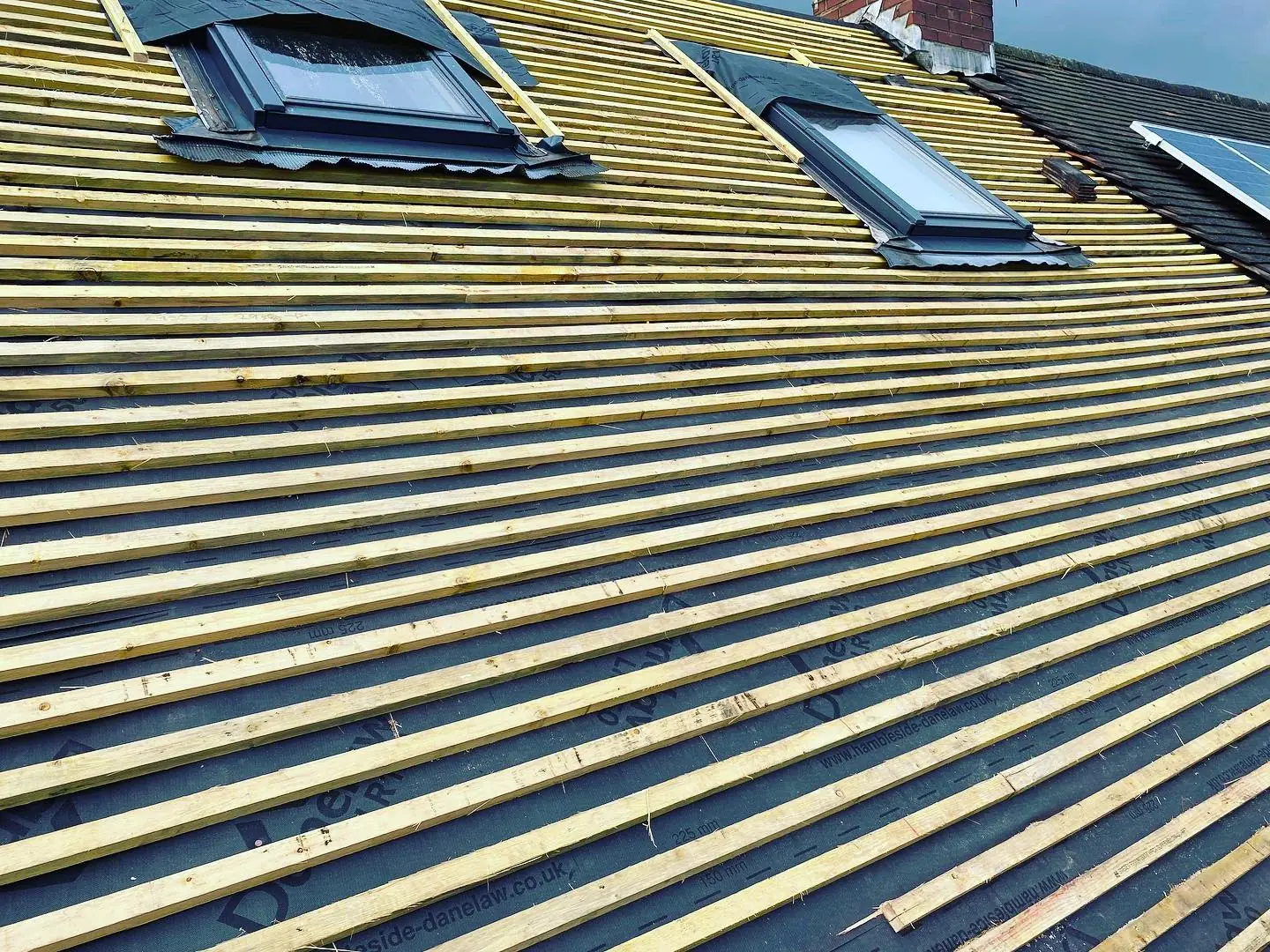
Mortar can win on price for the first job. It loses over the life of the roof, because you pay again every time it cracks. A dry verge costs a little more to fit and then asks nothing of you for decades.
We see cracked verges on a lot of homes around Lubenham and Foxton. The mortar has blown out in patches, and loose tiles sit at the edge. A dry verge fixes the cause, not the last crack.
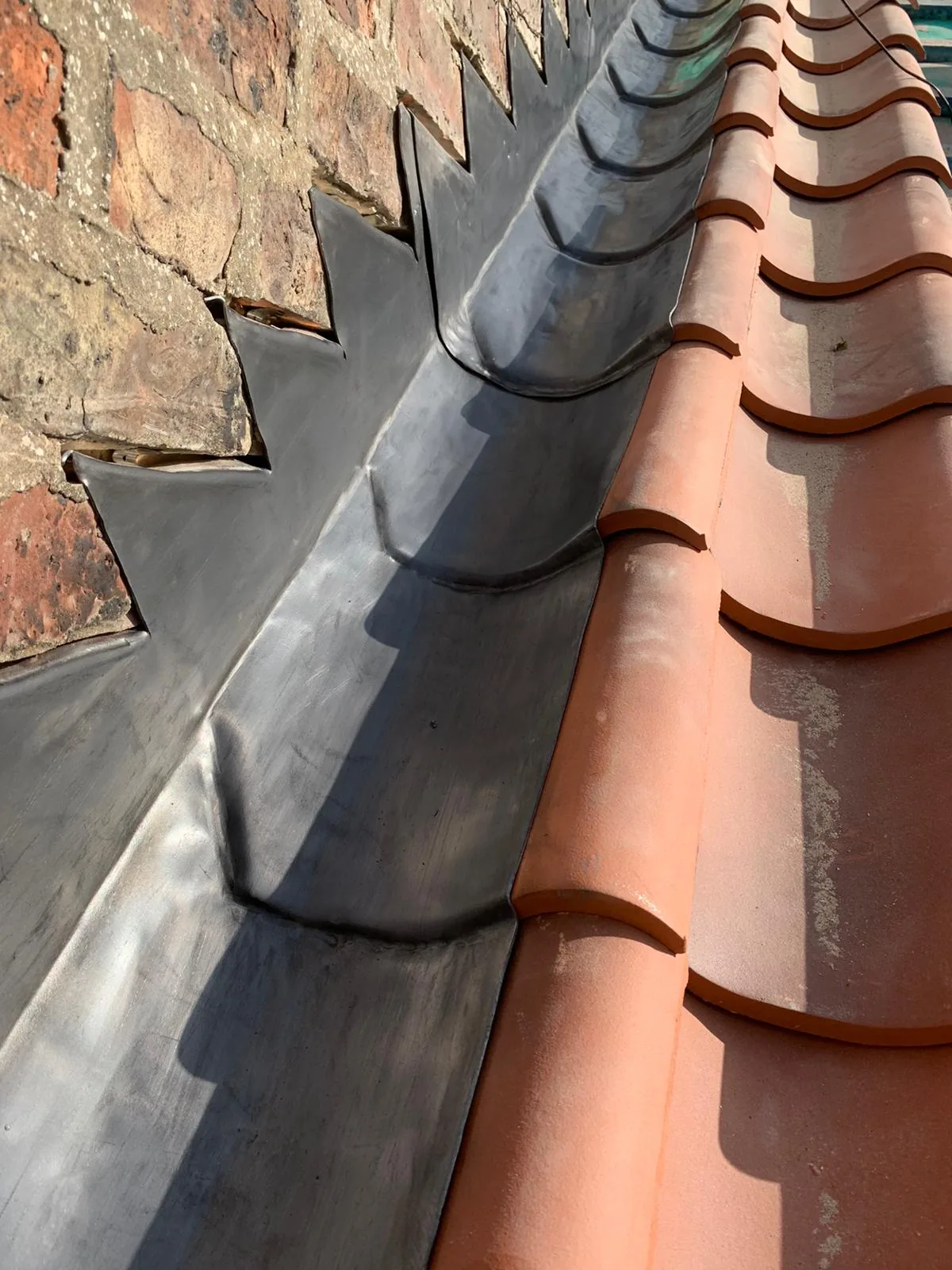
Wind-Driven Rain Stays Out and Caps Stay On
A gable end takes the full force of the weather. When mortar cracks, wind gets under the edge tiles and lifts them. On an exposed roof that is how tiles end up in the street after a storm.
A dry verge locks that edge down mechanically. Each cap ties to the batten, and the caps interlock as a run. Fitted with the right screws, at least two per cap, the wind has nothing to grab. Rain is turned away from the tile ends rather than soaking the timber behind them.
Modern guidance backs the mechanical route. British Standard BS 8612 sets the performance rules for dry-fix verge systems. It also expects the caps to shed water and hold against set wind loads. New-build roofs now lean on mechanical fixing for the verge as standard.
Fit It Over Your Existing Roof — No Full Strip Needed
You do not need a new roof to get a dry verge. On most homes we retrofit it to the roof you already have. There is no need to strip tiles across the whole roof or start again.
The work runs in a set order. We rake out the old cracked mortar along the verge. We clean the tile ends and check the battens are sound. Then the dry verge caps clip on and screw down in one tidy run.
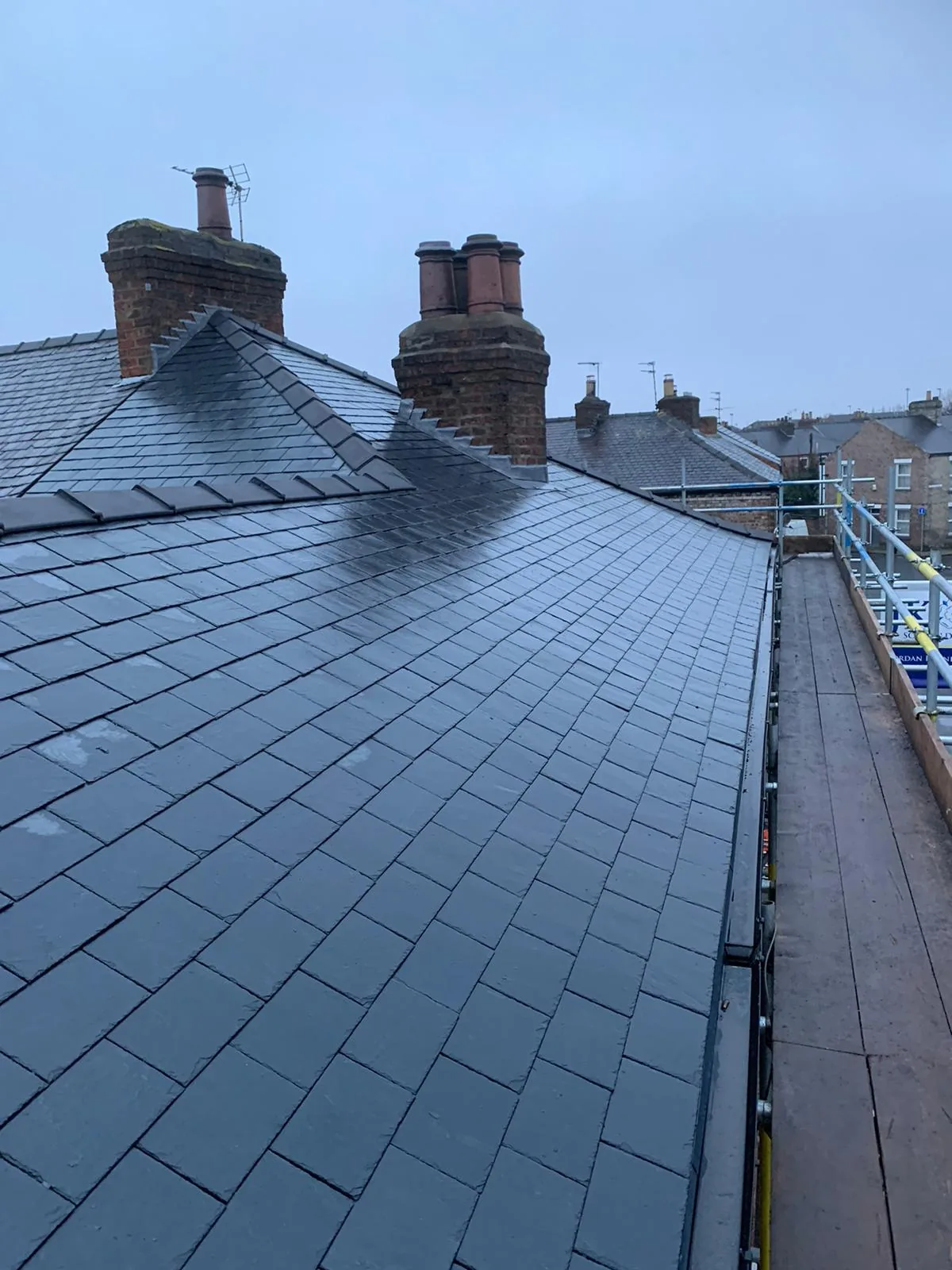
One thing to watch on a retrofit is the batten length. On some older roofs the battens stop short of the edge. Where that happens, the fixing needs enough timber to bite into, so we sort the batten line first. That is the sort of detail a drone survey shows before we quote. A dry verge often pairs well with a matching Dry Ridge System along the top of the roof.
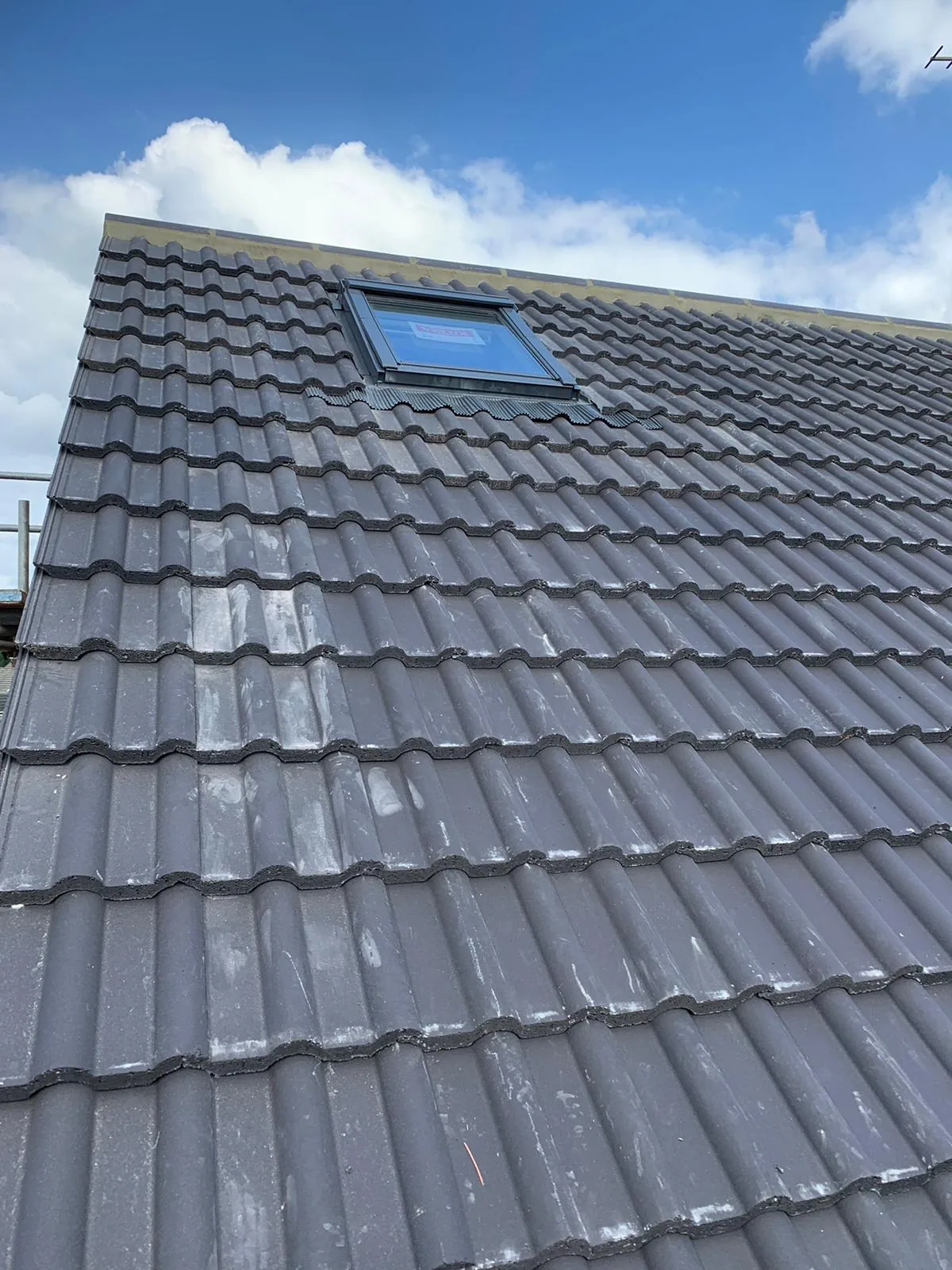
Colours That Blend Into Your Roofline
A dry verge does not have to stand out. The caps come in a range of standard colours to sit with your tiles. Most homes in this area take grey, brown, black or a terracotta shade.
We match the cap to the roof, not the other way round. On a grey concrete tile a grey cap all but disappears. On a red clay roof a terracotta cap keeps the period look. You get to see the options before we order anything.
Colour holds up well over time too. The pigment runs right through the material, so it does not flake or fade like painted trim. Your gable edge looks the same in year fifteen as it did on day one.
Keep Loose Mortar Off Your Path and Out of the Gutter
Cracked verge mortar does not just look tired. Lumps of it break off and fall. They land on the path, in the border, and down into the gutter where they block the flow.
A dry verge puts a stop to that. Once it is fitted, nothing crumbles off the edge. There is no mortar to repoint, no annual patch-up, and no debris to clear from below. The edge simply works.
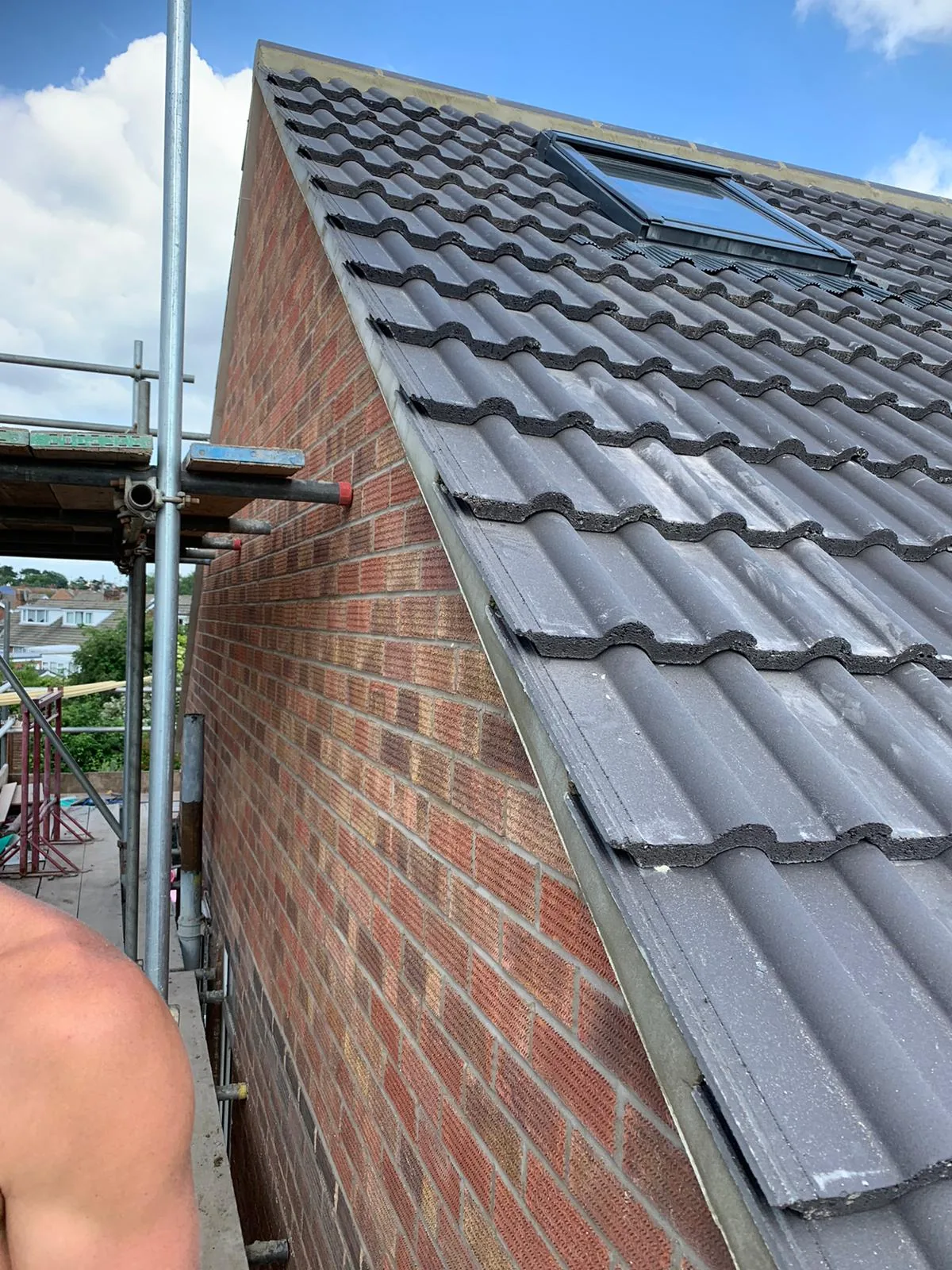
That low-fuss finish is why so many homeowners in Great Bowden and Kibworth Beauchamp switch when they re-roof. They want an edge they can forget about. A dry verge gives them exactly that, and it pairs neatly with new Concrete Roof Tiling on a full re-roof. For an independent read on how these systems work, the Building magazine on roof verge systems is a useful reference.
What a Dry Verge System Costs in Market Harborough
Cost comes down to three things: the length of the verges, the material, and access.
As a general guide, dry verge runs roughly £10–£25 per linear metre fitted. A typical semi-detached house lands around £750–£1,000 for the full job, materials and labour together. Across all house types the spread sits between about £500 and £2,000. uPVC caps cost around £5–£10 a unit, while aluminium caps run nearer £15–£25 a unit.
What pushes a price up or down:
- **Verge length*— a tall gable or a house with more gable ends means more metres to cover
- **Retrofit vs new build*— raking out old mortar and cleaning tile ends adds labour a new roof does not
- **Access*— a gable reached by ladder costs less to reach than one boxed in behind an extension
- **Batten condition*— short or soft battens at the edge need putting right before the caps go on
- **Material*— an aluminium cap costs more per unit than a uPVC one
These are general market ranges, not a quote for your roof. Two homes the same size can price apart once access and batten condition come into it. The only way to a firm figure is a proper survey — which is what our free drone survey gives you, followed by a clear written price with nothing added later. A fixed price needs a survey.
Why Market Harborough Homeowners Call Tate & Sons First
You are not just buying a set of caps — you are buying whoever fits them. Ryan Tate, our project manager, fits modern dry-fix systems day in, day out, and he is on site for the work, not just the quote. He handles the dry verge, the dry ridge and the fixing details that make an edge last. He will walk you through the choice in plain English, not sales talk.
Founder Michael Tate started his apprenticeship at sixteen and built Tate & Sons on one conviction: fix the cause, not just the symptom. He surveys the roof himself before we quote, so the price matches the job. Between us we carry over 45 years of combined experience, hold NVQ Level 2 and 3 qualifications in Roofing Occupations, and keep CSCS cards and NFRC trade-body membership. Read more about the people behind the work on our About Tate & Sons Roofing page.
Areas We Serve Across Market Harborough and the Harborough District
We fit dry verge systems across Market Harborough and the surrounding Welland Valley villages. If your area is not on the list below, call us anyway — if you are nearby, there is a strong chance we cover you.
- Market Harborough (LE16)
- Great Bowden (LE16 7)
- Little Bowden (LE16 8)
- Lubenham (LE16 9)
- Foxton (LE16 7)
- Medbourne (LE16 8)
- Kibworth Beauchamp (LE8)
- Great Glen (LE8 9)
- Fleckney (LE8 8)
- Husbands Bosworth (LE17 6)
- Desborough (NN14 2)
Got Questions?
Your Dry Verge Questions, Answered Properly
What is a dry verge system?
It is a set of interlocking caps that finish the gable edge of a roof without mortar. Each cap clips over the end tile and screws down to the batten or bargeboard. The caps run the length of the verge and lock together as one edge. They replace the old sand-and-cement mortar with a fixing that will not crack loose over time.
Dry verge vs mortar verge — which is better?
For most homes a dry verge is the better long-term choice. Mortar is cheaper on day one but cracks and needs repointing every ten to fifteen years. A dry verge costs a little more to fit and then lasts thirty years or more with no upkeep. Mortar still suits some period looks, which is why we talk it through before you decide.
How much does a dry verge system cost in Market Harborough?
As a general guide, dry verge runs roughly £10 to £25 per linear metre fitted. A typical semi-detached house lands around £750 to £1,000 for the full job. The final figure depends on verge length, access and whether old mortar has to come off first. A free drone survey gives you an exact written price rather than a rough estimate over the phone.
Do dry verge caps blow off in high winds?
Not when they are fitted right. Each cap screws to the batten and interlocks with the caps above and below it. We use at least two screws per cap, into sound timber, so the wind has nothing to lift. That mechanical hold is exactly why a dry verge beats mortar on an exposed gable.
What colours do dry verge systems come in?
The standard range covers grey, brown, black and terracotta. We match the cap to your tiles so the edge blends in rather than stands out. On a grey concrete roof a grey cap all but disappears. The colour runs right through the material, so it does not flake or fade over the years.
Can you fit a dry verge to my existing roof?
Yes, on most homes we retrofit it without a full re-tile. We rake out the old mortar, clean the tile ends, and check the battens are sound. Then the caps clip on and screw down in one run. The one thing we check first is that the battens reach the edge with enough timber to fix into.
Are dry verge systems really maintenance-free?
Once fitted, a dry verge asks nothing of you. There is no mortar to crack, repoint or clear off the path below. The caps hold the edge and shed water on their own for decades. That low-fuss finish is the main reason homeowners switch from mortar when they re-roof.
Do I have to fit dry verge on a new roof?
New-build and re-roofed work now leans on mechanical fixing at the verge as standard. British Standard BS 8612 sets the performance rules for dry-fix systems, and current guidance points away from mortar alone. On any new roof we fit, a dry verge is the edge we recommend. It meets the standard and saves you the repointing that mortar always comes back for.
Book Your Free Drone Roof Survey Today
See exactly what your gable edge needs before any work starts. No ladders, no pressure — just a clear picture from a local Market Harborough team.
Every season a cracked verge waits, more mortar drops and more wind gets under the edge tiles. A quick, free survey today tells you exactly where you stand — and often the fix is smaller and cheaper than you feared. Book now, get an honest quote, and lock down your roof edge before the next storm finds the weak spot.
ð 5 Hood Close, Market Harborough, LE16 9XS
ð 01858 457600
Call the Market Harborough team today on 01858 457600, or request your free drone survey online. We're already working across your area.
Book Your Free Drone Roof Survey
See exactly where your roof stands, with no obligation and no pressure. Call our Market Harborough team or request your free drone survey today.
Get in Touch
Tate & Sons Roofing — Market Harborough Office
5 Hood Close, Market Harborough, LE16 9XS
📞 01858 457600
✉️ [email protected]