
🏠 Trusted Local Roofers
GRP Fibreglass Roofing in Hinckley
A flat roof only works if water has nowhere to sit and nowhere to get in. GRP fibreglass roofing in Hinckley gives you a single moulded surface with no seams, no joints, and no obvious weak point for rain to find. It is fitted cold, without a blowtorch anywhere near your timber, and it cures into one solid sheet that follows every upstand and corner of your roof.
Tate & Sons Roofing fits GRP fibreglass roofs across Hinckley, from garage roofs on the older streets near the town centre to extension roofs on the new-build plots spreading out towards Sapcote and Stoney Stanton. We are a directly employed roofing contractor across Hinckley, so the crew that surveys your roof is the crew that fits it.
This page covers when GRP beats felt or EPDM, what installation day actually involves, real cost ranges, and how to keep a GRP roof performing for decades. Start with a free drone survey and a written quote before anything is agreed.
- Fully Insured
- 10-Year Guarantee
- 5-Star Rated
Quick Free Estimate - No Obligation
We're not just roofers – we're your neighbours.
Fully Insured • Response within 15 mins
🔒 Your details are safe with us. No spam, ever.
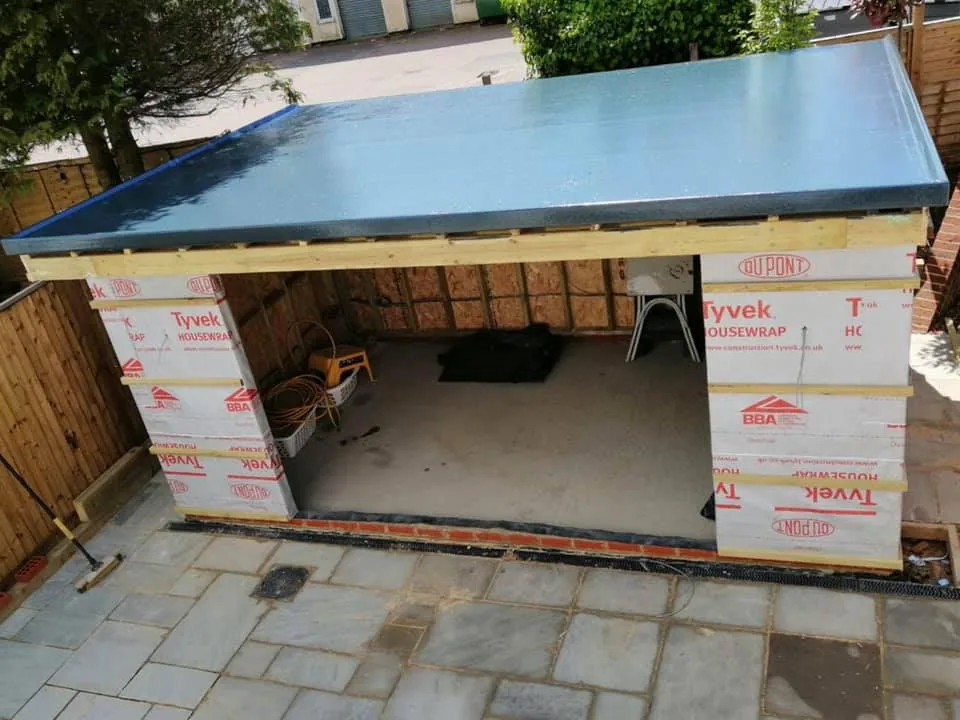
Know When Your Flat Roof Needs GRP, Not Another Patch
A flat roof gives warning signs long before it actually leaks. The trouble is that most of those signs sit above your head, out of sight, until water has already found its way through.
Watch out for these on any garage, extension or dormer roof:
- Bubbles or blisters in the surface after warm weather
- Cracks running along the edges or around upstands
- Ponding water that takes more than 48 hours to drain
- Felt that has gone brittle, curled, or lost its granules
- A roof covering more than 15 to 20 years old
- Damp patches on the ceiling directly below the flat section
A free drone survey settles the question properly. You get real footage of your flat roof, not a guess shouted up from a ladder.
A felt roof reaching the end of its life is the most common reason Hinckley homeowners look at GRP instead. Felt typically lasts 10 to 20 years and fails at the seams first, since every joint is a place for water to start working its way in. GRP has no seams at all, which is why so many people switch to it once a felt roof starts letting them down.
GRP vs EPDM vs Felt — Choosing the Right Flat Roof for Your Property
Three systems cover almost every flat roof in Hinckley: GRP fibreglass, EPDM rubber, and felt. Each has a genuine place, and the right one depends on your roof's shape, your budget, and how long you want it to last.
| :-: | :-: | :-: | :-: |
| System | Typical cost (per m²) | Typical lifespan | Best for |
| GRP fibreglass | £70–£130 | 20–30 years, up to 40 with careful installation | Complex roofs with upstands, edges and detailing; walkable balconies and terraces |
| EPDM rubber | £60–£100 | 25–50 years | Large, simple rectangular roofs with fewer edges; lowest long-term maintenance |
| Felt (built-up/torch-on) | £40–£70 | 10–20 years | Budget garage and shed roofs, short-term or temporary cover |
Daniel Whitmore, our project manager, walks every customer through which system actually suits their roof rather than pushing whichever one is easiest to fit that week.
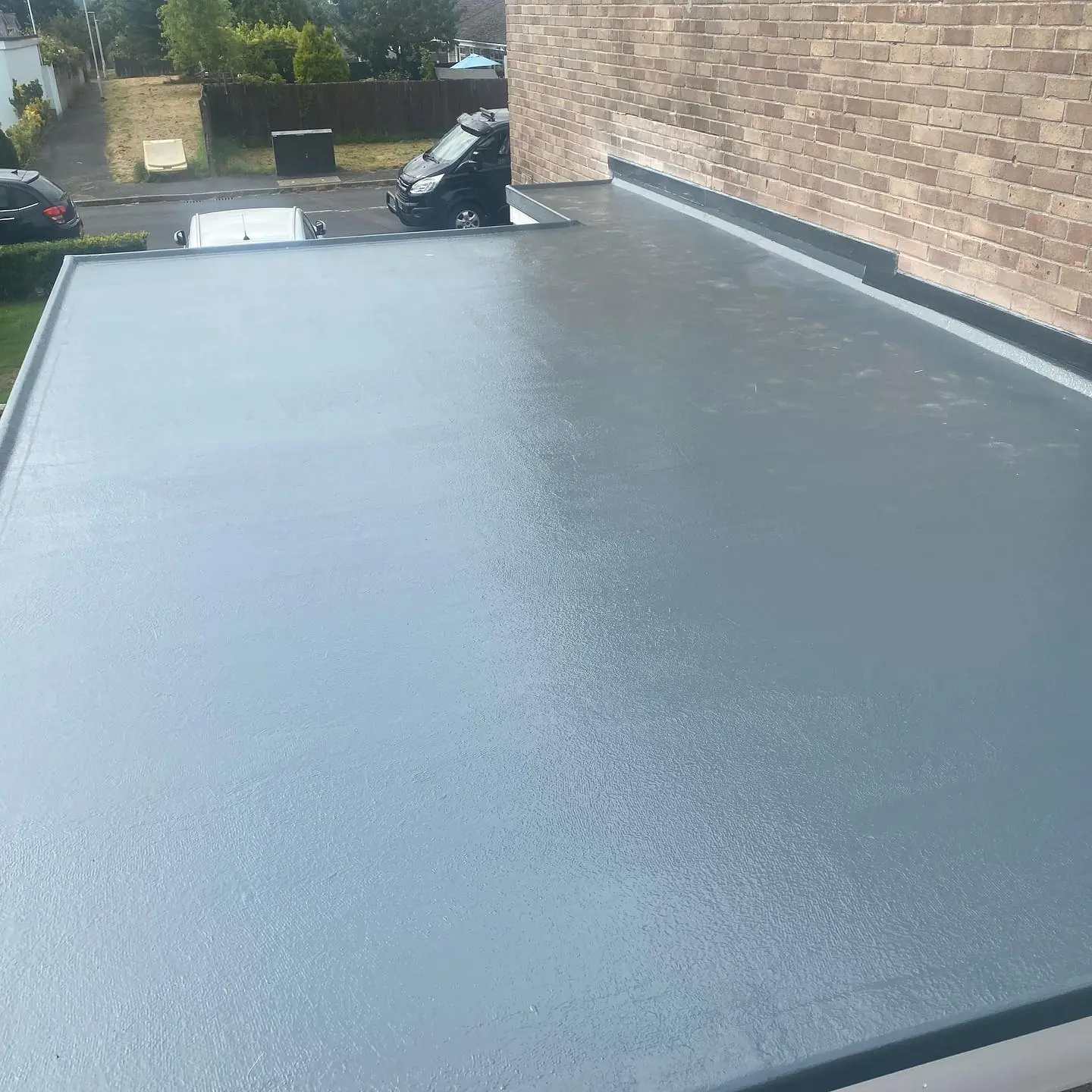
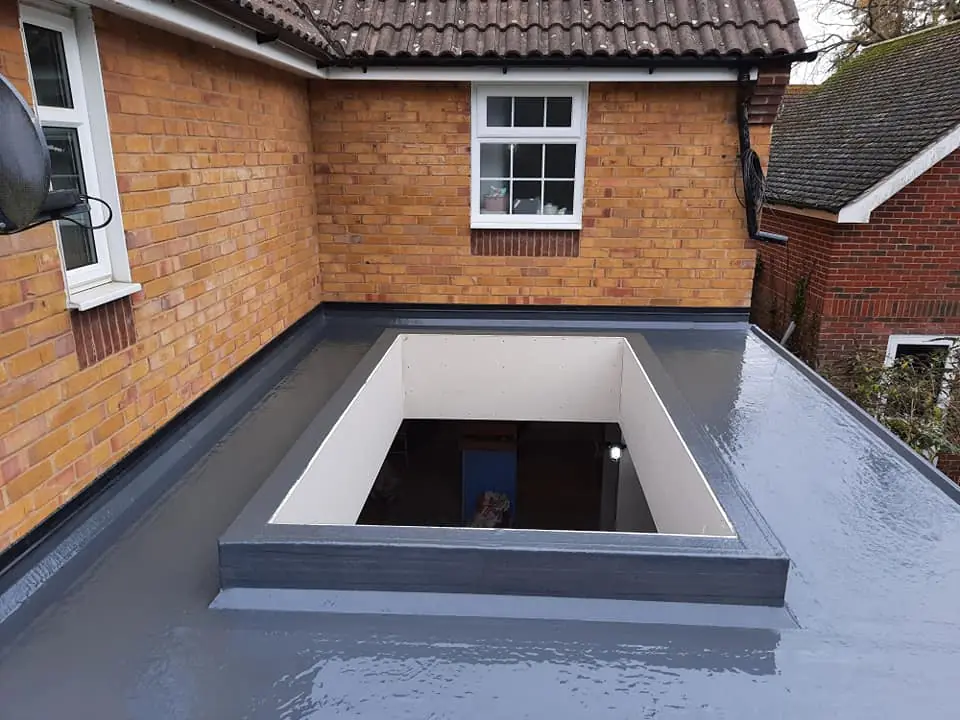
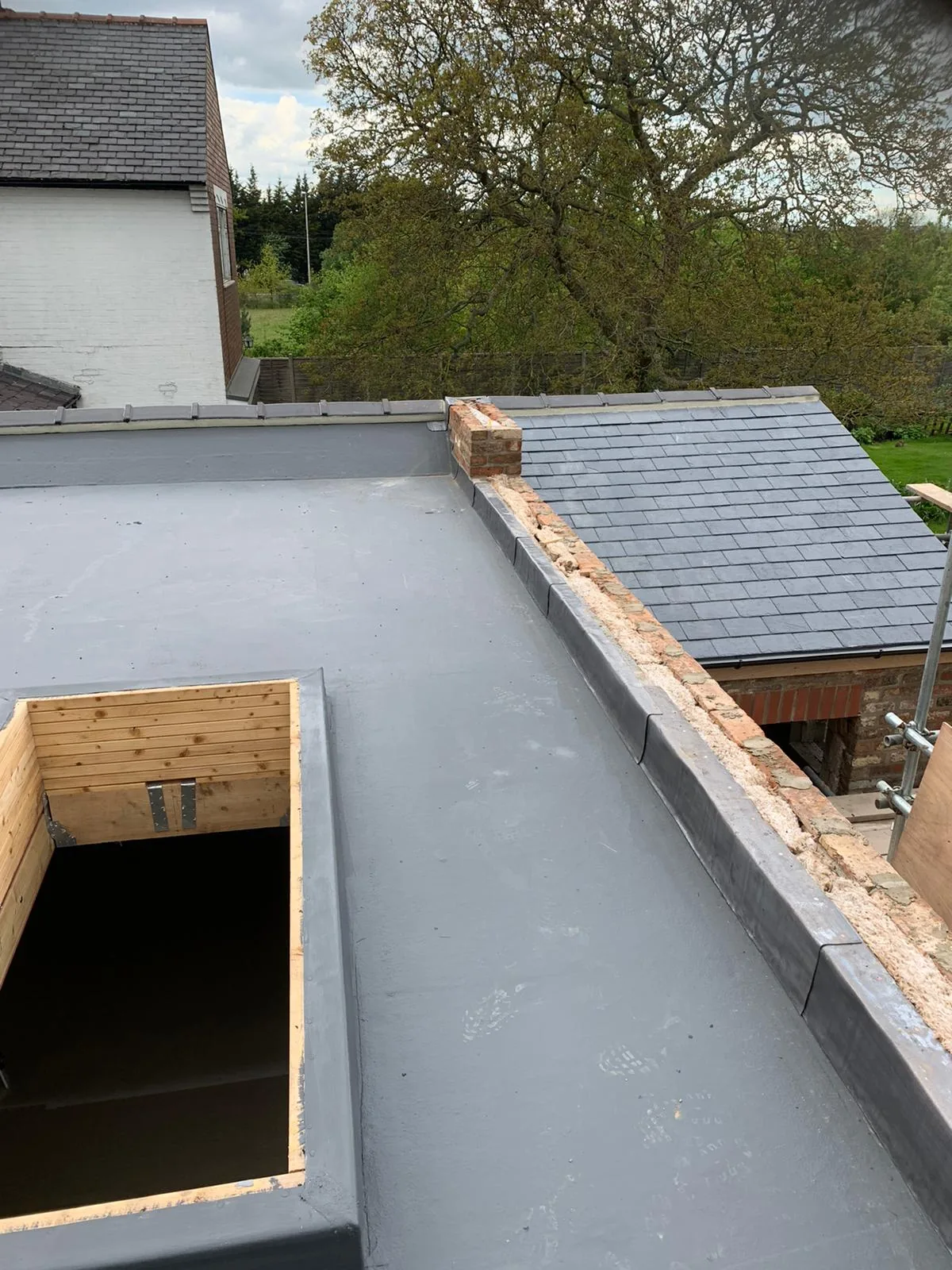
GRP earns its keep on roofs with plenty of upstands, chimneys, rooflights or changes in level, since the liquid resin moulds around every detail without a single joint. A simple rectangular garage roof with no obstructions often suits EPDM just as well, usually for a little less money and a longer working life. If your project is a straightforward rubber roof rather than a moulded fibreglass one, our EPDM rubber roofing service covers that system in full.
What Happens Before Installation Day — Getting Your Roof Ready for GRP
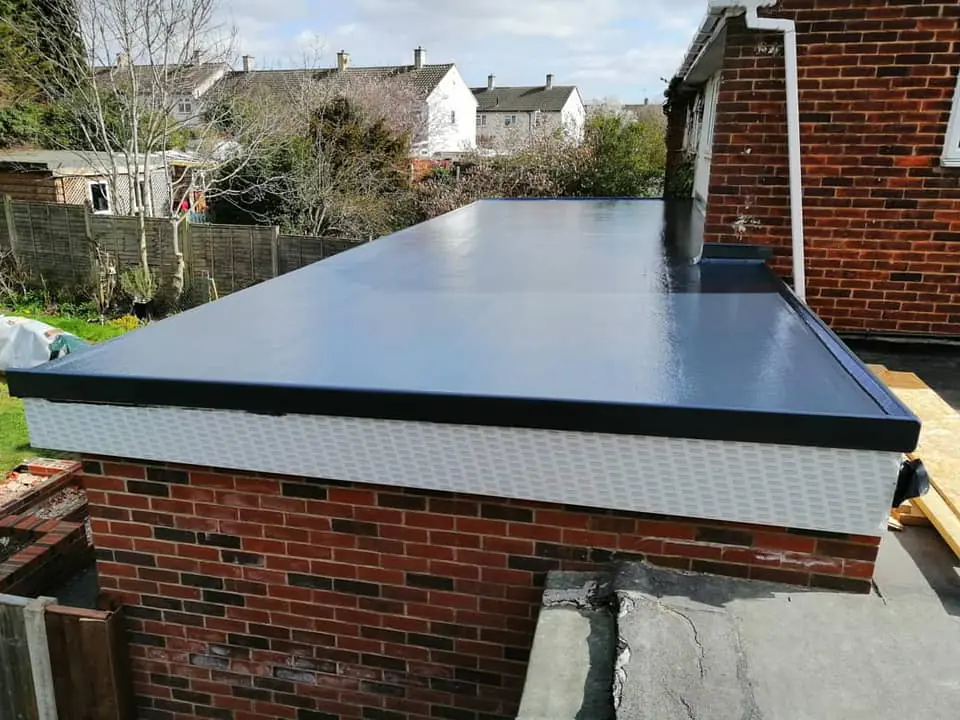
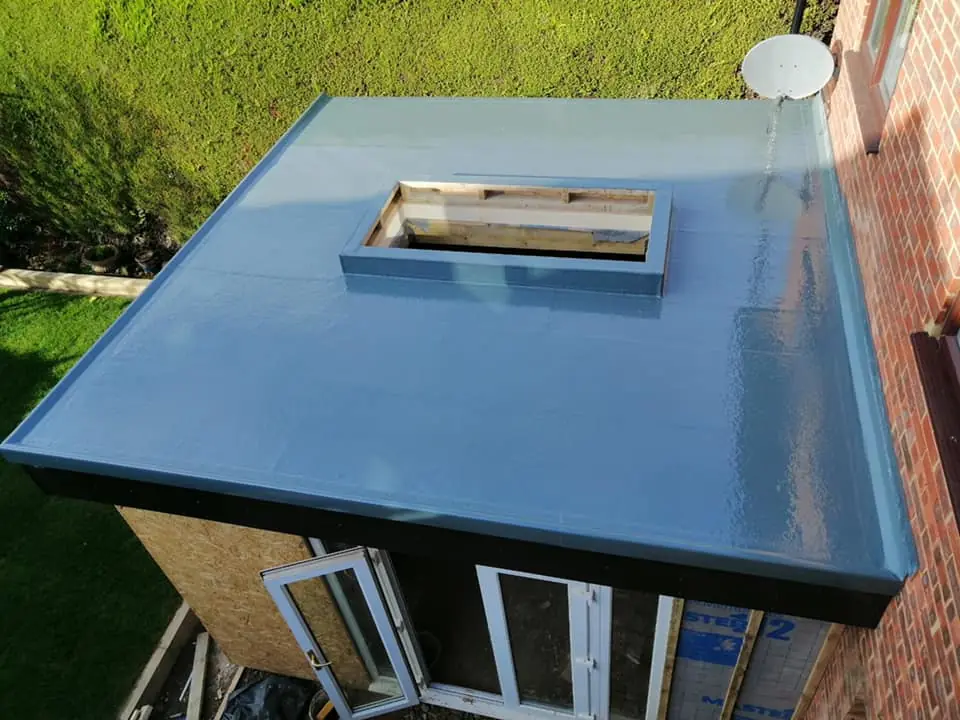
GRP needs a sound, dry deck underneath it, and getting that right matters more than the resin itself. Most Hinckley jobs use 18mm WBP plywood or OSB3 board as the base, fixed with a slight fall so water always has somewhere to go.
Before any resin goes near the roof, we check three things. First, the existing deck for rot or movement, especially on older garages around the town centre where timber has often taken damp for years unnoticed. Second, the fall of the roof, since standing water is the single biggest cause of early GRP failure. Third, the weather forecast, because GRP needs a dry, settled window to cure properly.
On new-build extensions going up around Sketchley Hill and Sapcote, the deck is usually sound and fresh, so preparation is quicker and the job moves straight to laying resin. On older Hinckley properties, replacing a soft or rotten deck board typically adds a day to the job, but it is not a step worth skipping. A GRP roof is only as good as what sits beneath it.
Installation Day — How a Seamless GRP Roof Actually Goes Down
A GRP installation follows the same sequence on every job, from a small garage to a full extension roof:
- Deck checked, repaired, and swept clean of dust and debris
- Trims and edge profiles fitted around the perimeter
- A base coat of catalysed resin rolled onto the deck
- Fibreglass matting laid into the wet resin and rolled out flat
- A second resin coat applied to fully saturate the matting
- A UV-stable topcoat applied for colour, grip and weather protection
- The roof checked for full cure before anyone walks on it
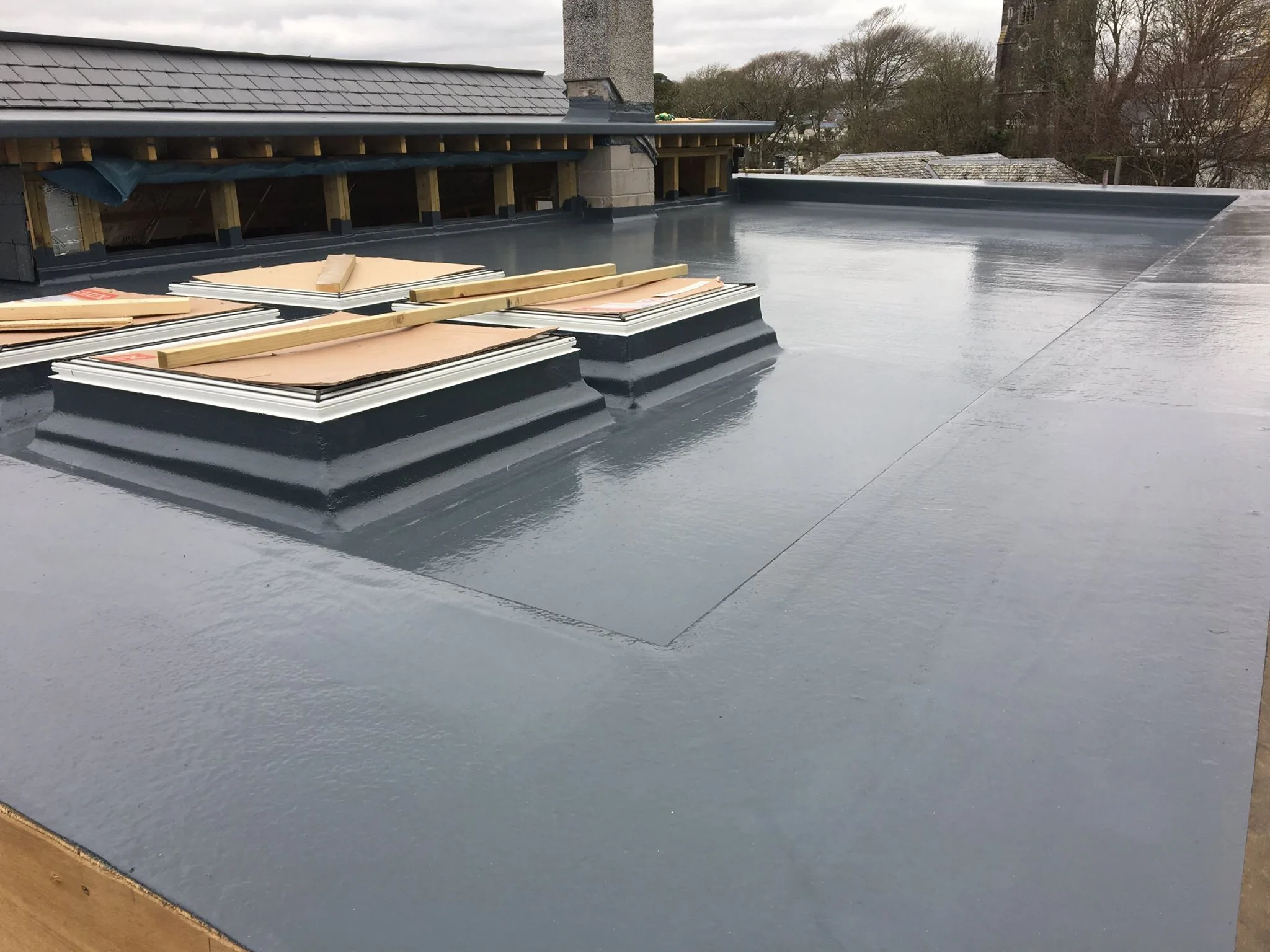
A standard garage roof usually takes one working day from start to finish once the deck is ready. A larger extension roof, or one with several upstands and rooflights, typically takes two days. GRP cures cold, so there is no naked flame anywhere near your roof at any point, unlike torch-on felt.
Adhesive selection and edge detailing matter more than most homeowners realise, particularly where a GRP roof meets an upstand or a neighbouring liquid system. The Liquid Roofing and Waterproofing Association publishes detailed technical guidance on adhesives for liquid flat roof systems, and it is the kind of detail that separates a roof that lasts 30 years from one that blisters within five. We work to that standard as a matter of course, not as an upgrade.
What a GRP Fibreglass Roof Really Costs in Hinckley
GRP fibreglass roofing typically costs £70 to £130 per square metre fully installed, covering both materials and labour. Standard specifications sit toward the bottom of that range, while insulated GRP systems and premium topcoats push costs toward the top.
As a general guide, a typical garage roof of around 15 to 20 square metres usually costs £1,200 to £2,600 fully fitted. A larger extension or dormer roof of 25 to 40 square metres typically runs £2,000 to £4,500, depending on how many upstands, rooflights and edge details are involved.
What pushes the price up or down:
These are general market ranges, not a quote for your roof. Two garage roofs the same size can price differently once deck condition and access are factored in. A fixed price needs a survey.
- **Roof complexity*— chimneys, rooflights and upstands all add labour and resin
- **Deck condition*— rotten boards typically add £300–£800 before resin goes on
- **Insulation*— an insulated warm-roof build-up adds roughly £20–£40 per square metre
- **Access*— a garage roof reached easily from a driveway costs less to scaffold than a boxed-in rear extension
- **Matting specification*— heavier matting for a walkable balcony costs more than a standard non-trafficked roof
Keep Your GRP Roof Performing for Decades
A well-installed GRP roof needs very little attention, but a little care goes a long way toward hitting the top end of its lifespan.
- Clear leaves and debris from the surface each autumn
- Check that water is draining and not pooling after heavy rain
- Sweep gently with a soft brush rather than jet washing the surface
- Look at flashings and upstands after any major storm
- Book a free drone survey every few years to catch problems early
Homes out along the A5 and Watling Street corridor take a harder battering from wind-driven rain than a sheltered street nearer Hollycroft Park, and that affects how firmly edge trims and upstands need to be fixed. We factor a property's exposure into the specification, not just its postcode.
Cracking or banging noises are usually thermal movement rather than a fault. GRP is a rigid material, and it expands slightly in summer heat and contracts in winter cold. A properly detailed roof allows for that movement at the edges, which is why correct installation matters more than the resin brand used. A poorly fitted deck with no expansion gap is the real cause of most cracking, not the GRP itself.
Why Hinckley Homeowners Choose Tate & Sons for GRP Roofing
A GRP roof is only as good as the hands that laid it. Daniel Whitmore, our project manager and lead roofer, oversees GRP and flat roof installations across Hinckley and specialises in the detailing around upstands, valleys and abutments that decide whether a roof lasts 15 years or 35.
Every GRP roof we fit carries a 10-year workmanship guarantee, and every quote starts with a free drone survey rather than a guess from the driveway.
Founder James Tate started out on the tools more than 20 years ago and still quotes the majority of jobs personally, including most flat roof and GRP work. Between us we bring 40 years of combined team experience, hold NVQ Level 2 and 3 qualifications in Roofing, and carry CSCS cards. Sophie Bennett, our office manager, keeps quotes, scheduling and aftercare running smoothly from your first call through to the finished roof. Read more about the people behind the work on our About Tate & Sons Roofing page.
Areas We Serve Across Hinckley and Bosworth Country
We fit GRP fibreglass roofs across Hinckley and the surrounding borough. If your area is not on the list below, call us anyway — there is a strong chance we already cover you.
- Hinckley (LE10)
- Burbage (LE10)
- Barwell (LE9)
- Earl Shilton (LE9)
- Sapcote (LE9)
- Sharnford (LE10)
- Wolvey (LE10)
- Higham on the Hill (CV13)
- Sutton Cheney (CV13)
- Stoke Golding (CV13)
- Market Bosworth (CV13)
- Nuneaton (CV10 / CV11)
- Bedworth (CV12)
Affluent Burbage, sitting right against Hinckley's southern edge, has plenty of extension and garage flat roofs that suit GRP well. Further out, the fast-growing new-build estates around Sapcote and Stoney Stanton are turning out fresh flat-roof extensions almost every month, and GRP is often the specification builders reach for first.
Got Questions?
Your GRP Fibreglass Roofing Questions, Answered Properly
How much does a GRP fibreglass roof cost in Hinckley?
GRP fibreglass roofing typically costs £70 to £130 per square metre fully installed. A standard garage roof of 15 to 20 square metres usually runs £1,200 to £2,600, while a larger extension roof of 25 to 40 square metres typically costs £2,000 to £4,500. Deck condition, insulation and roof complexity all affect the final figure. A free drone survey gives you an exact written price rather than a phone estimate.
How long does a GRP fibreglass roof last?
A well-installed GRP roof typically lasts 20 to 30 years, and roofs with careful installation and regular maintenance can reach 30 to 40 years. Lifespan depends heavily on deck preparation, correct expansion allowance, and how well the UV topcoat is maintained. Poor installation is the most common reason a GRP roof falls short of its expected life. Regular checks catch small problems before they shorten that lifespan.
Can I walk on a GRP fibreglass roof?
Yes, GRP can be built to take regular foot traffic, including balconies and terraces. The matting specification changes depending on how much footfall the roof will see, with heavier layers used for balconies than for a roof nobody walks on. Tell us upfront if the roof needs to be walkable, since it changes the specification, not just the finish. Getting this wrong at the quoting stage is one of the most common GRP mistakes.
Can GRP be fitted over my existing felt or asphalt roof?
Sometimes, but only if the existing deck underneath is sound and dry. Where the old covering is bonded well and the timber beneath shows no rot, overlaying can save on strip-out costs. Where the deck has taken on damp or moved over the years, stripping back to sound timber is the safer route, even though it costs more upfront. We check this properly during the survey rather than assuming either way.
How do I clean and maintain a GRP roof?
Sweep loose debris away with a soft brush and use mild detergent with a non-abrasive scrubber for dirt build-up. Avoid jet washing, since the pressure can damage the topcoat and shorten the roof's working life. Clear gutters and check for pooling water each autumn. A quick visual check after storms catches most problems before they become leaks.
Do I need planning permission for a GRP fibreglass roof?
Most straightforward flat roof coverings, including re-covering an existing garage or extension roof in GRP, do not need planning permission. Permission becomes more likely if the work raises the roof height, changes the roofline by a large margin, or applies to a listed building or conservation area. Some streets around Stoke Golding and Market Bosworth fall into the latter category. We check before quoting so there are no surprises once work is scheduled.
Is GRP or EPDM better for my flat roof?
It depends on your roof's shape. GRP suits roofs with plenty of upstands, rooflights and detailing, since the liquid resin moulds seamlessly around every feature. EPDM often suits large, simple rectangular roofs better, usually for a little less money and a longer typical lifespan. Neither system is universally better — the right choice comes down to your roof's actual layout, which we assess during the survey.
Why does my GRP roof crack or make banging noises in changing temperatures?
This is almost always thermal movement rather than a structural fault. GRP is rigid and expands slightly in warm weather, then contracts as it cools. A properly detailed roof leaves an expansion gap at the deck perimeter to absorb that movement, and roofs without one are the ones that crack or creak loudly. Poor original installation, not the resin itself, is the usual root cause. A survey can confirm whether movement is normal or a sign of a deeper problem.
Is GRP a good choice for a new flat-roof extension near Sapcote or Stoney Stanton?
Yes, and it is one of the most common specifications going onto the new-build extensions in that area. Fresh timber decks on new-build plots give GRP an ideal, dry base to bond to, which reduces the preparation work a converted older property often needs. The seamless finish also suits the clean lines most new-build extensions are designed around. We fit GRP on new-build and extension roofs across Sapcote, Stoney Stanton and the wider growth areas around Hinckley regularly.
Book Your Free Drone Roof Survey Today
See exactly what your flat roof needs before any work starts. No ladders, no pressure — just a clear picture from a local Hinckley team.
Every season a failing felt or ageing GRP roof is left alone, water works further into the deck beneath it, and a straightforward re-cover turns into a bigger repair involving rotten timber. A quick, free survey today tells you exactly where you stand, and the fix is often smaller than you feared. Book now, get an honest quote, and get a seamless roof that is built to last.
Call the Hinckley team today on 01455 242595, or request your free drone survey online. We're already working across your area.
Book Your Free Drone Roof Survey
See exactly where your roof stands, with no obligation and no pressure. Call our Hinckley team or request your free drone survey today.
Get in Touch
Tate & Sons Roofing — Hinckley Office
10 Brosdale Drive, Hinckley, LE10 0SW
📞 01455 242595
✉️ [email protected]