
🏠 Trusted Local Roofers
Felt Roofing in Hinckley
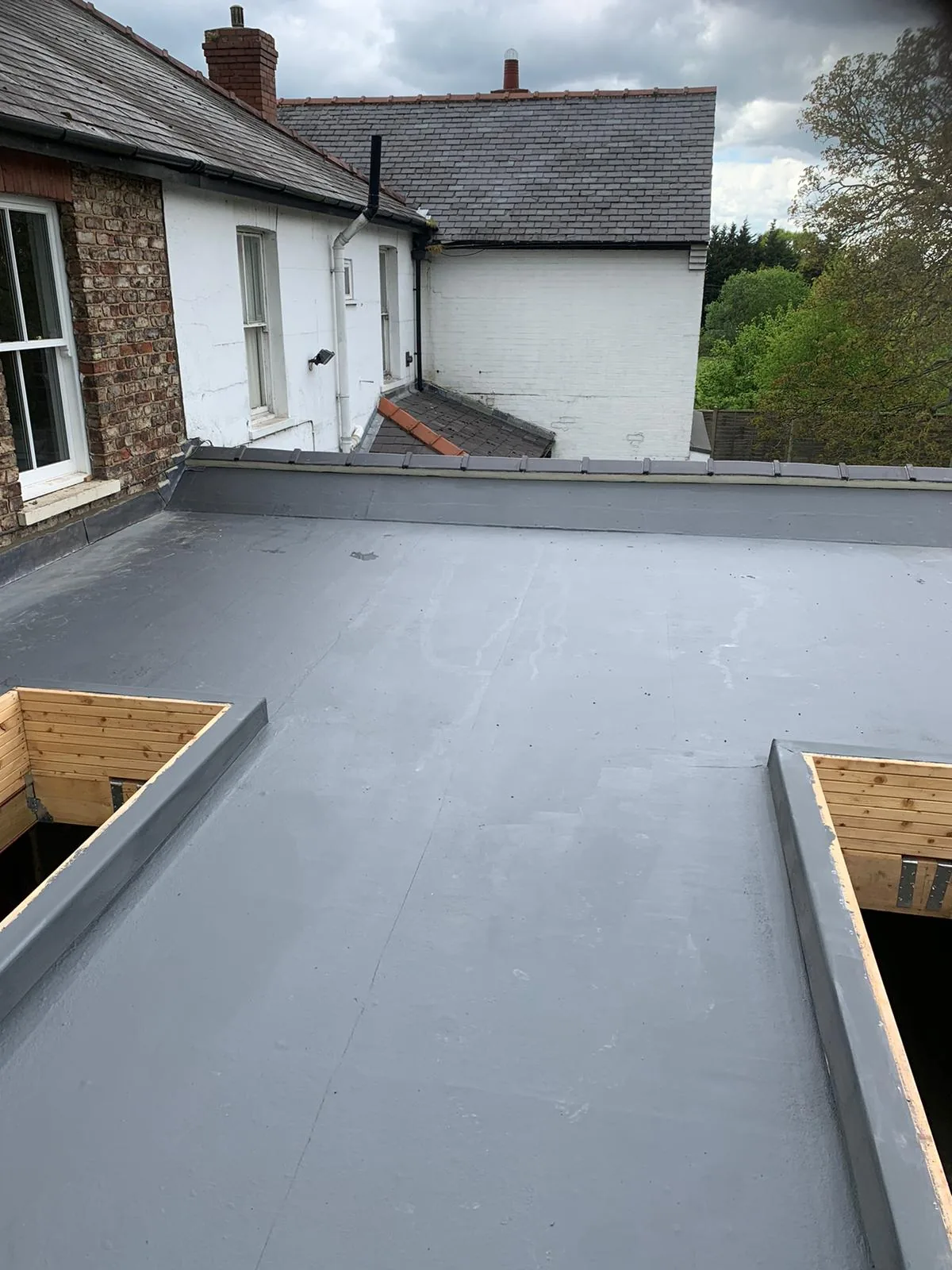
Felt roofing in Hinckley stays the most affordable way to cover a garage, shed, extension or dormer with a genuinely watertight roof. Modern felt has moved on from the thin, brittle sheets of decades past, and a properly fitted system now holds up for 15 to 20 years or more. Tate & Sons Roofing fits felt roofs across Hinckley, Burbage and the wider borough, from a single shed roof out near Wolvey to a full garage re-felt on an older terrace close to the Druid Quarter.
This page walks you through when felt beats other flat roof systems, which type of felt suits your roof, what installation day involves, and real cost figures for the Hinckley area. Start with a free drone survey and a written quote before anything is agreed — no ladder against your wall just to take a look, and no charge either way. Felt roofing is one part of the wider flat roofing work we carry out as a roofing contractor across Hinckley.
- Fully Insured
- 10-Year Guarantee
- 5-Star Rated
Quick Free Estimate - No Obligation
We're not just roofers – we're your neighbours.
Fully Insured • Response within 15 mins
🔒 Your details are safe with us. No spam, ever.
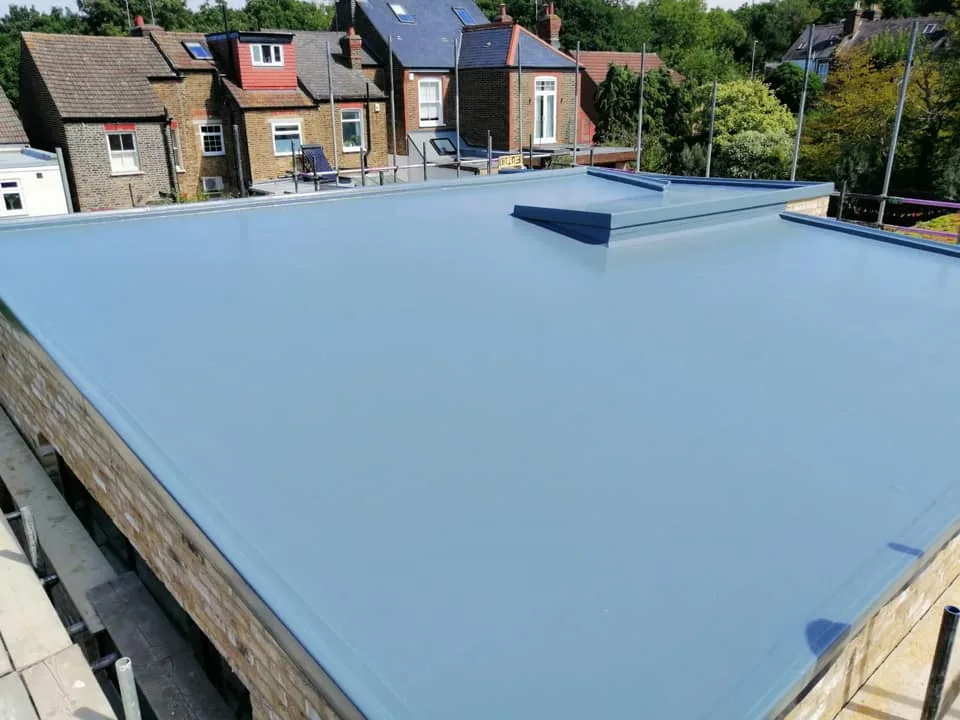
Know the Warning Signs Your Felt Roof Is Failing
A felt roof rarely fails without warning. The trouble is that a flat roof sits out of sight above a garage or single-storey extension, so problems build for months before anyone in Hinckley notices a stain on the ceiling below.
Look out for these:
- Bubbles or blisters across the surface, especially after a hot spell
- Cracking or crazing where the felt has dried out and lost its flexibility
- Water sitting on the roof more than 48 hours after rain stops
- Edges or laps lifting away from the roof deck
- Dark, damp patches spreading across a garage or extension ceiling
- Moss or heavy debris building up in valleys and around outlets
- A felt covering more than 15 to 20 years old with repeated patch repairs
A felt roof under 10 years old with one blister is usually a straightforward repair. A roof past 15 years with cracking across most of the surface is telling you it is close to the end of its working life. A free drone survey settles the question with real footage, not a guess from the ground.
Repair, Overlay or Full Re-Felt — Getting the Call Right
One blister or a single split seam does not mean your whole roof needs stripping off. Small, isolated damage on an otherwise sound felt roof is usually a simple repair job, and our felt roof repair service deals with exactly that kind of localised fault quickly and at low cost.
Widespread blistering, cracking across most of the surface, or a felt roof that keeps needing patched every year points toward a full re-felt instead. We see this often on the older terraces around the Druid Quarter, where garage and lean-to roofs from Hinckley’s hosiery and framework-knitting years have been patched repeatedly rather than properly renewed. Patching buys a season, but the underlying felt keeps failing until the roof gets stripped back and redone properly.
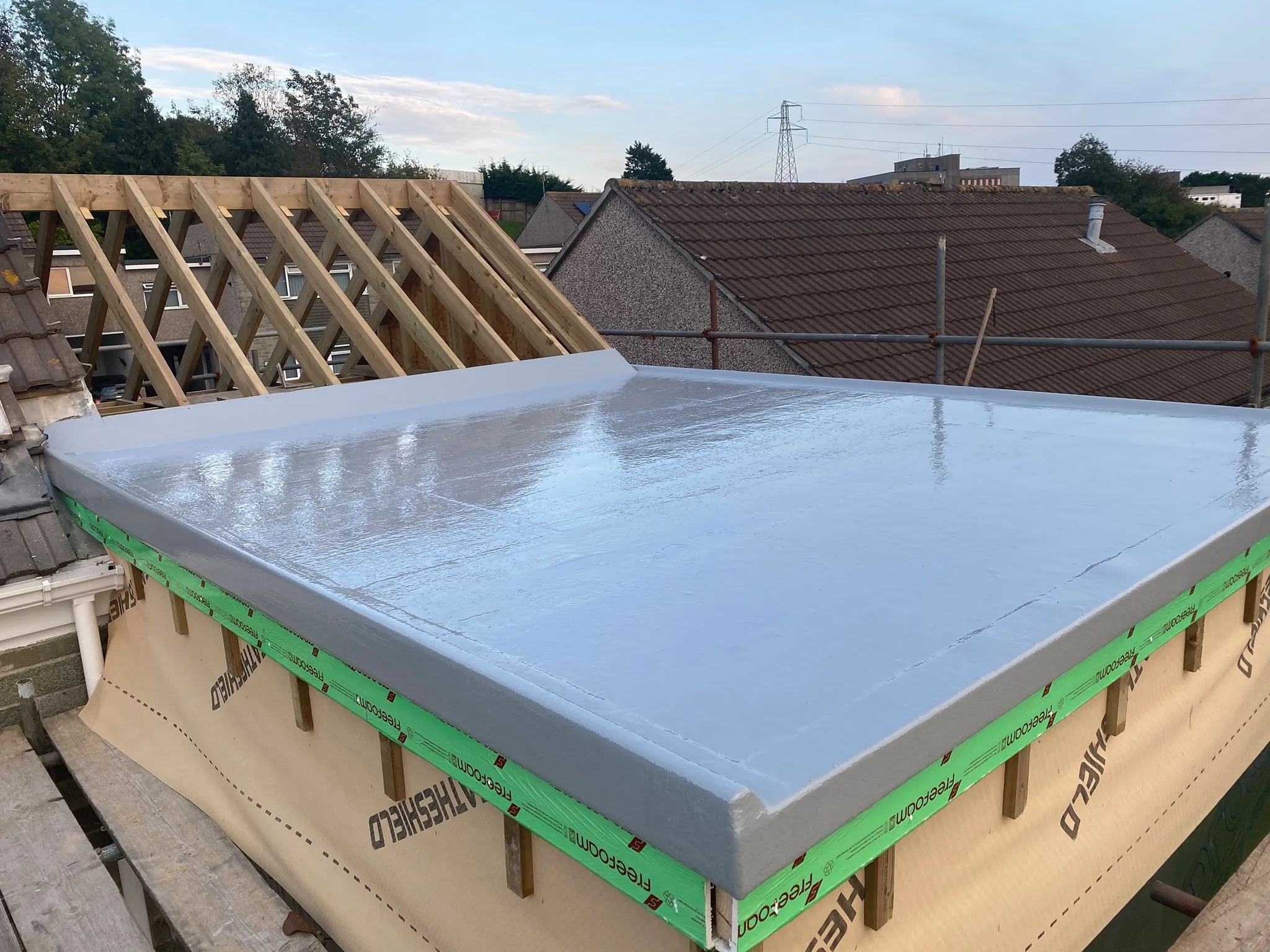
Sometimes a full strip-out is not needed. Where the deck underneath is sound and dry, a new layer of felt can be laid straight over the old covering, which saves on labour and disposal costs. We check the deck and existing felt on every survey before recommending either route, so you are not paying for work you do not need.
Shed Felt vs Torch-On vs High-Performance — Choosing the Right System
Three types of felt cover almost every job we fit around Hinckley. Each suits a different roof, budget and expected lifespan. In short: shed felt is the cheapest option and best kept for sheds and low-value outbuildings; built-up torch-on felt is the standard mid-range choice for garages and extensions; high-performance mineral felt costs more upfront but lasts the longest and suits larger or more visible flat roofs.
| :-: | :-: | :-: | :-: |
| Felt Type | Typical cost (per m²) | Typical lifespan | Best for |
| Shed felt (nailed mineral felt) | £15–£25 | 5–10 years | Sheds, small outbuildings, low-budget cover |
| Built-up torch-on felt (multi-layer bitumen) | £50–£80 | 15–20 years | Garages, extensions, dormers |
| High-performance mineral cap sheet | £70–£100 | 20–25+ years | Larger flat roofs, extensions wanting a longer warranty |
Homes around the bustling centre of Barwell and the newer estates near Hollycroft mix all three roof types, often on the same street. A single garage usually only needs a torch-on system, while a bigger flat-roofed extension benefits from the added lifespan a high-performance cap sheet brings. Daniel Whitmore, our project manager, will talk you through which system suits your roof and your budget, without pushing you toward the most expensive option if it is not needed.
Do You Need Permission to Re-Felt a Roof in Hinckley?
Re-felting a garage, shed or extension roof almost never needs planning permission, since it counts as maintenance or a like-for-like repair in most cases. Permission becomes more likely only if the work changes the roof’s height or shape, or if the property is listed or sits within a conservation area.
Building Regulations rarely apply to a simple re-felt, but they can come into play if you are also upgrading insulation as part of the job, since thermal performance rules still apply. Streets around Stoke Golding and Market Bosworth carry more listed and character buildings, so we check a property’s status before quoting on those villages. Everywhere else across Hinckley, Burbage, Earl Shilton and Sapcote, a straightforward re-felt is usually free of red tape altogether.
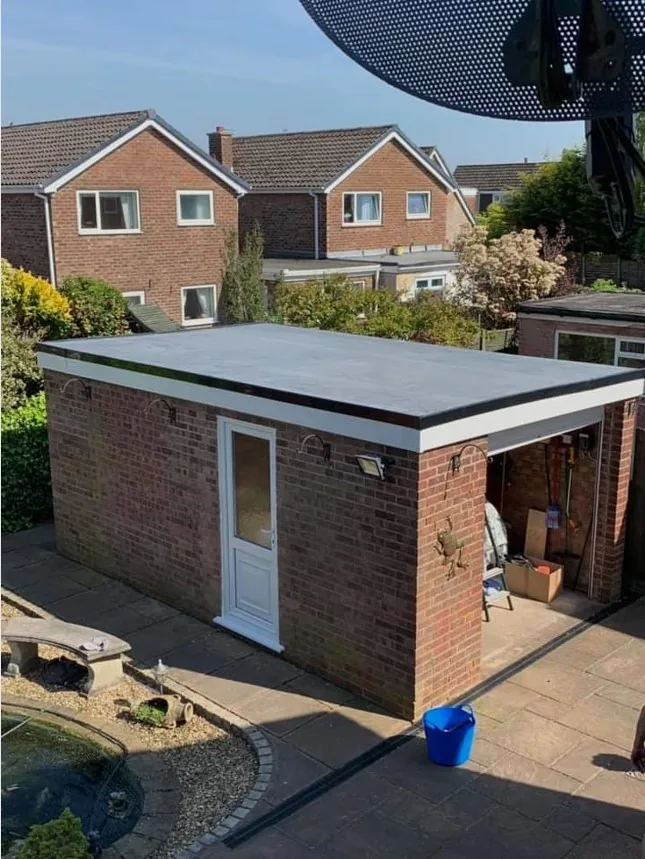
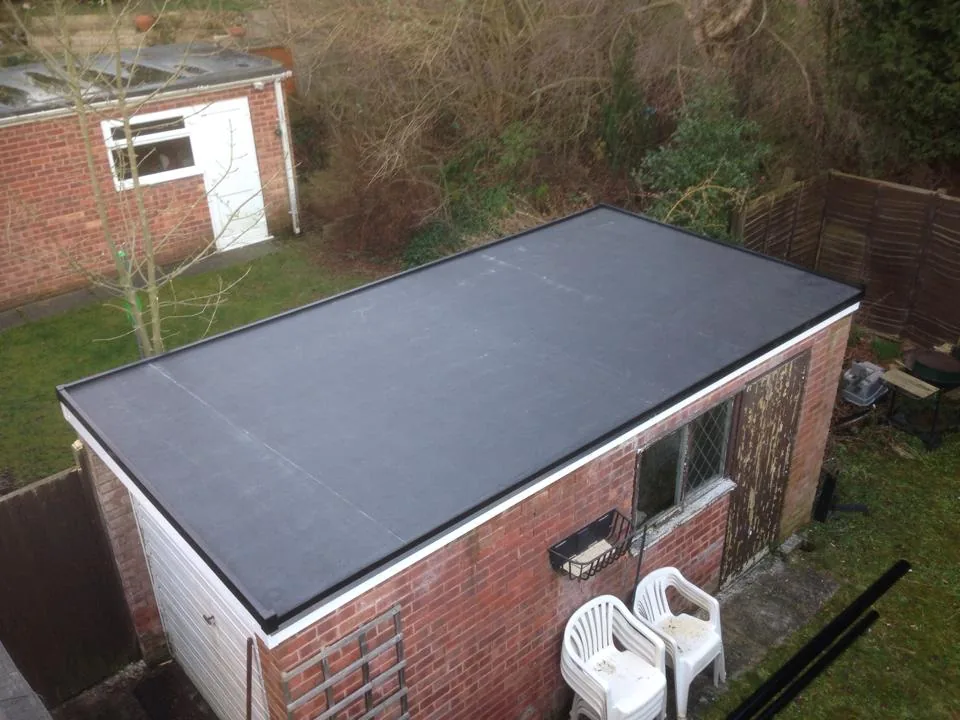
What Happens on Felt Roofing Day, Start to Finish
A felt roofing job follows the same order on every roof we cover:
- Old felt and any damaged decking boards stripped back
- Roof deck checked and any rotten timber replaced
- New insulation added where the job calls for it
- Underlay or base layer felt fitted and fixed down
- Cap sheet or top layer bonded on with heat or adhesive
- Edge trims, flashings and outlets fitted to shed water cleanly
- Site cleared and the finished roof checked before we leave
A single garage or shed roof is usually finished in a single day. A larger extension or dormer roof typically takes 1 to 3 days, depending on size and whether any decking needs replacing. Torch-on and high-performance felt both need a dry deck to bond properly, so we avoid fitting either system in heavy rain, though light showers rarely delay a job for long.
What Felt Roofing Really Costs in Hinckley
Cost comes down to felt type, roof size and access. As a general guide, a typical single garage roof in Hinckley runs £750–£1,500 supply and fit. A shed roof usually costs £150–£350, and a larger flat-roofed extension or dormer typically runs £1,500–£4,000 depending on size and felt type. Per square metre, expect to pay roughly £15–£25 for basic shed felt, £50–£80 for a built-up torch-on system, and £70–£100 for a high-performance mineral cap sheet.
What pushes a price up or down:
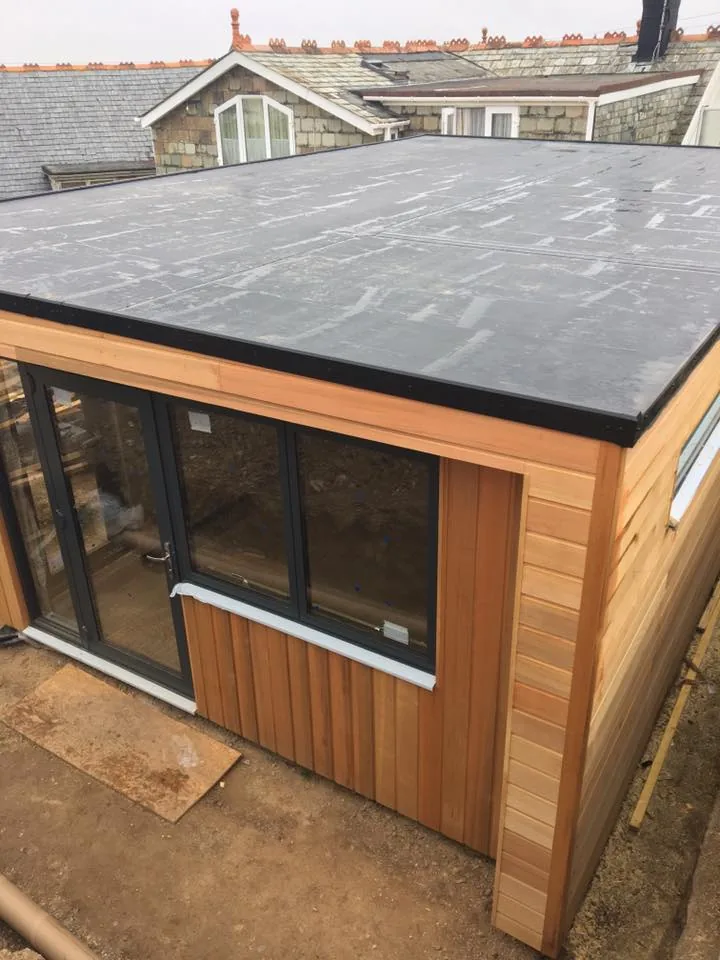
- Felt type — shed felt costs least, high-performance cap sheet costs most
- Roof size and shape — more upstands, outlets and edges all add labour
- Deck condition — rotten decking boards typically add £200–£600 to replace
- Access — a garage roof reached easily from a ladder costs less than one boxed in by fencing or a neighbouring wall
- Strip-out and disposal — removing old felt usually adds £100–£300
- Insulation upgrade — adding insulation as part of the job typically adds £20–£40 per m²
Labour typically makes up 40 to 60 percent of the total cost, and roofers in this part of Leicestershire generally charge in the region of £200–£350 per day. These are general market ranges, not a quote for your roof — two garages the same size can price differently once deck condition and access are factored in. A fixed price needs a survey.
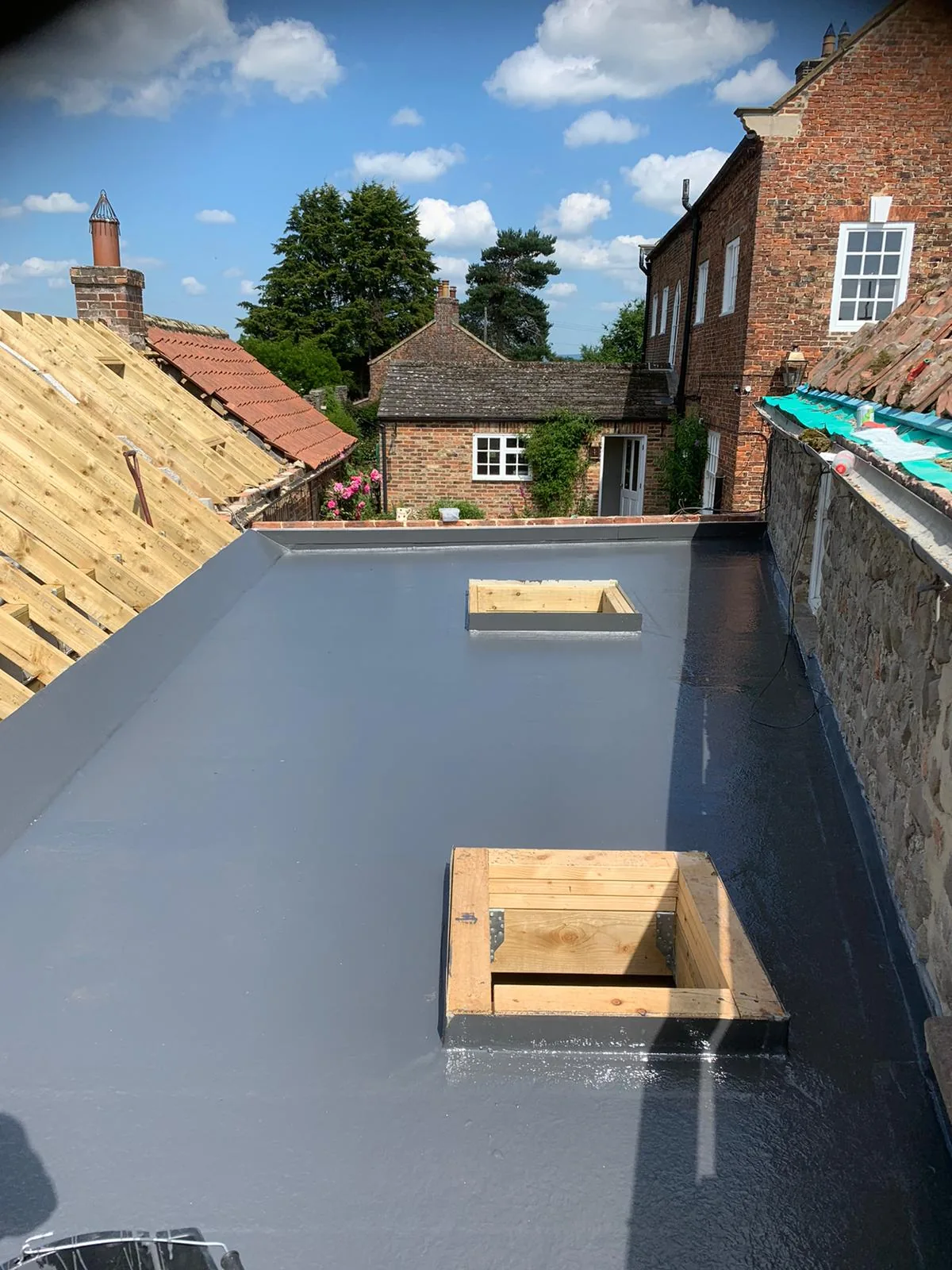
Keep a Felt Roof Watertight for Years to Come
A felt roof rewards a little regular attention with years of extra service. Sitting under trees or in a sheltered corner, as many garage roofs near Hollycroft Park do, means more leaf litter and moss than an open, exposed roof out toward Sharnford or Wolvey.
- Clear leaves, moss and debris from the surface each autumn
- Check outlets and gutters stay free-flowing so water cannot pool
- Look for blisters or cracking after a hot summer or a hard frost
- Keep an eye on flashings where the felt meets a wall or chimney
- Book a free drone survey every few years, or after any storm
The Mastic Asphalt Council’s guidance on flat roof maintenance and repair sets out why regular inspection matters for any built-up flat roofing system, felt included. None of this needs a specialist visit — just a regular look, and a call to us if anything seems off. Catching a blister or a lifted edge early is always cheaper than a full re-felt later.
Why Hinckley Turns to Tate & Sons for Felt Roofing
You are not just buying a roll of felt — you are buying whoever fits it. Daniel Whitmore, our project manager, runs the day-to-day on site and specialises in full re-roofs, leadwork and the flat roof detailing that makes or breaks a felt system’s lifespan. He checks every deck, upstand and outlet personally before the felt goes down, since a felt roof only lasts as long as the work underneath it.
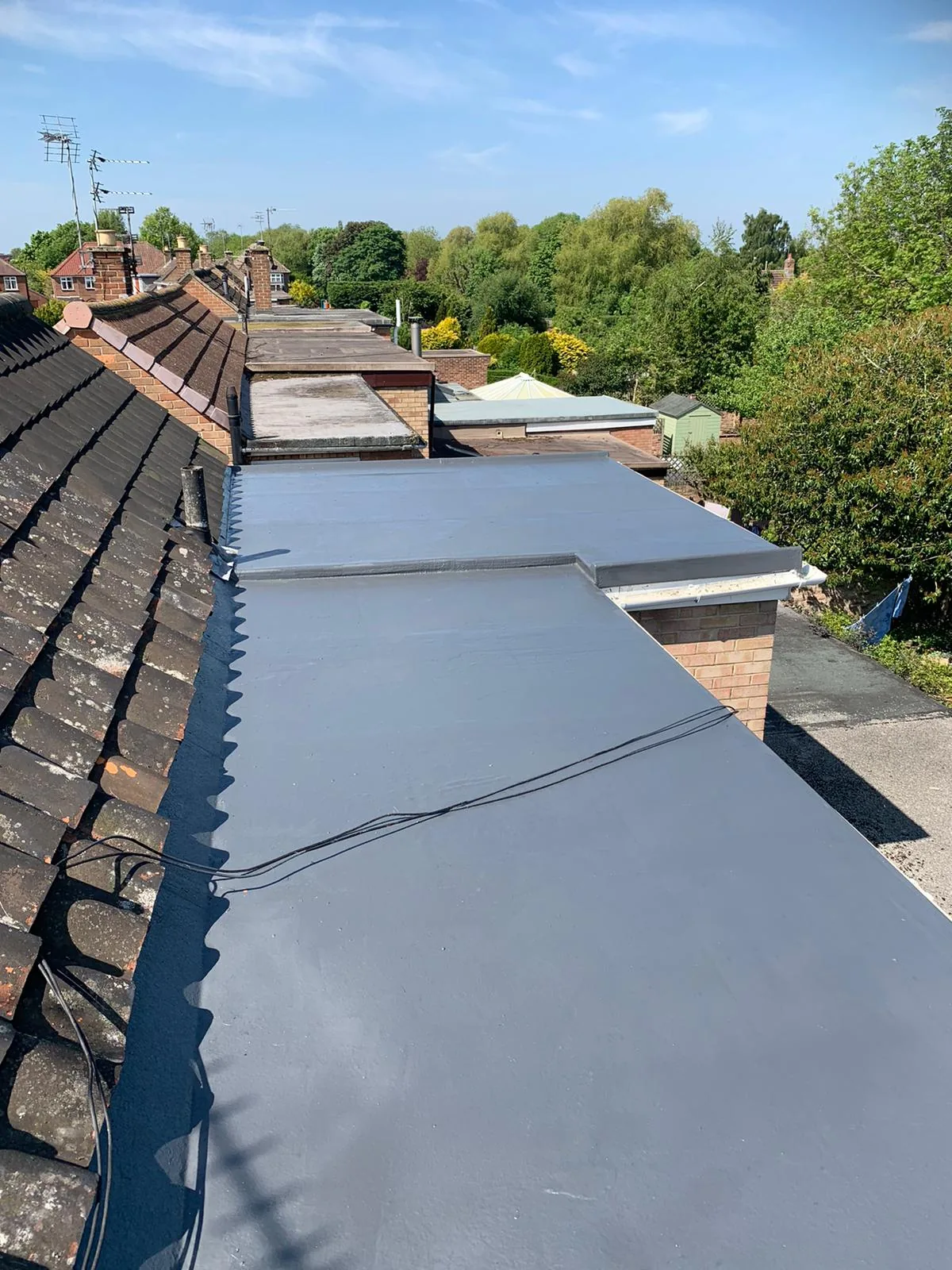
Founder James Tate started out on the tools more than 20 years ago and still quotes the majority of jobs personally, so the person weighing up your garage or extension roof is the one standing behind the finished work. Between us we bring 40 years of combined team experience, hold NVQ Level 2 and 3 qualifications in Roofing, and carry CSCS cards. Sophie Bennett, our office manager, keeps quotes, scheduling and aftercare running smoothly from the first phone call onwards. Read more about the people behind the work on our About Tate & Sons Roofing page.
Areas We Serve Across Hinckley and Bosworth Country
We fit felt roofs across Hinckley and the surrounding borough. If your area is not on the list below, call us anyway — there is a strong chance we already cover you.
- Hinckley (LE10)
- Burbage (LE10)
- Barwell (LE9)
- Earl Shilton (LE9)
- Sapcote (LE9)
- Sharnford (LE10)
- Wolvey (LE10)
- Higham on the Hill (CV13)
- Sutton Cheney (CV13)
- Stoke Golding (CV13)
- Market Bosworth (CV13)
- Nuneaton (CV10 / CV11)
- Bedworth (CV12)
Got Questions?
Your Felt Roofing Questions, Answered Properly
How much does felt roofing cost in Hinckley?
A single garage roof typically costs £750 to £1,500 fitted, a shed roof runs £150 to £350, and a larger flat extension roof usually costs £1,500 to £4,000 depending on size and felt type. Per square metre, basic shed felt costs roughly £15 to £25, built-up torch-on felt £50 to £80, and high-performance mineral felt £70 to £100. Deck condition, access and any insulation upgrade all move the final price up or down. A free drone survey gives you an exact written price rather than a phone estimate.
How long does a felt roof last?
A felt roof’s lifespan depends heavily on which system is fitted. Basic shed felt typically lasts 5 to 10 years, built-up torch-on felt runs 15 to 20 years, and a high-performance mineral cap sheet can reach 20 to 25 years or more with proper installation. Sheltered, well-maintained roofs tend to sit at the top end of these ranges. Regular inspection and prompt repair of small faults both add years to the working life of any felt system.
What is the difference between felt and other flat roofing like EPDM or GRP?
Felt is the most affordable flat roofing option, while EPDM rubber and GRP fibreglass cost more upfront but typically last longer with less maintenance. Felt is applied in overlapping layers and bonded with heat or adhesive, whereas EPDM is a single rubber sheet and GRP is a resin laminate applied wet. Felt remains a sound choice for garages, sheds and budget-conscious jobs where a 15 to 20 year lifespan is enough. Our team can talk you through whether EPDM or GRP suits your roof better if longevity matters more than upfront budget.
What causes a felt roof to blister?
Blisters form when moisture or air gets trapped between layers of felt during installation, then expands in the heat and pushes the surface up. They often show up first after a hot spell, when trapped vapour expands the most. Small blisters can usually be cut open, dried out and resealed as a straightforward repair. Left alone, larger blisters eventually burst and let water into the roof deck below.
Can a felt roof be repaired, or does it always need replacing?
Most felt roof problems are repairable, provided the damage is localised and the deck underneath is still sound. A single blister, split seam or lifted edge is usually a same-day repair rather than a full re-felt. Widespread cracking, repeated leaks in different spots, or felt older than 15 to 20 years usually means a repair will not hold for long. A survey tells you honestly which category your roof falls into before any work is booked.
Can new felt be laid over an existing felt roof?
Yes, in some cases, provided the existing deck is dry, sound and not already carrying too many layers. An overlay saves the cost of stripping and disposing of the old covering, which keeps the job cheaper and quicker. It is not right for every roof, since a deck with rot, or felt that has already been overlaid once before, usually needs stripping back to start again properly. We check the existing build-up on every survey before recommending an overlay or a full strip-out.
What roof pitch does felt roofing actually need to work properly?
Felt roofing needs a minimum fall of around 1 in 80 across the finished roof, though most installers aim for at least 1 in 40 to allow a safe margin for future settlement. Without enough fall, water sits on the surface instead of running off, which speeds up wear and makes blisters far more likely. A roof that already holds standing water for days after rain usually has a falls problem, not just a felt problem. We check falls as part of every survey, since re-felting a roof with poor falls just repeats the same issue.
Are the flat-roofed extensions common on Hinckley’s older estates usually covered in felt?
Yes, a large number of the single-storey extensions and garage roofs built across Hinckley through the 1960s to 1980s were originally felted, and many still carry felt today. These roofs are now well past their original lifespan in a lot of cases, particularly around older estates near Hollycroft. A quick check tells you whether the existing felt still has years left or is due for renewal. Age alone is not a reliable guide, so we always look at the actual condition rather than the roof’s date.
Does felt roofing suit the older garage roofs around the Druid Quarter?
Yes, felt remains one of the most practical choices for the smaller garage and lean-to roofs common on the terraces around the Druid Quarter. These roofs date from Hinckley’s hosiery and framework-knitting years and are usually modest in size, which suits felt’s lower cost per square metre well. A built-up torch-on system gives a good balance of price and lifespan for this kind of roof. We fit and repair felt on plenty of these older terraces and know the typical deck condition to expect before we even arrive.
Book Your Free Drone Survey for Your Felt Roof Today
See exactly what your felt roof needs before any work starts. No ladders against your wall, no pressure — just a clear picture from a local Hinckley team.
Every season a failing felt roof is left alone, water finds its way past a small crack or blister and starts rotting the deck timbers underneath. What could have been a same-day repair turns into a full strip-out and re-felt, at several times the cost. Book a free survey today, get an honest answer, and get your felt roof sorted properly — first time.
Call the Hinckley team today on 01455 242595, or request your free drone survey online. We're already working across your area.
Book Your Free Drone Roof Survey
See exactly where your roof stands, with no obligation and no pressure. Call our Hinckley team or request your free drone survey today.
Get in Touch
Tate & Sons Roofing — Hinckley Office
10 Brosdale Drive, Hinckley, LE10 0SW
📞 01455 242595
✉️ [email protected]