
🏠 Trusted Local Roofers
Fibreglass Roof Repair in Hinckley
A GRP fibreglass roof is tough, but it is not immune to Hinckley's weather. Sun bakes the gel coat in summer, frost bites at hairline cracks in winter, and every cycle in between opens those cracks a little wider. Fibreglass roof repair in Hinckley from Tate & Sons deals with the problem properly: gel coat crazing, resin cracks, and delamination sorted by roofers who work on GRP week in, week out, not a generalist squeezing it in between jobs.
This page covers how to tell a cosmetic gel coat mark from a genuine structural crack, what drives the cost of a fix, and how we prepare, repair and check a GRP roof so it stays watertight. Book a free drone survey before anything is agreed, and get a written price with nothing added later. Fibreglass repair is one part of the wider service we offer as a roofing contractor across Hinckley.
- Fully Insured
- 10-Year Guarantee
- 5-Star Rated
Quick Free Estimate - No Obligation
We're not just roofers – we're your neighbours.
Fully Insured • Response within 15 mins
🔒 Your details are safe with us. No spam, ever.
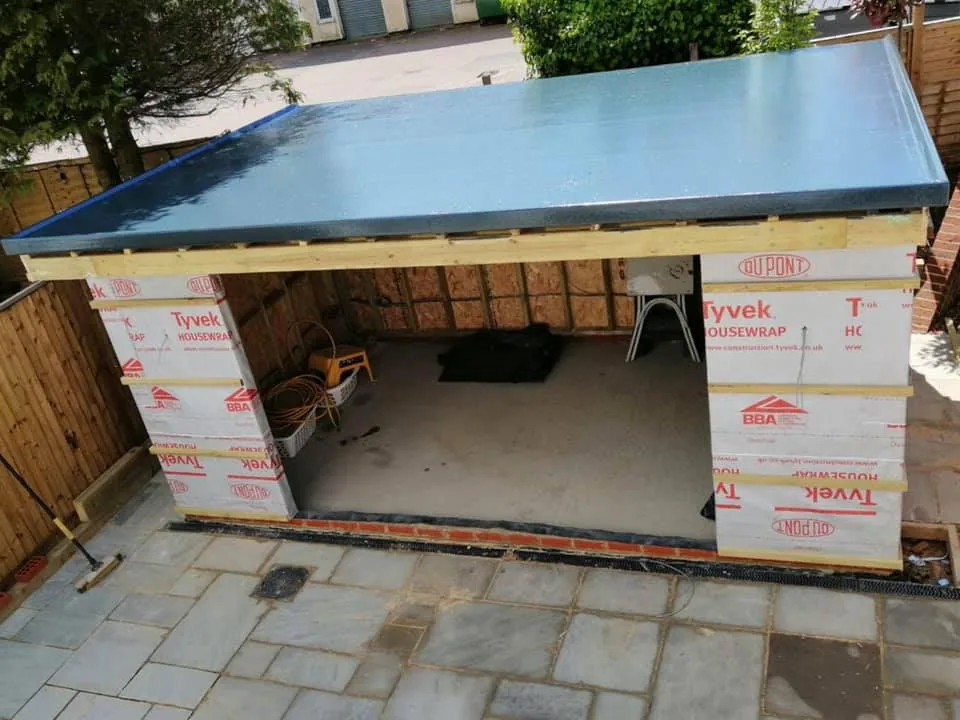
Spot the Warning Signs Before a Small GRP Crack Turns Into a Leak
A fibreglass roof rarely fails without warning. The gel coat usually tells you something is wrong long before water gets through to the timber deck underneath.
Watch out for these signs on a GRP roof:
- Fine spider-web cracks across the surface, known as crazing
- A single sharp crack running in a line, often near an upstand or corner
- Soft, spongy or bouncy patches when you walk near the edge
- Bubbling or blistering under the topcoat
- A dull, chalky surface that has lost its shine
- Ponding water that takes more than 48 hours to clear after rain
- Damp patches or staining on a ceiling below a flat section
None of these mean the whole roof needs stripping out. Most start as a surface problem you can catch early, on a garage roof in Burbage or a dormer extension near Hollycroft Park, before they reach the timber underneath. A free drone survey shows the whole surface close up, so you know exactly what you are dealing with before any work is booked.
Crack, Craze or Delaminate — Know Which GRP Problem You're Facing
Not every mark on a fibreglass roof means the same thing, and the fix is different for each one. Getting this right first time saves you paying for the wrong repair.
Gel coat crazing looks like a network of fine hairline lines across the surface, usually caused by UV exposure and years of the roof expanding in the sun and contracting overnight. It is mostly cosmetic at first, but left alone it lets water soak into the laminate underneath.
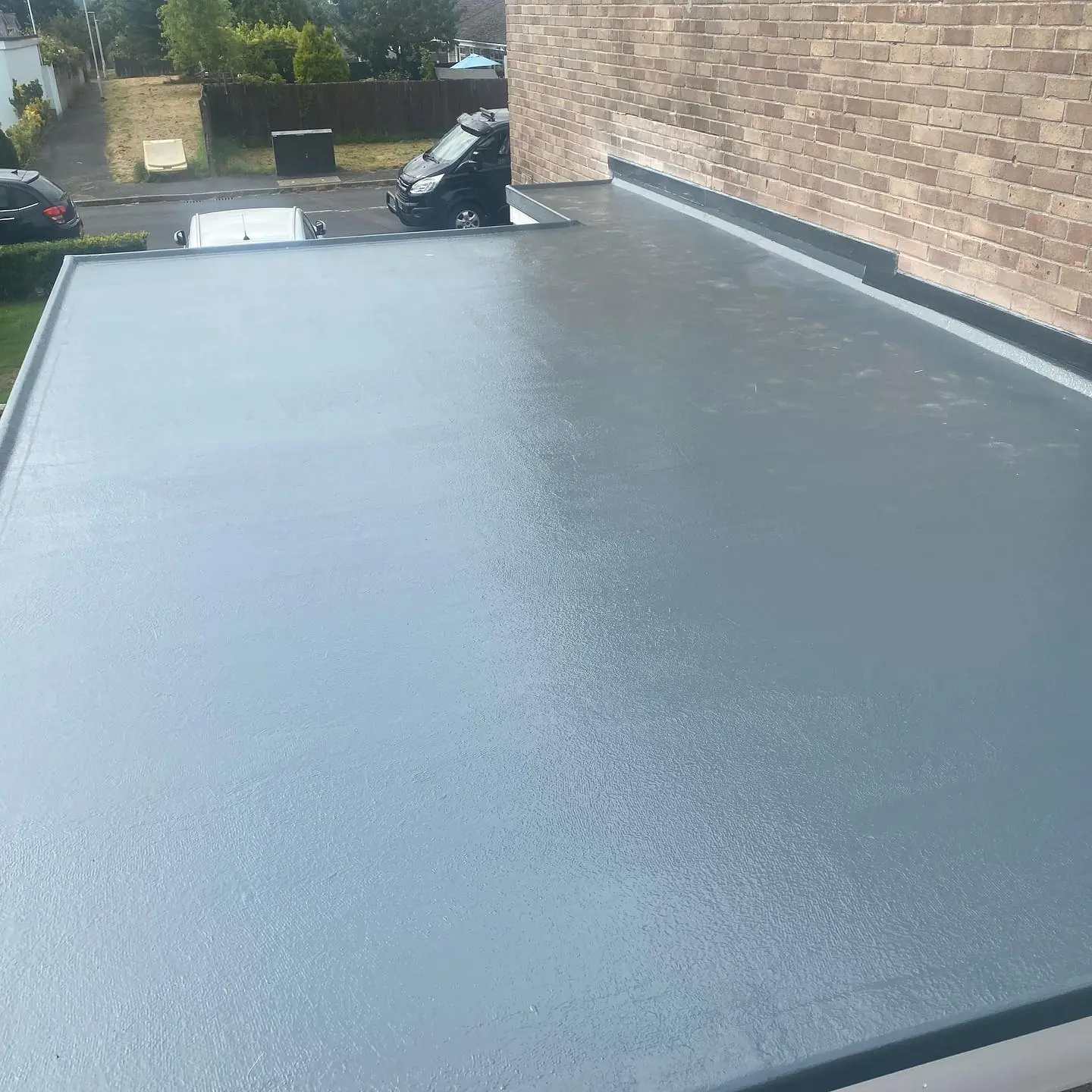
Resin cracks are a single, sharper line, often running straight through to the fibreglass laminate rather than sitting in the topcoat alone. These usually appear at stress points: corners, upstands, around a rooflight, or anywhere the deck flexes underneath. They are the most common cause of a genuine leak on an otherwise sound GRP roof.
Delamination is more serious. It happens when the fibreglass laminate separates from the timber deck below, usually because moisture got trapped during the original installation or crept in afterwards through an unnoticed crack. A soft or bouncy feel underfoot, rather than a firm, solid one, is the giveaway. Poor deck preparation, damp timber at the time of laying, or cheap plywood instead of proper marine ply or OSB3 are common root causes.
Ponding water makes every one of these problems worse, since standing water works into any crack far faster than rain that drains away. The Single Ply Roofing Association's guidance on flat roof drainage sets out why falls and outlet positioning matter so much on any flat roof, GRP included, and it is worth a look if your roof holds water after rain. If your flat roof is felt or rubber rather than fibreglass, the failure pattern is different again, and our flat roof repair page covers those materials separately.
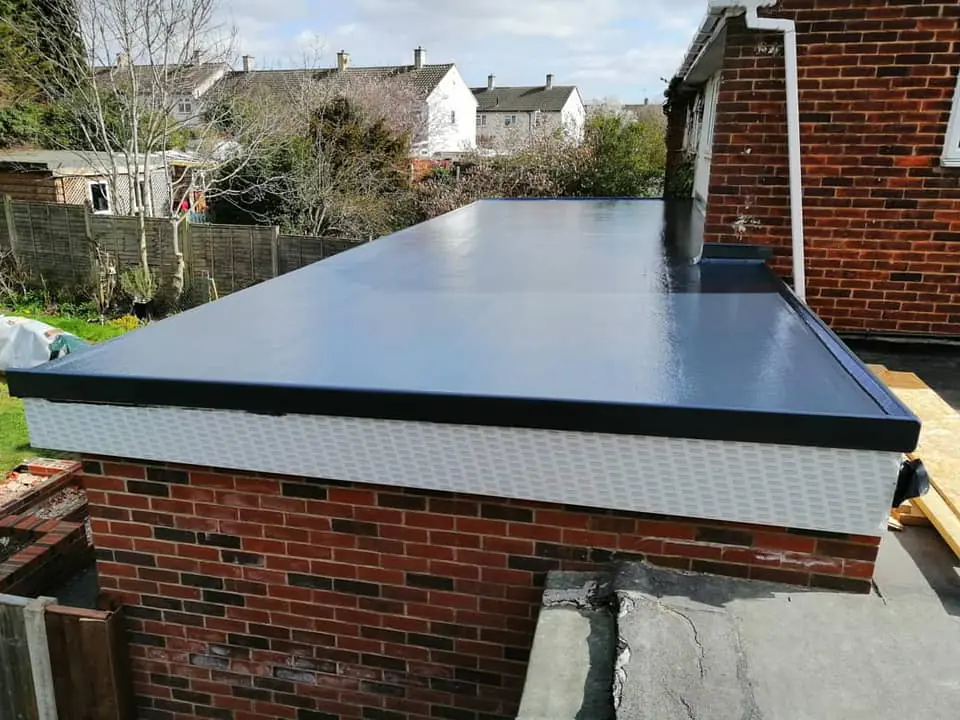
Repair, Overlay or Full Recover — Choosing the Right Fix for Your Roof
Three routes cover almost every GRP repair we carry out in Hinckley. Which one suits your roof depends on how much of the surface is affected, not just how bad one crack looks.
| :-: | :-: | :-: | :-: |
| Repair type | Typical cost | What it involves | Best for |
| Crack / gel coat repair | £200–£600 | Grind back, re-laminate the damaged spot, match topcoat | One or two isolated cracks on a sound roof |
| Resin overlay | £1,200–£3,500+ | New GRP layer laid over the whole surface | Widespread crazing, deck still sound and dry |
| Full recover | £1,800–£6,000+ | Strip to deck, replace rot, rebuild with new GRP | Delamination, failed deck, or a roof past its working life |
A localised crack or gel coat repair suits an otherwise sound roof with one or two problem spots. We grind back to sound laminate, dry the area fully, rebuild it with fresh fibreglass matting and resin, then finish with matching topcoat. A wider resin overlay makes sense once crazing or cracking has spread across most of the surface but the deck underneath is still solid and dry. A full recover strips the roof back to the timber and rebuilds it from scratch, which is the only real answer once delamination has taken hold or the deck itself has failed.
If a full recover is the right call, our GRP fibreglass roofing page covers a new install from scratch in more detail. Daniel Whitmore, our project manager, checks every roof in person before recommending a route, so you are never sold a full recover when a targeted repair would have done the job.
What Fibreglass Roof Repair Really Costs in Hinckley
As a general guide, a small gel coat or crack repair on a GRP roof typically runs £200–£600. A larger local repair, covering more than one damaged area, usually falls between £400 and £1,200. Where cracking has spread across most of the roof and a full resin overlay is the better route, expect £1,200–£3,500 or more depending on size and access. A full recover, stripping the roof back to the timber deck, generally starts around £1,800 and can run to £6,000 or beyond on a larger or more complex roof.
What pushes the price up or down:
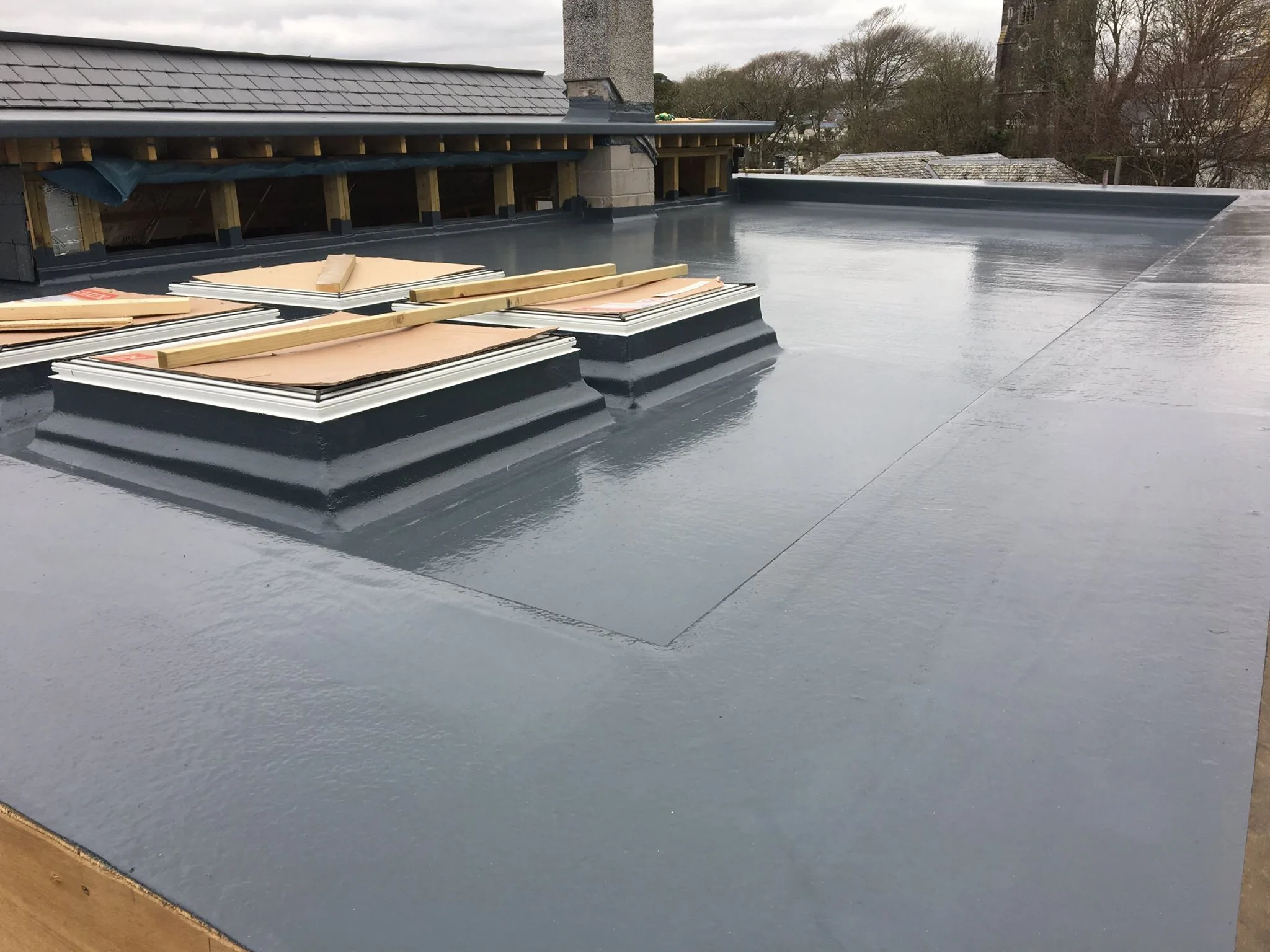
- **Size and number of damaged areas*— one crack costs far less than repairs scattered across the roof
- **Deck condition*— rotten or damp timber under the laminate adds cost before any new GRP goes down
- **Access*— a garage roof reached by ladder costs less to work on than a high rear extension needing scaffold
- **Colour matching*— a bespoke topcoat colour on an older roof can add a little over stock white or grey
- **Weather window*— GRP resin needs a dry surface and a reasonable temperature to cure properly, which can affect scheduling in deep winter
These are general market ranges, not a quote for your roof. Two roofs the same size can price very differently once deck condition and the number of repair spots are factored in. A fixed price needs a survey.
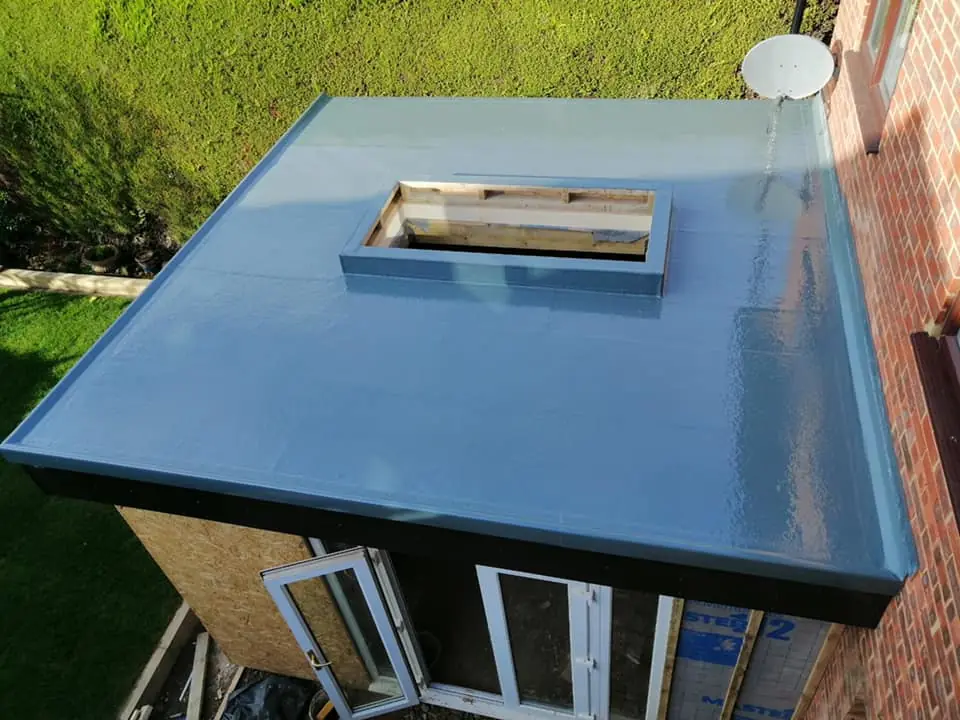
How We Prepare and Carry Out a Proper GRP Repair
A fibreglass repair is only as good as the preparation underneath it. Rushing this stage is the single biggest reason cheap GRP repairs fail within a year or two.
Our process on every job:
- Survey the full roof, not just the reported problem area, using drone footage first
- Grind back the damaged section to sound, undamaged laminate, feathering the edges
- Dry the area fully — GRP will not bond properly to a damp surface
- Replace any rotten or delaminated decking found underneath before re-laminating
- Lay new fibreglass matting and resin, built up to the correct thickness
- Apply matching topcoat once the laminate has cured
- Check the wider roof and clear the site before we leave
GRP resin cures best between roughly 10°C and 20°C, and it will not bond properly below about 5°C without specialist cold-weather resin. That is why we plan repair work around the weather window rather than rushing a job on a cold, damp morning just to keep a date. A repair applied in the wrong conditions looks fine on the day and fails within a season.
Checking the Repair Holds — Verification and Aftercare
A finished repair should look seamless and feel solid underfoot, not just watertight on the day it is done. We check every repair before we leave, and again as part of your workmanship guarantee if anything ever moves.
What we look for once a repair has cured:
- A firm, solid feel across the whole repaired area, no soft or bouncy spots
- A colour and sheen match close enough that the repair does not stand out
- Water running away cleanly toward the outlet, with no new ponding
- Edges and upstands fully sealed, with no gaps at joints or trims
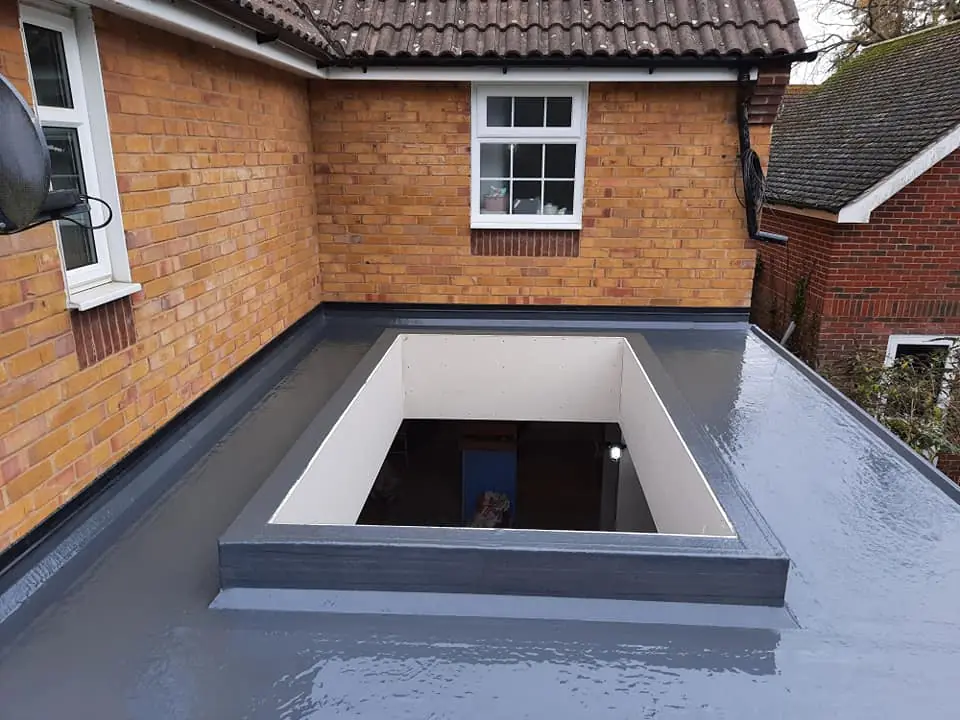
Freshly repaired GRP needs a short curing window, typically 24 to 48 hours, before it should take regular foot traffic. We flag this clearly before we leave, especially on a walkable terrace roof where residents are keen to get straight back out onto it.
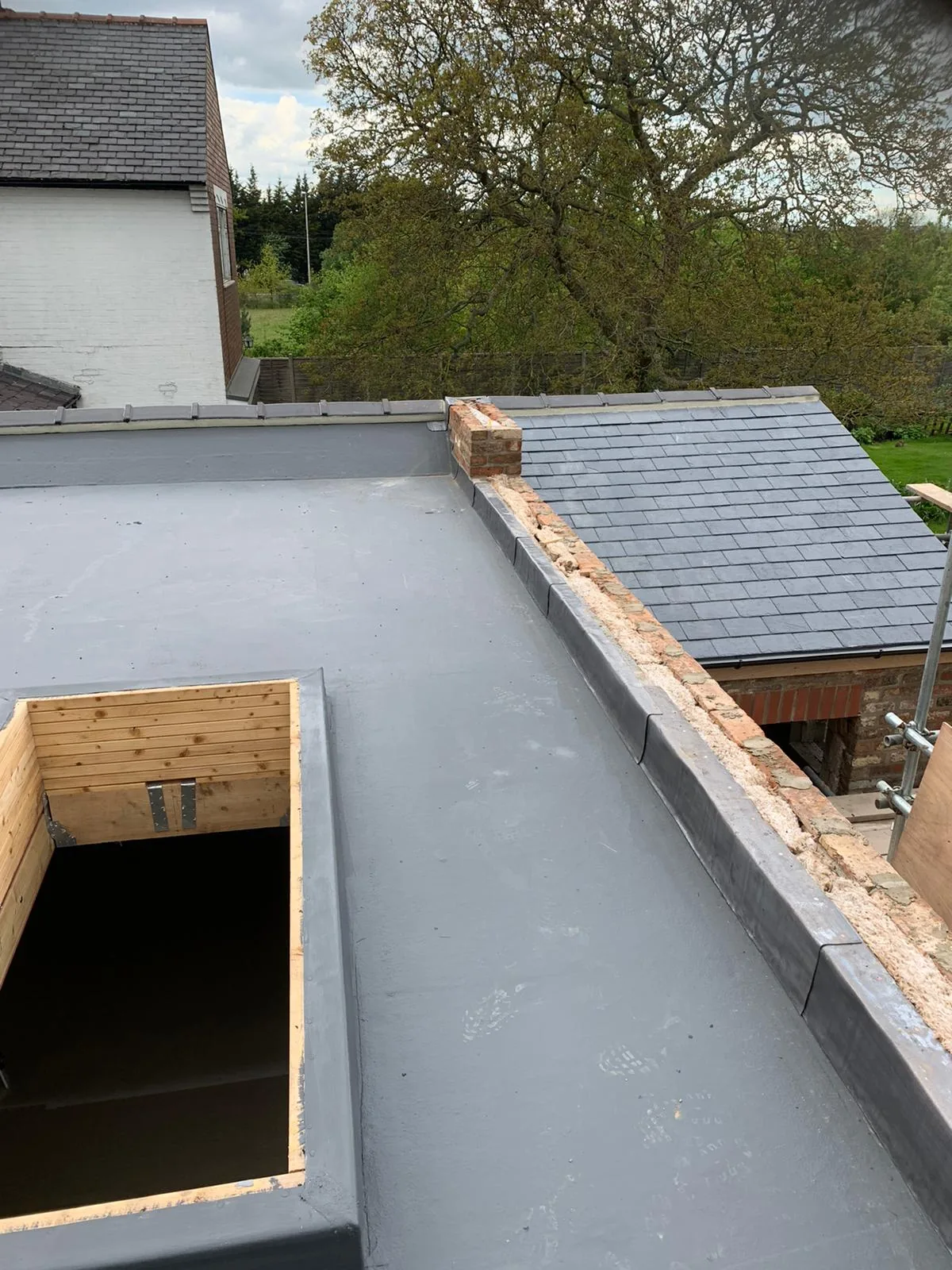
Keep Your GRP Roof Crack-Free for Longer
A fibreglass roof rewards a little upkeep with a much longer working life. Most of what keeps it sound costs nothing but a few minutes twice a year.
- Clear leaves and debris from the surface and outlets each autumn
- Avoid dragging garden furniture or heavy pots across the gel coat
- Check for ponding water after heavy rain and have it looked at if it lingers
- Book a topcoat recoat every 15 to 20 years to refresh UV protection
- Get a free drone survey after any major storm or high winds
A GRP roof properly installed and looked after can run 20 to 30 years or more before it needs a full recover. Catching gel coat crazing early, rather than waiting for it to become a resin crack, is the cheapest way to get there.
Why Hinckley Homeowners Trust Tate & Sons With Their GRP Roof
Fibreglass repair rewards a roofer who works with it regularly, not one relearning it on your roof. Daniel Whitmore, our project manager, oversees every GRP job on site and knows the difference between a crack that needs grinding out and one that is purely cosmetic — a call that saves you money when the answer is the smaller job.
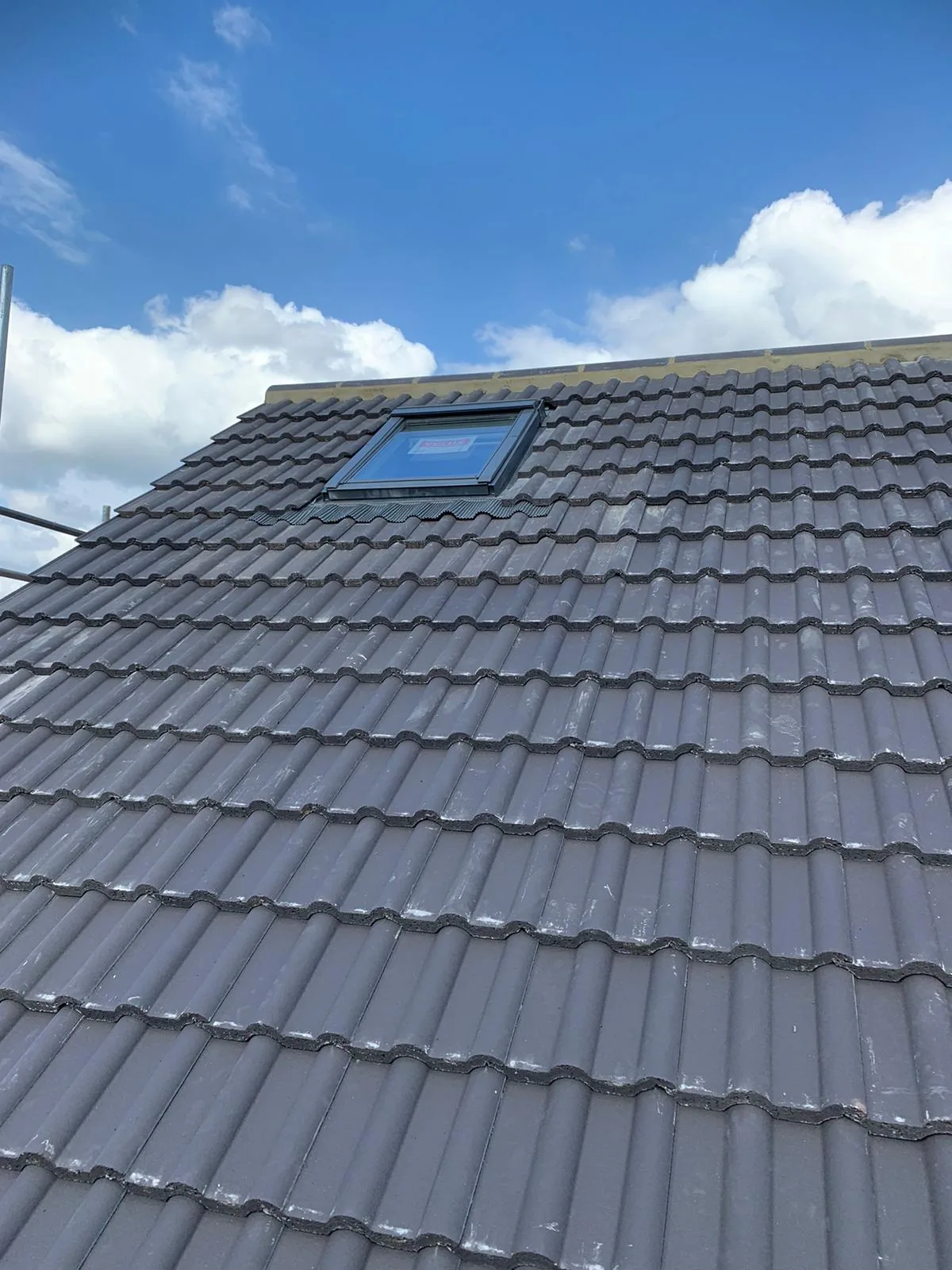
Founder James Tate started on the tools more than 20 years ago and still quotes the majority of jobs personally, including most of our GRP repair work. Between us we bring 40 years of combined team experience, hold NVQ Level 2 and 3 qualifications in Roofing, and carry CSCS cards. Sophie Bennett, our office manager, keeps quotes and scheduling running smoothly from your first call through to the finished repair. Read more about the people behind the work on our About Tate & Sons Roofing page.
Areas We Serve Across Hinckley and Bosworth Country
We carry out fibreglass roof repair across Hinckley and the surrounding borough. If your area is not listed below, call us anyway — there is a strong chance we already cover you.
- Hinckley (LE10)
- Burbage (LE10)
- Barwell (LE9)
- Earl Shilton (LE9)
- Sapcote (LE9)
- Sharnford (LE10)
- Wolvey (LE10)
- Higham on the Hill (CV13)
- Sutton Cheney (CV13)
- Stoke Golding (CV13)
- Market Bosworth (CV13)
- Nuneaton (CV10 / CV11)
- Bedworth (CV12)
Got Questions?
Your Fibreglass Roof Repair Questions, Answered Properly
Can a fibreglass roof be repaired, or does it need replacing?
Most GRP roofs can be repaired rather than replaced. Gel coat crazing and isolated resin cracks are usually a straightforward local fix, and a resin overlay handles wider crazing if the deck below is still sound. Full replacement only becomes the answer once delamination has taken hold or the timber deck has rotted underneath. A free drone survey tells you which situation you are actually in before any work is agreed.
What causes cracks in a GRP roof's gel coat?
Thermal movement is the main cause. The roof surface expands in summer heat and contracts overnight and in winter frost, and that constant movement eventually opens hairline cracks in the topcoat. Poor original installation, cheap or thin resin, and impact damage from dropped tools or falling branches also cause cracking. Corners, upstands and rooflight edges crack first because that is where the laminate flexes most under movement.
How much does fibreglass roof repair cost in Hinckley?
A small crack or gel coat repair typically costs £200–£600. Larger or multiple local repairs usually run £400–£1,200, and a full resin overlay across a wider area falls between £1,200 and £3,500 or more. A full recover, needed only where delamination or deck rot has set in, generally starts around £1,800. These are general ranges — a fixed price always needs a proper survey first.
How do I know if my GRP roof has delaminated rather than just cracked?
Delamination feels different underfoot than surface cracking. A soft, spongy or bouncy patch, rather than a firm and solid one, means the fibreglass laminate has separated from the timber deck below, usually because moisture got trapped during installation or crept in through an old crack. Surface cracking, by contrast, still feels solid to stand on even where the gel coat has visibly crazed. If you feel any give underfoot, get it checked before walking that section again.
Is it safe to walk on a fibreglass roof terrace?
Yes, a properly installed and sound GRP roof is one of the few flat roof coverings designed to be walked on regularly, which is why it suits balconies and roof terraces so well. The rigid laminate does not dimple under furniture the way some softer coverings can. That said, a roof with active cracking or any soft spots should be checked before it takes regular foot traffic again, since walking on a weak area can make the damage worse.
How long does a GRP roof repair take, and how long will it last?
A small local repair usually takes a single day on site, though the resin needs 24 to 48 hours to cure fully before it should take regular foot traffic. A wider resin overlay on a larger roof can take two to three days depending on size and weather. A properly carried out repair, on a roof that is otherwise sound, typically holds for 10 to 15 years or more before it needs attention again.
Can GRP roof repairs be done in winter or wet weather?
Fibreglass resin needs a dry surface and a reasonable temperature to bond and cure properly, ideally between 10°C and 20°C, and it will not cure reliably below about 5°C without specialist cold-weather resin. This does not mean repairs stop in winter — we use appropriate materials and pick a dry weather window, but a rushed job in the wrong conditions on a cold, damp morning is more likely to fail within a season. We would rather schedule around the weather than promise a date we cannot deliver on properly.
Does a bungalow extension roof in Sapcote need different repair to a walkable terrace in Market Bosworth?
The GRP material and repair method are the same, but the detailing differs. A flat-roof extension on a bungalow around Sapcote or Stoney Stanton usually just needs to shed water cleanly and take the occasional foot for gutter clearing. A premium walkable terrace on one of Market Bosworth's period conversions takes daily foot traffic and needs a thicker, more durable laminate build-up plus careful edge and upstand detailing to cope with that wear. We specify the repair to match how the roof is actually used, not a one-size-fits-all approach.
Book Your Free Drone Roof Survey Today
Every season a cracked gel coat is left alone, more water works its way into the laminate and the timber deck beneath it, turning a small repair into delamination and a full recover. A free drone survey shows you exactly what your GRP roof needs, with footage rather than guesswork, and there is no obligation either way. Book now and get an honest, written price before anything is agreed.
Call the Hinckley team today on 01455 242595, or request your free drone survey online. We're already working across your area.
Book Your Free Drone Roof Survey
See exactly where your roof stands, with no obligation and no pressure. Call our Hinckley team or request your free drone survey today.
Get in Touch
Tate & Sons Roofing — Hinckley Office
10 Brosdale Drive, Hinckley, LE10 0SW
📞 01455 242595
✉️ [email protected]