
🏠 Trusted Local Roofers
Ridge Tile Repairs & Rebedding in Hinckley
A loose ridge tile is one of the most common faults we find on Hinckley roofs, and one of the easiest to miss from the pavement. The mortar that once held those tiles firm dries out, cracks, and eventually lets go, and once one tile shifts, the next storm along the A5/Watling Street corridor tends to finish the job. Ridge tile repairs and rebedding in Hinckley put that right before a slipped tile becomes a hole in your roof.
Tate & Sons Roofing fixes and rebeds ridge tiles across Hinckley, Burbage and the surrounding villages, from a single cracked tile on a Barwell terrace to a full ridge rebed on an exposed roof near Higham on the Hill. This page covers how to spot a failing ridge, what causes the problem, whether rebedding or a dry ridge conversion suits your roof, real cost ranges, and what happens on the day. It sits alongside the wider work we do as a roofing contractor across Hinckley, and every job starts with a free drone survey so you know exactly what you are paying for.
- Fully Insured
- 10-Year Guarantee
- 5-Star Rated
Quick Free Estimate - No Obligation
We're not just roofers – we're your neighbours.
Fully Insured • Response within 15 mins
🔒 Your details are safe with us. No spam, ever.
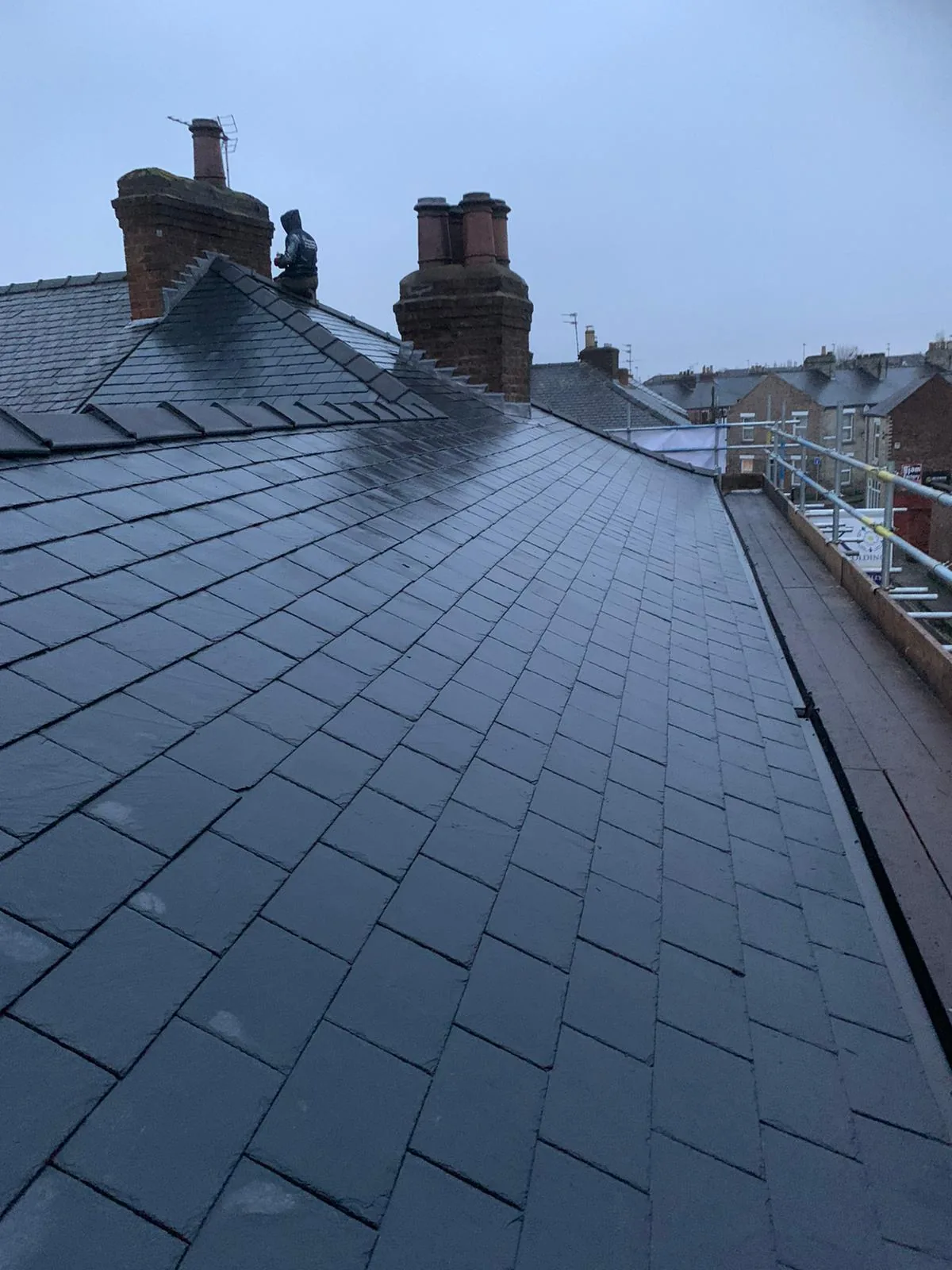
Spot the Warning Signs Before a Ridge Tile Actually Falls
A ridge tile rarely fails without warning. The mortar underneath it usually crumbles for months, sometimes years, before a tile actually lifts or drops.
Watch for these signs from the ground or in the loft:
- A grey, crumbly line of mortar visible along the ridge, or mortar missing altogether
- A ridge tile that looks slightly raised, tilted, or out of line with the rest
- Small chips of mortar or tile turning up in your gutters after wind
- Daylight or a draught at the very top of the loft space
- Damp patches on the ceiling directly below the ridge line
- A ridge tile that has visibly slipped or is missing entirely after a storm
Any one of these on its own is worth a call. Several together usually mean the mortar bed has failed along a stretch of ridge, not just at one tile, and that changes whether a spot repair or a full rebed makes sense.
Why Ridge Tiles Fail So Often on Hinckley's Older Roofs
Ridge tiles sit at the highest, most exposed point of any roof, and traditionally they were held in place with a simple sand-and-cement mortar bed. That mortar was never meant to last forever.
Every freeze-thaw cycle through a Hinckley winter opens tiny cracks in the mortar a little wider. Summer heat then dries and shrinks it further. Over ten to fifteen years, the bond between mortar and tile weakens until wind can get underneath and start lifting tiles rather than just rattling them.
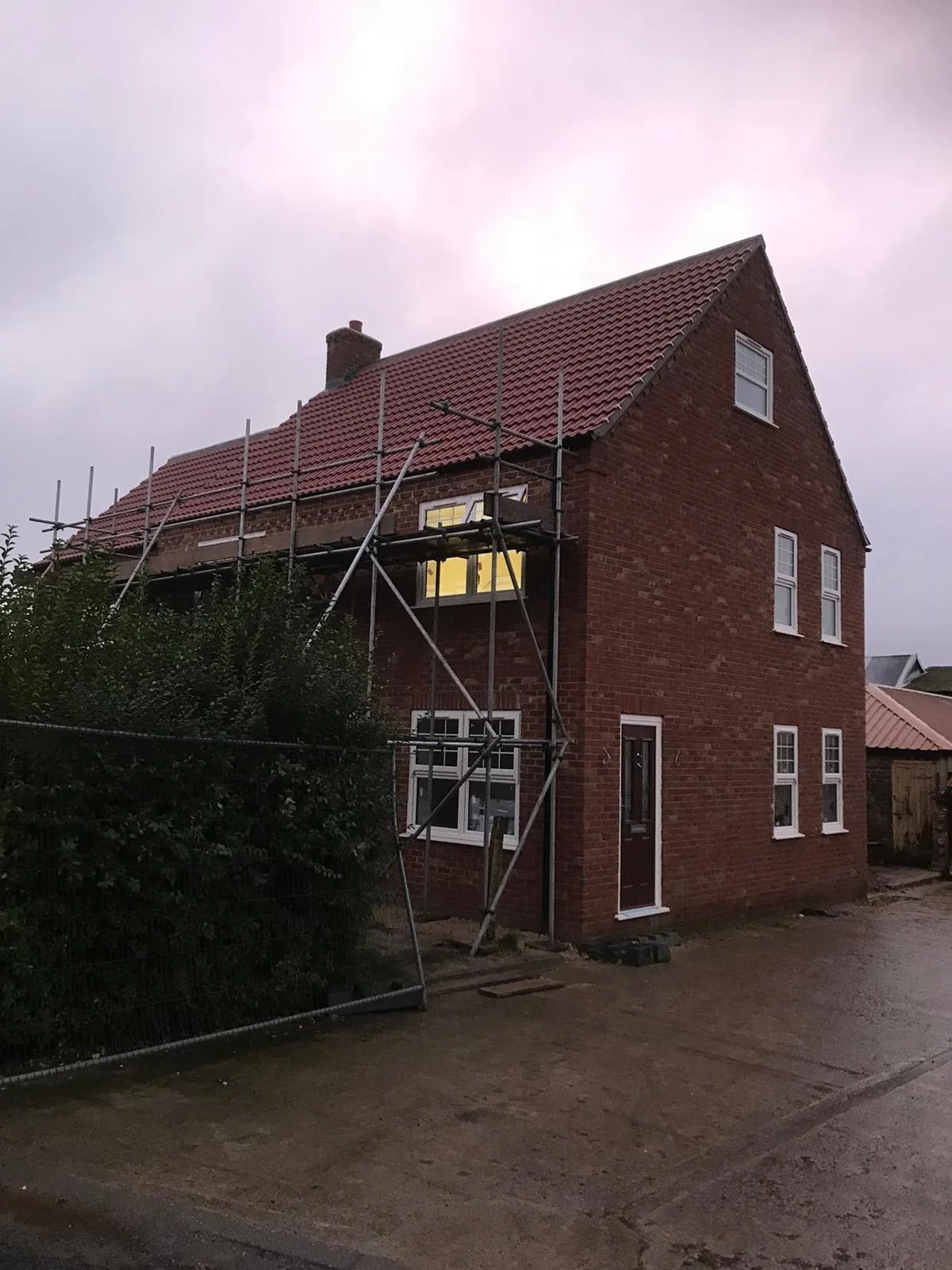
This is especially common on the older terraced roofs around Barwell and Earl Shilton, where original mortar bedding from decades ago has simply reached the end of its working life. Properties out toward Higham on the Hill and along the exposed A5 corridor see faster mortar breakdown again, because wind speed at ridge height there is consistently higher than on a sheltered street in Hinckley itself. A roof that looked fine five years ago can be due a rebed sooner than you would expect in that kind of exposure.
Rebedding or Dry Ridge Conversion — Which Fix Actually Suits Your Roof
There are two proper ways to fix a failing ridge, and the right one depends on your roof's age, exposure and how long you want the fix to last.
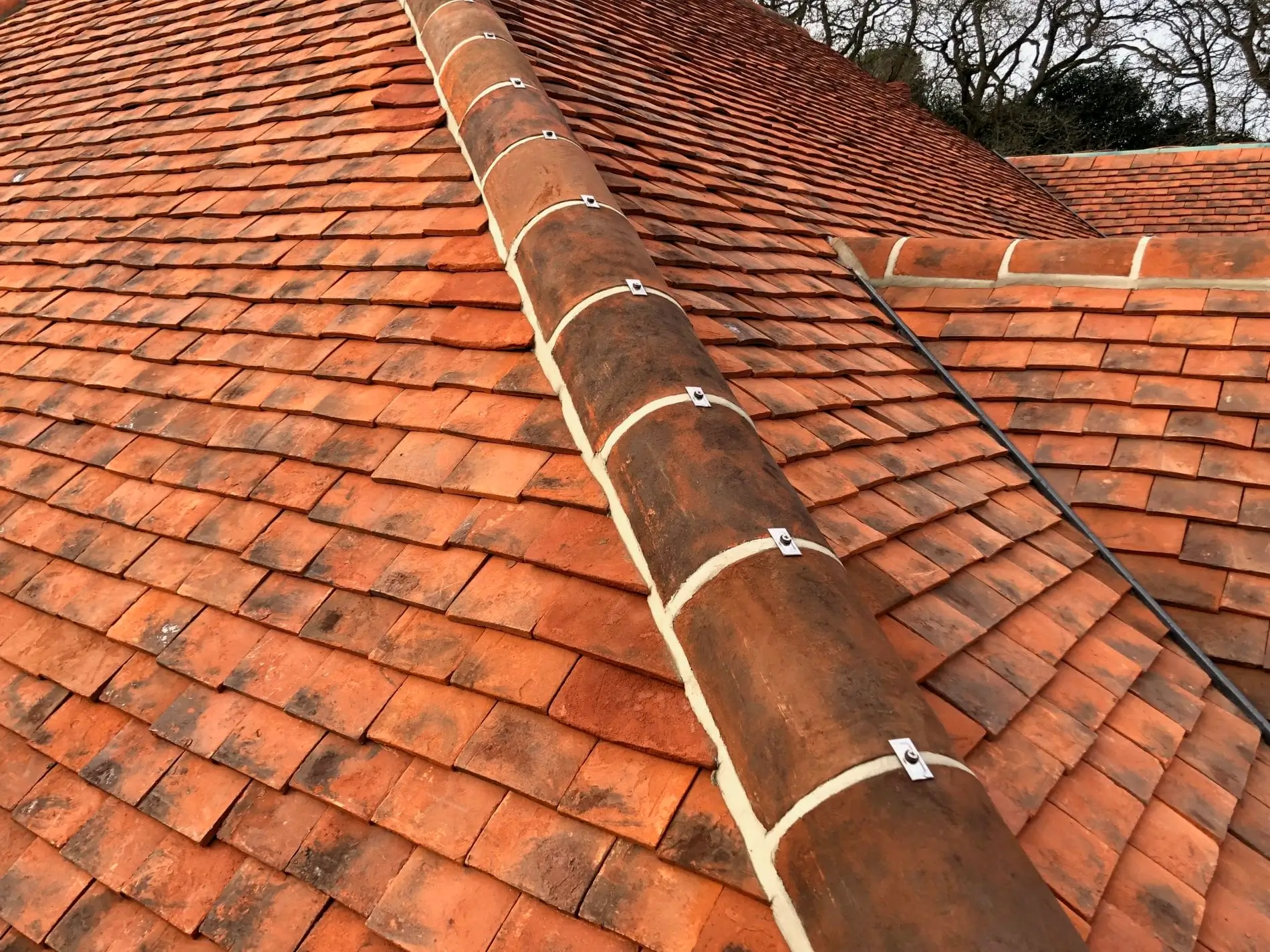
Mortar rebedding strips the old, failed mortar back to the tile and batten, then beds the ridge tiles again in a fresh sand-and-cement mix. It is the traditional repair, it matches the existing roof appearance exactly, and it costs less upfront. The trade-off is that fresh mortar will, eventually, crack and fail again in ten to fifteen years, just as the old mortar did.
A dry ridge system replaces mortar altogether with mechanical fixings, foam infill and ridge unions that clip and screw the tiles down. Current British Standards now require mechanical fixing on ridge tiles regardless of whether mortar is also used, so a dry ridge conversion brings an older roof up to today's standard rather than just patching yesterday's. It costs more to fit but does not rely on a mortar joint that will crumble again in a decade, and it adds ventilation at the ridge line that a mortar bed cannot provide. Our dry ridge system service covers this conversion in full if that is the direction that suits your roof.
We will tell you honestly which route fits your roof rather than pushing the higher-priced option by default. A terrace with a recently rebedded ridge might just need a smaller repair, while an exposed roof on its second or third rebed is usually better served converting to dry ridge once and being done with it.
What Ridge Tile Repairs and Rebedding Really Cost in Hinckley
Ridge tile repair costs vary a good deal depending on scope, so treat the figures below as a general guide rather than a quote.
- **Single tile repair or replacement*— typically £80–£250 per tile, including access and mortar work for a small area
- **Repointing an existing ridge*(mortar joints only, tiles sound) — roughly £150–£350 for a typical semi-detached ridge run
- **Full mortar rebedding*— typically £400–£900 for a standard semi-detached roof, more for longer or steeper ridges
- **Dry ridge system conversion*— typically £800–£1,600 for a standard semi-detached roof, priced per linear metre of ridge
What pushes a price up or down:
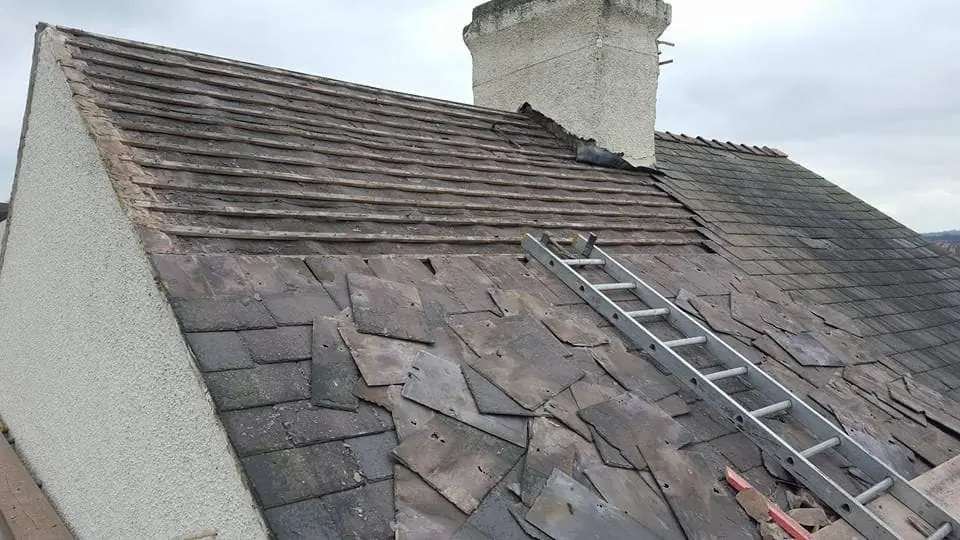
- **Access*— a roof ladder keeps costs down; a steep pitch or a ridge over 4 metres up usually needs scaffolding, which adds cost
- **Length of ridge*— a long run costs more than a short one, simply on materials and labour
- **Number of tiles needing full replacement*versus tiles that can be cleaned, refixed and reused
- **Tile matching*— clay and older discontinued tile profiles can cost more to source than standard concrete
- **Underlying batten or timber condition*found once the old mortar is stripped back
Labour typically makes up 60 to 70 percent of the total cost, and roofers in this part of Leicestershire generally charge around £200–£275 per day. These are general market ranges, not a fixed quote — the only way to a firm figure is a proper survey. A fixed price needs a survey.
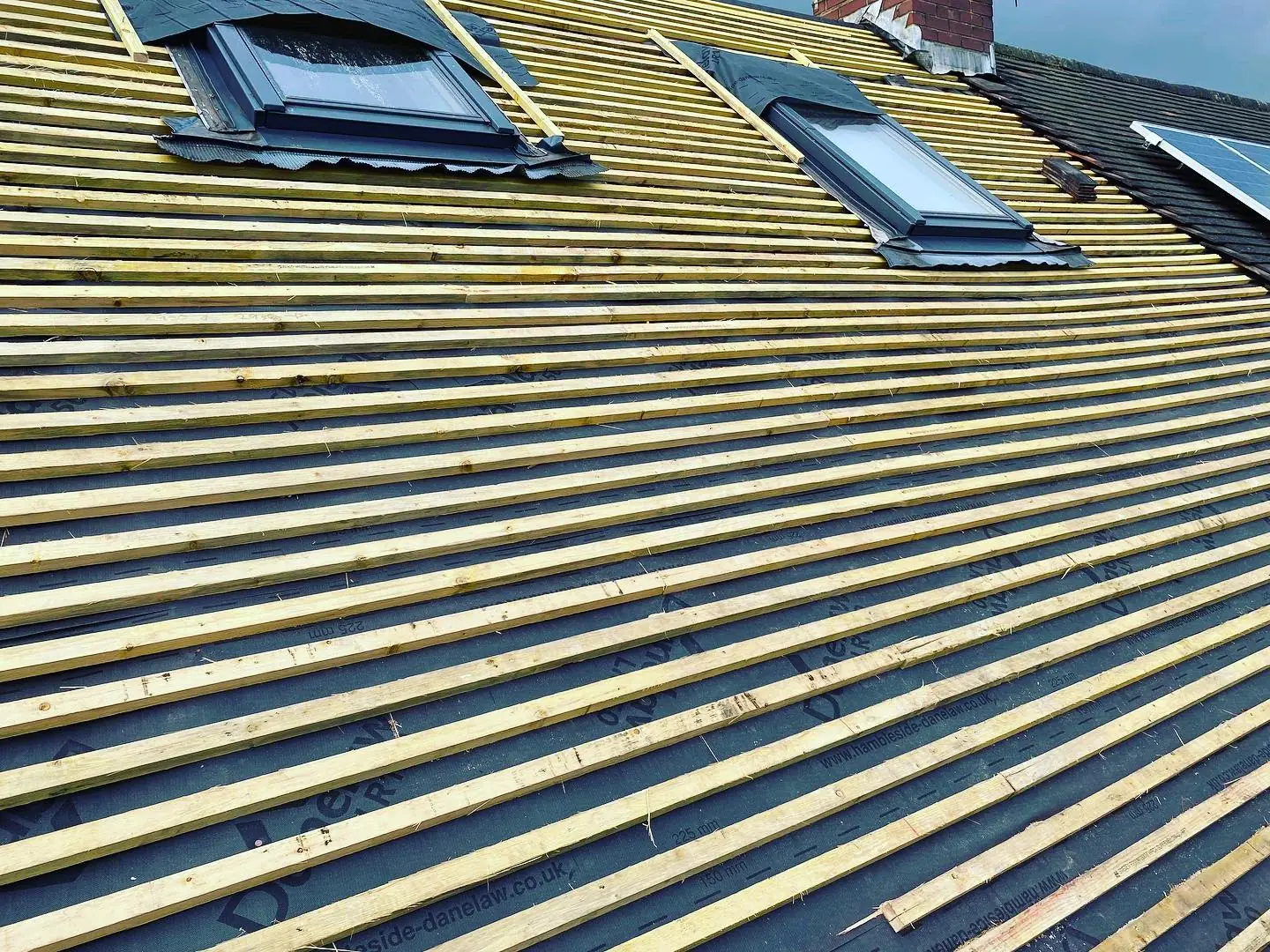
Mortar Rebedding vs Dry Ridge Conversion, Side by Side
| :-: | :-: | :-: | :-: |
| Option | Typical cost | Typical lifespan | Best for |
| Mortar rebedding | £400–£900 (semi-detached) | 10–15 years | Budget repairs, matching an original appearance, roofs not due a full re-roof soon |
| Dry ridge system conversion | £800–£1,600 (semi-detached) | 25–30+ years | Exposed roofs, repeat ridge failures, roofs due a longer-term fix and better ventilation |
What Happens on Ridge Repair Day, Start to Finish
A ridge tile repair or rebed follows a set order on every job we do:
- Access set up — roof ladder for most jobs, scaffolding where height or pitch requires it
- Existing ridge tiles carefully lifted and set aside
- Old, failed mortar chipped out and cleared from the ridge line
- Battens and timber checked underneath for rot or damage
- Ridge tiles rebedded in fresh mortar, or a dry ridge union and clip system fitted
- Ridge line checked for a true, level finish and firm fixing
- Gutters cleared of debris and the site left clean
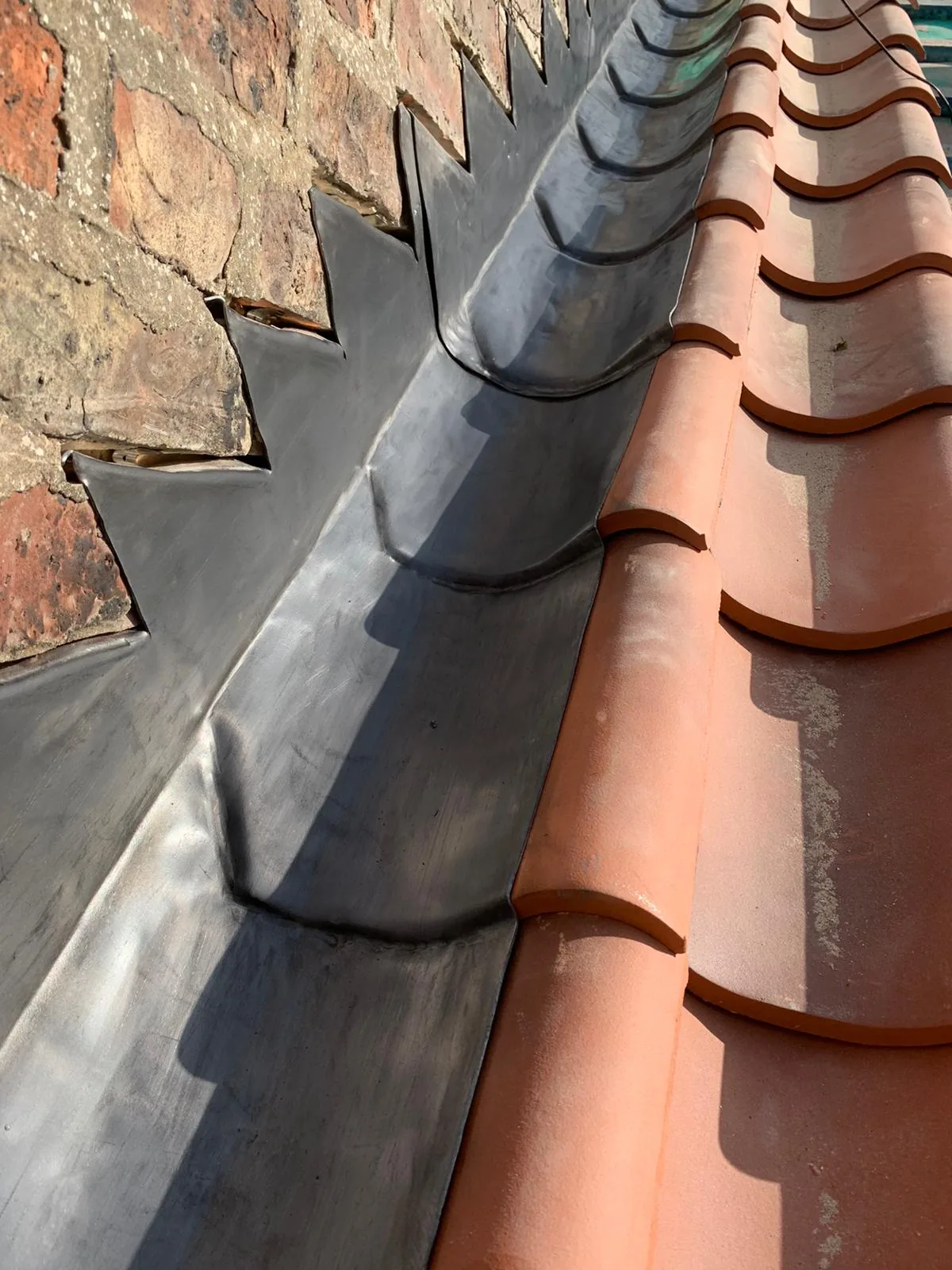
A spot repair on a few tiles usually takes half a day. A full ridge rebed on a standard semi-detached roof typically takes one to two days, and a dry ridge conversion usually runs a similar timeframe once access is up. Weather has the final say, since mortar needs dry, settled conditions to cure properly — we will not rebed a ridge into forecast rain, whatever the calendar says.
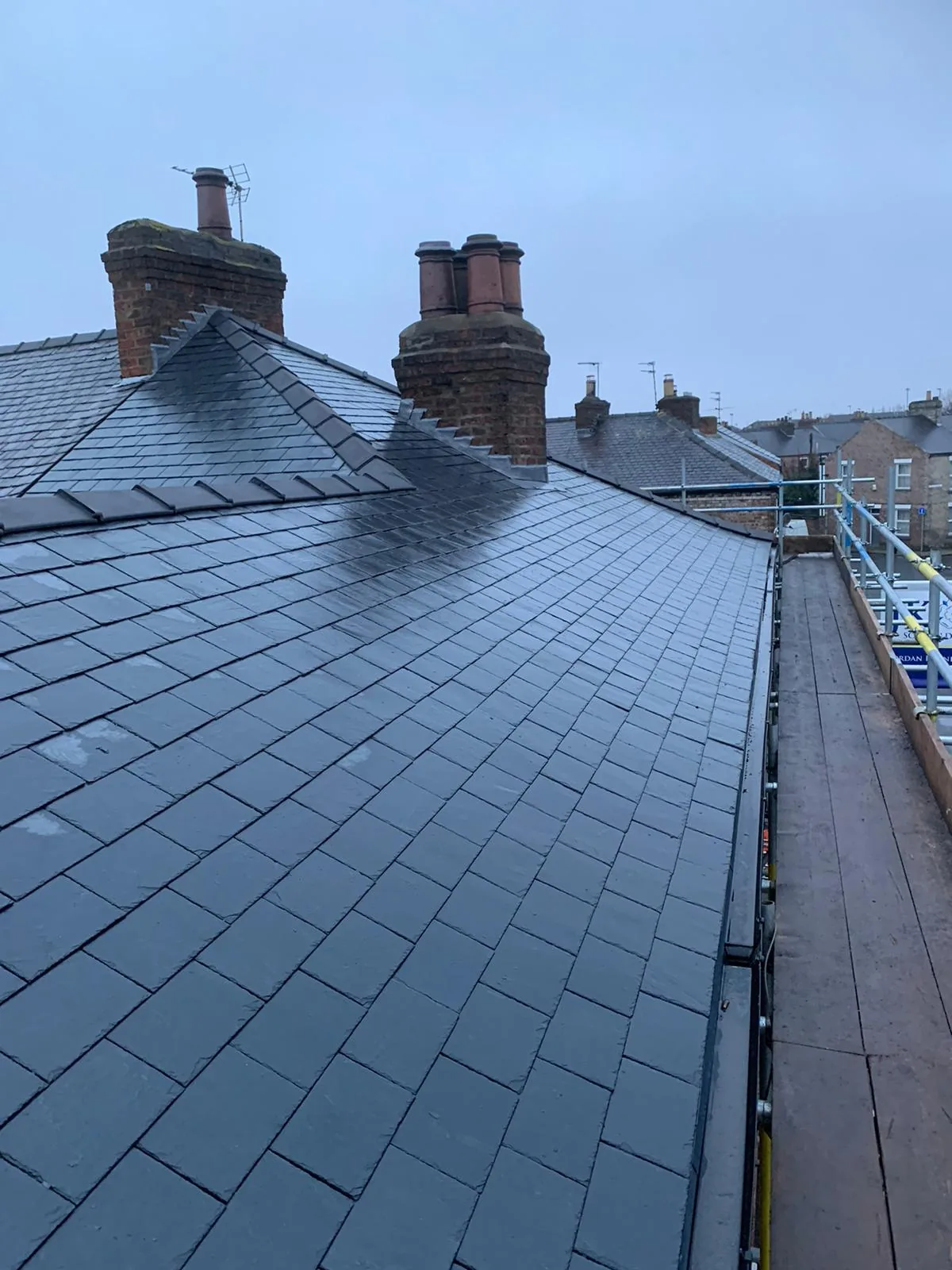
Stop a Small Ridge Problem Becoming a Bigger Roof Problem
A slipped or missing ridge tile is not just a cosmetic issue. Once the mortar seal breaks, rainwater tracks straight down through the ridge board and onto the felt, battens and rafters below.
Left long enough, that moisture rots timber, stains ceilings, and can spread to insulation in the loft. What would have been a same-day repair turns into a job involving replacement timber and a bigger bill. If a slipped ridge tile has already let water in and you need someone out quickly, our emergency roof repair team covers that in Hinckley and the surrounding villages.
The safest habit is a look after every named storm and a proper check every few years, particularly on roofs out near the Druid Quarter and along exposed rural stretches where wind does more damage than in a sheltered street.
The Technical Detail Behind a Ridge That Actually Holds
Not every ridge repair is built the same way, and the difference shows up years later, not on the day. Current British Standards for pitched roofing now require ridge, hip and verge tiles to be mechanically fixed, whether or not mortar is also used, because mortar alone is recognised as prone to cracking and coming loose over time.
Ridge tiles are also part of a bigger picture — if your clay roof tiling or concrete roof tiling is nearing the end of its life elsewhere on the roof, a ridge repair on its own may only buy a little time. We will always tell you if that is what we see during a survey.
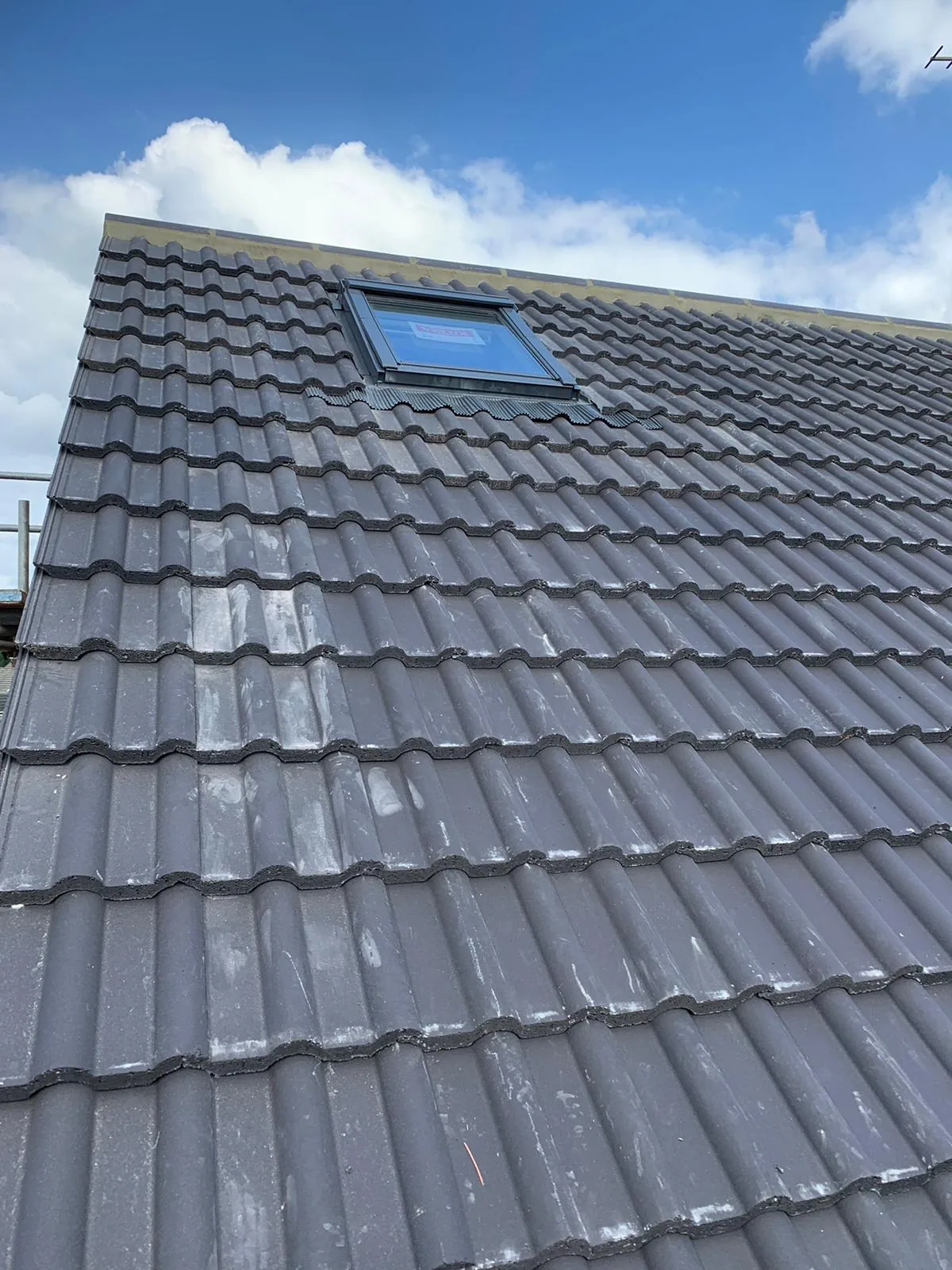
The Roof Tile Association's technical design guidance on ridge detailing sets this out clearly, and it is worth a read if you want the detail behind why we recommend mechanical fixing on every job, even a traditional mortar rebed. On listed or heritage properties, a mortar-only approach can still be appropriate where agreed with the relevant stakeholders, and we handle those cases with the same heritage tile detailing we bring to period roofs across Stoke Golding and Market Bosworth.
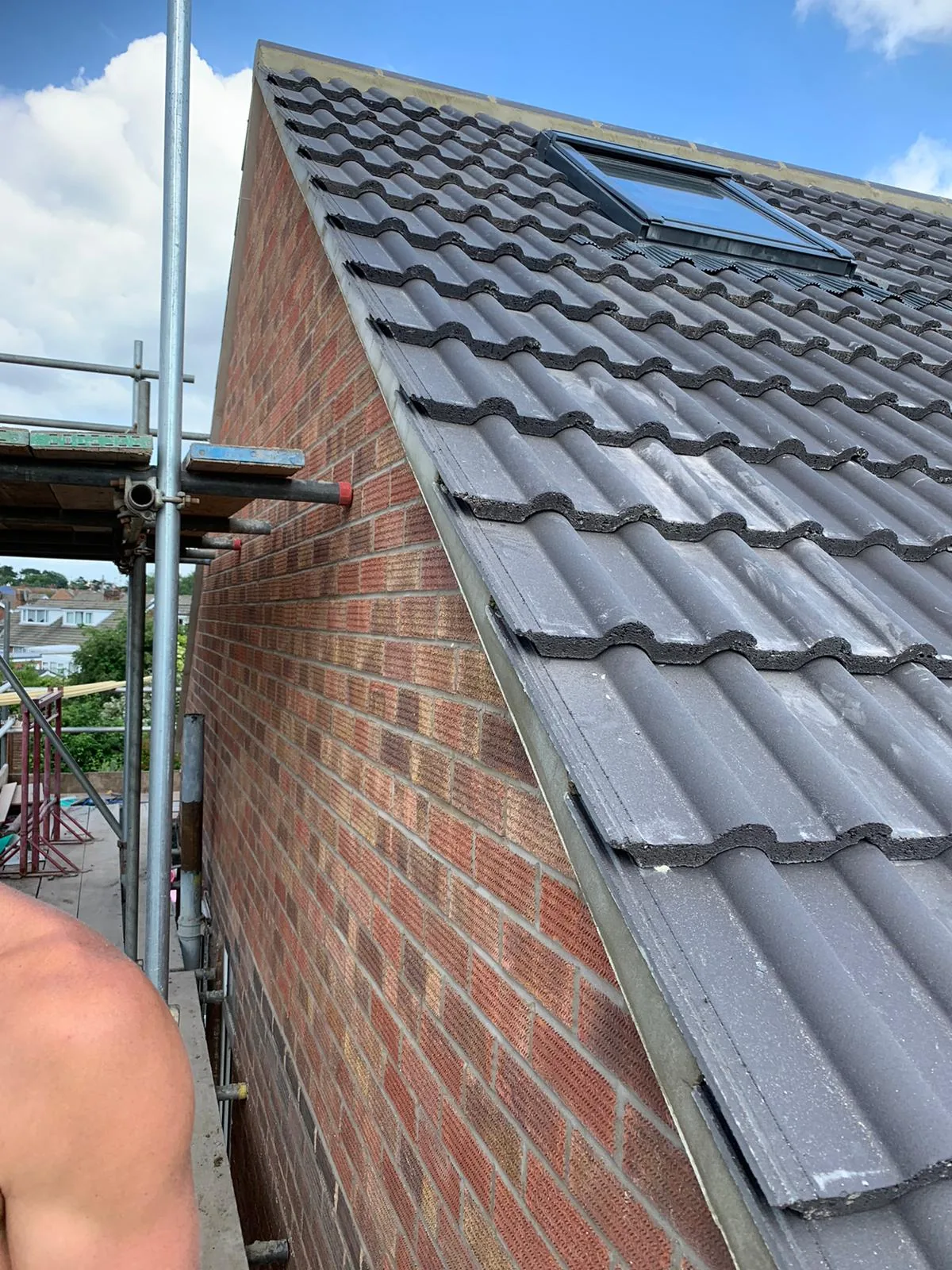
Why Choose Tate & Sons for Ridge Tile Repairs in Hinckley
Ridge tile faults are one of the most common calls we get on the older terraces around Hinckley, and Daniel Whitmore, our project manager, leads that work personally. Daniel specialises in heritage tile and slate detailing on the area's older properties, and he is part of the crew that turns up to fix your ridge, not just the person who quoted it.
Founder James Tate started out on the tools more than 20 years ago and still quotes the majority of jobs himself, so the person weighing up your ridge is often the one standing behind the finished work. Between us we bring 40 years of combined team experience, hold NVQ Level 2 and 3 qualifications in Roofing, and carry CSCS cards. Sophie Bennett, our office manager, keeps quotes, scheduling and aftercare running smoothly from your first call through to the finished job. Read more about the people behind the work on our About Tate & Sons Roofing page.
Areas We Serve Across Hinckley and Bosworth Country
We repair and rebed ridge tiles across Hinckley and the surrounding borough. If your area is not listed below, call us anyway — there is a strong chance we already cover you.
- Hinckley (LE10)
- Burbage (LE10)
- Barwell (LE9)
- Earl Shilton (LE9)
- Sapcote (LE9)
- Sharnford (LE10)
- Wolvey (LE10)
- Higham on the Hill (CV13)
- Sutton Cheney (CV13)
- Stoke Golding (CV13)
- Market Bosworth (CV13)
- Nuneaton (CV10 / CV11)
- Bedworth (CV12)
Got Questions?
Your Ridge Tile Questions, Answered Properly
How much does ridge tile repair cost in Hinckley?
A single tile repair typically costs £80–£250, repointing an existing ridge runs roughly £150–£350, and a full mortar rebed on a standard semi-detached roof typically costs £400–£900. A dry ridge system conversion usually runs £800–£1,600 for the same size roof. Access, ridge length and tile matching all affect the final figure, and a free drone survey gives you an exact written price rather than a phone estimate.
How long does ridge tile rebedding last?
A well-done mortar rebed typically lasts 10 to 15 years before the mortar starts to crack and fail again, depending on exposure. A dry ridge system, fitted with mechanical fixings rather than mortar alone, typically lasts 25 to 30 years or more with far less maintenance in between. Exposed roofs along the A5 corridor tend to sit at the shorter end of either range.
Do I need scaffolding to fix a ridge tile?
Not always. Most spot repairs and rebeds are carried out safely from a roof ladder, which keeps costs down. Scaffolding becomes necessary on a steep pitch, a ridge more than around 4 metres up, or where the roof sits close to a public footpath, and we build that into the quote where it applies rather than adding it as a surprise later.
Can I just fix one loose ridge tile, or does the whole ridge need doing?
A single loose tile in an otherwise sound ridge can usually be lifted, cleaned and rebedded on its own. If the mortar has failed along most of the ridge run, or several tiles are loose, a full rebed is more cost-effective than repeated single repairs, since the labour and access cost is largely the same either way. A survey tells you honestly which situation you are in.
What is a dry ridge system and is it worth the extra cost?
A dry ridge system replaces mortar with mechanical fixings, foam closures and ridge unions that clip and screw the tiles firmly in place, meeting current British Standards for mechanical fixing. It costs more upfront than mortar rebedding, but it lasts roughly twice as long and adds ridge ventilation that a mortar bed cannot provide. It is worth the extra cost on exposed roofs or roofs that have already needed more than one mortar rebed.
Will a missing ridge tile cause my roof to leak?
Yes, often quite quickly. A missing ridge tile leaves the underlay directly exposed at the highest point of the roof, and wind-driven rain can push straight through to the timber below. Even a small gap lets in more water than it looks like it should, so a missing ridge tile is worth treating as urgent rather than something to leave until a routine visit.
Does ridge tile repair need planning permission?
No. Repairing, rebedding or converting a ridge to a dry ridge system is maintenance work on an existing roof, and it does not require planning permission in England, including on most listed buildings, since it is a like-for-like repair rather than an alteration. If a listed building requires a change in tile colour or profile, that can need separate consent, which we check before quoting.
Why do ridge tiles on older Hinckley terraces fail more often?
Many terraces around Barwell and Earl Shilton still carry original sand-and-cement ridge bedding that is decades old and simply due for attention. Older mortar mixes were not always specified for today's weather patterns, and repeated freeze-thaw cycles over that many winters wear the bond down faster than on a more recently rebedded roof. It is one of the most frequent repairs we carry out on these older streets.
Does wind exposure along the A5 make ridge tiles fail faster in Hinckley?
Yes. Properties along the old Watling Street corridor and on higher, more open plots near Higham on the Hill sit in a genuinely windier position than a sheltered street in central Hinckley, and ridge tiles take the brunt of that exposure since they sit at the roof's highest point. We see mortar bedding fail noticeably sooner on these roofs, and it is a key reason we recommend dry ridge conversion more often out that way.
Book Your Free Drone Roof Survey Today
See exactly what your ridge needs before any work starts. No ladders on your property, no pressure — just a clear picture from a local Hinckley team.
Every season a failing ridge is left alone, more mortar falls away and more water finds its way into the timber underneath. A quick, free survey today tells you whether you need a spot repair, a full rebed, or a dry ridge conversion, and often the right answer costs less than people expect. Book now and get your ridge sorted properly, before the next storm makes the decision for you.
Call the Hinckley team today on 01455 242595, or request your free drone survey online. We're already working across your area.
Book Your Free Drone Roof Survey
See exactly where your roof stands, with no obligation and no pressure. Call our Hinckley team or request your free drone survey today.
Get in Touch
Tate & Sons Roofing — Hinckley Office
10 Brosdale Drive, Hinckley, LE10 0SW
📞 01455 242595
✉️ [email protected]