
🏠 Trusted Local Roofers
Chimney Cap Installation and Weatherproofing in Hinckley
An open chimney pot is an easy way for rain to run straight into your home. On the older properties around the Druid Quarter, many flues were capped off years ago with nothing more than a loose slate or a few loose bricks, and water still finds a way in. Left alone, that water soaks into the brickwork, rots timber nearby, and tracks damp patches down the chimney breast inside.
Chimney cap installation and weatherproofing in Hinckley solves that problem properly, without sealing the flue shut and creating a new one. We are part of the wider chimney service specialists across Hinckley, and fitting the right cap on a disused or under-used flue is one of the jobs we handle most often.
This page covers the warning signs, the choice between a ventilated cap and a full seal, which cap suits your chimney, what fitting day looks like, real cost ranges, and how to keep the flue dry for years afterward. Start with a free drone survey — no scaffold just to take a look, and no charge either way.
- Fully Insured
- 10-Year Guarantee
- 5-Star Rated
Quick Free Estimate - No Obligation
We're not just roofers – we're your neighbours.
Fully Insured • Response within 15 mins
🔒 Your details are safe with us. No spam, ever.
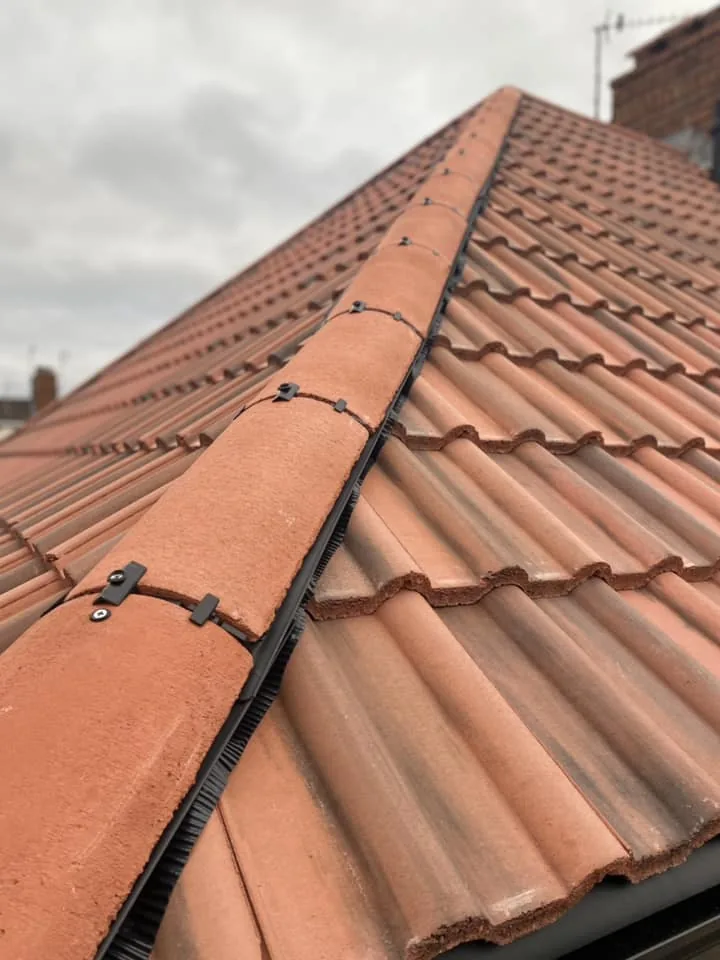
Know the Signs Your Chimney Needs a Cap Before Damp Takes Hold
Most chimney damp starts quietly, long before it shows up as a stain on a ceiling. By the time it is obvious indoors, water has usually been finding its way in for months, sometimes years.
We see this often on the older terraces around Barwell and Earl Shilton, where a fireplace was blocked up decades ago and nobody has checked the chimney above it since. The flue looks finished from inside the room, but the pot at roof level is often still wide open to the weather.
Watch out for these warning signs:
Any one of these is worth a proper look. A free drone survey shows the pot, the flaunching and the stack close up, without anyone climbing a ladder to guess at it from the eaves.
- A brown or yellow damp patch on the chimney breast, indoors or in the loft
- A musty smell in a room with a disused fireplace, worse after rain
- White, powdery salt deposits on the chimney brickwork
- Black mould spots around an old, boarded-up fireplace opening
- Scratching, cooing or debris noises coming from inside the flue
- A cracked, missing or badly weathered chimney pot
Ventilated Cap or Full Seal — Get This Decision Right First Time
The single biggest mistake on a disused chimney is sealing it airtight. It sounds like the safest option, but a fully sealed flue traps whatever moisture is already inside the brickwork with nowhere to go.
Warm, moist air from inside the house rises into the cold flue and condenses on the brick, and over time that moisture tracks through as mould, musty smells and dark staining on the chimney breast. The Energy Saving Trust's guidance on fixing damp and condensation makes the same point about homes generally: moisture needs somewhere to escape, and blocking every route out simply moves the problem rather than solving it.
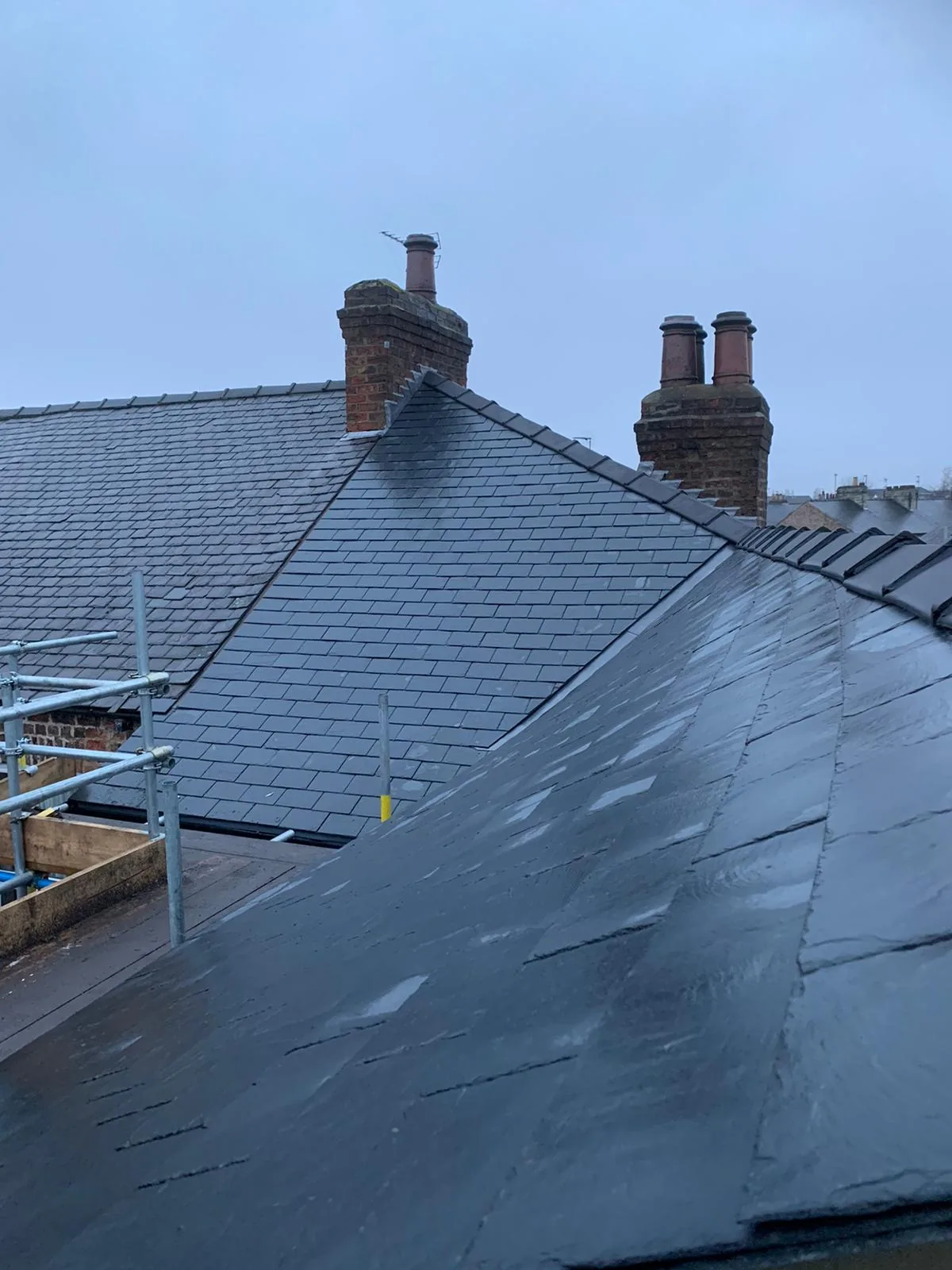
A ventilated cap avoids all of this. It keeps rain out at the top while a small vent, either in the cap itself or lower down at the old fireplace opening, lets the flue dry out naturally between wet spells.
| :-: | :-: | :-: | :-: |
| Option | What It Solves | Typical Cost | Best For |
| Ventilated rain cap | Stops rain ingress while letting the flue breathe and dry out | £150–£350 | Disused fireplaces, most Hinckley terraces and semis |
| Fully sealed cap | Blocks water and air completely | £120–£250 | Rarely recommended — carries a real risk of trapped damp |
| Cowl-with-cap combo | Solves rain ingress and downdraught or smoke back-flow together | £220–£450 | Chimneys still connected to a working fire or burner |
If the stack itself has open mortar joints or worn flaunching around the pot, a cap alone will not stop every route water can take. In those cases we usually recommend pairing the cap with our chimney repointing service, so the whole stack is weatherproof, not just the top.
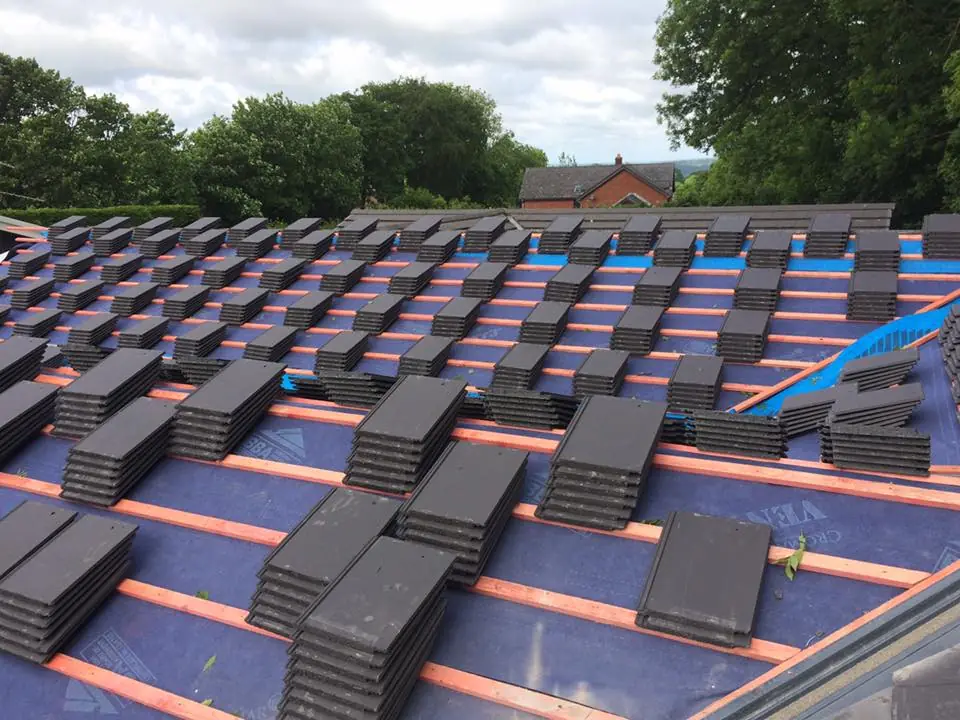
Pick the Right Cap for Your Hinckley Chimney
Once you have decided to ventilate rather than seal, the next choice is material and style. This is different from bird protection specifically — if mesh guards against birds and nesting debris are the main concern rather than rain, our chimney bird guard and cowl fitting service covers that separately.
For weatherproofing, three materials cover almost every job in Hinckley:
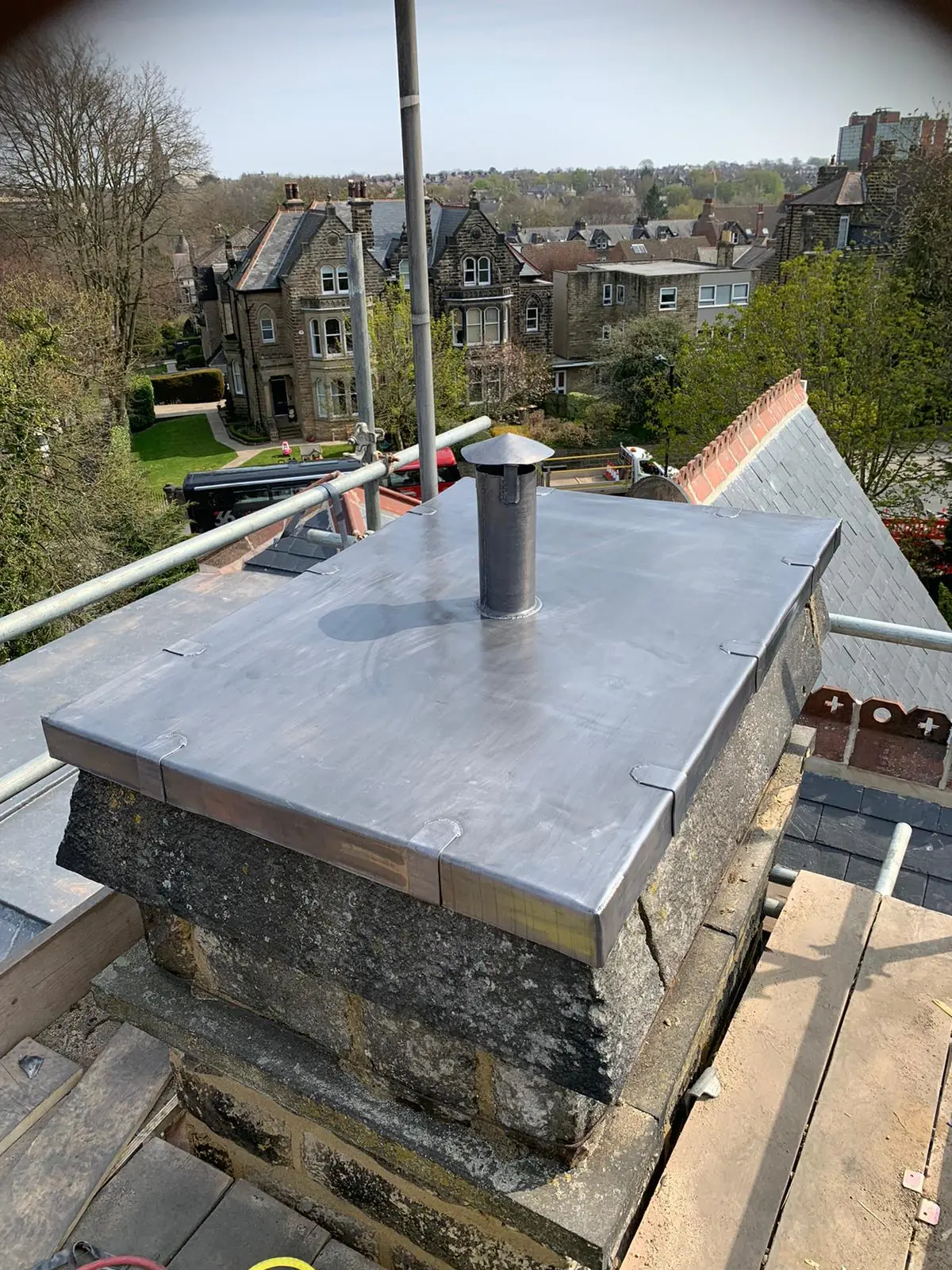
- **Lead capping*— the traditional choice on period properties, dressed by hand around the pot for a neat, long-lasting fit that suits older brickwork
- **Stainless steel*— corrosion-resistant and a strong choice for exposed sites, with a working life of 15 to 25 years
- **Galvanised steel*— the most affordable option, suited to newer properties where budget matters more than a heritage finish
On the newer estates around Hollycroft Park, a straightforward galvanised or stainless cap usually does the job well. On the period homes closer to the town centre and around the Druid Quarter, lead detailing tends to suit the property and the planning expectations better. Daniel Whitmore, our project manager, handles the leadwork on most of these older stacks personally, so the finish matches a roof that has stood for a century already.
What Happens on Chimney Cap Fitting Day
A chimney cap fitting follows a set order on every Hinckley job we do:
- Access arranged, either by ladder, tower or scaffold depending on height and pitch
- Old cap, debris, nests or loose material cleared from the pot and flue top
- Flaunching and pot condition checked, with any repairs flagged before fitting
- New cap fitted and secured to the pot or flue outlet
- Ventilation checked, so the flue can still dry out between wet spells
- Site cleared and the finished work checked before we leave
A single, straightforward cap on a chimney with easy access is usually finished within half a day. Where scaffolding is needed, or the flaunching needs rebuilding first, the job can run to a full day or two. We confirm the likely timeframe during the free drone survey, not as a guess once the ladder is already up.
What Chimney Cap Installation Really Costs in Hinckley
As a general guide, a straightforward ventilated cap fitted without scaffolding typically costs £150–£250 in Hinckley, covering a single pot with reasonable access. Where scaffolding is needed for a taller or awkward stack, the total usually rises to £500–£800 once access costs are included. Lead capping or a cowl-with-cap combination for an active flue tends to run £220–£520 depending on the design and pot size.
What pushes a price up or down:
These are general market ranges, not a quote for your chimney — two stacks the same height can price differently once access, pot condition and material are factored in. A fixed price needs a survey.
- **Access*— a ladder job costs far less than a chimney needing full scaffold
- **Material*— galvanised steel costs least, lead costs most
- **Flaunching and pot condition*— cracked flaunching or a damaged pot typically adds £100–£300 to make good before the cap goes on
- **Number of flues*— capping two or three pots on one stack costs less per pot than separate visits
- **Repointing needs*— a stack with failing mortar joints adds the cost of repointing on top of the cap itself
How We Check the Job Before We Leave
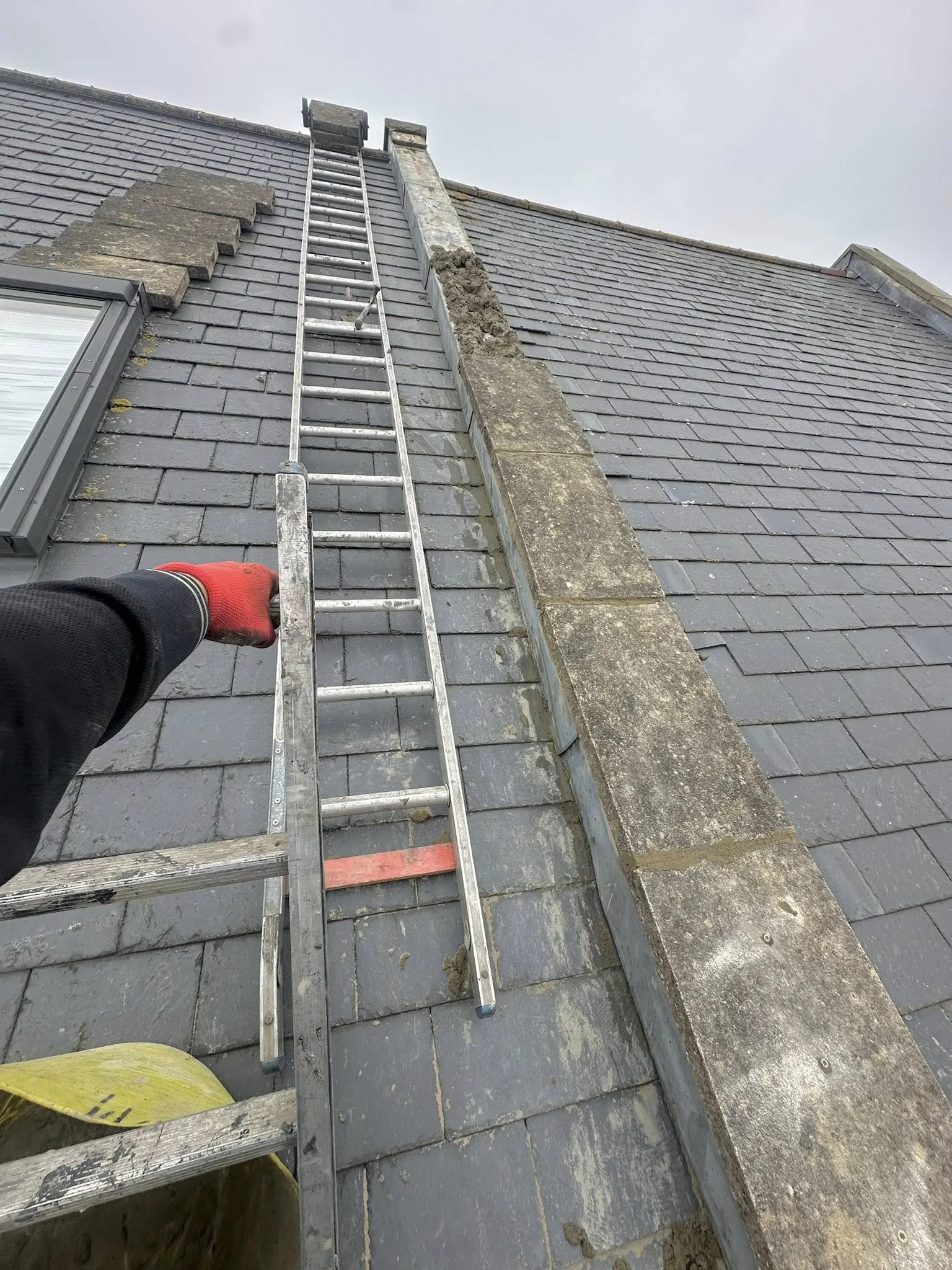
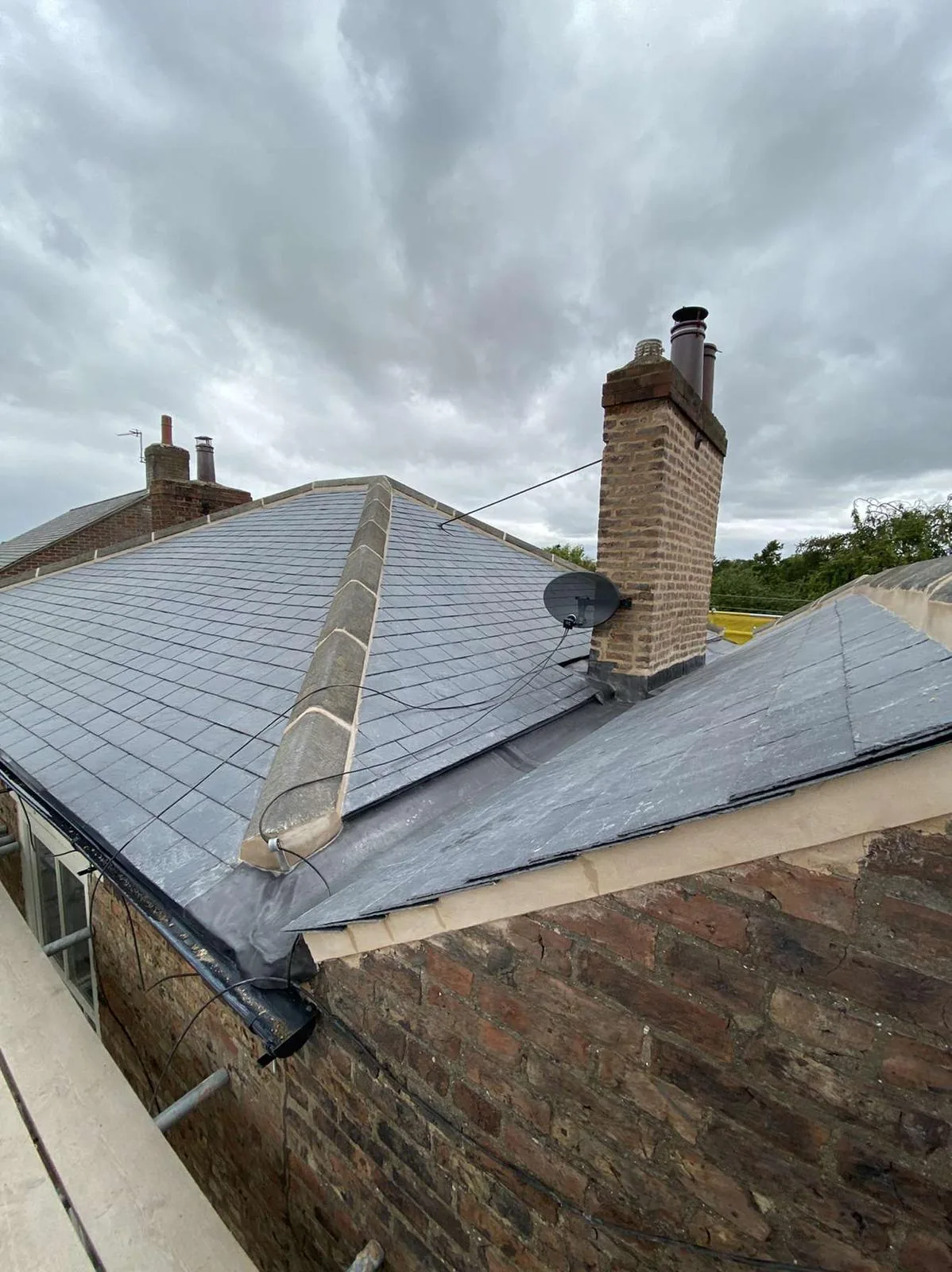
A cap that looks fitted from the ground is not the same as a cap that is actually weatherproof. Before we leave any Hinckley job, we check that the cap sits square on the pot, that fixings are secure against wind, and that the vent openings are clear and unobstructed.
Where the job includes ventilation lower in the flue, we confirm that vent is clear too, since a blocked lower vent defeats the point of fitting a ventilated cap at all. You get photos of the finished work, so you can see exactly what has been fitted without climbing up to check it yourself.
Keep Your Chimney Weatherproof for Years to Come
A properly fitted cap needs very little upkeep, but a few simple checks keep it performing for its full working life.
- Look up at the stack after any significant storm for a cap sitting loose or askew
- Keep an eye out for fresh damp patches on a chimney breast that had none before
- Check that a lower vent, if fitted, has not been blocked by furniture or decorating
- Book a free drone survey every few years to catch flaunching or pointing wear early
None of this needs a specialist visit — just a regular glance, and a call to us if anything looks off. A cap caught coming loose costs far less to sort than the damp that follows a winter of rain getting past it.
Why Hinckley Homeowners Choose Tate & Sons for Chimney Work
Chimney weatherproofing looks simple from the ground, but getting the balance between keeping rain out and letting the flue breathe wrong causes more damp than it cures. Daniel Whitmore, our project manager and lead roofer, specialises in leadwork and heritage detailing on the older stacks found across Hinckley, and he oversees the chimney capping jobs on site personally rather than handing them to whoever is free that week.
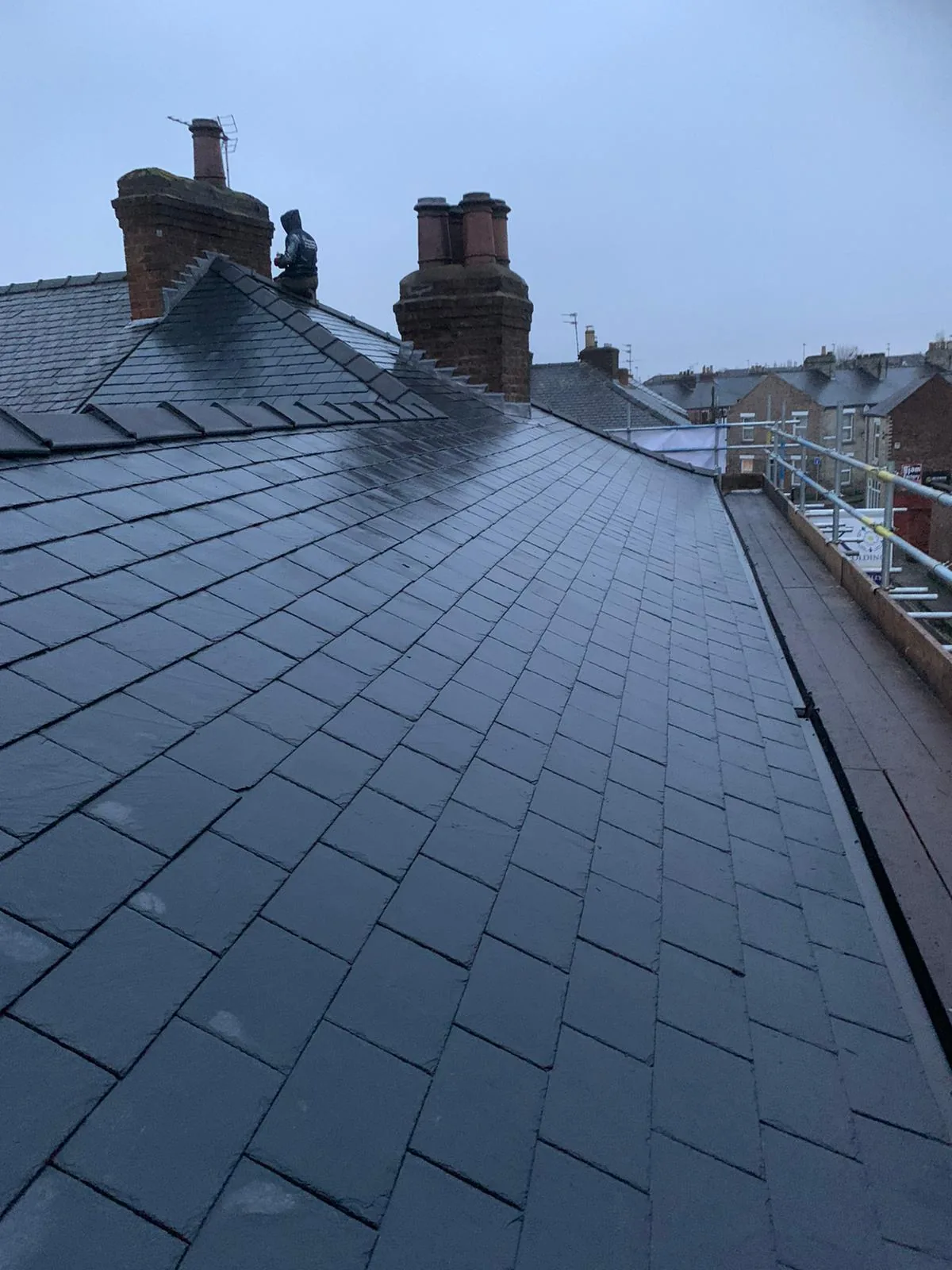
Founder James Tate started out on the tools more than 20 years ago and still quotes the majority of jobs himself, so the person pricing your chimney work is the one who understands what it actually needs. Sophie Bennett, our office manager, keeps quotes, scheduling and aftercare running smoothly from the first phone call through to the finished job. Between us we bring 40 years of combined roofing experience, hold NVQ Level 2 and 3 qualifications, and carry CSCS cards. Read more about the team behind the work on our About Tate & Sons Roofing page.
Areas We Serve Across Hinckley and Bosworth Country
We fit chimney caps and weatherproofing across Hinckley and the surrounding borough. If your area is not listed below, call us anyway — there is a strong chance we already cover you.
- Hinckley (LE10)
- Burbage (LE10)
- Barwell (LE9)
- Earl Shilton (LE9)
- Sapcote (LE9)
- Sharnford (LE10)
- Wolvey (LE10)
- Higham on the Hill (CV13)
- Sutton Cheney (CV13)
- Stoke Golding (CV13)
- Market Bosworth (CV13)
- Nuneaton (CV10 / CV11)
- Bedworth (CV12)
Got Questions?
Your Chimney Cap Questions, Answered Properly
What is a chimney cap and do I need one on a disused chimney?
A chimney cap is a weatherproof cover fitted over the pot or flue outlet to stop rain running straight down into the chimney. Yes, if your chimney is disused or only used occasionally, a cap is one of the most cost-effective ways to protect the brickwork below it. Without one, rain sits inside the flue, soaks into the masonry, and can eventually show up as damp patches on the chimney breast indoors. A cap fitted with the right ventilation keeps water out while still letting the flue breathe.
How much does chimney cap installation cost in Hinckley?
A straightforward cap fitted without scaffolding typically costs £150–£250 in Hinckley, covering a single pot with reasonable access. Where scaffolding is needed, the total usually rises to £500–£800 because of the access work involved. Lead capping or a cowl-with-cap combination for an active flue tends to run £220–£520 depending on the design. These are general market ranges rather than a quote for your chimney, and a fixed price always needs a survey.
What's the difference between a chimney cap, a cowl, and a bird guard?
A chimney cap is a solid or ventilated cover that sits over the pot mainly to keep rain out. A cowl usually adds a shaped hood or H-section to manage downdraught on a chimney still connected to a working fire or burner. A bird guard is a mesh cage that keeps birds and debris out while leaving airflow largely open, and it does less to stop rain than a proper cap. If mesh-style bird protection is your main concern, our chimney bird guard and cowl fitting service covers that in more detail.
Should a disused chimney be sealed completely or left ventilated?
Left ventilated, in almost every case. Fully sealing a flue traps whatever moisture is already inside, and warm air rising from the house condenses against the cold brickwork with nowhere to escape. That trapped damp tracks through as musty smells, mould and dark staining on the chimney breast, sometimes years after the flue was sealed. A ventilated cap keeps rain out at the top while a small vent lower down lets the flue dry out naturally.
Can a chimney cap be fitted without scaffolding?
Often, yes, particularly on a single-storey extension or a chimney with safe ladder access. Many straightforward cap fittings in Hinckley are completed from a ladder or a small tower, which keeps the cost down. Taller stacks, steep roof pitches, or chimneys hemmed in by neighbouring buildings usually need scaffolding for safety. We confirm access during the free drone survey, so you know the likely cost before we book the job in.
How long does a chimney cap last before it needs replacing?
A well-fitted stainless steel or lead cap typically lasts 15 to 25 years with no attention beyond an occasional check. Cheaper galvanised caps tend to corrode sooner, often needing replacement within 8 to 12 years, especially on exposed sites. Wind-driven rain along exposed stretches near Higham on the Hill takes a harder toll than a sheltered spot in town, so caps there tend to wear faster. A quick check every few years catches corrosion or a loose fitting before it lets water back in.
Can sealing a chimney cause damp lower down the chimney breast, not just in the loft?
Yes, and this is one of the most missed causes of unexplained damp in older Hinckley homes. A sealed flue holds moisture at every level it passes through, not only near the pot, so a patch can appear on a bedroom chimney breast two floors below the roofline. The damp often gets blamed on rising damp or a leaking pipe, when the real cause is a flue that was bricked up airtight years earlier. Opening a small vent low in the stack, alongside a ventilated cap at the top, usually resolves it without touching decoration elsewhere.
Do the old capped-off fireplaces in Barwell and Earl Shilton terraces need checking even though they look sealed already?
Often, yes. Many of these fireplaces were boarded or bricked up decades ago without anyone checking the chimney above, and the original capping is rarely ventilated to today's standard. A flue that looks sealed from inside the room can still be open to weather at the pot, or fully airtight and trapping damp with nowhere to go. We can check the stack and the fireplace opening together on these older terraces and recommend whichever fix the chimney actually needs.
Does capping a disused flue need Building Control sign-off if we're not fully decommissioning it?
Usually not, if you are simply fitting a weatherproof cap and keeping the flue in place for possible future use. Building Control involvement becomes more relevant if you are permanently decommissioning the chimney, removing the stack, or making major changes to the structure. A straightforward cap and ventilation job on a disused flue in the Druid Quarter, or anywhere else in Hinckley, is normally treated as routine maintenance. If your plans go beyond capping, we will flag it before work starts, not after.
Book Your Free Drone Chimney Survey Today
See exactly what your chimney needs before any work starts. No ladders, no pressure — just a clear picture from a local Hinckley team.
Every wet season a disused flue is left uncapped, more water works into the brickwork and timber around it, and a simple capping job can turn into stack repairs or repointing. A quick, free survey today tells you exactly where you stand, and the right fix is often smaller and more affordable than you feared. Book now, get an honest quote, and get your chimney weatherproofed properly — first time.
Call the Hinckley team today on 01455 242595, or request your free drone survey online. We're already working across your area.
Book Your Free Drone Roof Survey
See exactly where your roof stands, with no obligation and no pressure. Call our Hinckley team or request your free drone survey today.
Get in Touch
Tate & Sons Roofing — Hinckley Office
10 Brosdale Drive, Hinckley, LE10 0SW
📞 01455 242595
✉️ [email protected]