
🏠 Trusted Local Roofers
Flat Roofing in Hinckley
A flat roof in Hinckley works harder than most people realise. Rain sits on it for longer than it ever would on a pitched roof, and the sun along the exposed stretch of the A5/Watling Street corridor bakes the surface every summer. Get the system, the falls and the detailing right, and a flat roof will give you decades of trouble-free cover. Get it wrong, and you are back up a ladder every winter chasing the same leak.
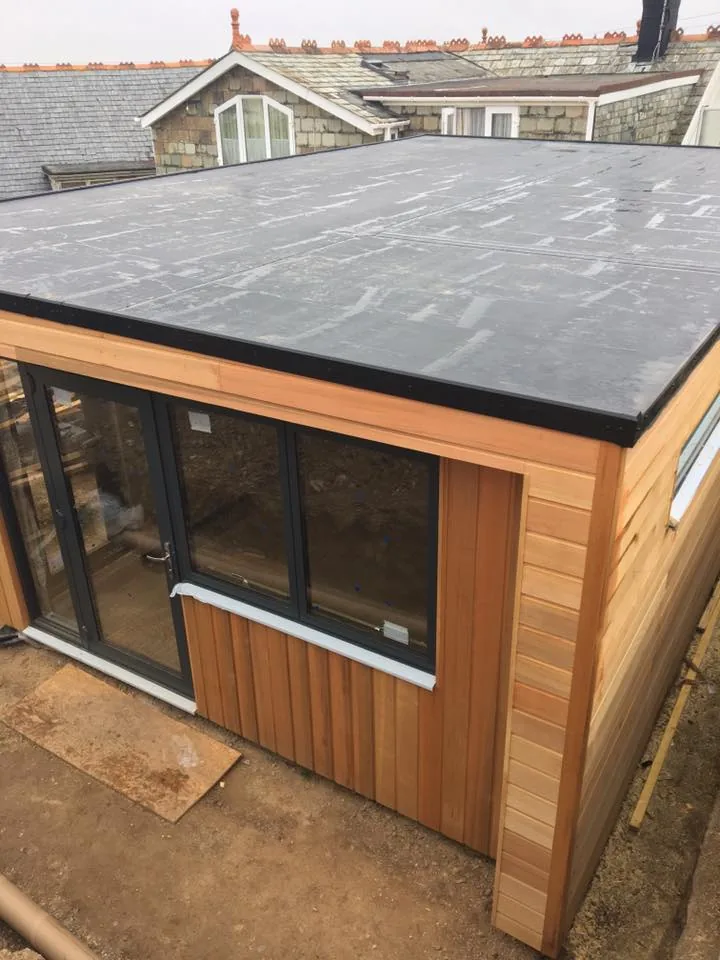
Tate & Sons Roofing fits and maintains flat roofing across Hinckley, from a single garage near Sketchley Hill to a full extension roof out toward Burbage. This page covers the warning signs of a failing flat roof, whether you need a repair or a full replacement, how felt, EPDM and GRP compare, real cost ranges, and how to get the insulation right the first time. Flat roofing is one part of the wider work we do as a roofing contractor across Hinckley, alongside pitched roofs, repairs and everything in between.
- Fully Insured
- 10-Year Guarantee
- 5-Star Rated
Quick Free Estimate - No Obligation
We're not just roofers – we're your neighbours.
Fully Insured • Response within 15 mins
🔒 Your details are safe with us. No spam, ever.
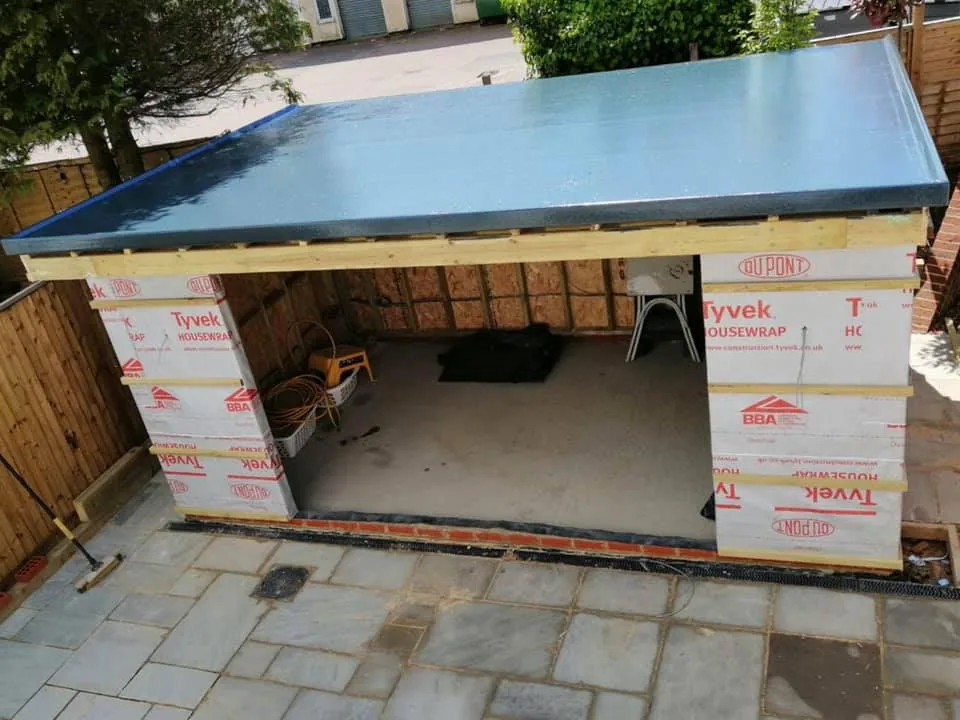
Spot the Warning Signs Before a Flat Roof Lets Water In
A flat roof rarely fails without warning. The problem is that most of the signs sit up on the roof itself, out of sight from the garden or the street, so they get missed until water is already dripping into the room below.
Watch out for these signs on any flat roof, whether it covers a garage, a dormer, or a full extension:
Most flat roofing systems are built to last 15 to 40 years depending on the material, but that lifespan only holds if the roof was fitted with the right falls and detailing in the first place. A free drone survey checks the whole surface, including areas you could never see safely from a ladder, so you know exactly what condition your roof is really in.
- Pools of water still sitting on the roof more than 48 hours after rain
- Bubbles, blisters or ripples in the surface of felt or GRP
- Cracking or a chalky, powdery texture on an older felt or GRP roof
- Splits or lifted seams at joints and edges
- Ceiling stains below the flat section that reappear after every downpour
- A soft, spongy feel underfoot when you step onto the roof
- Moss or algae holding damp against the surface for long spells
Repair or Replace — Getting the Call Right on a Flat Roof
A single split seam or a small area of blistering is usually a straightforward repair, especially on a roof that is otherwise in good condition. Widespread pooling, multiple leaks, or a covering nearing the end of its expected life points toward a full replacement instead.
We check the whole roof, not just the spot you called about. A free drone survey shows falls, pooling and edge detailing that a look from a ladder always misses, so any recommendation is based on the full picture.
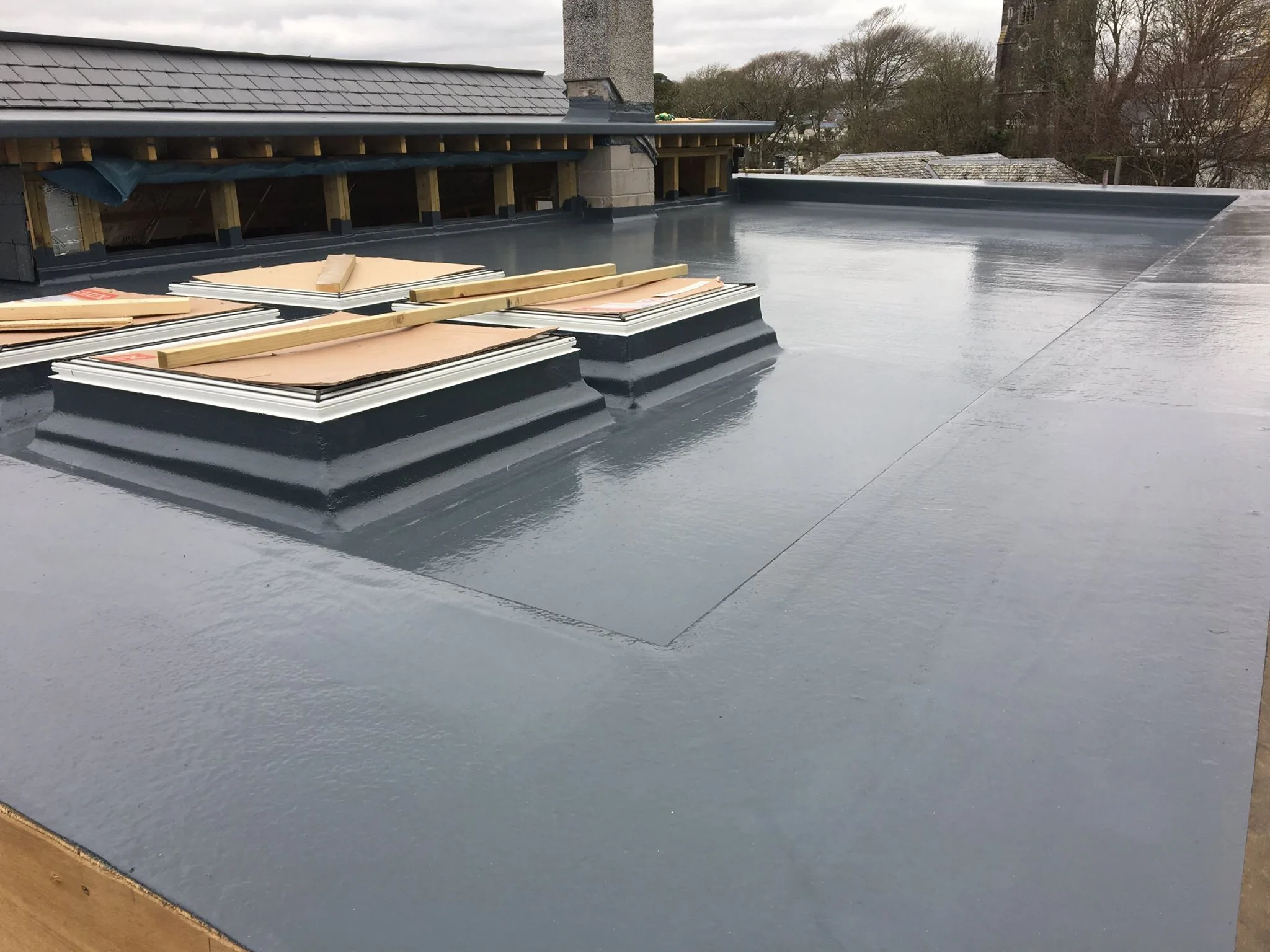
As a rule of thumb, if a repair would cost more than around a third of a full replacement, replacing the roof is usually the better long-term value. We see this pattern often on the older flat-roofed extensions around Hinckley's 1960s and 1970s estates, where a felt roof gets patched every year or two without anyone addressing the falls or decking failing underneath. Patching buys a season, but the underlying problem keeps costing money until the roof is properly replaced. If your flat roof just needs a targeted fix rather than a full new system, our flat roof repair service covers leaks, blisters and localised damage without the cost of stripping the whole roof.
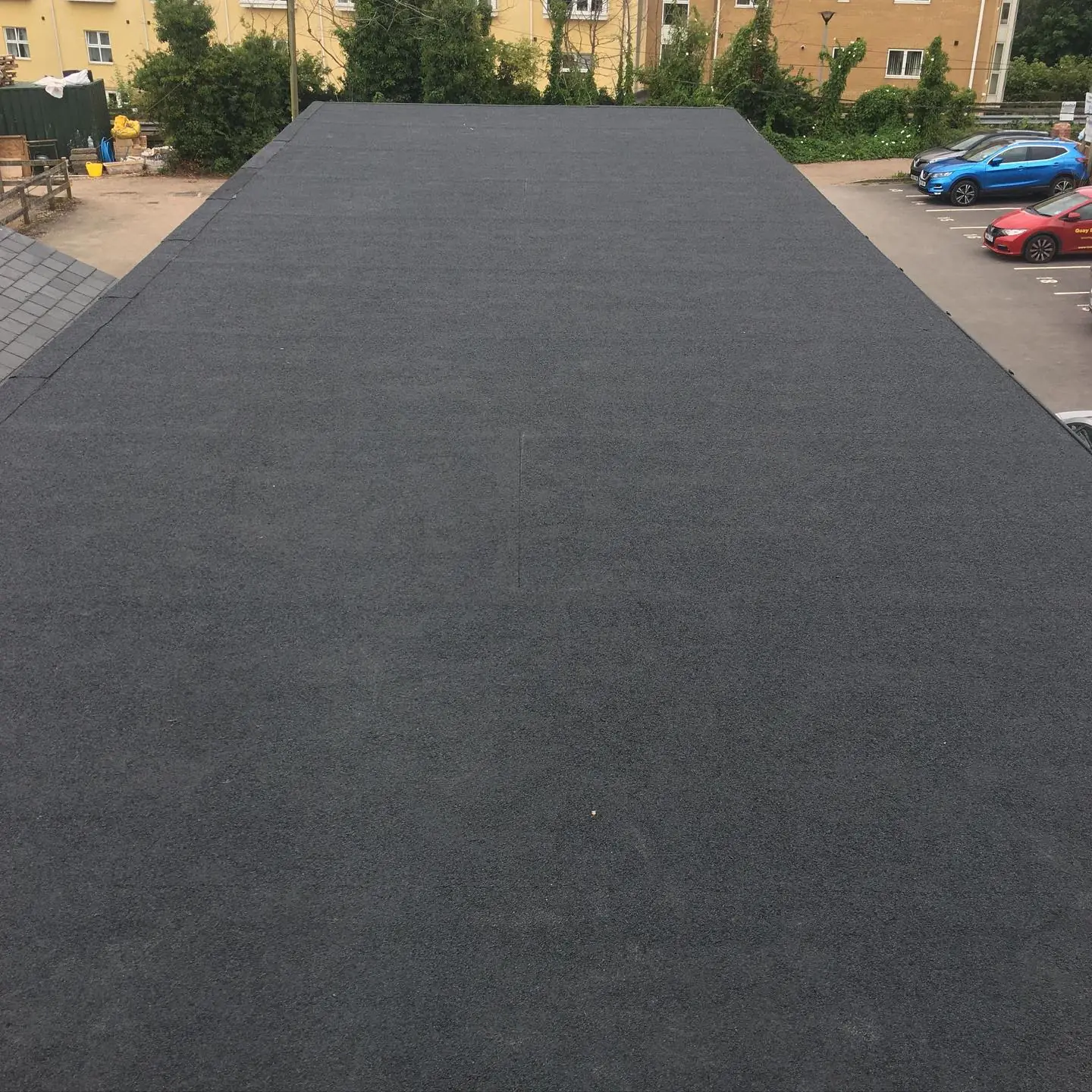
Felt, EPDM or GRP — Choosing the Right Flat Roof System for Your Property
Three systems cover almost every flat roof fitted around Hinckley today. Each suits a different budget, level of foot traffic and expected lifespan.
| Material | Typical cost (per m²) | Typical lifespan | Best for |
|---|---|---|---|
| Felt (torch-on/bitumen) | £40–£70 | 15–20 years | Sheds, outbuildings, tight budgets |
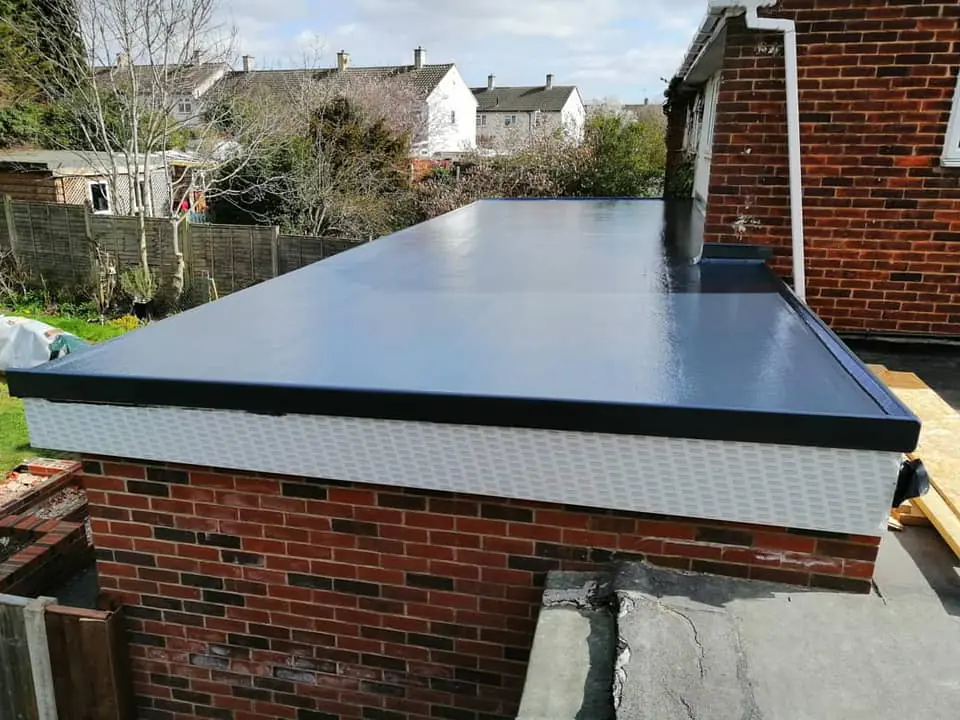
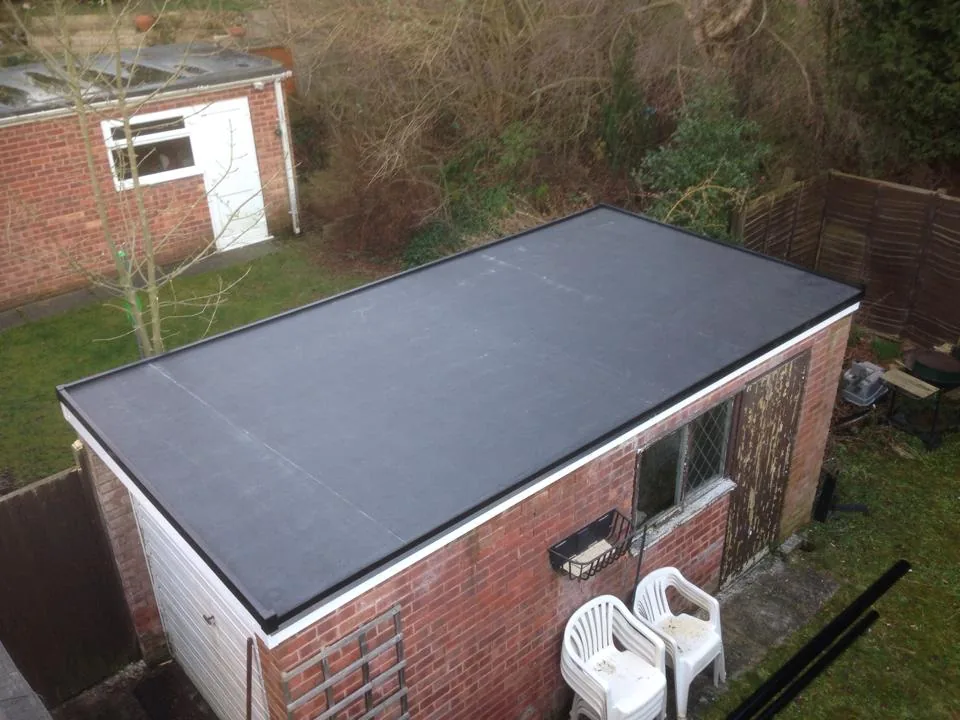
| EPDM rubber | £60–£100 | 25–40 years | Most garages, extensions and dormers |
| GRP fibreglass | £80–£130 | 30–40 years | Balconies, walkways, complex or detail-heavy roofs |
Daniel Whitmore, our project manager, fits all three systems across Hinckley and will talk you through which one suits your roof, your budget and how you actually use the space above it, in plain English rather than sales jargon.
Felt is the cheapest system upfront and still has its place on a shed or an outbuilding where budget matters more than longevity. EPDM rubber gives the best balance of cost and lifespan for most homes, with fewer seams and less risk of the cracking that ages felt roofs badly. GRP fibreglass forms a rigid, seamless surface that copes well with foot traffic, so it tends to suit roof terraces, balconies and roofs with lots of upstands, rooflights or awkward corners. You can read more about the systems themselves on our dedicated EPDM rubber roofing page.
What a New Flat Roof Really Costs in Hinckley
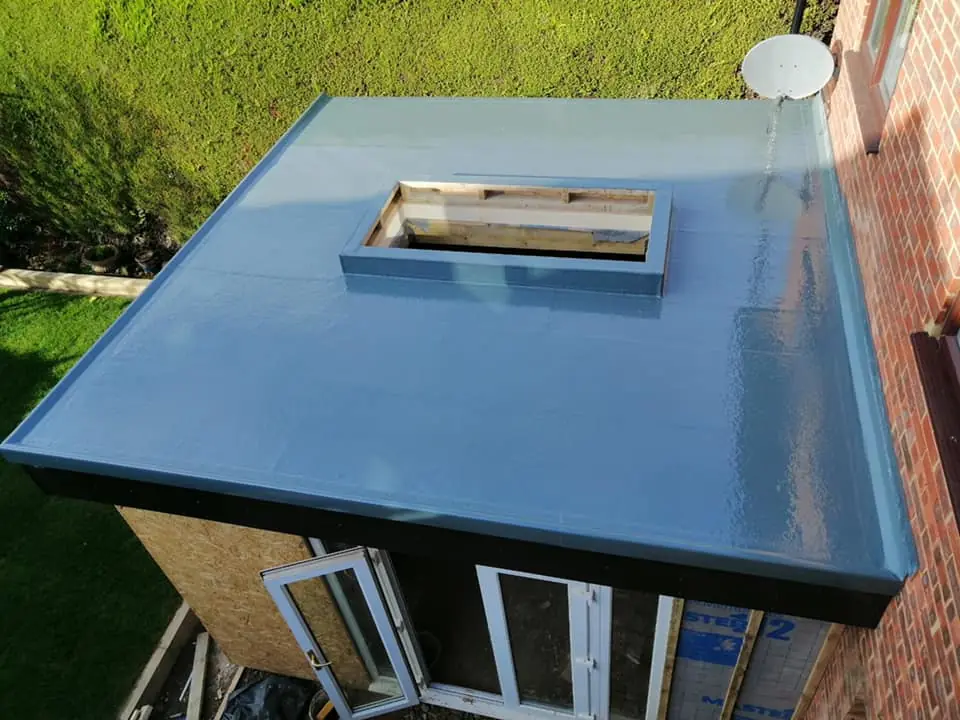
Cost comes down to the system you choose, the size of the roof, and how easy it is to access. As a general guide, a typical single garage roof, around 15 to 20 square metres, runs £1,200–£2,500 in felt, £1,800–£3,000 in EPDM, or £2,200–£3,800 in GRP. A flat-roofed extension or dormer, around 20 to 30 square metres, typically costs £1,800–£3,500 in EPDM or £2,400–£4,500 in GRP once insulation and detailing are included.
What pushes a price up or down:
- **Roof size and shape*— more upstands, rooflights and corners all add labour
- **Access*— a garage roof reached by ladder costs less than one boxed in by fencing or extensions
- **Decking condition*— rotten boards under an old felt roof typically add £300–£800 before the new covering goes on
- **Strip-out and disposal*— removing the old covering usually adds £200–£500
- **Insulation upgrade*— building a warm roof to current Building Regulations standard typically adds £15–£30 per square metre
- **System choice*— felt costs least upfront, GRP costs most but needs the least attention over its lifespan
Labour typically makes up around 40 to 50 percent of the total cost, and flat roofers in this part of Leicestershire generally charge in the region of £250–£350 per day. These are general market ranges, not a quote for your roof — two garages the same size can price very differently once decking condition and access are factored in. A fixed price needs a survey.
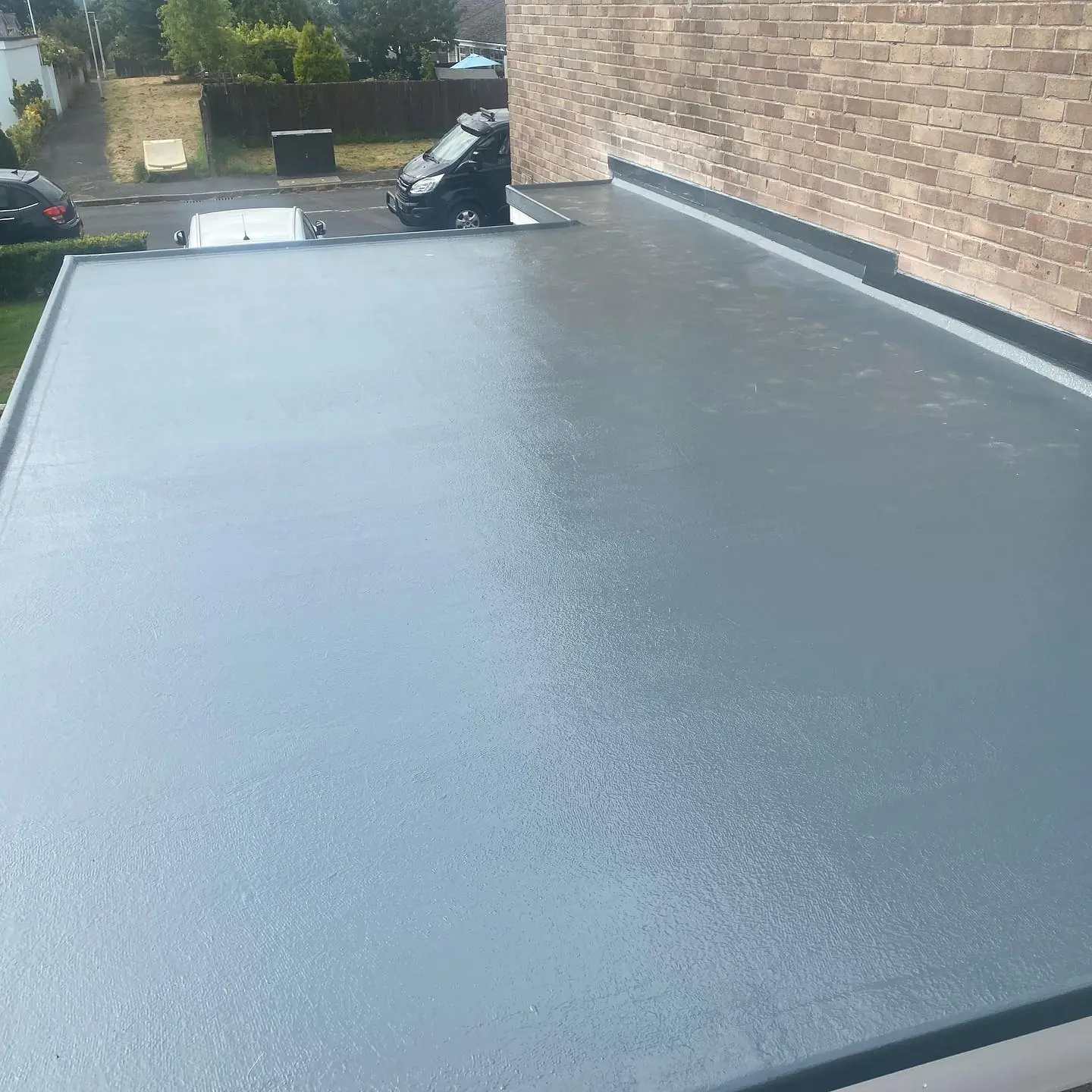
What Happens on Fitting Day, Start to Finish
A flat roof replacement follows the same order on every job:
- Old covering stripped back to the timber deck
- Deck inspected, with any rotten or damaged boards replaced
- Insulation fitted above the deck to build a warm roof
- New membrane fitted — felt, EPDM or GRP — with the correct falls built in
- Edge trims, upstands and flashings detailed to shed water cleanly
- Offcuts cleared and the finished roof checked before we leave
A single garage or dormer flat roof is usually finished within a day. A larger extension roof, once insulation and detailing are factored in, typically takes 2 to 3 days. Felt can be laid in cooler, drier weather, but heavy rain or frost on the day will push a job back — we build a realistic allowance into the schedule rather than promise a date we cannot keep.
Get Warm Roof Insulation Right and Stop Condensation for Good
Almost every flat roof fitted today should be built as a warm roof, with insulation laid above the timber deck rather than between the joists below. A warm roof keeps the deck itself at room temperature, which all but removes the risk of condensation forming inside the roof structure, and it needs no ventilation gaps to work properly.
Flat roofs also need a minimum fall, usually between 1:40 and 1:80, built into the deck or insulation so water actually runs to an outlet rather than sitting in the middle. A roof laid dead flat, or with the fall built the wrong way, will pond water no matter how good the membrane is. We build the correct fall into every flat roof we fit, checked before the membrane ever goes down.
An older cold roof, with insulation between the joists and a cold deck above, relies on ventilation to carry away moisture. Get that ventilation wrong, or block it over the years, and warm moist air from the room below condenses against the cold deck, leading to rot and failed insulation. Current Building Regulations target a U-value of around 0.18 W/m²K for a new flat roof, and around 0.25 W/m²K where an existing flat roof is being upgraded, so an old cold roof rarely meets today's standard without extra work. The Liquid Roofing and Waterproofing Association publishes detailed technical guidance on flat roof design and materials, and it is worth a look if you want the fuller technical picture behind the numbers.
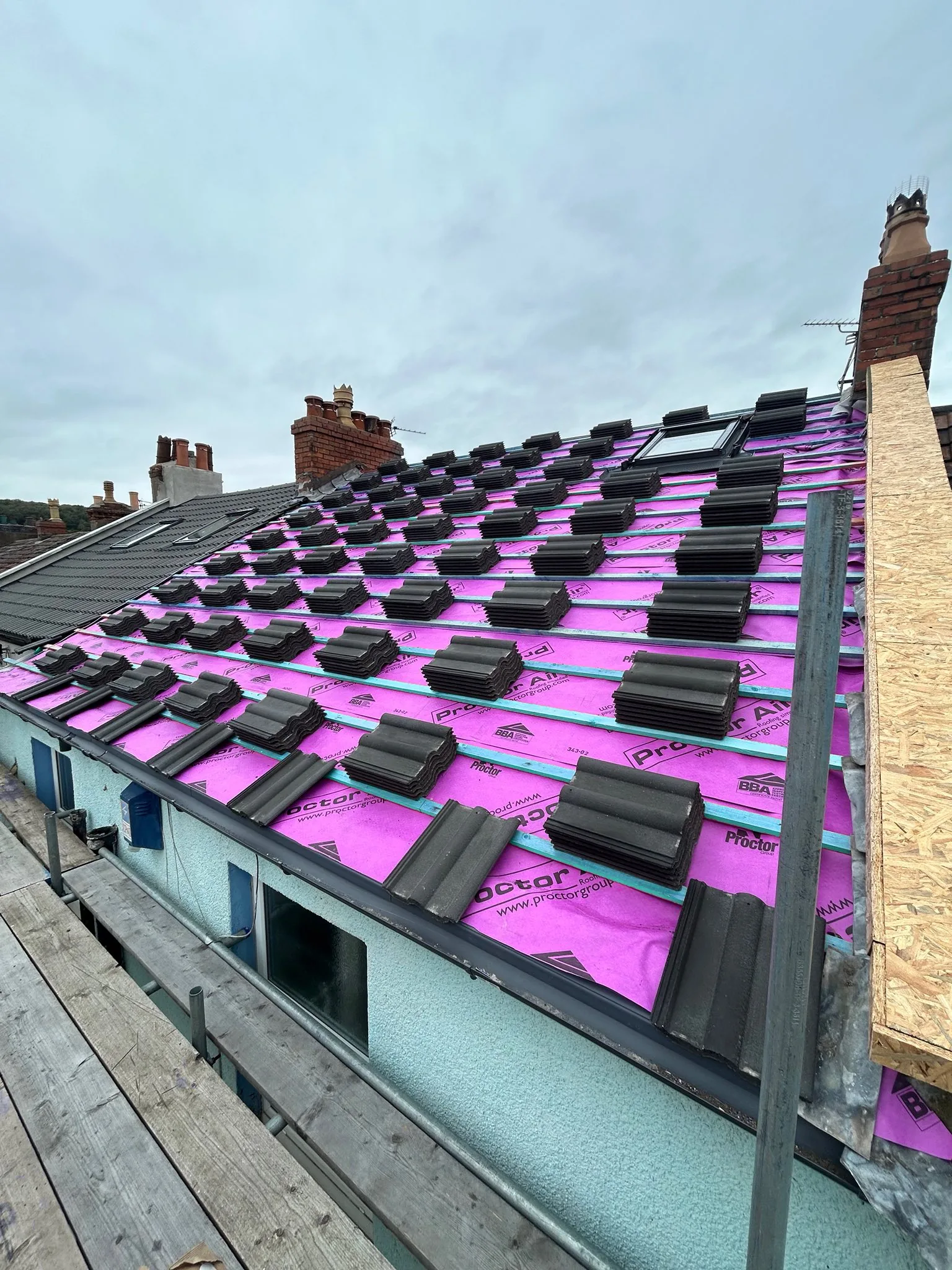
Simple Maintenance That Keeps a Flat Roof Performing for Decades
A flat roof needs a little more regular attention than a pitched roof, since debris and standing water both sit on the surface rather than running straight off.
- Clear leaves and moss from outlets and gutters each autumn
- Check for standing water a day or two after heavy rain
- Look over upstands and flashings around chimneys and abutments each year
- Book a free drone survey every few years, or straight after any major storm
None of this needs a specialist visit — just a regular look, and a call to us if anything seems off. A blocked outlet or a lifted edge trim caught early is a five-minute fix; left for a season, it becomes a ceiling repair as well as a roof repair.
Why Hinckley Property Owners Choose Tate & Sons for Flat Roofing
You are not just buying a membrane — you are buying whoever fits it, and how carefully they get the falls and detailing right. Daniel Whitmore, our project manager, runs flat roofing jobs across Hinckley day to day and specialises in EPDM, GRP and felt systems on everything from single garages to full extension roofs. He is part of the same crew that turns up to fit your roof, not just the man who quoted it.
Founder James Tate started out on the tools more than 20 years ago and still quotes the majority of jobs personally, so the person weighing up your flat roof is the one standing behind the finished work. Between us we bring 40 years of combined team experience, hold NVQ Level 2 and 3 qualifications in Roofing, and carry CSCS cards. Sophie Bennett, our office manager, keeps quotes, scheduling and aftercare running smoothly from the first phone call onwards. Read more about the people behind the work on our About Tate & Sons Roofing page.
Areas We Serve Across Hinckley and Bosworth Country
We fit and repair flat roofing across Hinckley and the surrounding borough. If your area is not on the list below, call us anyway — there is a strong chance we already cover you.
- Hinckley (LE10)
- Burbage (LE10)
- Barwell (LE9)
- Earl Shilton (LE9)
- Sapcote (LE9)
- Sharnford (LE10)
- Wolvey (LE10)
- Higham on the Hill (CV13)
- Sutton Cheney (CV13)
- Stoke Golding (CV13)
- Market Bosworth (CV13)
- Nuneaton (CV10 / CV11)
- Bedworth (CV12)
Got Questions?
Your Flat Roofing Questions, Answered Properly
How much does flat roofing cost in Hinckley?
A typical single garage roof, around 15 to 20 square metres, costs £1,200–£2,500 in felt, £1,800–£3,000 in EPDM, or £2,200–£3,800 in GRP. A flat-roofed extension or dormer usually runs £1,800–£4,500 depending on size and system, with access, decking condition and insulation upgrades all affecting the final figure. A free drone survey gives you an exact written price rather than a rough estimate over the phone.
What is the lifespan of a flat roof?
Lifespan depends entirely on the system fitted. Felt typically lasts 15 to 20 years, EPDM rubber 25 to 40 years, and GRP fibreglass 30 to 40 years, provided the falls and detailing were done correctly at installation. A roof fitted without the right fall will pond water and fail years earlier than its material's usual lifespan, whatever system was used.
How do I know if my flat roof needs repairing or replacing?
A single split seam, small blister or one localised leak is usually a straightforward repair. Widespread pooling, several separate leaks, or a covering close to the end of its expected life point toward full replacement instead. As a general rule, if a repair would cost more than around a third of a full replacement, replacing the roof is usually the better long-term value.
Do I need planning permission for a flat roof?
Most like-for-like flat roof replacements do not need planning permission in England. A new flat-roofed outbuilding within permitted development rules is usually limited to 3 metres in height, and permission is more likely to be needed if the structure is attached to the main house, sits within a conservation area, or exceeds permitted development size limits. We check this before quoting on any new structure, not just a straight re-cover.
Does a flat roof need a fall or slope built in?
Yes, every flat roof needs a minimum fall, usually between 1:40 and 1:80, so water actually reaches an outlet instead of sitting on the surface. A roof laid genuinely flat, or with the fall built the wrong direction, will pond water no matter how good the membrane is. We build and check the fall into the deck or insulation layer before any membrane goes down.
Can a flat roof be fitted in winter?
Yes, in most cases, though the system matters. EPDM and GRP can both be fitted in cold, dry conditions, while some felt and liquid systems need a minimum temperature to cure or bond properly. Frost, heavy rain or high wind on the day will push a job back regardless of system, and we build weather allowance into every schedule rather than risk a poor bond in the wrong conditions.
Are the flat-roofed extensions on Hinckley's older estates near Hollycroft and Sketchley Hill due for replacement?
Many are, yes. A lot of the flat-roofed kitchen extensions and garages built across Hinckley's estates in the 1960s and 1970s were originally covered in felt, and felt fitted that long ago has generally reached the end of its working life several times over. If your extension roof was felted more than 15 to 20 years ago and has been patched more than once, it is worth a free drone survey before the next winter, rather than another repair.
Does the exposed A5/Watling Street corridor affect which flat roof system I should choose?
It can. Properties along the old Watling Street corridor and other exposed spots around Hinckley take a harder battering from wind and driving rain than a sheltered garden closer to the town centre, and that affects how upstands and edge trims are fixed and detailed. We factor a property's exposure and position into the specification, not just a standard, one-size-fits-all approach to every flat roof.
Book Your Free Flat Roof Drone Survey Today
See exactly what your flat roof needs before any work starts. No ladders, no pressure — just a clear picture from a local Hinckley team.
Every season a failing flat roof is left alone, water works further into the deck timber beneath it, and a straightforward re-cover can turn into a much bigger repair to rotten joists and ceilings below. A quick, free survey today tells you exactly where you stand, and often the right answer is smaller and more affordable than you feared. Book now, get an honest quote, and get your flat roof sorted properly — first time.
Call the Hinckley team today on 01455 242595, or request your free drone survey online. We're already working across your area.
Book Your Free Drone Roof Survey
See exactly where your roof stands, with no obligation and no pressure. Call our Hinckley team or request your free drone survey today.
Get in Touch
Tate & Sons Roofing — Hinckley Office
10 Brosdale Drive, Hinckley, LE10 0SW
📞 01455 242595
✉️ [email protected]